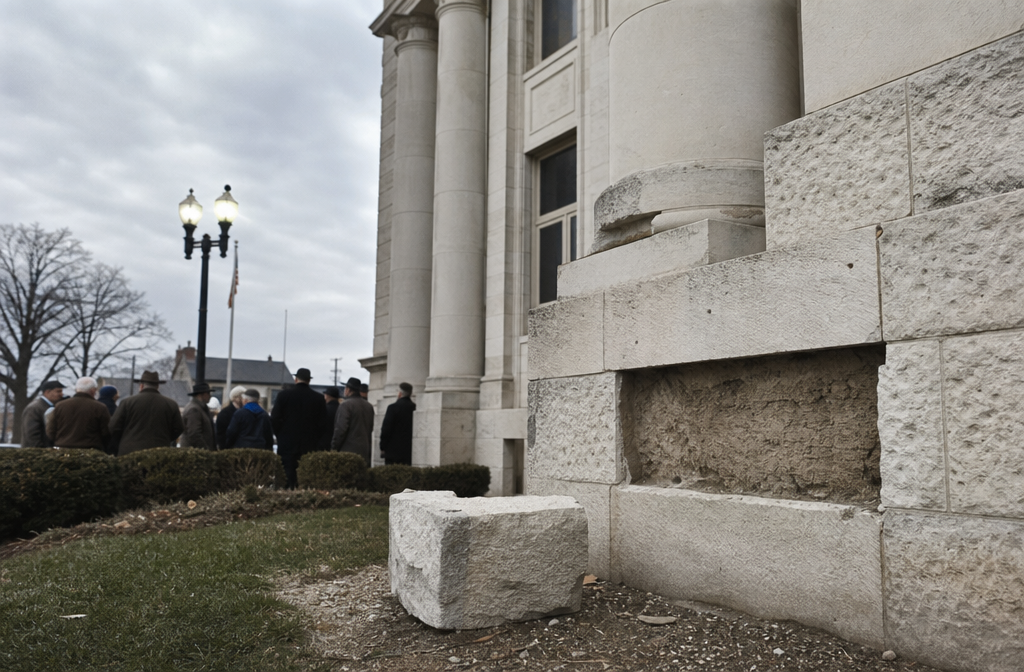
A time capsule is supposed to make history behave.
The rules are simple. A group chooses the objects, seals them in a box, and hides that box inside a wall, cornerstone, or monument. Decades later, another group opens it and receives a controlled message from the past.
That is why the courthouse cornerstone story is so irritating.
The box was reportedly sealed in 1911 during the dedication of a county courthouse. It was opened in the 1970s, during repairs and anniversary events that brought officials, local historians, reporters, and curious residents into the same room.
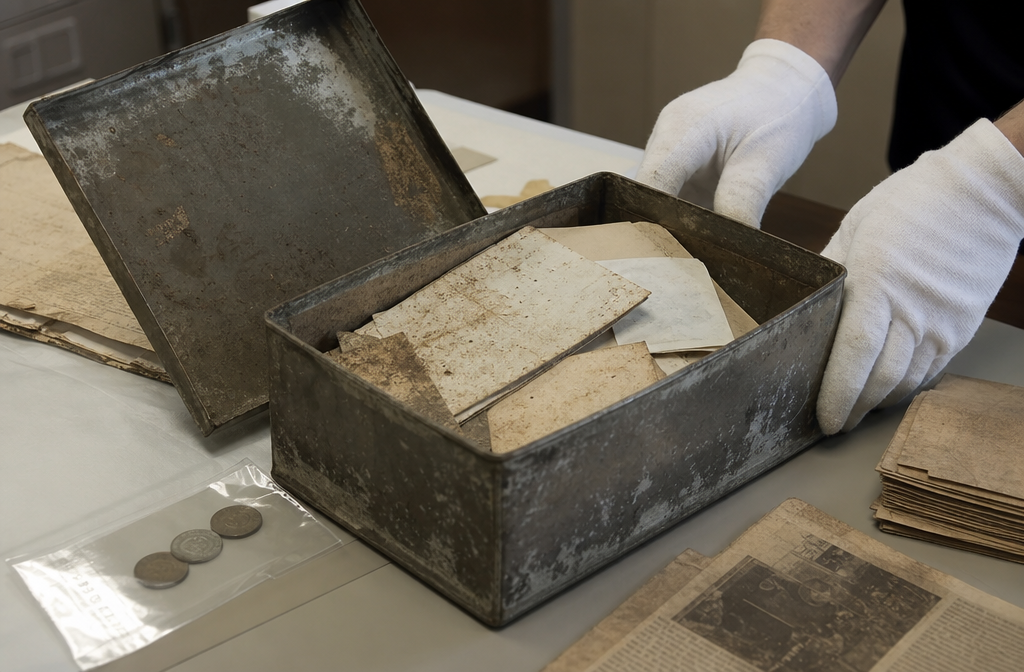
Most of what came out was exactly what anyone would expect: newspapers, coins, lists of officials, ceremonial cards, and small pieces of civic pride.
Then there was the streetcar transfer.
According to later accounts and inventory notes, the slip appeared to carry a date several years after the capsule had been sealed inside the cornerstone. Not a century later. Not a wild modern intrusion. Just late enough to make the whole record refuse to sit still.
The Ceremony in 1911
Courthouse cornerstone ceremonies were not casual events in 1911.
They involved speeches, lodge officers, contractors, judges, clerks, and local newspapers eager to print the names placed symbolically into the future.
The capsule, usually copper or zinc, might contain newspapers, a roster of officers, photographs, coins, church programs, railroad timetables, and business souvenirs.
A streetcar transfer would not have been strange by itself. It was an everyday paper object from an urbanizing county seat: cheap, dated, handled, and thrown away by the thousands.
If the transfer had matched 1911, nobody would remember it.
Its ordinariness is part of the problem. A hoaxer usually wants drama. A streetcar transfer is not dramatic. It is the kind of object an office clerk might have emptied from his pocket because someone said the box needed one more local item.
What Was Opened in the 1970s
The capsule was said to have been recovered during courthouse work in the 1970s, when the old cornerstone was exposed or removed.
These openings were often public but not forensic. A crowd gathered. A photographer tried to get a picture. Officials lifted brittle paper from a corroded container. Everyone wanted a clean story before the dust settled.
That setting gives skeptics plenty to work with.
Items could be dropped onto the table. A modern envelope could be confused with original contents. Someone might add a souvenir as a joke. A reporter might write down a date incorrectly. An archivist later reading faded ink might turn one numeral into another.
All of those are sensible warnings.
But the accounts that keep this case alive do not describe a box full of mixed debris. They describe a recognizable group of expected 1911 materials and one small transit paper that looked wrong. The anomaly was noticed because the rest behaved.
The Transfer That Should Not Be There
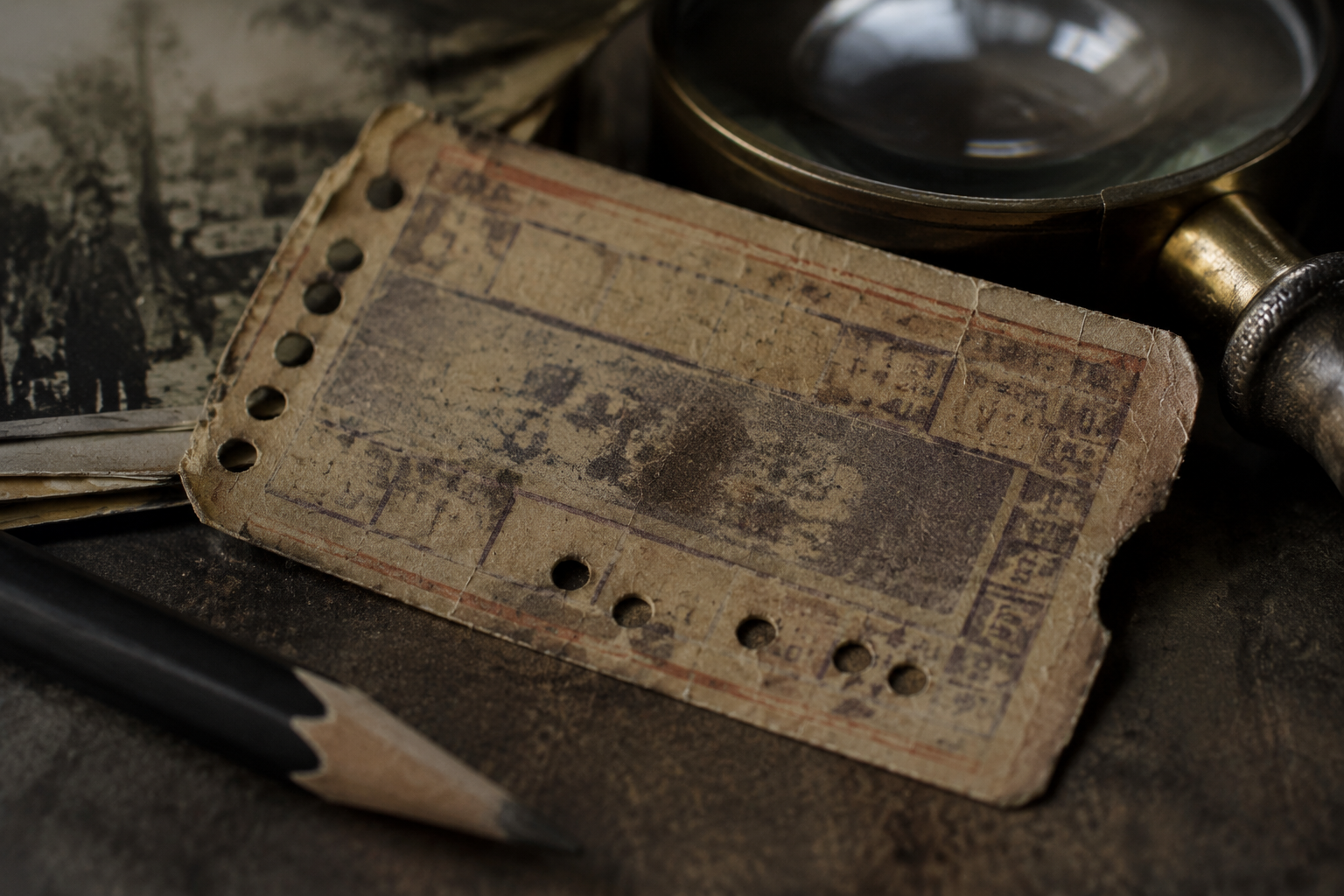
A streetcar transfer was a temporary pass.
It let a rider move from one line to another without paying a second fare. Its value depended on time, date, direction, and sometimes a conductor’s punch. That means many transfers carried printed calendars, pre-numbered days, or punched markers indicating when the slip was valid.
The disputed transfer was reportedly read as dating from several years after the courthouse dedication. In retellings, the exact year varies, which is one reason careful writers avoid pretending the case is cleaner than it is.
The important point is narrower: the date was understood by people who handled or described the contents as post-sealing.
That distinction matters. We are not dealing with a mysterious prophecy printed in a newspaper. We are dealing with a mundane administrative slip whose printed or punched marks appeared to say it belonged to a later operating period.
If the reading was correct, the capsule had been breached, resealed, misidentified, or somehow received an item after closure.
None of those options is comfortable.
Why a Simple Misread Is Possible
The ordinary explanation begins with the ticket itself.
Paper transit slips were not designed for historians. They were designed for conductors in bad weather and dim cars. Their typography could be cramped. Dates might be represented by punches along margins instead of by a single readable line.
A hole through a month column could be mistaken for a year mark. A route number could be read as a date. A company issue number could look like a year. Faded ink can make a three resemble an eight, or a one disappear.
If the transfer was damp, warped, or pressed against other papers for sixty years, the risk of misreading increases.
This is the best skeptical explanation because it does not require anyone to lie. The item could have been perfectly legitimate in 1911 while later observers, excited by the opening, misunderstood the format.
The weakness is that streetcar systems were practical institutions. Transfers usually had patterns familiar to riders, conductors, and local collectors. If several people saw the slip and still flagged the date as wrong, the misread theory has to explain not just one mistake, but a shared failure to recognize a common local artifact.
The Contamination Theory
The next explanation is contamination.
Perhaps the box was opened before the 1970s. Perhaps the cornerstone had been disturbed during an earlier repair. Perhaps the time capsule displayed that day was not the original sealed container but an associated archive packet assembled from courthouse materials.
This would solve the date problem quickly.
Courthouses are not sealed tombs. They are working buildings. Walls are patched. Basements flood. Cornerstones shift. Clerks move boxes, label envelopes, and inherit drawers from earlier generations.
A later streetcar transfer could have slipped into the collection during decades of ordinary handling.
Yet the reported setting resists that explanation more than many time capsule stories do. The box was tied to a specific cornerstone ceremony. Its expected contents matched the dedication period. The anomalous object was not a random modern newspaper clipping or a 1970s token. It was old enough to belong emotionally with the rest, but not old enough to belong logically.
That is the awkward zone where archival mysteries survive.
The Chain of Custody Problem
No responsible version of this story should pretend the chain of custody is perfect.
It is not.
The transfer’s current location is not always clear in summaries of the case. Some versions rely on a local newspaper description, some on an inventory sheet, and some on later retellings by people who were not in the room when the capsule was opened.
That should make readers cautious.
At the same time, imperfect custody is not the same thing as worthless evidence. Many local historical records survive through exactly this kind of chain: newspaper report, courthouse note, archive accession, anniversary booklet, memory of a curator.
The question is not whether the file meets courtroom standards. It does not.
The question is whether the odd detail appears early enough, plainly enough, and uselessly enough to be considered a genuine problem rather than folklore added later.
On that narrower test, the transfer remains stubborn. It is too small to carry a legend, but specific enough to disturb the inventory.
Why the Object Was So Unhelpful to a Hoax
Hoaxes usually have motive, audience, and payoff.
A forged treasure map sends people digging. A fake diary makes headlines. A planted newspaper from the future creates an obvious thrill.
A streetcar transfer dated a few years too late does very little. It does not reveal a crime. It does not predict a disaster. It does not even move the capsule into science fiction unless someone exaggerates the story.
That uselessness makes deliberate fraud less attractive.
Someone could have planted it as a prank during the opening, but the prank would depend on observers understanding a minor transit date format well enough to be confused by it. Someone could have inserted it earlier during repairs, but then left no clearer sign of intrusion.
The result is not impossible fraud. It is low-reward fraud.
And low-reward anomalies are often the ones archivists dislike most. They lack spectacle, but they also lack an obvious reason for existing.

The Record That Will Not Close
The courthouse time capsule story remains unresolved because every explanation has a cost.
If the transfer was misread, then multiple later descriptions may have preserved the same mistake without correction from anyone familiar with local transit ephemera.
If the capsule was contaminated, then an object from only a few years after 1911 entered a supposedly sealed cornerstone record while leaving the rest of the deposit convincing and period-correct.
If the item was planted, the plant was oddly modest.
And if the date was read correctly and the capsule was truly sealed, then the record contains a chronological impossibility in the driest possible form: not a vision, not a prophecy, not a ghostly message, but a transfer ticket.
That is why the case is hard to dismiss.
It asks for no belief in the supernatural. It only asks why a small paper pass appears to have arrived late to a box that should not have admitted late arrivals.
The strongest conclusion is cautious, not sensational. The courthouse capsule probably preserves a human error somewhere: in reading, handling, labeling, or memory.
But the surviving description gives that error unusually little room to stand.
Until the original transfer is located, reexamined, and compared against verified streetcar issue formats from the county seat, the mystery remains balanced on a thin strip of paper.
For a time capsule, that is enough.
Reader Context
This Weird Witnessed story is an editorial reconstruction, written as eerie visual storytelling rather than a verified report. For more context, see How to Read Weird Witnessed Stories and How WeirdWitnessed Creates Reconstructed Horror Stories.