The Detail That Started the File
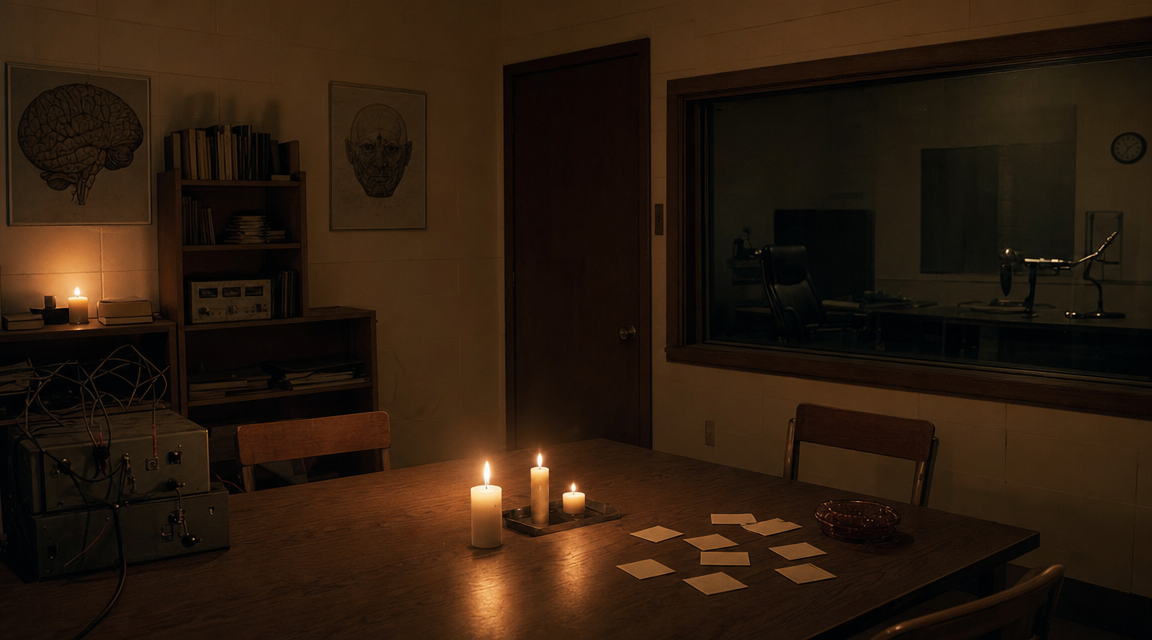
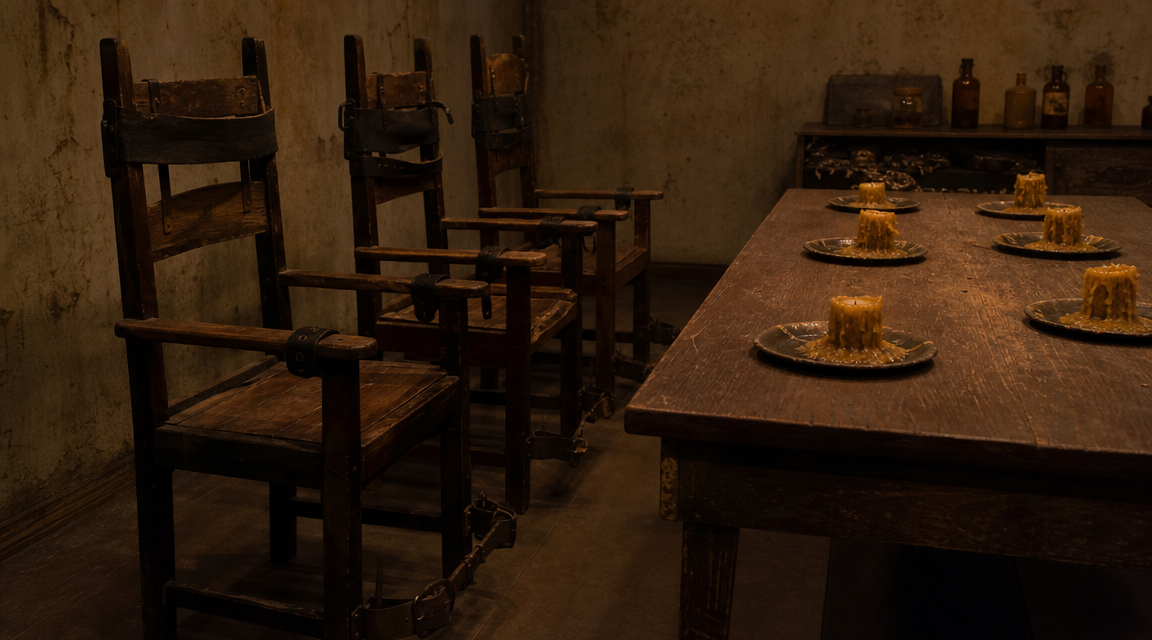
The surviving folder begins with a harmless list: eight chairs, one table, twelve candles, and a stack of blank-backed picture cards.
Nothing about that sounds like the beginning of a mystery. It sounds like a modest attention study in a department short on equipment.
That is what the Candle Room Memory Test was supposed to be. Volunteers would sit in low light, view ordinary images, and later write down what they remembered.
The researchers wanted to know whether warm flickering light changed recall. The proposal reads like careful psychology, not theater.
What made the case strange was not the method. It was the agreement.
Several participants wrote down the same detail before the relevant card was ever shown.
The account matters because it sits between bad procedure and something harder to file away. The notes show people trying to explain a problem before they understood it.
Why the Simple Version Was Not Enough
The first sessions were ordinary. A graduate assistant placed candles in glass saucers, checked the ventilation, and led volunteers into the room one at a time.
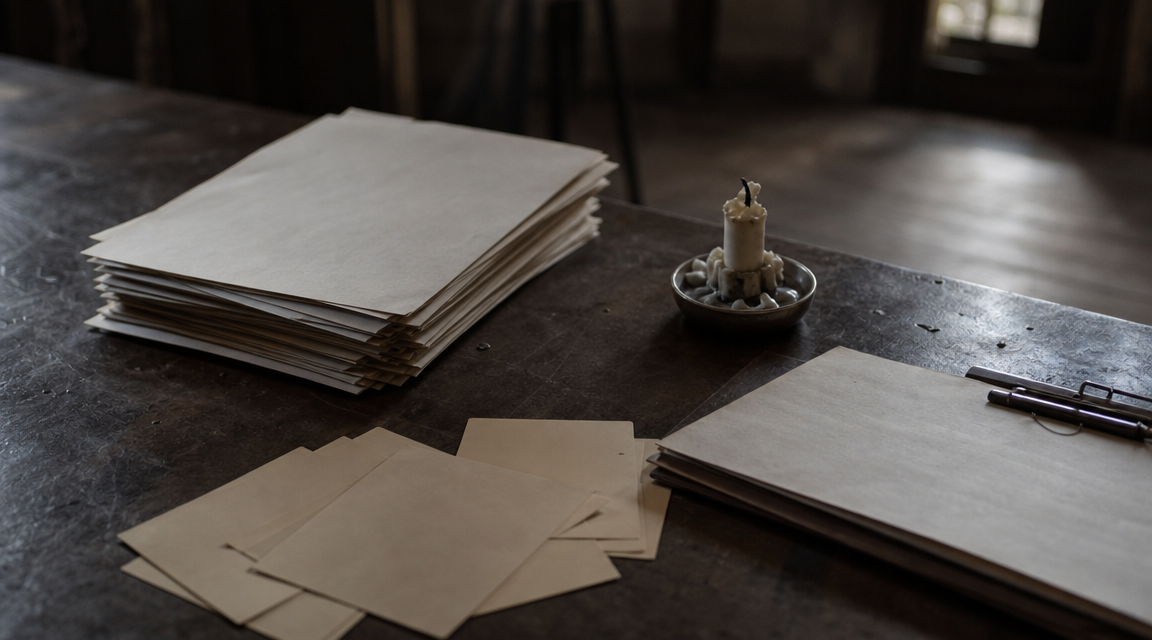
The cards were intentionally plain: a cup, a key, a stair rail, a winter coat, a brass birdcage.
Nothing was dramatic, and nothing was meant to frighten anyone.
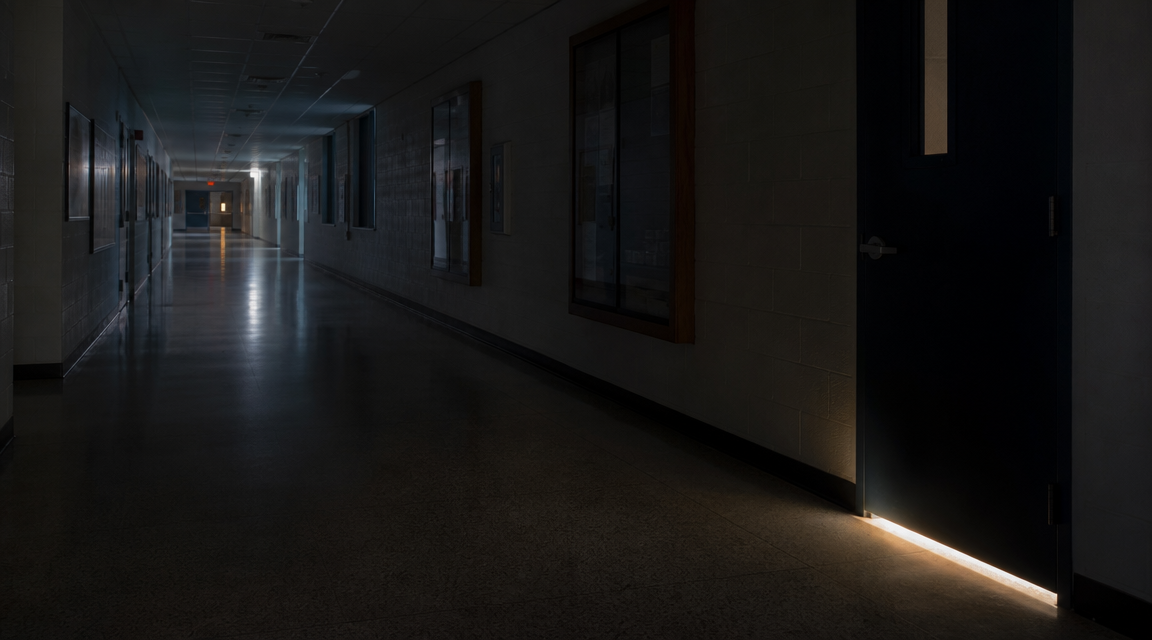
After each viewing, the participant waited in the hall and wrote what they remembered. Most answers were exactly what a psychology department would expect.
Then one sheet mentioned a black ribbon tied around the birdcage. The assistant marked it as an intrusion, a remembered detail that had not appeared.
At first, that was not alarming. Memory invents details constantly.
The Setting People Remember
The trouble was that two more participants wrote down the same black ribbon before any card with a ribbon was added to the sequence.
The staff suspected contamination. Maybe the volunteers spoke in the hall. Maybe one saw another sheet. Maybe the assistant accidentally described a card aloud.
They changed the order and separated the waiting chairs. They replaced the assistant.
They removed the birdcage card entirely for a session.
The ribbon still appeared in the answers.
That line gives the folder its uneasy force. It is written without drama, as if the person recording it wanted the problem noted without making it sound absurd.
The First Account That Changed the Mood
Candlelight was not chosen for atmosphere. The proposal described it as a way to reduce glare and create a consistent low-contrast environment.
The room’s electric fixture buzzed, and the researchers worried the sound might distract participants.
Candles also made the study cheaper. That practical detail makes the later story feel less invented.
Still, candlelight changes a room. Edges move. Reflections breathe. Ordinary objects seem to shift without actually moving.
A skeptical explanation starts there. The volunteers may have seen similar shadows and turned them into similar answers.
The black ribbon may have been a shared interpretation of the cage bars under flickering light.
Why the Obvious Explanation Struggles
But the notes complicate that explanation. Some participants who wrote down the ribbon had not seen the cage card at all.
They wrote it beside other objects, as if the ribbon belonged to the room more than the image.
By the fourth week, the researchers added control sessions under electric light. The unexpected answers decreased but did not vanish.
One volunteer wrote “the tied thing” beside a drawing of a chair. Another wrote “dark string on handle” next to the cup.
Those phrases are not identical, but they point in the same direction.
Something small, dark, and tied kept appearing in memory where it had no assigned place.
The Most Reasonable Theory
The staff checked the cards for marks. They checked the table. They checked the candleholders.
No ribbon was found in the room.
They also asked whether earlier participants had joked about the test. The notes record no clear evidence of that.
A rumor could still have spread, but the file does not show one being caught.
The most reasonable theory is procedural leakage. A student may have mentioned the odd answer, and the idea spread quietly.
Once a suggestion enters a group, memory can do the rest.
The Part That Stayed Unresolved
That theory explains much of the case. It does not explain the final session cleanly.
During that session, three volunteers asked whether they were supposed to remember the smell as well as the pictures.
The candles had been extinguished before the third volunteer entered.
The assistant wrote that the room smelled strongly of smoke even after airing. A maintenance note says the ventilation fan was working.
Again, this could be ordinary. Candle rooms smell like candles.
But one volunteer described “smoke from something tied shut.” The wording was strange enough that the supervisor copied it into the margin.
How the Story Was Retold
The test was stopped after that day. The official reason was methodological contamination, which is probably true.
Once a study produces repeated unexplained intrusions, its data becomes nearly useless.
Yet the folder was not discarded. It was labeled, tied, and kept with the department’s closed experiments.
Someone thought the failed study was worth preserving.
What remains unresolved is the shape of the agreement. People can share mistakes. People can inherit suggestions without knowing where they came from.
The Candle Room Memory Test is eerie because it never demands the impossible.
Why It Still Feels Worth Noticing
It only asks why several ordinary people remembered the same unnecessary thing.
Maybe the answer is hidden in a hallway conversation no one recorded.
Maybe it was a trick of candlelight and expectation.
Maybe the researchers, by trying to control memory, created the exact conditions for memory to misbehave.
That is why the case still works as a WeirdWitnessed story. The candles are not the mystery by themselves.
The mystery is the moment a room full of blank cards began giving people the same answer.
The detail that makes the folder feel unusually human is how quickly the staff tried to disprove themselves. They did not circle the strange answers and declare them meaningful. They rebuilt the procedure in small practical ways, the way careful people do when something goes wrong.
They moved the chairs. They changed the card order. They made volunteers wait in separate corners of the hall. They even logged the matches as probable contamination before they had a source for that contamination.
That restraint matters. The file does not read like a ghost story written after the fact. It reads like an experiment being slowly embarrassed by its own notes.
One later department memo mentions the Candle Room only once, in a list of discontinued studies. The phrase used is unusually dry: environmental recall trial, terminated due to repeated uncontrolled associations.
That may be all the mystery ever was. Uncontrolled association is a technical way to describe memory doing what memory does: reaching sideways, borrowing, filling blank places with material from somewhere else.
But the phrase also admits the central problem. The associations were repeated. They were not random enough to ignore, and they were not controlled enough to use.
The room itself was eventually reassigned. Shelves replaced the chairs. The table was removed. The candleholders vanished into storage or trash.
What stayed behind was the file, and the file is enough. It preserves a study that failed not because nothing happened, but because the same small impossible-seeming thing happened too many times.
A later student reportedly tried to locate the original cards and could not. That absence is not suspicious by itself. Teaching departments discard materials all the time, especially from studies considered unusable.
Still, the missing cards remove the easiest modern check. No one can examine the birdcage, the cup, or the chair to see whether shadows might have produced the same imagined ribbon.
What remains is the paperwork, and paperwork has its own limitations. It captures the official anxiety but not the room’s temperature, the smell of wax, the hesitation in a volunteer’s voice, or the moment a researcher realized the same wrong answer had appeared again.
That is why the case resists becoming either proof or debunking. The evidence is too thin for certainty and too specific to feel empty.
Reader Context
This Weird Witnessed story is an editorial reconstruction, written as eerie visual storytelling rather than a verified report. For more context, see How to Read Weird Witnessed Stories and How WeirdWitnessed Creates Reconstructed Horror Stories.