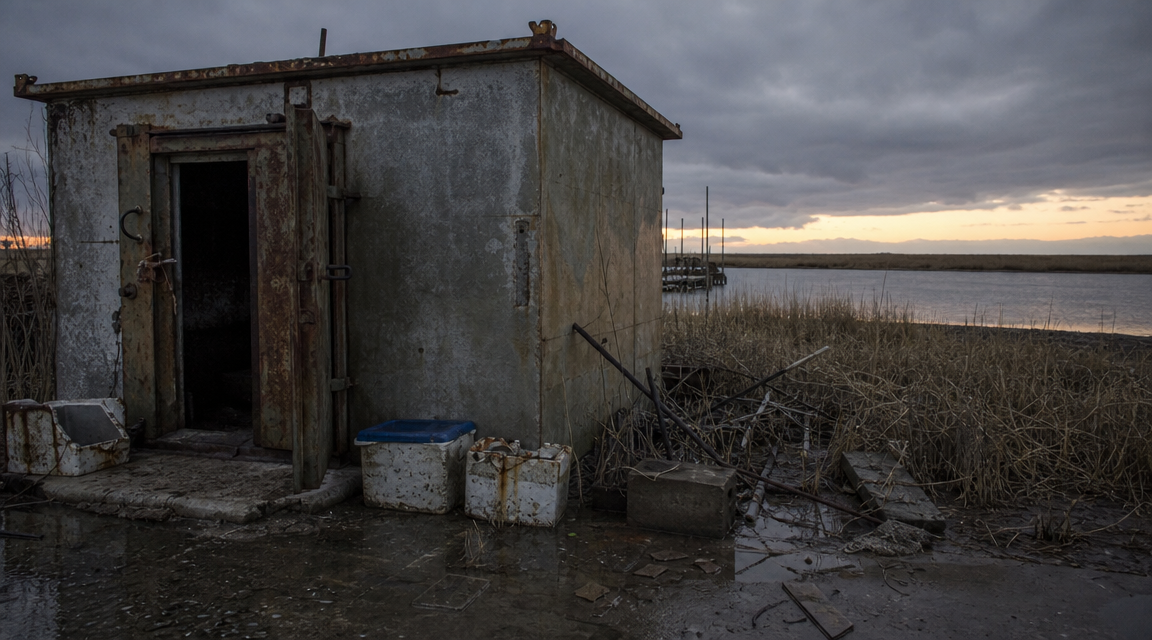
The Saltmarsh bait freezer report begins with a building nobody had much reason to enter anymore.
The fish station had closed after the docks silted in and the ice machine failed. What remained was a low block structure beside tidal reeds, a rusted loading rail, and a walk-in bait freezer that still held the smell of brine.
That kind of place naturally collects rumors. Raccoons nest in insulation. Wind pushes old metal until it sounds intentional.
But this report is not built on atmosphere alone. It rests on three pieces of evidence: a locked freezer door dented outward from inside, wet scale-like marks on the floor, and a recorder catching a rasping breath at the exterior vents.
None of those details proves a Chupacabra. Together, they form a quiet, uncomfortable case.
The Closed Fish Station
The station sat at the edge of a saltmarsh where a service road met a dead dock. Fishermen once used it for bait storage, ice, and repairs before running the channels at dawn.
After closure, the building was not fully abandoned so much as forgotten. The county still owned the lot. A faded chain blocked the road. A property manager checked it for vandalism, storm damage, and theft.
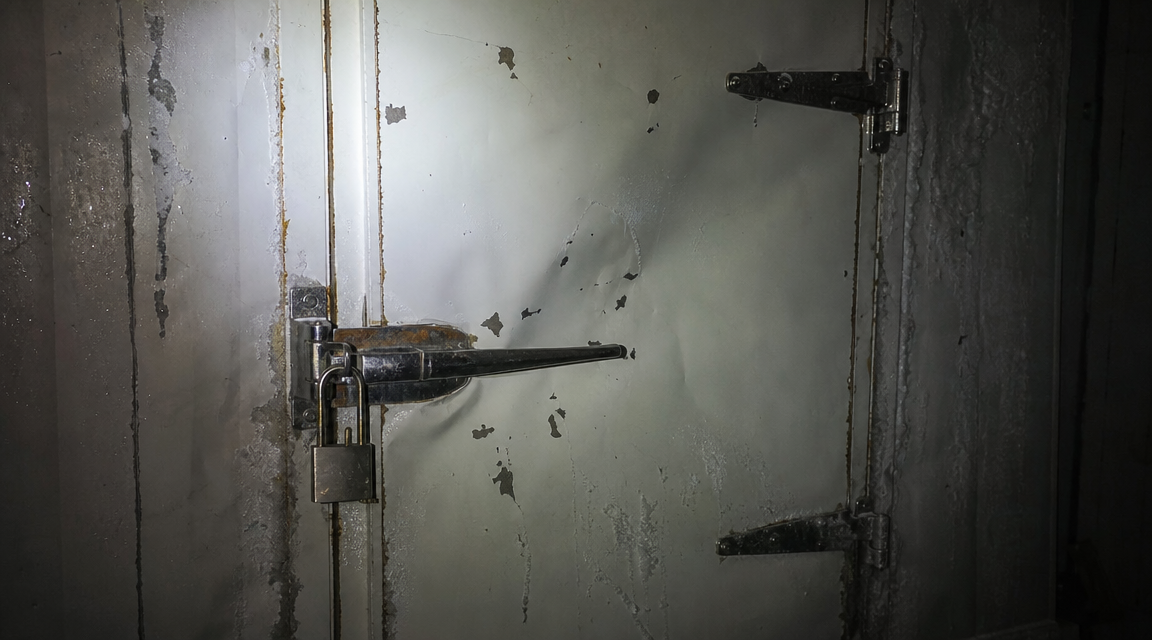
Inside, the bait freezer was the most solid room left. Its insulated metal door hung in a heavy frame. The latch had been replaced after a break-in, and a weathered padlock was clipped through the hasp.
The freezer no longer froze anything. With no power, it had become a sealed metal closet with a drain, old shelving rails, and damp walls.
The Door Bent the Wrong Way
The first discovery came during a post-storm inspection.
The padlock was still in place. The hasp had not been cut. The outer frame showed no pry marks that would suggest someone had forced the door open from the hallway.
Yet the door itself was dented outward.
That detail bothered the property manager enough to photograph it before touching anything. The dents were not huge cinematic bulges. They clustered around the lower panel, shallow but distinct, as if something inside had struck or leaned hard against the metal.
A thrown rock from outside would have pushed the metal inward. A boot from the hallway would have done the same. These impressions appeared to press toward the person standing in front of the door.
Old freezer panels can warp. Rust can swell seams. But the dent pattern looked localized, not like a door slowly failing across its whole surface.
The Lock Was Still Closed
The locked condition is the reason the case draws attention.
A dented door alone is not unusual at an old fish station. Equipment, storm debris, and rough handling can leave marks everywhere. The problem is the reported sequence: intact padlock, closed latch, outward dents, and no obvious way for a person to have been inside.
Could someone have entered earlier and locked the door from outside afterward? Yes. That is one of the simplest explanations.
The freezer had a mechanical emergency release, but it was corroded and stiff. If a trespasser had shut themselves in, panic could explain the dents. It would not explain why no one reported being trapped.
Could the dents predate the last inspection? Also possible. Records from neglected properties are rarely perfect.
Still, the manager insisted the door had not looked that way during the previous check. That does not settle the matter, but it keeps the timeline alive.
Wet Marks on the Concrete
When the door was opened, the second piece of evidence was waiting on the freezer floor.
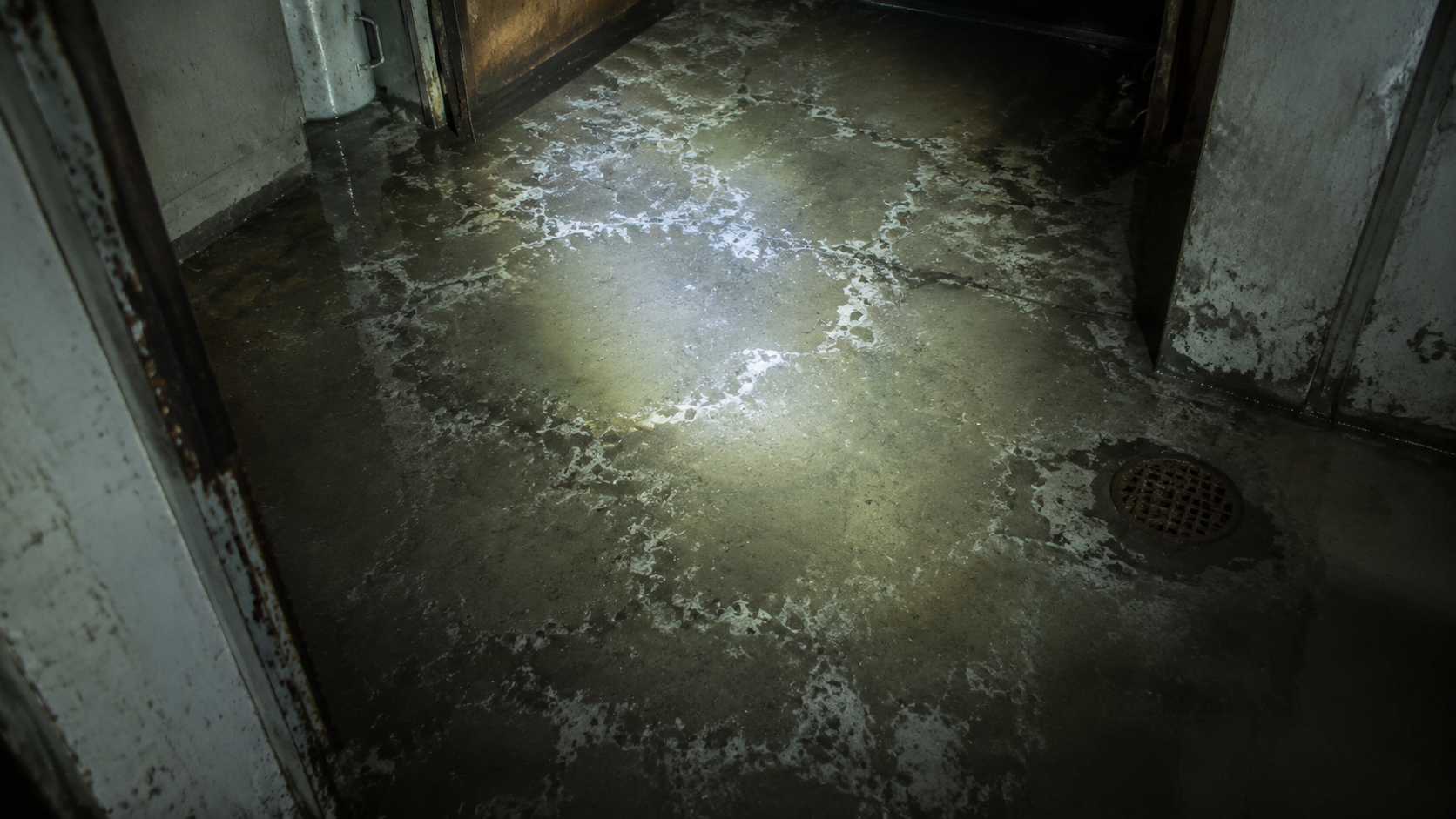
The concrete inside was damp in streaks. Not flooded, muddy, or covered with animal waste. The marks were wet, briny, and patterned with tiny reflective flecks like scales or scraped fish skin.
They began near the floor drain, crossed the room, then broke apart near the inside of the door. Some were long smears. Others were short, curved impressions, as if a wet surface had touched down and lifted again.
Because this was a bait freezer, fish residue is not surprising. Old scales can remain in drains. Salt crystals can bloom from concrete. Storm surge can push marsh water into places that seem sealed.
The oddity was freshness. The inspector reported that the marks were wet at the center when the door was opened, but dry and crusted at the edges by the time photographs were taken.
Fresh brine inside a locked, powerless freezer is not impossible. It is simply a question that needs an answer.
Not Footprints, Not Claw Marks
One reason the Saltmarsh case avoids the usual trap is that no one claimed perfect monster tracks.
There were no three-toed impressions, no dramatic claws, and no convenient trail leading into the reeds. The floor marks were messy, partial, and ambiguous.
That matters. In Chupacabra stories, evidence often becomes too neat too quickly. The creature is given a signature before the scene is examined.
Here, the marks were stranger because they were less readable.
They looked wet. They looked briny. They carried flecks that might have been scales. But they did not identify the thing that made them.
A large fish dragged from the drain would be absurd but not supernatural. A raccoon carrying bait scraps could smear residue. An eel or otter might leave a slick trail if it found a way inside.
The difficulty is access. How did anything large enough to dent the door get into a locked freezer room?
The Recorder at the Vents
The third piece of evidence came later, after curiosity turned into a small local investigation.
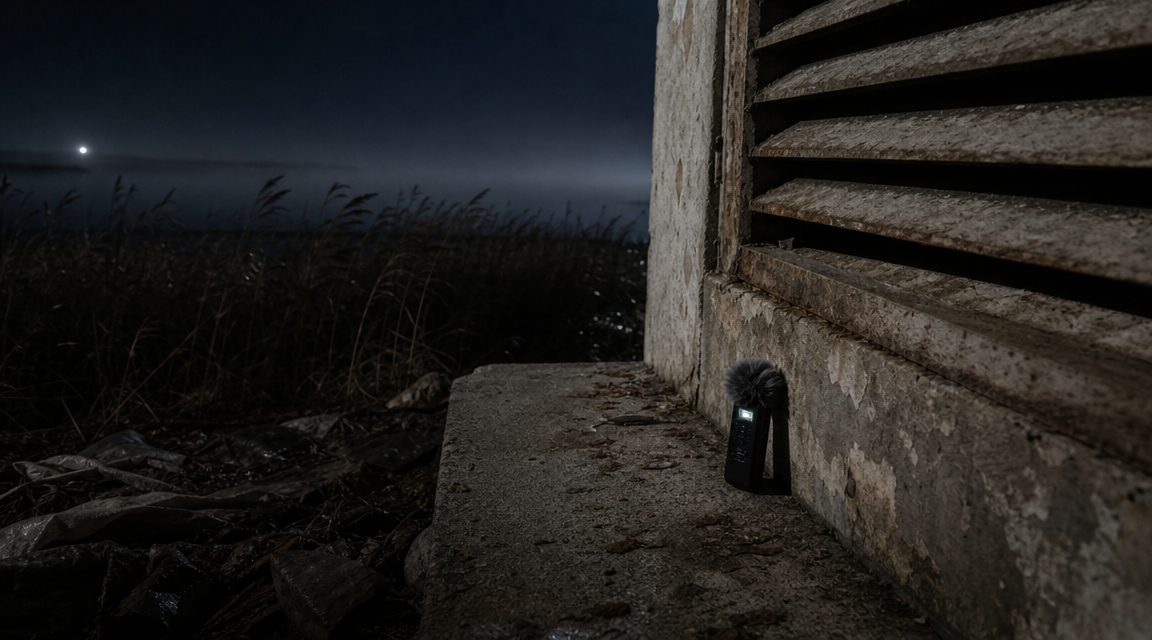
A night recorder was placed outside the freezer wall near the vent slats. If an animal was entering through a gap, the vents were one of the few possible routes. They were narrow, rusted, and partly screened, but connected to cavities around the old refrigeration system.
The recorder captured normal marsh sounds first: insects, distant traffic, reed movement, and loose metal tapping in wind.
Then, shortly after midnight, it picked up a close rasping breath.
The sound lasted only a few seconds. It was not a scream or a howl. It was a rough inhale and exhale close to the microphone, followed by a faint scrape near the vent housing.
Audio evidence is fragile. A raccoon sniffing a recorder can sound enormous. Wind crossing a vent can mimic breathing. A person leaning near the wall could produce the same effect.
Still, the recording matched the physical focus of the scene: the vents, the sealed room, and the sense that something was investigating the freezer from hidden edges.
Why Chupacabra Gets Mentioned
The Chupacabra label enters because of texture, not because the case includes the classic livestock story.
There were no dead goats, no drained animals, and no farmyard attack. In fact, that absence makes the report more useful. It does not lean on the most repeated version of the legend.
Instead, the Saltmarsh account brushes against a different strand of Chupacabra folklore: a lean nocturnal scavenger moving through marginal places and leaving traces that feel reptilian, canine, and marine all at once.
That does not mean a folklore creature was in the freezer. It means witnesses reached for the nearest name that fit the discomfort.
A locked bait room with briny marks and breathing at the vents does not suggest a neighborhood dog. It suggests something adapted to edges: marsh edge, building edge, tide edge, and the gap between animal behavior and human expectation.
That is where creature reports tend to grow.
Ordinary Explanations That Still Matter
The sensible explanations should be considered first.
Storm pressure may have flexed the door. Corrosion may have made old dents appear new. A trespasser may have been trapped and escaped without reporting it. Fish residue may have rehydrated in humid air. The recorder may have captured a raccoon, possum, heron, or person.
Each explanation works on one part of the case.
The harder question is whether one ordinary explanation covers all of it. A storm can explain moisture, but not easily a close breath at the vents days later. An animal can explain breathing, but not easily the outward dents in a locked metal door. A person can explain the dents, but not the wet scale-like trail unless they staged it or tracked in bait residue.
Staging is always possible. Abandoned buildings invite performance. Yet the report lacks the obvious reward structure of a hoax. No dramatic video appeared. No clear creature photo was offered. The details are physical, dull, and inconvenient.
That restraint is not proof. It is why the account continues to bother careful readers.
What the Evidence Really Shows
The Saltmarsh bait freezer case shows how little is needed to make an abandoned place feel occupied.
A door bent the wrong way. A wet trail on concrete. A few seconds of rough breathing near a vent.
Individually, each item is weak. Together, they create a scene with pressure behind it, as though something moved through the freezer room and returned to the outside wall after dark.
For investigators, the next steps would be ordinary: inspect the vent cavities, test the residue, compare the dent height with equipment inside, review storm data, and place cameras and recorders around every access point.
Until that happens, the case remains in the gray zone where WeirdWitnessed stories often live. It is not a detail people read as the Chupacabra. It is not even a detail people read as an unknown animal.
It is a locked room at the edge of a marsh, marked by salt, pressure, and breath.
And sometimes that keeps the door in your mind from closing.
Reader Context
This Weird Witnessed story is an editorial reconstruction, written as eerie visual storytelling rather than a verified report. For more context, see Creatures, Crawlers, and Cryptid Stories Guide and How WeirdWitnessed Creates Reconstructed Horror Stories.