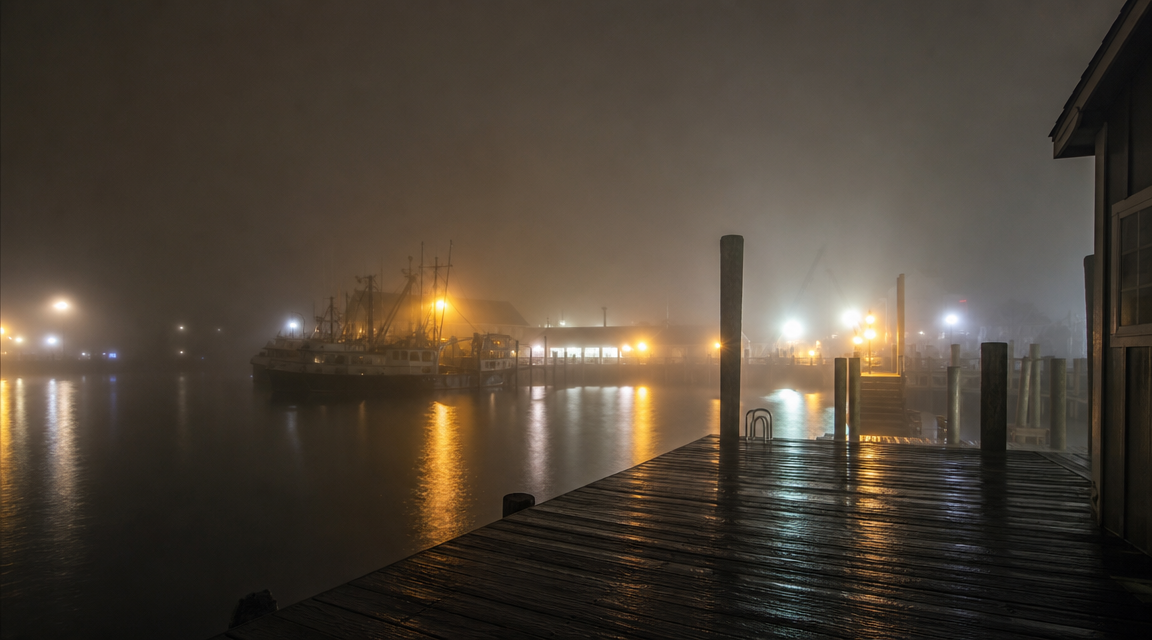
The Night the Harbor Went Soft Around the Edges
Fog changes the scale of a harbor. It makes large things feel close and small things feel important. On the night the lights counted backward, the harbor at Bellweather Cove was reduced to a few damp boards, the black knock of water against pilings, and the glow of maintenance lamps that should have been boring.
They were not navigation beacons. They did not guide ships through the channel or warn anyone off the rocks. They were ordinary work lights fixed along the inner service pier, used by dockhands, mechanics, and the occasional late-returning crab boat crew.
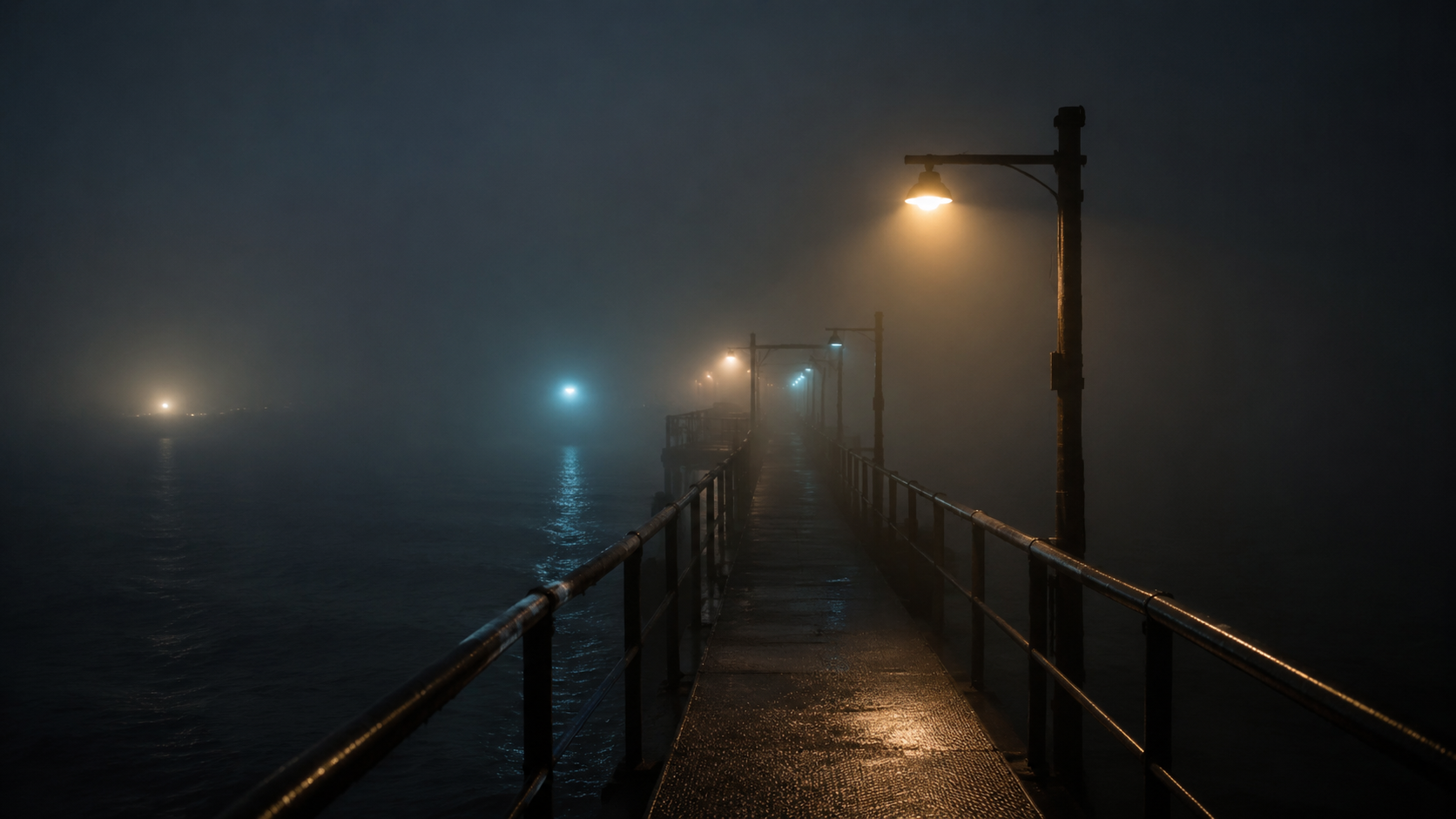
By midnight, according to the people who later discussed it, those lamps were blinking in a pattern. Not randomly. Not all at once. They appeared to be counting down from the far end of the pier toward shore.
Nine. Eight. Seven. Six.
Then darkness.
Then the sequence began again.
A Small Harbor With Practical Problems
Bellweather Cove is the kind of place where most mysteries are first treated as maintenance issues. A strange sound is usually a loose line. A light on the water is usually a buoy or a phone.
The harbor served a modest fleet: shellfish boats, two charter operators, a fuel dock, and a repair shed that smelled permanently of diesel and old rope. Its service pier had nine yellow maintenance lights mounted at uneven intervals, installed because people kept tripping over hoses and cleats before dawn.
For years those lamps ran on a timer. The box clicked them on at dusk and off after sunrise, with a few seasonal adjustments that nobody trusted. It was old, damp, and famous for losing time after storms.
Three weeks before the fog night, the harbor authority had the timer removed. That detail is the part everyone comes back to.
The Timer That Was No Longer There
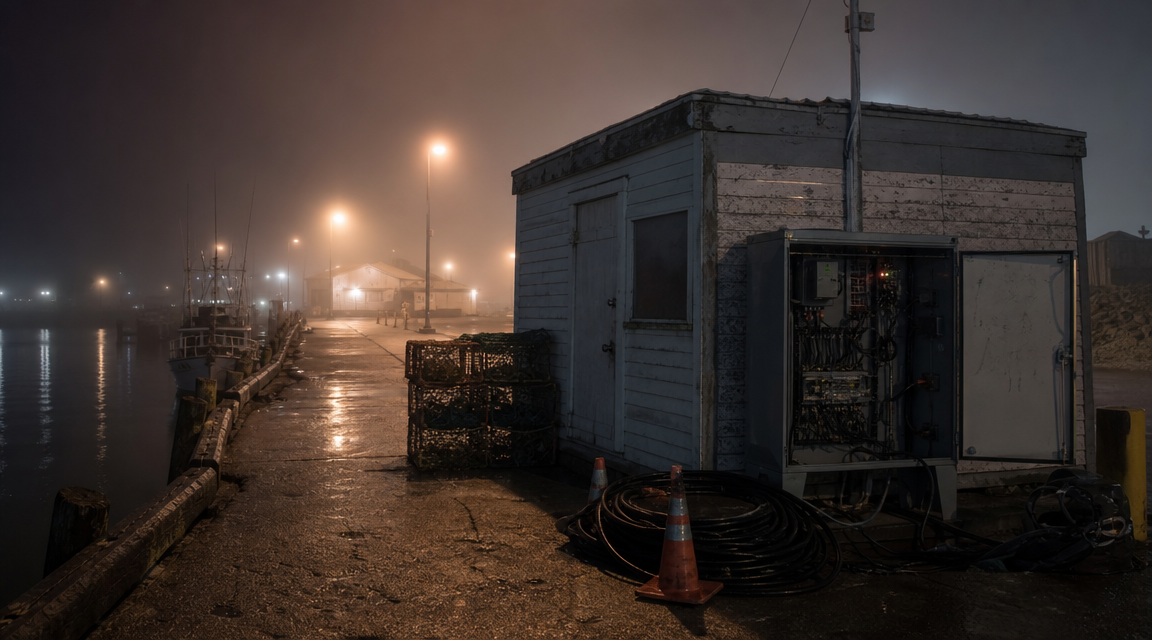
The timer cabinet had been mounted inside a service shed near the head of the pier. After repeated failures, the decision was made to simplify the setup. The lamps were rewired to a manual switch and breaker. No programmable unit. No cycling controller. Nothing that should have made nine separate lamps blink in order.
A local electrician reportedly pulled the old mechanism, capped what needed capping, and left the disconnected timer on a shelf before it was thrown into a scrap bin. The work was ordinary enough that nobody saved photographs. At the time, it was just another small improvement paid for out of a tight budget.
The new arrangement had one job. Flip the switch, the lamps came on. Flip it back, they went off.
On clear nights, that is what they did.
On the fog night, they behaved like something was still giving instructions.
First Witnesses on the Pier
The first people to notice were not tourists or thrill seekers. They were two crew members unloading gear from a delayed boat that had crept in after the fog thickened. The channel markers were barely visible.
One of the crew later described seeing the last light on the pier wink out, followed by the next, then the next, each one dropping away through the fog. At first he thought someone was walking down the pier and switching them off by hand.
But no figure appeared. The timing was too steady. The lights did not stay off. After the lamp closest to shore went dark, all nine returned together for several seconds. Then the farthest lamp blinked once, the next blinked after it, and the sequence moved inward again.
The two workers stood still long enough to confirm it happened more than once. One counted aloud. The other told him to stop.
That is often how odd events survive: practical people recognize when something is too orderly to ignore.
The Backward Count
The pattern was described as backward because it moved opposite the way people usually entered the pier. The farthest light, near the last mooring post, acted like number nine. Then the next lamp closer to land, number eight, and so on to the service shed.
The sequence did not produce numbers in the air. Nobody claimed shapes or symbols. It was simply a visible count made by distance and timing.
Each lamp blinked for less than a second. The pause between lamps was close enough to feel deliberate. After the closest light blinked, the whole row stayed lit for a short interval, then the countdown resumed.
Witnesses disagreed on the exact rhythm. Some said it was like a metronome. Others said the timing dragged near the middle, as though the harbor had to think before reaching five.
That uncertainty is worth keeping. Human memory does not improve in fog at midnight. But the central claim remained consistent: the lights activated one by one, from the end of the pier back toward shore, over and over.
The Harbor Office Log
The harbor office had no dramatic record, only the kind of notes that make it stranger by being dull. A staff member on late call wrote that the service pier lights were “cycling in sequence” and that the manual switch did not correct it.
According to retellings, the switch was turned off. The lamps went dark. When it was turned on again, they shone normally for less than a minute before the pattern returned.
The breaker was then opened for the circuit. That should have ended the matter, and for a while it did. The pier went dark except for spillover from the fuel dock and the pale blur of a security light near the parking area.
After several minutes, one worker said he saw a weak glow in the farthest lamp housing, not fully lit, just a pulse. Nobody agreed on whether that part happened. It did not appear in the office note. It lives only in the oral version.
What was written down was enough: lights cycling, timer removed, fog conditions severe.
Sensible Explanations, Considered Carefully
There are ordinary possibilities. Moisture can create faults. Salt air is brutal on electrical systems. A damaged neutral, failing ballast, induced voltage, or improvised wiring history can make lamps flicker in ways that look intentional.
Fog also changes perception. A light partly blocked by mist may seem to blink when it only fades behind moving vapor. If several lamps sit at different distances, shifting fog can create the impression of sequence.
Those explanations deserve room. They may even be correct.
But the people at Bellweather Cove kept returning to the same objections. The lamps were seen blinking from multiple angles. The pattern repeated while witnesses were looking directly at it. The lights were not fading softly but cutting out and returning. Most importantly, the old timer system that might have created a sequence was no longer connected.
Could another device have remained hidden in the circuit? Possibly. Could the removal have left behind some accidental behavior that appeared programmatic only under damp conditions? Also possible.
Still, the event landed in that narrow coastal category where reasonable explanations exist, yet none fit cleanly enough to quiet the story.
The Morning Inspection
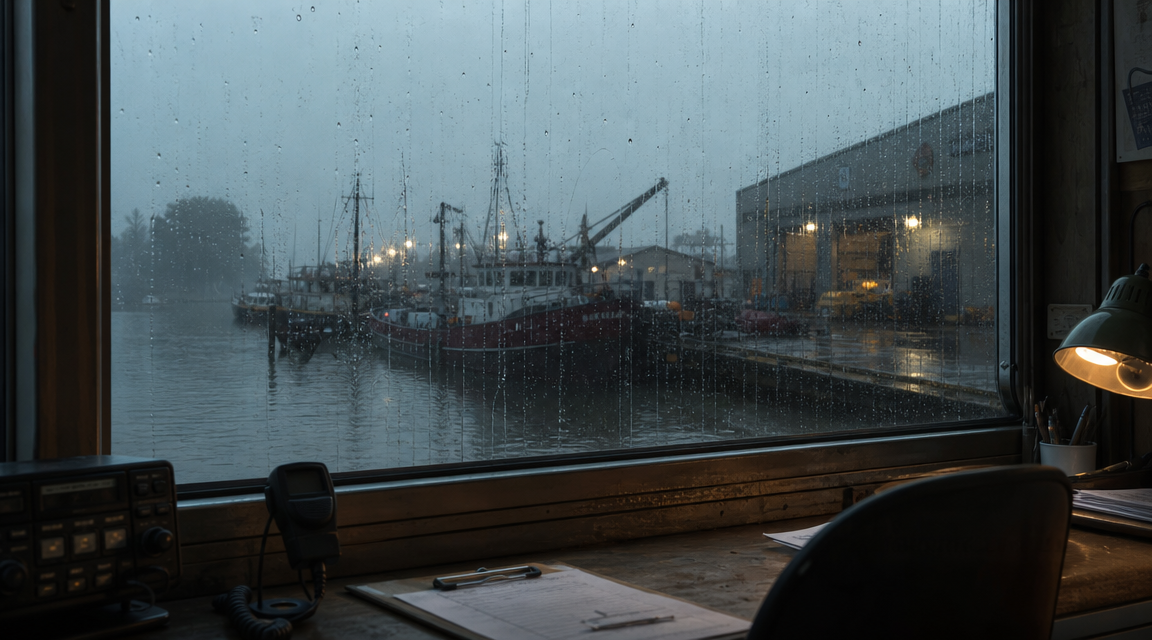
By morning, the fog had thinned into low cloud and the harbor looked embarrassed by its own performance. The lamps worked normally when tested. The manual switch behaved. The breaker held. No scorch marks were reported. No hidden timer was found.
An electrician inspected the service shed and lamp run. He reportedly found corrosion, damp fittings, and the usual sins of coastal wiring, but nothing that explained a clean reverse sequence across nine fixtures. A recommendation was made to replace several components and seal the boxes more carefully.
That is what happened. Parts were changed. Connections were remade. The old timer, if it was still in the scrap pile, disappeared with other metal waste.
The backward count did not return.
This absence became part of the story. A repeat event can be studied. A one-night event becomes a local argument. Some people prefer that. It lets them keep the mystery without having to defend it under fluorescent lights.
What Remains After the Countdown
Today, the service pier at Bellweather Cove is ordinary again. The newer lamps are brighter, whiter, and less atmospheric. They make the wet boards look practical instead of haunted. Boats come in, carts rattle, gulls complain, and the harbor returns to its main business of work.
Ask about the counting lights, and the answers depend on whom you catch. One person will say it was a fault in a damp circuit. Another will say the old timer was never fully removed. Someone else will shrug and insist they saw the lights count down with their own eyes, and that no explanation offered afterward has matched what happened.
The most convincing version does not require ghosts, signals, or secret machinery. It only requires a small harbor, a system recently simplified, and a night when the remaining wires seemed to remember an order they were no longer supposed to know.
That is the quiet unease of the Bellweather Cove incident. Not that the lights blinked. Lights blink all the time. It is that they appeared to blink with purpose after the purpose-built device had been taken away.
Nine to one, from fog to shore.
Then all of them burning steady, as if nothing unusual had happened at all.
Reader Context
This Weird Witnessed story is an editorial reconstruction, written as eerie visual storytelling rather than a verified report. For more context, see Camera Anomalies and Strange Images Guide and How WeirdWitnessed Creates Reconstructed Horror Stories.