Documented-culture opening
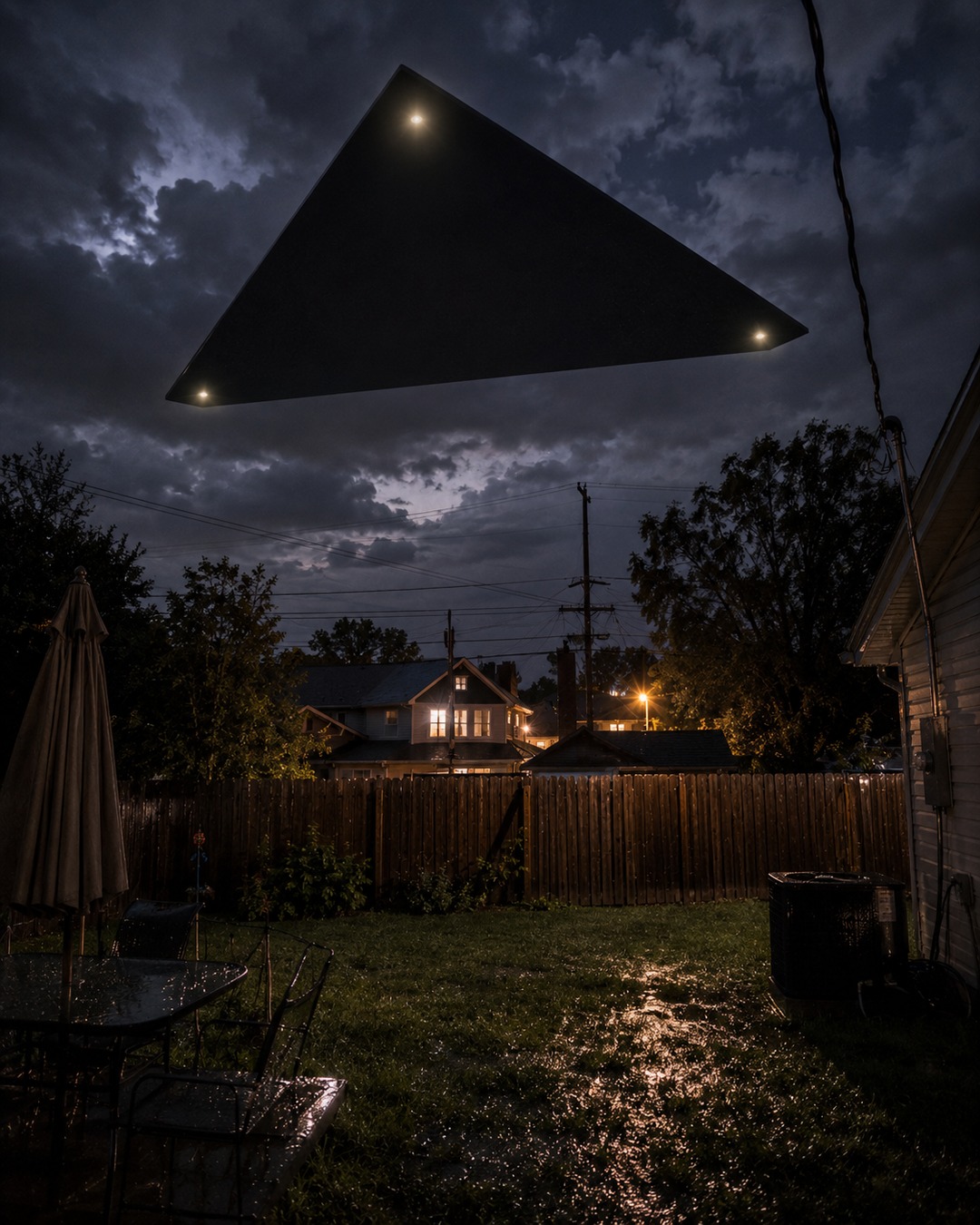
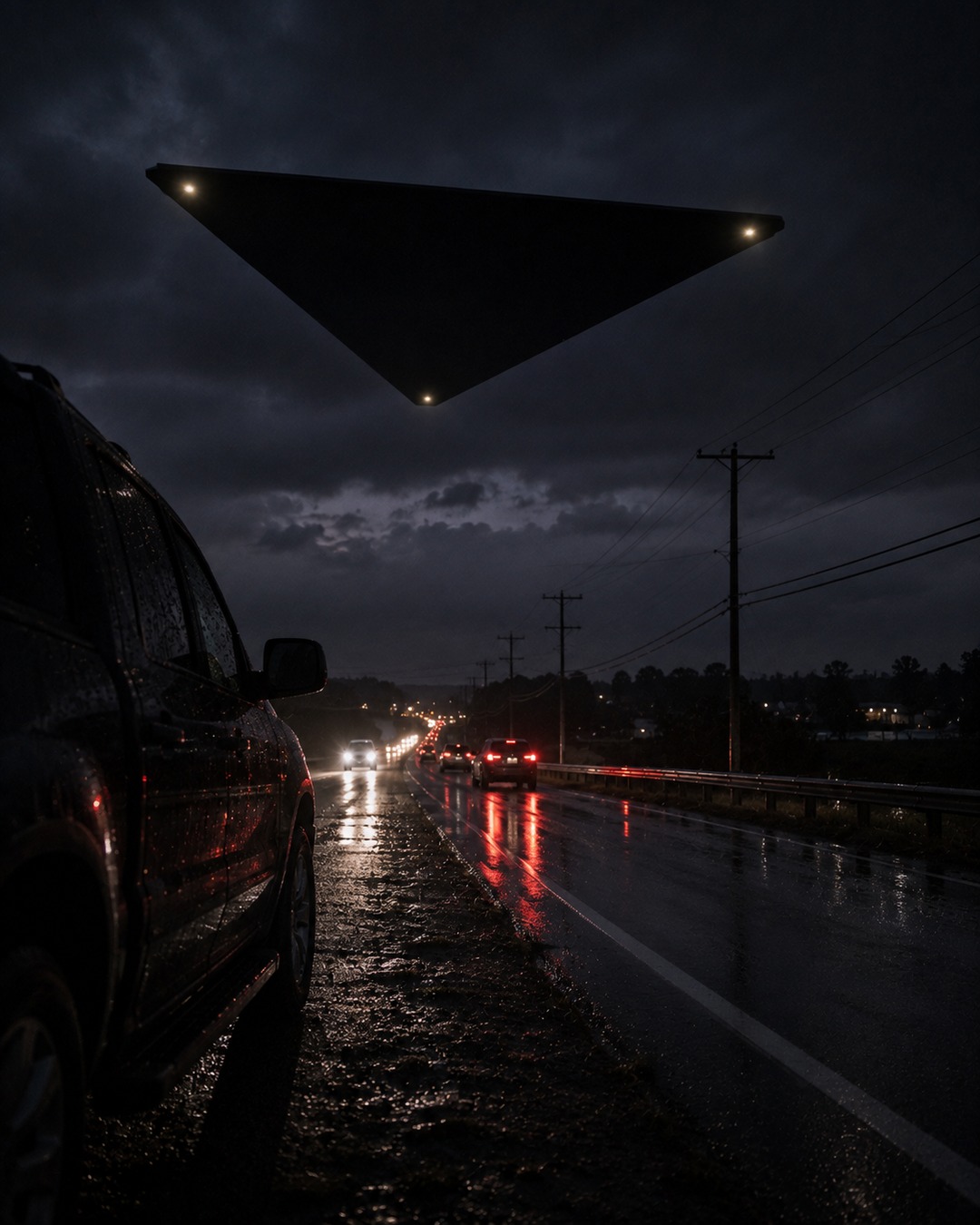
The three lights moved together over the highway, wide enough that the driver first thought they were separate aircraft. Then the space between them seemed too dark, too steady, and too quiet. By the time the lights crossed the road, the witness had one phrase for it: a black triangle.
Short answer
Black triangle UFO reports usually describe three lights, a dark triangular outline, slow movement and surprising silence. Some may involve aircraft, drones, formations, perspective, military activity, clouds, or lights seen under poor conditions. Others remain unidentified because the report lacks enough data. The black-triangle pattern is culturally important, but it is not by itself evidence of exotic technology.
What people usually report
Common details include large apparent size, low altitude, three corner lights, slow travel, quiet motion and a dark center. The dark center may be a true body, a silhouette against sky glow, or an inferred shape connecting separate lights.
Ordinary explanations to check first
Check aircraft lighting, formation flight, drones, sky conditions, road motion, windshield reflections and distance. A large triangle can be inferred when three unrelated lights appear fixed from a moving car. A quiet object may be farther away than it looks.
Why highways appear so often
Highways provide witnesses, motion, horizon lines and stress. A driver has limited time, glare, glass, speed and few stable measurements. That makes the report vivid but hard to reconstruct.
What would make a black-triangle report stronger?
Independent witnesses from different positions, video with fixed foreground references, exact time and direction, aircraft checks and consistent motion data would matter. A description of silence or size is useful, but it needs geometry.
Black triangles are not just generic UFO shapes
A black triangle report usually depends on a specific combination: corner lights, a dark center, slow motion, apparent size and silence. That combination is why the topic deserves its own guide instead of being folded into a general UFO-shapes article. The same report can involve light behavior, shape interpretation and cultural history at once.
The silence problem
Silence is one of the most repeated details, but it is also one of the hardest to evaluate. Distance, wind, road noise, aircraft direction and witness expectation all matter. A quiet object may be close and unusual, or it may be far enough that sound is delayed or masked. The report becomes stronger when the witness records environmental sound conditions instead of only saying “it should have made noise.”
Triangle reports from moving cars
Many triangle stories occur from highways because drivers look through glass while moving through changing light. A line of lights can seem to pace the car. A formation can appear fixed while the road curves. A reflection can appear in the same part of the windshield. None of that explains every report, but it belongs in the first-pass review.
Why The Black-Triangle Pattern Persists
The value of black-triangle reports is not only whether one case turns out to be extraordinary. The recurring pattern is culturally important: low, silent, dark, geometric, and often described over roads or infrastructure. The strongest reports preserve the eerie pattern while also recording geometry, timing, witness position, environmental conditions and evidence limits.
A Black-Triangle Report Checklist
The key question is whether the witness saw one solid object or three lights arranged in a triangle. If a dark body was visible, did it block stars, clouds or sky glow? If the body was inferred, did the lights keep fixed spacing while the witness moved? Was the observer driving, parked, walking or standing still?
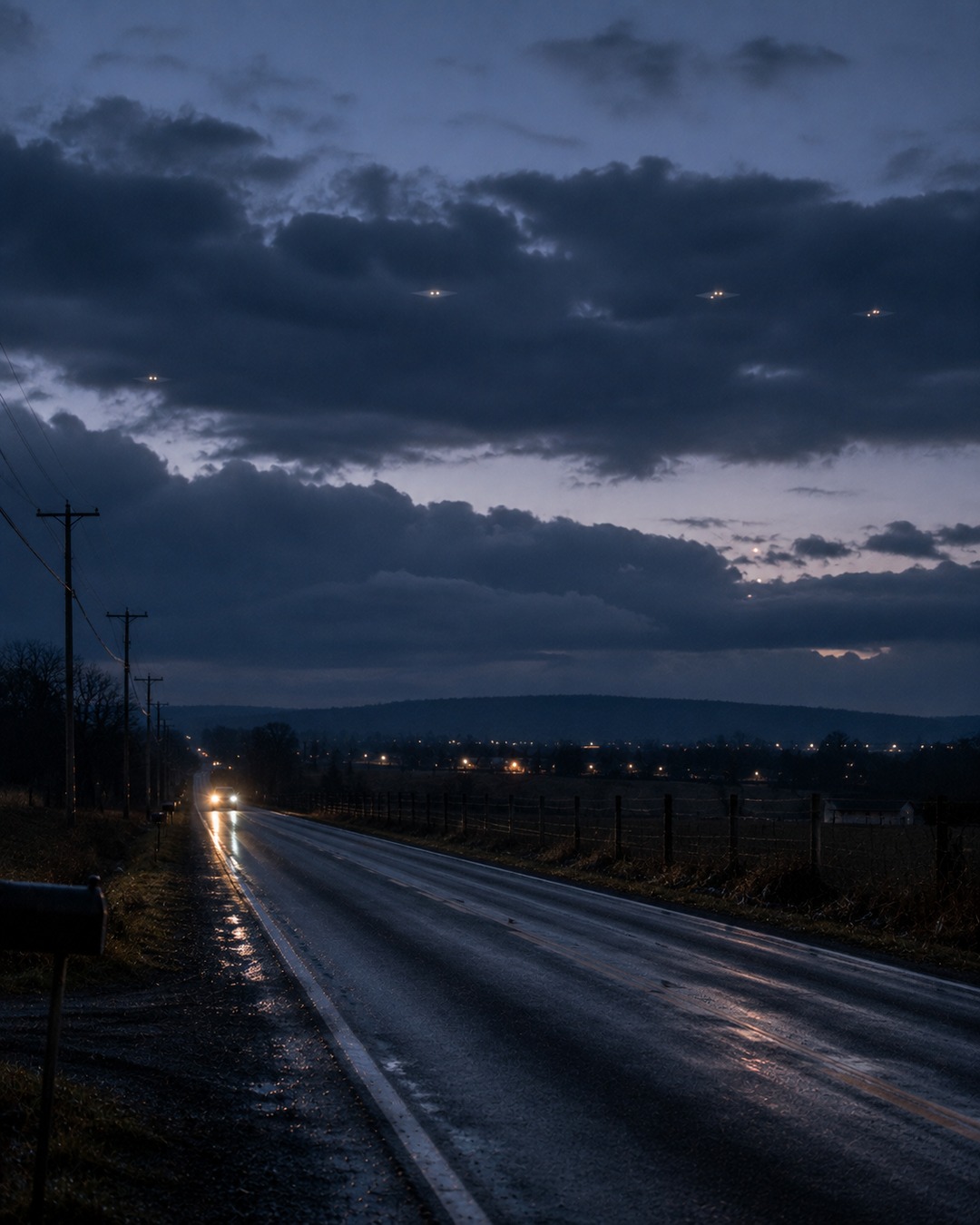
Angular size should be described carefully. A hand-width estimate at arm’s length, horizon reference, road direction and viewing duration help more than saying the object was “huge.” Sound conditions matter too: wind, traffic, distance, aircraft direction and terrain can all affect whether a witness hears anything.
What Independent Witness Positions Could Establish
Two witnesses standing miles apart can turn a story into geometry. If both record direction and elevation, the object’s approximate path or altitude may become easier to test. If one person sees three separated lights while another sees a dark body crossing stars, that difference matters. Independent positions are especially valuable for black triangles because apparent size is often the weakest part of the report.
Why Star or Cloud Occlusion Claims Matter
When a witness says the triangle blocked stars or passed in front of clouds, they are describing a potentially stronger observation than three lights alone. But the claim still needs care: sky glow, moving cloud edges and attention limits can fool the eye. The best record notes exactly where the occlusion occurred and whether other observers saw the same dark shape.
What we can and cannot say
We can say black triangles are a distinct modern UFO-report pattern. We cannot say every triangular light pattern is a craft, or that every craft-like report is nonhuman.
Related Weird Witnessed guides
- Why Ufo Lights Can Look Stationary Silent Or Impossible To Identify
- Ufo Shapes Explained Triangles Saucers Cigar Shaped Objects And Other Reports
Sources & Further Reading
- National Archives — UFO records and Project Blue Book context
- NASA — UAP independent study resources
- FAA — Pilot’s Handbook of Aeronautical Knowledge
- FAA — Recreational drone flyers