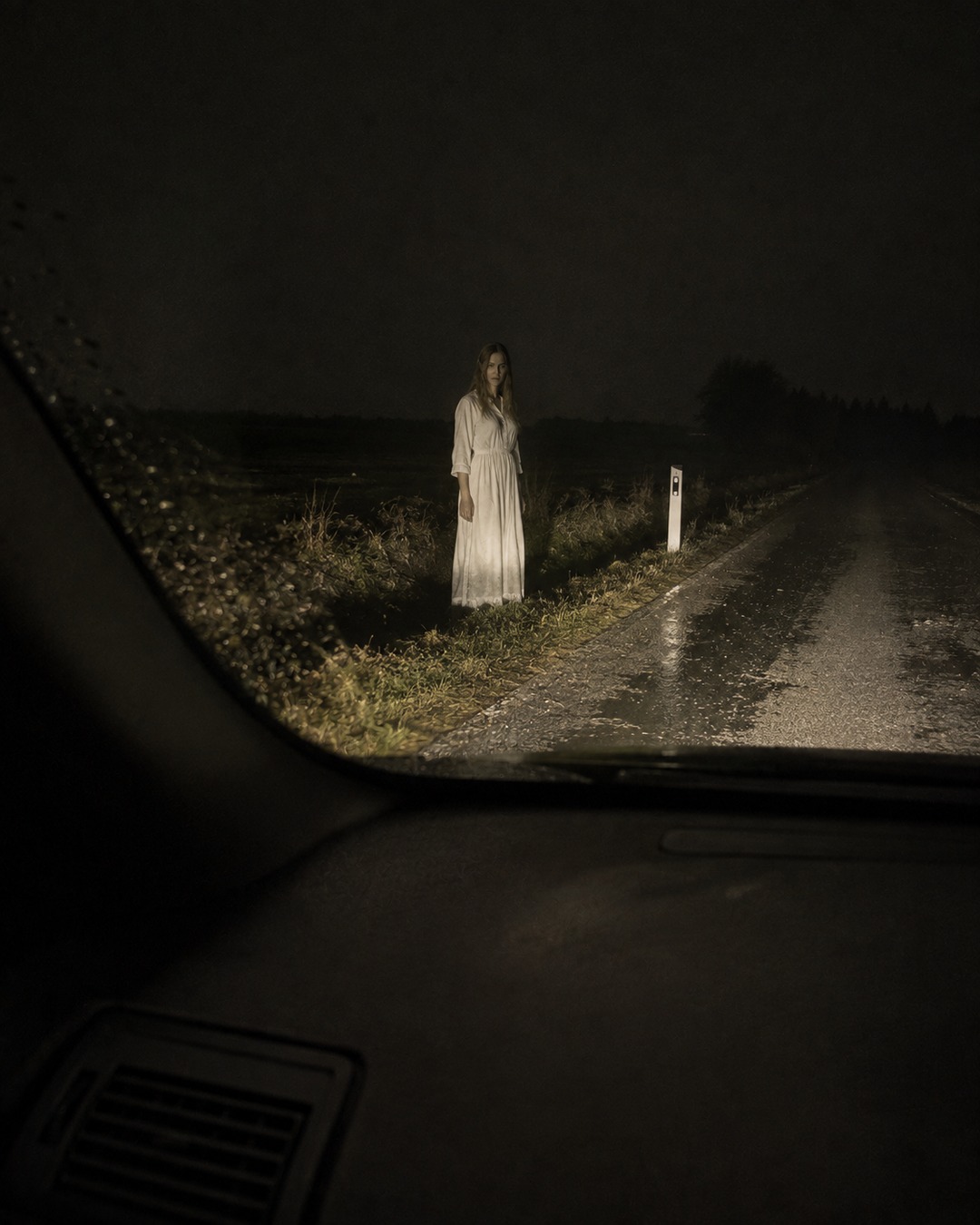
The woman was standing on the wrong side of the guardrail. A driver coming home after midnight noticed her as his headlights swept around a long country bend. She wore something pale that reached almost to the ground, and she was facing the road with her arms hanging straight beside her. There was no parked car nearby, no house light, and no safe place for anyone to have walked from. He slowed because he thought she might need help. Then he noticed the wrong detail: where her face should have been, there was only a pale blur. Not darkness, not hair covering her features. Just a smooth, washed-out patch that seemed to catch the headlights without revealing eyes, a mouth, or anything else. The driver looked forward for perhaps a second as the road tightened.
What Would Make This Report Stronger?
This account is kept live because it has a distinct scenario, but it should not be read as proof by itself. Stronger evidence would include exact timing, repeated observations, photographs from more than one angle, ordinary causes checked at the location, and clear separation between what was witnessed, what was inferred, and what was later remembered.
Possible ordinary explanations depend on the setting, but can include lighting changes, wiring or plumbing, pressure differences, reflections, vibration, building movement, animals, people nearby, camera artifacts, sleep or expectation. The reconstruction keeps the eerie premise while making the uncertainty clear.
When he looked back through the passenger window, the shoulder was empty. There was nowhere obvious for her to go. Beyond the guardrail was a steep ditch filled with weeds. Behind it stretched an open field. Stories like this appear in many places and under many names. Sometimes she is called a woman in white. Sometimes she is a vanishing hitchhiker, a roadside ghost, or simply "the woman by the road." So why does this same frightening image keep appearing? Why the woman in white is usually seen at night. Roads create unusually good conditions for frightening mistakes. At night, a driver sees the world through a narrow moving tunnel of headlights. Everything outside that tunnel becomes incomplete. Trees appear and disappear. Reflective objects flare brightly.
Fog can erase the background while leaving something closer to the road strangely clear. The driver is also moving. That matters because there may be only a few seconds to decide whether a pale object beside the road is a person, a sign, a bag caught on vegetation, or something else entirely. Human vision is extremely interested in human shapes. A vertical pale object with something resembling a head and shoulders can become "a woman" before the driver has enough detail to identify what is actually there. A white dress makes the classic story especially effective because pale material reflects headlights well. A dark figure might disappear against trees. A light figure can suddenly emerge from black surroundings. But mistaken identity does not explain the whole tradition.
The First Detail People Remember
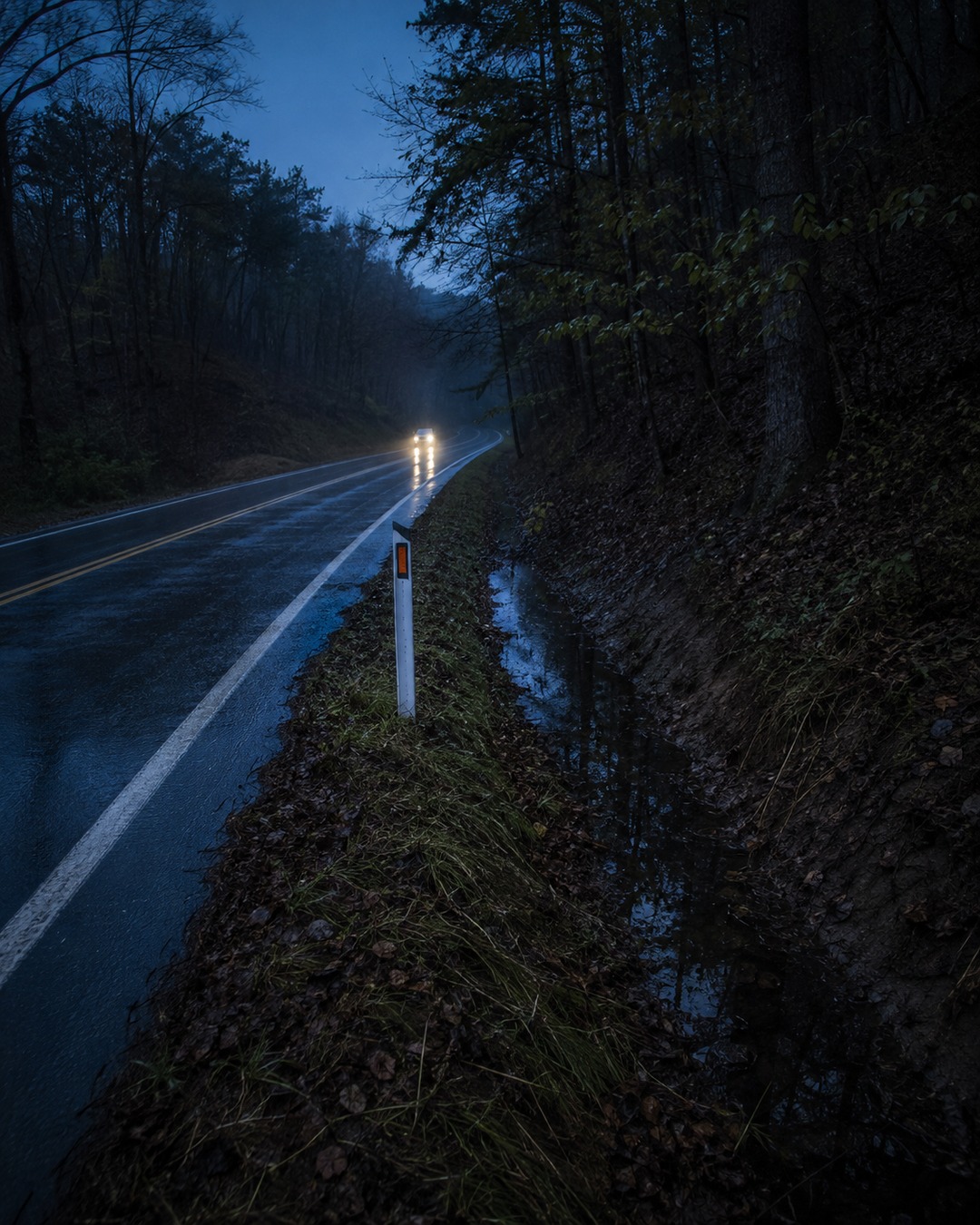
People have been telling stories about pale women appearing beside roads, bridges, paths, rivers, and dangerous crossings for generations. Modern highways simply provide a new stage for an older image. And once the figure is recognized as a person, another instinct takes over. Someone standing alone beside a road at 1 a.m. looks like someone who might need help. That forces the witness to pay attention. Why she is often waiting near a. Bend, Bridge, Or Empty Stretch The location is rarely emotionally neutral. Woman-in-white stories tend to feel strongest on roads where stopping would already make someone uncomfortable: isolated lanes, wooded curves, old bridges, mountain roads, stretches beside fields, and places far from houses. Part of this is practical. Darkness and isolation make ordinary objects harder to identify.
But the road itself also gives the story a natural structure. You are approaching something. You have only seconds to understand it. You pass it. Then you have to decide whether to turn around. That sequence creates tension almost automatically. Curves make it stronger because headlights reveal the roadside gradually. A pale figure can appear suddenly when the beam reaches the shoulder. Bridges and steep embankments add another disturbing question: where could the person have come from? If someone is standing beside a convenience store, there are dozens of normal explanations. If someone appears halfway across a lonely bridge with no sidewalk, the situation feels wrong before anything supernatural happens. Older ghost traditions also frequently connect pale women with places of transition: roads, crossroads, riverbanks, bridges, and paths between settlements.
Those are places where people arrive, leave, disappear from sight, and pass from one area into another. A roadside ghost fits naturally into that older pattern. She is not usually described as chasing the car. She is waiting where people pass.
Why The Scene Feels Wrong
The most unsettling woman-in-white stories usually contain one detail that makes the figure clearly unlike an ordinary stranded pedestrian. Often, it is the face. A driver may describe seeing the dress, arms, hair, or general shape clearly enough to believe a woman is standing there, yet being unable to make out normal facial features. Sometimes the face appears blurred. Sometimes it seems unnaturally pale. In other versions, the witness says the head was turned toward the vehicle but no eyes or mouth became visible even when the headlights reached it. This detail matters because faces are normally the first thing we use to understand another person. Is she frightened? Hurt? Angry? Looking at me?
Remove that information and the brain is left with the shape of a person without the social signals that make a person understandable. There are normal reasons this can happen. Bright headlights can wash out pale features. Hair can hide a face. Distance destroys small details. Rain on a windshield can distort a head while leaving the larger body shape recognizable. Fear can also change memory. A witness who saw something confusing for two seconds may later remember the broad shape more confidently than the tiny details. But the faceless version survives because it creates a particularly strong contradiction. The witness sees enough of a woman to stop thinking "object." Yet not enough of a woman to feel certain she was human. What drivers usually check after passing. Her
What Witnesses Usually Check First
The first reaction is often surprisingly ordinary. Drivers check the mirrors. They look for brake lights from another vehicle. They search for a driveway they missed. They wonder whether the woman was walking toward a nearby house. Some turn around. That is where many roadside ghost stories reach their most famous moment. The driver returns to the same section of shoulder and finds nobody there. On an ordinary road, disappearing quickly is not difficult. Someone can enter a driveway, walk behind vegetation, descend an embankment, or simply become invisible once the headlights move away. Distance is also deceptive at night. A person who seemed to be standing beside one tree may actually have been much farther away. Drivers sometimes misremember the exact spot as well, especially after traveling several hundred meters before deciding to return.
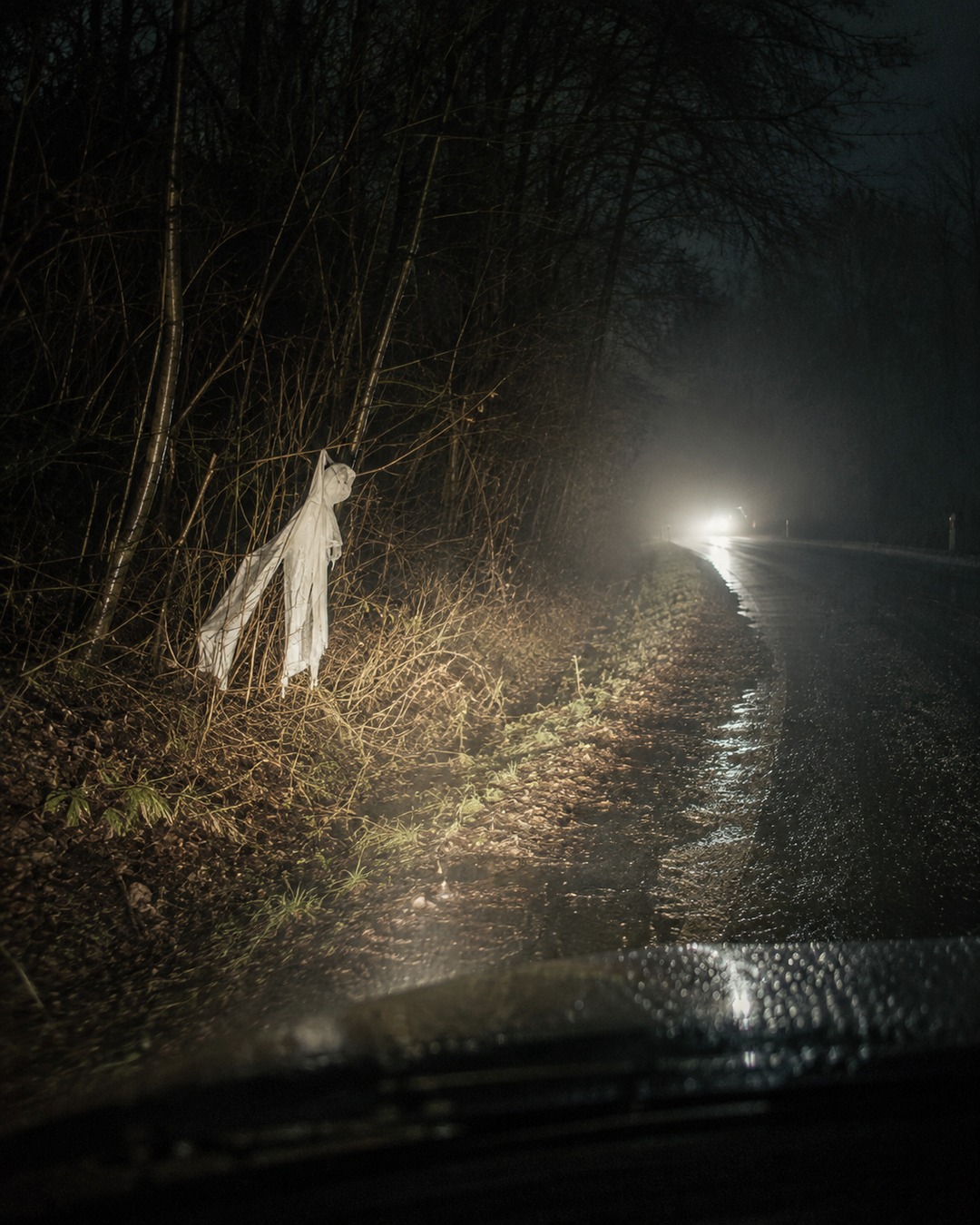
Still, certain versions become harder to dismiss immediately. Imagine a straight stretch bordered by an open harvested field. The shoulder is visible for hundreds of meters. A pale woman is standing beside a reflector post. The vehicle passes. The passenger turns around almost immediately. The reflector post is still there. The woman is not. That does not automatically make the figure a ghost. But it explains why the story survives the drive home. The ordinary things that can look like a roadside ghost. Many woman-in-white sightings probably begin with completely normal things.
The Ordinary Explanations That Come Up
Fog is an obvious culprit. Headlights striking a narrow patch of mist can create a bright upright form that changes shape as the vehicle approaches. Plastic sheeting can be even more convincing. A large pale bag or piece of fabric caught on a bush can create the appearance of a dress. Wind supplies movement. Branches can suggest arms. A dark clump above it can look like hair. Reflective road materials produce stranger effects. Signs, marker posts, pale tree trunks, memorial decorations, and construction materials can flare brightly while their surroundings remain almost invisible. Animals can contribute too. A deer partly hidden by vegetation may briefly create a tall shape that becomes difficult to reconstruct afterward. Then there are actual people.
Someone walking home, leaving a broken-down vehicle, crossing between properties, or standing near the road can seem inexplicable when the driver never sees where that person came from. Sleepiness deserves special attention. Late-night driving combines darkness, repetitive motion, fatigue, and brief visual information. A tired brain can turn uncertain shapes into familiar ones very quickly. There is even a common experience in which exhausted drivers briefly perceive people, animals, or obstacles that disappear when they focus on them. That is a strong reason to treat a strange roadside figure first as a driving-safety problem, not a paranormal puzzle. Slow down safely. Stay in control of the vehicle. Do not stare at the shoulder instead of the road. Whatever the figure is, a real crash is the greater danger.
The strongest stories are not simply "I saw something white." They include details that remove some easy explanations. Two people in the same car may independently notice a human-shaped figure.
The Detail That Keeps The Story Alive
The figure may appear clearly separated from nearby bushes. It may remain visible as the car approaches instead of resolving into a sign or plastic. The witnesses may see a head, shoulders, arms, and a long pale garment. Then something happens that does not fit their expectation. Perhaps the woman seems partly transparent when the headlights brighten her. Perhaps her feet cannot be seen even though the road surface beneath her is visible. Perhaps she appears to be facing the car while her posture remains unnaturally rigid. Or the car passes close enough that the passenger turns immediately and finds an empty shoulder. None of these details can establish what was there after the fact. Memory is not a perfect recording. Two witnesses can influence each other.
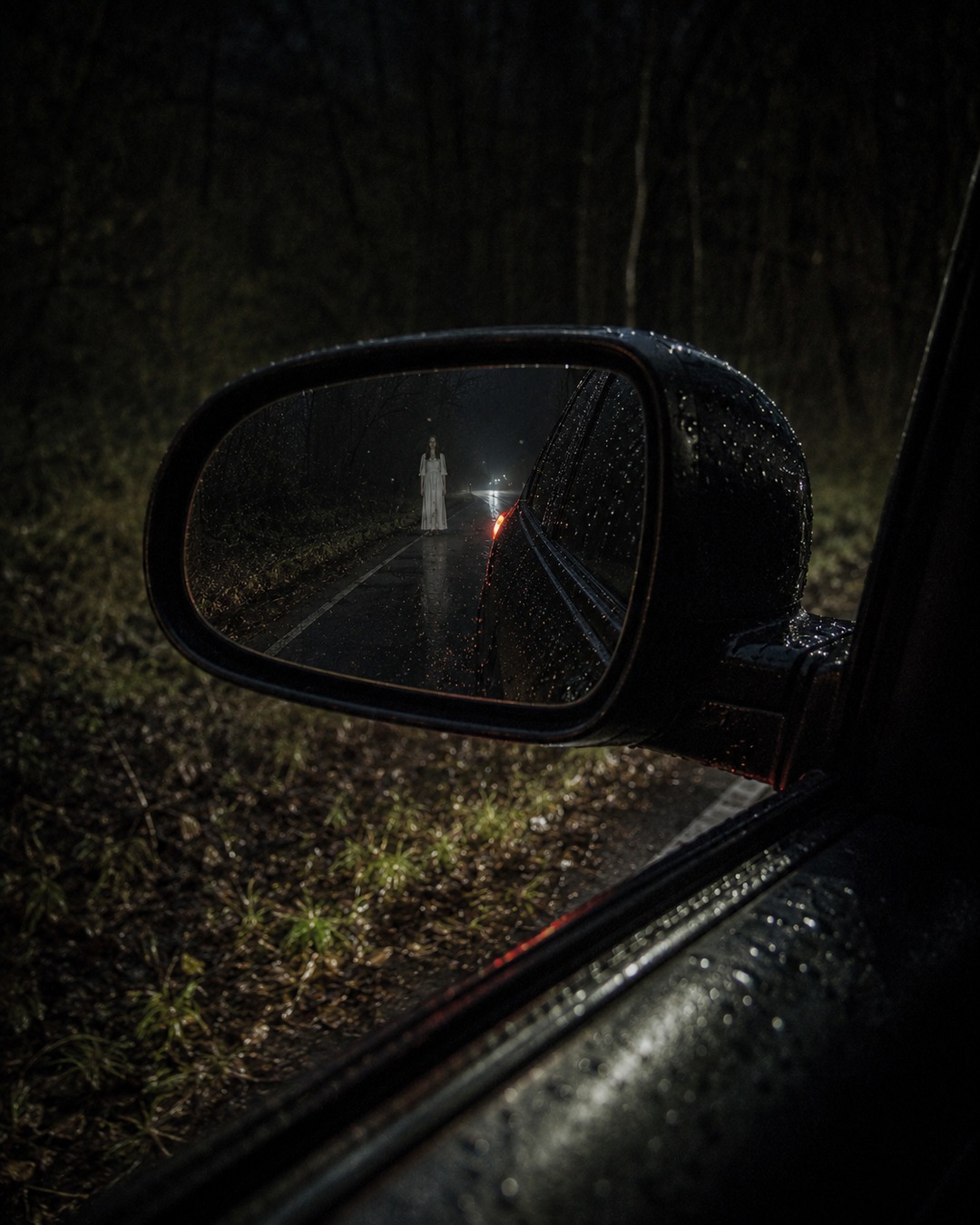
Darkness hides escape routes that look obvious in daylight. But these are the details that separate a forgettable roadside mistake from a story someone repeats for twenty years. The question changes from "What did I see?" It becomes "How did I see it that clearly and still not understand what it was?" That uncertainty is the engine of the woman-in-white story. Why the same ghost appears in so many different places. There is no single woman in white tradition shared identically by every culture. Instead, many places have their own versions of pale female ghosts connected with grief, death, lost travelers, water, abandoned roads, or people who never reached home. The details change.
Why People Retell This Version
One road may have a story about a bride who died before her wedding. Another may tell of a woman searching for a child. Somewhere else, drivers may be warned about a silent hitchhiker who accepts a ride and disappears from the passenger seat. These stories often become attached to real dangerous locations. A sharp curve already associated with crashes is almost designed to collect ghost stories. So is an old bridge, a road beside a cemetery, or an isolated route locals have driven for generations. Once a local story exists, later experiences gain a ready-made shape. Someone glimpses something pale. They tell a friend. The friend says, "You know what people say about that road, right?" Now the frightening two-second experience has a name. This does not mean witnesses are deliberately copying folklore.
Stories influence how people interpret confusing experiences without anyone deciding to invent anything. A person who has never heard the local legend might say, "I thought I saw a woman." Someone who already knows it may think, "I saw her." That difference is small, but powerful. Why people remember her for years. Most strange things seen from a moving car are forgotten. A confusing shadow becomes a tree. A distant light becomes a tractor. Something beside the road looks human until the car gets closer, and then everyone laughs because it was a mailbox covered with snow. The woman in white is different when the experience never reaches that final stage. There is no satisfying correction. The driver sees the woman.
What Makes The Question Linger
The car gets closer. She still looks like a woman. Then the driver passes her, looks back, and she is gone. The brain dislikes unfinished events, especially frightening ones. Without a clear ending, the memory gets revisited. Each replay centers on the same questions. Where was her car? Why was she dressed like that? Why couldn't I see her face? Where could she have gone? And perhaps the most uncomfortable question. Why did she seem to be watching the car before the headlights even reached her? There may be a normal answer to any individual roadside sighting. Darkness, fatigue, reflections, weather, real pedestrians, and memory can create remarkably convincing experiences. But that does not make the woman in white a weak ghost story. It explains why she is such a durable one.
A road at night already reduces the world to what your headlights allow you to see. Everything appears for a moment and then disappears behind you. Put a pale human shape at the edge of that light, make one detail unmistakably wrong, and the driver is left with only seconds to decide what they are looking at. Sometimes the road provides an answer. Sometimes the headlights move on before it does.