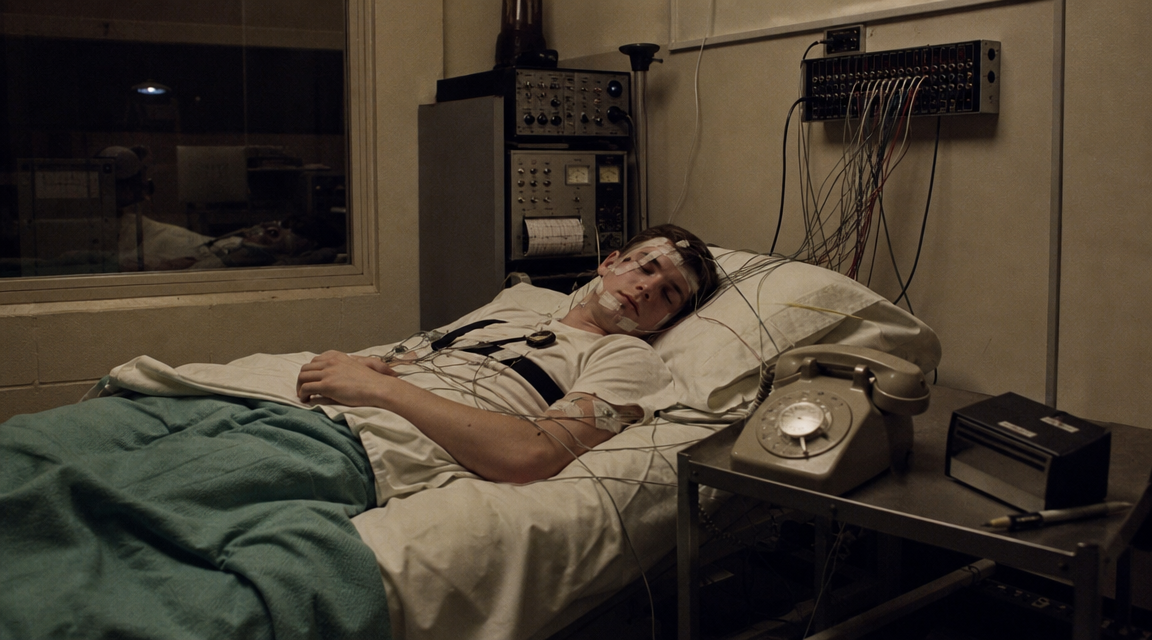
The telephone was supposed to be dead.
That was the point of placing it beside the bed. It looked familiar enough to enter a dream, but it was not connected to any active line, switchboard, or outside caller.
In the surviving accounts of a small 1983 university sleep study, that detail is repeated with unusual care. The phones were props, not instruments. They were there to be seen before sleep and described after waking.
Then, according to the story that followed the project, the phones began ringing during the dream reports, and the laboratory call logs began showing extension numbers that did not belong to the university.
A Modest Study With an Odd Prop
The study was reportedly run through a psychology department that still had a small parapsychology group attached to it, though not always proudly. By 1983, that work was already becoming difficult to defend in committee meetings.
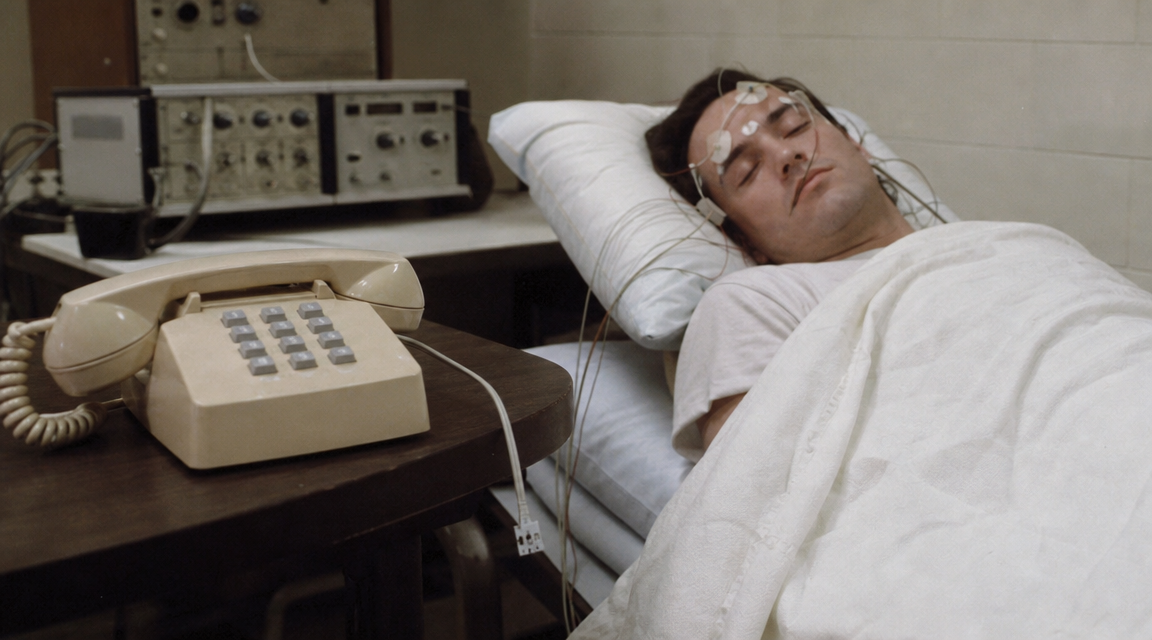
The proposal was not extravagant. Volunteers would sleep in a monitored room with an old telephone on the bedside table. Before lights-out, they were told the phone was part of the setting, not a device they had to answer.
Researchers hoped the image of the telephone might appear in dreams. If it did, the subject would be awakened during a rapid-eye-movement interval and asked for a report.
The problem was that telephones are not neutral objects. They imply interruption. They imply someone on the other end.
Why Disconnected Phones Were Used
The phones had to be disconnected for a simple reason: contamination.
A real ring would ruin the test. It would wake the subject, influence the report, and give skeptics an easy explanation for any dream involving a call. So the instruments were described as physically isolated from the campus exchange.
Some versions say the cords were cut. Others say the handsets and bases were intact, but the wall jacks were inactive and checked before each session. The surviving descriptions are not consistent.
What remains consistent is the rule: no phone in the sleep room was supposed to receive a call.
That rule is what makes the later claims interesting. Not because they prove a haunting, or telepathy, or messages from dreaming minds, but because they describe a controlled object behaving like an uncontrolled one.
A disconnected phone that rings is either not disconnected, not ringing, or not being described accurately.
The First Ring in the Report
The first strange entry reportedly happened during a routine awakening.
A volunteer was brought out of REM sleep and asked to speak into the recorder. The subject described a kitchen, a ringing phone, and a refusal to pick it up because the ring sounded “too close.”
While the subject was speaking, someone in the observation room reportedly heard a short metallic ring from inside the sleep room.
It was not a full telephone call. No long sequence of bells followed. The sound was one clipped burst, enough for the technician to look up from the console and ask whether the bedside unit had moved.
The subject did not remember hearing the real sound while awake. On the tape, according to a later summary, there is only a pause, then the volunteer continuing in a lower voice.
That would be easy to dismiss as equipment noise if it had happened once.
The Call Logs That Did Not Fit
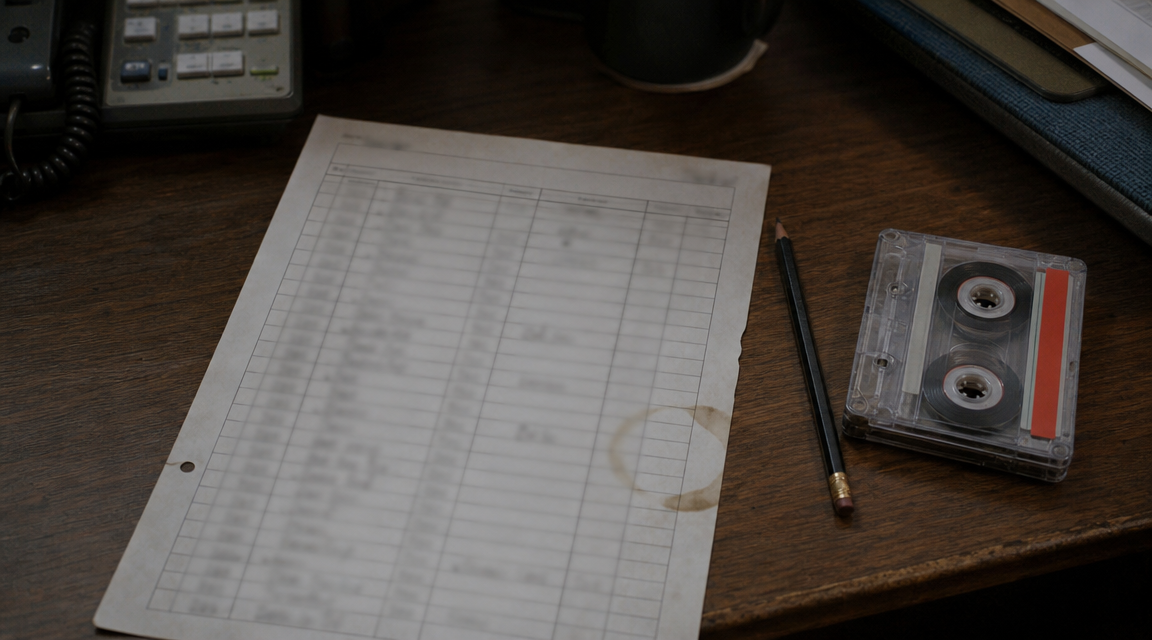
The university telephone system reportedly generated internal records for maintenance and billing. They were not designed for paranormal investigation. They were ordinary administrative documents.
After the second or third unexplained ring, a staff member is said to have requested logs for the sleep laboratory area, mainly to check whether an active extension had been overlooked.
That was when the extension numbers entered the story.
Several entries allegedly appeared around session times. They showed calls routed toward, or through, the laboratory block from extensions that could not be assigned to offices, dormitories, clinics, or service closets.
This made them easier to search and harder to dismiss as random calls.
A mundane error is possible. Phone systems mislabel traffic, technicians reuse ranges, and old switchboards can preserve ghosts of former assignments in ways that seem stranger than they are.
But the study’s defenders later emphasized one point: the questionable extensions were not merely unfamiliar. They were recorded as impossible under the numbering plan in use.
What the Volunteers Reported
The dream reports were uneven, as dream reports usually are.
Some volunteers never mentioned the telephone. Others treated it as furniture. A few remembered trying to dial numbers and being unable to push the buttons correctly, which is ordinary dream logic rather than evidence of anything.
The more troubling reports involved incoming calls.
One subject described a phone ringing from under the bed, though the prop was on the table. Another dreamed of answering and hearing only breathing. A third reportedly said, “It is ringing for the room, not for me.”
That sentence appears in several retellings. It may be exact, or it may be a copied summary that became sharper with repetition.
Caution matters here. No complete packet of original transcripts has circulated publicly. Still, the pattern explains why the room began to feel less like a laboratory and more like a place waiting for a call.
The Night Staff Stopped Laughing
The atmosphere changed after an incident near the middle of the run.
A volunteer was asleep, the telephone was on the bedside table, and the observation team was watching the usual readouts. The subject entered REM sleep. Before the scheduled awakening, the phone reportedly rang twice.
Both rings were heard in the observation room. The technician entered immediately, expecting to find a prank, a crossed line, or a hidden alarm in the unit.
The phone was still disconnected.
The volunteer woke badly, not in terror, but with the confused irritation of someone interrupted. Their report was brief. They said they had been in a hallway where many doors were labeled with numbers, and one door kept ringing from the other side.
A call log entry for that approximate time allegedly showed another invalid extension.
If the account is accurate, this was the point at which the study stopped being funny even to people who did not believe in it.
Why It Was Shut Down Quietly
There is no dramatic record of a dean denouncing the project or a board sealing the files.
The quiet ending is more believable. Small studies disappear all the time. Funding is redirected. Supervisors retire. A project becomes embarrassing, inconclusive, or administratively inconvenient.
A parapsychology-adjacent sleep study in 1983 would not need a scandal to be ended. It only needed results that could not be published cleanly.
If the rings were caused by wiring faults, the study design was compromised. If the rings were not caused by wiring faults, the evidence would require stronger controls than the project had. Either way, the original experiment was finished.
The reported solution was practical. The telephones were removed, the remaining sessions were canceled or redesigned, and the project stopped appearing in departmental scheduling notes.
No public announcement was necessary. The disappearance became part of the story because it was so ordinary.
The Best Non-Paranormal Explanation
The strongest skeptical explanation is infrastructure.
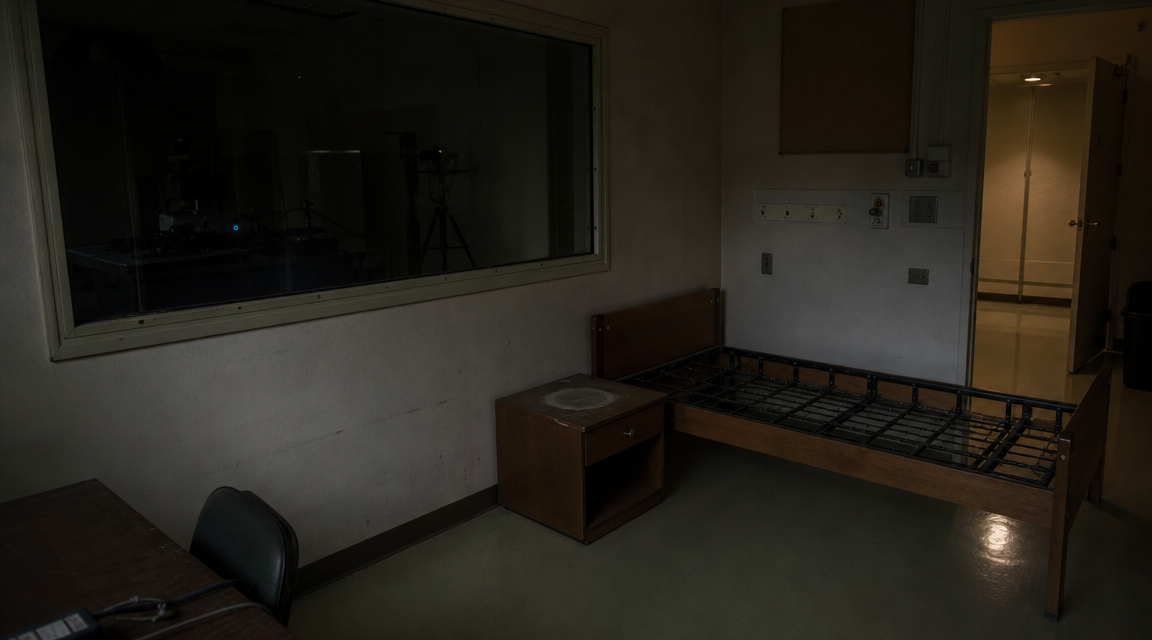
University telephone networks in the early 1980s were messy systems layered over years of repairs and forgotten changes. A disconnected-looking phone might still have had a pathway through a jack, test circuit, induction effect, or maintenance bridge no one in the psychology department understood.
The logs may also have been less authoritative than they appeared. Invalid extensions could have been diagnostic codes, temporary technician identifiers, truncated numbers, or artifacts from equipment that failed to classify traffic correctly.
Even the rings may have been misidentified. Sleep laboratories are full of small mechanical sounds: relays, recorders, ventilation, carts in corridors, and intercom clicks that seem louder at night.
That explanation is responsible.
But it does not erase the unease. The rings reportedly clustered around dream reports involving telephones, and the invalid extensions gave staff a paper trail where they expected only a wiring mistake.
Coincidence can feel deliberate when it arrives with paperwork.
What Remains in the Archive
The 1983 telephone dream study survives mostly as a partial archive rumor: references in correspondence, secondary summaries, and the memory of a project that ended before it became a formal paper.
That makes it fragile evidence. It also makes it a typical university mystery.
Institutions do not have to hide everything for something to vanish. They only have to stop caring. Boxes move. Tapes degrade. Graduate students leave. A study without a clean conclusion becomes a folder with an awkward label.
The most honest version is therefore cautious. A sleep lab placed disconnected phones beside volunteers. Staff allegedly heard rings. Administrative logs allegedly recorded impossible extensions. The project was then dropped quietly.
None of that proves the phones received calls from dreams, from the dead, or from anywhere outside the campus exchange.
It proves something narrower and more unsettling: a controlled experiment was interrupted by the signal it was built to exclude.
That is why the story lingers. The phone did not deliver a message anyone could quote. It did not reveal a voice, a warning, or a name.
It simply rang where it should not have rung, and then the university stopped asking it to do so.
Reader Context
This Weird Witnessed story is an editorial reconstruction, written as eerie visual storytelling rather than a verified report. For more context, see How to Read Weird Witnessed Stories and How WeirdWitnessed Creates Reconstructed Horror Stories.