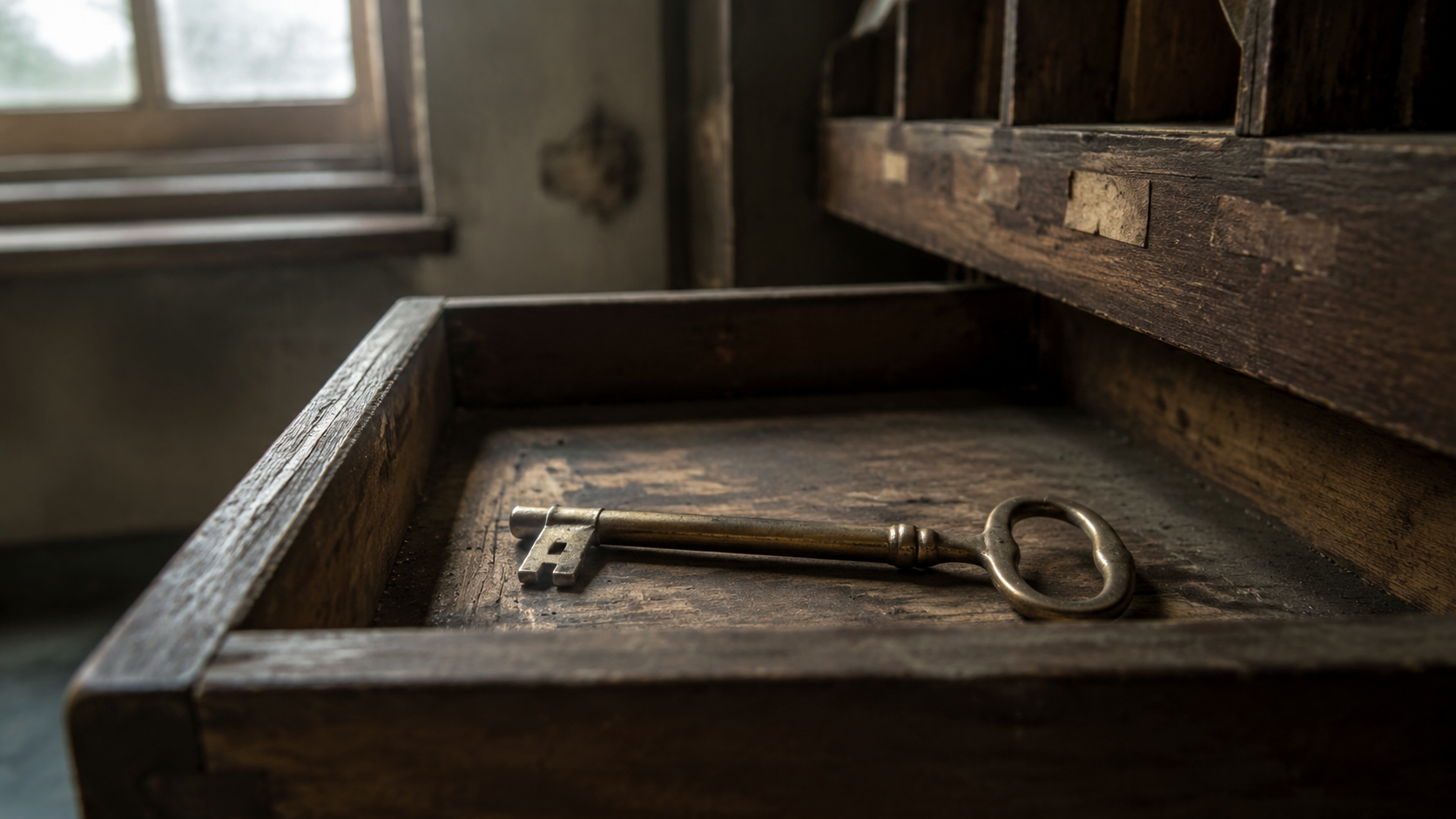
A Drawer That Should Have Been Empty
The key was found during the kind of cleanup nobody expected to remember. In 2019, a former post office building in a small Midwestern town was being emptied before renovation. The retail counter had been gone for years. The sorting cases were stacked against one wall. Most of what remained was ordinary debris: hardened rubber bands, blank change-of-address cards, cracked trays, and a drawer full of pencil stubs.
At the back of that drawer, under a sheet of brown shelf paper, was a heavy brass key.
It did not look like a house key or a padlock key. It had a long shank, a broad bow, and the squared confidence of institutional hardware. One side was stamped with a small postal-style serial mark, worn but still visible. To the man clearing the drawers, it looked like something important that had been misplaced.
That was the first odd thing. The building had already been through two formal cleanouts.
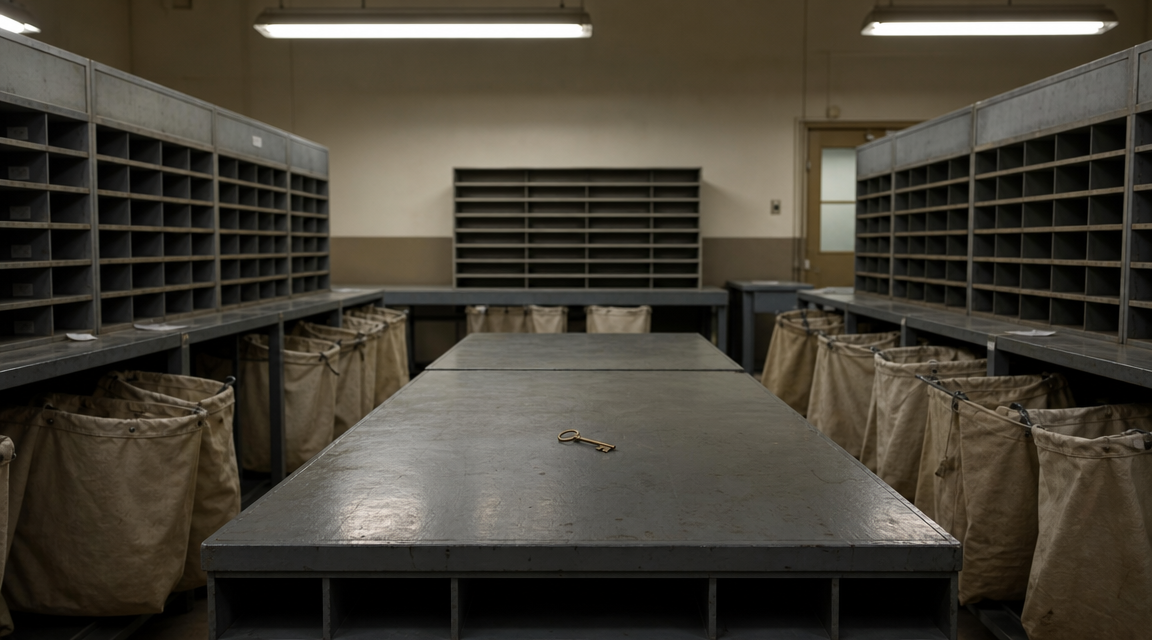
A Master Key With No Master
The key was assumed to be a master key for the old postal boxes in the lobby. That would have made sense. Older post offices often had specialized keys for service panels, rear access doors, package lockers, and internal cages. Some were kept for decades after the locks they served had been replaced.
The renovation crew tried the obvious places first. The key did not turn in the lobby boxes. It did not fit the rear delivery door, the old cage lock, the basement storage room, or the cabinet where registered mail forms had once been kept. A locksmith called it real, not decorative, but said its cut matched no lock still present.
That did not make it paranormal. Old keys outlive their locks all the time. Buildings change hands, doors are swapped, cabinets are thrown away, and the orphaned keys remain.
For days, the explanation seemed dull enough to be true.
The First Photograph
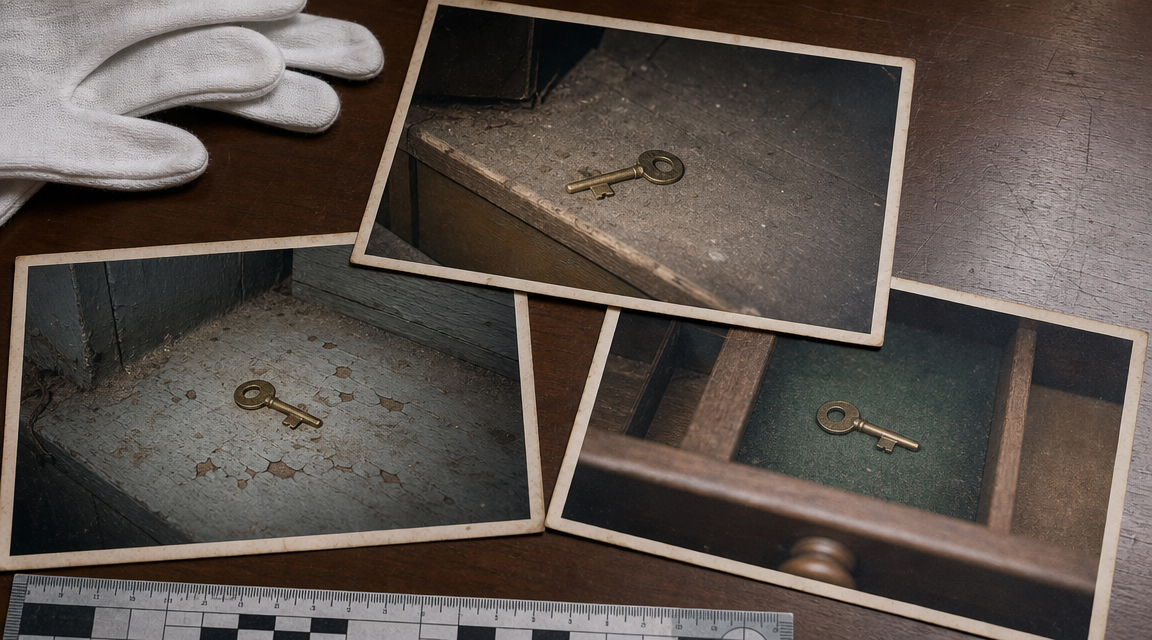
The story changed when a volunteer archivist began sorting through a box of municipal records stored at the old library. Among the papers were color inventory photographs taken in 2011, shortly before the post office moved to a newer building. They were not artistic photographs. They showed shelves, drawers, counters, and equipment from the old site, each image meant to document what was being removed or left behind.
In one photo, the brass key was visible on a sorting table.
It was not subtle once someone pointed it out. The same broad bow, same long shank, same dark stain near the shoulder. It lay beside a coil of twine and a stack of empty mail trays. The 2011 photo had been taken eight years before the key was found in the drawer.
At first, everyone assumed the photo simply proved that the key had been around for a long time. But that raised a small problem. The drawer where it was found had been photographed in the same 2011 inventory, and it was visibly empty except for office supplies.
The key was not in the drawer then.
The Second Photograph
A second image came from 2015, when the town's historical committee photographed the building while discussing whether to preserve the old postal boxes. Those pictures were informal, taken with a phone and saved in a shared folder.
In one of them, the key appeared on top of a metal cabinet in the back room.
The cabinet was not near the drawer. It had been sold before the 2019 cleanup. Yet the key in the 2015 image looked identical: same proportions, same dull yellow brass, same notch pattern as far as the low-resolution photo allowed.
This was where the sensible explanations began to split. One person suggested there were multiple keys from the same batch. Another suggested the found key had been moved casually over the years by different volunteers, appearing wherever someone last set it down. A third noted that the building had been unlocked for committee visits, contractor estimates, and occasional storage access. Plenty of hands could have touched it.
Those explanations were reasonable. They also did not explain why no one remembered the key.
The Third Photograph
The third photograph was the hardest to dismiss. It came from a 2007 insurance walk-through after a roof leak damaged the rear ceiling. The image was grainy, but it showed the same sorting room from another angle. Near the bottom edge, partly cut off, was the brass key.
This time it was hanging from a nail on a wooden partition that had been demolished in 2012.
The 2007 image placed the key in the building at least twelve years before its rediscovery, and in a location that no longer existed. More importantly, it suggested that the key had been visible to maintenance workers, postal staff, insurance inspectors, preservation volunteers, and contractors over a long period. Yet it had never been listed by name, labeled, tagged, or matched to a purpose.
Objects in institutional buildings usually become anonymous through neglect. This key remained specific while refusing identification.
What The Records Said
The town had no complete hardware history. Few towns do. There were receipts for paint, roof work, window replacement, and electrical repairs. There were minutes about relocating postal services. There were no surviving lock schedules, box-system diagrams, or master key lists.
A retired clerk remembered a ring of service keys kept behind the counter. She remembered which key opened the rear door, which opened the parcel locker, and which one stuck unless you lifted the knob. She did not remember a brass key like this one.
Another former employee thought it might have belonged to a mail collection box outside the building. That was tested against a similar old lock kept by a collector in the county. It did not fit.
The locksmith who examined the key later said the cut was unusual but not impossible. It could have been for a cabinet, a private postal box system, a safe deposit compartment, or a lock that had been removed decades earlier. He would not call it mysterious. He called it unsupported.
That is a better word than haunted.
Why The Photos Matter
A lost key is common. A key with no known lock is common. A key that appears in three unrelated record sets, in three different places, over twelve years, without ever becoming part of the official inventory is less common.
The photographs do not prove the key moved on its own. They prove something quieter and stranger: the key was repeatedly seen without being noticed.
In each image, it sits in the margin of attention. It is not centered, labeled, or held up for documentation. It is background clutter. Only after the physical key was found did the earlier images become meaningful. Before that, they were ordinary records of an ordinary room.
That is often how strange objects gather force. Not through a single dramatic event, but through delayed recognition. A thing becomes uncanny when the record shows it was present before anyone knew to look for it.
The key did not announce itself. The archive did.
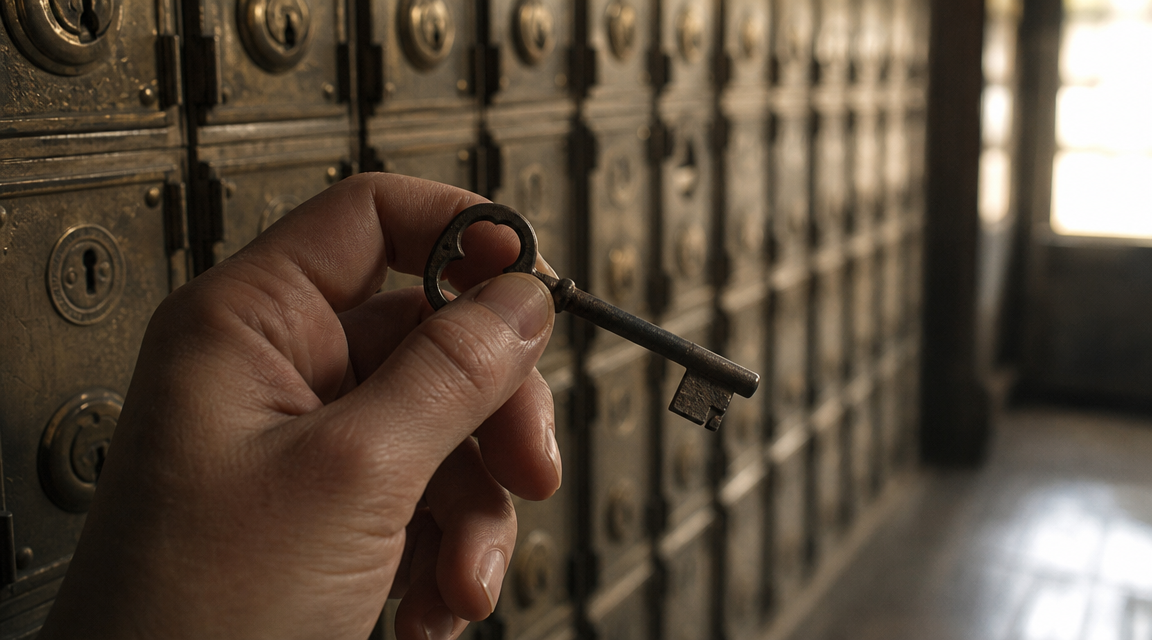
Theories That Almost Work
The simplest theory is duplication. Perhaps there were several identical keys, all cut for the same old system. One was photographed in 2007, another in 2011, another in 2015, and one ended up in the drawer. That would reduce the mystery to mistaken identity.
But the stain near the shoulder appears in all three photographs. It may be a coincidence of shadow or corrosion. It may also be the same stain.
Another theory is ordinary human movement. Someone found the key in 2007, hung it on a nail, later moved it to a table, later set it on a cabinet, and finally tucked it into the drawer. That is plausible. It requires no hidden mechanism. It only requires that everyone who handled it forgot doing so.
A third theory is that the key once opened a lock no longer associated with the building at all. Postal furniture moves. Doors are salvaged. Old lock cores are discarded. A key can remain behind after its purpose has been carried away.
This may be the most likely answer. It is also the least satisfying, because it leaves the key doing exactly what made it unsettling in the first place: surviving without context.
The Object Today
The key is now kept in a small archival envelope by the local historical committee, along with printed copies of the three photographs. It is not displayed as a supernatural artifact. The committee's note is careful: unidentified brass key, found in former post office drawer, visible in earlier inventory images.
That restraint is part of why the case lingers.
Too much certainty would flatten it. If someone declared it magical, the story would become easier to reject. If someone found the missing lock, it would become easier to file away. Instead, it remains in the middle distance: documented, physical, mundane, and oddly resistant to closure.
The old post office has since been renovated. The drawers were removed. The sorting room became office space. The nail, the cabinet, and the table from the photographs are gone.
The key is still there, in a sense. Not opening anything. Not proving anything. Just appearing, again and again, wherever the records happen to look.
Reader Context
This Weird Witnessed story is an editorial reconstruction, written as eerie visual storytelling rather than a verified report. For more context, see How to Read Weird Witnessed Stories and How WeirdWitnessed Creates Reconstructed Horror Stories.