A Glasshouse That Never Quite Emptied
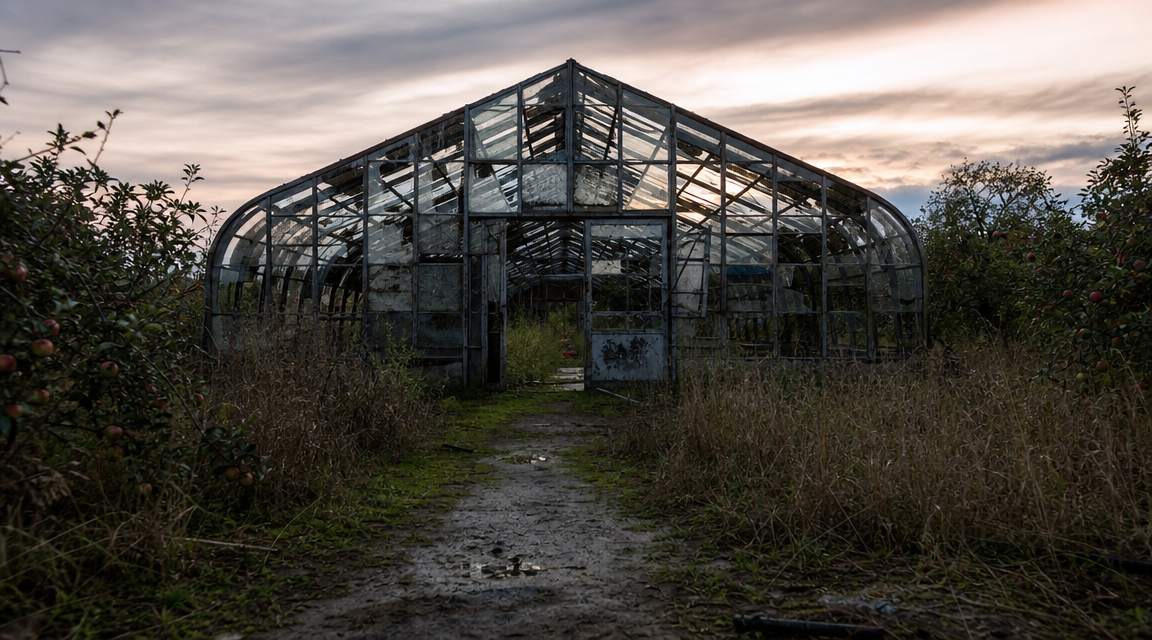
The old glasshouse at Larkmere Orchard does not look theatrical from the lane. It is a long, low structure of milky panes, rusted ribs, and nettles pressing through the broken door.
Most abandoned growing houses have the same tired mood. They smell of wet soil, metal, and leaves that have forgotten their season. Larkmere is different only in the way people talk after visiting it: not as if they saw a figure, but as if someone had just stood up.
That distinction matters. The stories attached to this place are not grand apparitions or violent legends, but small domestic disturbances: a chair turned toward a different row, a pane touched from the inside, and condensation shaped like a seated body.
Those details are why the glasshouse has kept its local reputation. It behaves less like a haunted ruin than like an occupied room whose occupant does not care to be interrupted.
The Orchard Beyond the Road
Larkmere Orchard sits behind a hedge line near the old cart road, where the land dips and holds cold air after sunset. The fruit trees are uneven now, some still producing sour apples, others hollow enough for wrens to nest in.
The glasshouse was built near the northern edge, where the ground stays damp and level. Former workers reportedly used it for early seedlings, cuttings, and espalier stock that could not tolerate late frost.
No single tragedy is reliably attached to it. That absence is worth noting, because many haunted places acquire a story first and evidence later.
Here, the reputation seems to have formed through repeated awkward observations. People went in expecting a picturesque ruin and came out trying to explain why their breath stopped near the same old chair.
The building is not sealed. Ramblers, local teenagers, orchard volunteers, and photographers have all found their way inside over the years. Most leave with nothing stranger than muddy shoes, but a smaller number describe the same few details.
Warm Handprints on Cold Panes
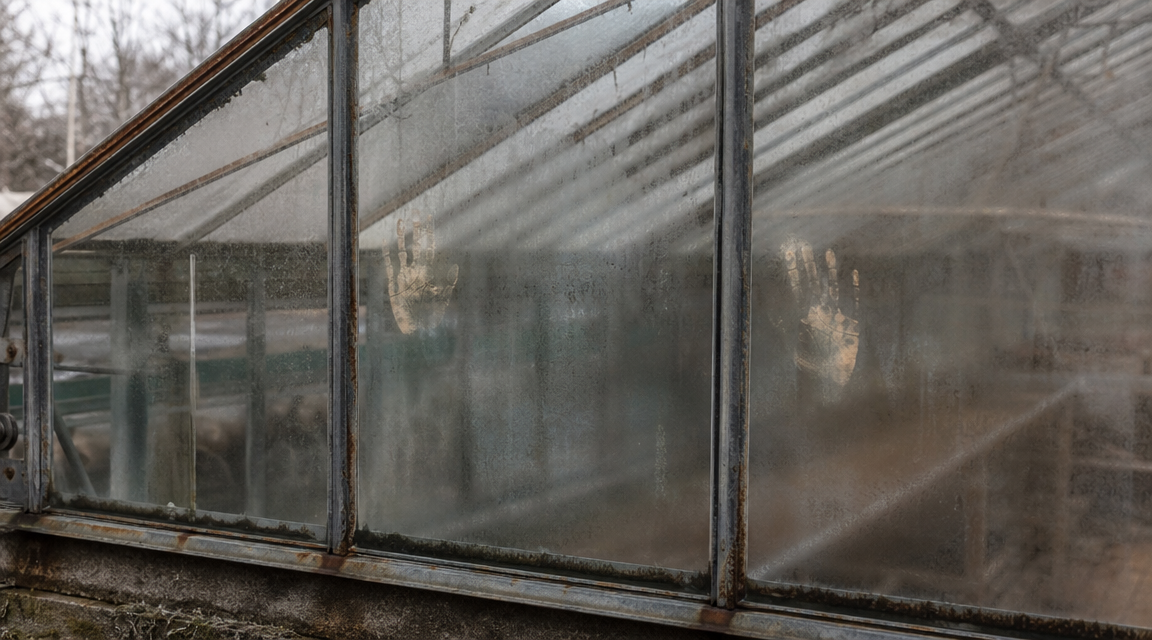
The most repeated report concerns handprints. Not dusty prints on the exterior glass, which would be easy enough to explain, but warm-looking impressions blooming on the inside of panes during cold weather.
Witnesses describe them as appearing slowly, the way breath appears on a window. A blank pane turns foggy, then clears around the shape of a palm and fingers.
The prints are said to be too high or too far across the benching to match where a casual visitor would lean. In some accounts, they appear on panes that are difficult to reach without stepping over rotten wooden frames.
A practical explanation may exist. Glasshouses create odd pockets of temperature, and old panes hold grime, oils, and mineral residue in patterns that only show under certain humidity. A handprint left years earlier can sometimes reappear when condensation catches it.
But Larkmere’s reports are uneasy because of timing. Several visitors say the marks formed while they were standing there, with no one near the glass.
One account describes three finger marks appearing first, then the heel of the palm, as if someone on the far side had pressed gently and withdrawn. That proves nothing, but people remember the sequence vividly.
The Chair That Chooses a Row
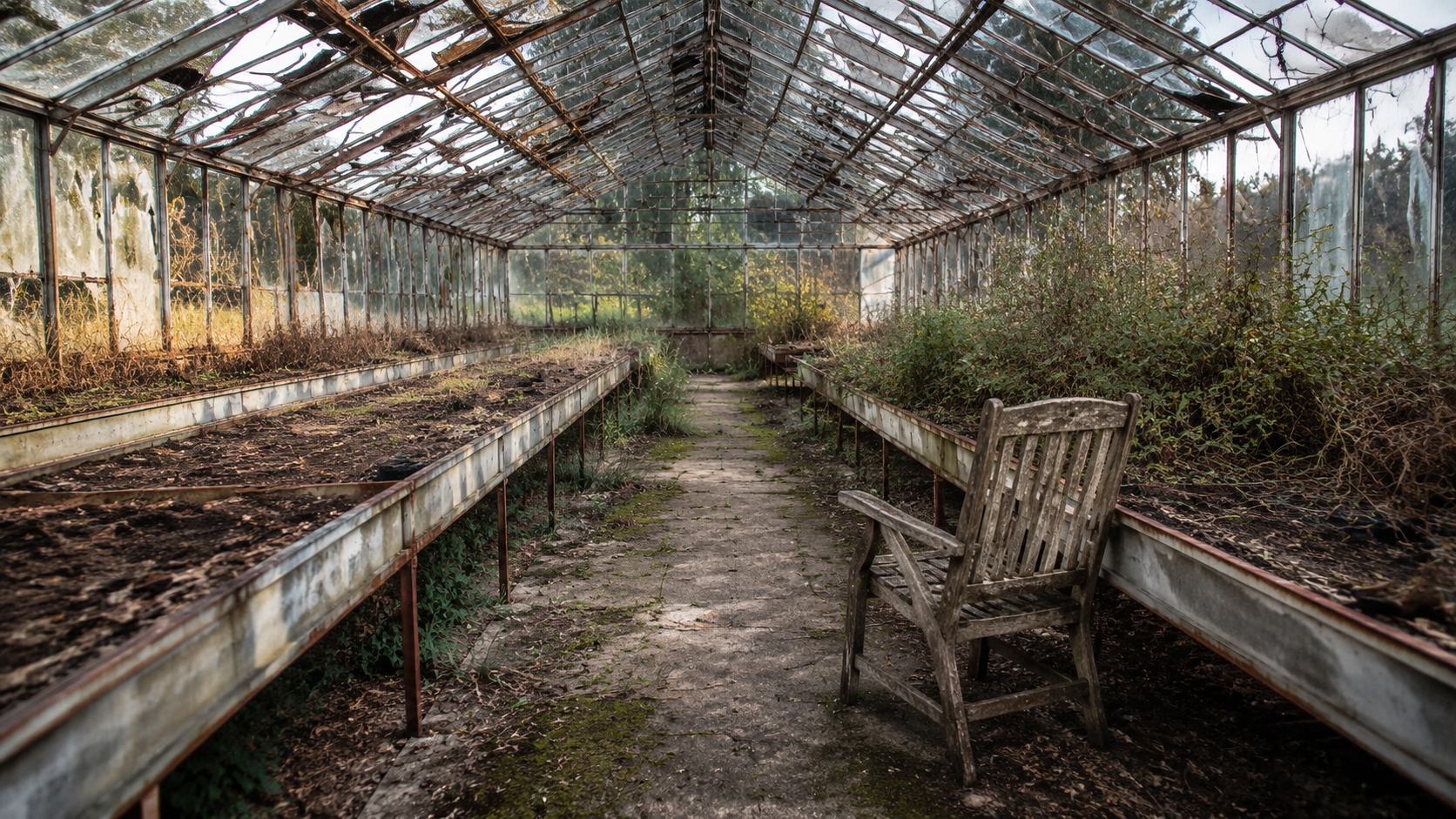
The second feature of the glasshouse is a single wooden chair. It is plain, armless, and weather-softened, the sort once kept for a worker to tie labels, sort cuttings, or rest during tea.
Its presence is not surprising. Abandoned agricultural buildings often collect furniture that no one wants to carry back. What unsettles visitors is its orientation. The chair is usually found in the central aisle, but it is not always facing the same direction. Some say it faces the east row, where old staging still holds cracked terracotta pots. Others find it turned west, toward collapsed frames and bindweed.
A few have claimed they turned it deliberately toward the door, only to find it facing inward again on a later visit.
This could be trespassers, wind, uneven flooring, or the simple unreliability of memory in a place with repeating rows. The mind is poor at mapping spaces where every sightline resembles the last.
Still, the chair has become the center of the glasshouse’s folklore because it gives the building a point of view. A chair is not frightening by itself. One that seems to keep choosing what to watch is harder to ignore.
Condensation Around an Unseen Sitter
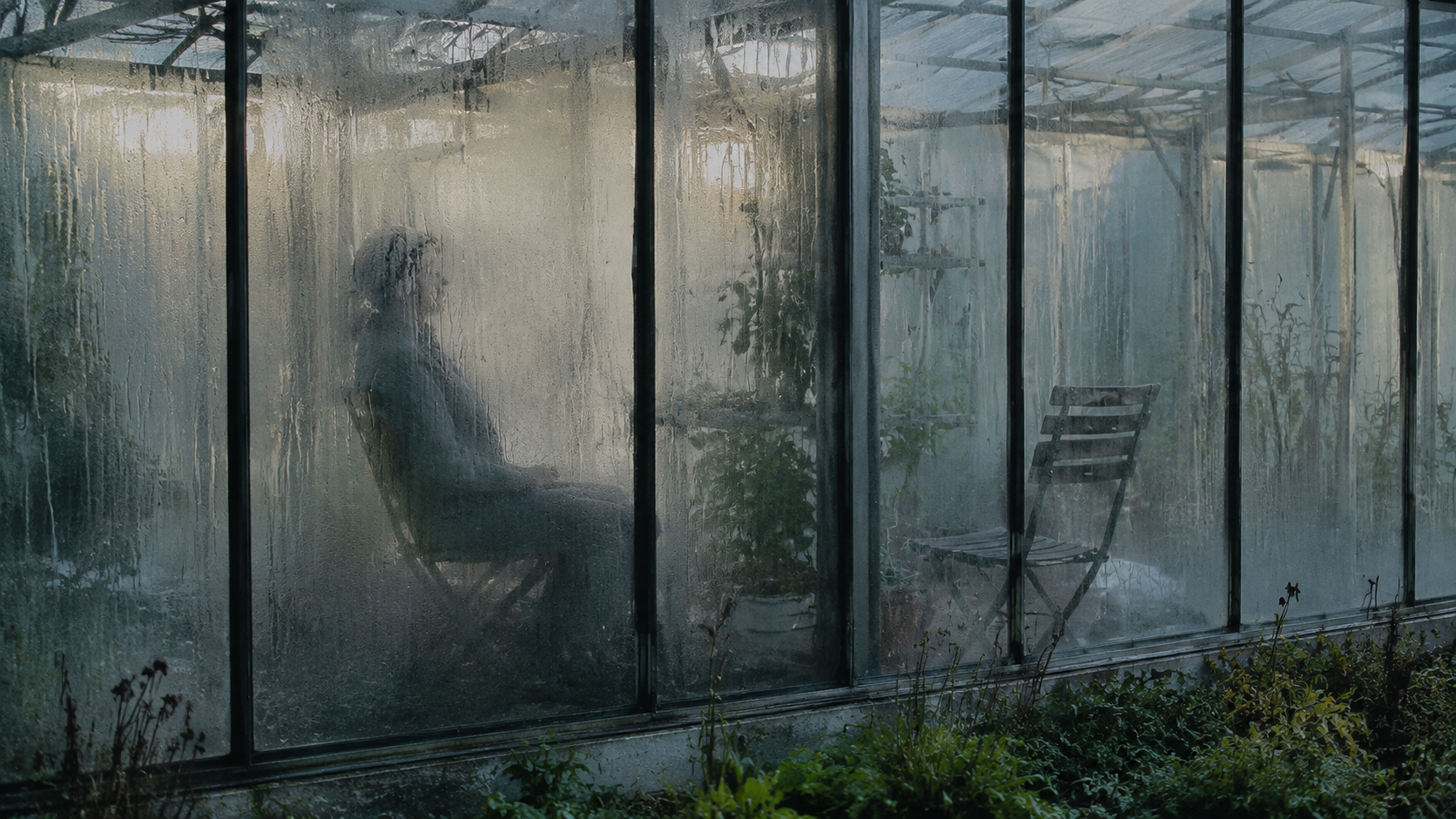
The strangest claim is also the quietest. On cold mornings, some visitors report a seated outline forming in condensation near or around the chair.
Not a clear human shape. Not a face. The descriptions are restrained: a rounded blank where shoulders might be, a darker dry patch where a back might block damp air, a crescent of fog at chest height.
The effect reportedly lasts only minutes. When the temperature shifts or the door is opened wider, the outline loosens into ordinary mist.
That fragility is part of what makes the story persuasive to some locals. It behaves like weather almost arranging itself into meaning.
Skeptics have plenty to work with. A chair can redirect air currents. A broken pane can channel cold air around a warmer patch. Moisture can cling to old oils, spores, and dust in shapes that look intentional.
Yet the reports are oddly consistent about where the outline appears: not anywhere in the glasshouse, but at the chair, as if the room saves its condensation for that one seat.
Why This Haunting Feels Domestic
Many haunted places are described as aggressive. Doors slam, names are called, lights fail, or footsteps pursue the visitor. Larkmere’s glasshouse has a more domestic unease.
The signs suggest routine: a hand on glass, a seat adjusted, a body-shaped warmth in a cold room. That is why the building feels occupied rather than invaded. Nothing in the better accounts suggests malice. If anything, the atmosphere people describe is one of interruption.
This may explain why the story persists without embellishment. It does not ask the listener to imagine a monster, only an ordinary presence continuing an ordinary habit after the reason for it has vanished.
Old work sites can hold that sensation strongly. A glasshouse is built around attention: watering, pruning, checking heat, opening vents, closing them before frost. When such a place decays, the rows remain, waiting for hands.
What the Building Itself Can Explain
Any fair account of Larkmere must admit that the building is almost designed to produce illusions. Glass, damp, cold metal, and rotting organic matter make a laboratory for strange surfaces.
Condensation records temperature differences. Dust records touch. Old putty and algae change how water gathers. A pane can show a mark that looks fresh because the right weather has finally revealed it.
The chair, too, may have ordinary helpers. Curious visitors move it. Photographers stage it. Animals brush against it. The floor may settle enough that vibration nudges its legs over time.
Even the feeling of presence has environmental explanations. Enclosed ruins amplify small sounds. A dripping pane can resemble a step. Wind through cracked glass can make a room seem to inhale.
None of this ruins the story. It makes the story more interesting, because the haunting at Larkmere lives in the border between physics and interpretation. People do not come away saying the impossible happened in broad, undeniable terms. They come away saying the possible explanations all feel slightly too thin.
The Best Way to Hear the Place
Those who know the orchard advise visiting from the outside only, and with permission where required. The glasshouse is derelict, and broken panes can fall without warning.
There is no need to step inside to understand its reputation. From the threshold, the interior is visible enough: the long aisle, the empty staging, the chair if it has not been moved deeper among the rows.
The best conditions, according to repeat visitors, are early morning after a cold night or late afternoon when the temperature drops quickly. That is when the glass begins to cloud and the building becomes a map of warm and cold.
It is also when ordinary things become easiest to misread. That caution should stay with the story. But if a palm shape appears on the inner pane while your own hands are in your pockets, caution may not be the first response available.
You may find yourself doing what many witnesses say they did: standing still, listening for the small scrape of a chair leg on damp concrete.
Still Facing the Rows
The glasshouse at Larkmere Orchard has survived because its mystery is modest. It does not demand belief. It invites attention.
A chair faces the rows. A pane remembers a hand. Condensation gathers where a person might sit to look over plants that no longer grow there.
Perhaps the building is only weather, residue, and suggestion. Perhaps visitors supply the occupant because an empty chair in an abandoned workplace feels unfinished.
Or perhaps some places remain arranged around a habit so persistent that the living notice it as presence.
That is the unsettling charm of Larkmere. The glasshouse does not feel haunted because something terrible announces itself there. It feels haunted because, in the cold, it still seems to be waiting for someone to finish the morning round.
Reader Context
This Weird Witnessed story is an editorial reconstruction, written as eerie visual storytelling rather than a verified report. For more context, see Apparitions and Hauntings Guide and How WeirdWitnessed Creates Reconstructed Horror Stories.