
The Name in the Wages Column
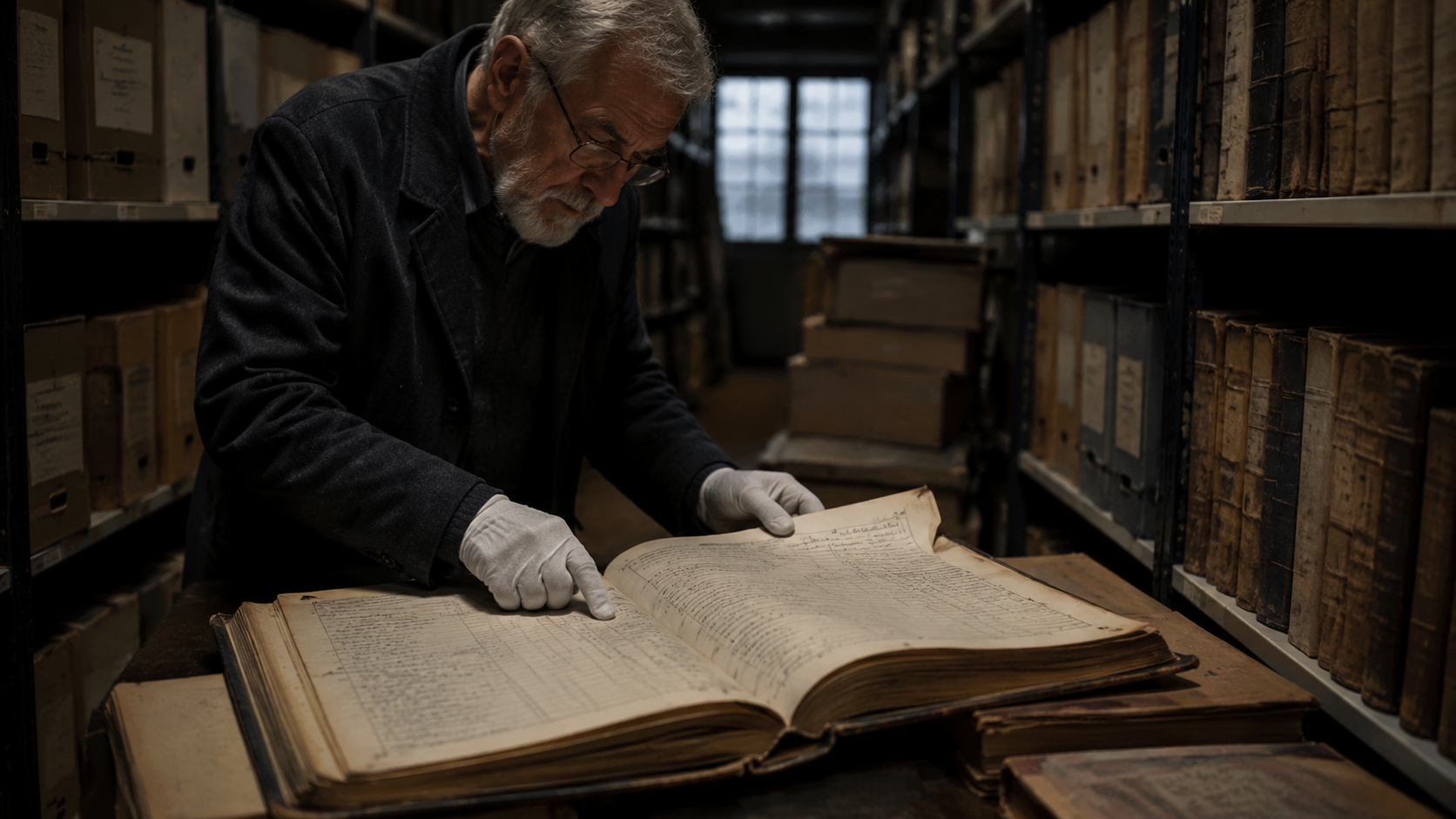
The sheet did not look dramatic when pulled from the county archive. It was a payroll page from the old Harrowby Limestone Company, dated April 1924, brittle at the fold and browned at the corners. Across it ran columns for crew number, day rate, hours cut, deductions, and signature marks.
Most of the names belonged exactly where local historians expected them to be. Quarry families had a way of repeating themselves through directories, church lists, and cemetery stones. A foreman’s son became a driller. A cart boy became a teamster. The payroll page looked like one more ordinary survival from a rough local industry.
Then one name stopped the reading cold: Nathaniel Orr.
Not because it was famous. Not because it was rare. Because the Nathaniel Orr known to the town was born in 1944, twenty years after the payroll sheet said he had already earned three days’ wages at the quarry.
A Quarry That Kept Good Records
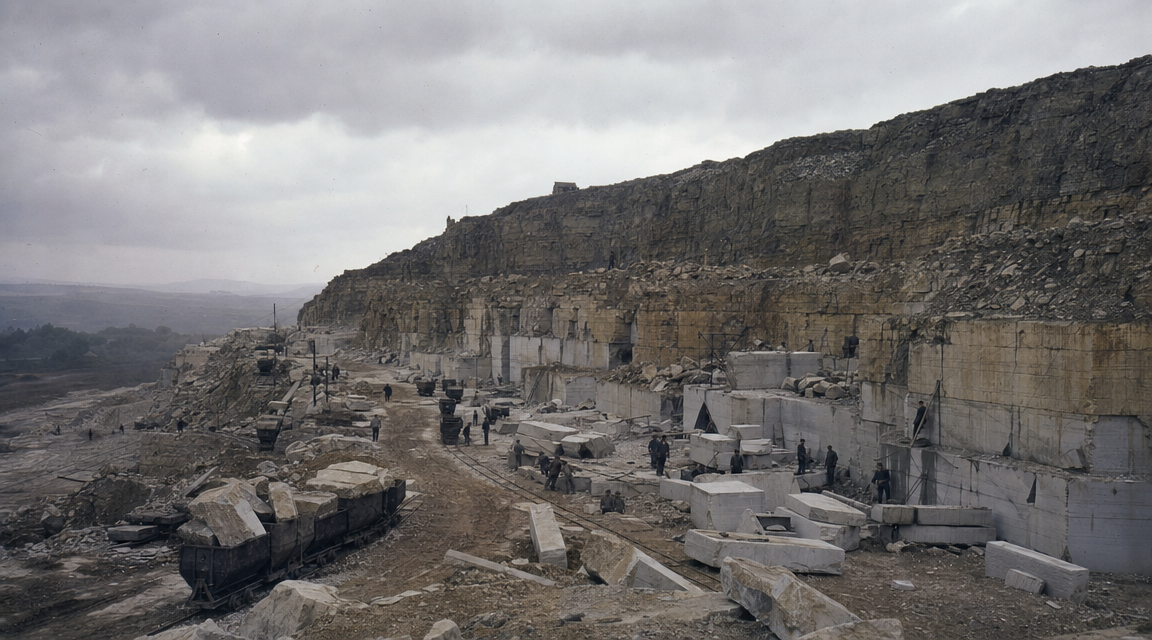
Harrowby Quarry was not a place where paperwork usually became legend. The company cut pale limestone from a ridge outside the village, sold blocks to builders, and kept careful accounts because blasting powder, rail cart repairs, and injuries all cost money.
The surviving payrolls were plain business documents. Each week was a practical calculation: who worked, how long, what was owed, and what was held back for tools or company lodging.
That is what makes the 1924 sheet uncomfortable. The handwriting matches adjacent pages. The pay rates match the quarry’s known wage scale. The paper, ink, and filing sequence all belong to the same run.
A hoax would need to be oddly restrained. Whoever forged the entry, if it was forged, did not add a prophecy or warning. They simply placed Nathaniel Orr among men who hauled stone, sharpened drills, and went home sore.
The Birth Record That Should Have Ended It
The simplest answer should have been a second man with the same name. That explanation is usually enough for archival oddities. Names repeat. Middle initials vanish. Census takers mishear. Clerks flatten accents into whatever spelling seems familiar.
But the local Orr family was small, and the name Nathaniel was not reused in the available line before 1944. County birth records list Nathaniel Thomas Orr as born on September 3 of that year to Ellis Orr and Margaret Vale Orr. Baptismal notes, school registration, and later employment cards all point to the same person.
Researchers checked for an elder uncle, a cousin, or a man who moved through the area and left no later trace. No matching death notice, veteran file, marriage record, tax entry, draft card, or burial record identified another Nathaniel Orr old enough to work at Harrowby in 1924.
The 1924 entry includes no age, but it does include pay. Nathaniel Orr was credited for three ten-hour shifts at the laborer’s rate, less a small deduction for gloves. The line is not crossed out. It is totaled into the weekly wage column.
The Adult Who Came Back to the Same Stone
If the mystery ended with one impossible line, it might have remained a filing error. But Harrowby Quarry, though reorganized and partly mechanized, was still operating when Nathaniel Orr became a young man.
In 1967, records from the successor company show Nathaniel T. Orr hired as a maintenance laborer. He was twenty-two, recently returned from technical training, and lived on the edge of town with his mother. He worked around compressors, belt housings, and the pump shed that kept water from collecting in the lower cut.
Older employees remembered him as punctual and quiet. He did not drink at the quarry club. He did not gamble on paydays. He had a habit of standing with one hand against stacked stone, as if testing whether it was cold.
The payroll anomaly was reportedly discovered during a records inventory in the early 1970s. By then Nathaniel was not an old man, only in his late twenties. Yet when a clerk joked that he had been on the payroll before he was born, he did not laugh.
The Refusal
The strongest part of the story is also the hardest to prove, because it rests on local memory rather than a formal record. Several people later claimed Nathaniel Orr had been shown a copy of the 1924 payroll sheet, or at least told about it, and reacted with visible distress.
He did not deny the name. He did not offer a family explanation. According to one retired timekeeper, Nathaniel folded the copy, placed it back on the desk, and said, “That was not for telling.”
Another version has him saying, “Leave the old pay alone.” A third has no memorable phrase, only a long silence and a request to return to work.
Those differences matter. They show the story has been handled by memory, retold at kitchens and reunions, and softened by age. Still, every version agrees: Nathaniel refused to discuss the ledger.
For a man faced with a clerical curiosity, silence seems excessive. For a man facing something he recognized, it seems like the beginning of the real mystery.
Explanations That Almost Fit
The duplicate-name theory remains the safest explanation, but it strains against the surviving records. An undocumented transient could have worked under the name Nathaniel Orr for a single week and disappeared. Quarry towns attracted itinerant labor when contracts required quick cutting.
Yet the payroll does not mark him as temporary. His entry sits with the regular crew. The glove deduction suggests company-issued gear, not cash paid to a passerby at the gate.
A clerical error is also possible. Perhaps the clerk meant Nathaniel Ord, Orrin, or Oar, and later eyes converted the name into Orr. But the handwriting is unusually clear, and nearby surnames with similar letters are formed differently. The final double r is hard to dismiss.
Another possibility is later contamination. A 1960s or 1970s employee might have written Nathaniel’s name onto an old payroll sheet as a joke, then the page was refiled. That should leave signs: different ink, altered spacing, or a line that fails to balance. Instead, the total includes the wages where they should be.
None of these explanations is impossible. None is satisfying.
What the Ledger Does Not Say
The most tempting stories are the ones the ledger does not support. It does not show Nathaniel’s signature. Many quarry workers were marked by the clerk, so that absence proves little. It does not describe an accident, a vanished worker, or a supernatural event.
It does not say the man in 1924 looked like the later Nathaniel. No photograph has been tied to that week’s crew. No surviving newspaper item mentions a mysterious laborer, a stranger at the boarding house, or a dispute over wages.
The document is modest. A name. Three days. A deduction for gloves. A sum added to the total.
That modesty is why the case has lasted in local conversation. It offers no dramatic scene to debunk. It asks only why a future man’s name appears in a past payroll, then becomes stranger because the future man eventually stands in the same quarry and refuses to help.

A Family Silence Around the Pit
Nathaniel Orr left Harrowby Quarry in the late 1970s after a pump accident injured his shoulder. He later repaired farm equipment and, according to neighbors, remained private but not unfriendly. He attended funerals, paid bills, and avoided old quarry gatherings whenever possible.
His family did not become promoters of the story. That is unusual in a town where a mystery can become a minor inheritance. Relatives reportedly discouraged questions and said Nathaniel had disliked gossip.
After his death, no diary or confession surfaced. A few personal papers were kept by family, but nothing publicly linked him to the 1924 entry. If he knew why his name appeared there, he carried that explanation away.
The quarry itself eventually filled with water after operations ceased. The old office was demolished. Payroll sheets, accident reports, and invoices survived because a county clerk decided industrial records were worth saving.
Without that decision, the Nathaniel Orr problem would have vanished completely.
The Ordinary Paper That Would Not Behave
Unexplained history often hides in documents that were never meant to be mysterious. Payroll pages are supposed to be dull. They exist to prove that money moved from employer to worker, not to challenge the order of birth and labor.
That is why the Harrowby sheet remains unsettling. It is not a grand prophecy or a polished legend. It is a payroll record doing one impossible thing while everything around it stays mundane.
If Nathaniel Orr of 1924 was another man, he escaped every record that should have caught him. If the entry was an error, it later attached itself to the one person in town most affected by it. If it was a prank, it was made with remarkable discipline and no obvious reward.
And if Nathaniel himself understood the entry, his refusal gave the paper a second life.
The mystery is not only that a name appeared too early. It is that the same name returned to the quarry, put on work clothes, collected wages under fluorescent office lights, and then chose silence when the past called him from an older page.
Reader Context
This Weird Witnessed story is an editorial reconstruction, written as eerie visual storytelling rather than a verified report. For more context, see How to Read Weird Witnessed Stories and How WeirdWitnessed Creates Reconstructed Horror Stories.