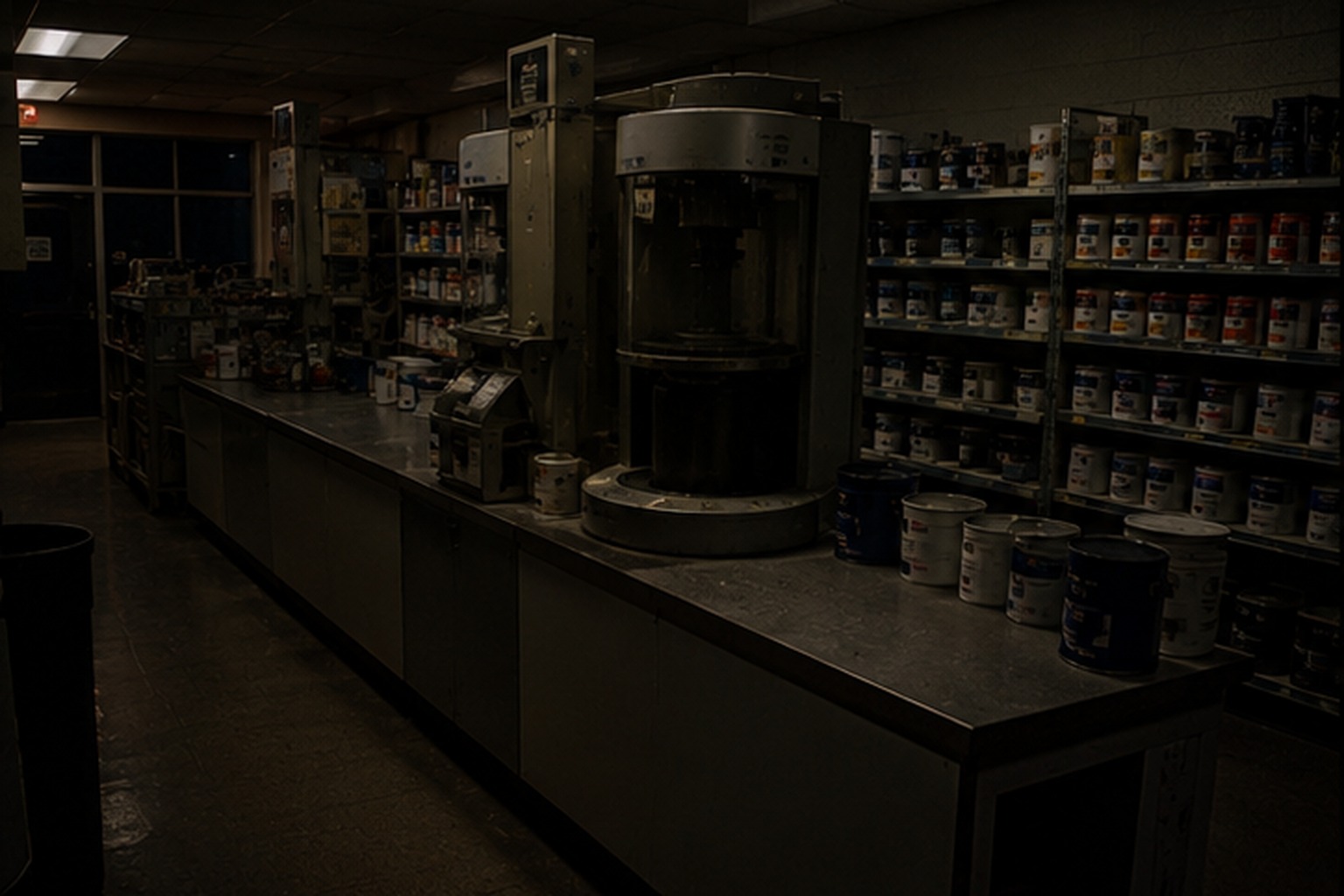
The hardware store was closed, the paint counter was empty, and the old mixer should have been silent until morning.
Instead, just after midnight, the machine began to shake.
The strange part came in three pieces:
- the motion alert showed no employee near the counter;
- the machine ran with a sealed can locked inside;
- under that can's lid, morning staff found a hand-shaped smear in the paint film.
That last detail is why the story stayed with people. Machines can fail. Timers can misfire. Cameras can make an empty aisle look stranger than it is. But a mark shaped like a palm and five fingers, hidden beneath a lid that had not been opened, is harder to set aside.
This is a reconstruction of the account as it was described, not proof of anything supernatural. The hardware store in the story is the kind of place most people know immediately: concrete floor, tall aisles, bins of screws, keys cut near the register, and a paint counter that smells faintly of latex even when nobody is mixing paint.
The Store Had A Closing Routine
By closing time, the place had a rhythm.
The last customers drifted out with furnace filters, porch bulbs, and small paper bags of fasteners. The front doors were locked. The registers were counted. The paint counter was wiped down, the tint lids were checked, and the shaker was left off.
The mixer was not some new silent machine buried in software. It was an older metal shaker with a clamping arm and a heavy door. When it ran, everyone knew. The counter vibrated. Nearby cans rattled softly. Even from plumbing, you could hear the dull mechanical thump.
The last job of the night was a plain interior paint, a neutral color mixed for a customer who said they would pick it up the next morning. The can was tinted, hammered shut, and placed in the mixer. It ran normally. Afterward, the employee set the sealed can on the counter, wrote the order number on a slip, and finished closing.
After Midnight, The Alert Came In
The store's camera system sent motion alerts to the manager's phone, usually for moths near the front glass or headlights moving across the windows.
This one came from the paint aisle.
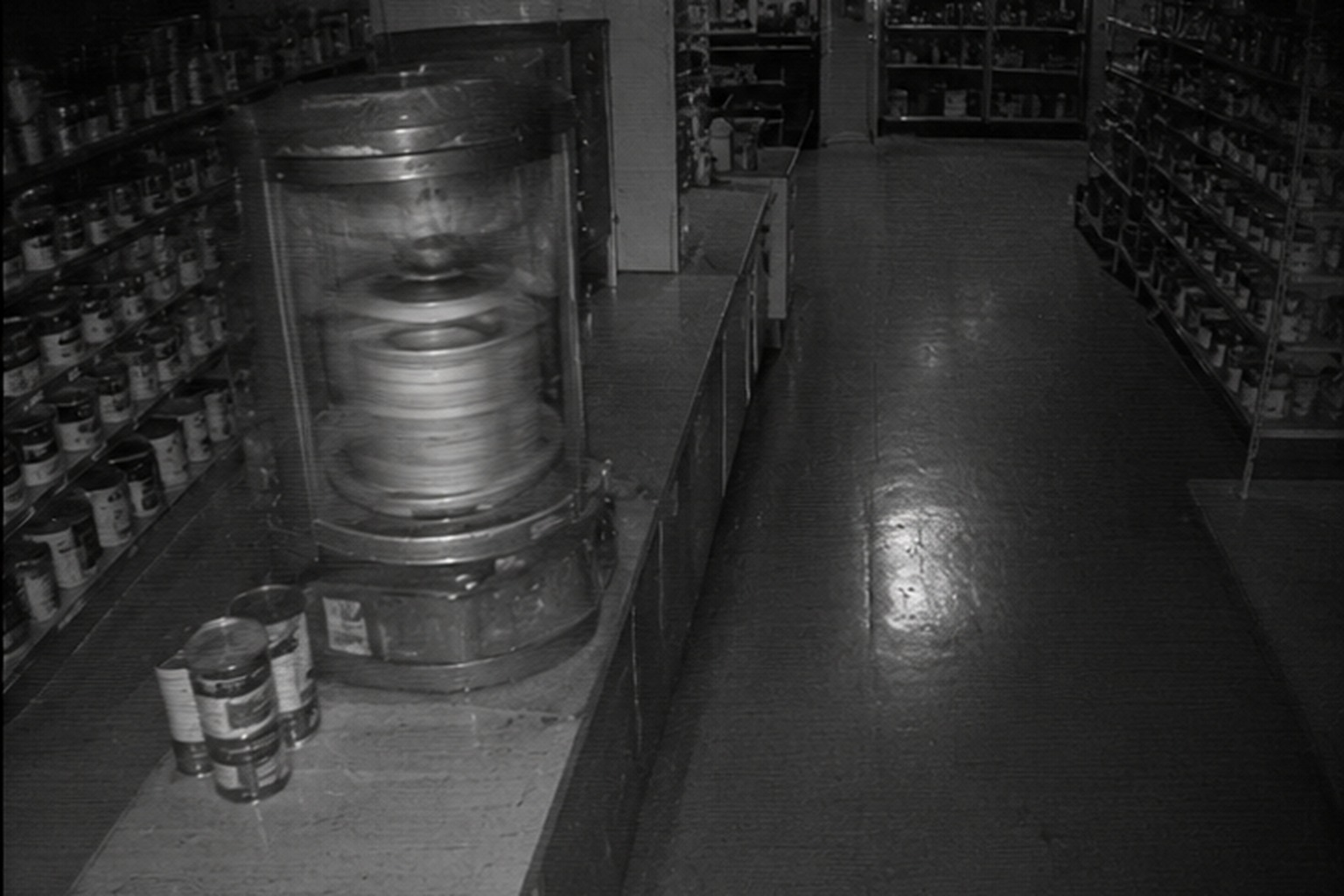
The first clip showed nothing unusual for several seconds. The counter was empty. The aisles were dim. One fluorescent tube near the ceiling flickered in the tired way old store lights do when they have not completely turned off.
Then the mixer door trembled.
A second later, the whole machine started.
It did not roar to life like a movie prop. It clanked once, shuddered, then settled into the blunt, repetitive shake employees knew by sound alone.
The manager watched the clip twice, sitting up in bed, trying to decide whether the machine had been left on a delayed cycle.
There was no visible person in the frame.
The Camera Made The Aisle Feel Too Empty
Security footage often disappoints. It is too high, too grainy, too flat. It turns people into smudges and ordinary corners into mysteries.
This clip had that same quality. The paint counter looked washed in weak gray. The far aisle disappeared into a darker block near the back wall.
But the machine was clear.
Its metal housing vibrated. The can inside struck its restraints in a regular rhythm. A row of small sample jars quivered on the shelf beside it.
Then, after less than a minute, the mixer stopped.
The aisle returned to stillness. No shadow moved toward the machine. No employee stepped into view. The door did not open.
Morning Made It Worse
When the opener arrived, the paint counter looked normal at first.
Nothing had fallen. Nothing was spilled. The mixer door was closed. The floor showed no footprints in dust because the floor was swept every night. The air smelled the way the paint area always smelled, a mix of cardboard, metal, and damp colorants.
Then they noticed the can.
It was inside the mixer.
That contradicted the closing memory. The employee believed they had removed it after the evening mix. The manager checked the order slip. The color matched. The can was the same one waiting for pickup.
The lid still looked sealed. The rim had the little dents from the closing mallet. There was no obvious pry mark and no dried drip running down the side.
Someone suggested the employee had simply left the can in the mixer by mistake.
That would have explained the machine, if not the start.
Then they opened it.
The Mark Was Under The Lid
The paint looked ordinary when the lid came up.
The surface had a smooth, pale skin from being shaken and resting overnight. No bubbles. No foreign object. No message. No face. Just a can of light-colored wall paint under morning store lights.
The underside of the lid was different.
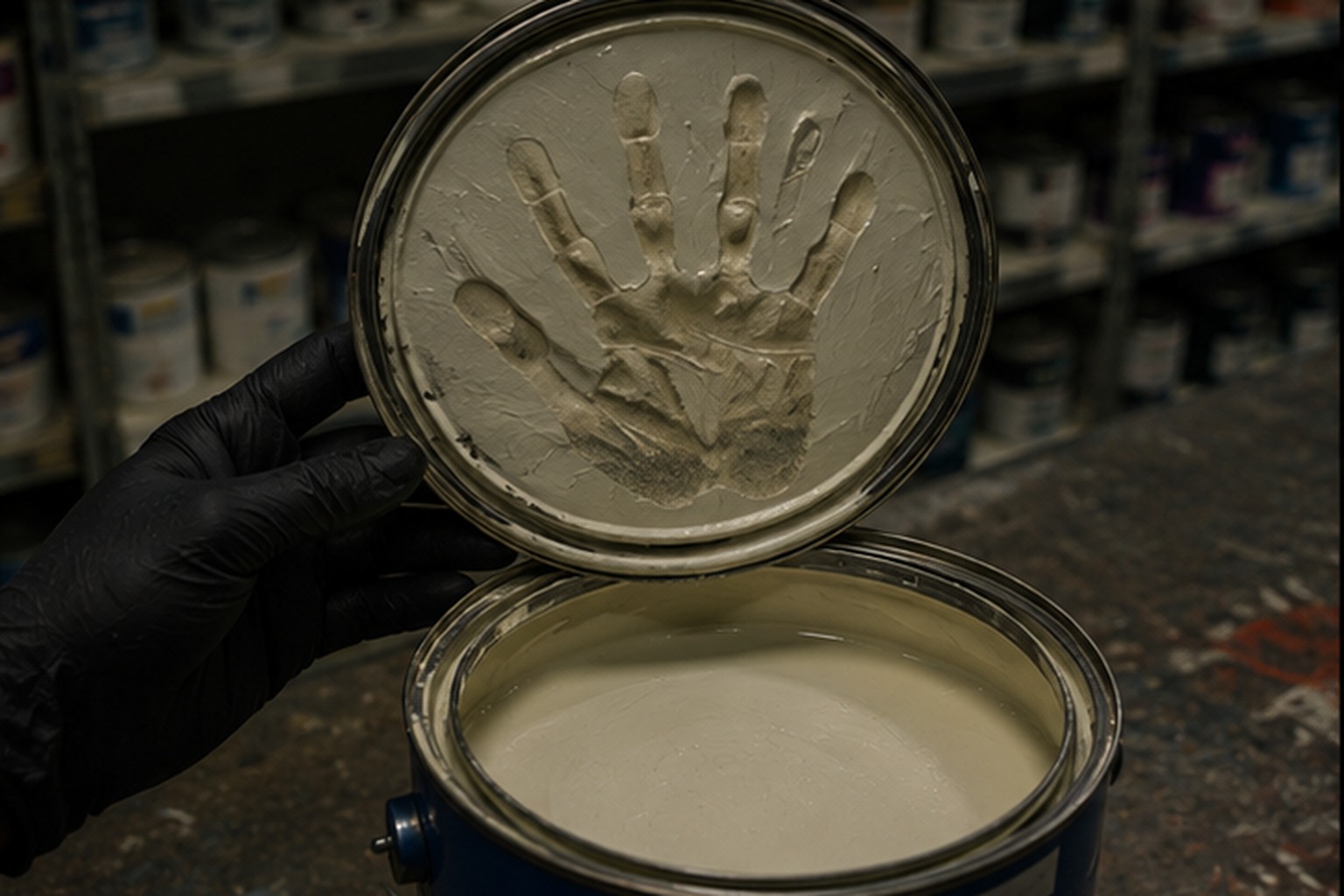
Across the wet film was a hand-shaped smear.
It was not a perfect print with fingerprints and lines. It looked more like someone had pressed a paint-covered hand against the underside and dragged it slightly before pulling away. A palm shape. Five uneven finger marks. A thicker blur where the thumb would be.
Everyone stared because the mark was in the one place nobody expected contact.
The lid had been sealed. The outside rim was intact. If a person had opened it, they should have left a visible sign. If the employee had touched the lid before closing, the smear should have been on top, not underneath.
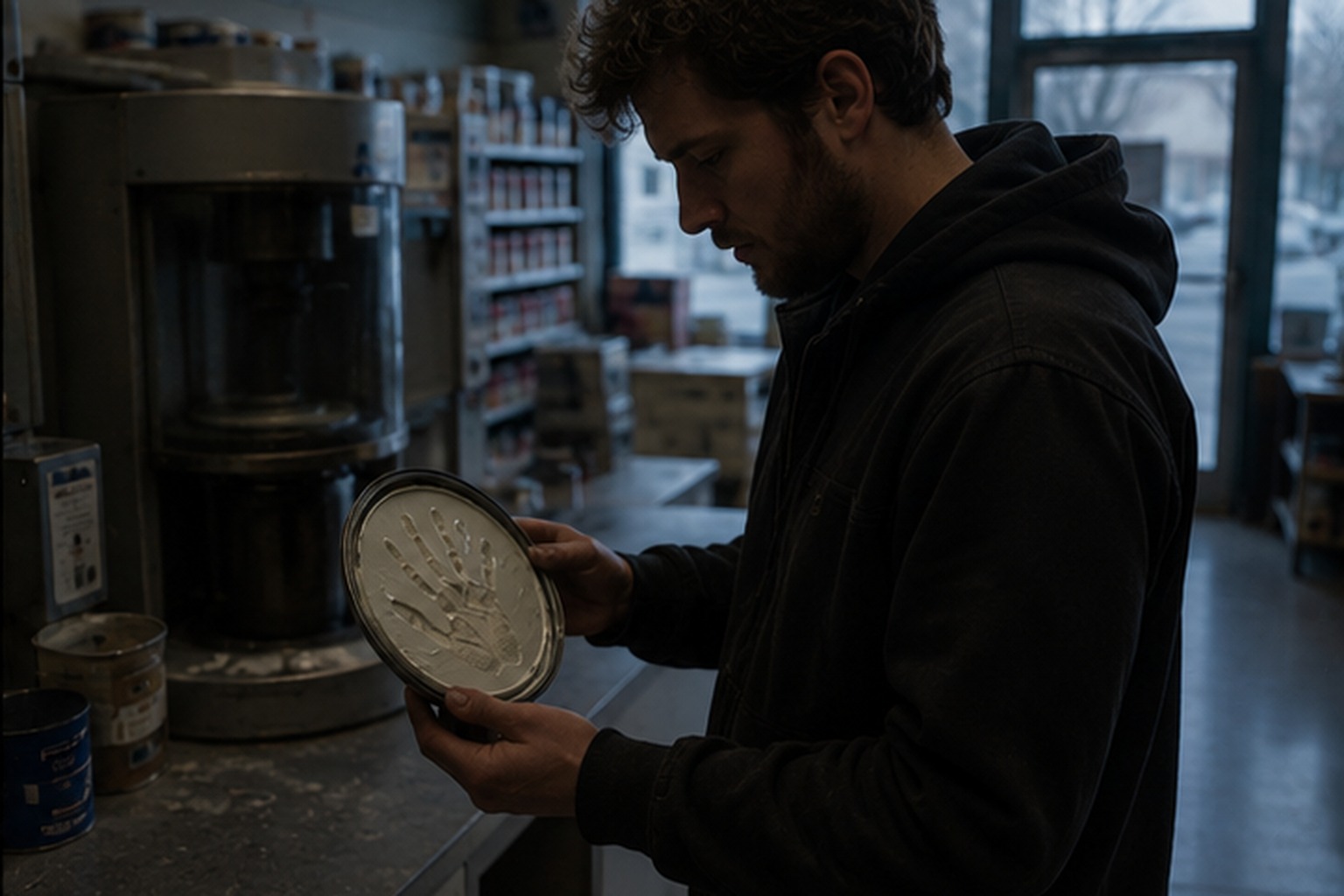
The image people later talked about was that lid held over the counter, the old mixer behind it, and the pale hand shape shining in the paint.
The Sensible Explanations Were Checked First
There were normal possibilities, and they deserve space.
A worker could have misremembered the closing routine. The can may have been left in the mixer. A faulty switch, stuck relay, or power interruption could have triggered a short cycle. Paint on the lid might have shifted during shaking and formed a shape that only looked like a hand.
Human brains are excellent at finding familiar patterns.
A smear can become a palm because people are built to notice hands, faces, and threats. A camera can hide a person just outside the frame. A sealed lid can look untouched even if someone opened it carefully.
The employees checked the power strip, the switch, and the clamp. They looked for evidence that the can had leaked upward or splashed the underside of the lid in a way that made the mark.
Nothing conclusive came from it.
The Shape Did Not Behave Like A Splash
What bothered them was the direction of the smear.
Paint splatter from shaking usually makes arcs, dots, or random crescents. It gathers at the rim or flecks outward from the lid's center. This mark looked compressed, as if pressure had made it.
The finger streaks were separated enough to be recognizable. The palm area was broader and thinner at the edges. One side had a small drag mark, like a hand slipping on wet glass.
Again, that does not prove anything impossible.
It only explains why the staff did not laugh it off in five minutes.
The manager reportedly saved the clip, took photos of the lid, and removed the mixer from use until someone could inspect it. The customer never received that can. It was set aside, relabeled, and eventually disposed of like any other questionable paint.
The machine did not perform another midnight cycle while anyone was watching.
Why This One Travels So Well Online
The story works because it uses objects that do not feel haunted.
A paint mixer is practical. It belongs to invoices, remodels, and weekend projects. A sealed can is not mysterious. A hardware store after closing is not gothic. It is fluorescent, dusty, and full of items designed to fix ordinary problems.
That is why the visual lands so strongly.
You can picture the empty aisle. You can hear the machine start with nobody near it. You can imagine the opener standing at the counter, annoyed at first, then quiet as the lid turns over in their hands.
The hand-shaped smear is not violent. It is not dramatic. It is only misplaced.
And misplaced details are often the ones people remember.
The Unanswered Part
The cleanest explanation is still mechanical trouble mixed with human error and a suggestive paint pattern.
Maybe the can was left inside. Maybe the switch failed. Maybe the shaking made a random mark under the lid. Maybe the staff, already unnerved by the footage, saw a hand because the night had primed them to see one.
That is reasonable.
But the account leaves one image that refuses to become fully practical: a locked store, an empty paint counter, a machine shaking in the dark, and a sealed can waiting inside as if someone had wanted it mixed one more time.
By morning, the machine was quiet.
The lid was not.