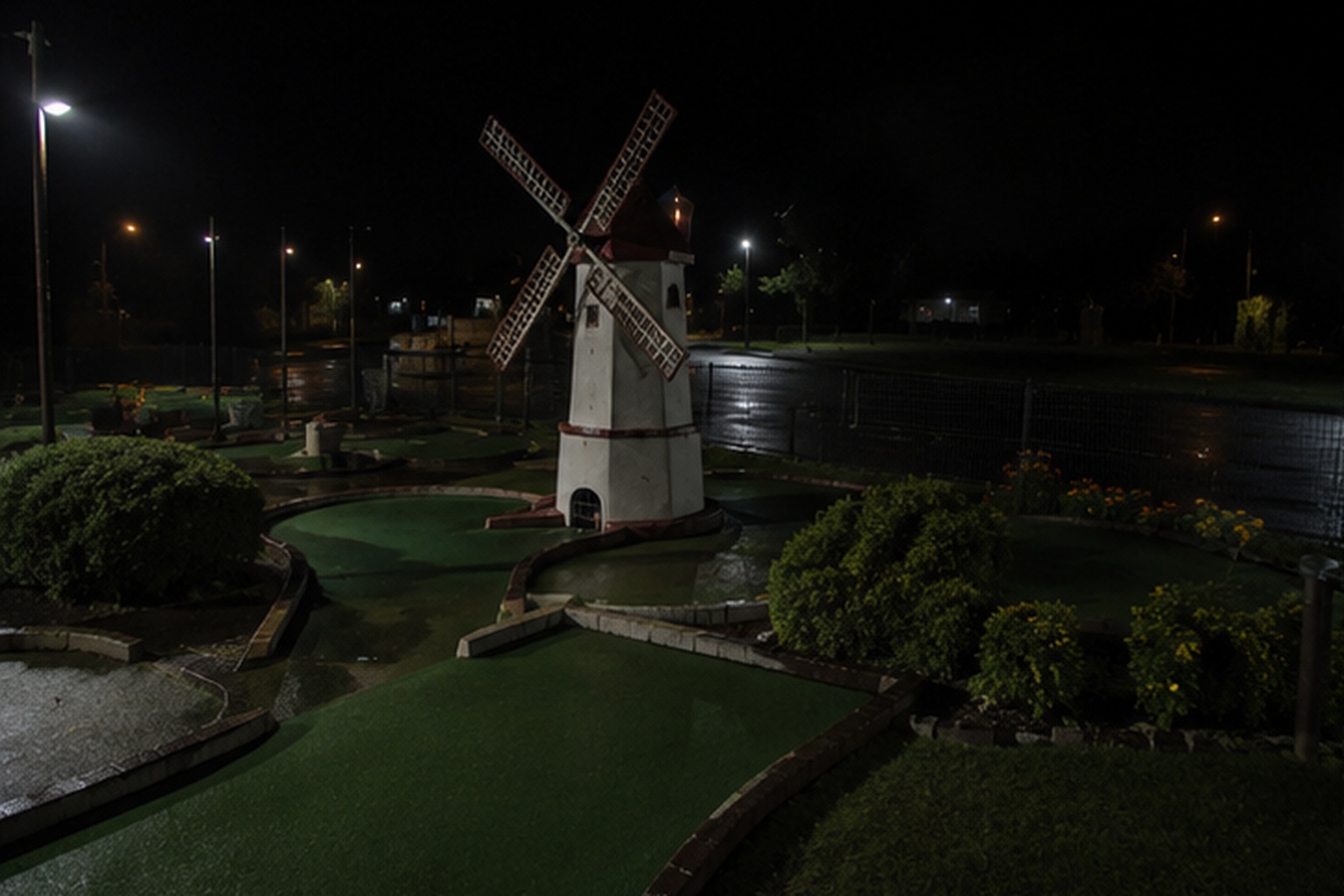
The ball was sitting in the wrong place.
Not under the windmill blades, where players usually missed the ramp. Not in the cup. Not behind the fence, where children sometimes kicked them by accident. It was on the green strip outside the return tunnel, clean and white in the morning damp, as if it had come back out during the night.
The tunnel had been locked.
The course had been closed.
The power to the moving obstacles had been turned off after the last group left.
That is why the staff at a small roadside mini-golf course reportedly checked the windmill camera. They expected a raccoon, a teenager, or one of those plain explanations that becomes obvious once the footage is on a screen. Instead, they found a clip that people kept replaying because every ordinary answer seemed to leave one piece out.
The short version is simple: the ball-return tunnel was locked from the outside, the return assist was off, no person appeared at the tunnel entrance, one ball rolled out after closing, and later a tall shadow stood beside the clown-mouth obstacle.
None of that proves anything paranormal. A bad angle, a rolling surface, a loose mechanism, or an after-hours trespasser can make strange footage look stranger.
But people who have seen the clip usually mention the same detail first. The ball did not roll like something knocked loose. It came back like something had sent it.
The Course Looked Harmless In Daylight
By afternoon, the place had the cheerful tiredness of family entertainment.
The same bright hazards became silhouettes. The windmill was painted red and white, with chipped blades that turned slowly when powered on. The clown-mouth obstacle sat two holes away, grinning over a carpeted slope, its black mouth opening into a short chute.
Nothing about it looked frightening when children were arguing over scorecards.
At night, it changed. The windmill blades stopped at uneven angles. The clown’s painted eyes looked flatter under security lights. The empty course made every small sound carry: chain links tapping the fence, water dripping from the fake creek, traffic hissing beyond the road.
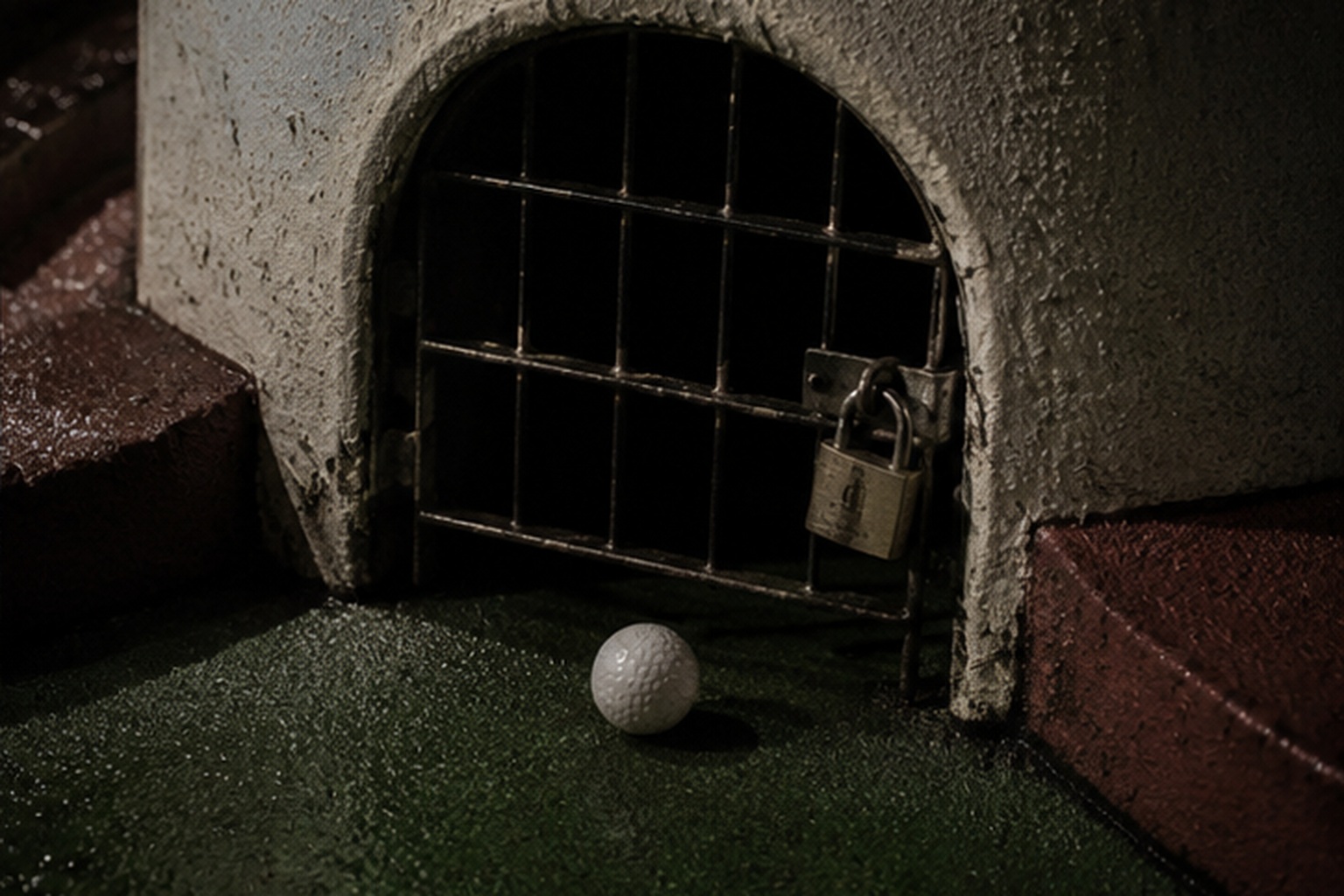
The staff closed the course the usual way: putters in, balls counted, register emptied, moving features shut down from the office panel. At closing, the front access grate under the windmill was locked so no one could reach into the tunnel or jam the mechanism.
On the night in question, the lock was reportedly checked. That detail matters because the ball appeared outside it the next morning.
The First Explanation Almost Worked
The manager did not jump to ghosts.
The simplest answer was that a ball had been missed during cleanup. Someone could have left it near the tunnel before closing, and the morning staff only noticed it because the turf was otherwise clean.
That explanation almost worked.
The course kept a count. It was not perfect, but it was close enough for a slow weekday. The last group had returned their putters and balls. The staff member who locked the windmill area remembered checking the return mouth because a child had dropped a score pencil through it earlier.
The ball found in the morning also had a faint dark scuff on one side, the kind made by the rubber edge inside the chute. That did not prove it had come through overnight. It did make people look at the camera.
The windmill camera was not installed for scares. It watched the most expensive obstacle because players leaned on the blades and teenagers tried to climb it. Its angle showed the blades, the entrance ramp, the dark tunnel mouth, and part of the path toward the clown hole.
For most of the night, the footage was boring. Insects flared white in front of the lens. The stopped windmill stood in a frozen X. No players crossed the frame. No worker returned.
Then the ball appeared.
The Ball Came Out After The Power Was Off
The time was after closing by more than an hour.
At the lower edge of the windmill tunnel, a pale circle emerged from the black opening. It rolled slowly onto the turf, curved slightly left, and settled against the low wooden border.
There was no hand visible. No shoe. No flashlight beam. No raccoon nose pushing behind it. The tunnel behind the ball stayed dark.
That is the part that made the staff check the electrical panel. The return assist had no power.
This tunnel was simple, but it had a small service light and a powered vibration feature that helped stuck balls move through during business hours. That system had been off. A ball can still move without power if the grade is right. A tunnel can hold a ball on a small ridge until temperature, moisture, or vibration frees it. A truck on the road can shake a structure. Real explanations exist.
The unsettling thing was direction. The return was designed to send the ball forward to the next tee. The morning ball had come back out at the wrong end, toward the starting side, from the locked access mouth.
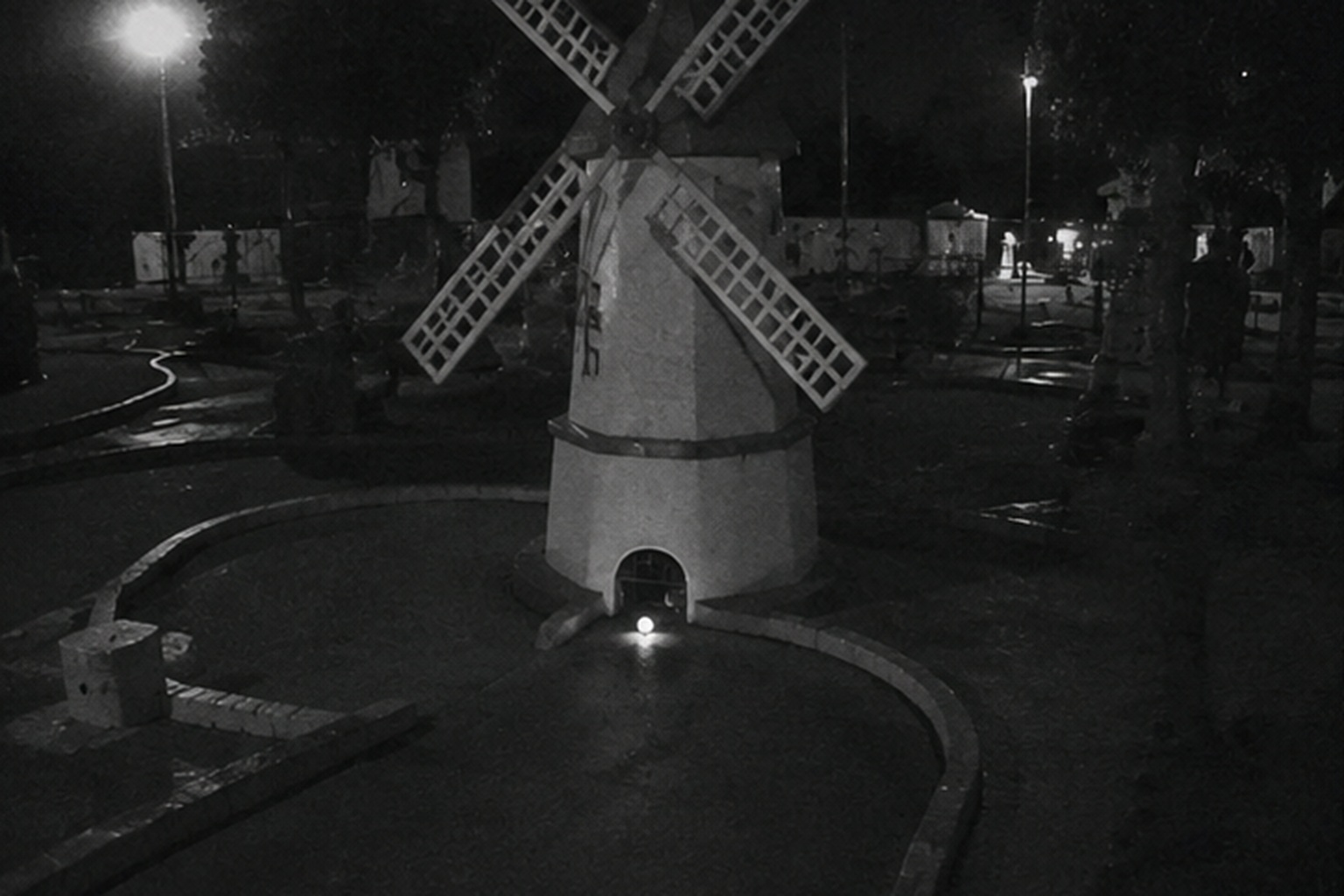
Anyone trying to recreate it had trouble making that happen without reaching inside.
The Locked Grate Was Still Locked
By itself, a rolling ball is a small mystery. The lock made it harder to laugh off.
The grate covered the service opening under the windmill. Staff used it to retrieve stuck balls and clear leaves. In the footage, the grate was a dark rectangle beside the tunnel mouth. It did not swing open. No one touched it on camera.
In the morning, the lock was still in place. The hasp was seated. There were no fresh pry marks that anyone noticed. The tunnel was damp inside, with a few leaves and the usual rubber scuffs, but no obvious sign that someone had crawled through from the other end.
Maybe the ball had been hidden near the mouth all along. Maybe a small animal moved it without being clear on camera. Maybe the grade did something no one expected after a night of cooling turf and wet wood.
The staff might have accepted one of those answers if the clip ended there.
It did not.
The Shadow Beside The Clown Mouth
About twenty minutes after the ball rolled out, the camera adjusted exposure.
The windmill stayed still. The ball remained against the border. A passing car threw light across the fence and disappeared.
Then, near the edge of the frame, the path beside the clown-mouth obstacle darkened. At first it looked like the normal shadow of a signpost. The course had plenty of shapes that stretched strangely under night lighting. A pirate mast, a fence rail, a flagstick, even a trash can could become a person if the camera was grainy enough.
But this shadow appeared where no fixed object stood.
It had a tall, upright outline beside the clown’s cheek, narrower at the top and broad through the middle. It did not cross the turf like a cast shadow from a car. It seemed to occupy the space beside the obstacle, blocking the pale edge of the clown’s painted jaw.
For a few seconds, it looked like someone standing there. Not walking. Standing.
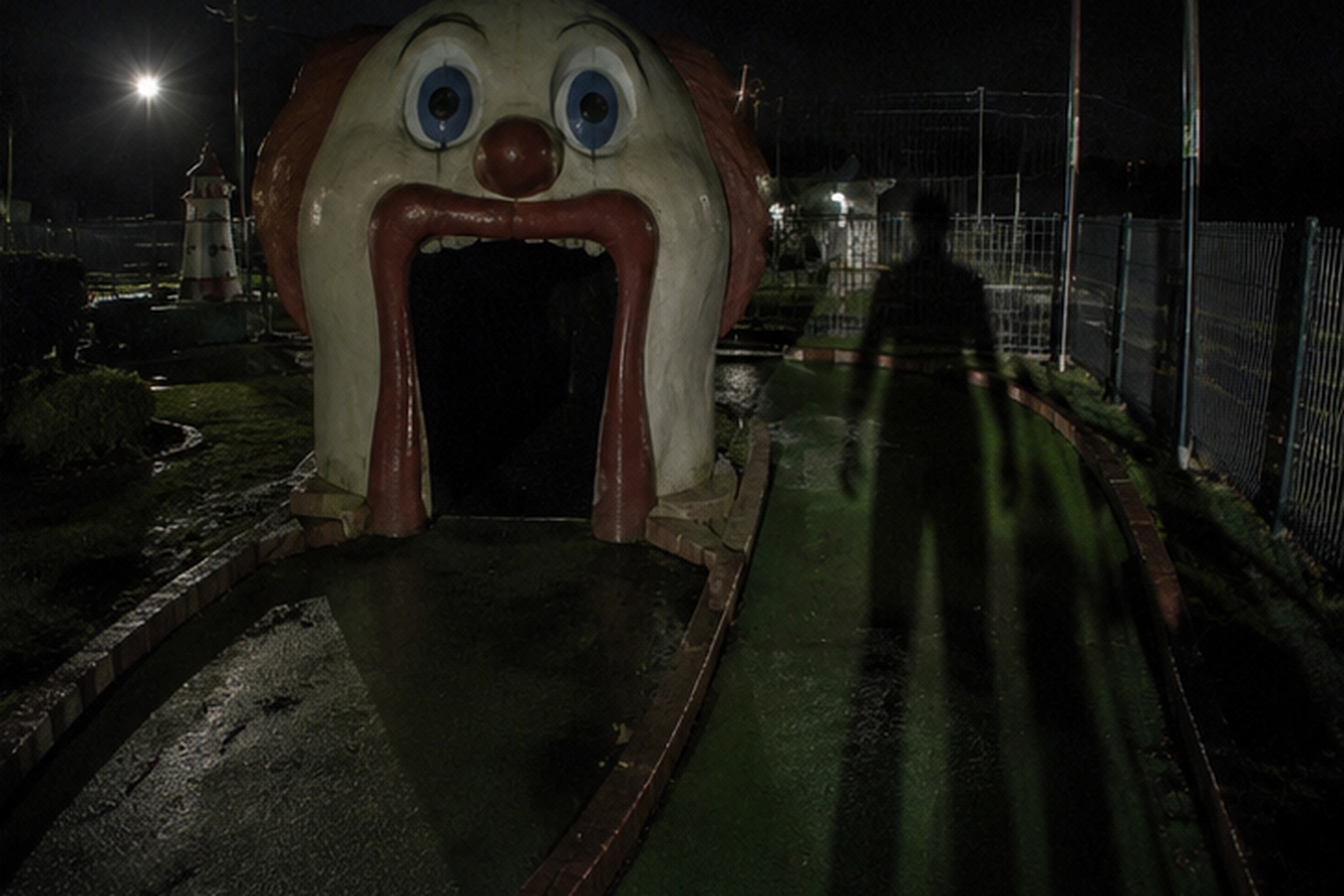
The clown-mouth obstacle made the image worse than it deserved to be. In daylight, it was just a painted face with a chipped red nose and a mouth big enough for a golf ball. At night, the black mouth looked like an opening into something deeper. Then the exposure pulsed again, and the shape was gone.
What The Camera Did Not Show
The footage did not show a ghost.
It did not show a figure bending down to place the ball. It did not show the clown moving. It did not show the windmill blades turning on their own. It did not show a face, a hand, or anything clear enough to identify.
That matters. The clip is unsettling because of what it suggests, not because it proves a dramatic event. A white ball exits a locked dark tunnel after the power is off. Later, a tall shadow appears near a clown-mouth obstacle. The two moments may be connected, or they may be unrelated camera artifacts placed close together by nervous human attention.
Still, the staff reportedly behaved like people who had seen something they did not enjoy. They checked the fence, pushed balls through in both directions, and stood where the shadow appeared looking for anything that could have cast it.
There was no perfect match.
The Reason It Sticks
Mini-golf is built to be harmless.
Every hazard is fake. The rocks are fake. The streams are pumped. The castles are plywood. The monsters are painted. Even the fear is supposed to be playful, a clown face or pirate skull softened by bright colors and families laughing under summer lights.
So when something odd happens there after closing, the setting works against the witnesses. It feels ridiculous to be afraid of a golf ball or to wonder whether something stood beside a clown-mouth obstacle.
That embarrassment may be why the story is effective. Nobody wants to admit a cheap roadside course made them uneasy. Nobody wants to say they replayed a ball rolling out of a tunnel ten times.
The cautious explanation is that the ball was already there, or that an animal, angle, slope, vibration, or camera artifact created the sequence.
The scarier version is simpler.
After the lights went down and the windmill stopped, something inside the locked tunnel sent the ball back. Then it waited beside the clown’s open mouth to see who noticed.