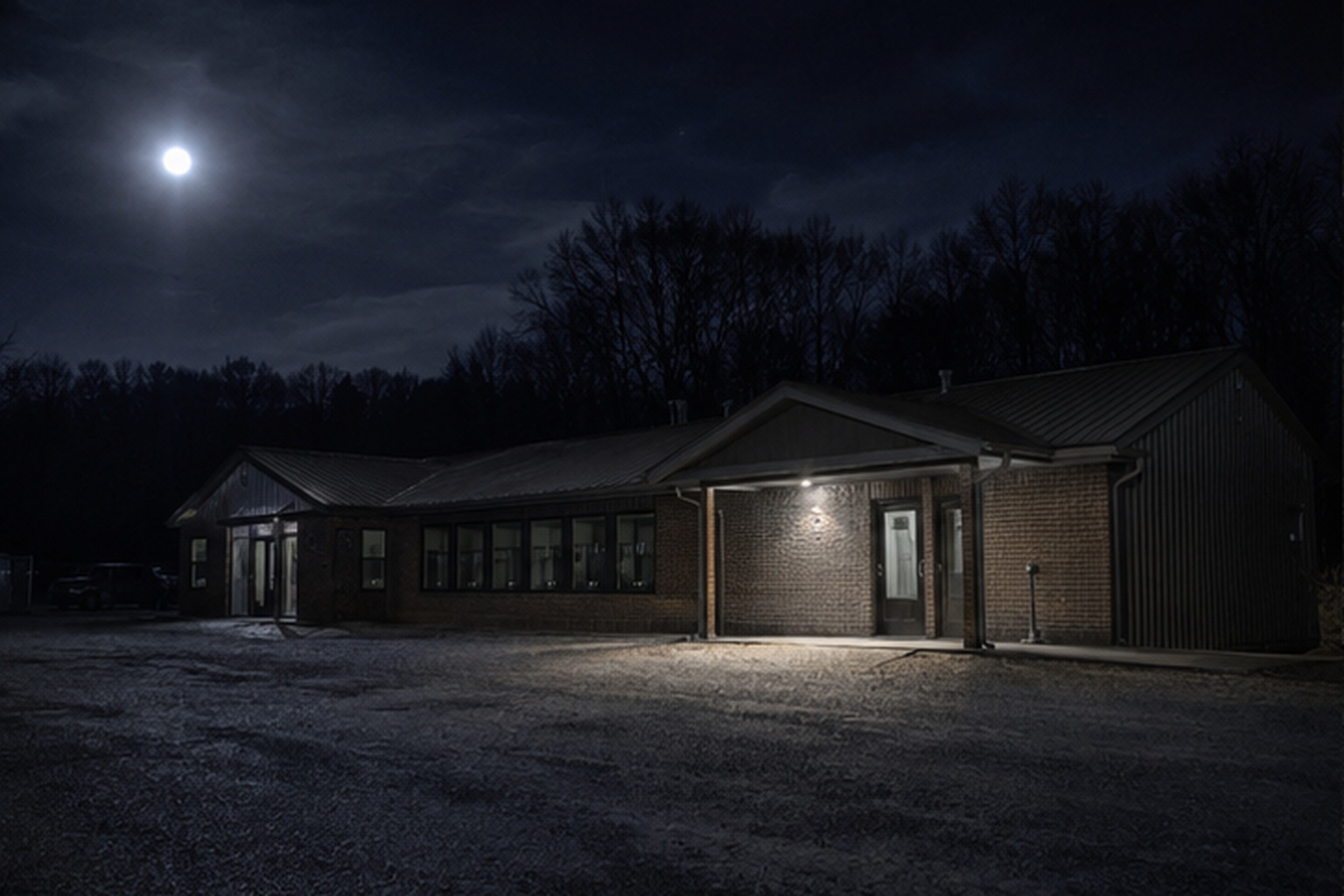
The veterinary clinic camera was not meant to watch the sky.
It watched the gravel lot.
That was its whole job: after-hours trucks, medicine deliveries, late pickups, the front door, and the side of the kennel wing where clients sometimes parked too close to the building. The camera was practical, fixed, and unromantic. It saw dust, headlights, raccoons, moths, and the occasional employee arriving before sunrise.
Then one night it recorded something it was never aimed at directly.
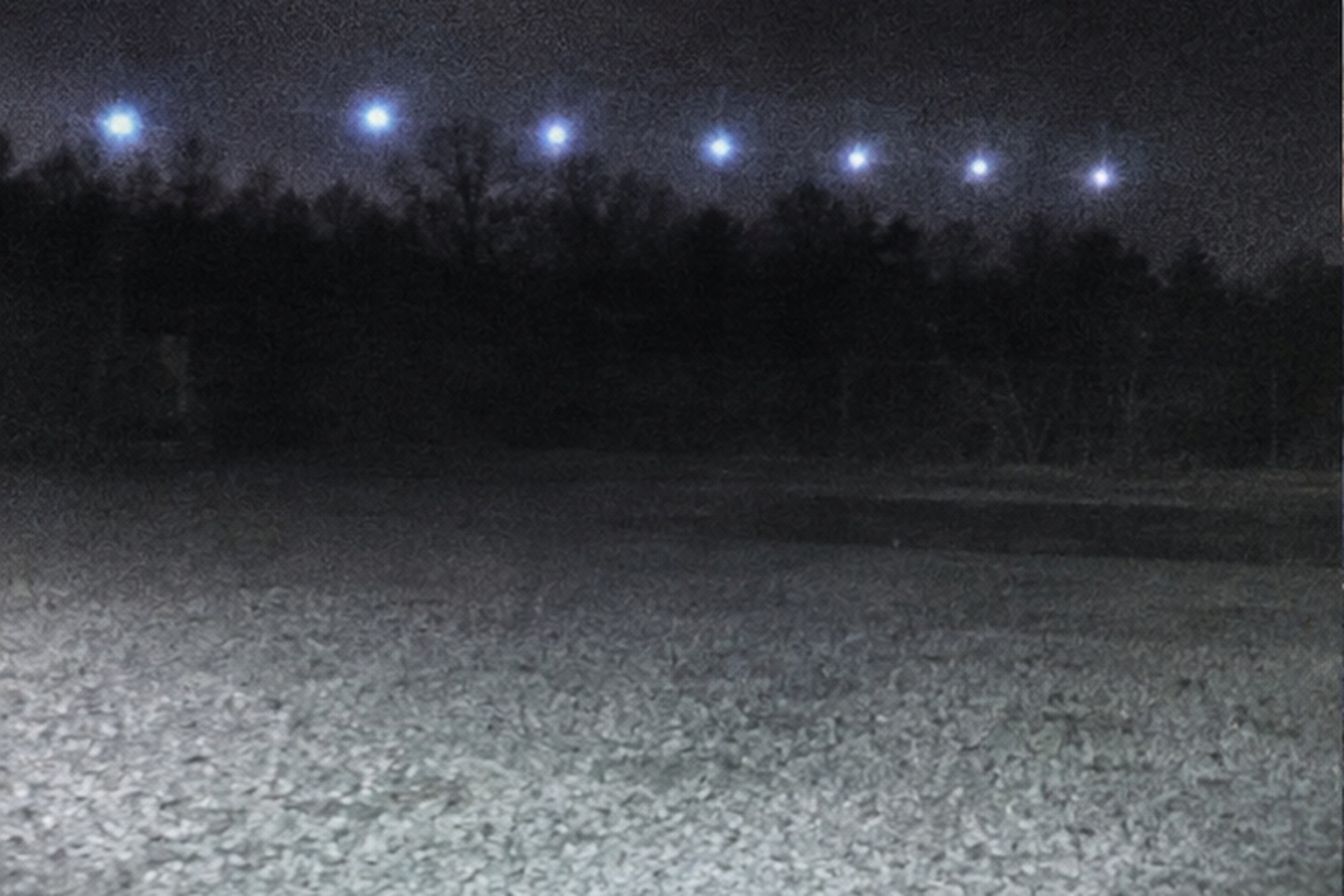
A row of blue-white lights appeared in the reflection of the kennel windows, hanging above the black tree line behind the clinic. No one reported an engine. No one saw a helicopter pass. The dogs inside, which had been barking in the usual restless way, went quiet before the lights showed clearly in the glass.
The story is remembered because of those small details:
- the lights were first noticed as a reflection, not a direct sky shot
- the row appeared level and unusually still
- the lights were blue-white rather than warm like farm equipment or road lamps
- the kennel dogs reportedly stopped barking at nearly the same moment
- the parking lot camera recorded no obvious vehicle entering or leaving
None of that proves a UFO. It does explain why the clip bothered people who knew the clinic, the dogs, and the ordinary lights that belonged on that road.
1. The Clinic Was A Place Of Ordinary Noise
A rural veterinary clinic is rarely silent.
Even closed, it has a living sound. Dogs shift in runs. A recovering hound whines at nothing. Metal bowls scrape. HVAC units click. A cat carrier rattles when its occupant decides it has had enough of the night. Outside, gravel pops under tires when staff arrive for emergencies or farmers pull in with an animal before dawn.
The camera did not record all of that perfectly, but the staff knew the rhythm. They knew which dogs barked at every passing truck and which ones only reacted when someone came near the kennel door. They knew how the building sounded when weather changed and how the animals answered it.
That is why the silence became part of the account.
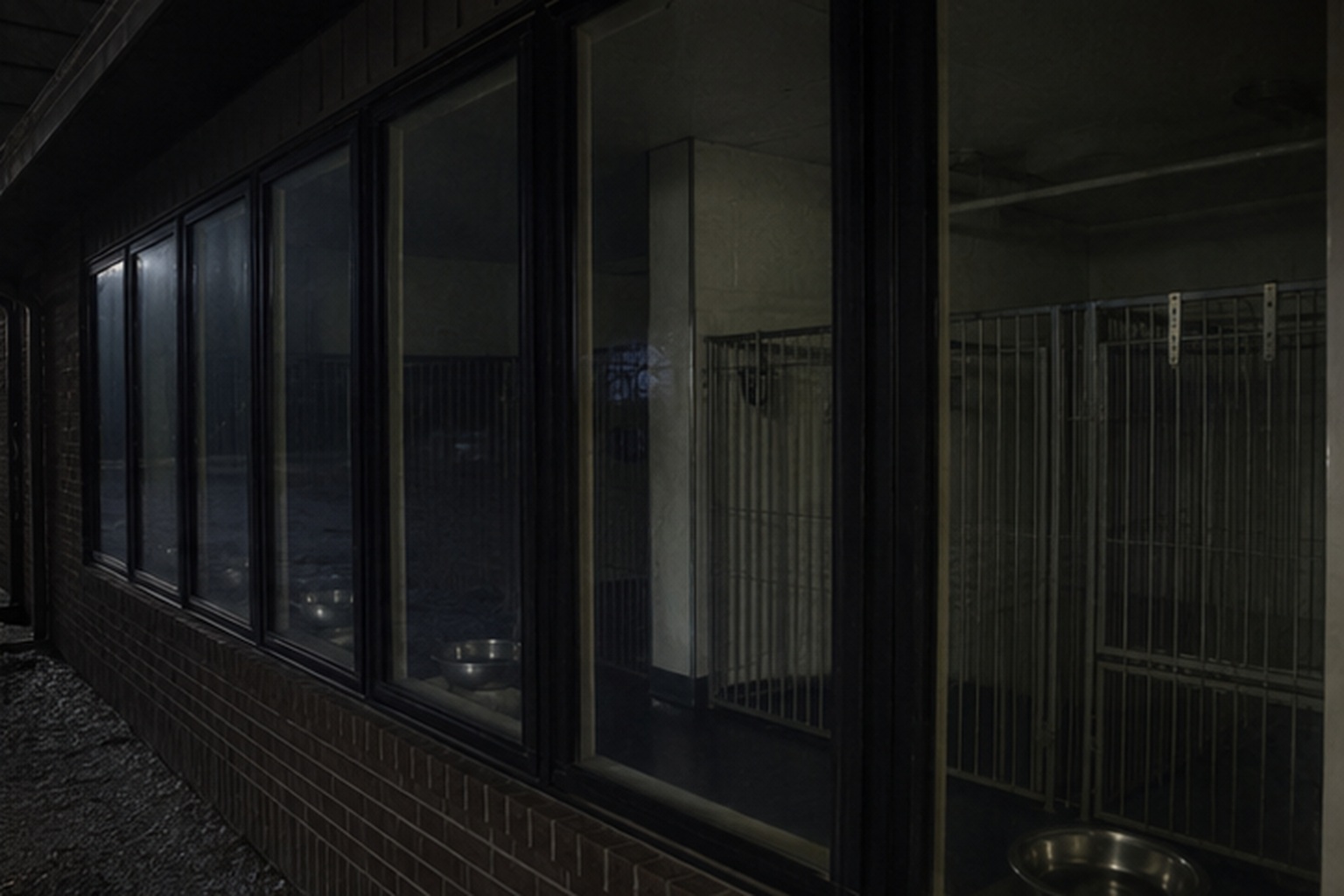
According to the version passed around by employees and clients, the dogs had been barking off and on before midnight. Nothing unusual. Then the audio dipped into a blank kind of quiet. Not peaceful quiet. Listening quiet.
Only after that did the windows show the lights.
2. The Camera Saw The Reflection First
The parking lot camera was angled too low to capture much sky.
It showed the front half of the lot, the clinic wall, the kennel windows, and a dark strip of trees beyond the property. The sky above the trees was mostly out of frame. If something passed overhead, the camera would usually miss it unless it affected the ground, the building, or the glass.
That is what made the reflection unsettling.
The row of lights appeared across the kennel windows as if the glass had become a witness. The lights were not bright enough to flood the lot. They did not cast dramatic beams or make the clinic glow like a movie scene. They sat in the window reflection, small and sharp, a blue-white line above the dark mirrored trees.
Reflections can lie.
A vehicle outside the camera’s view could reflect in glass. A sign, a phone screen, an emergency light, or a piece of equipment could bounce strangely at night. Security footage compresses glare into hard dots and turns curved reflections into straight lines.
But the staff knew the lot. They knew where headlights usually crossed the windows. They knew the color of the highway lights and the warm blink of the radio tower farther out. This looked different enough that people kept replaying it.
3. The Lights Held Their Line
Many ordinary lights move in ways that explain themselves.
Headlights rise and fall with the road. Aircraft blink and drift. Drones wobble, especially in wind. Farm equipment throws light low and uneven through trees. Emergency vehicles splash red and blue across walls in a rhythm no one mistakes for stars.
The blue-white lights in the kennel glass reportedly held a steady row.
They did not sweep across the windows like a car turning. They did not pulse in a familiar pattern. They did not separate like several vehicles on a road. In the clearest segment, the lights appeared evenly spaced enough to feel connected, but not so perfect that they looked like an obvious reflection from indoor bulbs.
That ambiguity is what gives the story its hook.
A row of lights can be anything until it refuses to behave like the things people already know. Then the mind starts measuring it against the local landscape: the tree line, the access road, the hill beyond the pasture, the height of utility poles, the route aircraft normally take.
The staff did that, and the row still seemed too high.
4. The Dogs Stopped First
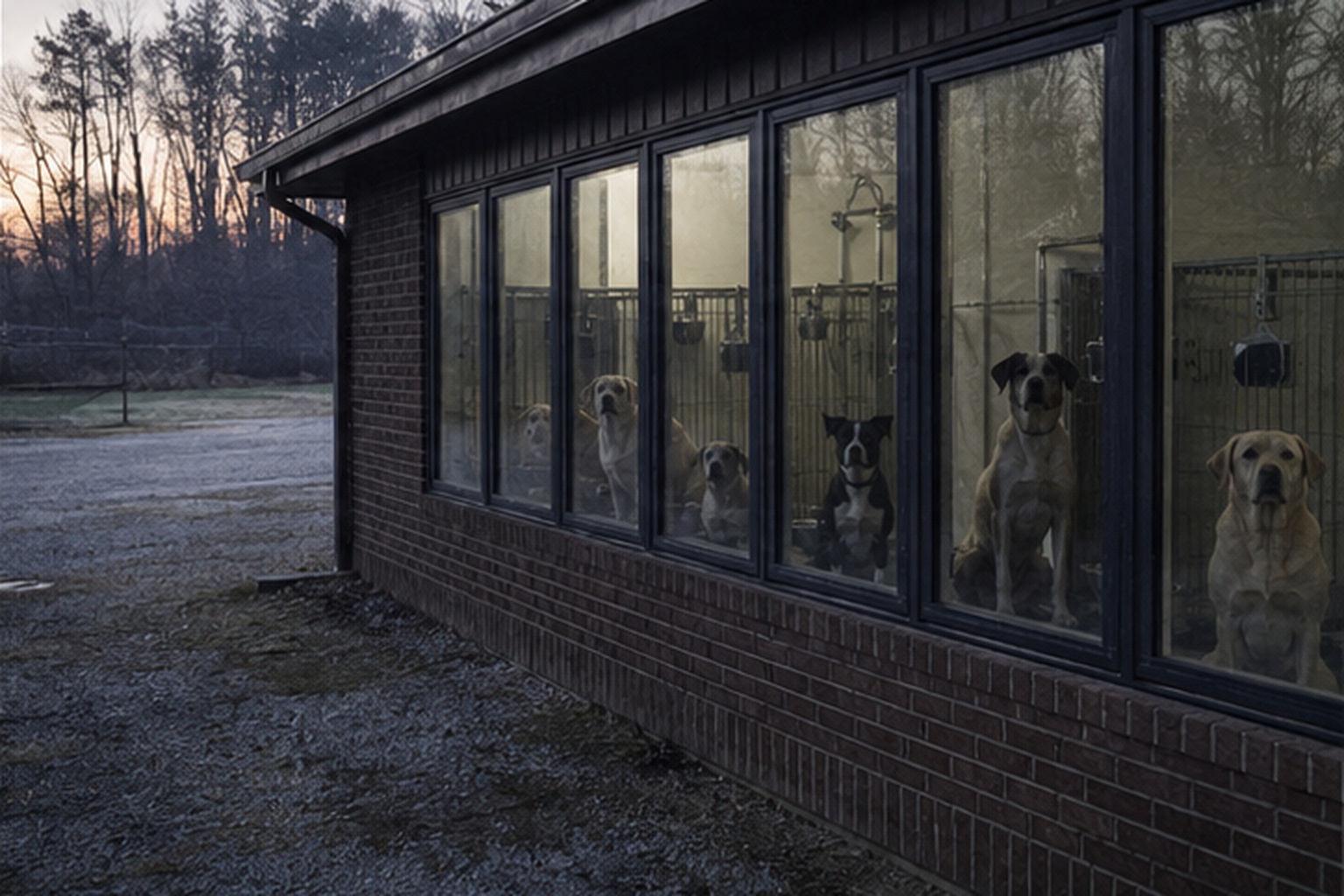
The dogs are the detail people either believe immediately or dismiss as exaggeration.
Animals react to ordinary things humans miss. They hear distant vehicles, smell predators, and sense weather before people step outside. A kennel full of dogs can also become quiet for normal reasons. One dog settles, another follows, and the whole room drops off at once.
So the silence cannot be treated as proof.
Still, veterinary workers pay attention to animals for a living. They are less likely than most people to treat every bark as mystical. If they said the quiet felt wrong, that does not mean they identified a UFO. It means the quiet did not match what usually made those dogs stop.
The timing made it worse.
On the recording, the barking faded before the lights were obvious in the glass. The animals did not seem to be reacting to a crash, a siren, or someone at the door. It was more like the whole kennel had paused.
Then the windows carried the blue-white row.
5. No Ground Visitor Appeared
This account is not remembered because of a figure in the parking lot.
There was no gray shape at the door, no footprints in the gravel, no face at the kennel window, and no animal found strangely marked in the morning. The clinic did not turn into a monster story. Nothing came down the sidewalk. Nothing tried the handle.
That matters.
The evidence stayed in the sky, or at least in the reflection of the sky. The camera gave people no alien visitor to argue over. It gave them light, silence, glass, and an ordinary building full of animals that seemed to notice something before the people did.
In a way, that restraint makes the story more durable.
A dramatic visitor would make the account easier to reject. A row of lights reflected in kennel windows is smaller, colder, and harder to turn into a clean hoax narrative. It is not cinematic. It is a strange thing appearing in the wrong part of a practical security feed.
The Best Normal Explanation
The best ordinary explanation is a reflection from something off camera.
A vehicle could have turned on a road behind the camera. A maintenance truck, utility crew, drone operator, or farm machine could have produced blue-white glare at just the right angle. The kennel windows might have reflected interior indicator lights, medical equipment, or a monitor in a way that made them appear outside. Compression artifacts could sharpen small points into a suspicious row.
The dogs going quiet could also be normal. Kennels change mood suddenly. Animals settle. Audio drops. A microphone can flatten barking into silence when gain shifts or background hum changes.
Those explanations are reasonable.
They just do not remove the discomfort of the sequence: noise, quiet, reflection, lights, empty lot.
The people who found the clip were not scanning the sky for wonders. They were reviewing routine footage at a workplace where strange animal behavior has ordinary explanations almost every day. That is why this one stood apart. It looked like the building had accidentally recorded the underside of something passing over the trees.
What Was Left By Morning
Morning made everything plain again.
The dogs barked at breakfast carts. The gravel lot filled with trucks. The windows reflected the same trees, the same sky, the same front lights, and the same employees moving through another long clinic day. No one found burn marks in the grass or damage on the roof. No one could point to a physical trace and say the lights had been there.
Only the recording remained.
In the story, the most unnerving image is not a spacecraft over a field. It is a kennel window doing what glass does: reflecting what stands beyond the viewer. In that reflection, above the dark line of rural trees, a silent blue-white row holds still while the animals inside stop making noise.
The clinic kept operating. Dogs came and went. The camera kept watching the gravel.
But after that night, people who worked there found themselves glancing at the kennel windows differently, especially when the room went quiet all at once and the glass turned black enough to show the sky behind them.