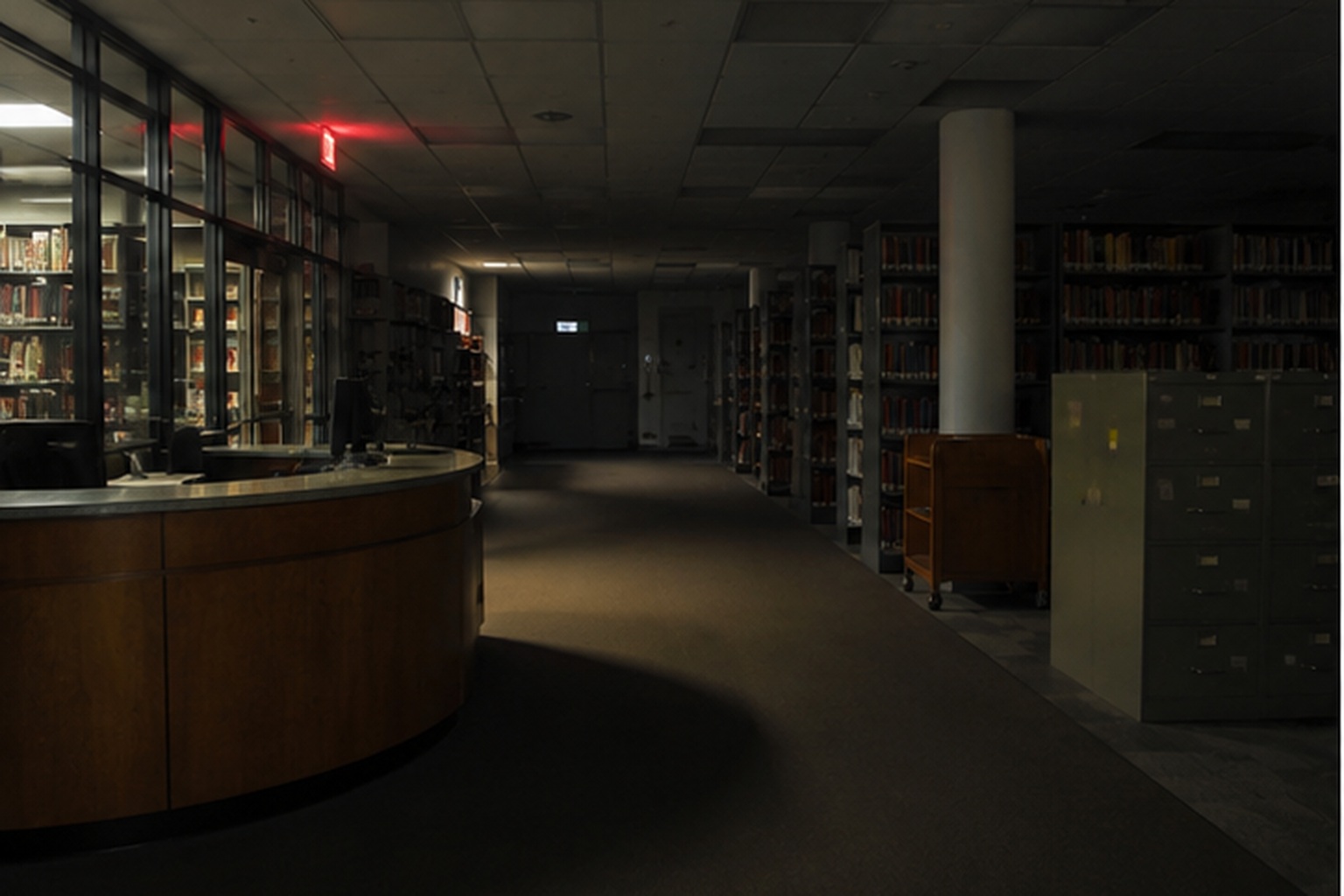
The chair was not supposed to be facing the machine.
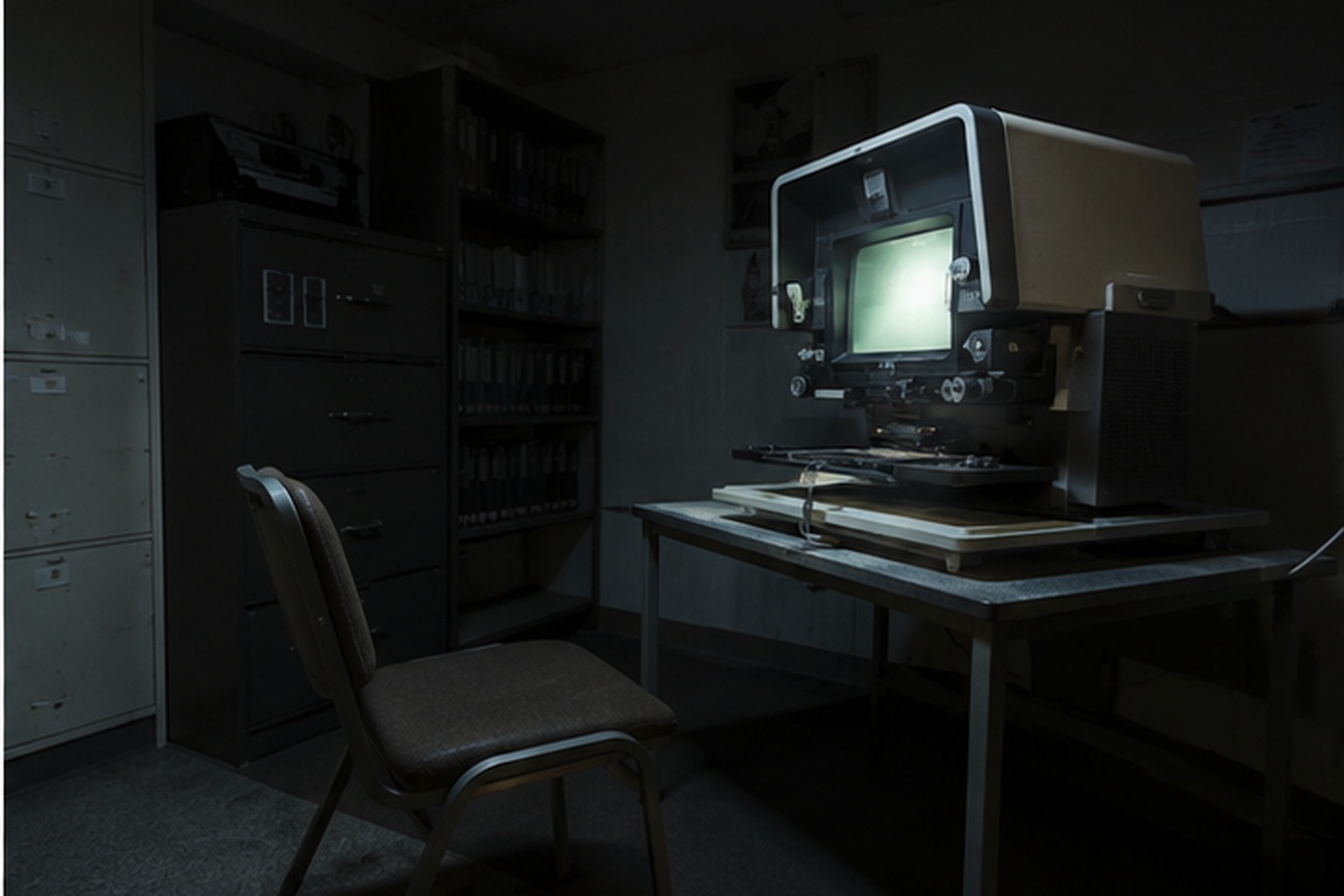
At closing, the library aide pushed it back under the table, the way staff always did in the microfilm room. The reader was switched off. The cabinet drawers were checked. The archive floor was cleared, lights were killed in sections, and the stairwell door was locked from the staff side.
By morning, the chair was turned squarely toward the reader.
A strip of film rested beneath the glass.
The screen was dark by then, and the machine was cold. But the night camera had recorded the room, and that was where the account became harder to file away as a careless closing mistake.
According to the version passed around by people connected to the library, the camera seemed to show the microfilm reader lighting up in a closed room. A few minutes later, a dark shape appeared in the chair. Not at the doorway. Not moving quickly past the lens. Sitting at the machine, as if looking into the glow.
That does not prove a haunting. Small rooms with glass, old equipment, low-light cameras, and reflective surfaces can turn ordinary motion into something alarming. A worker could have forgotten a step. A patron could have hidden on the floor. A camera compression glitch can make a coat on a chair look occupied.
But the people who saw the clip talked about stillness. The shadow sat like someone who knew exactly what they had come to read.
The Room Everyone Forgot About
The microfilm room was beige and neglected. The carpet had flattened paths between the cabinets. The walls carried faded instructions for loading reels. The reader hummed when it worked and clicked when it did not.
Most days, only genealogy researchers and local history volunteers used it. They came in with notebooks, requested old newspapers, and spent hours scrolling through weddings, fires, obituaries, and county notices. The room collected the past in gray strips and small boxes.
After sunset, the archive floor changed because no one had a reason to be there. Downstairs, public computers stayed bright. Upstairs, beyond the reference stacks, the microfilm room went flat and silent.
The camera was mounted high in a corner to watch the reader, cabinets, and doorway, mostly because film boxes had gone missing years earlier. The image was grainy at night. Passing headlights sometimes made the hallway wall brighten. Insects near the lens looked like white sparks.
None of that bothered anyone until the chair was found out of place.
The Closing Check Looked Normal
The aide who closed the archive floor reportedly remembered the room because the reader had jammed earlier that afternoon. A patron had been searching old death notices and could not get the take-up reel to catch. The aide fixed it, rewound the film, and made a note to ask maintenance about the sticky feed arm.
At closing, the same aide glanced into the room. The reader was off. The chair was tucked in. No one was inside. That memory mattered later, though memory is never perfect at the end of a routine shift.
The library’s alarm did not show a break-in. The stairwell door to the archive floor was still locked in the morning. No cabinet appeared forced. Nothing valuable was gone.
The only wrong things were small: the chair facing the reader, the glass plate lowered, and a strip of film positioned as if someone had stopped in the middle of reading.
That was enough for the manager to ask for the footage.
The Screen Came On First
For hours, the recording showed nothing but the room in darkness.
The reader sat as a pale block in the corner. The chair was a darker shape below it. The doorway held a narrow strip of hall light until the building timer shut that down too. After that, the camera saw in muddy gray.
Then the reader screen brightened.
It did not flare like a flashlight or sweep like a car beam. It grew from the machine itself, a rectangular glow soft enough to make the tabletop visible. The chair’s back appeared against it. The cabinets gained thin silver edges.
A technician could point to several possible causes. Some older machines keep residual charge. Some power strips fail in odd ways. A scheduled electrical test might wake a device. It is possible the reader was not truly off, only sleeping.
Still, the glow lasted long enough for staff to lean closer to the monitor.
No one entered through the visible doorway.
No hand reached for the switch.
The room simply brightened around an empty chair.
Something Was Sitting There
The shape appeared after the light had been on for several minutes.
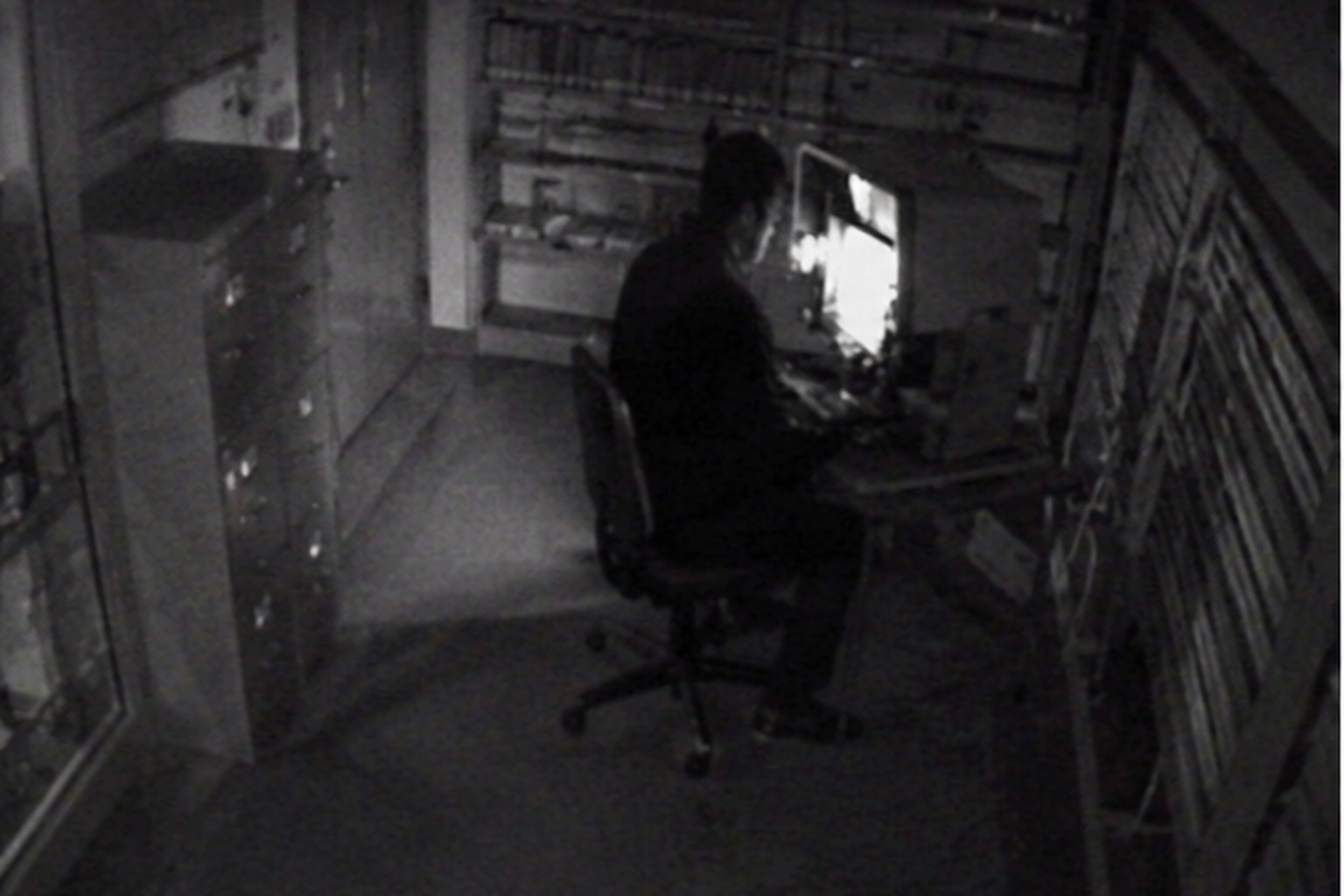
At first it could be dismissed as a camera adjustment. The image darkened near the chair, then deepened into a mass where no mass had been. The top rose just above the chair back. The sides sloped inward like shoulders. There was no clear head, no face, and no detail that could honestly be called clothing.
It looked like a person only because it occupied a person’s place.
That was what made it uncomfortable. The shadow did not loom in a corner or rush the lens. It sat centered before the reader. The upper part leaned slightly forward, the way researchers lean when a line of old newspaper print is too faint to read.
For nearly four minutes, it remained there.
The screen flickered. The shadow did not.
Some viewers suggested the chair had held a coat, and the glow made it visible. Staff pushed back because the morning chair was bare. Someone else suggested the camera was blending frames, turning a past patron into a delayed smear. No one could show the same effect elsewhere in the recording.
The most grounded possibility was an intruder outside the camera’s view. If a person slipped in before closing, sat low, and left through a route not covered by the lens, the footage would look mysterious without being impossible.
But the shape never stood up.
It did not leave through the doorway.
It faded when the reader went dark.
The Film Under The Glass
The morning discovery made the clip more difficult to ignore.
The film in the reader was reportedly from a local newspaper reel decades old. The strip under the glass showed a section near winter notices: names, dates, county meetings, and a small obituary column that staff noticed because the frame had stopped there.
No one should claim the obituary explained the figure. Microfilm rooms hold old death notices every day. That alone is not supernatural.
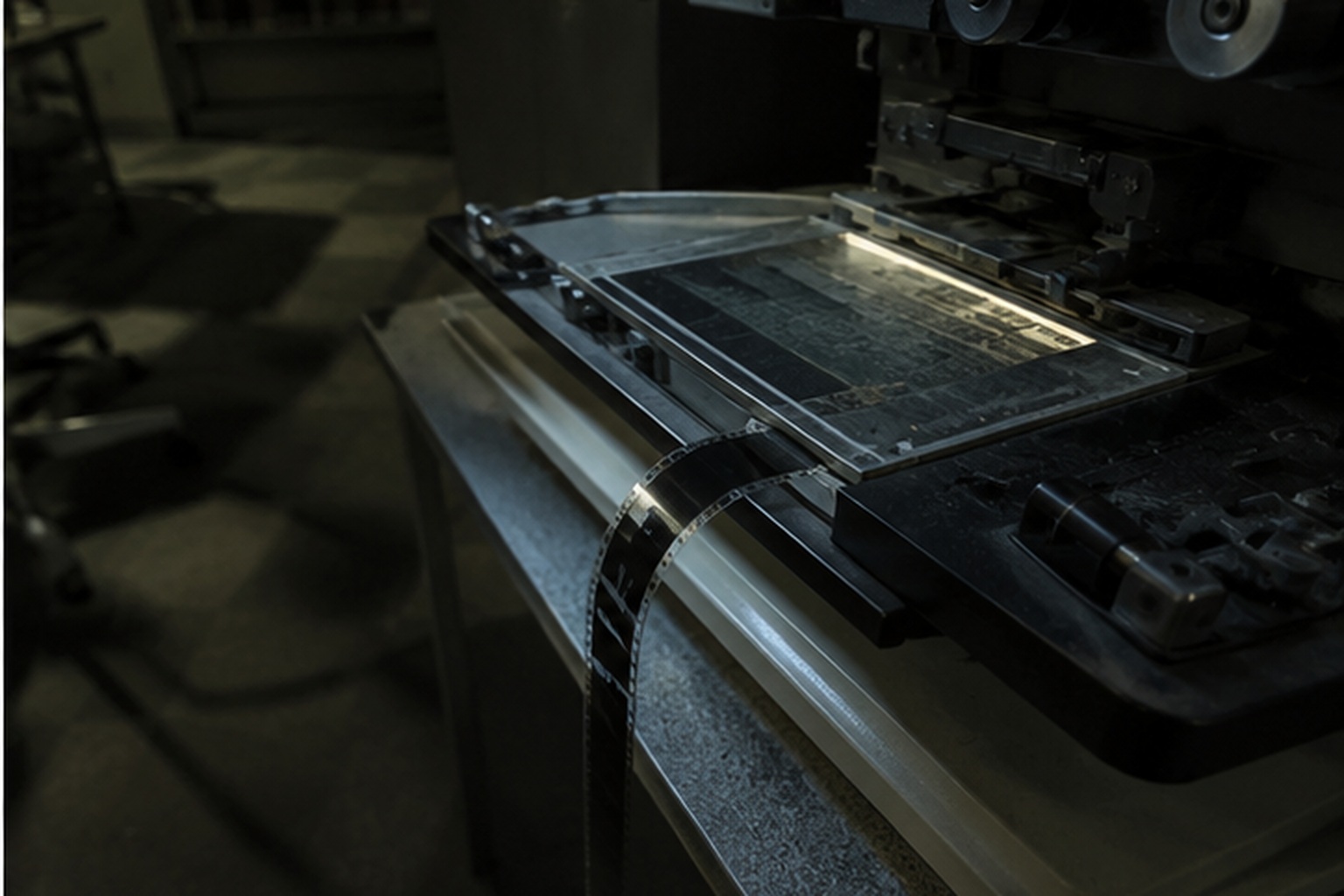
What unsettled the staff was that the reel had been threaded correctly. Loading it required opening the tray, feeding the strip under glass, catching it on the take-up side, and aligning the image. A prankster could do that. A hidden researcher could do that. A staff member could have done more than they remembered.
But if the simplest answer was human error, the camera still had to be explained: the glow, the seated darkness, and the lack of an entrance or exit.
The Room Stayed Closed
The library did not announce anything. Public buildings rarely benefit from ghost stories. The microfilm room was marked temporarily unavailable, which patrons accepted because the reader failed often anyway.
Maintenance checked the outlet. IT pulled a longer export from the camera system. Staff looked for reflections from hallway windows, passing vehicles, and the small glass panel in a nearby office door. They found ways to make lights crawl across walls. They did not recreate a seated figure at the reader.
Eventually the room reopened. The chair was removed at night and stacked in the hallway. The reader was unplugged after use. The archive-floor door got an extra check in the closing log.
Nothing as clear was recorded again, at least not in the versions shared outside the building.
That may be the answer by itself. A one-night combination of old electronics, shadows, and expectation can become a haunting because people are good at seeing presence in darkness.
Still, the image stayed with the staff who saw it.
A closed room.
A screen glowing over old names.
A chair filled by something dark and patient.
And in the morning, a strip of film resting under the glass, as if someone had come back after closing to look for a line they could not stop reading.