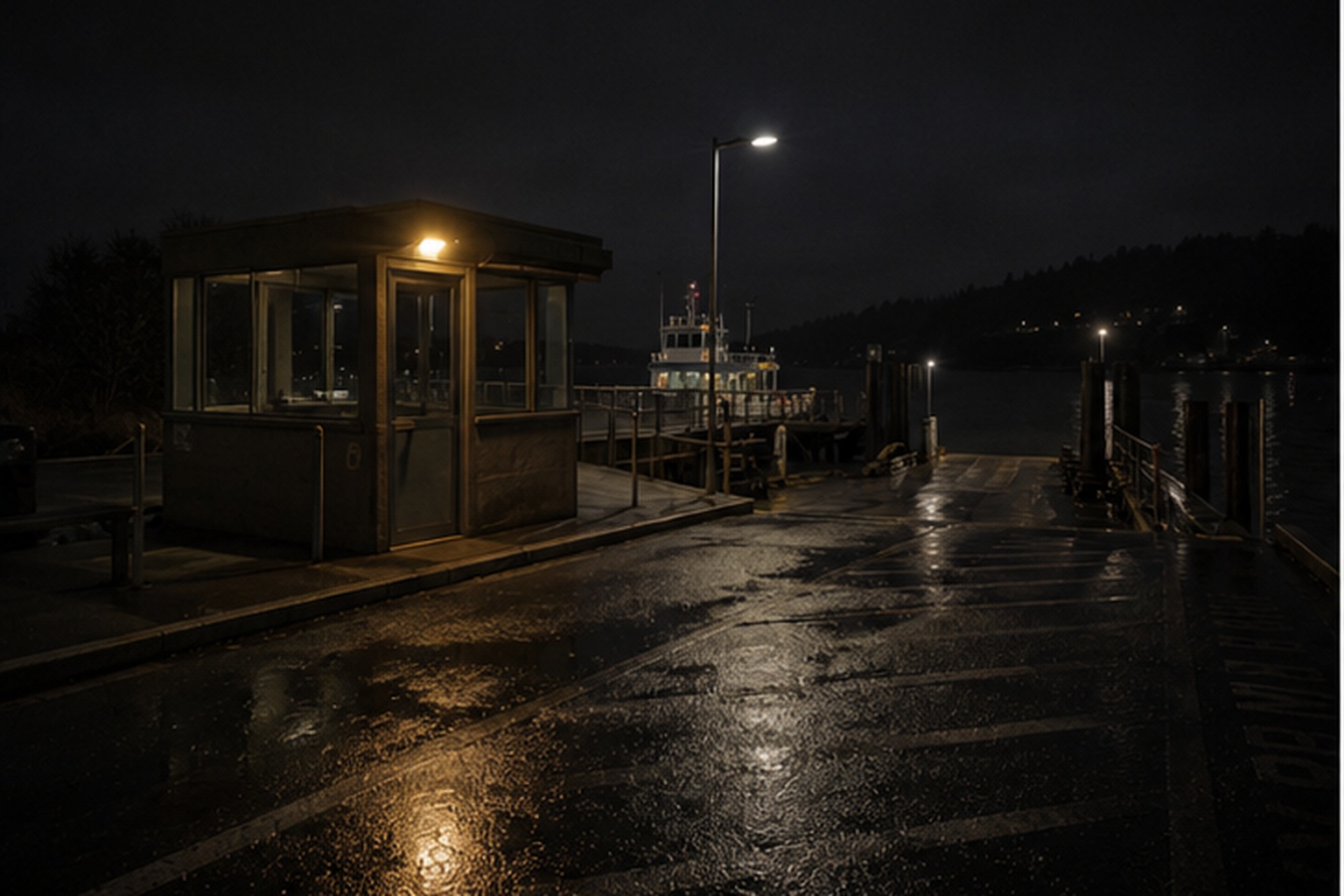
The ferry had already made its last crossing.
That mattered more than anything else in the story. The dock was closed. The ramp chains were up. The clerk had counted out, shut down the ticket computer, and locked the booth with the little receipt printer sitting quiet beside the window.
No one was supposed to buy a ticket after that because there was nowhere to go.
In the morning, one receipt was on the counter.
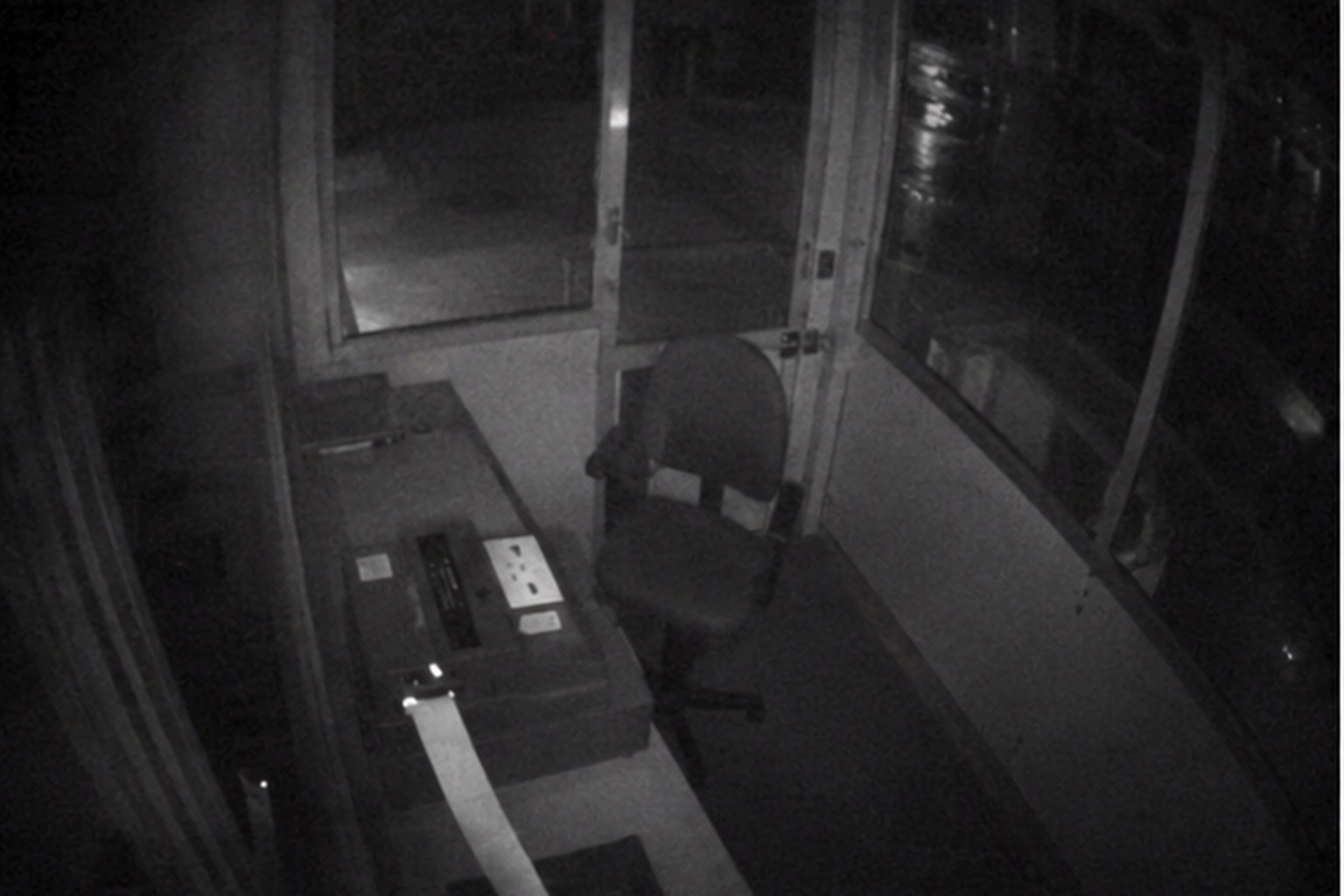
It had curled as it cooled, a narrow white strip lying half under the printer mouth. The booth door was still locked. The cash drawer was closed. The night deposit envelope matched the previous evening’s total. Nothing suggested a burglary or a late passenger being helped by staff.
At first, the supervisor treated it as a system issue. Ferry terminals run on old hardware, bad weather, and routines held together with labels. A delayed print job would not be the strangest thing to happen beside a river.
Then they checked the camera.
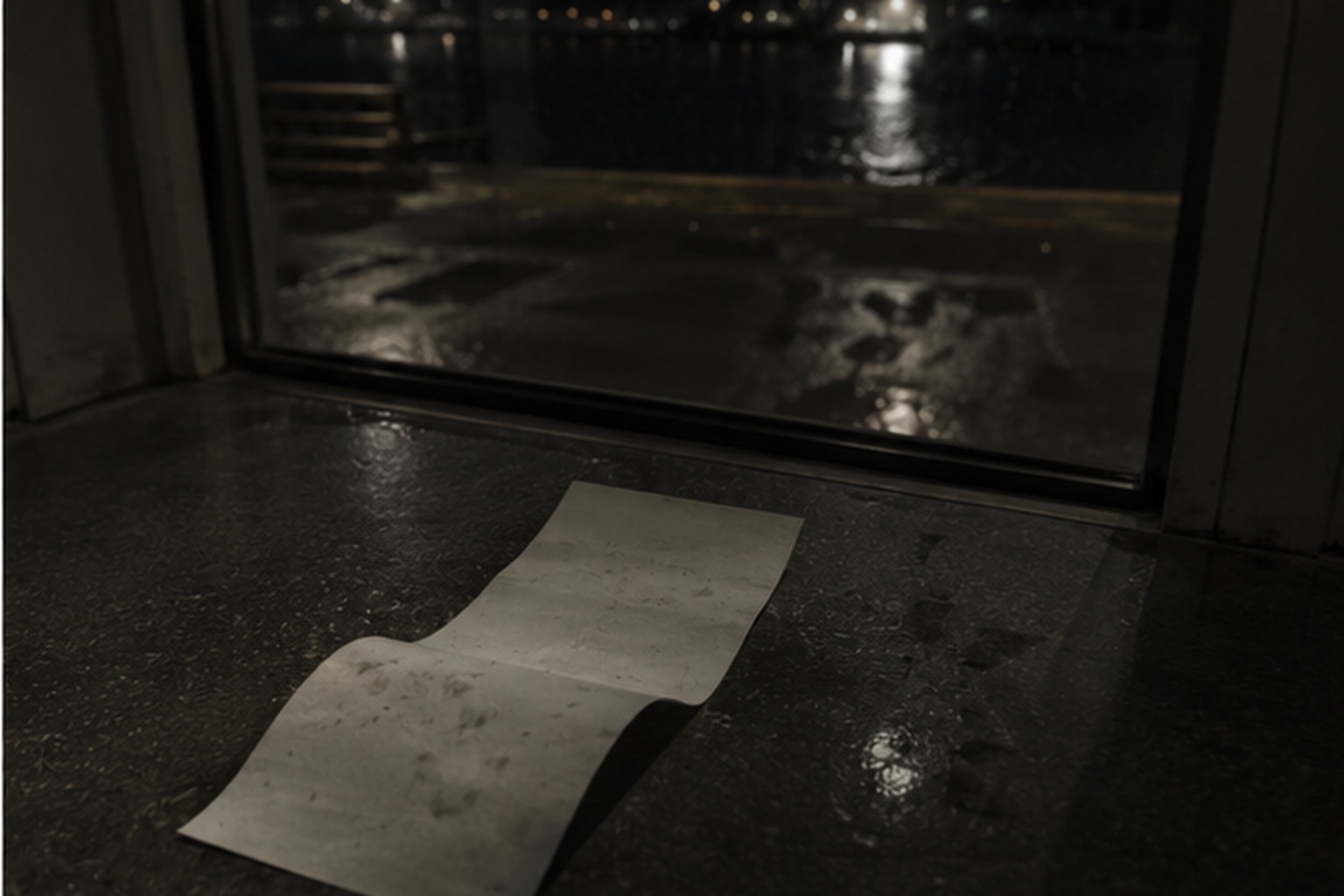
The footage reportedly showed the empty booth after closing, the dock lights reflecting in the glass, and the printer suddenly chattering once. A receipt fed out slowly while the chair beside it stayed empty.
There was no customer at the window.
There was no clerk inside.
And the final ferry of the night was already a dark shape on the far side of the water.
The Booth Was Built For Waiting
The terminal was small enough that regular passengers knew its sounds: tires bumping onto the ramp, the bell before loading, the printer whining through its plastic teeth.
By day, it was an ordinary crossing point for commuters, delivery vans, and families heading to campgrounds. By night, after the last run, the place felt less like transportation and more like an edge.
The river widened there. On damp evenings, fog collected low over the black water and erased the far landing. The ticket booth sat near the lane entrance with a view of the ramp and waiting area.
The booth’s camera watched the clerk and the transaction window because cash passed through the building. Other cameras watched the ramp and parking area.
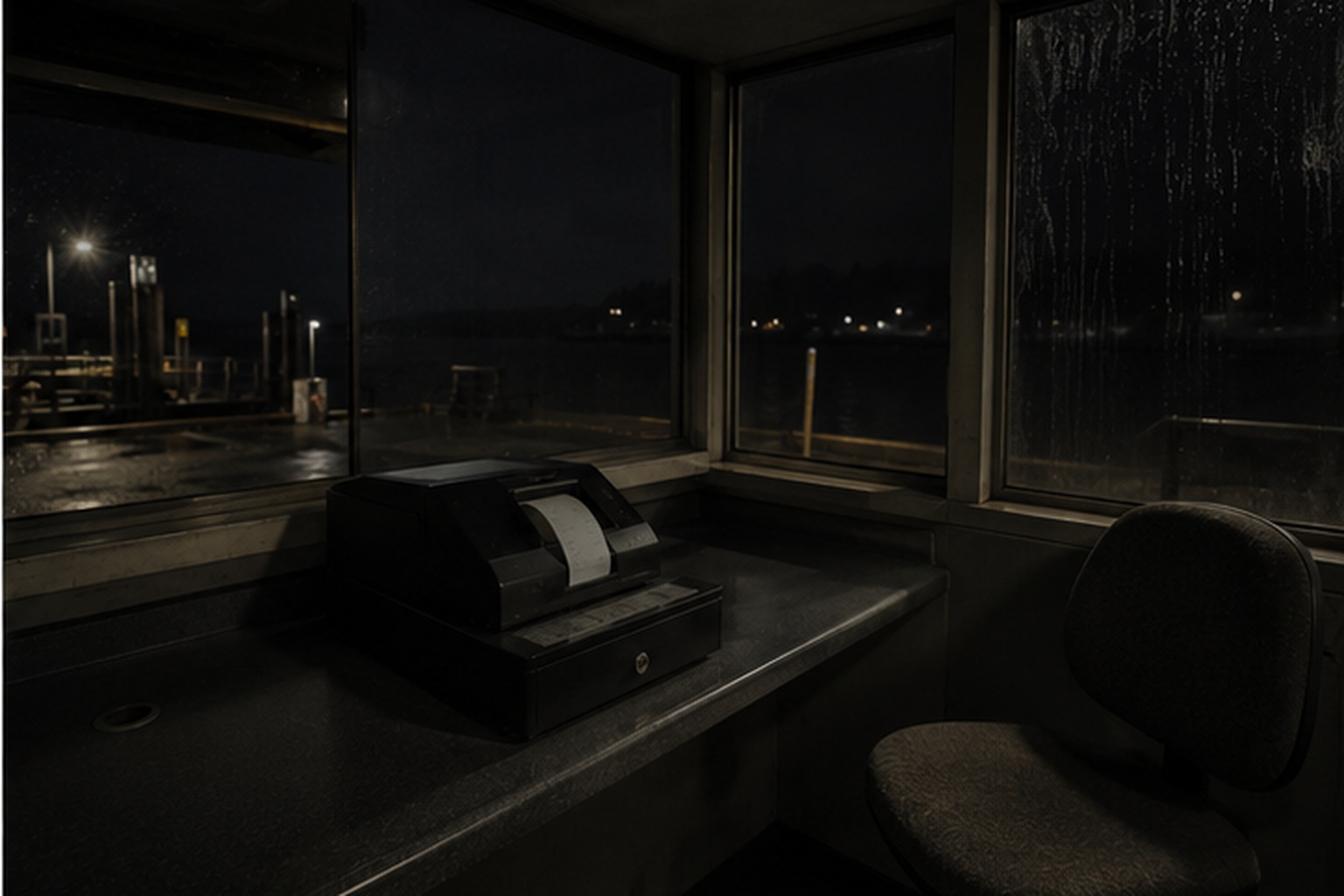
The receipt printer was old but serviceable. Staff complained that it sometimes woke up late, finishing a job after the computer froze. That detail gave everyone a reasonable place to start.
Closing Was Supposed To Be Simple
On the night in question, the last crossing was quiet.
A few cars boarded. One pickup arrived close to cutoff and was waved through after paying. The ferry pulled away with its deck lights reflected in broken lines across the water. The clerk finished the paperwork and closed the booth.
The routine was familiar. Print the final report. Count the drawer. Place the deposit. Shut down the computer. Turn off the window light. Lock the door.
The clerk later reportedly said the printer had been silent when they left. That memory could be wrong. End-of-shift details blur. A pending receipt might have been left in the queue. A transaction from the last pickup could have failed, then completed after the computer was shut down.
Those explanations stayed on the table.
But the paper found in the morning did not look like a jam cleared by itself. It was clean, fresh, and neatly advanced. It sat where a clerk would tear it off for a passenger, except no one had torn it.
That was enough to pull the camera file.
The Printer Started After The Lights Went Out
The booth camera showed the clerk leaving.
The door opened, the clerk stepped out with a bag and keys, and the booth light went dark. Reflections took over the glass. For a while, the only movement was rain sliding down the outside pane.
The final ferry could be seen on the ramp camera finishing its approach to the opposite landing. After it unloaded, the terminal on the near side remained empty.
Nearly half an hour later, the printer moved.
It was a small motion at first, just a twitch in the white roll visible through the booth camera. Then the machine made the familiar stuttering feed. The strip emerged from the slot in short advances.
The chair did not move.
The door did not open.
No hand crossed the counter.
Outside the window, there was no waiting customer, no face close to the glass, no flashlight beam from a late driver. The lane remained empty.
When the paper stopped, the booth returned to stillness.
The Receipt Did Not Settle Anything
The easiest explanation was a delayed transaction.
Printers do that. Networks lag. Old point-of-sale systems hold jobs and release them when power flickers. A receipt printed after closing may feel eerie only because humans attach meaning to timing.
Staff reportedly checked the transaction log anyway. The receipt appeared to match a crossing category used that night, but the details did not cleanly match the final report. Accounts differ on exactly what was off.
The cautious version is simply this: the paper did not immediately explain itself.
No one should build a haunting out of a receipt line. Misread records, duplicate prints, and software oddities are common in places that depend on aging equipment.
But the camera made the incident feel staged by something patient.
The booth was empty for long enough that the night had settled around it. Then the printer behaved as if a sale had just happened.
A ticket for after the last boat.
No One Was At The Window
The window view bothered the night crew most.
A person outside the booth would have been easy to miss if they stayed low or stood just beyond the angle. Still, the camera caught enough of the lane to show whether a car pulled up. None did.
The ramp camera did not show a pedestrian crossing the open pavement. The parking camera did not show a vehicle entering. The near dock stayed empty except for the chains and the wet shine of boards.
There was one moment people argued over. During the print, a darker vertical smear appeared in the booth window, reflected from outside. It could have been a piling shadow, a compression artifact, or the reflection of the printer paper moving.
Almost is the important word.
The terminal staff did not claim a figure was proven to be there. They only said the shape appeared while the receipt was printing, then was gone when the paper stopped.
That kind of detail is where stories become unreliable. One person sees a shadow. Another sees a passenger. The clearest version remains the simplest and strangest: the booth printed a receipt, and no visible person caused it.
The Last Crossing Has Its Own Weight
Ferry workers know that the last run feels different.
During the day, a ferry is machinery. At night, it becomes a lit platform moving over black water, carrying whoever made the cutoff and leaving behind whoever did not.
That may be why the receipt unnerved people more than a flickering light would have. A ticket is a promise of passage. It belongs to someone standing in line, asking to be taken across.
This receipt appeared when passage was no longer available.
By morning, the supervisor bagged the paper rather than throw it away. The printer was tested. The computer was restarted. The booth lock was checked. Nothing dramatic came from it.
The terminal kept running. Ferries do not stop because a printer misbehaves.
But for a while, closing staff changed their routine. They waited after shutdown to see if the printer moved. They looked twice at the customer window before turning off the light. Some refused to leave the chair facing the counter, as if an empty seat made the booth too inviting.
Nothing identical was reported again.
That may point toward the ordinary answer: one delayed job, one old printer, one damp night, and a camera angle that made a boring malfunction feel like a message.
Still, the image is hard to shake.
A closed terminal.
A dark river.
A locked booth with nobody inside.
And one receipt feeding out after the last crossing, curling on the counter like a ticket waiting for someone who arrived too late to be seen.