The road looked like the kind of place nobody remembers after they drive away.
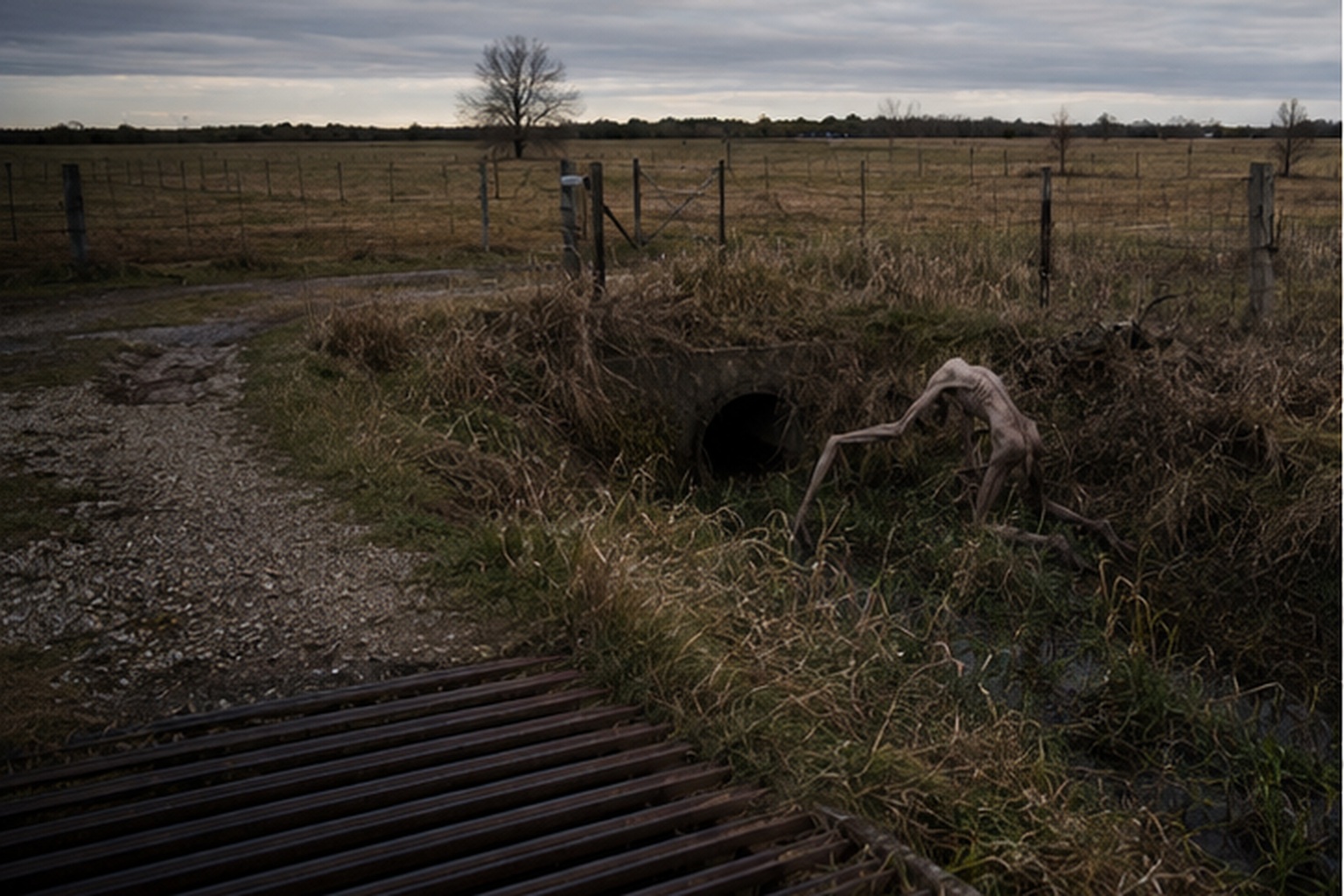
It was a gravel farm lane after rain, pale and rutted, with puddles settled in the low spots and a wire fence running beside it. A metal cattle grate cut across the track where the pasture began. On one side, the ground dropped into an irrigation ditch full of muddy water, flattened grass, and reeds bent over by runoff.
The image was not taken like a monster picture. The road was the subject. Maybe the driver had stopped to check the washed-out shoulder. Maybe they liked the look of the gray sky over wet pasture. Maybe they only wanted to show how high the water had come after the storm.
Low in the ditch grass beside the cattle grate, almost tucked under the road edge, there was a pale shape folded into the weeds. At first it looked like debris. Then it looked like a skinny animal. Then the angles began to arrange themselves into something worse.
Two crooked sticks walking under pale skin.
The Farm Road After Rain
Rain changes a farm road in ways that make every line uncertain. Grass gets pressed flat. Mud shines like hide. Branches lose their bark and turn bone-colored. Water cuts little channels through ditch banks and leaves strange shapes behind.
There was nothing theatrical about it. No eyes in the dark. No figure standing in the middle of the lane. No clean outline against the horizon. Just a wet rural road, a cattle grate, and the usual mess of a drainage ditch after bad weather.
But the ditch is exactly where the picture starts to feel wrong. Not because something was clearly posing there, but because something seemed to be using the ditch the way a living thing would use it.
It was below the road. It was partly hidden. It was close enough that a truck could roll over the grate and pass within a few feet without anyone looking down.
Where The Driver Would Have Looked
A driver stopping at that spot would naturally check the road surface first. The grate matters more than the grass. So does the fence, the mud, the washed gravel, and the question of whether the lane is safe to cross.
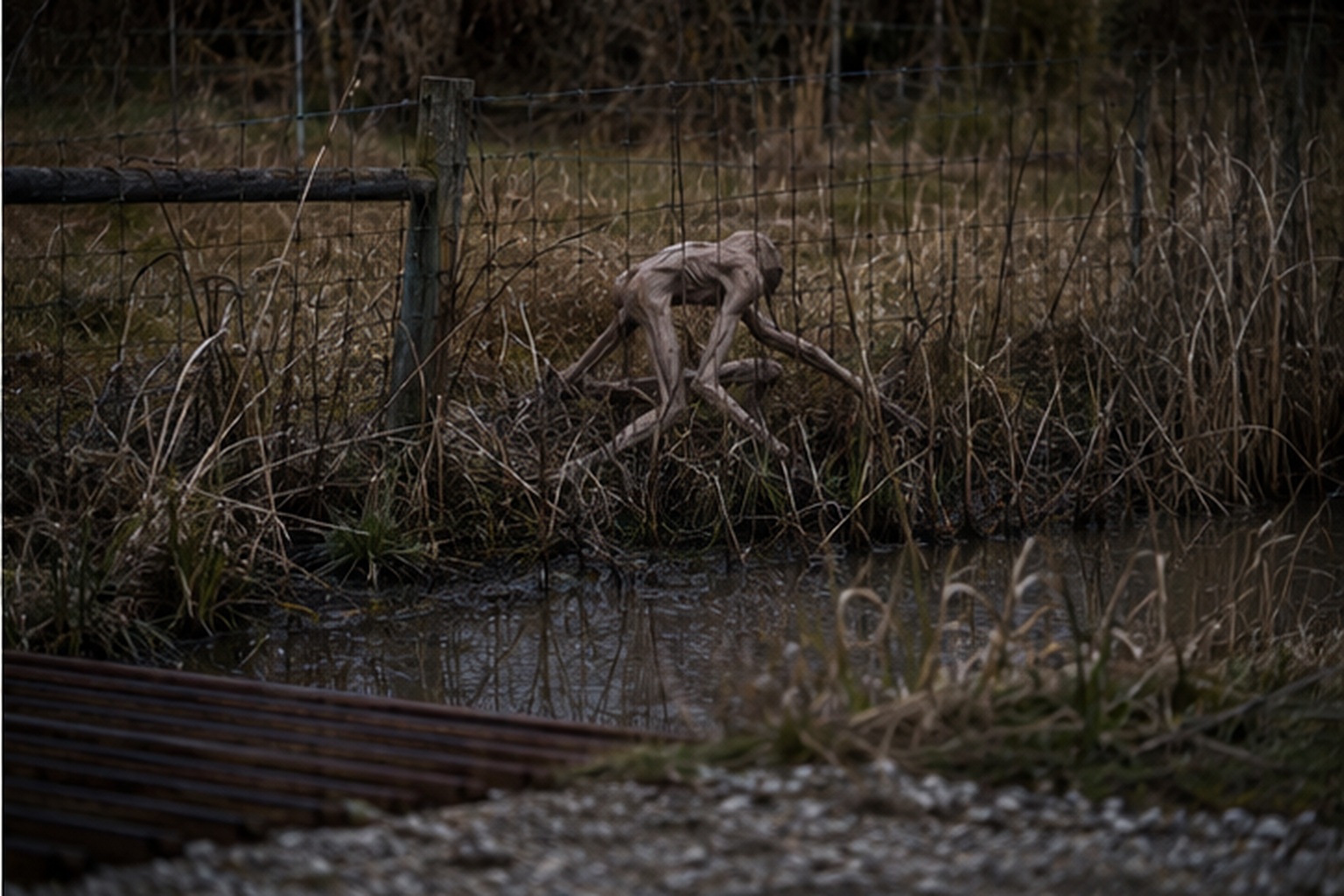
That may be why the shape was apparently noticed later. The image had to be looked at again before the pale pieces in the grass became one thing instead of several. The first viewing gave people a farm road. The second gave them a hiding place.
Once noticed, the position was hard to unsee. The narrow pale center sat back from the road, screened by stems. One long angle dropped toward the water. Another bent up through the grass in a way that suggested a joint instead of a snapped reed.
It did not look like something crossing the open lane. It looked like something that had stopped because the vehicle stopped.
The Shape In The Ditch Grass
The most unsettling part was not size. It was proportion.
The body, if it was a body, appeared small and narrow. The limbs, if they were limbs, seemed too long for it. They were thin enough to be mistaken for plant stalks, but they did not quite scatter like plants. They met the pale center with a disturbing sense of attachment.
That is where the phrase stick-limbed creature came from. It was not a muscular animal, not a wolf, not a calf, not any familiar pasture shape caught mid-step. It looked starved down to angles.
The skin, or what people read as skin, was the same sick pale tone as sun-bleached wood. Patchy darker places along it made the shape feel physical instead of clean. It was not a perfect white figure. It was dirty, wet, and partly lost in the reeds.
The Cattle Grate Made It Worse
Those metal bars are familiar on rural lanes. They are built for trucks and hooves, and their straight lines tell the eye how wide the road is. In this image, the grate made the ditch feel close, shallow, and ordinary. It also made the pale shape feel uncomfortably near.
If the thing in the grass was only a pile of weeds, it was an unfortunately animal-shaped pile of weeds. If it was an animal, it was folded in a way that hid the head and stretched the limbs into strange places.
A deer lying down can become unrecognizable in tall grass. A wet dog can look hairless. A coyote with mange can turn into a nightmare at the edge of a field.
Still, the grate anchored the imagination. It made viewers picture a driver pulling up, tires clicking over metal, never knowing that something pale and jointed might be pressed into the ditch beside the front wheel.
The Head That Would Not Resolve
Most rural mysteries become less frightening when the head is found.
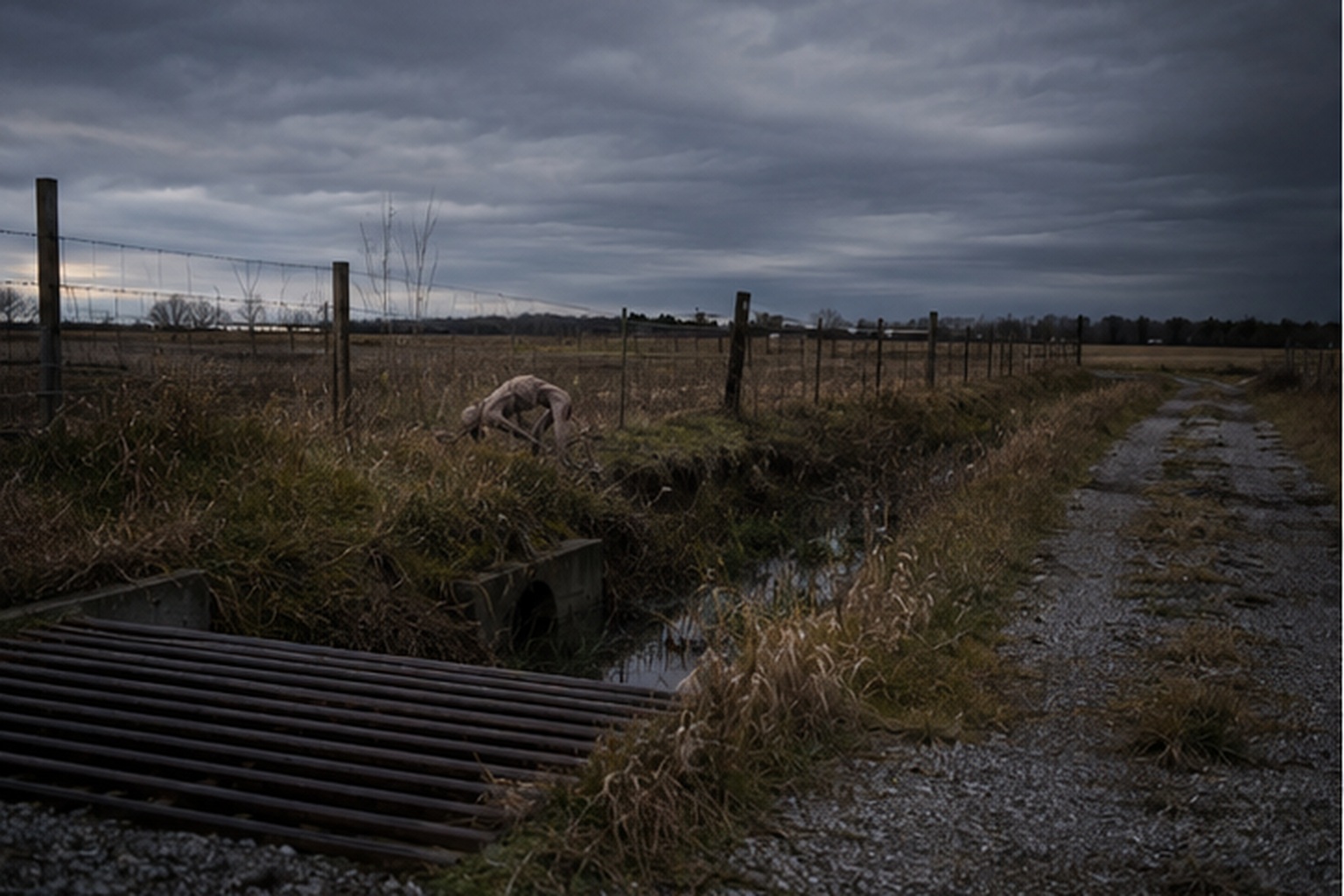
Find the snout and it becomes a dog. Find the ears and it becomes a deer. Find the muzzle and shoulder and the mind relaxes, even if the animal is sick or wet or badly angled.
Some people saw a small dark knot tucked near the culvert edge. Others thought the narrow body simply faded into shadow. Some thought the head was turned away and held almost level with the ditch bank, as if the thing were trying to keep itself below the top of the grass.
None of those readings can be trusted completely. Grass interrupts everything. Mud creates false borders. The eye finishes shapes before the image does.
But the missing head mattered because the limbs had already suggested a body. Without a normal head to make sense of it, the figure felt less like an animal caught at a bad angle and more like a crouched thing deliberately keeping its face out of view.
What It Could Have Been
The pale lines could have been dry reeds, exposed roots, bits of irrigation pipe, or sun-bleached branches washed into the ditch. The darker center could have been mud, a clump of grass, a rock, or a torn feed sack snagged on the bank.
If there was an animal there, it may have been something common and unhappy: a wet dog, a mangy coyote, a young deer crouched low, or livestock partly hidden by weeds. Farm edges create ugly illusions, especially after rain has flattened grass in several directions at once.
The mind also does its part. Once someone traces a creature in a chaotic image, everyone else starts from that outline. A reed becomes a forearm. A shadow becomes a rib cage. A branch becomes a shin.
The problem is that sensible does not always erase the feeling of being watched from below.
Why The Mundane Answer Still Feels Wrong
What kept people returning to the image was not a claim that the shape had to be impossible. It was how well it fit the place.
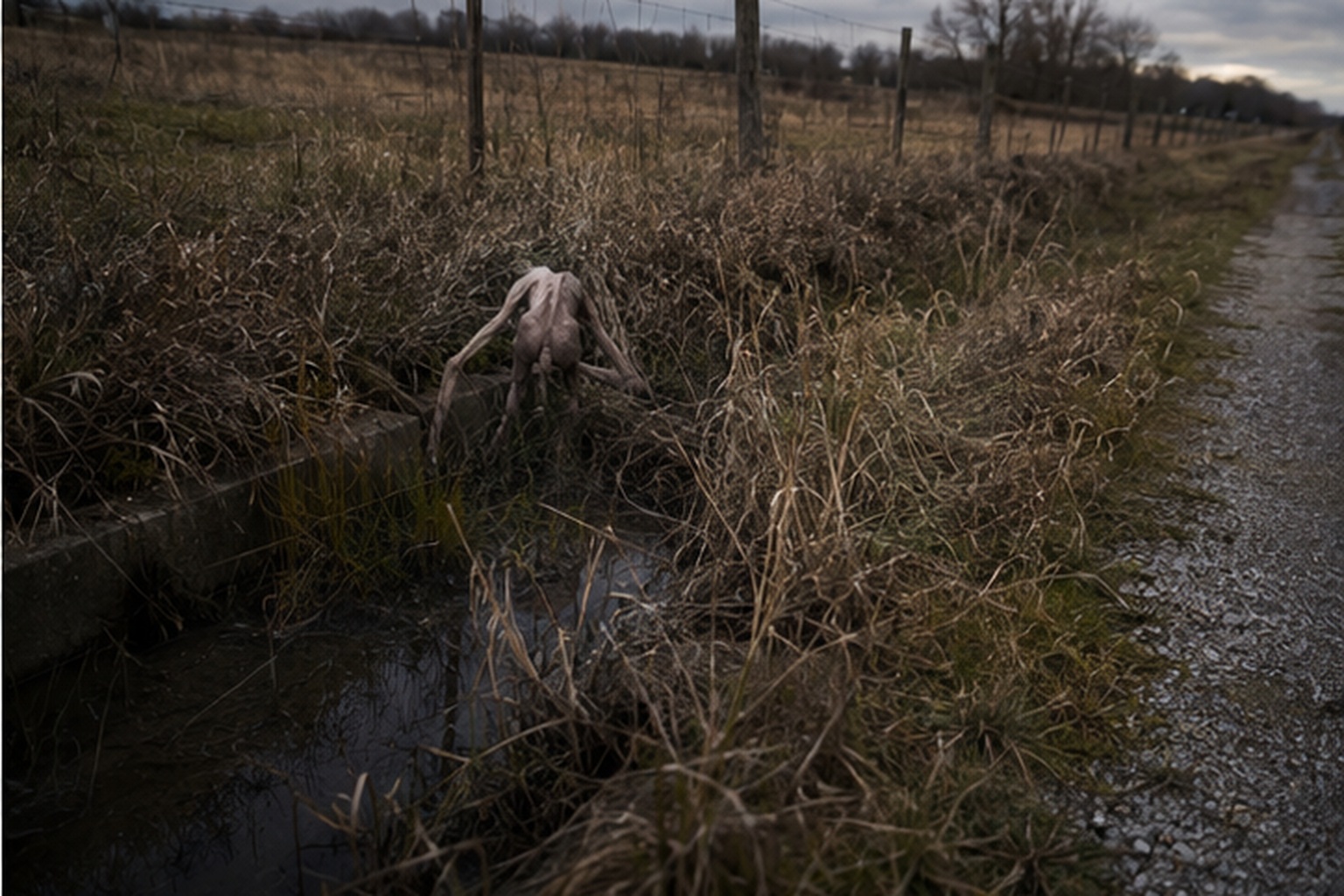
An irrigation ditch is a ready-made route for something that does not want to be seen. It runs beside roads, under fence lines, through culverts, and along pasture edges. It lets a low animal move beside human paths without stepping onto them.
The figure seemed built for that strip of land. Too low for the road, too pale for the mud, too jointed for brush, too hidden for comfort.
There is a particular fear in realizing that the open lane was not the dangerous part. The dangerous part was the narrow trough beside it, the place drivers ignore because they are focused on the gate, the grate, the fence, the chore.
What Was Noticed Too Late
A driver stopped on a wet farm road after rain. The cattle grate was ahead. The ditch was full of flattened grass and muddy water. Something pale was already low in the reeds, or something ordinary had arranged itself to look that way.
The driver did not react because there was nothing to react to. Not then.
Only later did the shape appear. Only later did the pale angles stop being background clutter. Only later did the mind connect them into thin limbs, a narrow torso, and a posture too aware of the road above it.
Maybe it was weeds. Maybe it was a sick animal. Maybe it was a branch, a sack, and shadow lined up by rain and luck.
Or maybe something hairless and gaunt had been moving along the irrigation ditch when the vehicle slowed at the grate. Maybe it folded itself into the grass, held still, and let the road become empty again.
Not a chase. Not an attack. Just the thought of passing a familiar farm road after rain and never knowing what was tucked below eye level, waiting in the ditch grass.