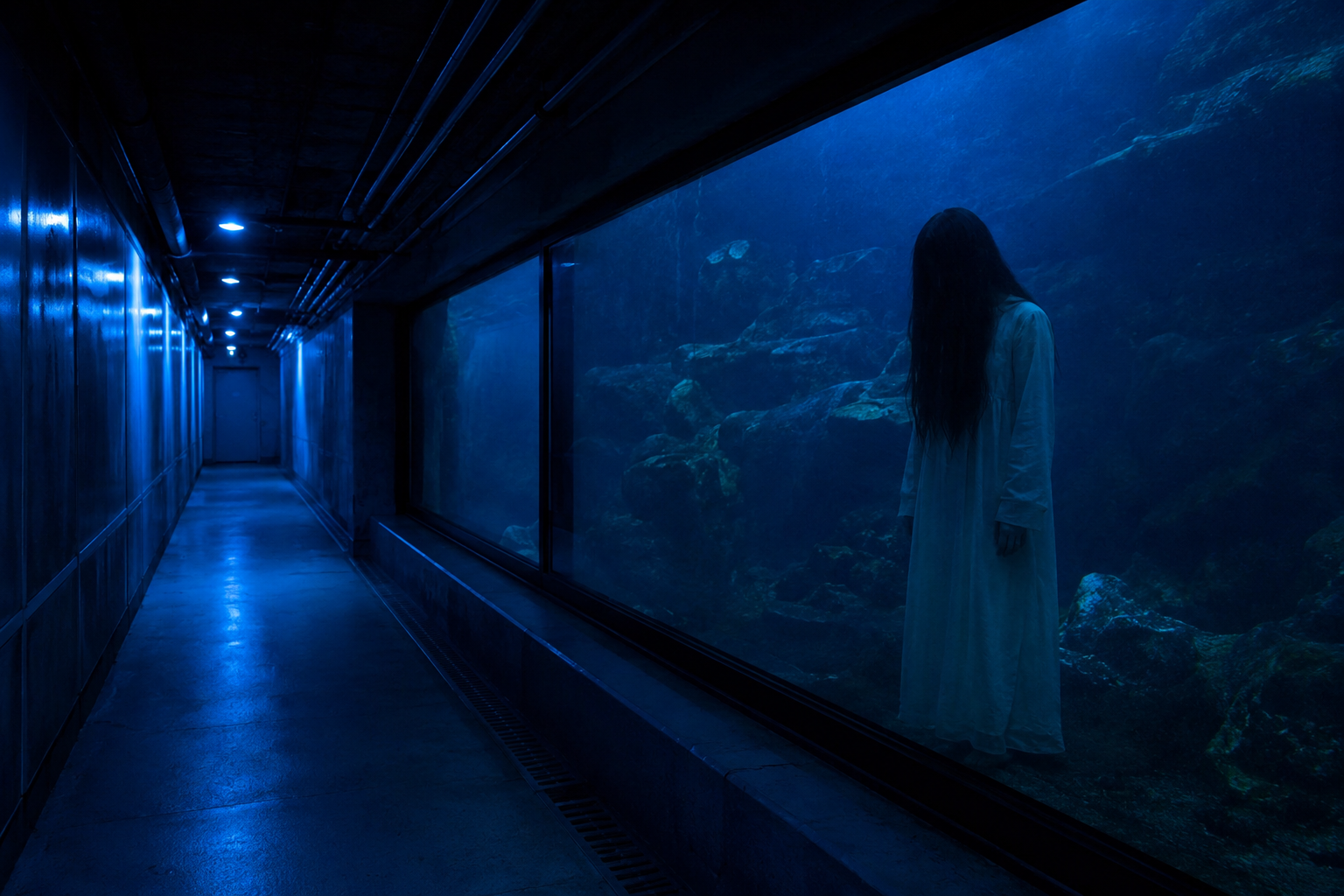
The photo was supposed to prove the tunnel lights had been left on.
That is how the story usually begins, with a tired aquarium employee doing something ordinary after closing: walking the staff route, checking doors, and snapping a quick picture for a manager who wanted to know why blue light was visible from the lobby.
The public galleries were already dark. The gift shop register had been counted. The last families had gone home. Only the service tunnel remained lit, a narrow concrete passage behind one of the larger tanks.
In the picture, the corridor bends away under pipes and cables, the floor shines with old water, and along the left side thick glass holds a deep blue rectangle.
Behind that glass, the story goes, a woman in a white dress is standing where no walkway exists.
The Aquarium After Closing
Closed aquariums have a different feeling than empty offices or schools. They are not truly silent. Pumps hum behind walls, water clicks through valves, and filters throb with a low mechanical pulse that seems too large for the building around it.
People who have worked nights in places like that often describe the same unease. You are alone, but everything around you is alive, and a wall can seem to breathe if a fish passes close to the glass.
The employee in this account was not hunting for anything strange. According to the local version, he had been asked to check a staff-only corridor after a cleaner noticed blue light under a locked door.
He took the service route because it was faster than reopening the public gallery. The tunnel was not a scenic exhibit space. It was practical, damp, and ugly, with valves marked in peeling tape and a hose left coiled beside a drain. It was also supposed to be empty.
A Blue-Lit Corridor
The tunnel ran beside the rear of a tank visitors saw from the main hall during the day. From the public side, it looked beautiful: drifting fish, artificial rock, shafts of blue light, children pressing hands against the viewing panel.
From the staff side, it was less magical. There were electrical boxes, mop buckets, access panels, and a long stretch of reinforced viewing glass that let workers inspect the tank edge without going into the gallery.
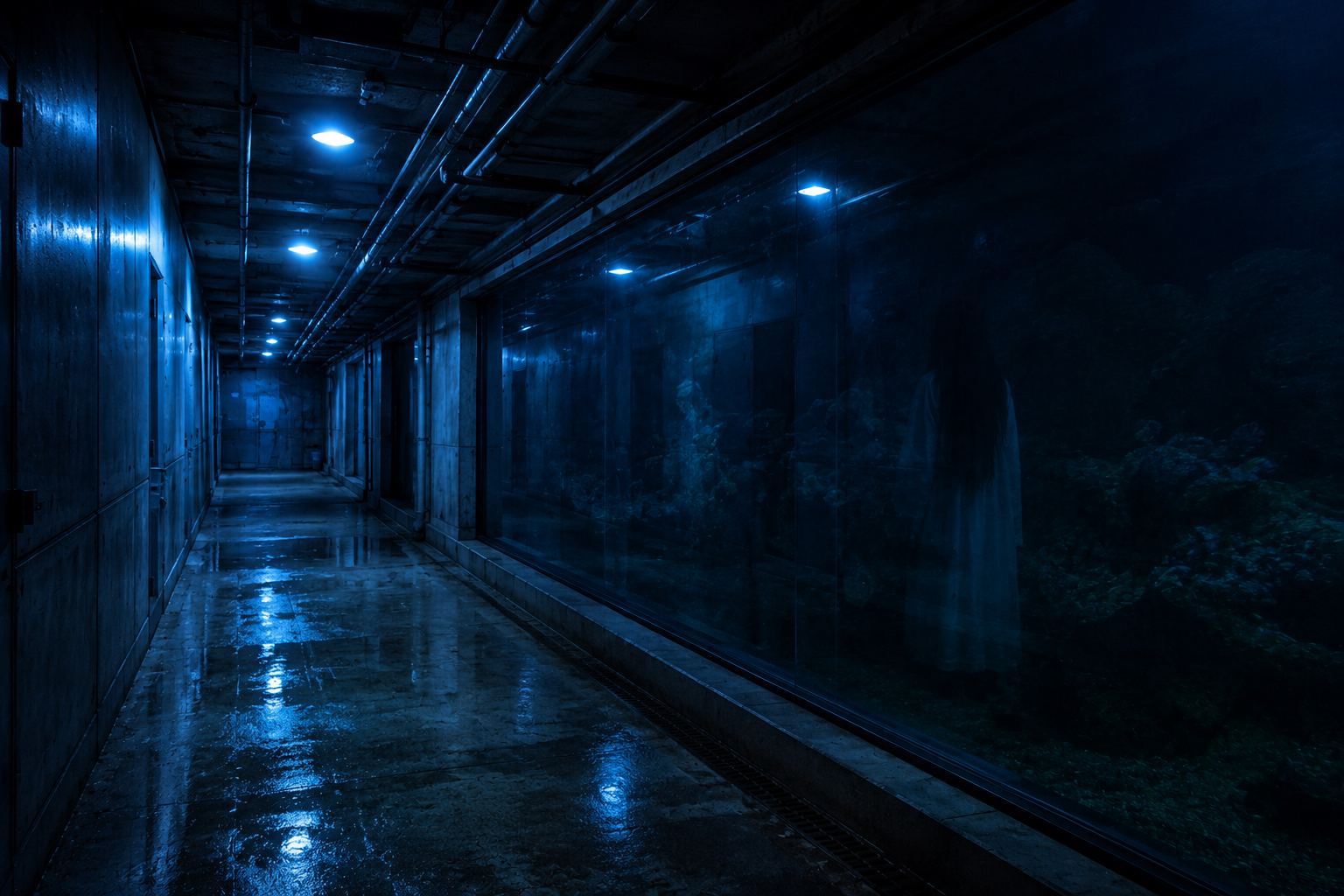
The photo showed that stretch clearly enough. Not perfectly, because phone cameras struggle in blue light, but enough to see the straight corridor, the wet floor, and the dark mass of water beyond the glass.
At first glance, nothing was wrong. The white figure was noticed later, after the photo had been sent, saved, and brightened by someone who thought the tunnel looked creepier than usual.
That is when the shape became hard to ignore.
The Woman Behind The Glass
She appeared on the tank side of the pane, not in the hallway. That is the part people repeat, because it turns a simple ghost story into a problem of architecture.
A person in the tunnel would be frightening, but possible. A person behind the glass would need floor, air, and access.
The figure seemed upright, narrow, and pale, with a white dress or gown falling straight down. A dark area at the head suggested hair, although the image was too murky for a face.
There was no dramatic reaching hand, no glowing eyes, and no theatrical pose. She simply stood a few feet beyond the glass, angled as if watching the corridor from inside the tank wall.
The employee reportedly went back through the tunnel with another worker. They found no person, no costume, and no white sheet caught in the equipment. If there was a ledge behind that panel, neither worker knew of one.
Where No Walkway Exists
The aquarium’s layout is the detail that made the story travel. People said the space behind that viewing glass was not a hidden balcony or maintenance platform. It was tank space, a sealed area of water and rockwork bordered by concrete and filtration systems.
Service access existed elsewhere, but not there. Divers could enter the tank under controlled conditions, and staff could reach mechanical rooms through separate doors, but the photo seemed to place the white figure in a dead zone.
That does not mean the photo settles anything supernatural. Buildings are complicated, and aquariums especially can contain crawlspaces, false backs, reflections, and angles visitors never see.
Still, the local story insists the employee asked someone familiar with the plans. The answer, as it is usually told, was simple: nobody should have been standing in that spot because there was nowhere to stand. That sentence is probably why the image stayed in circulation.
The Reflection That Did Not Behave
The most reasonable first explanation was reflection. Glass in aquariums is a trap for reflections, layering the room behind you over water in front of you.
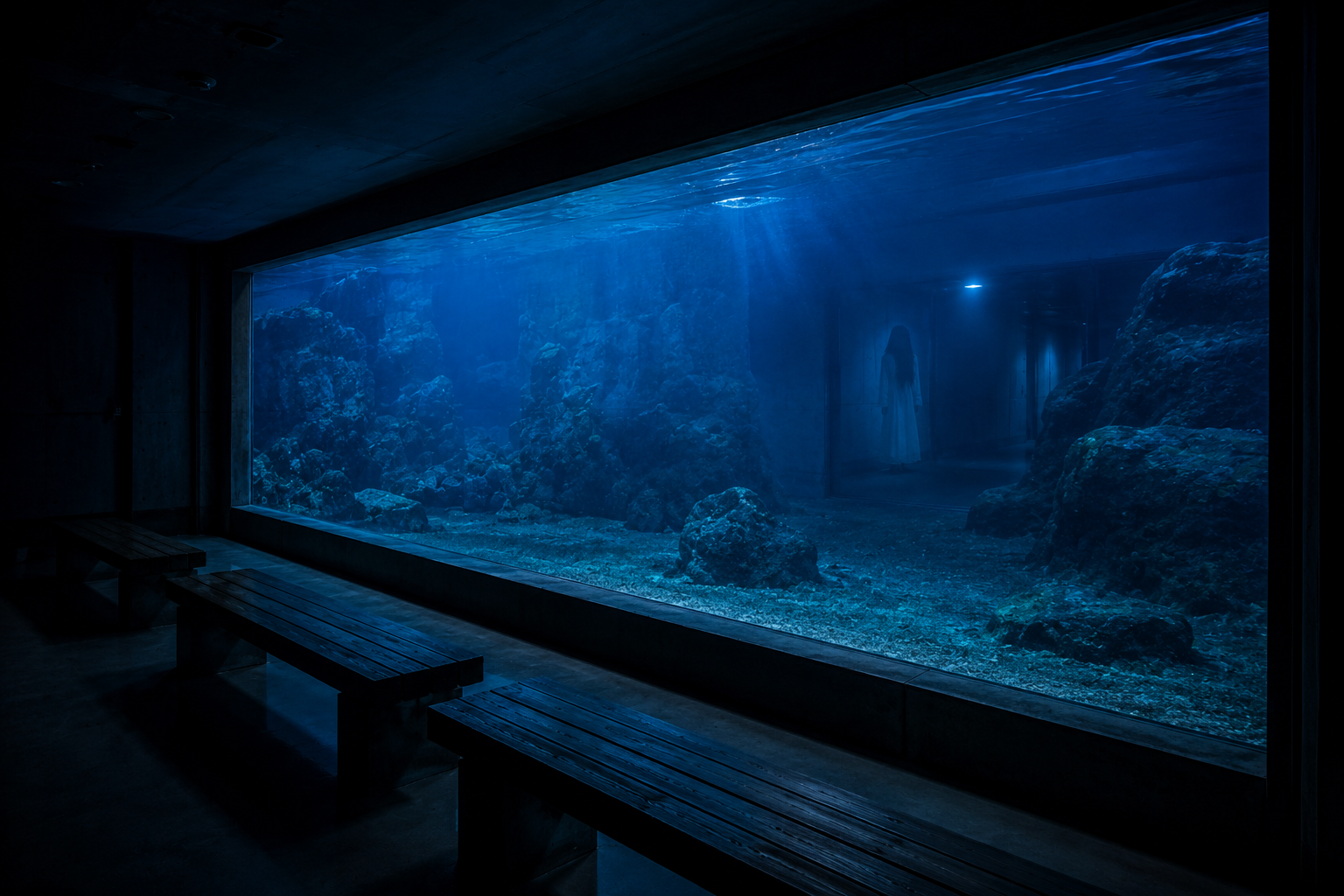
It can turn a pale sign, a mop handle, or a worker’s shirt into something that appears to float on the wrong side of the pane. Blue light makes it worse. Edges blur, whites bloom, and shadows take on the weight of hair or fabric.
People who wanted the story to stay grounded pointed to those possibilities immediately. The problem, according to those who saw the photo, was that the figure did not line up with anything obvious in the corridor.
The bright objects on the staff side had their own reflections. The white-dress shape sat deeper, slightly offset, with the wrong scale for a bucket or hanging towel.
It looked less like something reflected on the glass and more like something reflected from inside it. That is a feeling, not certainty, but frightening stories often survive on feelings that remain after the explanations have been named.
What The Staff Checked
The next morning, people said the tunnel became an unofficial stop before opening. A few employees looked at the spot in daylight and checked the hose rack, the door window, the opposite wall, and the ceiling where a loose plastic sheet might have made a pale shape.
Nothing matched cleanly. Someone stood where the photographer had stood and took another picture. Someone else walked the corridor wearing a light sweatshirt to see how a human reflection would fall across the glass.
Those attempts reportedly produced reflections, but not the same one. A human in the corridor looked like a human in the corridor. A bucket looked like a bucket once the angle was known.
Even a white rag hanging from a pipe looked lower and wider than the figure in the original image. That is the version believers prefer, though skeptics would say memory improves mysteries after the fact. By the time a strange photo becomes a local story, every retelling has polished the edges.
The Ordinary Explanations
There are plenty of mundane possibilities, and they deserve space. The figure could have been a reflection from a person outside the frame, a pale maintenance cover, a folded plastic sheet, or a cleaning smock hanging in a place no one remembered later.
The white dress might have been an illusion made by glare on wet glass. The dark head could have been a cable bundle, a pipe shadow, or the silhouette of a fish passing at the exact wrong moment.
Phone cameras also invent certainty. In low light, they sharpen some details and smear others. A small vertical shape can become a body when software tries to rescue a bad image.
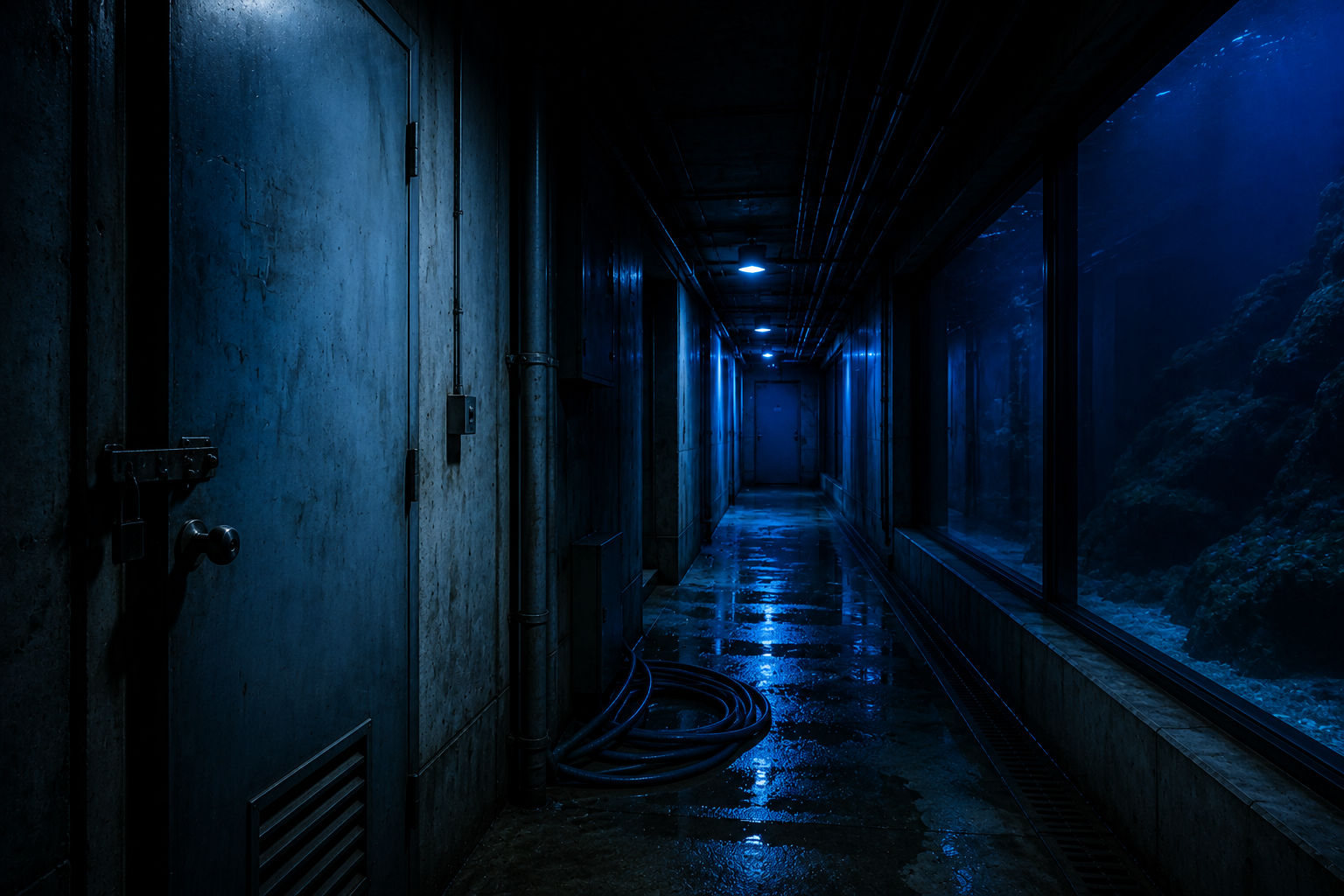
And then there is expectation. A blue aquarium corridor already looks haunted. Once someone says, “Do you see the woman?” the brain becomes very good at seeing her.
None of those explanations ruins the story. They make it more interesting because they show how close the image sits to the border between mistake and apparition. The unsettling part is not that no explanation exists. It is that several almost exist.
Why The Story Stuck
The aquarium did not become famous because of the photo, at least not in any official way. There was no grand announcement, no final answer offered, no serious claim that a ghost had been documented behind a tank wall.
The story stayed smaller than that, passed between workers, friends, and local people who liked the idea of the building having one cold secret after hours.
Maybe that is why it feels believable as folklore. The scene is too practical to feel invented for drama: a staff tunnel, a manager’s request, a bad phone photo, and a white shape noticed only after everyone had already gone home.
The apparition, if that is what people choose to call it, does not chase anyone. It does not bang on the glass, leave wet footprints, or whisper from the filtration room.
It stands behind the pane, in blue light, as if waiting for someone in the corridor to look back.
The Last Look Down The Tunnel
The employee supposedly deleted the photo from his phone after people kept asking to see it. Whether that part is true or only added later, it gives the story the ending it wants.
The image becomes unavailable, which makes every description feel both weaker and harder to shake. All that remains is the layout: empty tunnel, blue glass, wet concrete, and a white-dress figure placed where the mind says a person cannot be.
Maybe it was glare. Maybe it was fabric. Maybe it was the camera making a woman from light, water, and fear. But people who like the story do not remember it for certainty. They remember the moment someone zoomed in and realized the corridor was empty, while the glass was not.