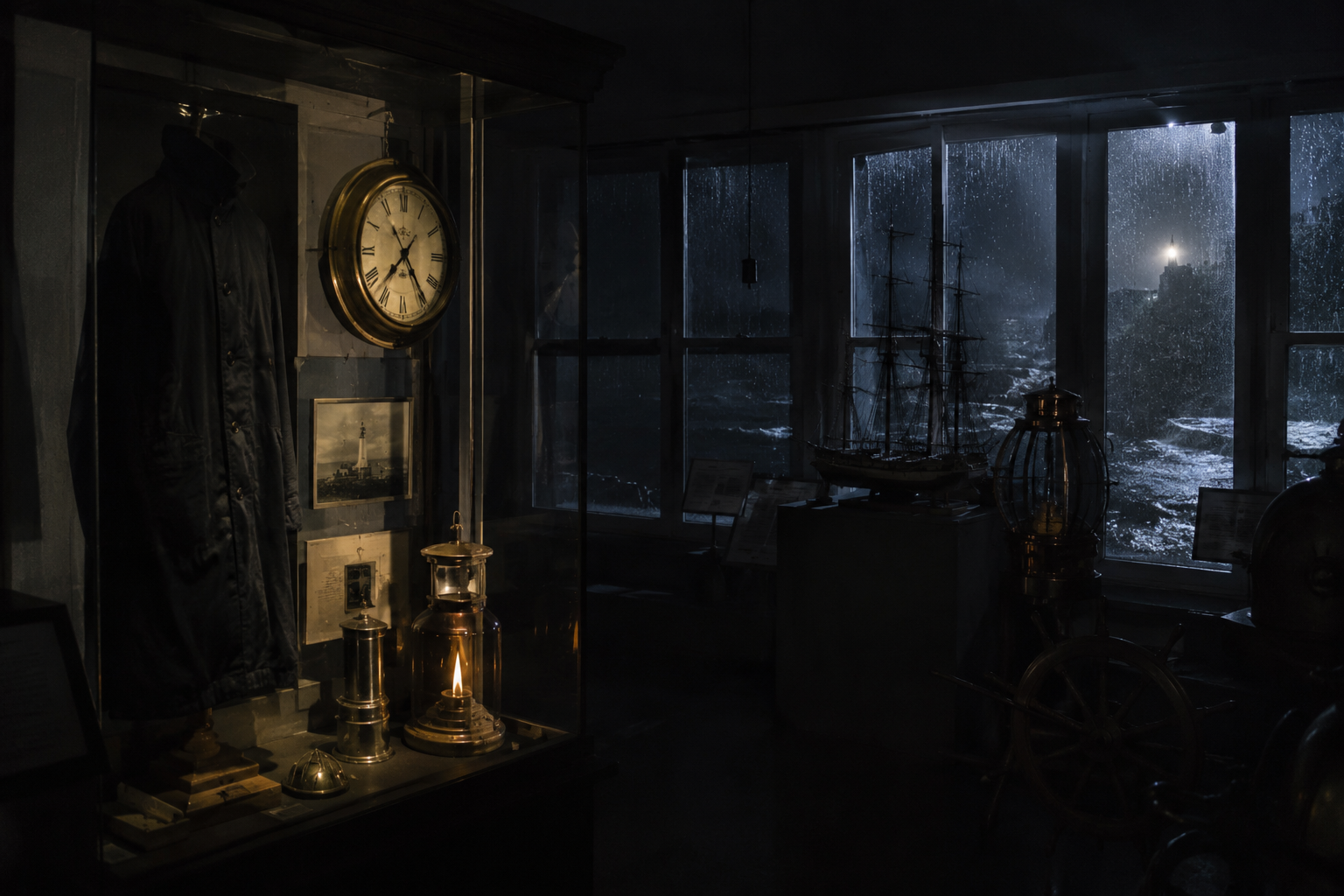
The little museum closed early when the harbor lights went out.
It was February, off-season, with rain climbing the windows in sheets and wind dragging ropes against the masts across the street. The Seabrook Coastal Museum occupied an old customs office at the end of a narrow main road.
By four-thirty there were no tourists left. The tide was high against the seawall. Every few minutes the building gave a wooden shudder.
The power failed at 4:47.
Maren, one of two staff members still inside, was in the lighthouse room when it happened. The gallery did not go completely black. Gray storm light stayed in the windows, and the red EXIT sign at the hall door came alive on battery. But the dehumidifier stopped, the desk heater died, and the audio loop of gulls and foghorns cut off mid-cry.
In the sudden quiet, the old lighthouse keeper clock began to tick.
The Clock From Gull Rock
The clock was not large. It hung inside a glass-fronted case built to look like the corner of a keeper's room, with a narrow bunk, an oilskin coat, a brass lamp, and a replica logbook opened to a page about fog.
A small label said it had come from Gull Rock Light, a retired station three miles offshore. The lighthouse had been automated decades earlier, then decommissioned after the coast guard replaced the beacon. The museum obtained the clock from the family of a former keeper.
It was a plain black-rimmed wall clock, salt-dulled around the edges, with a cream face and thin dark hands. The mechanism had not been connected to anything for years. It was display-only, set permanently to 11:18 because that was the time recorded in a famous storm rescue mentioned on the wall panel.
Maren had passed it hundreds of times. Eleven eighteen. Minute hand down and right. Hour hand just past eleven. A fixed little fact in a room full of ropes, charts, and polished brass.
That evening, with the power out, she looked at the case and heard the ticking again.
Two Photos In A Dark Room
Outage procedure was simple: check for visitors, secure the side door, photograph any galleries that might leak, and wait for the town utility notice. Maren used her phone flashlight to inspect the lighthouse room because one window had leaked during a storm the previous winter.
No water was on the floor. The exhibits looked dry. Still, she took a quick photo for the maintenance log. It showed the Fresnel lens on its platform, the keeper display along the left wall, and the glass case reflecting the small white circle of her phone light.
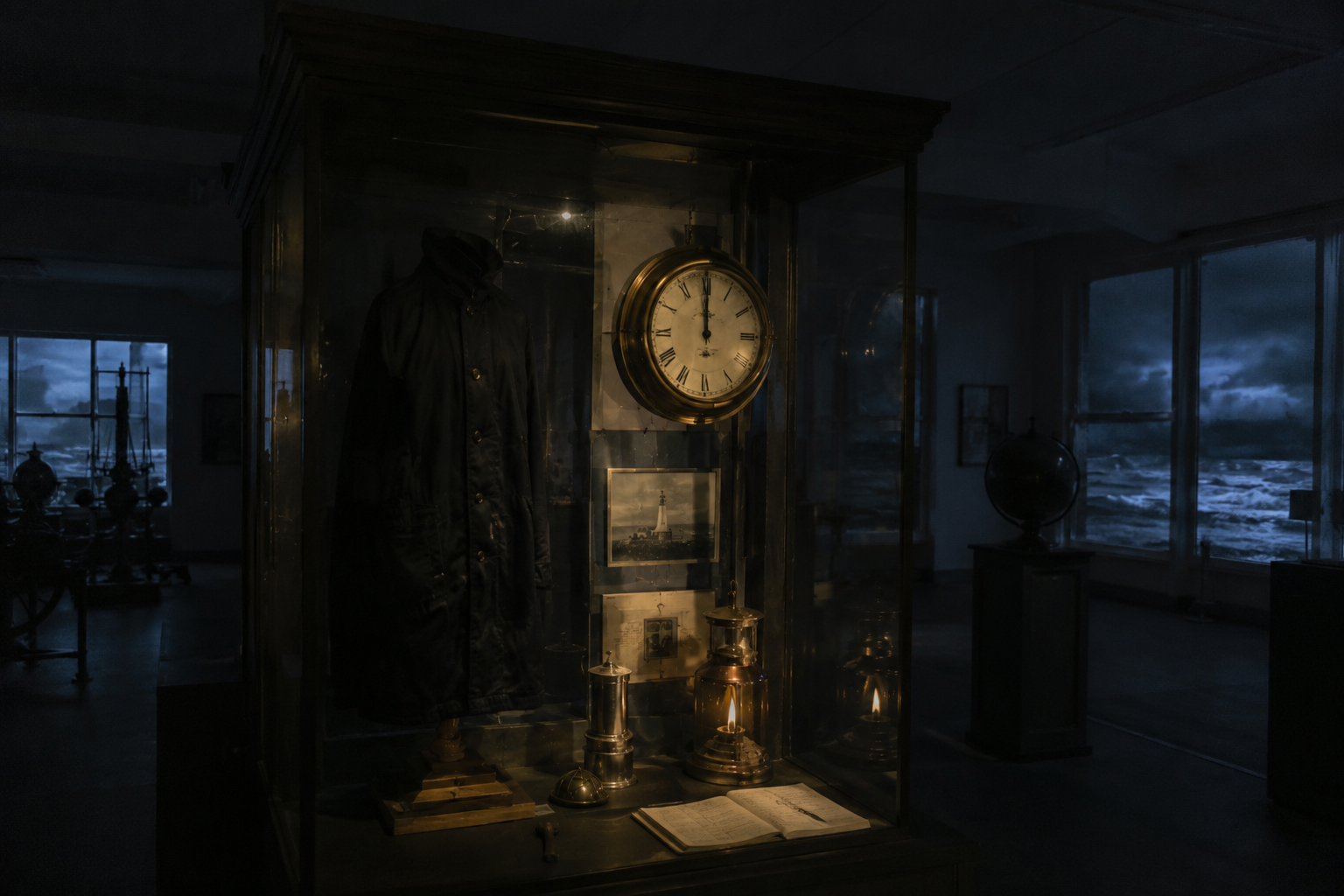
The clock was visible in that photo.
She did not notice anything odd. The image was only evidence that the room had been checked.
About eight minutes later, the museum director, Paul, came in from the front desk carrying a battery lantern. He asked Maren to take another photo before they checked the back stairwell. She stood nearly where she had stood before, held the phone chest-high, and took a second picture.
Both photos seemed ordinary in the moment: dim room, storm-dark windows, lighthouse artifacts, staff doing what staff do when an old building loses power.
The unease arrived later, after the lights returned and Maren uploaded the outage images to the shared folder.
In the first photo, the clock appeared to read 11:18.
In the second, taken minutes later, the minute hand appeared closer to 11:12.
The Hand That Should Not Move
Paul was the first to notice. He was comparing the two gallery photos to see whether a ceiling stain near the lens had grown. When he clicked back and forth, the clock face jumped.
At first he blamed the angle. The glass reflected light differently in each image. The lantern had added a warm glare to the second photo. Old clock hands can look thicker or thinner depending on shadow.
But the change was not only a blur. The minute hand seemed to have moved upward and left, backward along the dial by several minute marks. The hour hand, harder to read, still sat near eleven.
They enlarged both photos. They rotated them. They asked another employee, Della, to look without telling her what to find.
"Why is the clock different?" she asked.
That question made the room feel colder than the outage had.
The clock was inside a locked case. The key hung in a cabinet near the office, and nobody had opened the display that day. The hands were not supposed to run, and if they had slipped from vibration, gravity, or a failing mount, staff expected them to droop forward, not climb back toward the top of the dial.
Maren remembered the ticking.
Nobody else admitted hearing it.
What The Outage Hid
The museum was an old building, and old buildings offer explanations generously. During storms, they expand, leak, tremble, and knock. A power outage changes the soundscape so completely that ordinary noises can seem newly alive.
The clock itself had not been examined for months. The hands may have been looser than anyone realized. The first photo may have caught a reflection that made the minute hand appear lower than it was, while the second showed it more clearly.
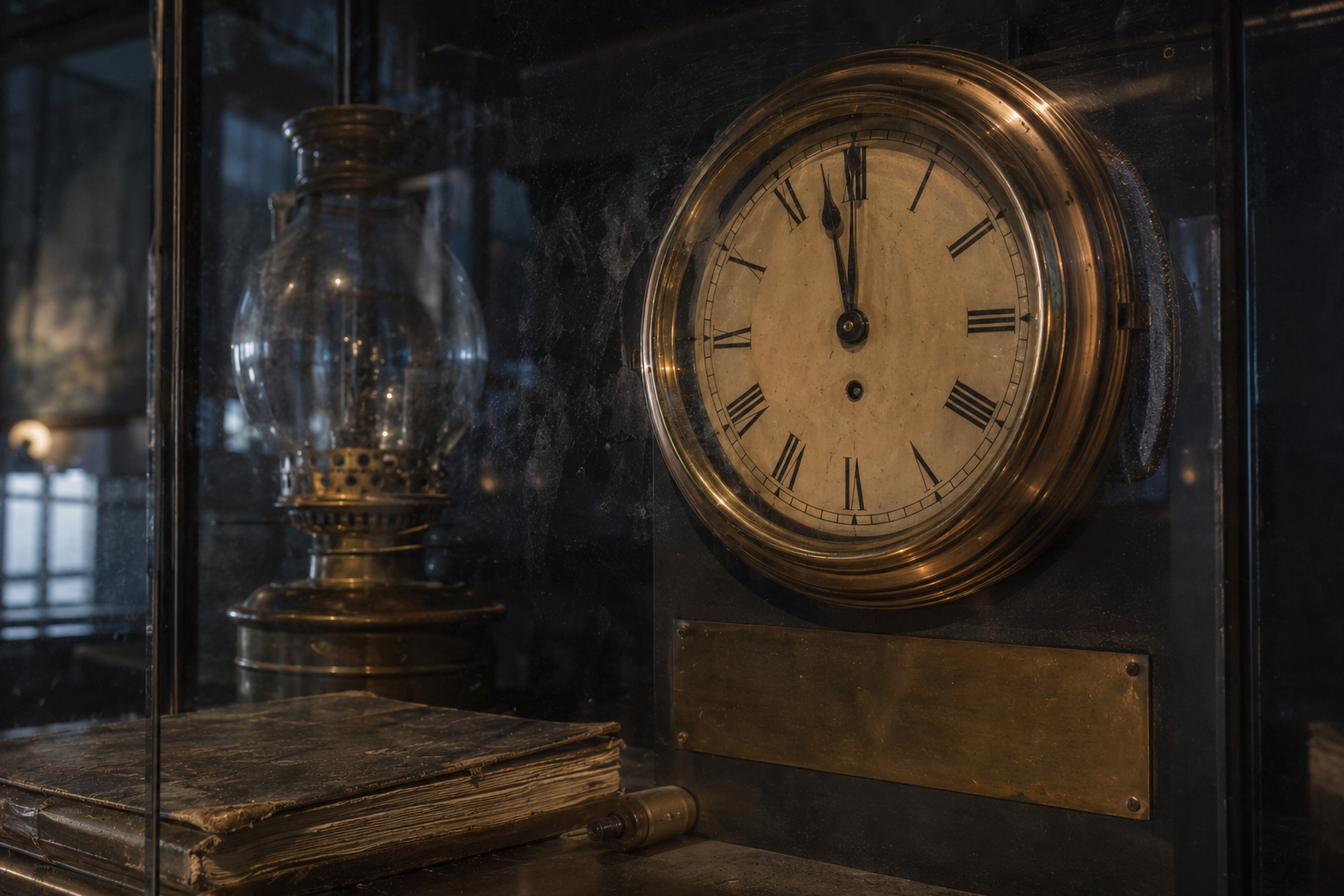
There was also the lantern. In the second photo, its amber light cut across the glass and complicated the dial. A skeptic could say people were reading an artifact of light and stress into a cheap phone image taken during bad weather.
That is reasonable.
It is also not what staff remembered most.
What they remembered was that, when the power failed, the lighthouse room felt attended. Not crowded. Not dramatic. Just watched over. The audio loop had died, but for several seconds the room kept its own rhythm: tick, tick, tick, patient and dry beneath the rain.
The Keeper's Last Note
The clock had always been tied to a rescue story, but the museum files held a darker footnote that was not on the public label.
Gull Rock Light had been a hard post. The tower stood on a low black reef where waves broke over the landing steps and fog could erase the mainland for days. Keepers wrote constantly in the log: weather, lamp condition, vessel sightings, repairs, time checks.
One keeper, Elias Vane, became part of local folklore because of his final winter at the station. Family letters said he grew obsessed with the watch-room clock. He complained that it lost time only during fog, then gained it during clear weather, as if the station were breathing minutes in and out.
His last official log entry before being relieved for illness recorded the lamp trimmed, the sea high, and the clock corrected twice. A penciled note in a private letter claimed Elias believed the clock did not measure time at Gull Rock. It warned him when something was coming from the water.
That line never made it onto the exhibit panel. After the outage photos circulated among staff, it sounded less like folklore.
After The Lights Came Back
When power returned, Paul unlocked the case with Maren watching. The clock hung exactly where it always had.
Its face read 11:18.
That made the photos worse, not better. If the hand had physically shifted backward, it had returned before anyone opened the case. If the photos were misleading, then both had conspired to create a very specific movement where no movement occurred.
Paul lifted the clock from its hook. It was lighter than expected. When he tilted it, something inside gave a faint dry click.
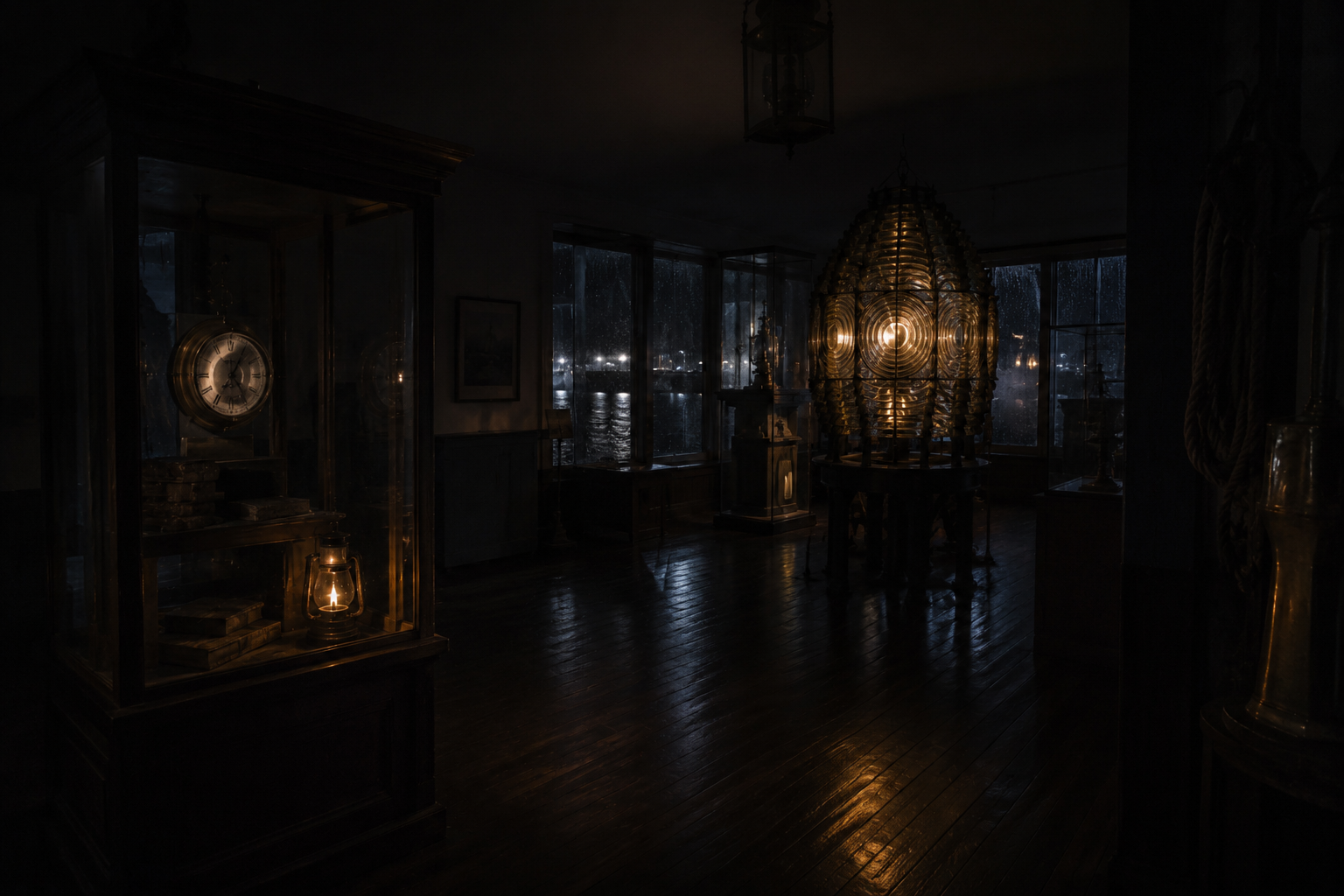
Not a tick. A click.
The museum sent the clock to a local repairman. His note was careful: the movement was corroded and incomplete, but the hands were slightly loose and could be moved by touch.
But the case had been locked.
Why The Photos Stayed Private
The museum never turned the incident into an exhibit. There was no press release, no late-night ghost tour built around the object. For a while, the two photos lived only in a staff folder labeled with the outage date.
A cropped comparison eventually spread through a small coastal history group, where people argued over reflections, lens distortion, and whether the second image had been taken from a different angle.
The museum quietly changed the display afterward. The clock no longer hangs in the keeper room. It sits lower now, in a sealed archival drawer. The public case contains a reproduction set to 11:18.
Visitors still stand in front of it and read about the rescue, the fog, and the men who kept lamps burning offshore.
They do not see the two outage photos.
They do not hear what Maren said she heard when the room went dark.
Maybe the clock hand never moved. Maybe glass, storm light, and human pattern-hunting created a backward minute where none existed. Museums are full of objects that look different through cases, and fear is excellent at sharpening coincidence into narrative.
Still, the oddest detail is not that the minute hand seemed to slip from 11:18 to 11:12.
It is that, in the second photo, the display logbook below the clock lies open to the printed line about the Gull Rock rescue. The page is blurred, but one word near the center is clear enough to read.
Fog.
And outside the museum windows that evening, after the outage ended and the town lights came back one by one, the harbor vanished behind a white wall rolling in from the water.