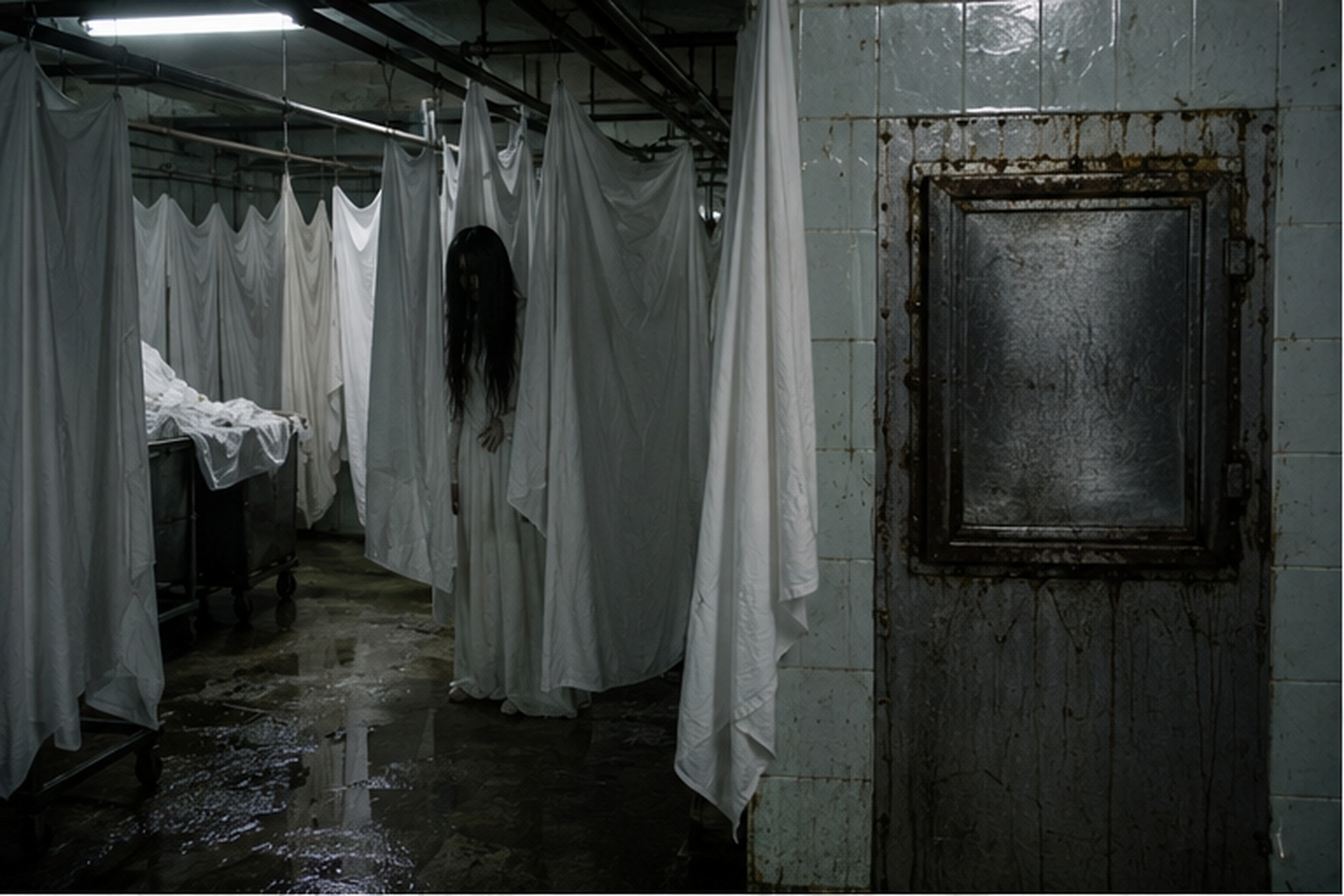
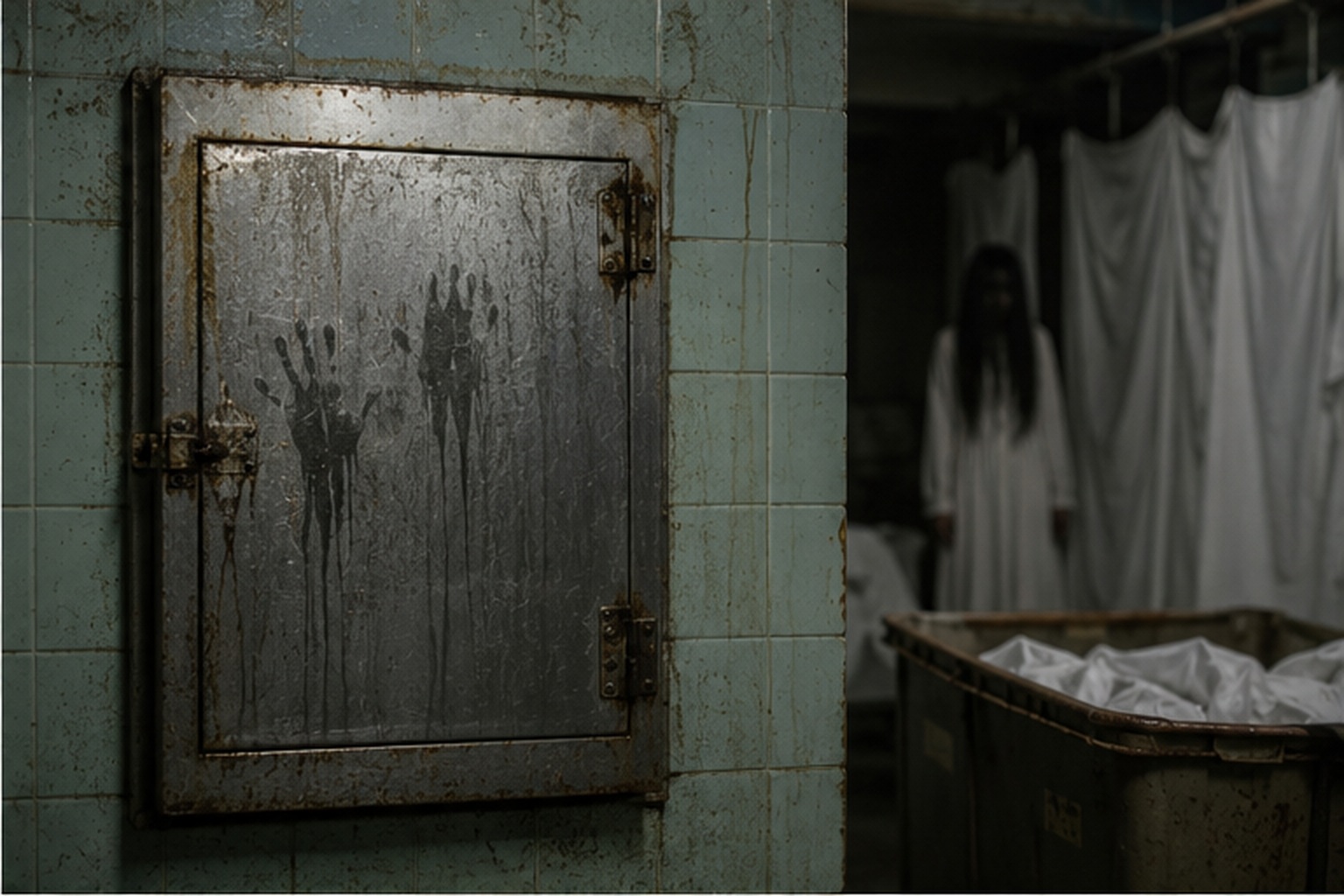
The first strange mark appeared on a Monday morning, shaped like a hand pressed flat against glass.
That was the part nobody liked, because the laundry room did not have glass there. It had glazed tile, a sealed metal chute, and a stretch of wall that should have been dry unless a pipe had started sweating behind it.
The hospital had been closed for three years. It sat outside a rural town where the main road narrowed between hay fields and second-growth woods. The emergency entrance was chained. The patient rooms had been stripped. The building was waiting for an inspection that might turn it into storage, offices, or nothing at all.
Only a small maintenance staff still came through. They checked for leaks, vandals, animals, and storm damage. They expected raccoons in the attic and copper thieves near the mechanical room. They did not expect fresh hand-shaped condensation beside a laundry chute that had been welded shut.
The Laundry Room Below The Ward
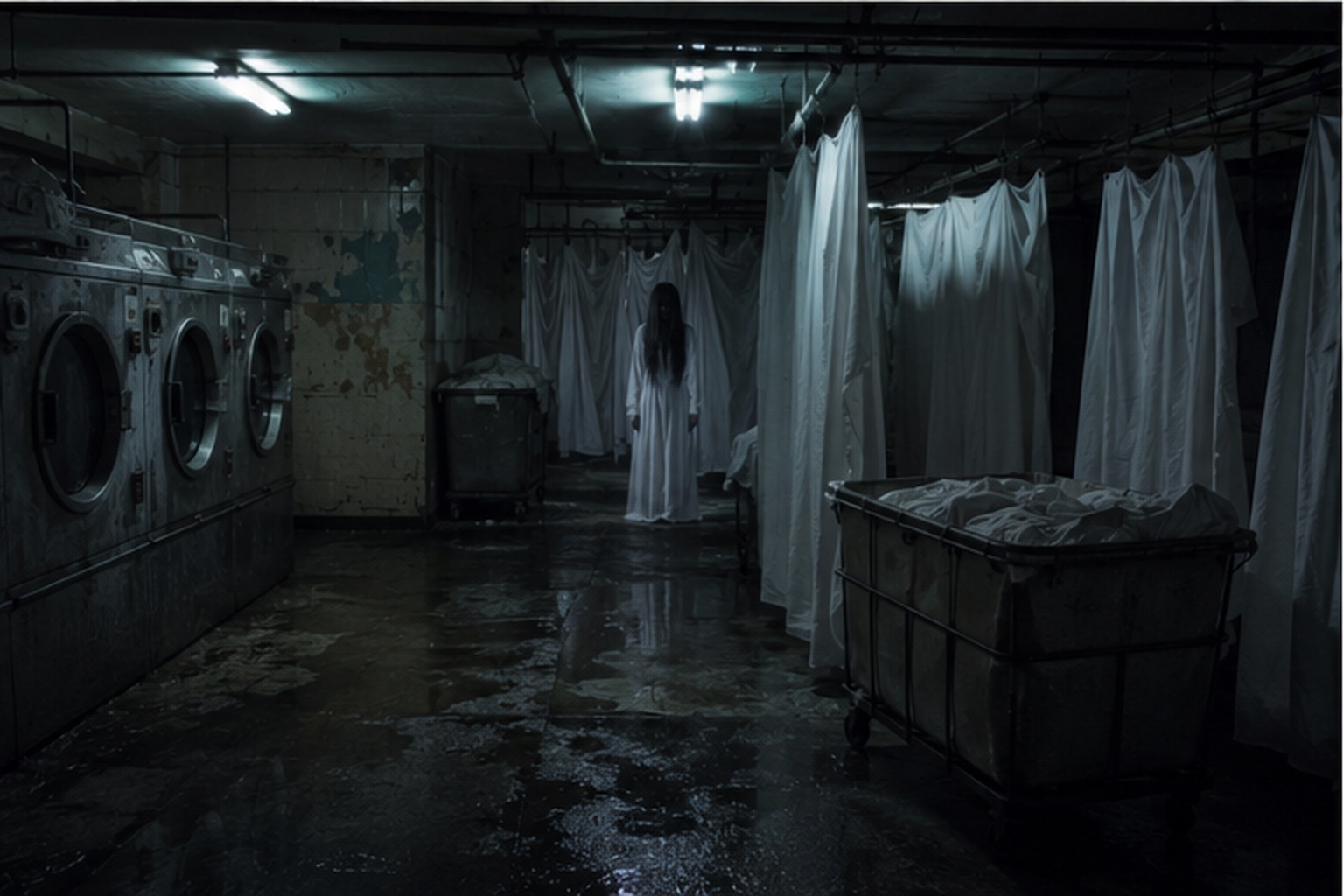
The laundry room was in the lowest level, past the boiler room and down a service corridor painted the color of old oatmeal. Even during the day, the place felt underground. The windows were high, narrow, and filmed over with dust. Fluorescent tubes buzzed above rows of industrial washers that had not spun since the hospital closed.
A folding table still stood near the center of the room. Metal carts nested beside it. A line of white sheets hung from an overhead rail because somebody had left them there during the final cleanout, and over the years they had turned gray at the hems.
The chute came down through the ceiling from the patient floors above. In the old days, linens dropped through it into a square metal catch bin. After closure, the upper doors were bolted, and the basement receiving door was sealed with a plate and thick beads of weld.
Nothing should have come through it. Not laundry. Not air. Not hands.
The Marks That Kept Returning
The first maintenance worker wiped the wall with a rag and blamed temperature. The room was damp, the boiler pipes still carried occasional heat, and old hospitals are full of hidden drafts.
By the next visit, the marks were back. There were three of them this time, spaced unevenly around the chute door. Each had a wide palm shape with long dragging streaks below it, as though wet fingers had slid down the tile before lifting away. The condensation was clear at the edges and milky in the center. It faded when the worker opened the service door and let the corridor air move through.
A week later, the streaks returned in a different place. One was high enough that a short person would have needed to reach. Another sat low near the floor, with five narrow trails running toward the drain.
Someone joked that the building wanted its sheets back.
Nobody laughed very hard.
The Staff Photo
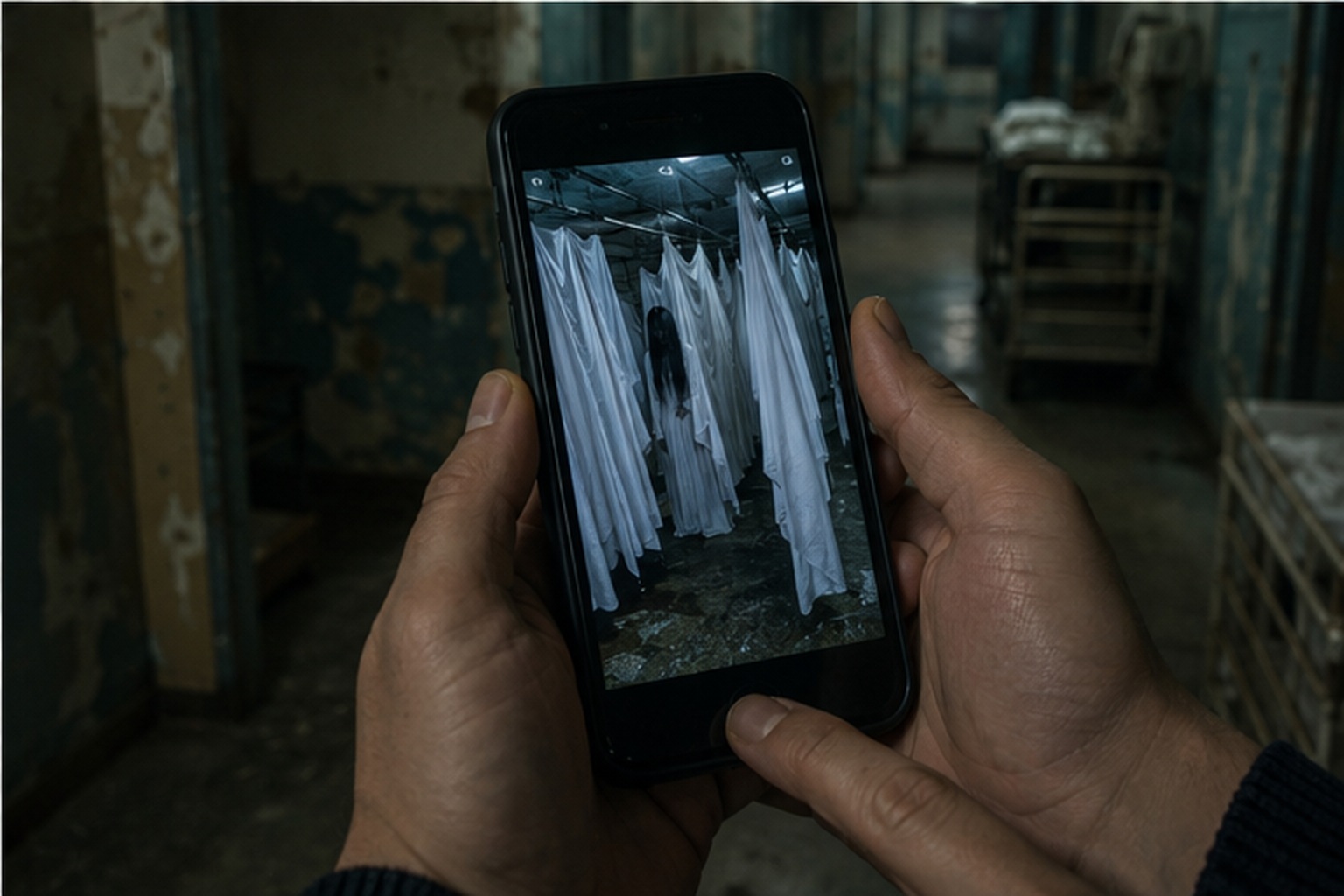
The photo was taken during a routine check after a hard rain. Two staff members went in together because water had been pooling near the old machines. One held a flashlight while the other photographed the chute wall, the floor drain, and the hanging sheets so they could show the property manager what needed attention.
In the room itself, they noticed nothing except cold air and the smell of damp cotton.
Later, in the office, one of them opened the images on a larger screen. The first photos showed the expected problems: cracked tile, rust below the chute plate, and shiny streaks of moisture on the wall.
Then came the wide shot of the hanging sheets.
At first it looked like fabric folded over fabric. Then the dark gap between two sheets became a head tilted forward. Below it, a white shape fell straight to the floor, not like a sheet on a rail but like a dress hanging from shoulders. Long black hair covered most of the face.
The figure stood behind the laundry line, partly hidden, close enough that the sheets seemed to brush her arms.
The Face Nobody Could Find
People who saw the photo kept trying to brighten it. That only made it worse.
The laundry room around the figure became clearer. You could see the carts, the tile, the dull shine on the sealed chute, and the sagging bottom edge of the sheets. But the face did not resolve. It stayed buried behind hair, a pale oval with darkness where features should have been.
The white dress shape was not glowing. It did not float. It seemed to occupy the same stale air as everything else in the room. Its hem vanished into shadow near the floor drain. One shoulder looked too narrow. One arm seemed folded close to the body or hidden behind a sheet.
That ordinary placement made the image more upsetting. If it had been a misty blur, people could have dismissed it faster. Instead it looked like someone had found the deepest row of fabric in a dead hospital and stood there quietly while staff worked a few yards away.
Neither worker remembered seeing a person.
The Sealed Chute
The chute became the center of the story because it was the only thing in the room with a past.
Hospitals send their hidden labor through places like that. Sheets from fever beds. Towels from operating rooms. Gowns from people who arrived frightened and left changed, or did not leave at all. The chute had carried the ordinary aftermath of sickness for decades.
Local staff said the laundry room had always been unpleasant, even before closure. The basement was too warm in summer and too cold in winter. The chute door clanged without warning when loads dropped from above. New employees disliked standing directly beneath it.
After the hospital closed, the chute was supposed to be only metal and silence.
Yet the condensation always gathered beside it, never across the whole room. The hand-shaped streaks appeared on tiles closest to the sealed plate. When staff photographed the room, the figure appeared several feet away, behind the hanging sheets, as if avoiding the chute but refusing to leave it.
A Practical Explanation
There are ordinary possibilities, and they should be taken seriously.
The condensation could have come from a temperature difference around the old chute shaft. Even sealed, metal conducts cold and heat. Moist basement air might gather on tiles near the chute and run downward in patterns that only resemble hands because people are built to recognize hands everywhere.
The figure in the photo could be folded fabric. White sheets hanging at different depths can create the illusion of a body, especially in low light. A dark gap, a stained fold, and a strip of shadow could become hair, head, and dress once someone points them out.
It could also be a person. Closed hospitals attract explorers, shelter seekers, scrappers, and teenagers looking for a dare. Someone may have slipped in through a window or delivery door, hidden when staff entered, and escaped after they left.
That explanation is simple, but it does not feel comforting. If a living woman stood behind the sheets, she was silent enough that two workers never heard her breathe, step, or move.
The Room After The Photo
The next inspection was not casual. Three people went down with bright lights. They checked behind the sheets, inside the carts, under the folding table, and along the chute wall. They found no bedding piled into a body shape, no mannequin, no discarded dress, and no obvious opening large enough for someone to vanish through quickly.
The sheets were taken down and bagged. The rail was left empty. A fan was placed in the room to keep air moving.
For several days, the wall stayed dry.
Then a single streak appeared under the left edge of the chute plate. It was not as clear as the earlier marks, but it had a fingertip shape at the top and a long line descending from it.
That was when staff stopped joking about leaks.
The property manager reportedly ordered the laundry room locked except for paired checks. Nobody wanted an employee alone with the chute, the empty rail, and the memory of the pale figure hiding where the sheets had been.
What The Hospital Kept
The building is still there in the story, low and square against the fields, with weeds pushing through the ambulance bay and the basement holding its wet breath.
Maybe the marks were only moisture. Maybe the photo turned old fabric into a woman because the room already felt like a place where something should be watching. Maybe a trespasser in pale clothes stood very still behind the sheets and never realized she had become the hospital's favorite rumor.
But the image lingers because of its quietness.
No door slammed. No voice called from the chute. No figure rushed toward the camera. The room simply formed handprints on the wall and then offered one still look at a pale woman hiding among laundry that should have been cleared years earlier.
The chute remained sealed. The sheets were gone. And for the workers who saw the photo, the old hospital laundry room never felt empty again.