The Ordinary Detail That Started It
The old county hospital had been empty for nearly twelve years before anyone bothered to replace the broken fence around its parking lot. Ivy climbed over cracked brick walls.
Rain collected in wheelchairs left beneath a loading canopy. Every corridor carried the stale smell of damp plaster and forgotten disinfectant, as if the building refused to accept that no patients remained inside.
Most people who wandered through the property talked about the operating theaters or the abandoned maternity ward. Those rooms looked exactly how people imagined forgotten hospitals should look. The stairwell was different. It looked almost untouched. Concrete steps still wore their faded anti-slip paint.
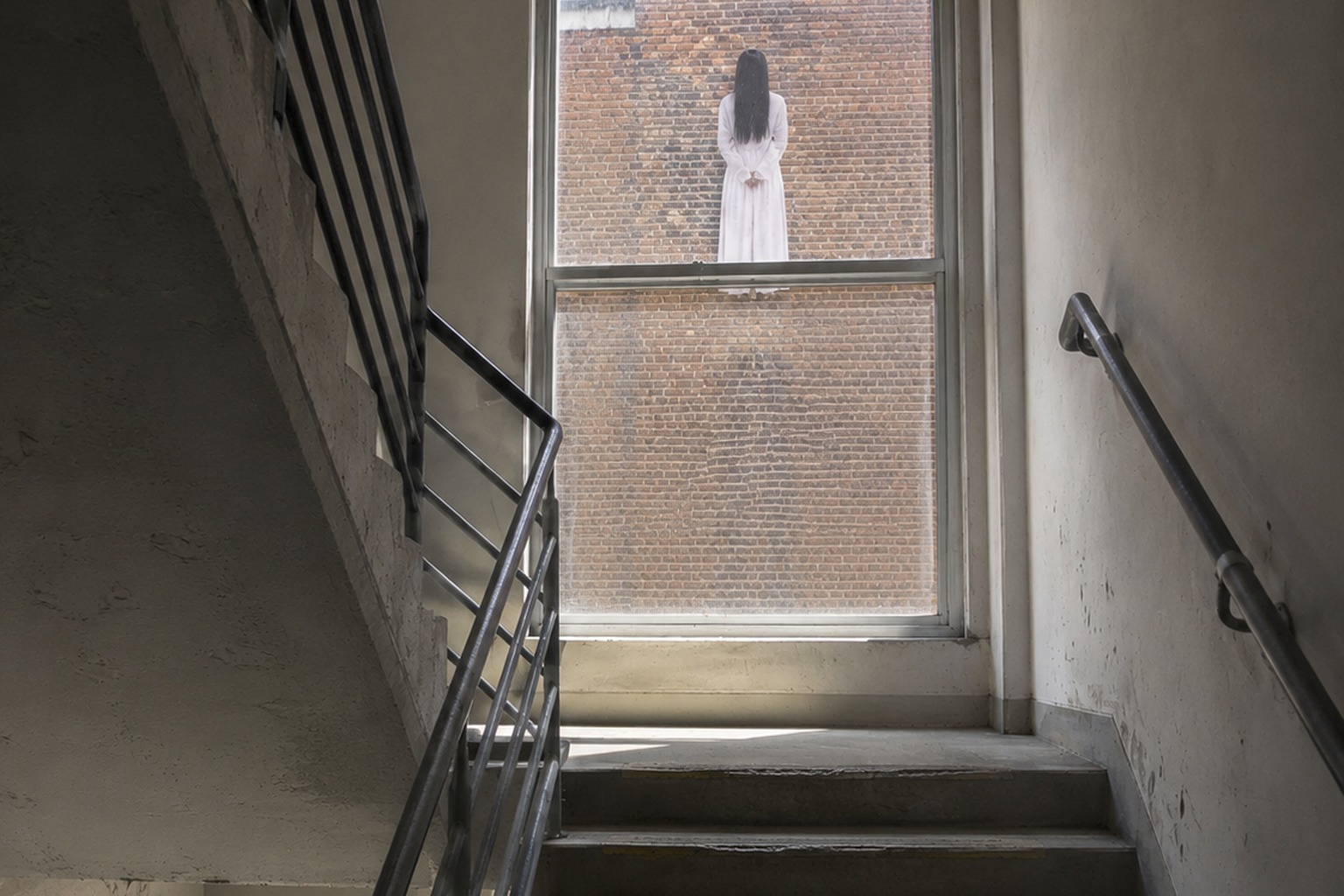
The steel handrails remained firmly bolted into the walls. Emergency lights, long without electricity, sat above each landing. Tall rectangular windows stretched from waist height nearly to the ceiling, allowing pale afternoon light to spill onto every flight.
Why People Looked Twice
It should have been the safest, most ordinary place in the building. Instead, nearly everyone who entered remembered the landing window. Not because of the glass itself.
Because of what seemed to appear behind it. The first account came from two urban photographers documenting abandoned architecture before demolition crews arrived. They avoided the dramatic sections of the hospital and focused instead on forgotten utility spaces—laundry rooms, service corridors, mechanical floors.
One photographer climbed the west stairwell while the other explored another wing. Halfway between the fourth and fifth floors, the photographer stopped to capture the geometry of the staircase. The afternoon sun illuminated the landing perfectly.
Concrete. Steel railings. Dust floating through narrow beams of light. And standing beyond the landing window…
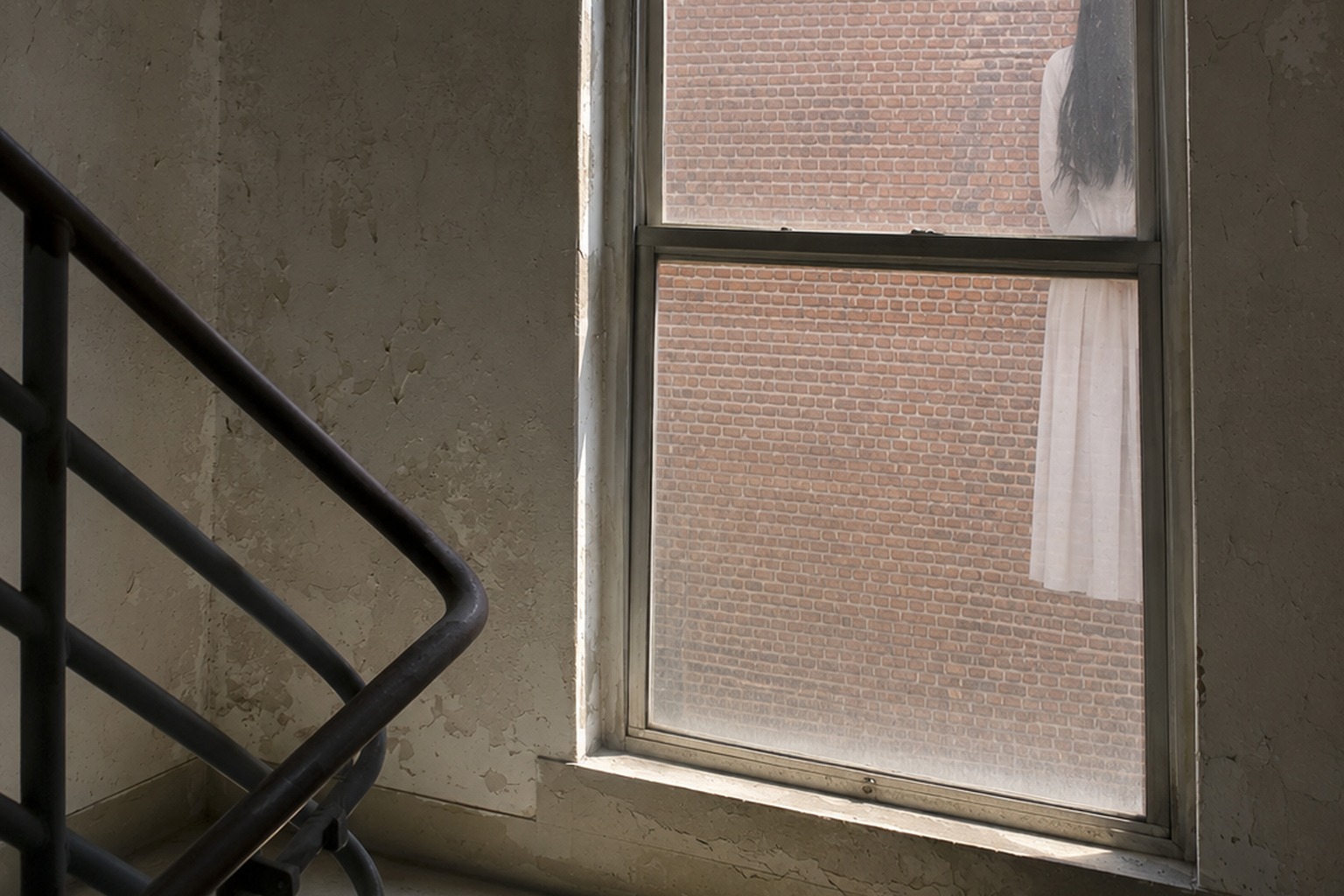
A woman wearing a plain white dress. She wasn't inside the stairwell. She appeared to be standing outside the building. The problem was that there was no outside ledge. The window overlooked a sheer brick wall that dropped nearly sixty feet to the loading docks below.
The Part That Did Not Fit
There was simply nowhere a person could stand. The photographer assumed someone was reflected in the glass. He lowered the camera. Nobody.
Only the empty stairwell stretching behind him. When he looked back toward the window, the white figure remained exactly where it had been. Motionless. Face hidden behind long dark hair.
Not pressed against the glass. Not floating. Simply standing where no floor existed. He took another photograph. Then another. By the fourth frame the window was empty. He reached the landing expecting to find some architectural feature that explained everything. Outside the glass was only weathered brick. No balcony.
No maintenance platform. No fire escape. Nothing. His friend later joked that exhaustion had played tricks on his eyes. Until they reviewed the images. The first photograph showed only sunlight. The second captured what looked unmistakably like part of a white dress beyond the glass. The third showed more.
What A Simple Explanation Could Be
Enough to reveal shoulders, folded hands, and strands of black hair obscuring the face. The fourth image showed nothing at all. The sequence made little sense. The shadows remained identical. The sunlight never changed. Only the figure appeared and disappeared.
Months later another visitor unknowingly recreated almost the exact series. He had never seen the earlier photographs. He wasn't searching for ghosts. He was filming an exploration camera still for abandoned buildings. His camera still remained completely uneventful until he climbed the western stairwell.
While narrating the peeling paint and broken windows, he paused unexpectedly. "…Was someone just outside?" The question sounded almost casual. He walked closer to the landing. Nothing.
He continued upward. Reviewing his camera still later, viewers noticed something he never mentioned again. During the few seconds before he questioned the window, a pale figure occupied the far side of the glass. It vanished precisely as he stepped toward it. Comments filled with competing explanations. Reflection.
Why That Answer Still Felt Incomplete
Lens flare. Compression artifacts. Yet nobody could explain why the white shape disappeared only after movement toward the landing. Visitors eventually began testing the location intentionally. Some climbed quickly. Others slowly. Some avoided looking directly at the window until reaching the landing. Results never matched.
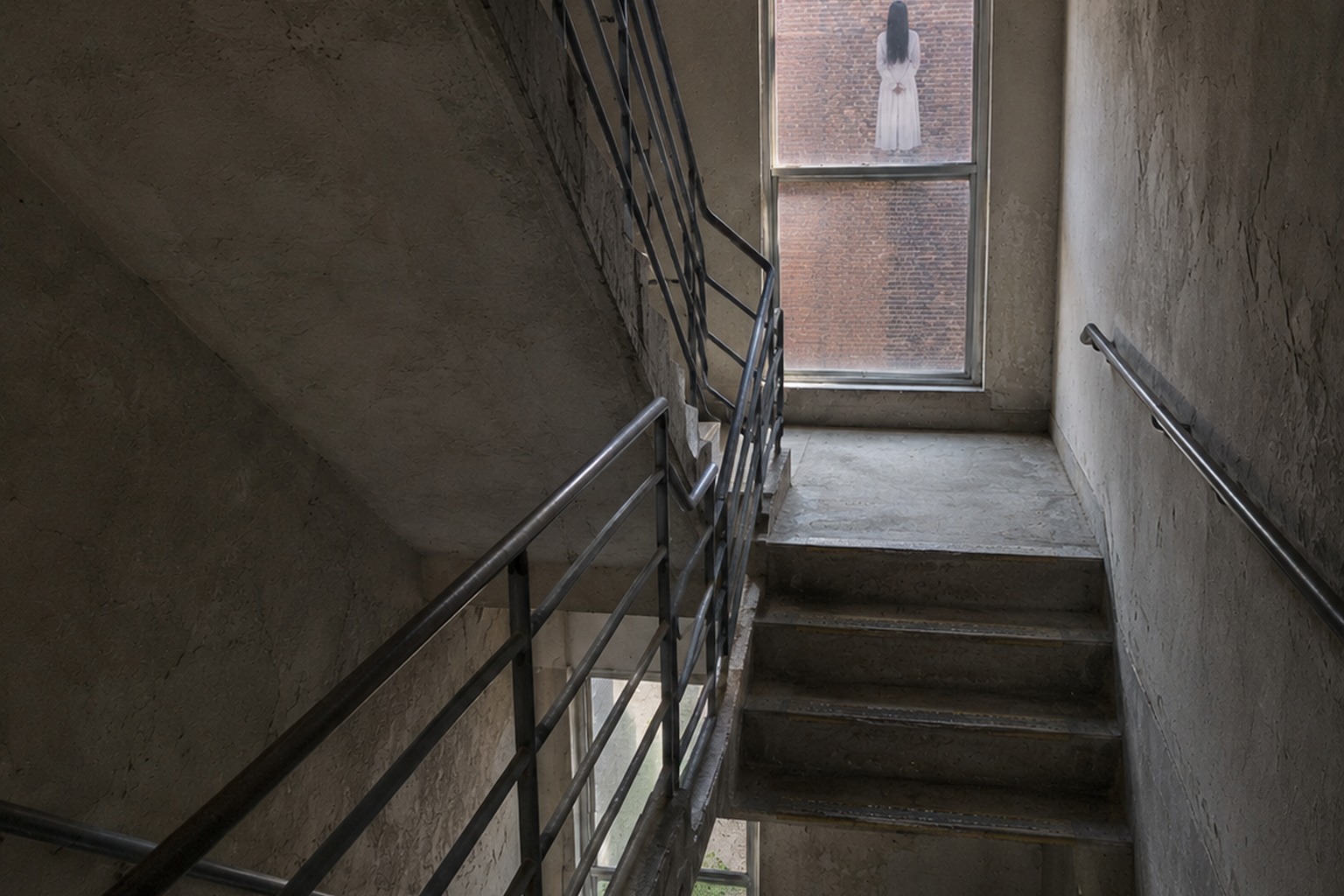
Most saw nothing. A handful described catching movement only through peripheral vision. One maintenance contractor hired to inspect structural damage reportedly refused to use that staircase again after seeing what he believed was a nurse standing outside the fifth-floor window.
He later admitted something bothered him more than the impossible location. She never appeared to be looking inside. Instead, she seemed to face away from the building. As though watching something else. No one knew what could possibly hold her attention beyond a blank brick wall.
The hospital itself carried no famous ghost story. There had been tragedies over decades, as every aging medical center accumulated, but no documented tale of a woman in white wandering the stairwells. Local historians searched employee photographs. Old nursing uniforms. Patient records.
The Detail People Kept Returning To
Nothing matched the simple ankle-length dress consistently described by witnesses. It wasn't old-fashioned enough to belong to another century. Nor modern enough to resemble hospital clothing. It looked deliberately plain. Anonymous. Several demolition workers later shared stories privately after beginning preparations inside the building.
Most dismissed unusual noises. Hospitals settle. Pipes echo. Wind moves through empty elevator shafts. But nearly every crew avoided taking breaks inside the west stairwell. One electrician explained why. He had carried supplies up six flights when sunlight flashed across the landing window. He glanced sideways.
Someone stood outside. White dress. Dark hair. Hands together. He assumed another worker had somehow reached scaffolding. Then he remembered there wasn't any. He froze halfway up the stairs. The figure remained perfectly still. Not swaying. Not breathing. Just existing beyond impossible empty air.
How The Story Changed Afterward
He blinked once. The landing was empty. He finished the job using another staircase for the rest of the week. When asked why, he simply answered that some places didn't deserve curiosity. One evening shortly before demolition began, security cameras were installed around the site to discourage trespassers.
None monitored the interior. Except one. A temporary camera overlooked the entrance corridor leading toward the west stairwell. It couldn't see the landing window. Only people entering or leaving. For several nights nothing happened. Then shortly after sunrise one morning, the motion log activated. Nobody entered. Nobody exited.
Yet the camera repeatedly detected movement inside the stairwell itself. Security assumed birds had entered through broken windows. A guard investigated immediately. Every landing stood empty.
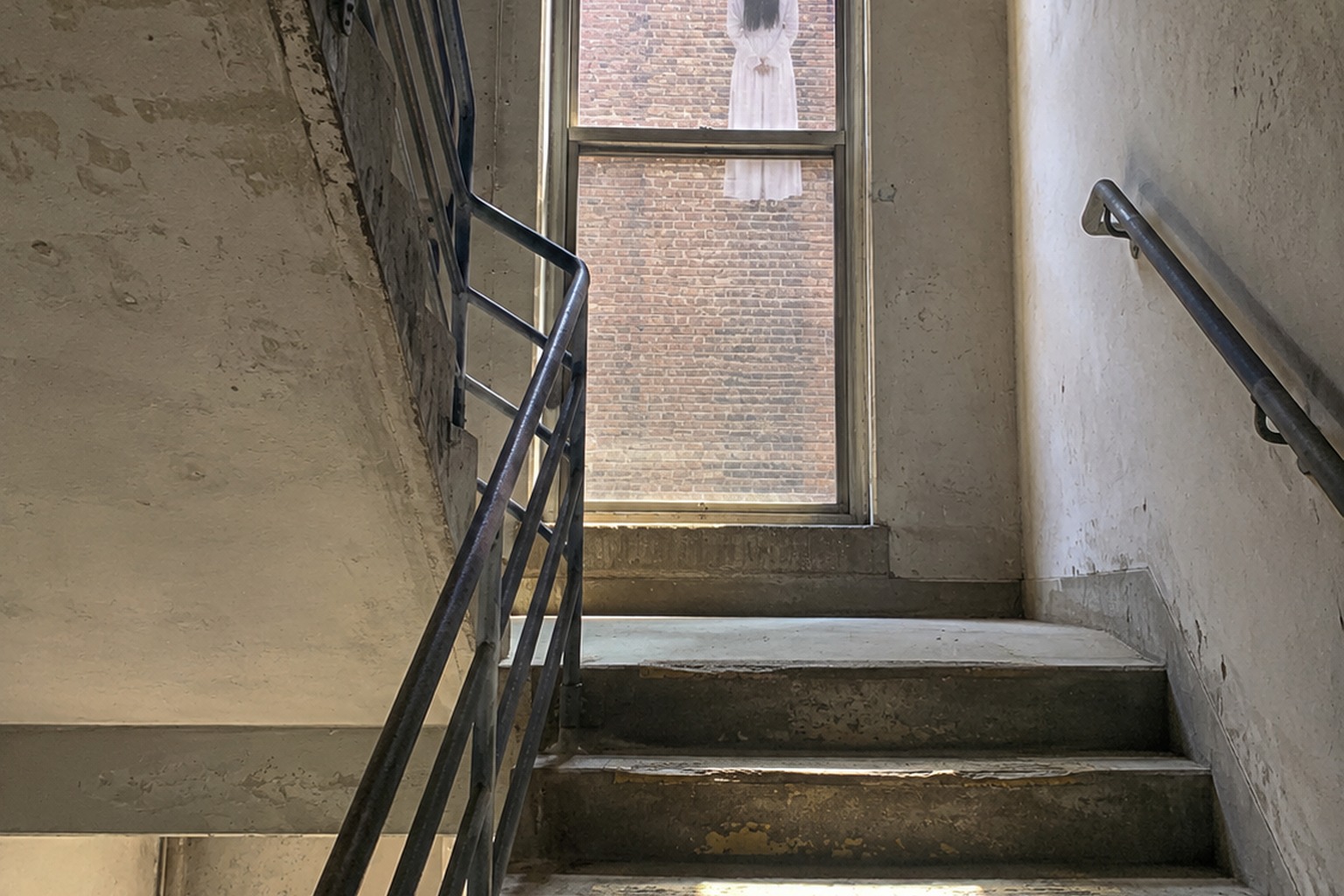
No animals. No people. Only sunlight moving slowly across concrete. Reviewing timestamps later revealed something odd. Motion alerts appeared almost exactly every fourteen minutes.
Each lasted only a few seconds. Always after sunrise. Always stopping before anyone reached the building. Workers joked the ghost preferred daylight. Others refused to joke at all. Demolition finally arrived. Heavy machinery removed the upper floors first. The west stairwell disappeared section by section.
Why It Still Feels Unsettled
The landing window was among the first pieces to fall. No dramatic discoveries emerged behind the walls. No hidden rooms. No forgotten belongings.
Only ordinary concrete and reinforcing steel. The photographs remained. The camera stills remained. And so did the stories. People who visited years later found only an empty lot where the hospital once stood.
Grass covered the foundations. Wildflowers grew where ambulances had parked. Nothing suggested an enormous medical building had ever occupied the property. Yet conversations occasionally returned to the same question. If every witness imagined the figure, why did descriptions remain so strangely consistent? A simple white dress.
Long dark hair covering the face. Hands folded quietly. Standing beyond a fifth-floor landing window where no human being could possibly stand. Perhaps coincidence explained everything. Perhaps reflections and expectation combined inside tired minds exploring abandoned places.
Or perhaps the stairwell held something far quieter than the dramatic hauntings people hoped to find. Not a spirit chasing visitors. Not a ghost demanding attention.
Only a silent figure who appeared briefly whenever sunlight struck one forgotten landing in exactly the right way. Watching something no one else could see beyond an ordinary hospital wall. And disappearing forever the moment someone tried to get closer.