The Detail That Made The Story Hard To Dismiss
For nearly seventy years, Mercer & Bell Department Store stood at the center of its downtown block, its limestone façade glowing warmly beneath rows of brass lamps every holiday season.
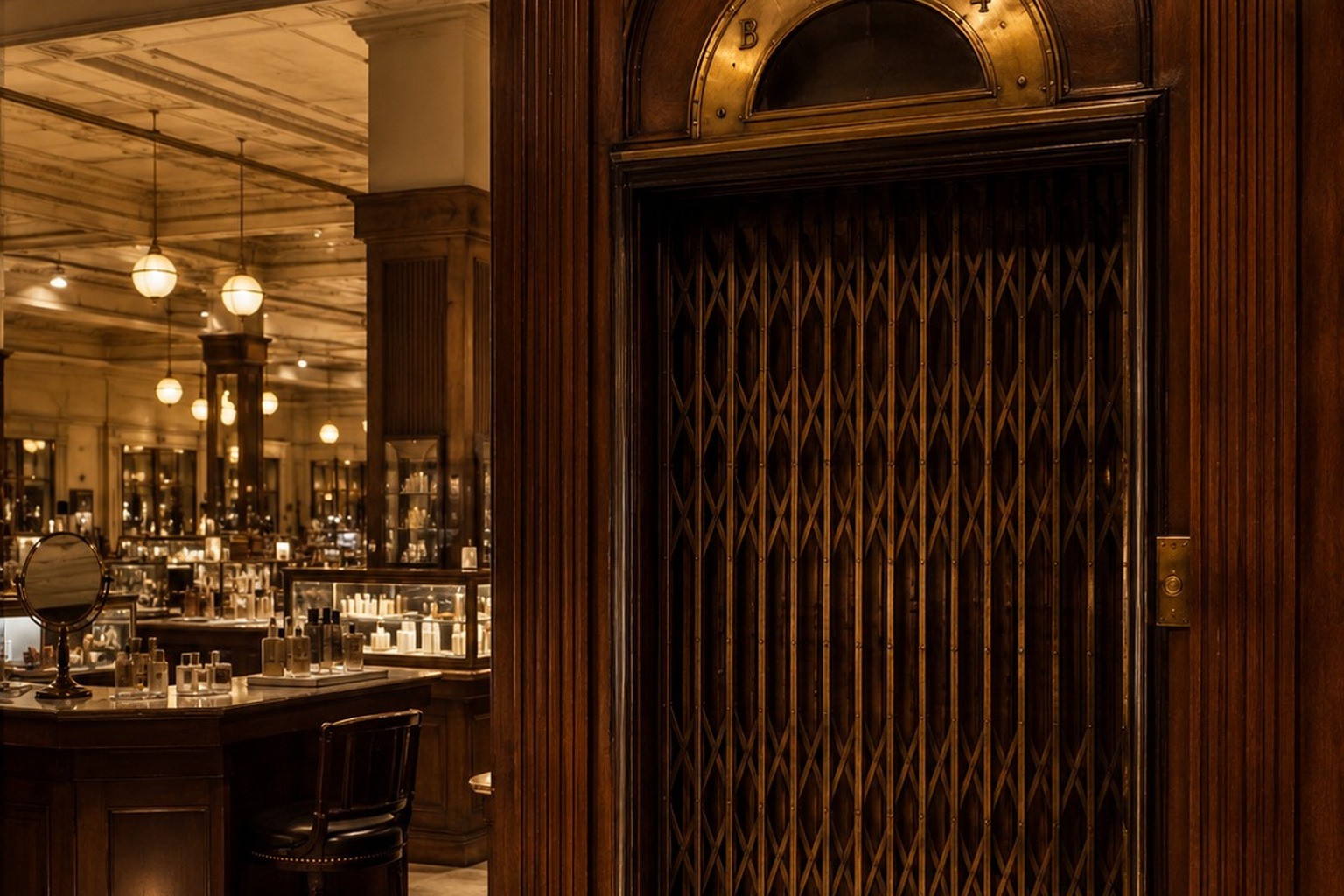
Families remembered buying school clothes beneath its stained-glass ceiling, grandparents spoke fondly of the tea room on the fourth floor, and former employees still recalled the enormous manually operated elevator with polished oak walls and an accordion gate that rattled softly every time it climbed.
Everyone who worked there learned its rhythm. Basement. First. Second. Third. Fourth. Roof access, locked. Nothing more. At least, that was what the building directory insisted. The elevator itself seemed older than the store around it, preserved long after every other lift had been modernized.
Customers loved riding it because it felt like stepping into another era. Brass floor indicators clicked mechanically overhead, and the old motor hummed through the cables with a slow confidence impossible to find in newer elevators.
It never skipped. It never hesitated. Until one rainy Tuesday evening in October. Closing announcements echoed through the nearly empty building while associates folded clothing and switched display lights off one department at a time.
Only three employees remained upstairs. Angela from housewares. Michael from security. And nineteen-year-old stock clerk Ethan, whose final task involved returning unsold seasonal decorations from the fourth floor storage area.
What The Camera Or Witnesses Actually Noticed
He wheeled a cart toward the antique elevator just before 8:15 p.m. Michael watched him enter from across the cosmetics department. The accordion gate closed. The indicator pointed toward the ground floor.
Then something happened that none of them could explain afterward. The brass arrow climbed beyond four. Not quickly. Slowly. Five. The tiny indicator paused. Then continued upward. Six.
There had never been a fifth or sixth floor. The building only had four. Michael frowned. He assumed the indicator mechanism had finally failed. Then he heard something stranger.
The elevator motor never stopped. It continued climbing for nearly twenty more seconds. Impossible. There wasn't enough building above them. The cables should have reached the roof. Instead the old machinery groaned as though it were ascending through a much taller structure hidden somewhere beyond the visible one.
Then complete silence. Nearly forty-five seconds passed. The elevator did not return. Michael radioed Ethan. No answer. He tried again. Static. Angela joined him beside the shaft doors.
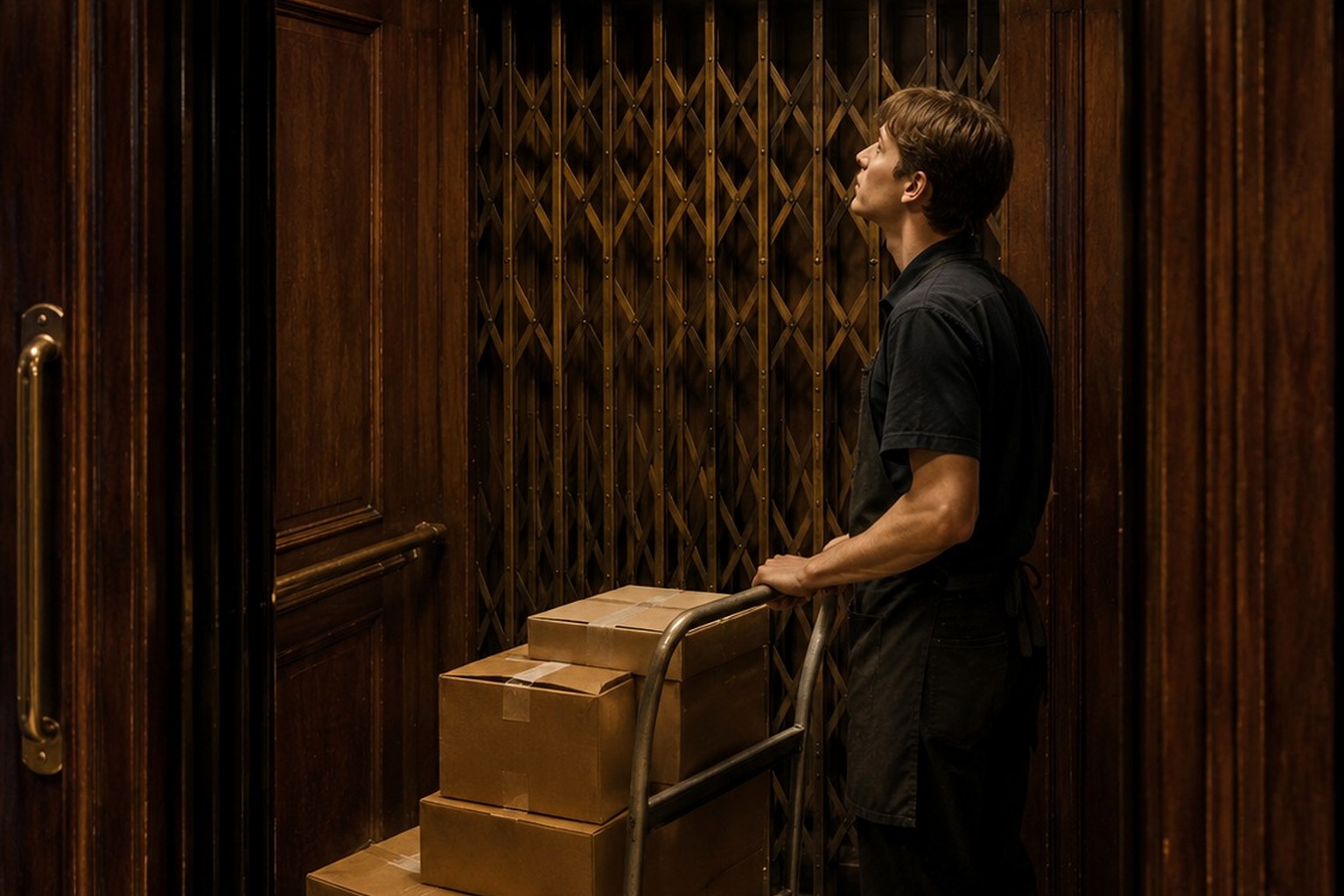
They both stared at the unmoving brass indicator. Instead of displaying numbered floors, the tiny arrow rested above every engraved marking. There was no number beside it. Only empty brass.
Why The Location Matters
Then, with a loud metallic thunk, the indicator began descending. Six. Five. Four. Three. Two. One. The elevator doors slid open. The cart remained inside. Ethan did not.
At first they believed he had stepped out somewhere. Security searched every level within minutes. Nothing. Every emergency exit remained alarmed. The roof door was still locked from the inside.
Police later reviewed surveillance image. Every camera showed Ethan entering the elevator. None showed him leaving. The only missing coverage came from inside the elevator itself. The ancient cab had never been fitted with a camera.
After several hours, officers assumed he had somehow slipped past unnoticed during the confusion. The search expanded into neighboring buildings. Nothing. Just after midnight, while investigators photographed the elevator machinery, the old lift descended by itself.
Nobody had called it. The gate opened. Ethan stood inside. He looked exhausted. His clothes were damp. Not from rain. From condensation, as though he had walked through dense fog for hours.
"What happened?" Michael asked. Ethan stared blankly. "I couldn't find the stairs." Everyone assumed he was in shock. Police questioned him carefully. His story never changed. He said the elevator opened onto another department floor.
The Part That Changed After Dark
It looked almost identical to Mercer & Bell. Only quieter. The lighting came from enormous globe fixtures hanging beneath a ceiling he had never seen before. Every display case contained products decades out of date.
Hat boxes. Typewriters. Crystal perfume bottles. Radio tubes. Women's gloves still folded beneath handwritten price cards. He assumed the store had opened onto some forgotten storage level. He pushed the decoration cart out.
The elevator doors closed behind him. Only then did he notice something was wrong. There were no windows. No emergency exit signs. No music. No ventilation. The silence was so complete he could hear individual light bulbs buzzing overhead.
He searched for a staircase. None existed. Every aisle eventually curved back toward the central elevator lobby. Except the elevator was gone. The doors had vanished. Only smooth walnut paneling remained.
He wandered farther. Everything seemed preserved rather than abandoned. Dust covered nothing. Price tags looked newly written. Escalators stood perfectly still. Mannequins wore clothing from another century. None had faces.
Just polished white heads reflecting soft amber light. Eventually he began noticing movement. Not direct movement. Tiny changes. One mannequin would now face a different direction. Another would appear at the end of an aisle where none had stood moments earlier.
The Small Detail People Usually Miss
A shopping cart rolled gently across polished tile without making any sound. Ethan called out repeatedly. No reply came. Then he heard footsteps. Slow. Measured. Not approaching. Simply walking somewhere beyond the displays.
He followed them through furniture showrooms arranged like complete homes. Every lamp glowed warmly. Every dining table held untouched meals. Steam drifted lazily upward from cups that should have been cold.
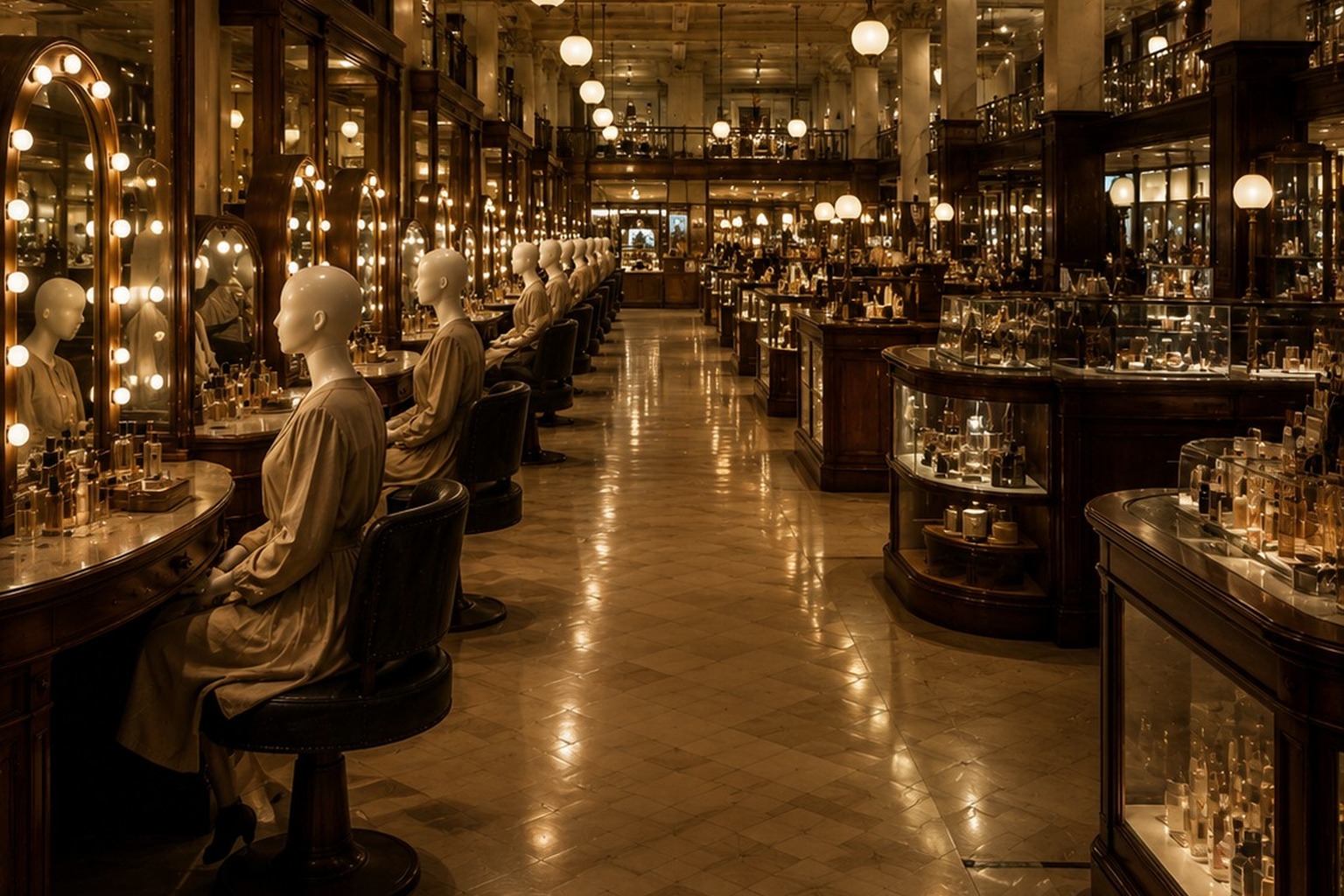
He rounded a corner expecting to find another employee. Instead he discovered an enormous cosmetics counter stretching farther than he could see. Every stool sat occupied. At least that was his first impression.
Then he realized the figures weren't people. They were mannequins dressed in employee uniforms. Each one sat perfectly upright. Each one faced the mirrors. And every mirror reflected occupied chairs.
Except the reflections weren't mannequins. The mirrors showed actual department store employees. Cashiers. Sales associates. Security guards. Busy with ordinary work. Smiling. Talking. Helping invisible customers. None acknowledged Ethan standing behind them.
He backed away immediately. The footsteps stopped. Complete silence returned. Hours seemed to pass. His watch no longer advanced. He grew thirsty. The warm lights never changed. Finally he noticed a service bell resting atop an abandoned customer assistance desk.
How The Story Spread Quietly
It was ordinary. Chrome. Small enough to fit inside one hand. Desperate, he rang it. Once. Its chime echoed much farther than it should have. The sound continued through unseen hallways before fading completely.
Then every light inside the enormous floor flickered simultaneously. The mannequins disappeared. The mirrors went dark. And somewhere in the distance, an elevator bell answered. One cheerful ding.
He ran toward the sound. The elevator doors had returned. Exactly where they had first vanished. The old brass indicator displayed only one word. HOME. He stepped inside.
The accordion gate closed without him touching it. The elevator descended for what felt like only seconds. When the doors reopened, Michael stood waiting. Less than four hours had passed.
Ethan insisted it had been several days. Nobody believed that part. At least initially. Then investigators examined the decoration cart. The cardboard boxes looked exactly the same. Except one contained merchandise that had never belonged to Mercer & Bell.
Inside rested pristine catalogs advertising products introduced nearly forty years before the department store itself had even opened. Every catalog listed the same address. Mercer & Bell Department Store.
Why It Still Feels Unsettling
Yet the building pictured on the cover looked entirely different. Larger. Seven stories tall. An elaborate glass dome rose above the roof. A fifth-floor restaurant overlooked the city.
A sixth-floor ballroom hosted evening dances beneath crystal chandeliers. Local archives contained no record of such a structure ever existing. Architectural historians dismissed them as elaborate promotional artwork.
But no printing company could identify the paper. The ink composition didn't match modern formulas. Nor historical ones. The catalogs simply existed. Months later, Mercer & Bell permanently retired the antique elevator.
Visitors complained. Many considered it the building's most charming feature. Eventually the entire department store closed, unable to compete with suburban shopping centers. Developers converted the lower floors into offices while preserving the historic façade.
The elevator shaft remained untouched. Construction crews refused to remove it after repeated equipment failures centered around the old lift. Power tools malfunctioned. Laser measuring equipment produced impossible floor heights.
Blueprint dimensions stopped matching physical measurements near the shaft. No explanation satisfied anyone. Today the elevator doors remain permanently welded shut behind decorative walls. Most tenants never realize an elevator ever stood there.
Maintenance workers occasionally report hearing an old mechanical bell echo through empty service corridors after everyone has gone home. Others claim they have seen the brass floor indicator illuminated through tiny gaps in the wall.
Followed by patient footsteps crossing polished tile. As though somewhere beyond the walls, an enormous department store still welcomes evening shoppers beneath warm amber lights. Waiting for someone else to press the button.
And ride to a floor that was never supposed to exist.
Reader Context
This story is presented as a WeirdWitnessed-style horror reconstruction, not as verified evidence. For more context on how to read these accounts, see https://weirdwitnessed.com/how-to-read-weird-witnessed-stories/ and https://weirdwitnessed.com/how-weirdwitnessed-creates-reconstructed-horror-stories/.