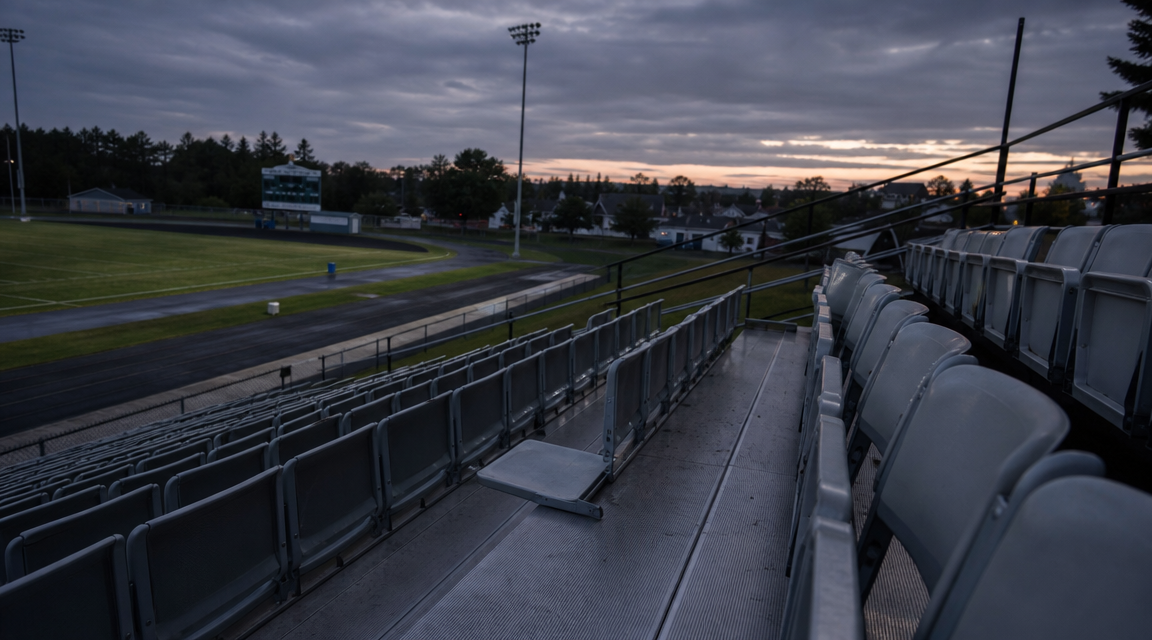
There are stadium mysteries that begin with a roar, a crowd, a storm, or a night when too many people remember the same impossible thing.
This one began with an empty seat, or more precisely with Seat 17 in Section C of a small municipal athletic field. It was one folding chair among rows of aging metal seats bolted to concrete bleachers above a track that had faded from red to a dull brick color. Every morning, when staff unlocked the grounds, Seat 17 was down.
The First Morning It Was Noticed
The first person to mention it was the groundskeeper, who noticed the seat while sweeping paper cups and sunflower seed shells after a Friday game. Every seat in the section had snapped back upright except one.
Folding stadium seats are built to return to position when weight leaves them. They do not always do it gracefully, especially after years of rain, dust, and repairs, but they are meant to look empty when they are empty.
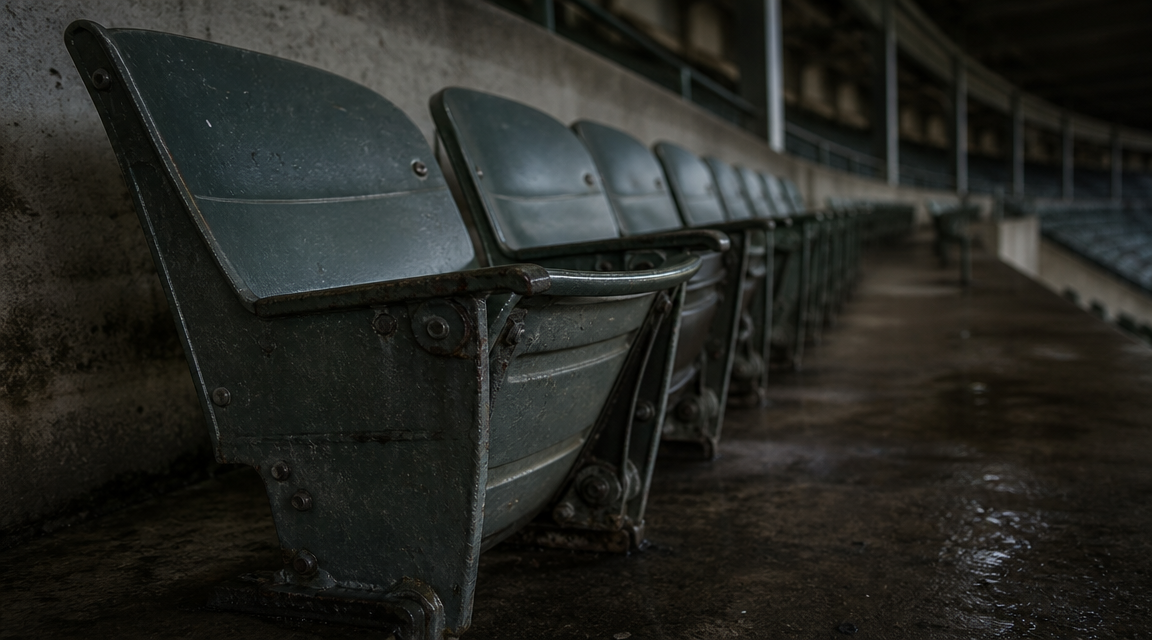
Seat 17 looked occupied, or recently abandoned. The groundskeeper pushed it up with the broom handle and heard the familiar metal clack, which should have ended the story.
It did not, because the same seat was down again on Monday.
A Seat in the Quiet Part of the Stands
Section C was not the best place to sit. It was off center from the fifty-yard line, close enough to hear the announcer but too far from the concession stand to be convenient.
Families preferred the lower rows. Students stood near the rail. Coaches and photographers rarely climbed that high, and Seat 17 belonged to the middle of a middle row, neither hidden nor prominent.
That ordinary placement made the repeated movement harder to dress up as a prank. If someone wanted attention, there were better targets: the press box door, the scoreboard switch, the mascot storage room.
Seat 17 offered no message. It simply lowered itself by morning.
The Closing Checklist
The athletic field had a basic closing routine. A staff member walked the concourse, checked the restrooms, locked the equipment shed, and made sure the bleacher gates were chained.
After the third report, the supervisor added a line to the checklist: Section C seats upright. On game nights, two people did the sweep. On practice nights, one was usually enough.
For a week, the closing staff specifically checked Seat 17. They raised it, pushed down on the edge, watched it spring back, and left it matching the rest of the row.
By morning, it was down again. No trash appeared under it, no footprints marked the dusty concrete, and no wrappers or cigarette butts suggested someone had been sitting there after hours.
The seat was just lowered, as if the stadium had opened itself to one invisible spectator.
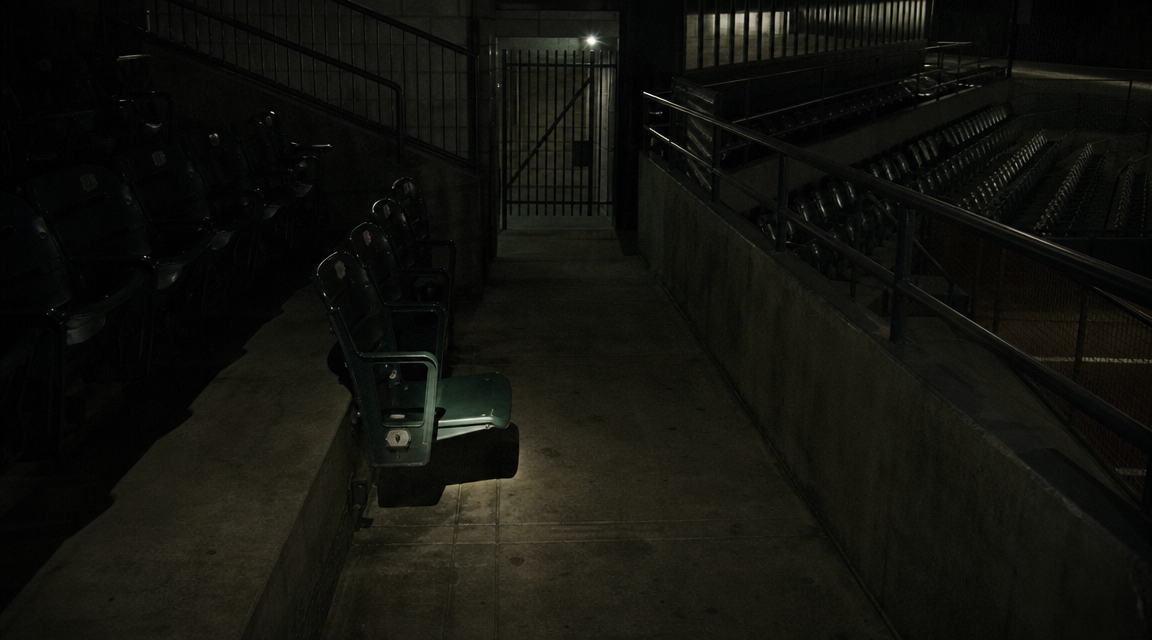
Weather Had a Chance to Explain It
Weather was the first serious explanation. Wind can move loose things, temperature changes can tighten old metal, and moisture can swell grime inside hinges until a chair behaves differently after dark.
The maintenance crew did not ignore that possibility. They checked Seat 17 on dry nights, wet nights, and a cold night when mist settled on the railings.
They compared it with the seats beside it. Several in the row had rust, but only one kept appearing down in the morning.
One worker tried leaving Seat 16 and Seat 18 slightly loose to see whether wind would catch them too. At sunrise, those two seats were upright. Seat 17 was down.
The explanation still sounded mechanical, but it was beginning to feel selective.
The Camera That Almost Helped
The stadium had cameras, though not the kind that make mysteries easy. They were installed to discourage vandalism near gates, storage areas, and the concession window.
Section C appeared only in the edge of one wide frame, high and grainy, with the seat numbers too small to see. After the supervisor got tired of morning notes, he aimed a temporary trail camera at the row.
The first night it caught nothing useful. The infrared flash reflected off a railing and washed the frame in pale glare.
The second night showed the row clearly enough to prove the gate stayed shut and no person walked through the aisle. At 11:42 p.m., Seat 17 was upright.
At 12:07 a.m., after a brief gap in the motion-triggered camera record, Seat 17 was down. The camera did not capture it moving. It captured the before and the after, which is often worse for a small mystery than no camera record at all.
A Name Nobody Wanted to Use
Small towns attach stories to public places whether anyone asks them to or not. By the end of the month, someone remembered that an older man had once sat in Section C for nearly every home game.
Someone else thought his preferred seat was in that row. A third person said it had been 17, then admitted they were not certain.
The staff avoided repeating that version in official notes. It was too easy and too sentimental, the kind of explanation people reach for when an empty place already looks like an absence.
Still, the rumor changed how people looked at the bleachers. A lowered seat no longer seemed like a defect. It seemed like attendance.
The Repair Test
The most practical response was to remove mystery from the hardware. A maintenance contractor inspected Seat 17 and found what old public seating usually offers: corrosion, worn bushings, a tired return spring, and bolts tightened by many hands.
He cleaned the hinge, replaced the spring, adjusted the bracket, and tested it repeatedly. The seat snapped upright harder than the others after the repair.
For two mornings, it stayed that way. On the third morning, it was down again.
This time there was a detail that bothered the groundskeeper more than the position itself. The seat was not hanging loosely, as if gravity had won. It was fully lowered, pressed flat to the stop, the way it would sit beneath a person's weight.
He lifted it and let it go. It snapped upright with a sharp report that echoed across the empty field.
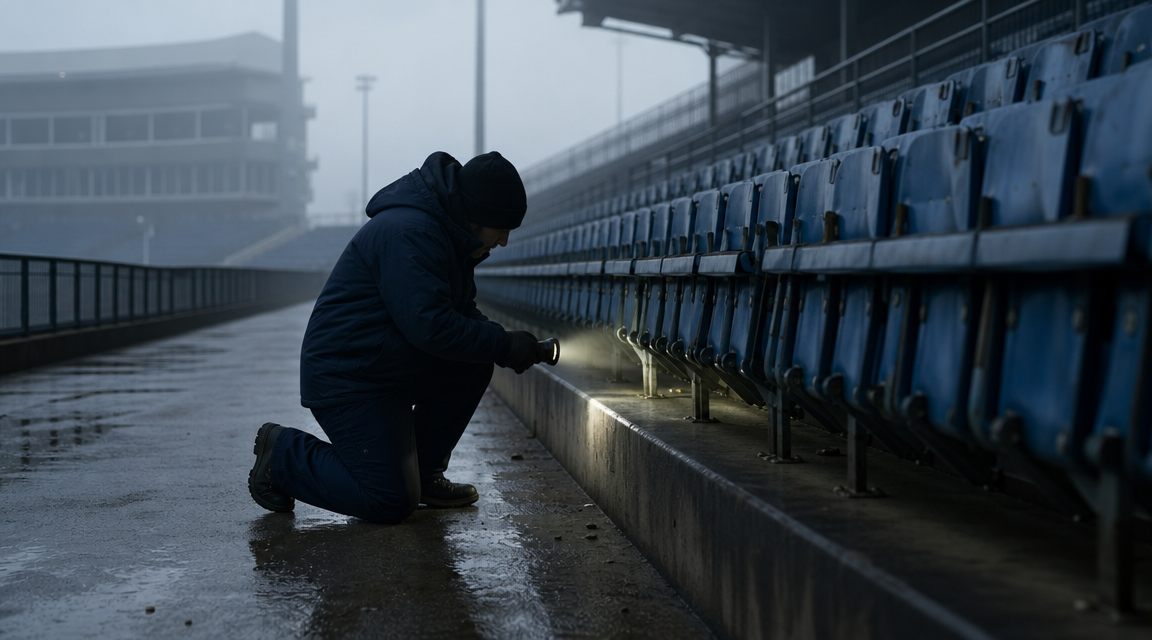
The Night Watch
Eventually two staff members agreed to sit in the press box after closing. They did not call it a stakeout, because that sounded ridiculous for a folding stadium chair.
They brought coffee, a radio, and the quiet embarrassment of adults monitoring furniture. From the press box they could see Section C under the security lamps.
Seat 17 remained upright through the first hour. A stray cat crossed near the track, a plastic bag snagged against a drain, and the stadium made all the ordinary sounds old structures make when nobody is cheering inside them.
Just after midnight, the lamps on the far side of the field flickered once. The two witnesses later disagreed about whether the seat moved during that instant or immediately after it.
They did agree on the important part: when they looked back at Section C, Seat 17 was down. They had heard no hinge squeal. They saw no person, animal, or object touch it.
Neither man went down to raise it until morning.
Why It Still Feels Unsettled
The bleachers were eventually renovated, and the old seats from Section C were removed. According to the most repeated version, Seat 17 did not go to a museum, a collector, or a paranormal investigator.
It went into a scrap pile with the rest of the damaged hardware, which is probably what happens to most objects that briefly become strange. That ending frustrates people who want a final test.
It also keeps the story believable. Nobody produced a cursed chair. Nobody claimed the seat followed them home. The event stayed small, documented mostly through staff notes, half-useful camera camera images, and the discomfort of people who had better things to do than invent a haunted bleacher.
The simplest explanation remains mechanical failure under just the right conditions. Old springs slip. Hinges bind. Metal remembers stress in ways that can surprise people who expect objects to behave consistently.
But the witness accounts keep returning to the same stubborn details: one seat, one section, after closing, repeatedly lowered with no sign of entry.
That is why Seat 17 lingers as a Weird Events story rather than a ghost story. It did not scream, vanish, or leave a message. It merely kept making room for someone who was not there.
Reader Context
This Weird Witnessed story is an editorial reconstruction, written as eerie visual storytelling rather than a verified report. For more context, see Camera Anomalies and Strange Images Guide and How WeirdWitnessed Creates Reconstructed Horror Stories.