The Detail That Started the File
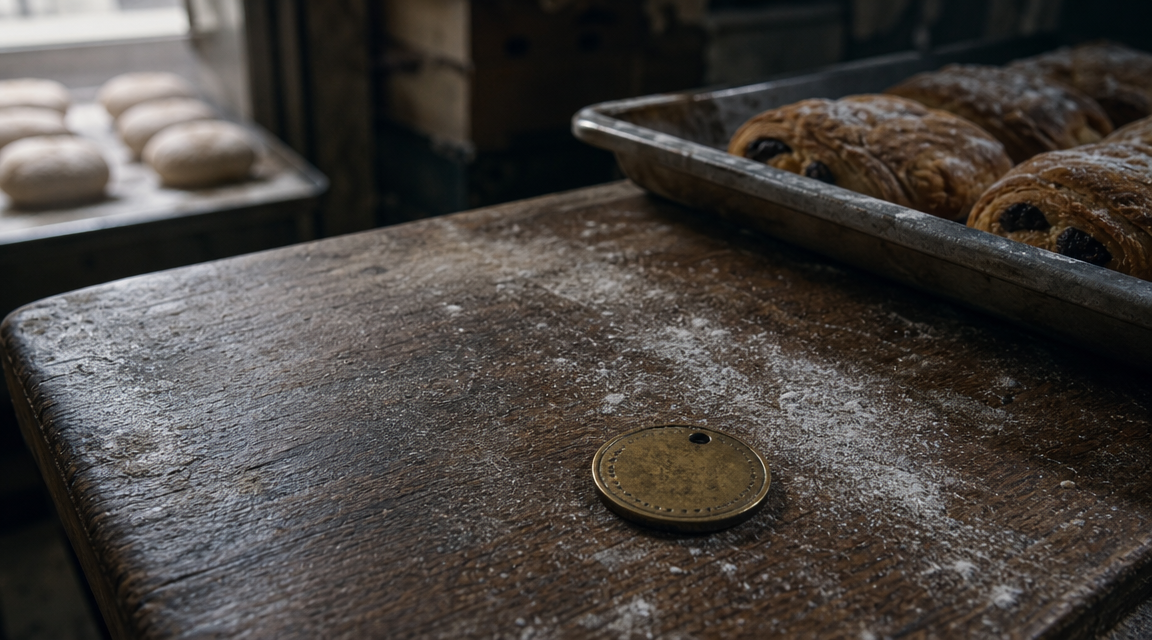
The object was small enough to miss. It was a round brass token, darkened at the edges, found when workers pried an old bakery counter away from the wall.
At first, nobody treated it as mysterious. Old businesses leave behind old things.
Buttons, coins, drawer pulls, and discount chips all collect in places no broom can reach.
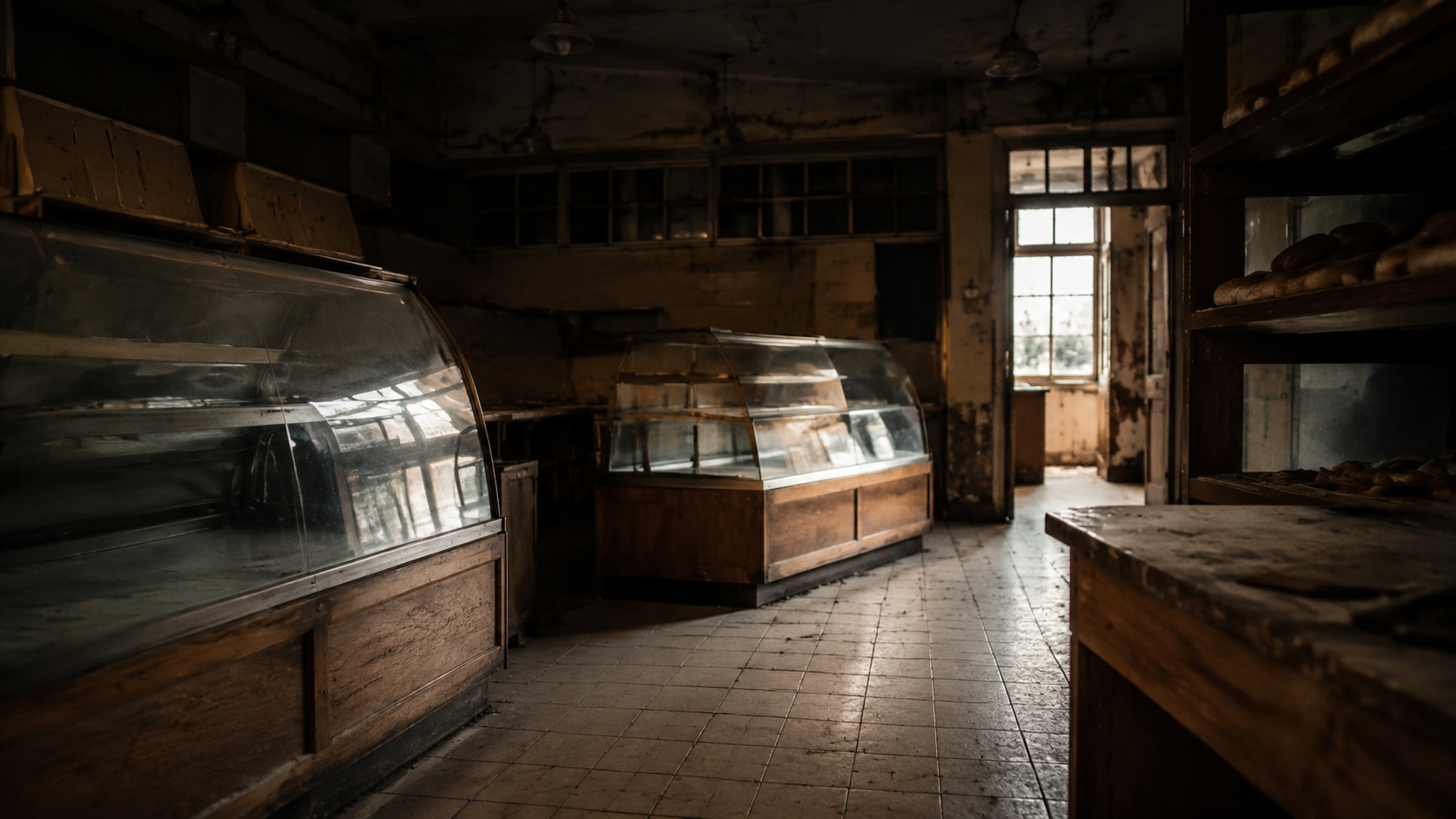
The bakery had been closed for years. Its display cases were empty, its ovens disconnected, and its painted sign removed from the window.
A token under the counter sounded like the least strange thing in the building.
Then a former clerk saw a photograph of it and said the sentence that changed the story.
That was the piece they were never supposed to put in the register.
Why the Simple Version Was Not Enough
The bakery had operated for most of the twentieth century. It sold bread, rolls, and simple cakes to a neighborhood that changed around it.
By the time it closed, the shop felt less like a business than a habit.
Tokens were not unusual in that kind of place. Some bakeries used them for prepaid loaves, delivery credits, or charity bread during hard weeks.
This token looked like it belonged to that history. It was worn smooth in the center and nicked along the rim.
One side carried a number. The other had a shallow stamped mark too blurred to read.
The problem was that no one could match it to anything.
A nephew of the last owner compared it with the surviving receipt books. The number did not appear.
The Setting People Remember
He checked a drawer of old credit slips, then a box of delivery route cards. Nothing fit.
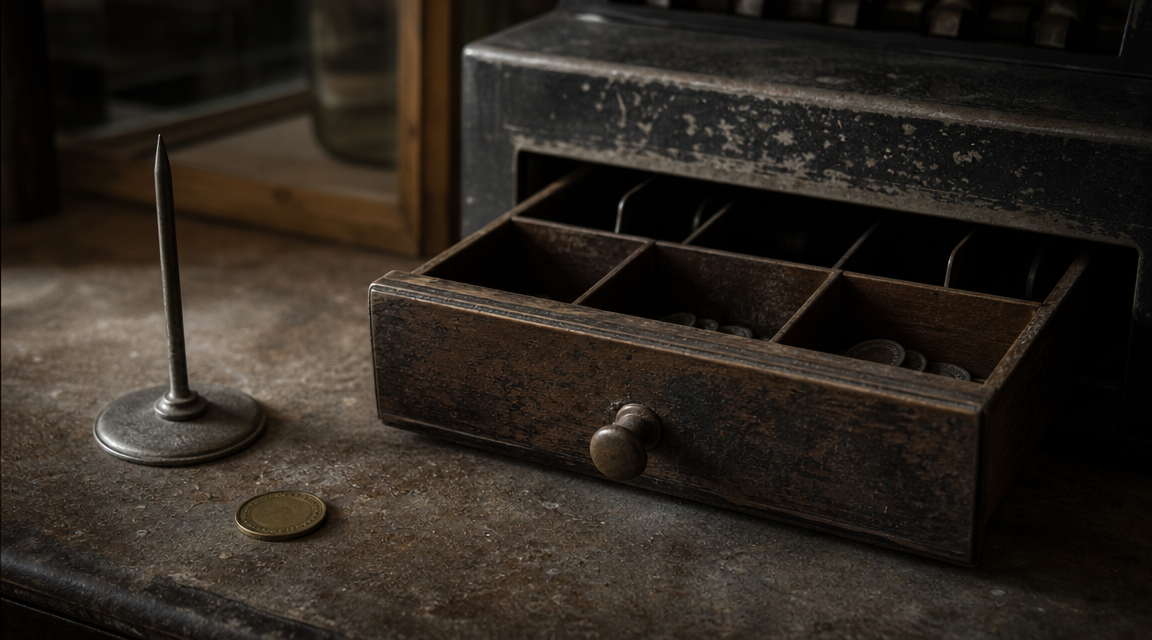
The cash register had been saved in storage. Its keys were missing, but the drawer still opened with pressure from underneath.
Inside were coin slots, paper dust, and a few brittle receipt fragments.
No slot was shaped for tokens. No note mentioned them. No drawer label matched the stamped number.
That should have ended the matter. An unmatched token is not automatically strange.
It might have come from another store, another town, or a child’s game.
But former employees remembered it too clearly. Not the number, necessarily, but the rule.
The First Account That Changed the Mood
One clerk said new staff were told not to accept brass pieces after dark.
Another remembered a token kept near the flour scale, separate from money.
A third said the owner once closed the drawer on a customer’s hand rather than let a certain piece drop inside.
Memories from decades later are fragile. They bend toward drama.
Still, the agreement is hard to ignore.
Nobody described the token as cursed. The language was more practical and more unsettling.
Why the Obvious Explanation Struggles
Do not put it in the drawer. Do not count it with the day’s money. Do not give change for it.
The warning suggests a business problem before it suggests a supernatural one.
Perhaps counterfeit tokens circulated. Perhaps someone used a similar piece to cheat the shop.
A bakery with thin margins would remember that. A bad token could become a rule, and a rule could become a story.
The most practical explanation is that the token belonged to a private credit system that was later abandoned.
If records were destroyed, the object would seem untraceable.
The Most Reasonable Theory
That explanation works until the register enters the story.
Several people insisted the token was not merely worthless. It was specifically not to be placed inside the register drawer.
Why would that matter?
One version says the register jammed whenever the brass piece touched the coin tray.
Another says totals came out wrong at closing. A quieter version says the owner disliked the sound it made against the metal.
The sound detail is the one people repeat. Former staff described a dull double-click, as if the token hit the drawer twice.
The Part That Stayed Unresolved
There is no way to prove that now. The old register is warped, the drawer springs are weak, and any test would be theater more than evidence.
Still, the object leaves a paper problem. Businesses record money because money matters.
If the token represented credit, debt, charity, or delivery, it should appear somewhere.
It does not.
The absence may only mean the wrong papers survived. But in a story about a shop built on daily accounting, an object that refuses every ledger feels larger than it is.
After the bakery closed, the token passed through several hands. Each person treated it as a curiosity until they heard the drawer warning.
How the Story Was Retold
Then it became harder to dismiss.
That is how strange objects gather weight. Not through proof, but through repeated caution.
A thing becomes unsettling because too many ordinary people remember avoiding it.
The bakery itself is gone now. The counter was hauled away, the ovens removed, and the front room renovated beyond recognition.
But the token remains, small and dull, with a number no register claims.
Maybe it came from another business and wandered into the bakery by accident.
Why It Still Feels Worth Noticing
Maybe former employees stitched separate memories into one neat warning.
Maybe the owner had a practical, private reason that was never written down.
The token still feels wrong because it is not dramatic. It does not glow, open doors, or make threats.
It simply refuses to belong to the system that should explain it.
A bakery is a place of counts: dozens, loaves, change, orders, mornings.
The brass token is strange because every count around it fails.
The strongest caution against overreading the token is also the strongest reason the story survives. A neighborhood bakery is exactly the kind of place where private rules become family folklore. A warning repeated for practical reasons can outlive the reason itself.
By the time outsiders hear the rule, it sounds stranger than it may have been. Do not put that in the drawer might once have meant do not mix it with cash, do not accept store credit from strangers, or do not reopen an old dispute.
Still, the former employees did not remember a general policy. They remembered the object as if it had a particular identity.
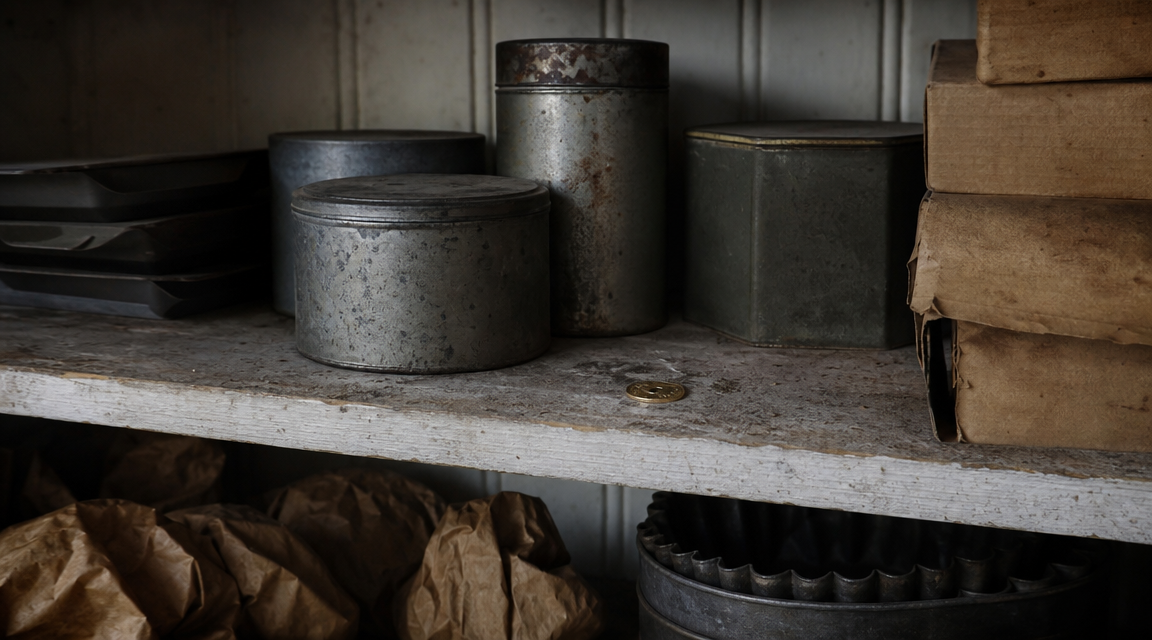
One described it as colder than the other coins in the drawer. Another said the owner kept it wrapped in wax paper for a time. A third remembered seeing it on a shelf above the ovens, which makes little practical sense for a payment token.
Those memories cannot be tested now. They may be ordinary exaggerations created by age, repetition, and the pleasure of a good scary reconstructed moment.
But the object gives the story a center. It is easier to dismiss a rumor than a thing you can hold.
The brass token does not solve the bakery’s mystery. It narrows it. It asks why a shop built on daily transactions preserved a payment piece nobody could spend.
That is why the object feels less like a relic and more like a warning label without the label. Something about it was known well enough to avoid, but not well enough to explain.
There is another small point former staff agreed on: the token was never thrown away. If it was only counterfeit, tossing it would have been simple. If it belonged to another shop, returning it or ignoring it would have ended the matter.
Instead, it seems to have been kept close enough for people to learn a rule about it. That choice gives the story its shape. The bakery did not simply reject the token. It remembered it.
In practical terms, that may mean the owner expected it to appear again. In stranger terms, it suggests the object had already done enough to earn a place in the shop’s private map of things to avoid.
Reader Context
This Weird Witnessed story is an editorial reconstruction, written as eerie visual storytelling rather than a verified report. For more context, see How to Read Weird Witnessed Stories and How WeirdWitnessed Creates Reconstructed Horror Stories.