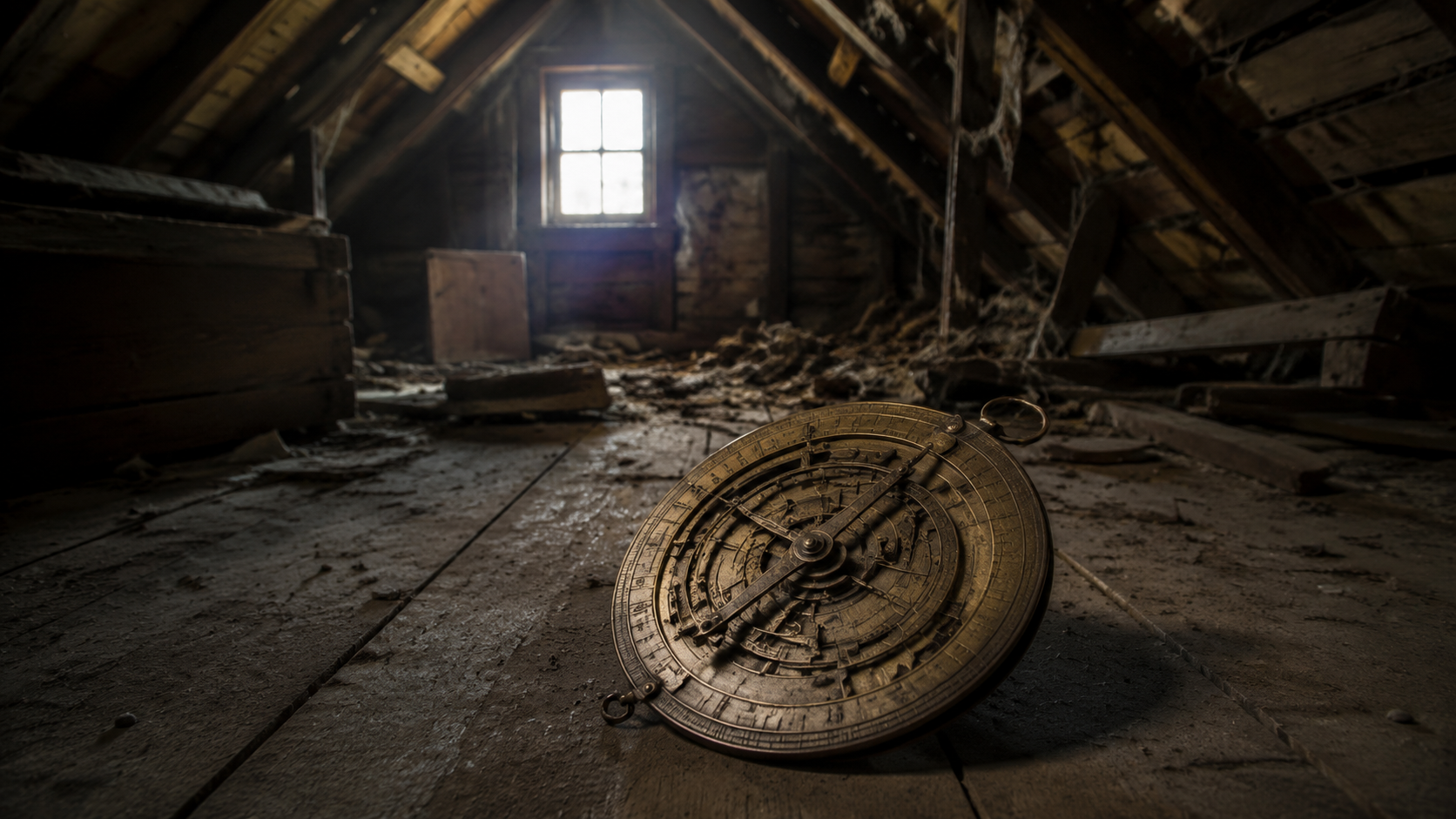
The brass object was not found in a chest or under a loose board.
It was sitting in the Bellweather attic almost politely, wrapped in yellowed cloth beside cracked picture frames, a child's chair, and a box of rain-stained receipts.
At first, the family called it an astrolabe because that was the nearest familiar word. It had rings, pointers, engraved arcs, and a patient old shine under the dust.
What changed the tone was not its age or possible value. It was the way the object, whenever set down flat, seemed to choose one direction in the house: toward a sealed room nobody in the family remembered entering.
The Attic Find
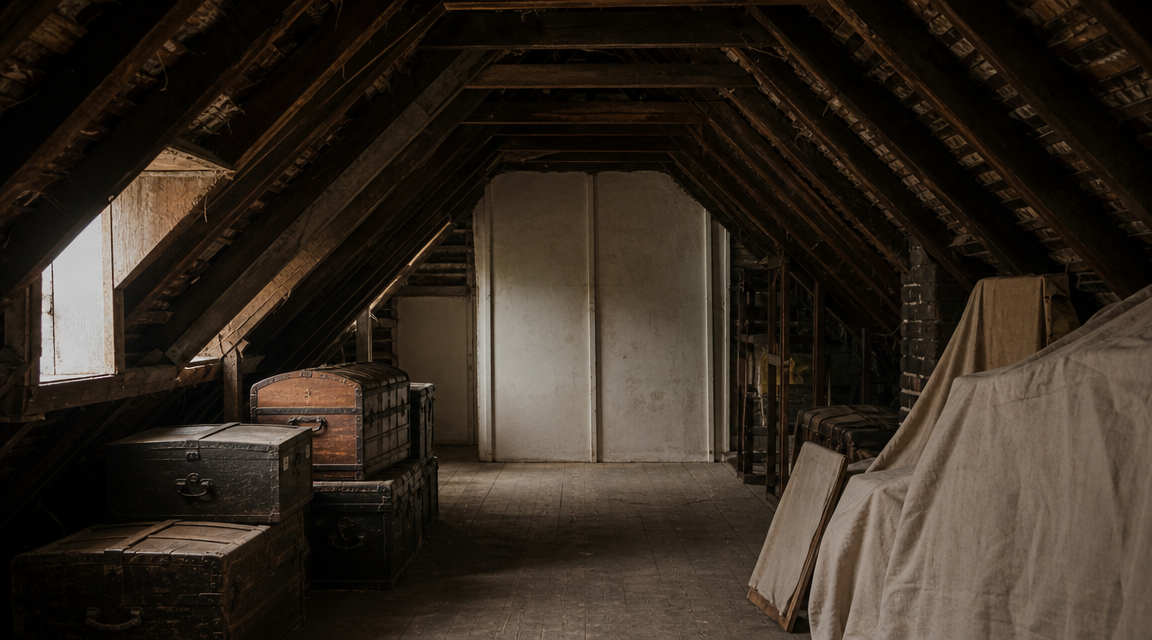
The Bellweather house, according to the account preserved by relatives, had been added onto at least twice. Its attic was less a single room than a low maze of joists, knee walls, old insulation, and stored lives.
The brass instrument appeared during a clearing effort after a roof leak. The family expected water damage. They found mouse-nibbled quilts, brittle documents, and a round metal device about the size of a dessert plate.
It was heavy enough to feel purposeful. Its face carried circular graduations, small pivoting arms, and openwork cutouts that made it look scientific rather than ornamental.
Nobody present claimed expertise. The first assumption was simple: an old navigational or astronomical instrument had ended up in the attic and might interest an auctioneer.
That assumption lasted until someone put it on the floor.
What It Looked Like
The object resembled an astrolabe in the broad, non-specialist sense: brass, circular, layered, and marked for measurement. A trained historian might have been less generous.
Several features were wrong or at least odd. Some markings looked decorative rather than functional. A few arcs ended where useful scales should have continued. One rotating arm was weighted unevenly, giving the whole piece a lopsided habit when released.
There was no maker's name visible. No date appeared on the front. The brass had darkened in protected hollows and brightened along raised edges, suggesting long handling before long neglect.
The family later said the most unsettling part was how legitimate it seemed from a distance, and how uncertain it became the closer anyone studied it.
It had the manners of an instrument without offering a clear job.
The Direction Problem
The first movement was dismissed as the wobble of an uneven floor.
Set flat on attic boards, the object shifted slightly, then settled with one narrow pointer aimed toward the rear of the house. When it was turned and placed again, it repeated the preference.
The family tried other surfaces. A card table. A trunk lid. Later, a kitchen counter and a dining table downstairs. The same pointer, once the object stopped rocking, reportedly favored the same part of the building.
It did not spin dramatically. It did not hum, heat, or jump. The account is quieter than that.
The object simply came to rest in a way that made people stop talking. After several attempts, the line it indicated appeared to pass through the upper hallway and into a wall panel long assumed to cover unused crawl space.
Behind that panel was the sealed room.
The Sealed Room
The room was not discovered through demolition on the first day. That detail matters.
For a while, the family argued about whether the indicated area was a void, a closet, or just an architectural misunderstanding. Old houses contain many spaces that look secret only because builders solved problems cheaply.
A contractor eventually noted there was a closed-off chamber behind the paneling. It had no normal doorway from the hall. Access appeared to have been removed during an earlier renovation, then covered cleanly enough that later owners treated the wall as original.
When a small inspection opening was made, the space beyond looked empty except for plaster dust, narrow flooring, and a dark stain near one corner. No hidden fortune appeared. No dramatic artifact waited inside.
That absence did not calm the family. It made the brass object harder to classify.
If it was not pointing toward treasure, what had it been indicating?
The Marks Underneath
The underside changed the conversation from antique curiosity to possible evidence.
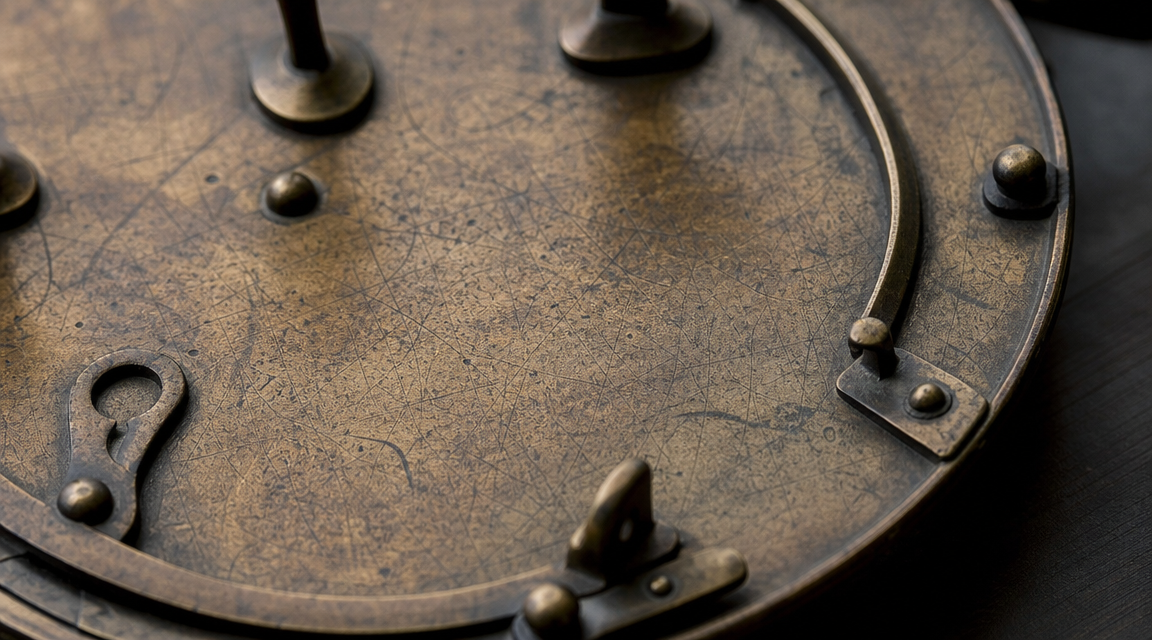
When the object was turned over for cleaning, the family noticed clusters of shallow scratches across the back plate. They were not random scuffs from storage. They crossed and repeated in short, hesitant runs, as if someone had tried to mark the metal without having the right edge for the job.
A jeweler reportedly said they did not look like normal engraving. A local appraiser considered damage, repair marks, and deliberate distressing, but did not identify a familiar workshop pattern.
The scratches also avoided certain raised areas with strange care. Whoever or whatever made them seemed to work around the structure rather than simply gouge across it.
That is where the family's language shifted. They stopped saying the object was valuable. They started saying it should not be polished, sold, or repaired until someone understood what had happened to it.
They treated it like a witness that could still be contaminated.
Why Treasure Was the Wrong Word
The obvious story would be that the family hoped for money. An attic object, brass and old-looking, invites that suspicion.
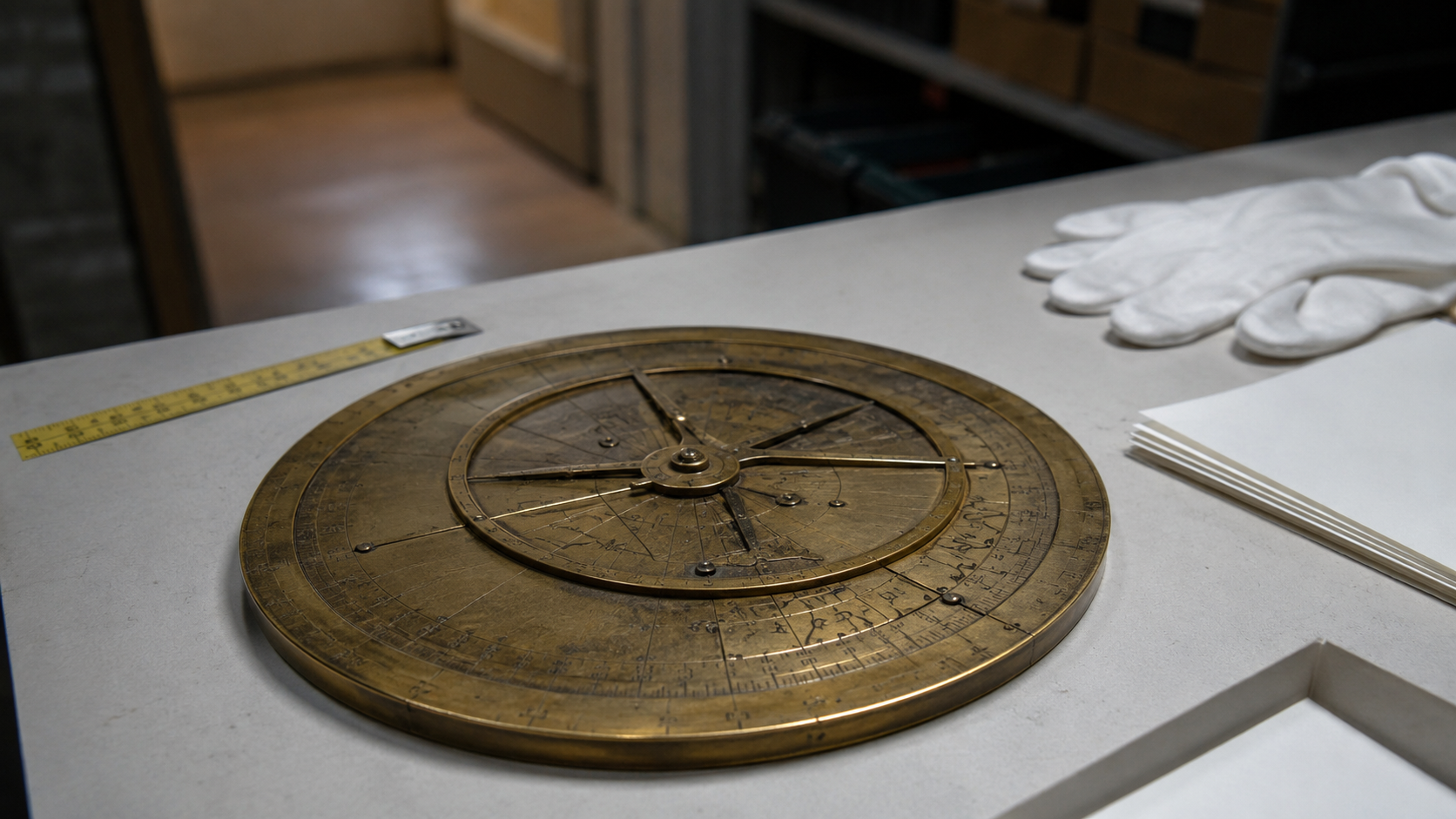
But the surviving account repeatedly emphasizes restraint. The owners did not rush it to market. They kept it wrapped in acid-free paper. They photographed it from multiple angles. They marked where it had been found and where it had been placed during the direction tests.
This behavior sounds less romantic than frightened. A treasure is something you display, insure, or sell. Evidence is something you preserve because its meaning may depend on details too small to notice at first.
The sealed room also complicated any simple profit motive. Once opened, it produced no satisfying prize. The object's importance increased precisely when its practical reward decreased.
That is one reason the Bellweather story has a stubborn credibility. The people involved did not appear to benefit from making the object stranger.
Possible Ordinary Explanations
There are several grounded ways to approach the report.
The instrument may have been weighted so unevenly that it always settled along the slightest slope. Old attic floors dip. Tables lean. A house can guide a rolling or rocking object more consistently than witnesses realize.
The pointer may have seemed aimed at the sealed room because the family began testing after that idea entered their minds. Humans are excellent at turning approximate lines into meaningful targets.
The underside scratches may have mundane causes too. Scrap contact, past cleaning, a child's experiment, or friction against another metal object could leave marks that feel mysterious decades later.
Even the sealed room is not impossible. Renovations bury spaces. Closed-off rooms are found in old houses often enough to be surprising without being supernatural.
The cautious reading allows all of this. It says the object may have been odd, old, damaged, and misinterpreted.
It does not fully explain why the family became so careful.
The Evidence Habit
What makes the Bellweather account linger is the discipline that followed the fear.
They did not build a shrine around the brass disk. They did not invite neighborhood séances or attach a grand curse to the room. Instead, they labeled envelopes, preserved dust from the wrapping, and kept a written record of each placement test they considered reliable.
That is not a detail people read as anything extraordinary. People can document errors with great sincerity.
Still, the evidence habit changes the emotional temperature of the story. It suggests the owners felt watched not by the object, but by the possibility that mishandling it would erase the only useful trace.
The brass instrument became a question with a chain of custody.
In strange-object cases, that is rare. Most artifacts become legends because they are passed around. This one became unnerving because the family stopped passing it around at all.
What Remains Unsettled
No public laboratory report has settled the matter. No expert consensus identifies the object with confidence. The sealed room, as described, offers context but not an answer.
That leaves a narrow and uncomfortable version of the story.
A brass astrolabe-like instrument was found in an attic. When placed flat, it reportedly favored the direction of a hidden room. Its underside carried marks that did not match the explanations available to the owners. Instead of chasing value, they preserved it.
The eerie part is not that the object must have known something. That is too large a claim for the evidence available.
The eerie part is smaller: everyone who handled it closely seems to have decided it was no longer just a thing.
It was a remaining piece of an event nobody could reconstruct, pointing not to a fortune, but to a blank sealed space in the house.
And sometimes a blank space is exactly what makes an object feel dangerous to move.
Reader Context
This Weird Witnessed story is an editorial reconstruction, written as eerie visual storytelling rather than a verified report. For more context, see How to Read Weird Witnessed Stories and How WeirdWitnessed Creates Reconstructed Horror Stories.