The Detail That Made The Story Unsettling
The flower cooler sat at the back of the funeral home where almost no visitors ever wandered. Families stayed in softly lit arrangement rooms. Staff moved quietly through preparation areas. Delivery drivers came and went through a side entrance.
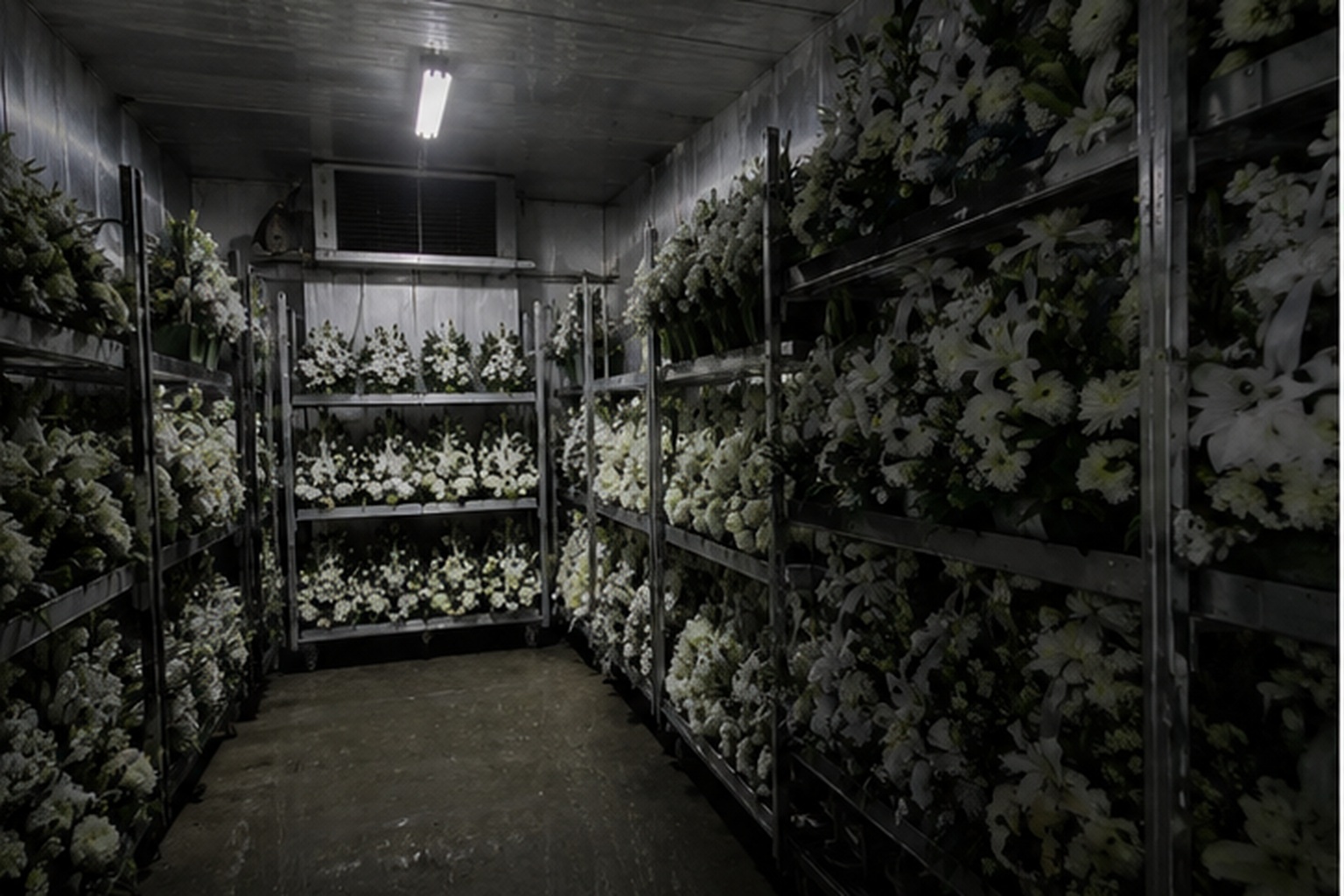
But the cooler itself was simply part of the routine—a long refrigerated room lined with rolling racks of lilies, carnations, roses, and white chrysanthemums waiting for services scheduled over the coming week. It was never meant to be mysterious.
The room existed for one reason: to keep flowers fresh. That ordinary purpose made what appeared in one photograph feel impossible to explain. The image wasn't dramatic. Nothing was lunging toward the camera.
There were no glowing eyes or impossible shadows. At first glance it looked like another inventory photo taken before opening—a habit one employee had developed after several expensive floral deliveries had accidentally been misplaced between services. Every morning she photographed each rack before moving arrangements into chapels. It saved arguments.
If a family insisted they had ordered six standing sprays instead of five, or claimed a wreath had arrived damaged, management simply reviewed the photos. Thousands had been taken. Only one was ever discussed afterward. The cooler itself measured perhaps forty feet long.
Steel shelving rolled along narrow tracks, allowing workers to slide racks together and create aisles wherever they needed access. Plastic buckets filled with water sat beneath dozens of arrangements, while chilled air drifted constantly from vents hidden behind aluminum panels near the ceiling. Everything reflected pale white. The walls.
The concrete floor. The polished steel racks. Even the flowers seemed almost colorless beneath the cold fluorescent lights. That morning started no differently than dozens before it.
What The Camera Or Witnesses Noticed
The employee unlocked the cooler shortly after sunrise. The compressor hummed steadily. Cold air rolled across the threshold. She stepped inside, photographed the first aisle, then slowly worked deeper into the room, taking pictures every few feet. Click. Step. Click. Step. Nothing unusual. Until the final photograph.
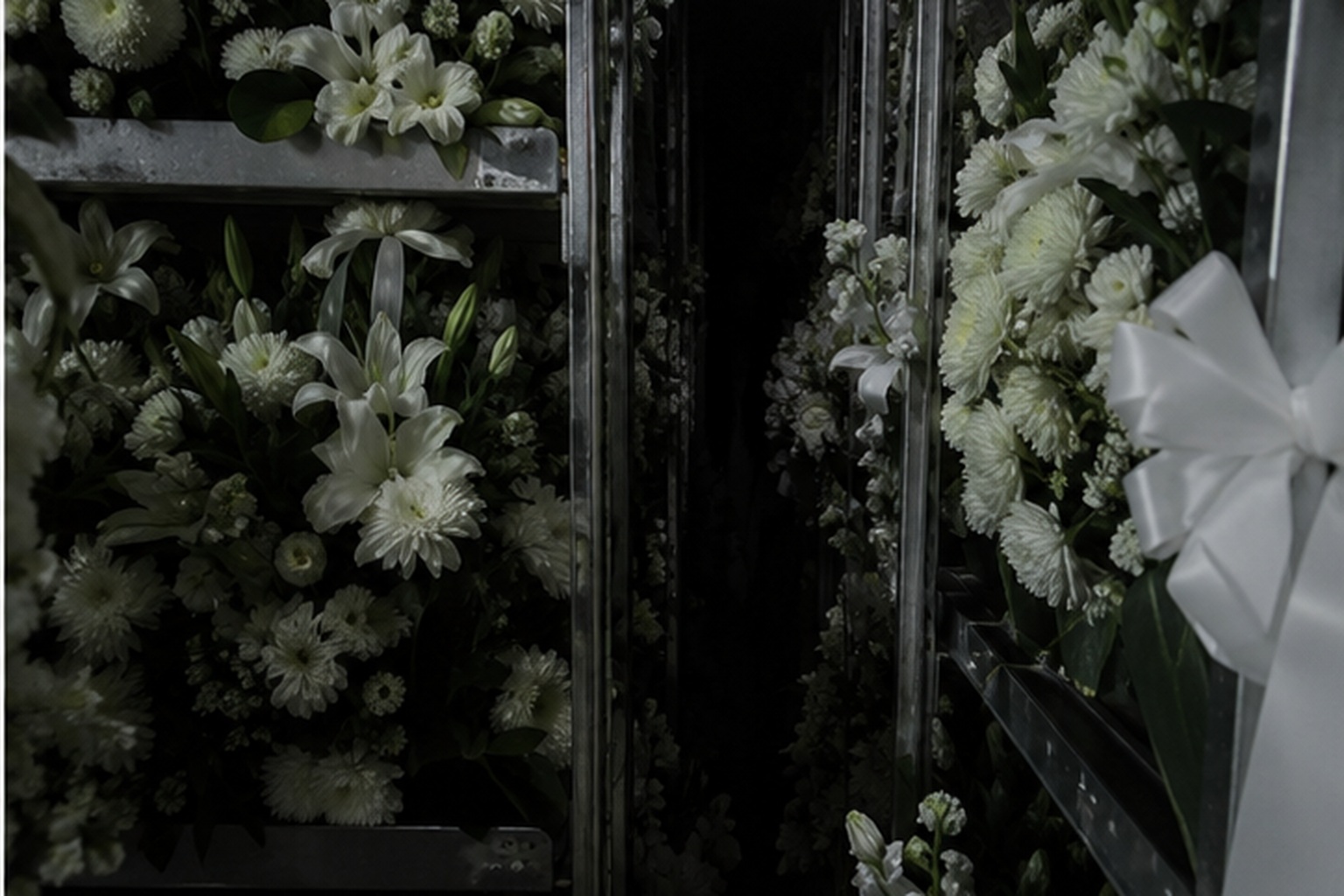
She didn't notice anything while taking it. She simply lowered her phone, finished moving arrangements for the day's visitation, and forgot about the pictures entirely. Hours later another employee searched through them while confirming delivery locations. Halfway through the gallery he stopped.
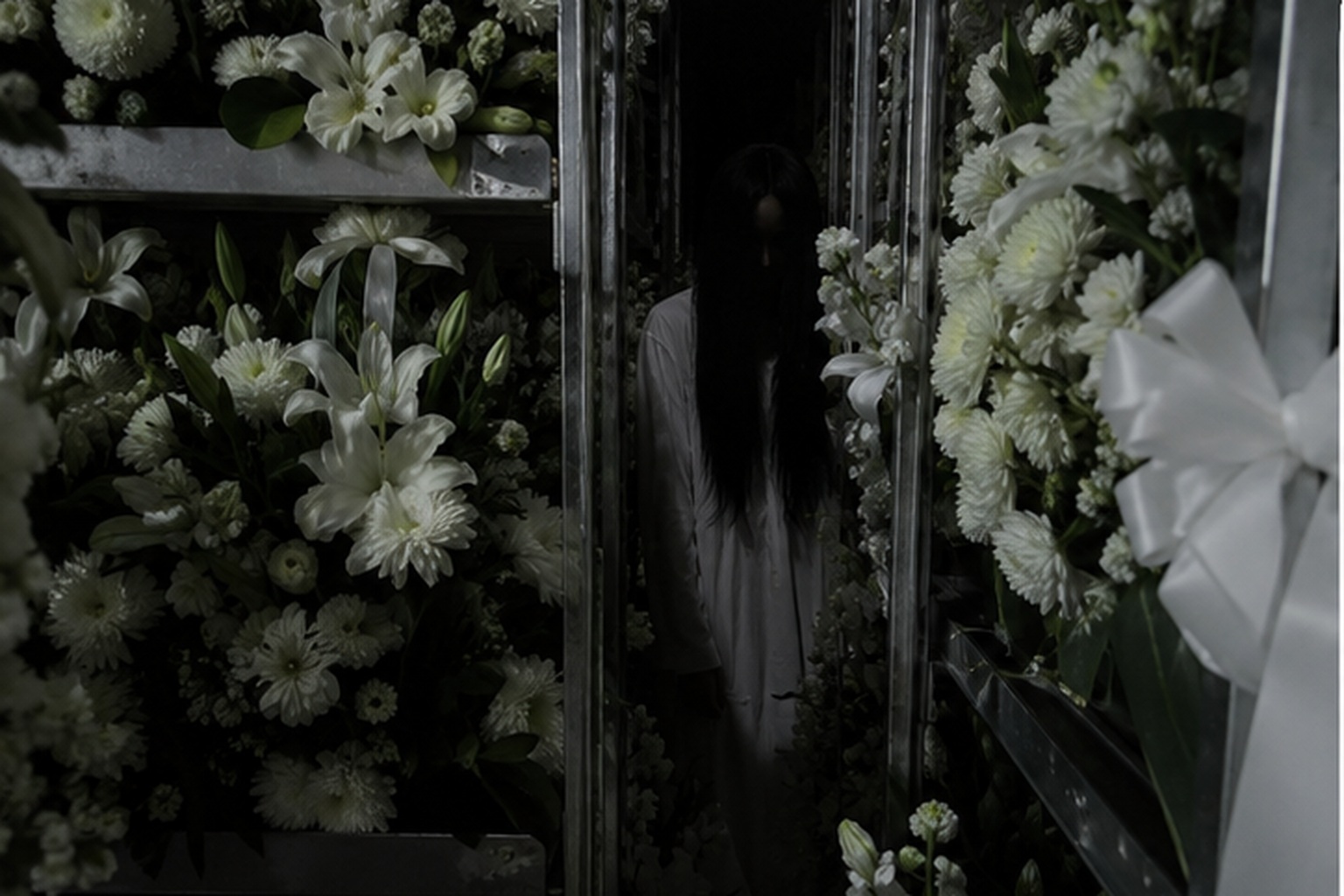
"Who's standing back there?" She looked over. "What?" "In this one." He enlarged the image. Between two tightly packed racks of white sympathy sprays stood what appeared to be part of a person. Only part. Not a face. Not hands.
Just the unmistakable front of a long white dress extending from shoulder level nearly to the floor. The figure seemed positioned perfectly within the narrow aisle between racks. Yet no head appeared above the flowers. No shoes appeared beneath the hem.
The dress simply occupied the center of the opening as though the rest disappeared behind blossoms that weren't nearly large enough to conceal a person. At first they assumed another employee had stepped into frame.
Why The Location Matters
There were several women working that morning. But nobody wore white. Funeral home staff deliberately avoided white clothing during services to prevent blending into floral displays in photographs. Dark suits. Dark dresses. Dark shoes. Always. One by one everyone checked.
Nobody owned anything remotely resembling the garment visible in the photograph. They laughed about it. Probably flowers arranged in an odd way. Perhaps folded ribbon. Maybe protective plastic reflecting the lights. The explanation sounded convincing until someone walked back into the cooler.
They stood exactly where the dress should have been. There wasn't enough room. The floral racks nearly touched. No adult could fit between them without pushing arrangements aside. Nothing had been disturbed. Water buckets remained perfectly aligned. Flower stems stood upright. Delicate ribbon bows hadn't shifted at all.
If someone had occupied that space—even briefly—dozens of arrangements should have leaned or scraped against each other. They hadn't. Curiosity replaced amusement. The employee recreated the saved image.
The Part That Changed After Dark
Same phone. Same lighting. Same position. Nothing appeared. Again. Nothing. Again. Only flowers. The white shape refused to return. Over the following week conversation drifted through the building whenever someone passed the cooler.
Someone joked about a bride who never made it to her wedding. Another mentioned old stories claiming funeral homes sometimes retain emotional echoes after particularly difficult services.
Nobody truly believed those ideas. Still, nobody deleted the picture. Instead it stayed saved in a shared folder simply labeled "Cooler." Months passed. Winter arrived. Business slowed after the holidays. The photograph became one more strange workplace story shared with new employees during quiet afternoons.
Eventually another incident renewed interest. A florist entered the cooler to retrieve roses stored along the rear wall. Halfway down the aisle she noticed what looked like white fabric disappearing behind the final rack. She assumed another employee was already inside. "Need something?" No answer. She rounded the corner.
Nobody. The rear wall stood empty except for refrigeration panels and stacked delivery boxes.
The Small Detail People Usually Miss
She shrugged and continued working. Only later, while carrying flowers out, did she remember something. The aisle behind that last rack didn't exist. The shelving had been pushed completely together that morning. There had been nowhere for anyone to stand. Management inspected the rack wheels thinking perhaps someone had moved them.
The dust lines on the concrete showed they hadn't shifted in weeks. The cooler slowly developed an unspoken reputation. No one refused to enter. No one claimed it was haunted. But workers stopped lingering inside once their tasks were finished. Doors remained propped open whenever possible.
Music played from nearby hallways to soften the mechanical silence. The refrigeration system itself produced an oddly rhythmic pulse. Compressors cycled every few minutes. Fans accelerated. Then everything settled again. Those changing sounds created strange illusions. Sometimes the airflow through flower leaves resembled whispering. Ribbon curls brushed gently against wrapped bouquets.
Plastic sleeves crackled as temperatures shifted. Every sound had a practical explanation. Yet employees occasionally found themselves glancing toward the far end anyway. Years later the original phone was replaced. Old inventory folders were transferred to cloud storage before being erased from the device. Someone nearly deleted the photograph permanently.
How The Story Spread Quietly
Fortunately another employee recognized it immediately. "Keep that one." It survived simply because people had talked about it for so long. A local photographer eventually heard the story while delivering flowers for a memorial service. He asked to see the image. Expecting something dramatic, he instead found himself staring at an almost boring photograph. Rows of flowers.
Steel racks. Bright fluorescent lights. And there— Hidden so naturally that your eyes almost skipped over it— The front of a white dress. Its shape wasn't ghostly. It wasn't transparent. It looked completely solid.
That ordinary appearance disturbed him more than anything supernatural could have. If the image had contained a floating figure or glowing silhouette, he could dismiss it as lens flare or digital artifacts.
Instead the garment reflected light exactly like everything around it. It possessed folds. Texture. Weight. It belonged in the room. Everything except the person wearing it.
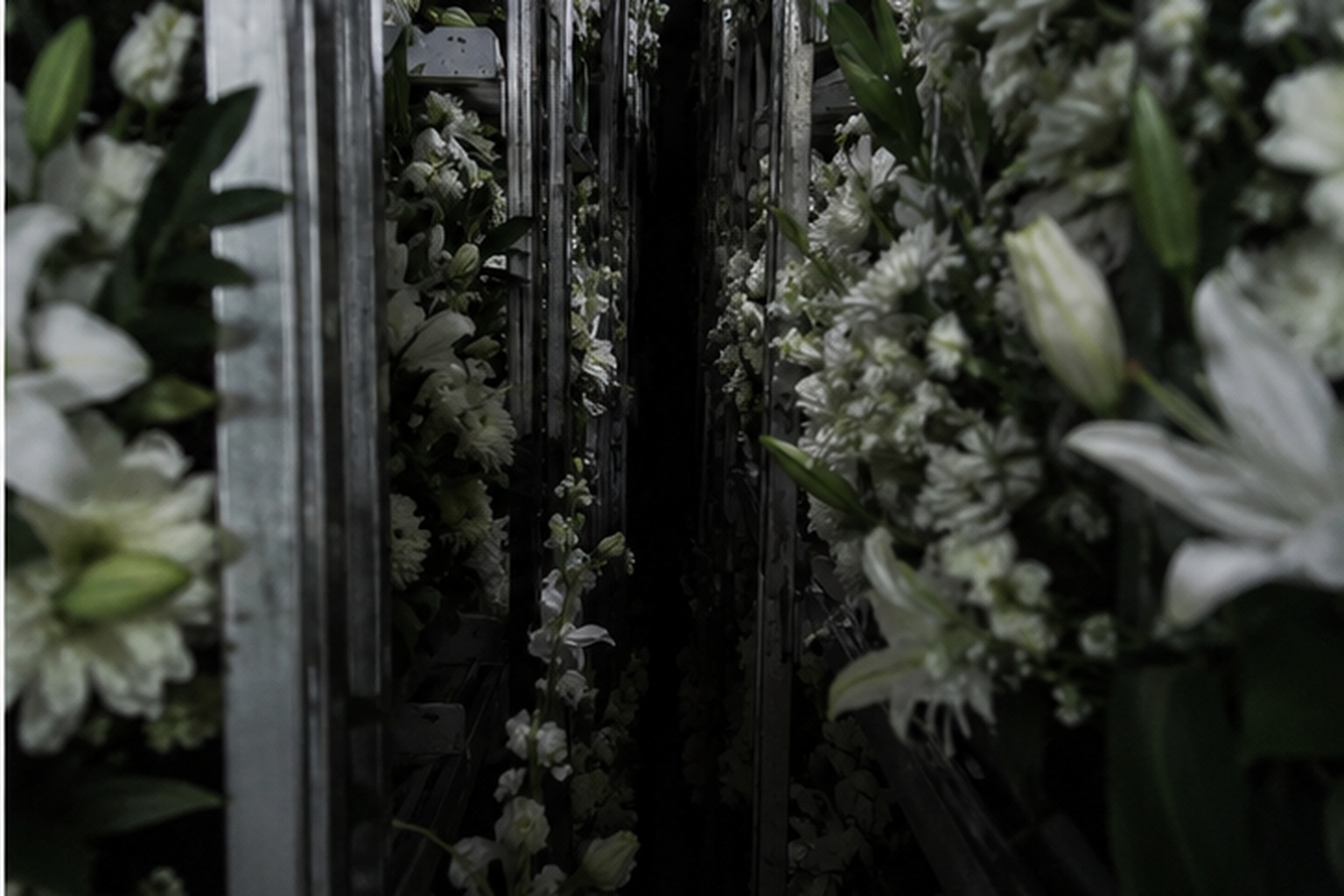
He enlarged the photograph repeatedly. Each zoom produced less information. The pixels softened. Edges dissolved. The dress became an arrangement of pale shapes. Nothing identifiable emerged.
Why It Still Feels Hard To Explain
Digital experts later pointed out how compression destroys tiny details. Whatever occupied those few dozen pixels had likely been there all along. Or perhaps it hadn't. Either way the original information no longer existed. The mystery became permanent. Some employees preferred practical explanations. Reflection from protective plastic. Coincidental alignment of flower ribbons.
Perspective distortion. Others quietly admitted the shape looked too intentional. Too centered. Too complete. None claimed certainty. That uncertainty proved far more unsettling than any definite answer. The cooler still functions today much as it always has. Fresh flowers arrive. Old arrangements leave. Families never see the room hidden beyond the service halls.
Staff continue photographing expensive deliveries before each busy week. Hundreds of nearly identical images accumulate every year. Most are forgotten within days. Every so often, however, someone scrolling through archived folders pauses when reaching that single photograph. Conversation begins again. Someone inevitably asks the same question.
"If that's only flowers… why does it look exactly like someone waiting between the racks?" No one has ever managed to answer it. Perhaps the camera caught an impossible combination of petals, ribbons, shadows, and chilled fluorescent light. Perhaps perspective briefly assembled ordinary objects into something unmistakably human.
Or perhaps, for the smallest fraction of a second, the quietest room in the building wasn't quite as empty as everyone believed. Even after all these years, people who study the image tend to stop looking at the flowers first. Their eyes drift naturally toward the narrow opening between the racks. Toward the white dress.
Toward the empty space where someone should be standing. And once they notice it, they usually spend much longer wondering why they cannot see anyone inside it.