The Detail That Made The Story Unsettling
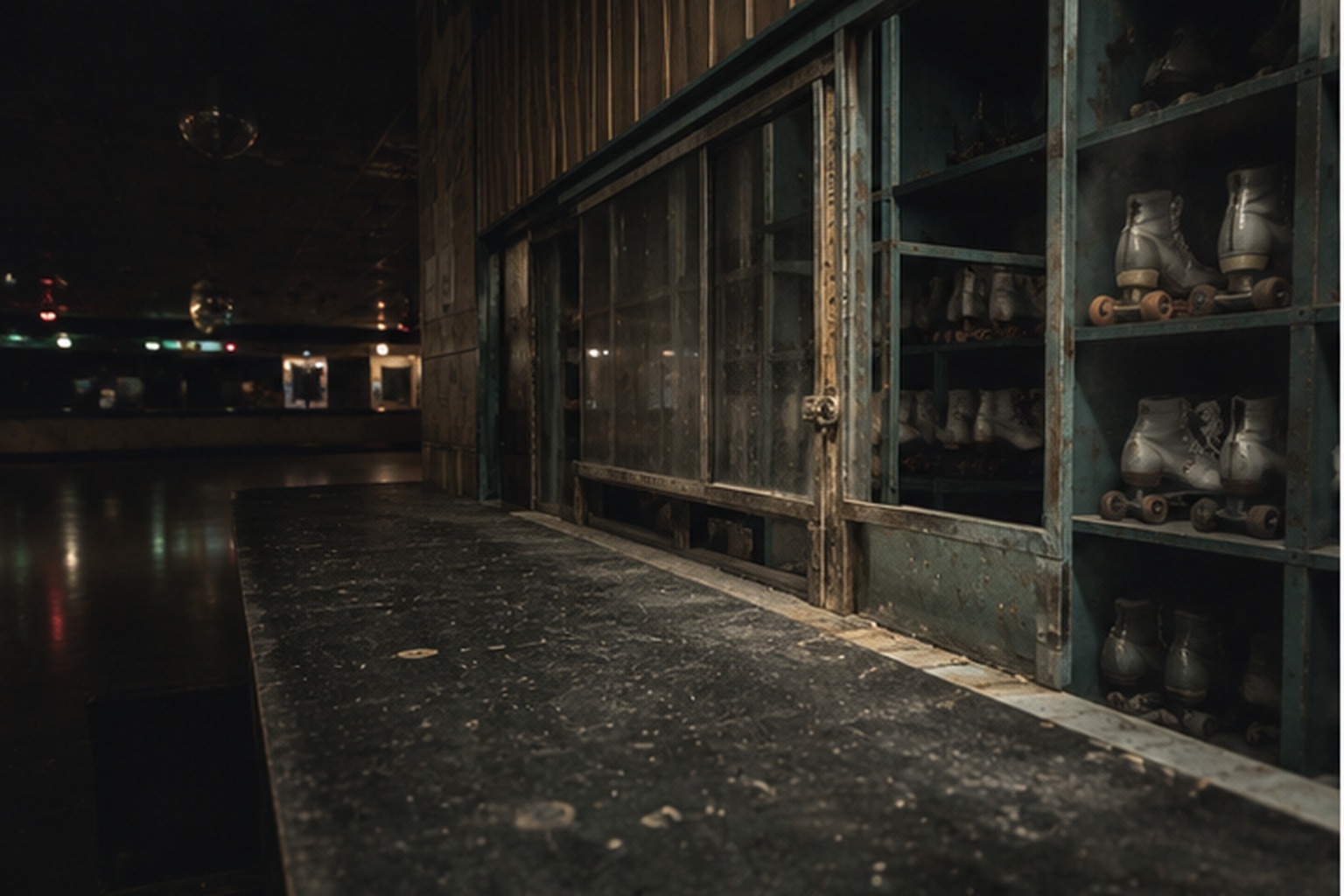
The old roller rink had been closed for nearly a decade, but locals still slowed down when they passed it after dark. Not because they expected to see lights. Not because anyone believed the building was haunted. Because the place always looked as though someone had left only minutes earlier.
The faded neon skate hanging over the entrance still leaned at the same crooked angle. The striped carpet visible through the dusty front doors still glowed in impossible shades of purple and teal whenever moonlight slipped through the skylights.
Posters advertising Friday Night Disco Skate peeled from the walls exactly as they had for years, frozen halfway between celebration and decay. Even the rental counter remained perfectly organized. Rows of rental skates still lined the shelves behind the service window. Tiny numbered cubbies waited for customers who would never return.
The old brass bell sat beside the register beneath a layer of dust so thick that no fingerprints had disturbed it in years. At least, that's what everyone believed. Then someone decided to photograph the inside. A local photographer had received permission from the property's owner to document abandoned businesses around town before demolition crews arrived.
The roller rink had been scheduled to disappear within the month, making it his final stop before sunset. He expected peeling paint. Broken arcade machines. Collapsed ceiling tiles. Instead, he found something stranger. The building felt unusually intact.
The air carried the stale mixture of old carpet, dried cleaning chemicals, machine oil, and something faintly sweet that reminded him of birthday cake frosting. His footsteps echoed through the lobby.
Beyond the entrance stood hundreds of mismatched rental skates, arranged exactly as employees had apparently left them after closing one ordinary night years ago. The skating floor stretched into darkness.
Colored spotlights still hung above the polished wood. The mirrored disco ball remained suspended over the center, perfectly motionless. Nothing appeared disturbed. He photographed everything slowly, working room by room while daylight faded through cracked skylights overhead. When he reached the rental counter, he noticed the service window. It was locked from the inside.
What The Camera Or Witnesses Noticed
A heavy sliding glass window separated employees from customers, and a steel latch still secured both panels together. Years of dust covered every surface around it. No scratches. No recent marks. No evidence anyone had touched it. He took several photographs anyway. Wide shots first. Then closer angles showing the register.
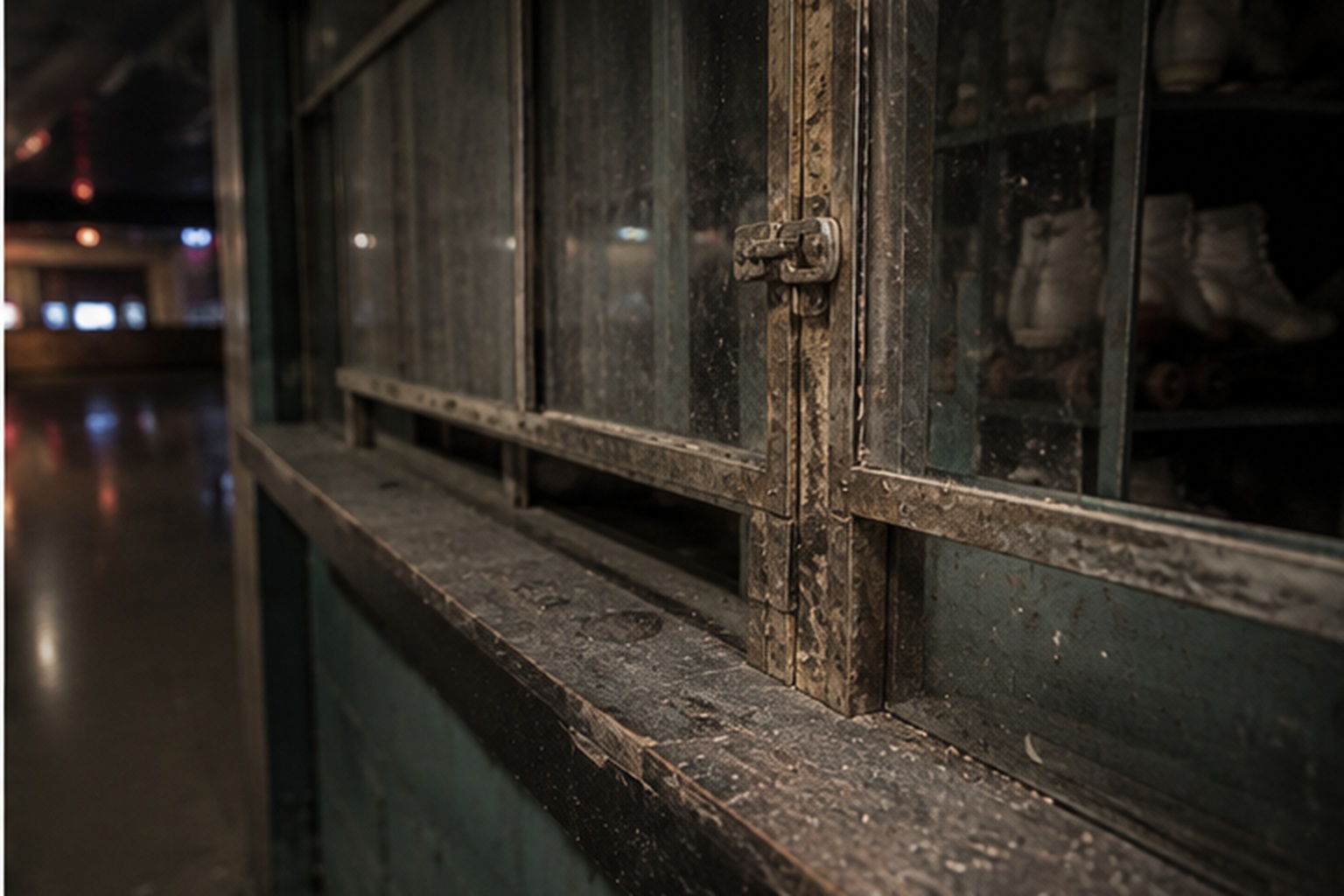
The brass bell. The stacks of rental forms. The faded price board listing skate sizes that hadn't fit anyone in decades. Satisfied, he continued deeper into the building. The employee hallway behind the counter was inaccessible because a steel security gate blocked the entrance. Every employee door remained chained shut.
Nothing unusual happened during the rest of the visit. He left before sunset. That evening he began reviewing the photographs. Everything looked ordinary. Empty hallways. Dust-covered lockers. Silent arcade machines. Then he reached the images of the rental counter. At first he noticed nothing unusual. The locked service window reflected faint afternoon light.
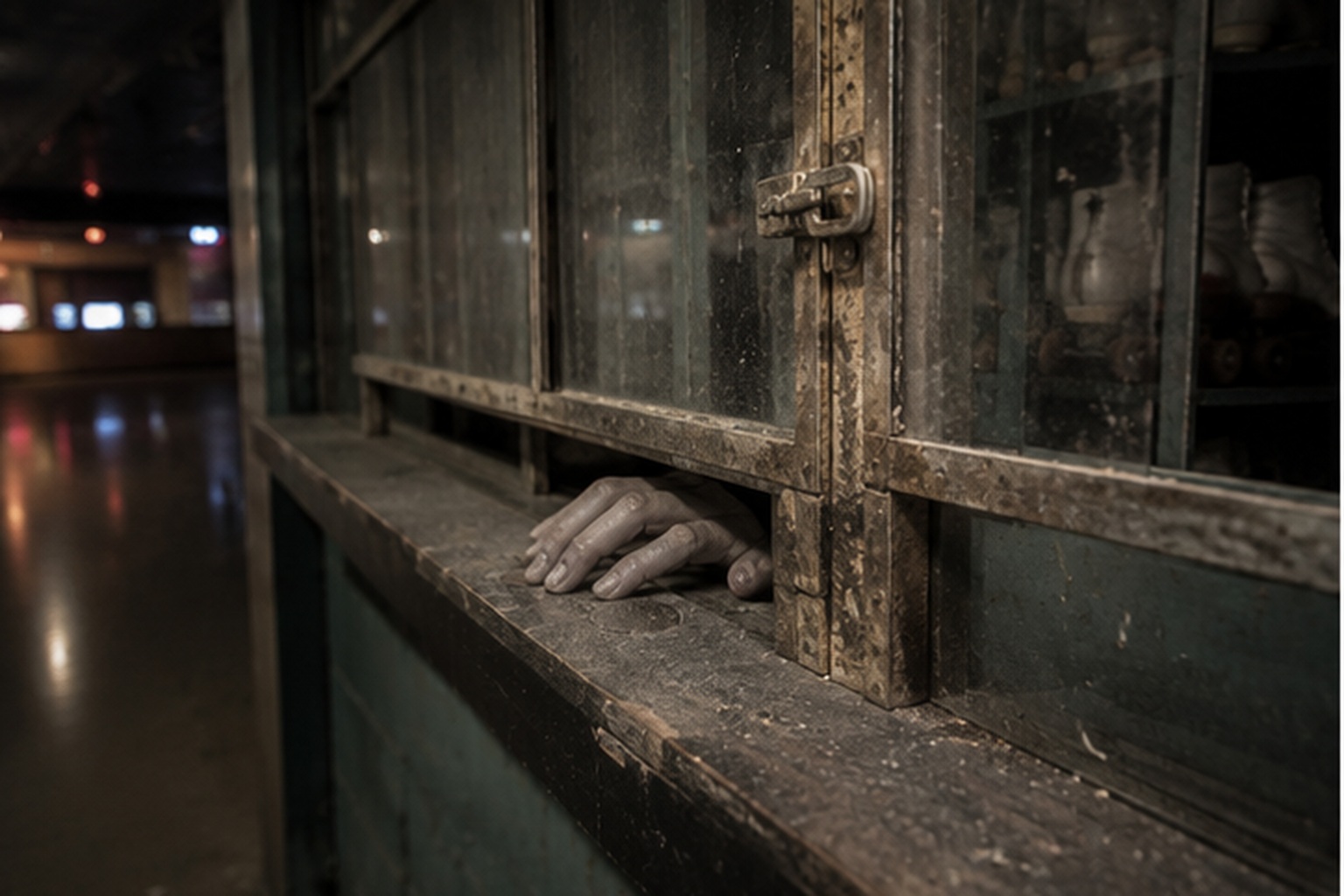
Shelves of rental skates filled the background. The old cash register sat beneath decades of dust. Then he zoomed in. Something rested just inside the narrow opening where customers once passed their skates through the window. It looked like fingertips. Not wrapped around the opening.
Why The Location Matters
Resting inside it. Long. Pale. Relaxed. As though someone had quietly placed their hand against the lower ledge while watching from inside. The fingers were too long to belong comfortably to anyone standing behind the counter. Their joints appeared oddly pronounced. The skin carried no visible wrinkles, veins, or discoloration.
It almost resembled a mannequin hand. Except mannequins don't naturally curl their fingers around rough wooden ledges. He assumed it was debris. Perhaps peeling paint. Maybe folded paper. He enlarged the image again. The fingernails became visible. Short. Rounded. Perfectly clean.
The fingertips rested naturally against the worn paint exactly where thousands of customers would once have handed over rental tickets. He checked every other photograph from that sequence. The hand appeared in only one frame. The photograph taken less than three seconds earlier showed nothing. The image afterward showed nothing. Only one exposure contained the hand.
He returned the following morning with the property owner. Both expected to solve the mystery quickly. Instead they discovered something impossible. The rental window could not physically open. Rust had fused both sliding panels together. The interior locking latch had completely seized.
The Part That Changed After Dark
Even after applying lubricant, neither man could move the glass. The narrow opening visible in the photograph no longer existed. It couldn't. The window had remained sealed for years. Yet somehow something had rested inside it. The photographer searched for another explanation. Maybe the hand had belonged to someone hiding inside. Except every entrance remained locked.
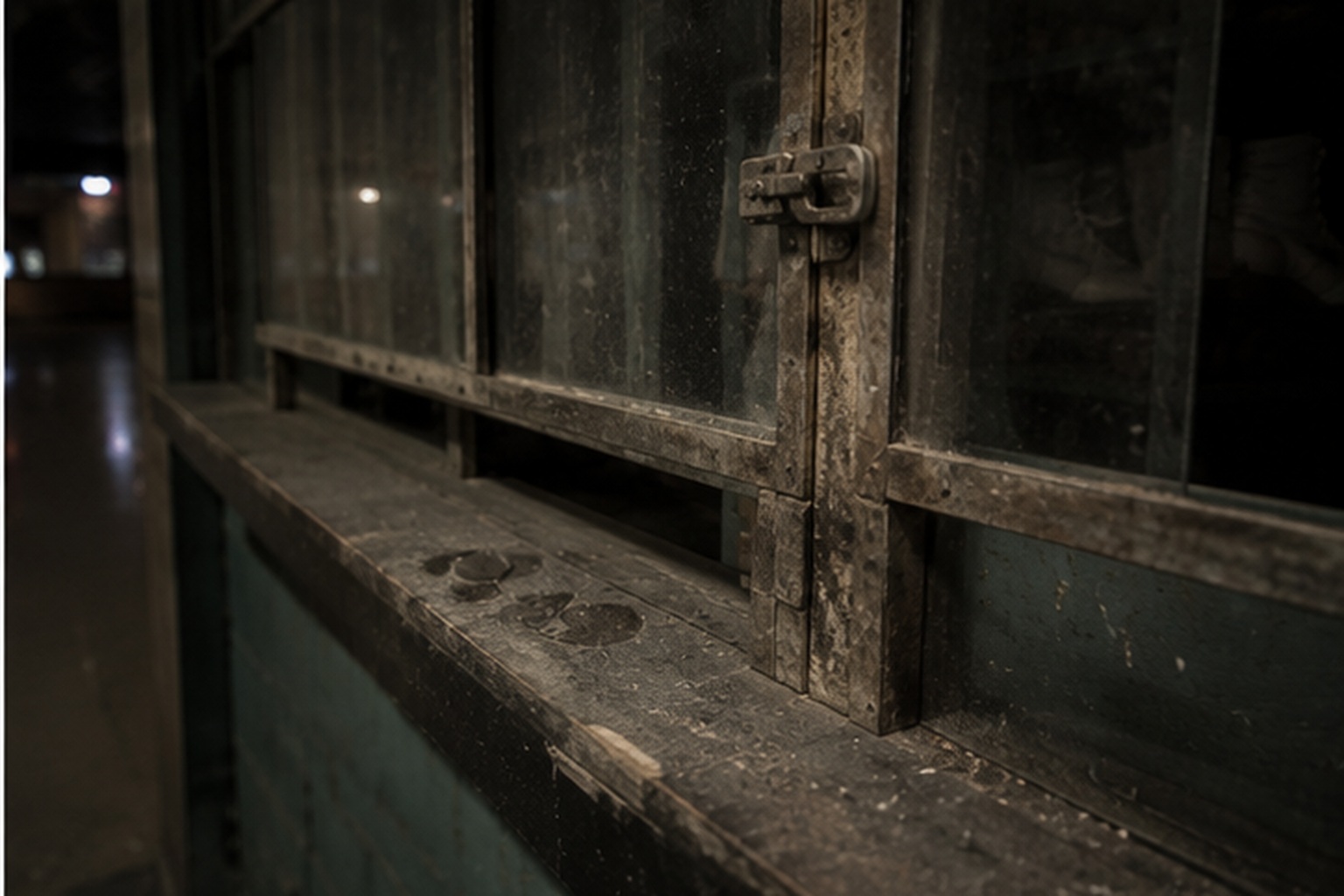
The employee hallway gate required bolt cutters before they could even inspect it. Dust covered the concrete floor continuously behind the counter. No footprints interrupted it. No drag marks. No shoe impressions. Only one thing looked unusual. Directly beneath the inside edge of the rental window sat a perfectly clean rectangle. About eight inches long.
As though something had rested there recently while every surrounding surface gathered dust. The owner couldn't explain it. Neither could the photographer. Neither mentioned the discovery publicly. The photograph quietly circulated among friends instead. Most dismissed it immediately. Reflection. Editing. Camera artifact. The photographer eventually accepted those explanations himself. Until someone noticed another detail. The mirrors.
Old roller rinks often surround skating floors with mirrors. This one was no different.
The Small Detail People Usually Miss
One photograph captured the rental counter reflected across the rink through several angled mirrors mounted on distant support columns. The reflection was blurry. Distorted. Barely usable. Yet after increasing brightness, the same service window became visible. So did the hand.
Except it wasn't resting. It appeared pressed flat against the inside of the glass. Every finger spread apart. The palm fully visible. Almost as though whoever—or whatever—stood behind the window had moved between exposures. No one had noticed because the reflection occupied less than two percent of the image.
The photographer had never intended anyone to inspect it. People did anyway. Then another detail emerged. The fingers looked longer in the mirror than in the direct photograph. Perspective could explain that.
Except the thumb appeared too low. The joints bent differently. Almost as though the reflected hand belonged to something slightly different than the one directly photographed.
Arguments followed. Optical distortion. Mirror warping. Lens compression. No explanation settled the discussion. Months passed. The building remained standing while demolition faced delays. Curiosity eventually outweighed common sense. A small group received permission to explore the rink during daylight. Their goal wasn't ghosts.
How The Story Spread Quietly
They simply wanted to recreate the photograph. They brought cameras. Tripods. Measuring tape. Flashlights. They matched the photographer's position almost exactly. The counter looked identical. The locked window hadn't changed. Neither had the shelves. While comparing framing through one camera screen, someone jokingly knocked on the glass.
Three quick taps. The sound echoed through the empty building. Everyone laughed. Then something answered. Three softer taps. From behind the counter. No one moved. The reply had sounded unmistakably different. Wood. Not glass. Slow. Measured. Close. One of them immediately walked around toward the employee hallway.
The chained gate still blocked entry. No movement. No voices. No animals. Nothing. When they returned, another photographer quietly lowered his camera.
Why It Still Feels Hard To Explain
He had taken a burst of images automatically after hearing the taps. Most showed nothing. One showed the lower edge of the service window. A pale fingertip extended barely half an inch beyond the wooden ledge. Not reaching out. Simply resting there.
The following frame was empty again. No one had seen it while standing there. Only the camera had. That image spread much farther than the original. People argued over compression artifacts. Motion blur. AI generation. But everyone overlooked something hidden in the photograph's metadata.
The camera had captured twenty images during that burst. Image twelve contained the fingertip. Image thirteen did not. Yet image thirteen had been recorded nearly two full seconds before image twelve according to its embedded timestamp. Every other photograph followed normal sequence. Only those two had reversed themselves.
No software expert who examined the files could explain why. The rink was finally demolished that autumn. Workers removed the front lobby first. The rental counter came apart board by board.
Behind the service window they found nothing except old wiring, mold, and empty shelving. The locked glass itself required heavy machinery because corrosion had practically welded the frame into place.
One worker reportedly joked that whatever had been trapped behind the counter was finally getting out. No explanation was offered. The wall disappeared into a dumpster before anyone photographed it properly. Today, a small grocery store occupies the property.
Most never know there was once a tiny rental window where thousands of children leaned forward, laughing as attendants slid heavy skates across the counter. And fewer still have ever seen the photograph. The one showing a pale hand patiently resting inside a window that could not open. Not grabbing.
Not waving. Not trying to escape. Simply waiting on the other side of the locked glass. As though it expected the next customer to step forward and ask for their size.