The Nursery After Closing
The first thing people notice about a garden center after closing is how quickly it stops feeling like a store. The music shuts off. The forklifts disappear. The chatter of customers fades into distant traffic. What's left behind is a maze of towering shrubs, stacked pottery, greenhouses that breathe warmth into the night, and hundreds of yards of black shade cloth hanging in slow, unmoving curtains.
Everything that looked cheerful during the day becomes strangely difficult to judge after sunset. Depth disappears. Distances stretch. A simple aisle between rows of arborvitae suddenly feels like a tunnel.
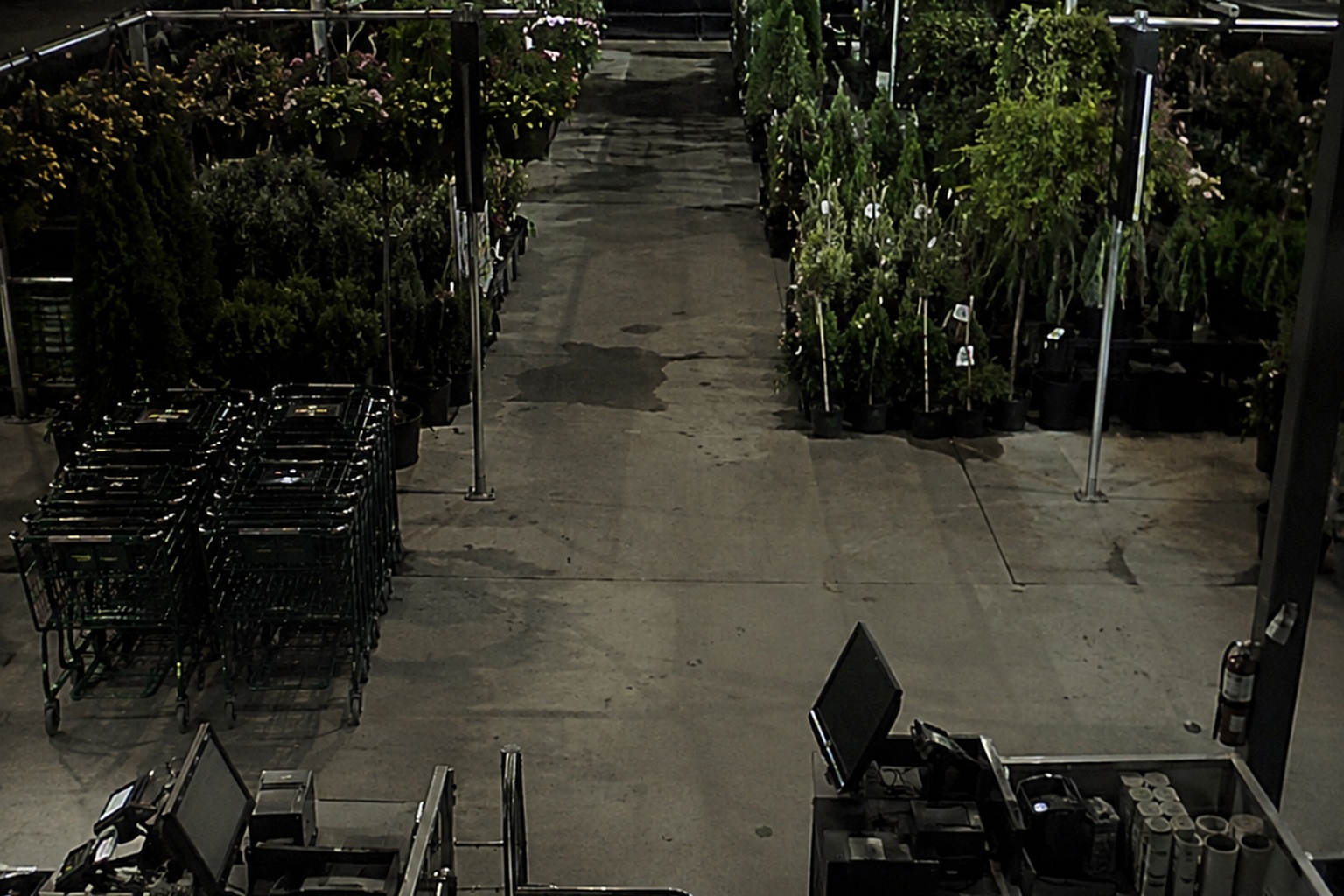
That was exactly the atmosphere on the evening the register camera caught something no employee remembered walking into the nursery. The front registers had already been counted. Seasonal displays were pushed neatly into place. The automatic entrance doors were locked, and only a few security lights remained on across the outdoor plant yard.
The camera above Register Three wasn't meant to watch customers anymore. It overlooked the front checkout, the covered walkway leading toward the outdoor nursery, and beyond that, several layers of suspended black shade cloth designed to protect delicate plants from the afternoon sun. During business hours those hanging sheets looked perfectly ordinary.
At night they became walls. The images begins with nothing unusual. A gentle breeze shifts a row of hanging ferns. Shopping carts remain lined against the entrance.
Plastic watering cans glimmer faintly beneath fluorescent lights. Then something changes behind the furthest curtain of shade cloth. Not movement. Presence.
One section of fabric begins to bulge outward. Slowly. Not from wind. The cloth doesn't flap.
The Register Camera Angle
It stretches. As though something unimaginably large has stepped directly behind it without ever touching the ground beneath. The camera is too distant to reveal edges. Only volume.
An enormous shape presses forward just enough to redefine the curtain's outline. The bottom edge never lifts. Nothing becomes visible beneath it. Instead, the fabric develops the impossible contour of something standing several feet behind it—broad enough that the cloth no longer hangs flat.
Then it stops. For nearly twenty seconds, nothing else moves. The hanging baskets continue swaying gently. Tree branches outside shift naturally.
But the strange bulge remains perfectly motionless. Almost deliberate. Almost patient. If someone had walked behind the curtain, they would have created changing folds, footsteps, shifting shadows.
This shape creates none. It simply exists. The unsettling part isn't its height. It's its width.
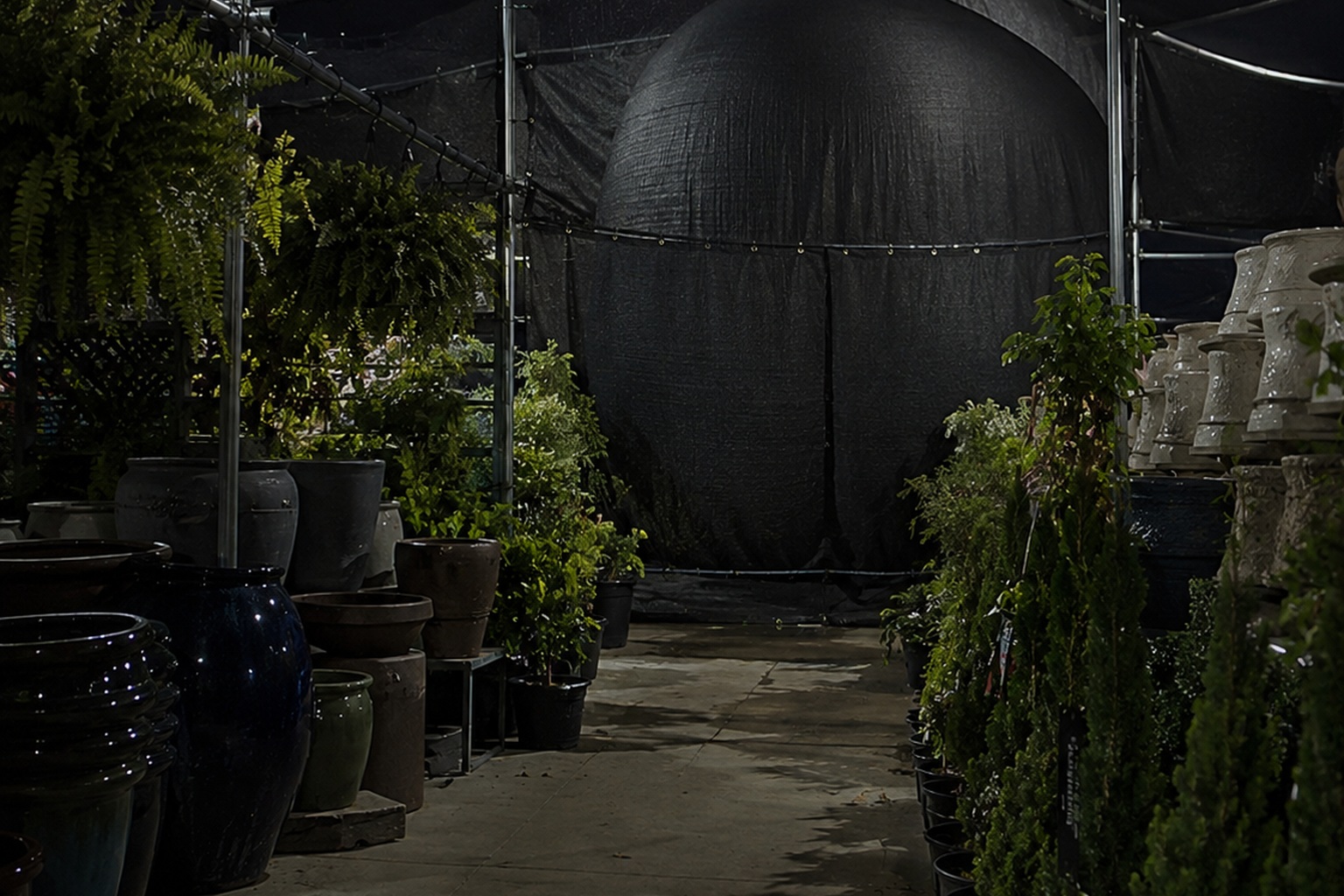
The outline spans almost the entire gap between two steel support posts. Too broad for any person. Too smooth for stacked inventory. Too rounded to resemble equipment.
It's less like looking at someone hiding behind fabric and more like seeing the curtain draped over the front of something standing silently in the darkness. Several minutes later the curtain relaxes. Not quickly. Not dramatically.
The Shade Cloth That Moved Wrong
It simply returns to hanging naturally. No figure emerges. No forklift passes. Nothing walks away.
The cloth becomes flat again as though whatever occupied the space behind it quietly ceased to be there. By morning, employees found nothing unusual. No damaged irrigation lines. No fallen racks.
No disturbed mulch. Nothing bent. Nothing broken. Nothing explaining why several yards of heavy shade cloth had briefly taken the unmistakable shape of something enormous.
The longer people watched the camera file, the stranger the nursery itself began to feel. Garden centers are built from layers. Rows of shrubs. Privacy hedges.
Shade structures. Seasonal tents. Treelike displays. Everything interrupts sightlines.
You are almost never looking across the entire property. You're looking through it. A person can disappear after taking only a few steps. Workers become silhouettes between pallets of soil.
Customers vanish behind fruit trees before reappearing somewhere completely unexpected. Most people never realize how many blind corners exist inside an outdoor nursery. The reconstruction that grew from the images begins with a simple possibility. Imagine arriving just after sunset.
The gates are locked. Only security lights remain. Rows of maple saplings whisper quietly overhead. Plastic nursery pots click softly as cooling temperatures shrink them.
Why It Did Not Look Like Wind
The greenhouse fans hum somewhere beyond the darkness. You follow the concrete path toward the shade structures. Everything feels larger now. The hanging fabric absorbs nearly all available light.
Instead of seeing the aisles beyond, you see black walls interrupted only by narrow openings. Each curtain swings just enough to hint that another row exists behind it. Then another. Then another.
You begin to lose your sense of direction. Every path looks nearly identical. The air changes beneath the shade cloth. Cooler.
Stiller. Even your footsteps become strangely muted by damp soil and mulch. Ahead, one section of fabric appears different. Not because it's moving.
Because it isn't. Every surrounding curtain shifts slightly with the breeze. One remains perfectly still. You approach.
The difference becomes impossible to ignore. The cloth isn't hanging vertically anymore. It's bowed outward. Not sharply.
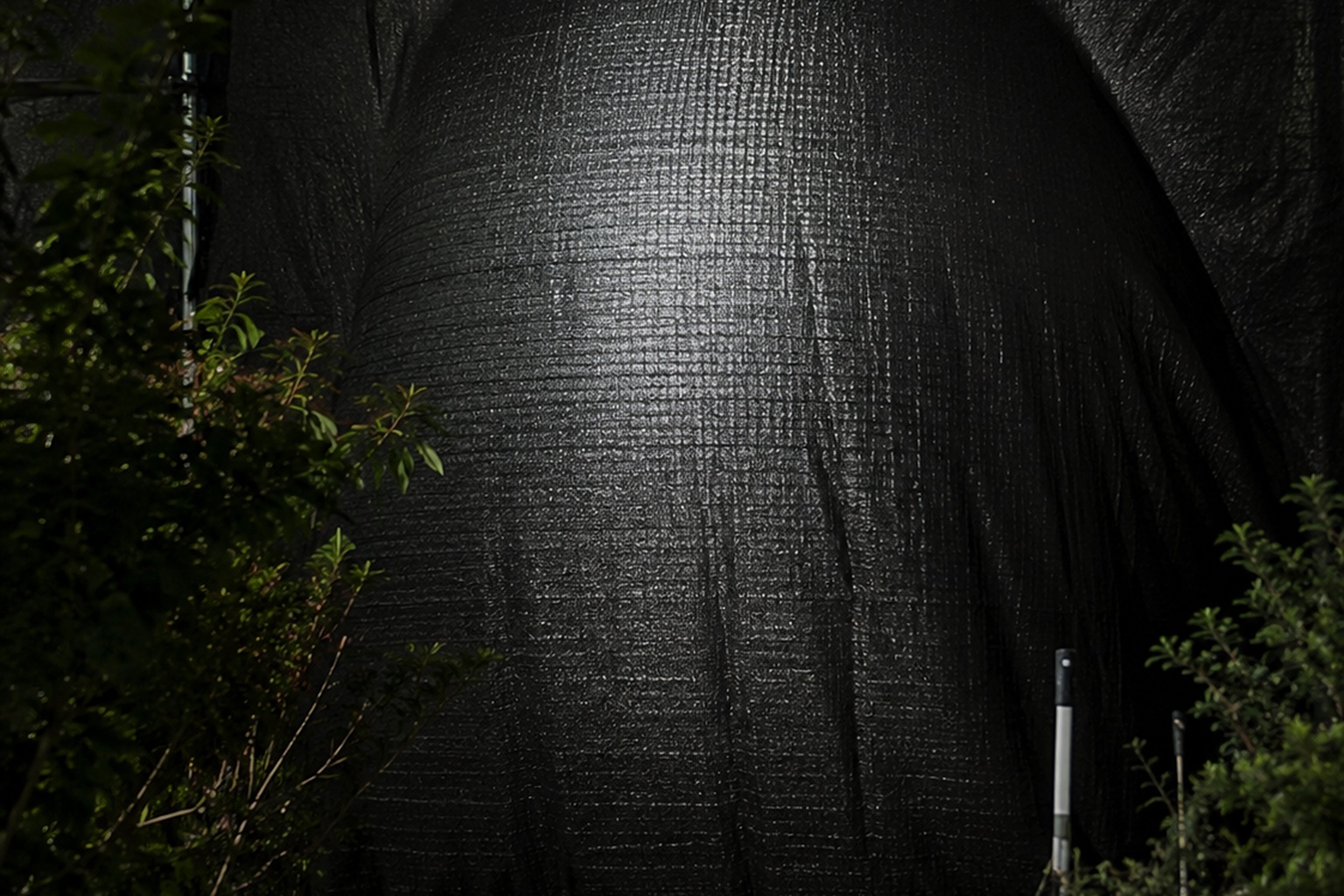
Gently. Like fabric resting against an object with no visible edges. The outline reaches higher than your head. Far wider than your shoulders.
The Aisle No One Wanted To Check
Your first thought is stacked pallets. Your second is irrigation equipment. Your third thought never fully forms because something feels wrong about the proportions. No corners.
No straight lines. Only one enormous rounded surface hidden just behind the fabric. You listen. No breathing.
No machinery. No insects beneath the cloth. Only silence. You take another cautious step.
The curtain doesn't respond. It doesn't ripple from your movement. It simply remains stretched. Your flashlight catches the weave of the material.
Tiny perforations reveal only darkness behind it. Nothing distinguishable. Yet your brain insists something occupies that space. You convince yourself to reach forward.
Just enough to pull the cloth aside. Your fingers stop inches away. A strange instinct interrupts you. Not fear.
Recognition. The overwhelming certainty that if you move the fabric, something on the other side will already be facing you. Waiting. You lower your hand.
Back away. Tell yourself you're imagining things. The curtain remains exactly as it was. Only when you've retreated several yards does the fabric slowly relax.
What Morning Did Not Explain
Not because anything leaves. Because whatever had been pressing its shape into the darkness no longer needs to. That idea became the most unsettling part of the reconstruction. Not that something hid behind the cloth.
That it chose to reveal only its outline. The nursery itself almost seems designed for that kind of encounter. Plants naturally conceal movement. Rows naturally fragment vision.
Shade cloth naturally transforms simple shadows into impossible silhouettes. The environment doesn't create monsters. It creates uncertainty. And uncertainty quietly fills every empty space with possibilities.
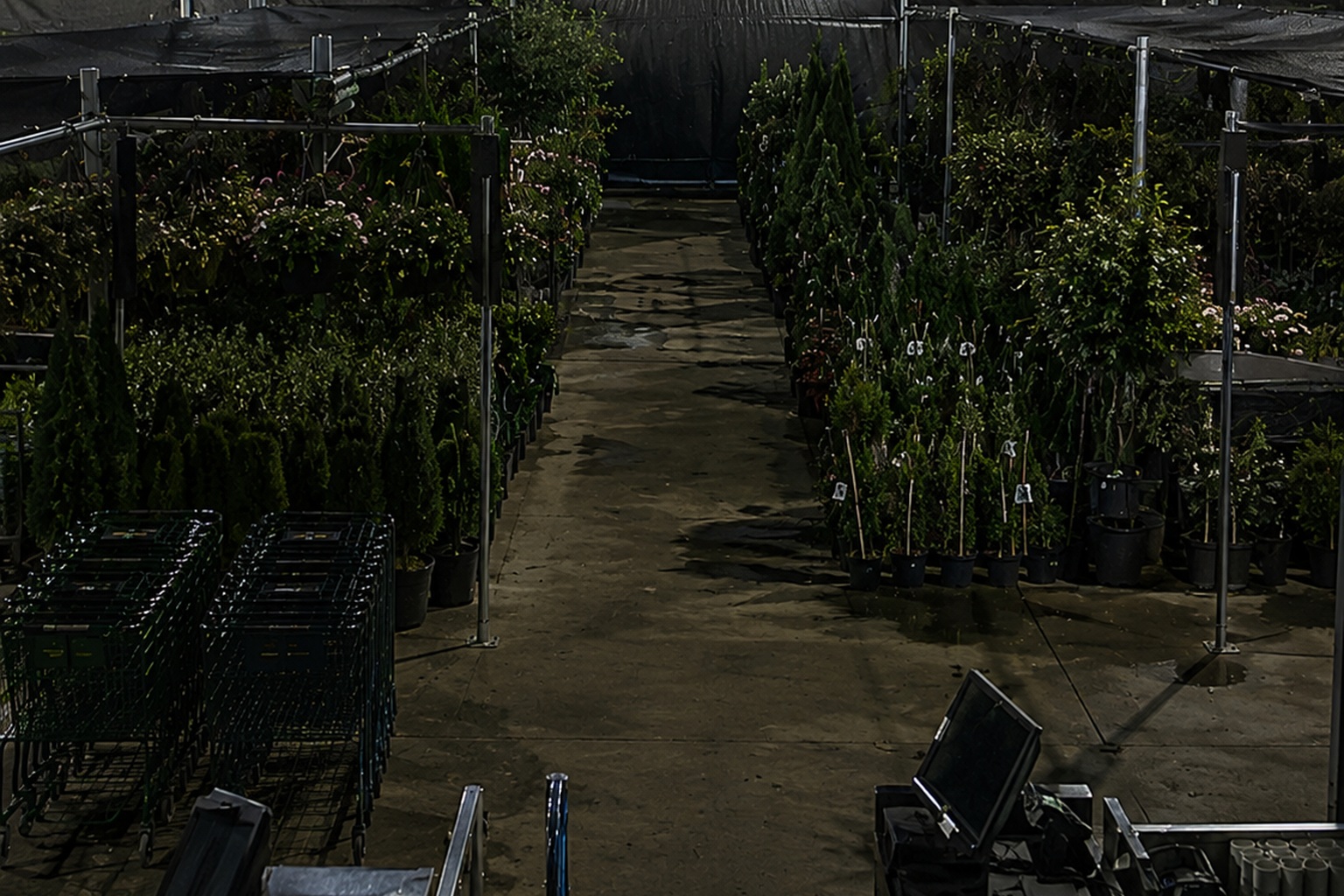
Security specialists who design commercial camera systems often mention how fabric complicates surveillance. Movement behind mesh can distort. Depth becomes unreliable. Objects appear larger or smaller depending on lighting.
Ordinarily those effects explain strange recordings. But they rarely produce the overwhelming impression of size that viewers described after seeing the register images. Again and again people used the same phrase. "It looked too big."
Not impossibly tall. Simply massive. Like standing beside an elephant hidden behind a theater curtain. Except there were no footprints.
No damaged supports. No reason for anything that size to exist inside a retail nursery after closing. One former employee later described locking the outdoor gates years before the camera file surfaced. They admitted there was one section of the shade yard they never enjoyed checking alone.
Why The Shape Still Bothers People
Not because anything had happened there. Because every evening they found themselves glancing toward the hanging curtains expecting someone to step out. No one ever did. The feeling remained anyway.
Perhaps that's the true reason stories like this linger. Most frightening places are frightening because we cannot fully see them. The darkness itself isn't the problem. The interruption is.
The tree that blocks the trail. The shower curtain. The frosted window. The heavy theater drape.
The hanging shade cloth. Each creates a boundary where imagination quietly begins constructing shapes before our eyes confirm anything at all. Sometimes imagination invents them. Sometimes it merely notices outlines we've been ignoring.
Long after sunrise, customers once again wandered beneath those same black curtains carrying flowering baskets and bags of mulch. Children chased butterflies through the nursery. Employees watered hydrangeas beneath gentle sprays. Everything returned to feeling ordinary.
The shade cloth hung perfectly flat. The aisles looked inviting. No one would have guessed that only hours earlier, from the perspective of a silent register camera, those same curtains appeared to conceal something so vast that the fabric itself seemed to hesitate around it.
And perhaps that's why the image refuses to fade. Not because anyone clearly saw a creature. Not because anyone proved what stood behind the cloth. But because for a brief moment, an ordinary piece of hanging fabric stopped looking empty.
It looked occupied. By something that understood exactly how much of itself needed to remain hidden.