The First Detail People Noticed
The Empty Aquarium Touch Tank Photo Showed A White Dress Behind The Kelp Mural The aquarium had already been closed for nearly an hour when the volunteer remembered the forgotten bucket beside the touch tank.
Families had spent the afternoon letting children gently brush their fingertips across sea stars and horseshoe crabs. The room had echoed with excited voices, splashing water, and the familiar reminders to keep hands wet before touching anything alive.
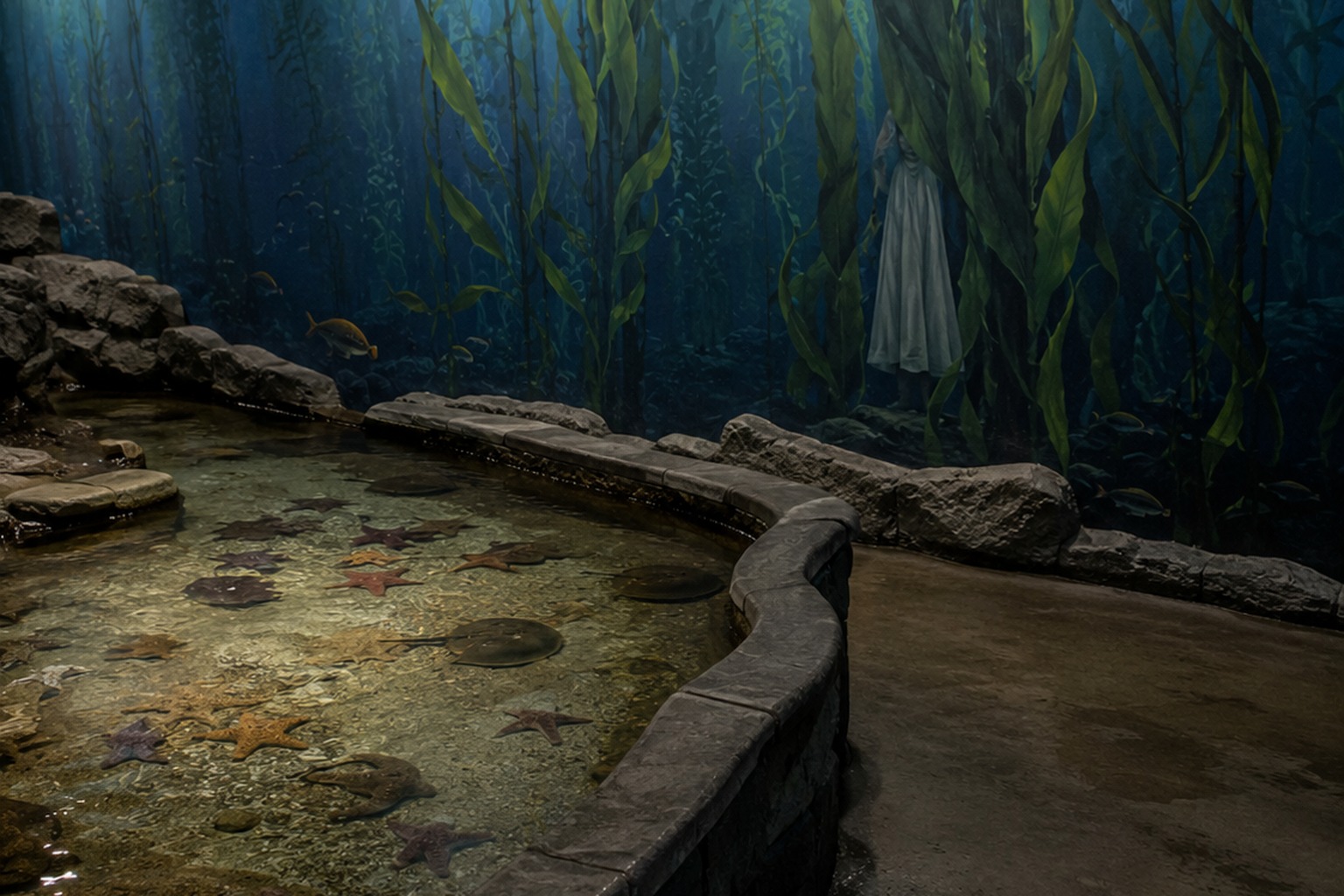
By evening, every light except the maintenance fixtures had been dimmed. The large wall mural behind the touch pool stretched from floor to ceiling, painted with towering strands of green kelp disappearing into blue water.
It was designed to make visitors feel as though they were standing beneath the ocean's surface. During the day, nobody paid much attention to it. After closing, it felt strangely different.
A Quiet Return To The Touch Gallery The volunteer walked back carrying an empty cart, expecting nothing more than cleaning supplies left behind. The gallery was silent except for the low mechanical hum of pumps hidden beneath the exhibits.
Why The Place Felt Ordinary At First
Salt lingered in the air. Water gently rippled inside the shallow touch tank as filtration jets continued circulating through the system. The overhead lights reflected softly across the damp floor, leaving the painted kelp forest in long shifting shadows.
It was only while reaching for the forgotten bucket that the volunteer noticed something pale near the mural. Not directly in front of it. Not painted onto it. Just… somewhere behind the seaweed.
At first it looked like a trick of overlapping greens and blues. A pale vertical shape. Almost like folded fabric. The volunteer stared for several seconds before convincing themselves it was simply part of the artwork catching the light.
They collected the bucket and left without another glance. That should have been the end of it. The Photograph Nobody Expected The next morning another employee prepared routine social media photos before opening.
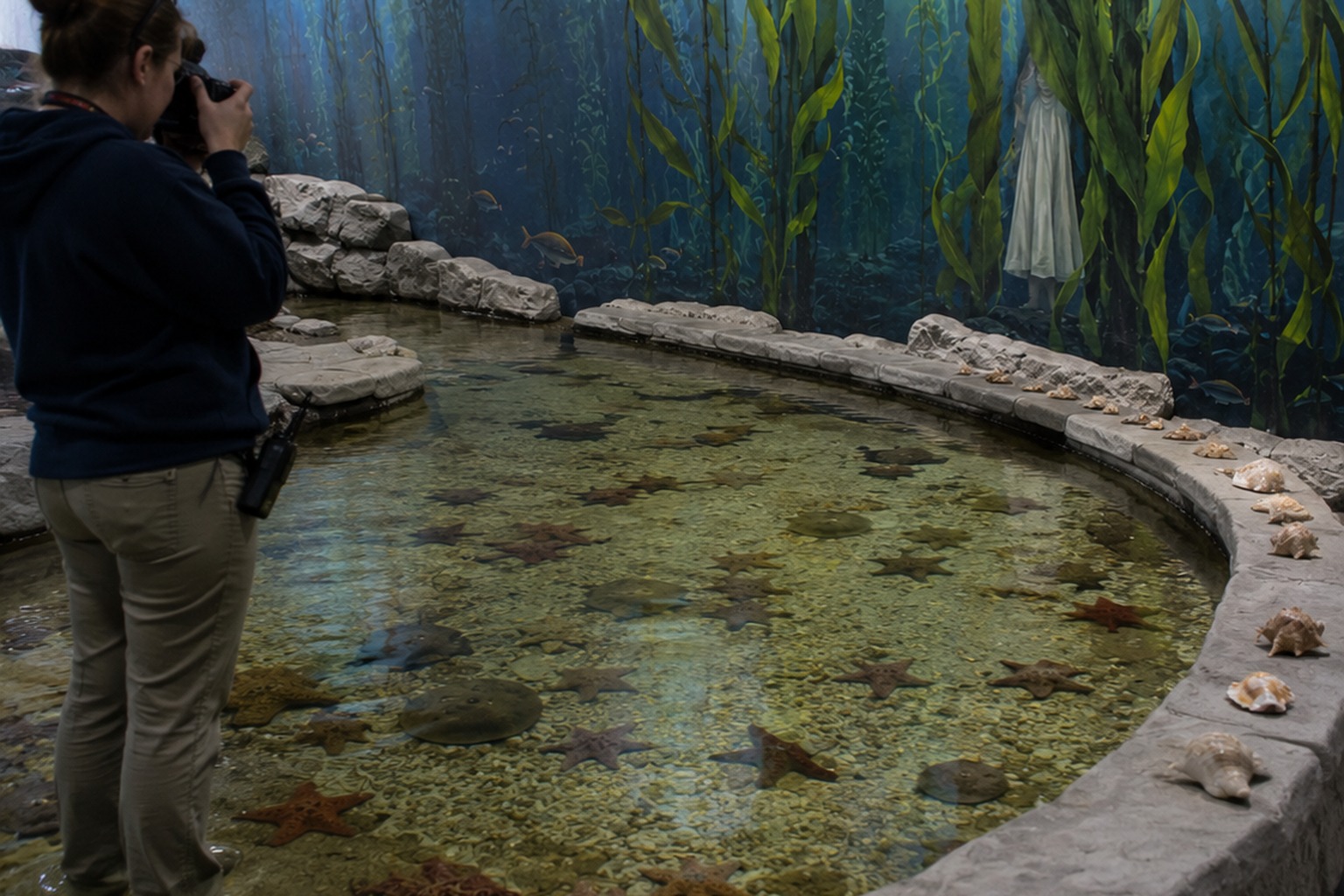
The touch tank looked peaceful beneath the early lights. Water shimmered gently. Decorative shells surrounded the exhibit. The enormous kelp mural filled the background exactly as intended. Several photos were taken from different angles.
The Part That Did Not Fit
Only one looked strange later. Near the center of the mural, partly hidden between painted strands of kelp, appeared what resembled the lower half of a long white dress. Not bright white.
Old white. Like fabric that had absorbed years of salt air. The shape disappeared behind painted seaweed in a way that made little visual sense. It wasn't standing in front of the wall.
It wasn't obviously painted into it either. Instead, it appeared to exist somewhere impossible—behind a flat mural that should have had nothing except concrete behind it. People who glanced at the picture quickly missed it entirely.
Those who noticed rarely stopped thinking about it. The Wall That Didn't Feel Flat Visitors often assume murals are painted directly onto smooth walls. This one wasn't. The aquarium had built shallow decorative panels that created slight depth across portions of the kelp forest.
Artificial rock edges projected outward. Painted shadows extended inward. From certain viewing angles, the illusion became surprisingly convincing. Maintenance workers occasionally joked that the mural felt deeper than the room itself.
What Changed After The Photo Was Reviewed
Standing close to it created an odd sensation. The painted kelp seemed almost capable of hiding movement. The volunteer returned that evening, curious after seeing the unusual photograph. Nothing unusual appeared at first.
The room looked exactly as expected. The touch tank bubbled quietly. The mural remained still. Then the volunteer stepped several feet to the left. The pale shape appeared again. Only briefly.
Half concealed between painted fronds. Not moving. Not approaching. Just standing where no standing space should have existed. Another step sideways… Nothing. Back again… There it was. The volunteer left without walking closer.
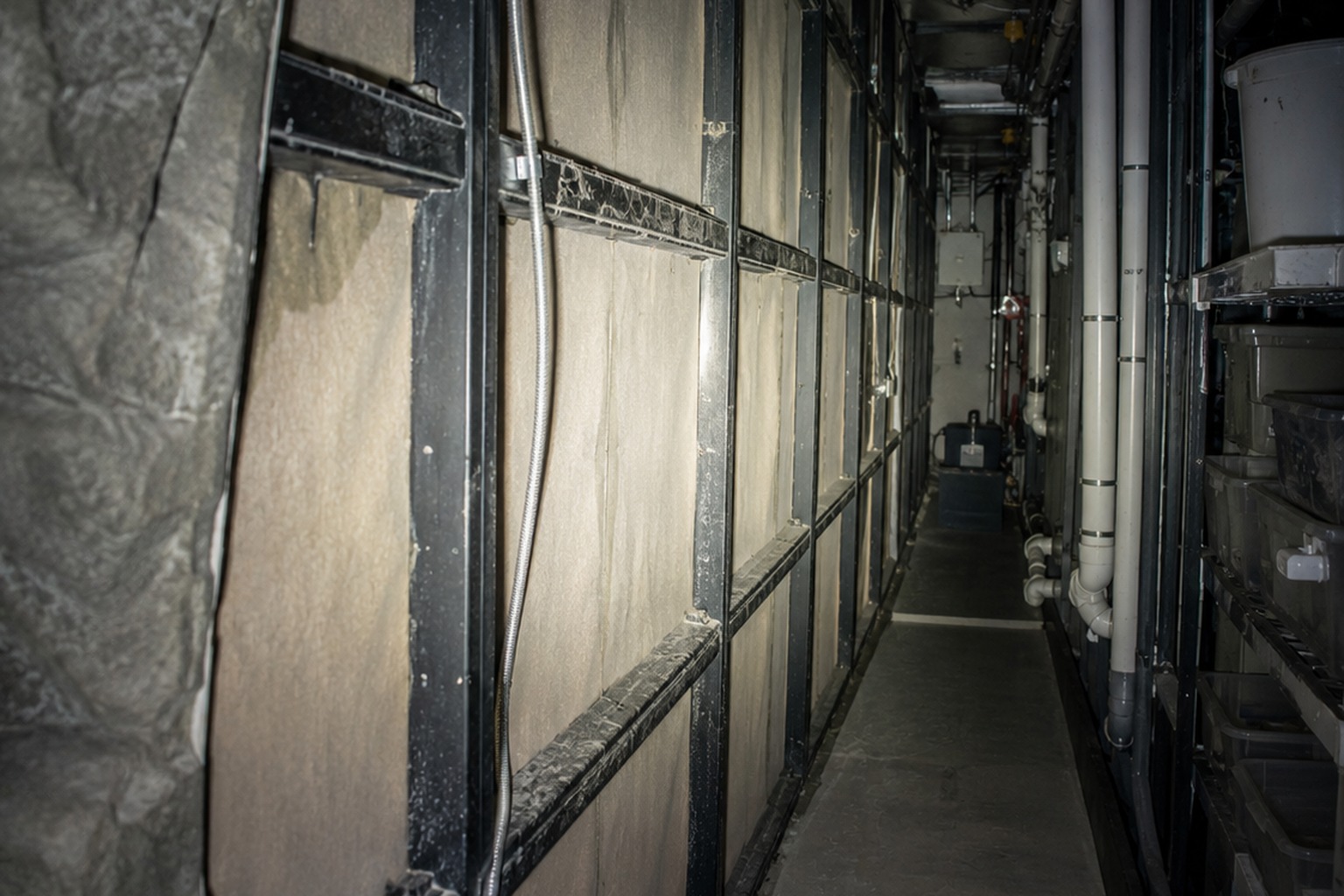
The Maintenance Corridor Eventually curiosity led someone to inspect the opposite side of the wall. Behind the mural stretched a narrow maintenance corridor. Pipes. Electrical conduits. Storage shelving. Nothing more.
The passage was surprisingly cramped. Barely wide enough for technicians carrying equipment. There certainly wasn't room for anyone wearing flowing clothing. Even if someone had somehow entered after hours, there was no hidden chamber matching the apparent position seen in the photograph.
The Small Detail People Missed
Measurements made the geometry even stranger. The corridor sat several feet behind where the pale figure seemed to appear. The positions simply refused to line up. Standing inside the corridor and looking toward the wall revealed only painted support panels secured by metal framing.
No openings. No hidden viewing windows. No forgotten doorway. Nothing explained why the white shape always appeared between painted strands of kelp instead of against the wall itself. Every Return Looked Slightly Different Over the following weeks, employees found themselves glancing toward the mural almost automatically.
Most evenings showed nothing unusual. Sometimes they noticed only shifting reflections from the water. Other nights the pale suggestion returned. Never completely visible. Never close enough to examine. One worker described seeing only the hem of a dress.
Another remembered sleeves. Someone else insisted there had been long hair blending with painted seaweed. Oddly, nobody agreed on the details. Yet everyone described the same uneasy feeling. The room became strangely quiet whenever attention settled on that section of wall.
The pumps still hummed. The water still moved. But conversations seemed to fade without anyone realizing they had stopped talking. Several employees admitted they had begun avoiding the last closing walk through the gallery alone.
Why The Story Stayed With Locals
Not because they expected anything to happen. Because the mural always encouraged one last look before leaving. And every extra glance felt increasingly difficult to explain away. The Painting Seemed To Swallow Distance Artists often create murals that trick the eye into believing flat walls continue far beyond their true depth.
This one accomplished that remarkably well. Towering kelp stretched upward toward invisible sunlight. Blue water faded into darker blues. Tiny painted fish disappeared between leaves. The white shape somehow borrowed that illusion.
Instead of appearing pasted against the wall, it seemed suspended inside the painted forest. Farther away than the room allowed. Closer than imagination felt comfortable admitting. Some visitors who later heard the story returned hoping to notice it themselves.
Most saw nothing unusual. A handful paused longer than expected. Several quietly shifted sideways while studying the mural. The same movement employees had made. Looking. Stepping. Looking again. Trying to determine whether something pale had just slipped behind painted kelp—or whether the eye simply wanted to complete an unfinished shape.
Eventually everyone walked away carrying exactly the same uncertainty. The Last Person To Leave Closing time continued as usual. Buckets were emptied. Displays were checked. Lights were dimmed section by section.
What Makes The Image Hard To Shake
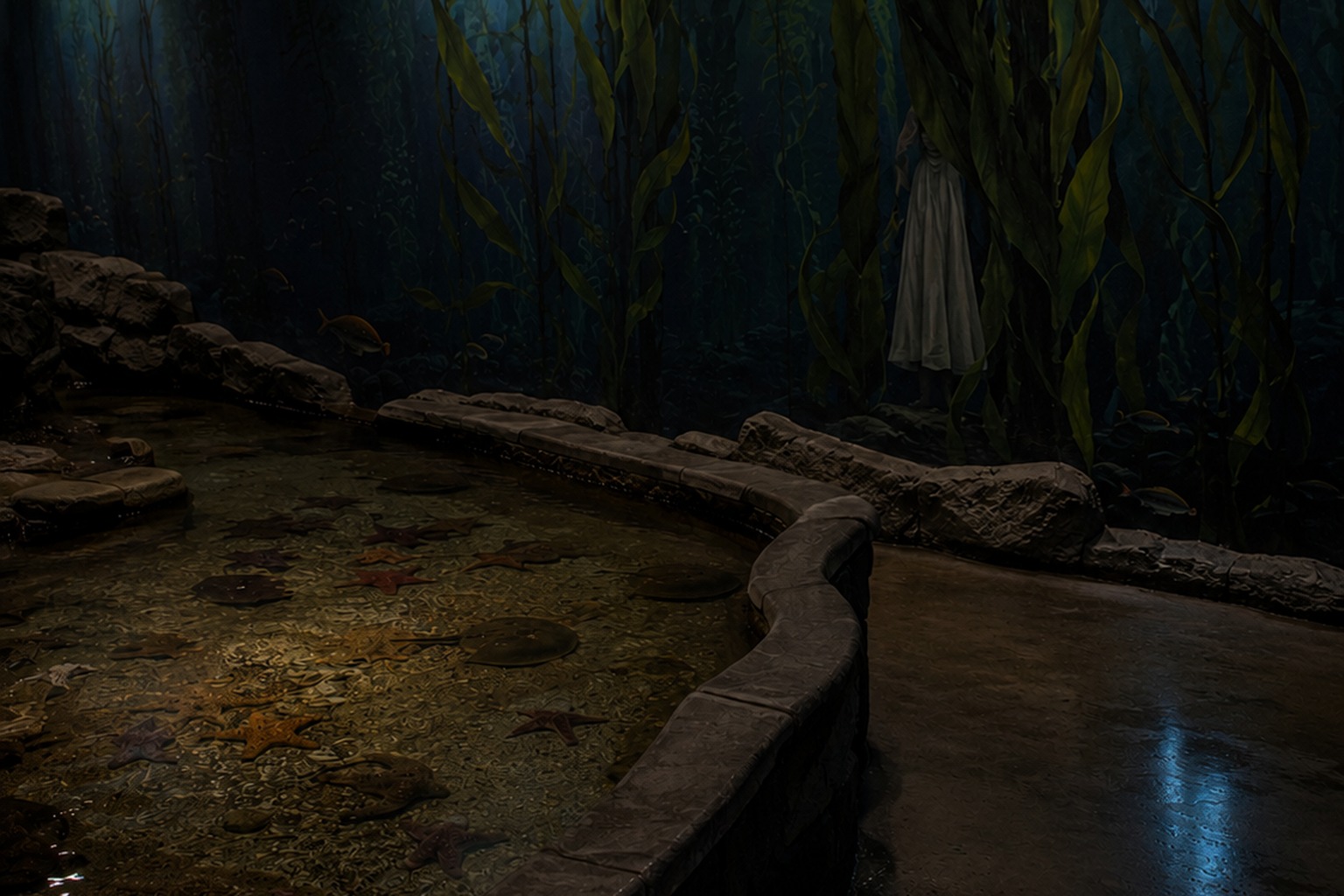
The touch gallery always came near the end. One evening the final employee paused before switching off the remaining lights. The mural dissolved slowly into shadow as each row of fixtures darkened.
The painted kelp lost its color first. Then the rocks. Then the distant blue water. Only one pale shape seemed reluctant to disappear. For a brief moment it appeared brighter than everything surrounding it.
Not glowing. Simply refusing to fade as quickly as the painted wall. The employee looked away to lock the maintenance door. When they turned back, darkness had swallowed the gallery completely.
Nothing remained except the quiet ripple of water inside the touch tank. The next morning, sunlight entered through the aquarium entrance exactly as it always had. Children laughed. Hands reached carefully into shallow water.
Sea stars clung patiently to smooth rocks. Behind them, the towering kelp mural looked harmless once again. Most visitors admired its colors for only a few seconds before moving on to the next exhibit.
But anyone who had heard the story found themselves slowing their pace. Their eyes drifted toward the same narrow opening between painted strands of kelp. Not expecting to discover anything.
Simply wondering why that particular section of wall always seemed just a little deeper than paint should ever allow.