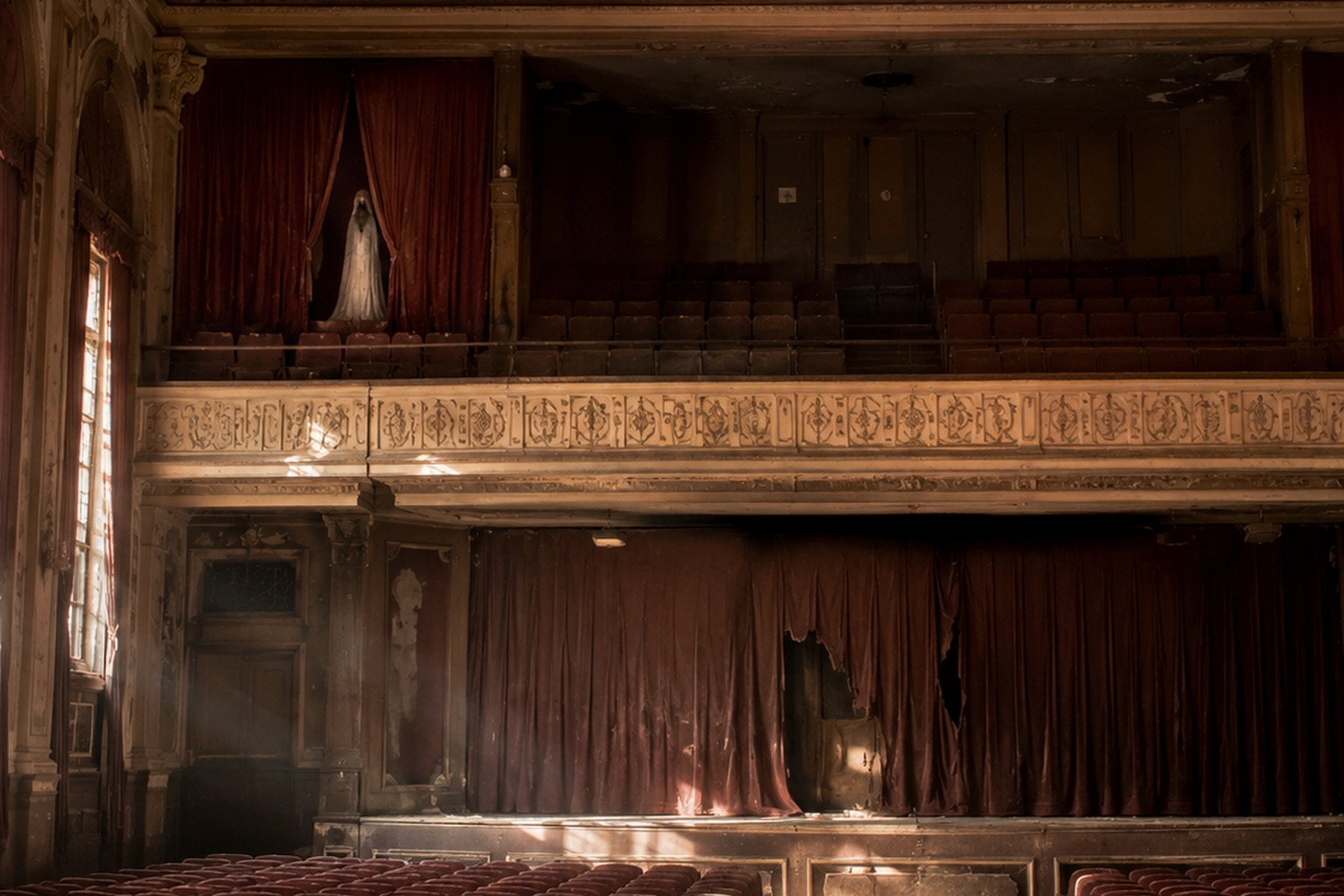
There was never supposed to be anyone left inside the old community theater. The final volunteers had locked the lobby doors before sunset, checked every dressing room, switched off the stage lights, and made one last walk through the balcony before heading home. The building was scheduled for renovation in just a few weeks, and years of neglected repairs had left it smelling of old wood, dust, and fading paint.
The theater had once hosted school productions, local musicals, holiday concerts, and charity performances. Now it mostly echoed. The photograph appeared almost by accident. One volunteer had been documenting the building before construction crews arrived. They wanted pictures of the cracked ceiling murals, worn velvet seats, faded playbills still hanging in display cases, and the ornate balcony that overlooked the empty stage.
Only later, while sorting through dozens of images at home, did one particular photograph begin to feel different. Not because of the stage. Not because of the balcony itself. Because behind one of the balcony curtains—torn almost halfway down from years of neglect—something pale appeared to be standing perfectly still.
At first glance it looked like folded fabric. Then it began to resemble part of a white dress. And once someone noticed it, nobody seemed able to stop looking. A Building
That Refused To Feel Empty
What The First Photo Seemed To Show
The theater stood on the corner of an aging downtown block where most neighboring businesses had already disappeared. The brick exterior looked ordinary enough in daylight. Inside, however, every room carried the weight of countless performances. Dust floated constantly through narrow beams of sunlight leaking around boarded windows.
Old scenery flats leaned against backstage walls like forgotten doorways. The orchestra pit had long since been covered with temporary flooring that creaked beneath every step. The balcony remained the favorite part of the building. Its carved wooden rail stretched in a graceful curve above rows of faded red seats, while thick crimson curtains framed narrow maintenance passages hidden from the audience below.
Those curtains had not been replaced in decades. Several had ripped where sunlight and moisture had weakened the heavy fabric. One curtain near the far left balcony hung almost completely detached. Behind it was supposed to be nothing more than a shallow service alcove.
At least that was what everyone believed.
The Photograph No One Could Explain Away The volunteer stood near the center aisle while taking the picture. The composition was simple.
Why The Location Felt Wrong After Closing
The empty stage occupied the lower half of the frame. The balcony swept across the upper section in elegant curves. The lighting came entirely from late afternoon sunlight spilling through cracked stained-glass windows high above the lobby entrance. Everything appeared calm.
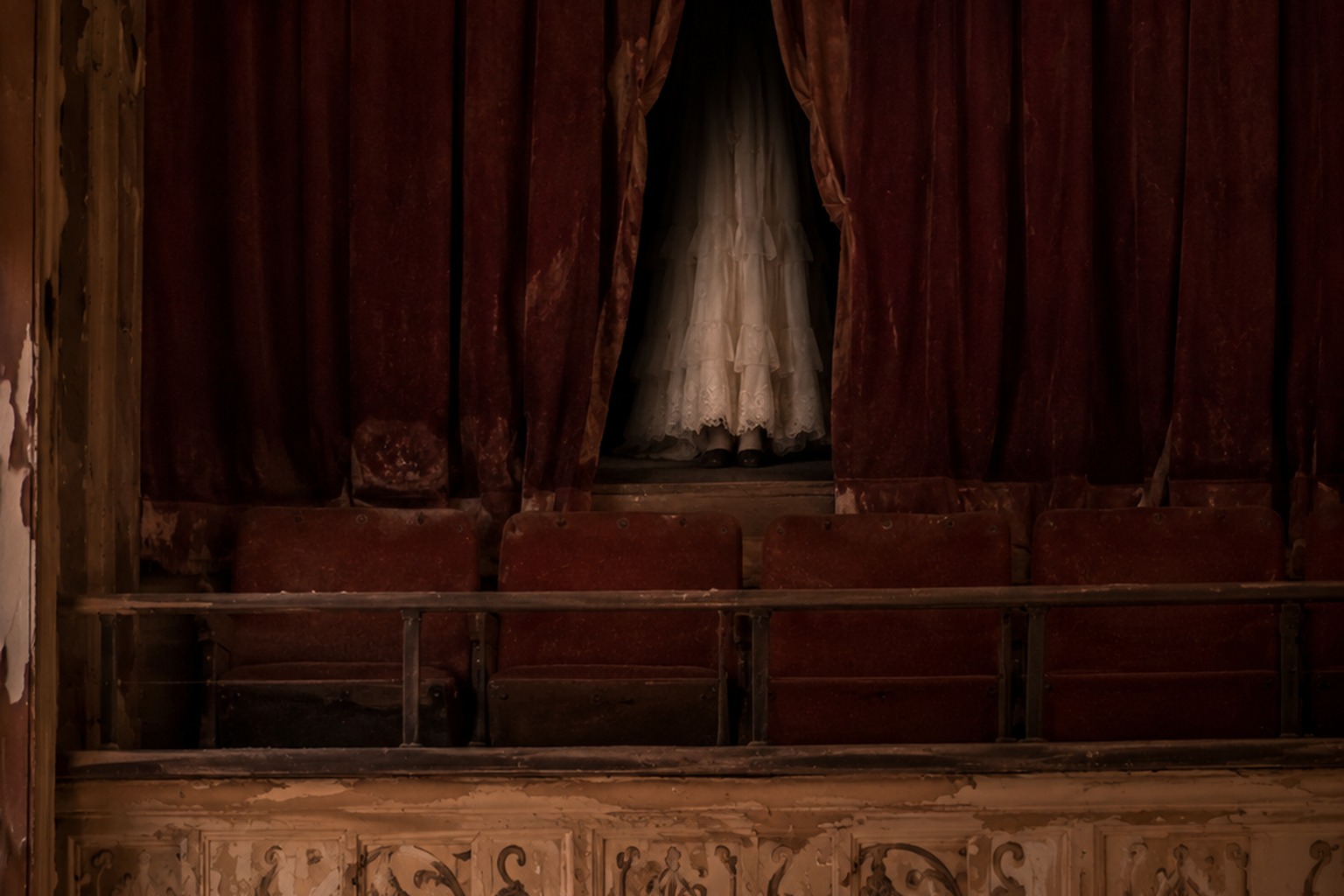
Only after zooming into the balcony did something unexpected emerge. Behind the torn curtain rested a pale vertical shape. It wasn't bright. It wasn't glowing.
It simply reflected enough natural light to separate itself from the darkness behind the curtain. The shape resembled layered white fabric. Below it, a faint darker section looked strangely similar to shoes hidden beneath the hem of a dress. The image resolution wasn't sharp enough to settle the question.
That uncertainty became the unsettling part. The longer someone examined the photograph, the more human the figure seemed. Yet stepping back made it appear like nothing more than old cloth. Friends who viewed the image reached opposite conclusions within seconds.
Some laughed and called it damaged curtain lining. Others immediately asked one question. Why would fabric be standing upright behind a curtain that barely had room for storage? Returning To The Balcony
Curiosity eventually outweighed discomfort. Several volunteers returned together during daylight before renovation work officially began. They carried flashlights, measuring tape, and copies of the photograph. Finding the exact location proved surprisingly difficult.
The Detail People Noticed Later
Every balcony curtain looked similar from the stage below. Only after matching cracks in the decorative plaster did they identify the correct section. The torn curtain hung exactly where expected. The rip looked even larger in person.
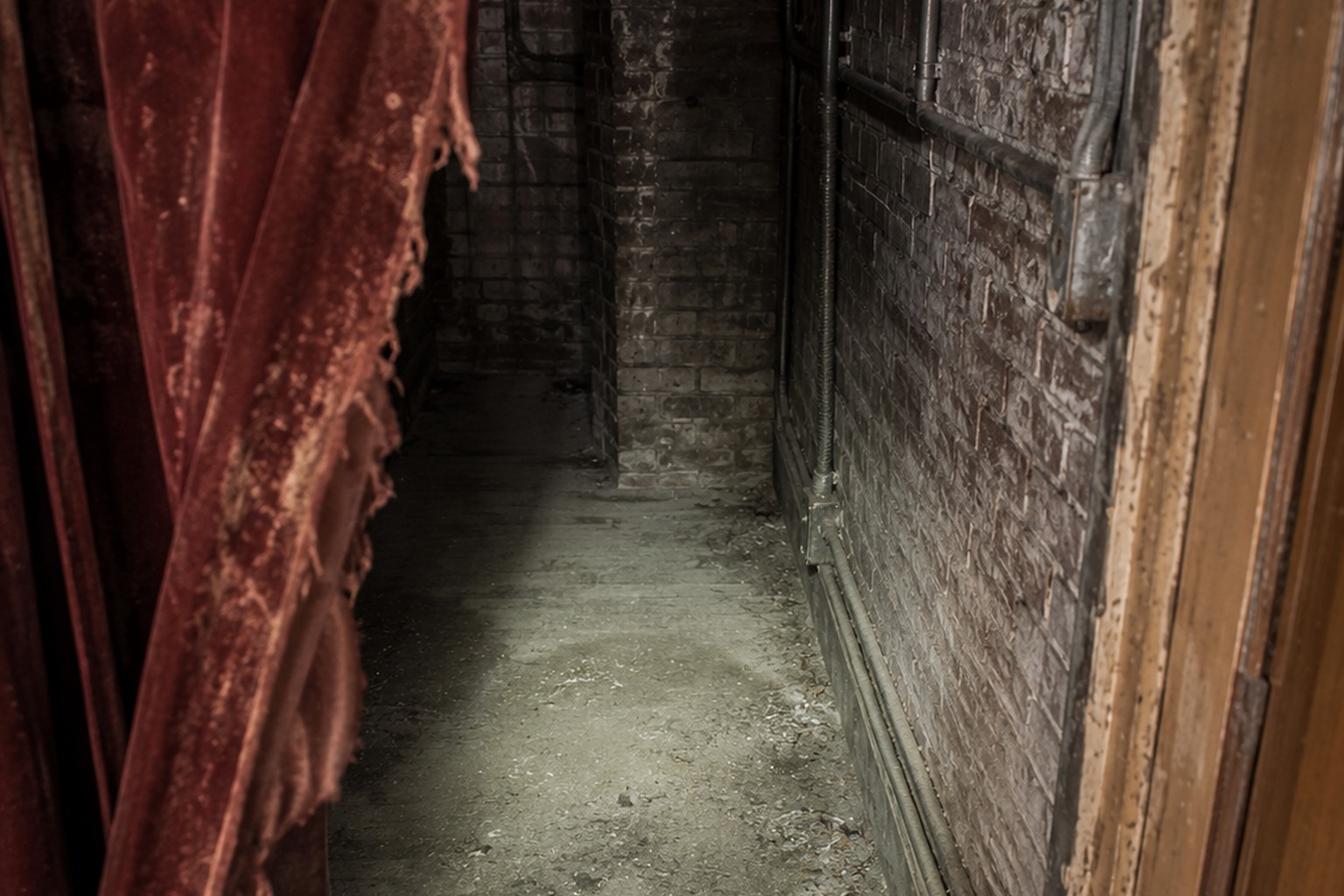
Dust coated every fold. The narrow passage behind it measured only a few feet across before ending at a solid brick wall. There was nowhere obvious for anyone to stand unseen. No hidden staircase.
No doorway. No forgotten storage room. Only old electrical conduit running along the masonry and decades of accumulated dust. Yet something immediately caught everyone's attention.
The floor behind the curtain contained noticeably less dust than the surrounding walkway. Not clean. Simply disturbed. As though something had occupied that exact patch more recently than the rest of the neglected balcony.
No footprints appeared. No drag marks crossed the floor. Just an irregular oval where fine dust seemed thinner than everywhere else nearby. Nobody could explain why.
What They Found When They Went Back
Stories Hidden Between Performances Like many aging theaters, this one carried generations of stories. Former actors remembered hearing footsteps after rehearsals had ended. Stagehands joked about applause echoing through an empty auditorium while striking scenery.
Lighting technicians sometimes claimed someone watched rehearsals from the balcony even when every seat remained empty. None of those stories matched each other. Most had probably grown larger over decades of retelling. Still, they shared one curious detail.
The balcony. Not backstage. Not beneath the stage. Always the balcony.
An elderly volunteer eventually mentioned an old costume tradition. Years earlier, damaged wardrobe pieces waiting for repair were occasionally hung behind those very curtains during rehearsals because the alcoves stayed out of public view. White dresses included. The explanation sounded comforting.
Until someone pointed out the obvious problem. That practice had ended decades before the building closed. Nothing remained hanging behind the curtains anymore. Renovation photographs taken only weeks earlier showed the same alcove completely empty.
The Part That Did Not Fit A Simple Explanation
Another volunteer quietly admitted they had always avoided walking that section of the balcony alone after dark. Not because they had seen anyone. Because every visit ended with the uncomfortable feeling that someone stepped aside just before they arrived.
The Curtain That Never Hung The Same Way Twice
During the following week, additional photographs documented demolition preparations. Most focused on architectural details rather than anything unusual. Yet the damaged curtain slowly became its own point of interest. In one image it leaned sharply toward the wall.
In another it hung almost straight despite calm indoor air. A third showed the torn section folded inward differently than before. Old fabric naturally shifts over time. No one argued otherwise.
But several volunteers began comparing timestamps simply because the curtain seemed oddly inconsistent. One afternoon someone positioned a ladder beneath the balcony and photographed directly upward. Nothing appeared behind the fabric. Only darkness.
Another picture taken from the opposite side seemed to reveal a pale edge hidden just beyond the torn opening. Again, zooming produced uncertainty rather than clarity. The renovation crew eventually removed every remaining curtain. Workers rolled them into large bundles and carried them outside.
How The Story Changed Around The Place
Behind the damaged section they discovered exactly what earlier inspections had revealed. Brick. Wood framing. Electrical conduit.
Nothing resembling hidden storage. Nothing capable of explaining the pale shape seen in the earlier image. For most people that ended the discussion. The building simply looked different after its worn curtains disappeared.
Yet the earlier photograph remained strangely difficult to dismiss. Without the curtain, the balcony somehow felt emptier than before.
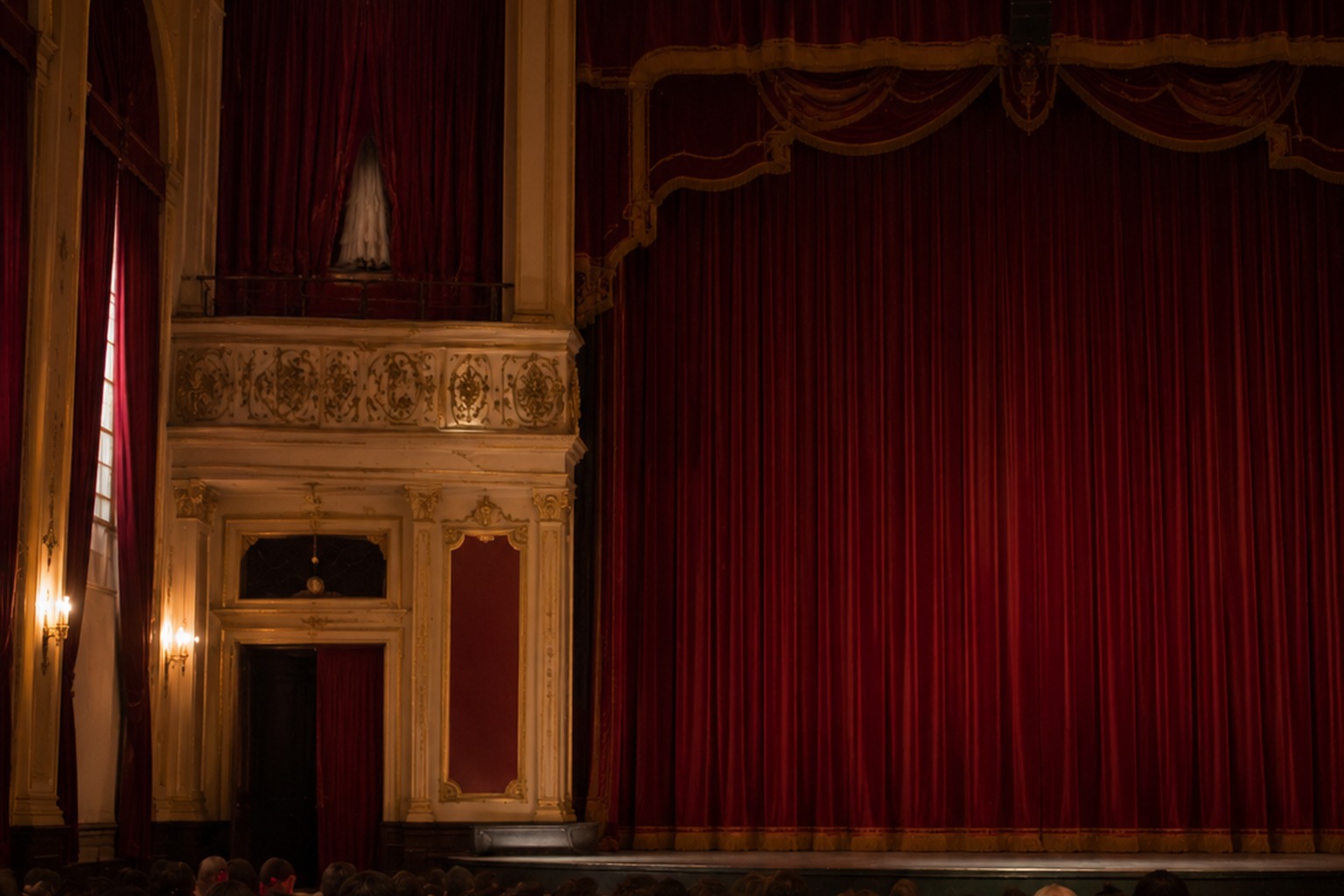
Looking Up During The Final Performance Months later the renovated theater reopened with fresh paint, repaired seating, modern lighting, and carefully restored decorative plaster.
Families returned. Children performed on the same stage where generations before them had acted beneath heavy curtains. Most visitors never heard about the photograph. Those who had usually smiled before finding seats.
Why This Image Still Gets Shared
Still, a few quietly glanced toward the far left balcony before the lights dimmed. Old habits linger longer than old buildings. The new curtains reached the floor without tears. The narrow alcove disappeared completely behind fresh fabric.
No pale shape has drawn similar attention since. Even so, copies of the earlier photograph still circulate among former volunteers who spent their final weeks inside the abandoned theater. Every so often someone enlarges the image again. Someone notices another fold.
Another shadow. Another detail that wasn't obvious before. Some remain convinced it shows damaged fabric catching afternoon light at exactly the right angle. Others never manage to see only fabric again.
Perhaps that is why the image continues to linger long after the balcony itself changed. It asks almost nothing of the viewer. Just one uncomfortable favor. The next time you find yourself sitting inside an old theater while the house lights slowly fade and the audience grows quiet, resist the urge to look toward the highest balcony.
Because if a torn curtain no longer hangs there… …you may begin wondering what once needed hiding behind it.