The old zoo had been closed long enough for vines to climb over the visitor maps and swallow the painted animal names one by one. Nature had reclaimed almost everything.
Almost. The service road still cut through the trees like a pale scar, ending at a rusted maintenance gate that no visitors had ever noticed when the zoo was open. It led to the rear feeding corridor where keepers once wheeled meat carts, hay bales, and medicine between enclosures without crossing public paths.
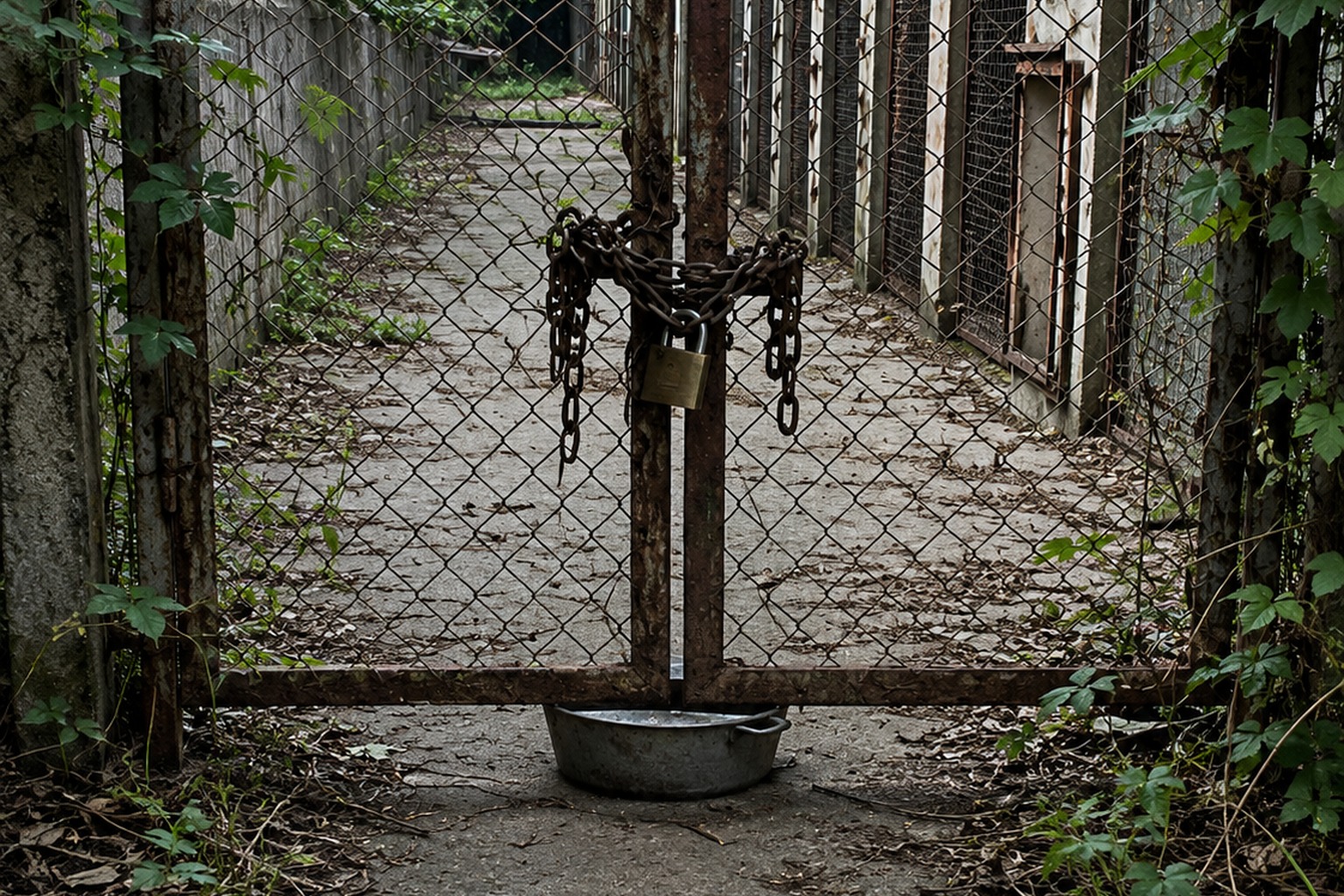
The chain-link fence remained standing. So did the heavy steel service gate. Its padlock still hung exactly where the final maintenance crew had left it years earlier. That was why the photograph unsettled everyone who looked at it for longer than a few seconds.
Not because of what appeared behind the fence. Because of what appeared to move beneath it. A Place Even Wildlife Avoided Local photographers occasionally wandered through the abandoned grounds looking for collapsing buildings and overgrown walkways.
Most stayed on the public paths. Very few bothered exploring the maintenance roads hidden behind thick vegetation. One autumn afternoon, a photographer followed old tire tracks through waist-high weeds until he reached the service entrance to the carnivore holding area. The entrance was sealed.
A faded warning sign still clung to the gate, nearly unreadable beneath peeling paint and moss. Beyond the fence stretched a narrow concrete corridor bordered by empty holding cages. Metal feeding doors lined the walls every few meters. Everything looked frozen.
What The Camera Seemed To Show
Except for one dented aluminum feed bucket sitting halfway down the corridor. It looked strangely clean compared to everything around it. The photographer thought little of it. He took several pictures before walking away.
Only later, while reviewing the images at home, did he notice something impossible.
The Bucket Changed Position The photographs had been taken only seconds apart. Nothing dramatic separated them.
No strange figures. No glowing lights. No movement anyone would notice immediately. Until the bucket.
In the first image, it rested beside the concrete wall several feet behind the gate. In the second, it sat closer. Not much. Perhaps half a meter.
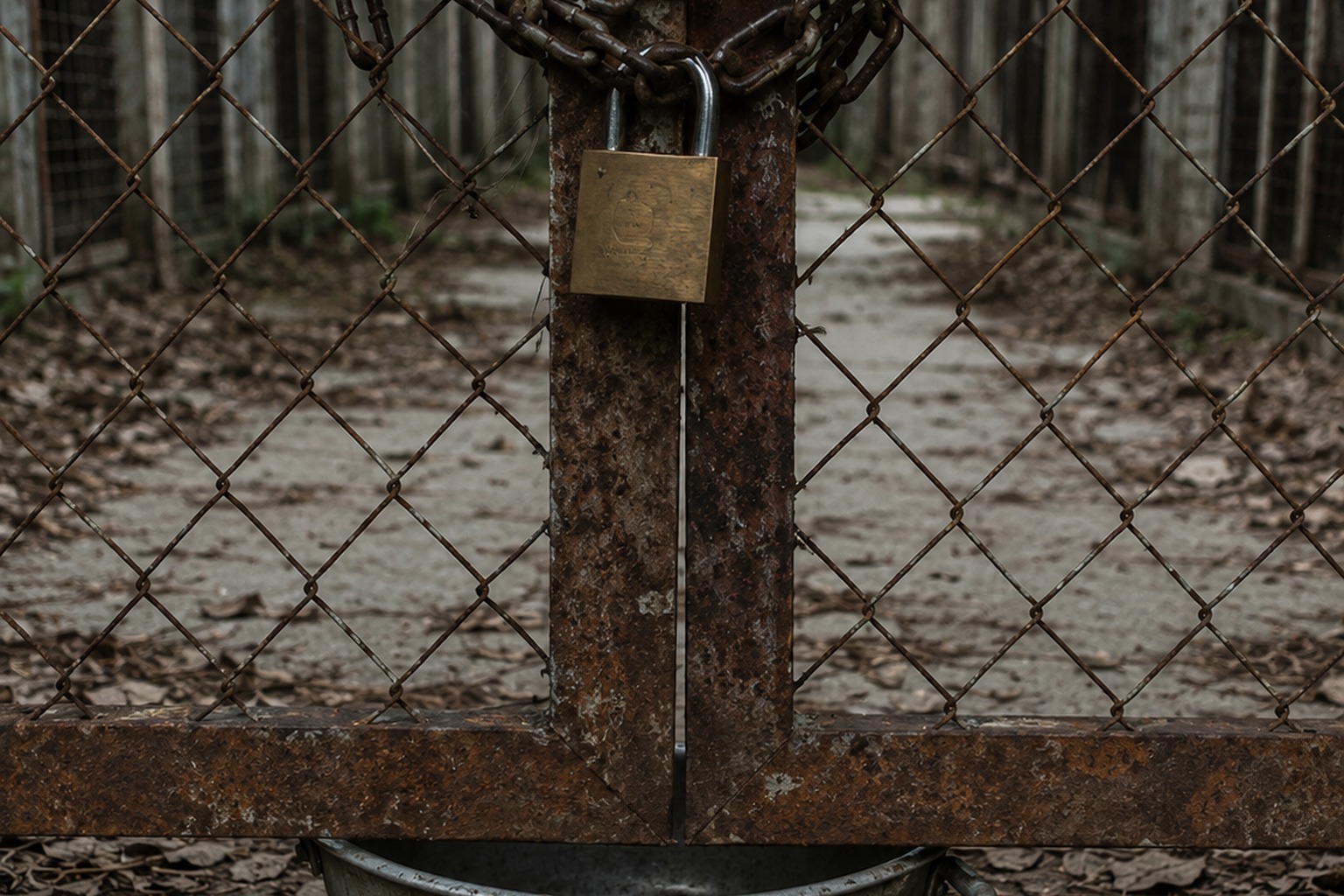
Enough to seem odd. The third image was worse. The bucket now leaned against the bottom edge of the chain-link gate itself. The padlock remained untouched.
Why The Setting Made It Hard To Dismiss
The chain had not shifted. The gate had never opened. The fourth photograph stopped people cold. The bucket no longer rested behind the gate.
Half of it now protruded beneath the narrow gap below the chain-link panel. As though someone unseen had slowly pushed it underneath. Yet the opening looked far too small. The bucket should never have fit.
Looking Closer Than Intended People initially blamed perspective. Different camera angles. Uneven ground.
Optical distortion. Then someone enlarged the final image. Scratches in the dirt told another story. A long line carved through years of settled dust stretched from the bucket's original position toward the gate.
It looked fresh. As though something heavy had recently dragged across the corridor. There were no footprints beside it. No tire marks.
No animal tracks. Only the single scrape ending beneath the gate. Then someone noticed the opposite side. The dirt outside the fence showed another fresh scrape continuing away from the bucket.
The Concrete Detail That Did Not Fit
The line did not stop at the fence. It continued toward the photographer. Almost as though the bucket had completed its journey before the picture had been taken. People began asking the obvious question.
Who—or what—had pulled it through?
The Animals Reacted First The abandoned zoo attracted plenty of wildlife. Foxes nested inside former bird exhibits.
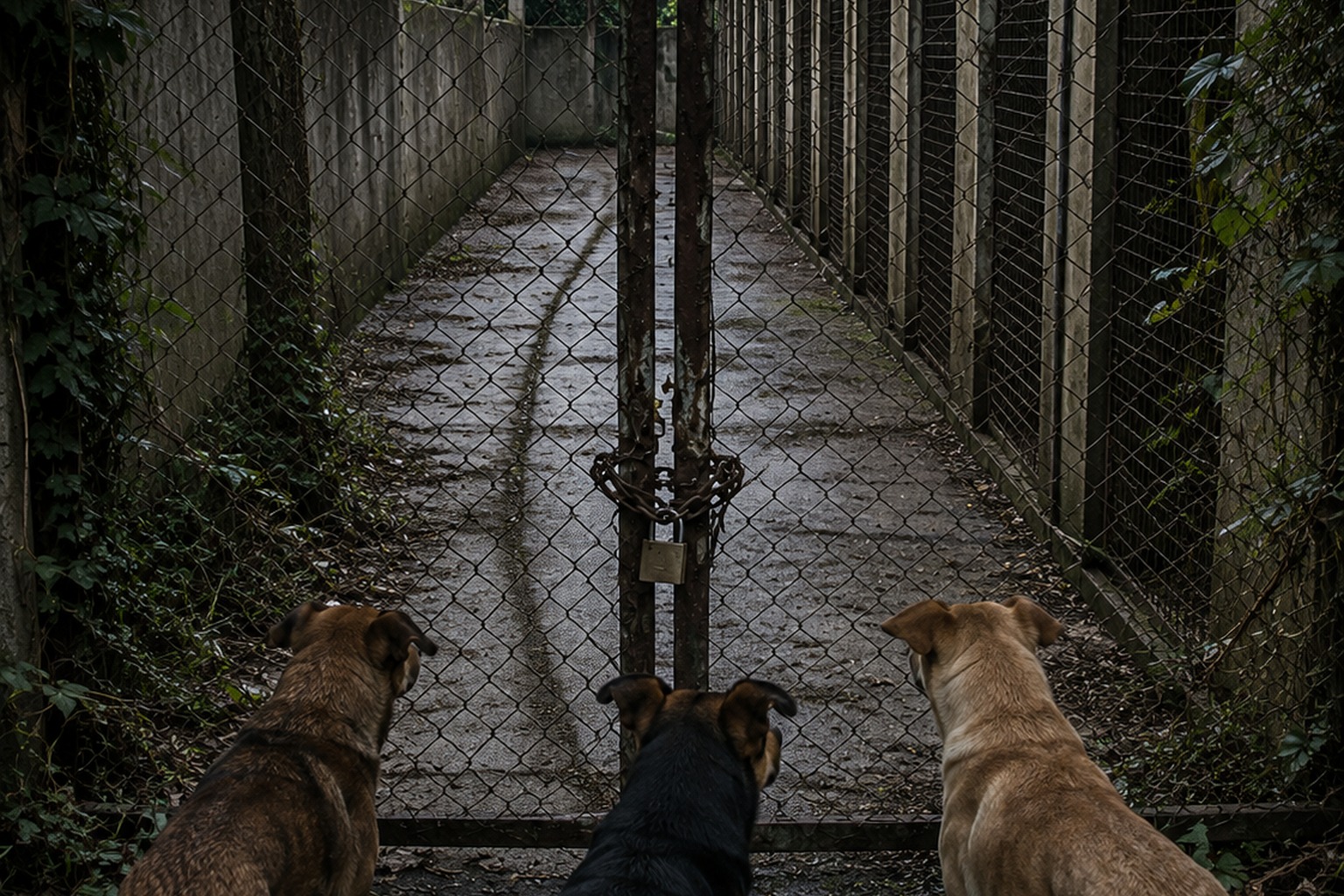
Owls perched atop old viewing platforms. Stray dogs occasionally wandered through broken visitor entrances. A local resident later shared pictures taken from the nearby access road on another evening. Three stray dogs stood facing the maintenance gate.
None barked. None approached. All stared silently through the chain-link. Their ears stayed forward.
Their tails remained low. The photographer who captured the bucket remembered hearing them during his visit. He had assumed they were watching deer deeper in the woods. Now he wondered whether they had been watching the service corridor instead.
What People Checked Afterward
The strangest detail emerged after another visitor inspected the area days later. The bucket remained behind the locked gate. Exactly where it appeared in the earlier photographs. Except the scrape marks had disappeared.
Fresh leaves covered the concrete. The dirt outside looked undisturbed. Only one thing seemed different. The bucket now rested farther back inside the corridor once again.
Almost exactly where it had started.
What Lived Beyond Feeding Time Old zoo workers remembered the service corridor well. Every enclosure connected to it through steel feeding hatches.
Keepers never entered predator exhibits directly. Food always arrived through those secure doors. Some recalled an unusual routine during the zoo's final operating years. Whenever feeding finished late in the evening, workers avoided leaving empty buckets near the holding corridor.
Not because of theft. Not because of animals. Because buckets occasionally disappeared overnight. Maintenance staff always found them somewhere else by morning.
Usually only a few meters away. Sometimes lying beneath gates they should never have crossed. Workers joked that forgotten feeding rounds finished themselves after dark. No one investigated very hard.
The Small Detail That Changed The Story
Everyone simply carried the buckets back. The habit became strangely normal. Until the zoo finally closed. Years later, no one remained to move them anymore.
Yet one still seemed determined to travel.
The Gate Never Needed To Open The photograph gained attention because people focused on the impossible gap beneath the fence. Measurements suggested the bucket could never slide underneath without becoming crushed.
Yet it appeared intact. The padlock still hung straight. Rust covered every chain link. Spider webs connected parts of the latch.
Nothing suggested recent access. Some viewers pointed toward damaged mesh along the bottom. Others believed the bucket had tipped sideways before squeezing through. But enlarged images complicated both explanations.
The bucket stood upright. Its handle rested naturally against the rim. No dents suggested force. Even stranger, dry leaves beneath the bucket remained undisturbed.
How The Place Felt Different Later
If it had scraped underneath while upright, the leaves should have scattered. Instead they lay perfectly still. Only the scrape leading toward the fence hinted that movement had happened at all. It almost looked less like the bucket had crossed beneath the mesh…
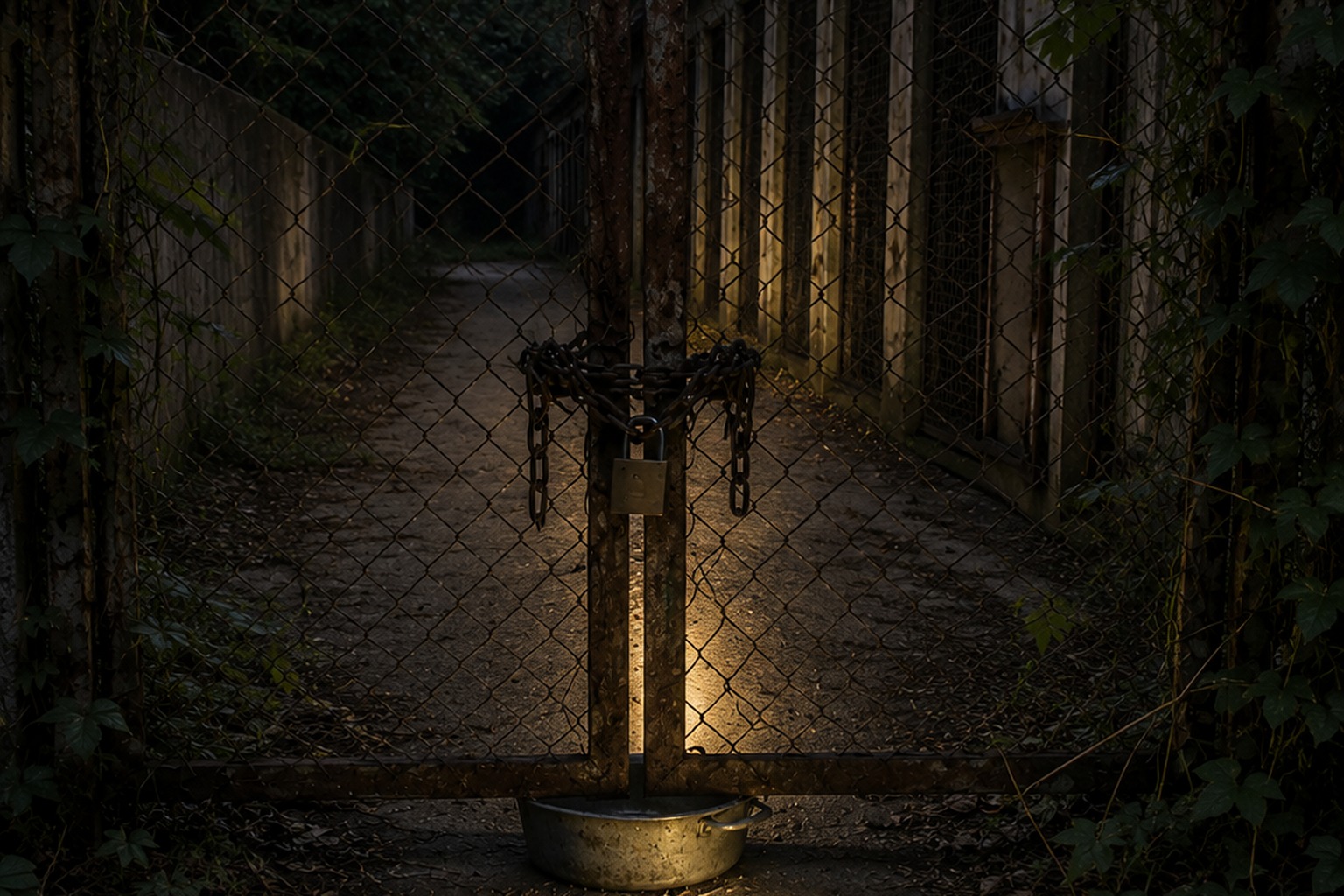
…and more like the ground had briefly forgotten where the fence belonged.
Nobody Returned After Sunset Curiosity eventually drew several explorers back. They arrived shortly before sunset hoping to recreate the photographs.
They placed another empty bucket several feet behind the locked gate. Then they waited outside. Nothing happened for nearly an hour. The woods settled into evening silence.
Birdsong faded. Wind disappeared. One member of the group noticed movement first. Not behind the gate.
Beside it. A row of weeds growing through cracked pavement bent sharply toward the corridor without any breeze to push them. The bucket remained still. Seconds later came a metallic sound.
Why This Image Still Gets Shared
Not loud. Just the hollow scrape of aluminum touching concrete. Nobody admitted seeing the bucket move. Each person later described the noise differently.
One insisted it came from farther inside the holding area. Another believed it sounded directly beneath the gate. Someone quietly suggested leaving. No one argued.
As they walked away, one person looked back long enough to photograph the entrance one final time. Nothing unusual stood behind the fence. No figures. No animals.
No lights. Only the bucket. Resting halfway beneath the chain-link once again. Closer inspection later revealed something almost everyone missed at first glance.
The photographer's own flashlight lay on the ground outside the gate. He had been carrying it only moments earlier. No one remembered dropping it. The flashlight rested several feet beyond where the bucket had stopped.
Its beam pointed directly into the feeding corridor. As though something inside had needed just a little more light.