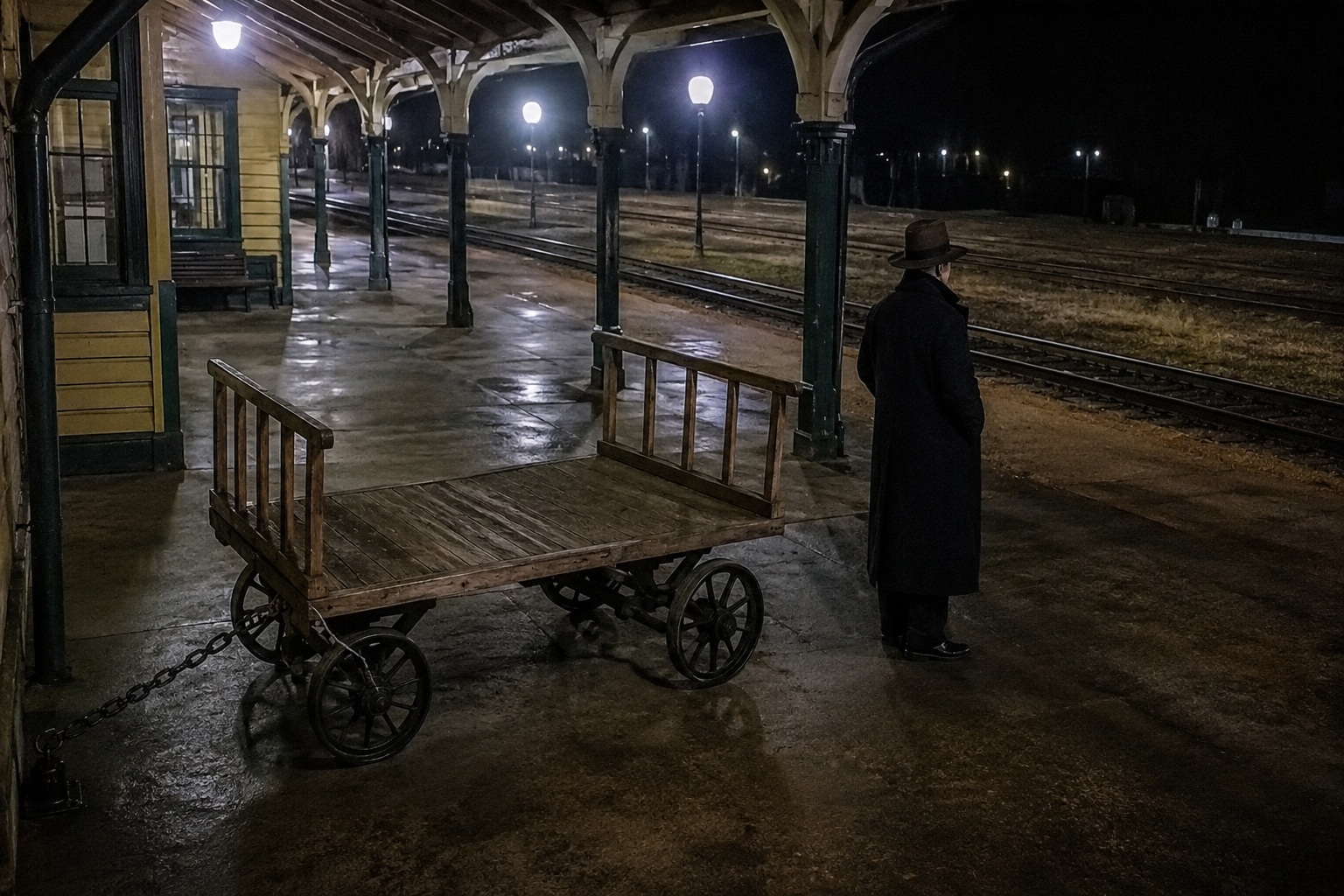
The old depot had stopped serving passengers decades ago. Freight still rolled through a few nights each week, shaking loose flakes of rust from the iron beams overhead, but nobody bought tickets there anymore. The waiting room had become a local museum. The ticket office held faded timetables beneath dusty glass. The platform remained mostly untouched, preserved because replacing century-old brickwork cost more than leaving it alone.
Visitors came during daylight. After sunset, the place belonged to maintenance crews, freight dispatchers, and silence. One corner of the platform still displayed an antique baggage cart. Its wooden sides had been restored years earlier, its iron wheels cleaned and painted black. Heavy chains looped through both axles, fastening the cart to a steel anchor set into the platform so curious visitors could not push it toward the tracks.
It had not moved in years. Every evening, a caretaker walked the platform before locking the museum entrance. The benches were checked. The station lamps switched to their overnight setting.
The freight warning lights were tested. Then everything waited for the next morning. Except, according to the people who worked nearby, the depot never truly became empty. The Platform After Midnight
Freight trains rarely stopped there. They thundered through without slowing, pushing walls of wind ahead of them before disappearing into darkness. When the engines were gone, the silence somehow felt louder than before. The platform lights cast pale circles across cracked concrete.
Old painted safety lines faded toward the edge. Beyond them, twin rails stretched into blackness where trees swallowed the horizon. The baggage cart always stood exactly where visitors expected to find it. Its chain remained tight.
What The Camera Seemed To Show
Its wheels pointed perfectly straight. Every shadow nearby belonged to benches, lamp posts, or the station roof. At least that was how the platform usually looked. One rainy autumn night, a dispatcher checking routine platform images noticed something that immediately drew his attention away from the tracks.
Someone appeared to be standing beside the baggage cart. Not leaning. Not walking. Simply waiting.
A Passenger Without A Train The figure wore what looked like a long dark overcoat. One arm rested naturally beside the body while the other seemed bent slightly at the elbow, as though holding a small travel case hidden behind the cart itself. Its posture looked remarkably ordinary.
That normality disturbed people more than anything else. It did not resemble a monster. It did not appear aggressive. It looked exactly like someone expecting the next train.
Except there had not been scheduled passenger service there for generations. The platform gate had been locked hours earlier. Fresh rain covered every exposed surface. No footprints led toward the figure from either direction.
Why The Setting Made It Hard To Dismiss
Workers initially assumed someone had climbed over the fence. Maintenance staff arrived expecting to escort away a trespasser. The platform was empty. The baggage cart remained chained exactly where it had always been.
The wet concrete reflected nothing unusual beneath the station lamps. Only the image from moments earlier suggested anyone had ever stood there.
The Chain Never Changed Curiosity replaced concern over the following weeks.
Staff quietly began checking the platform more often. Nothing unusual happened for several nights. Then another strange detail appeared. The figure returned.
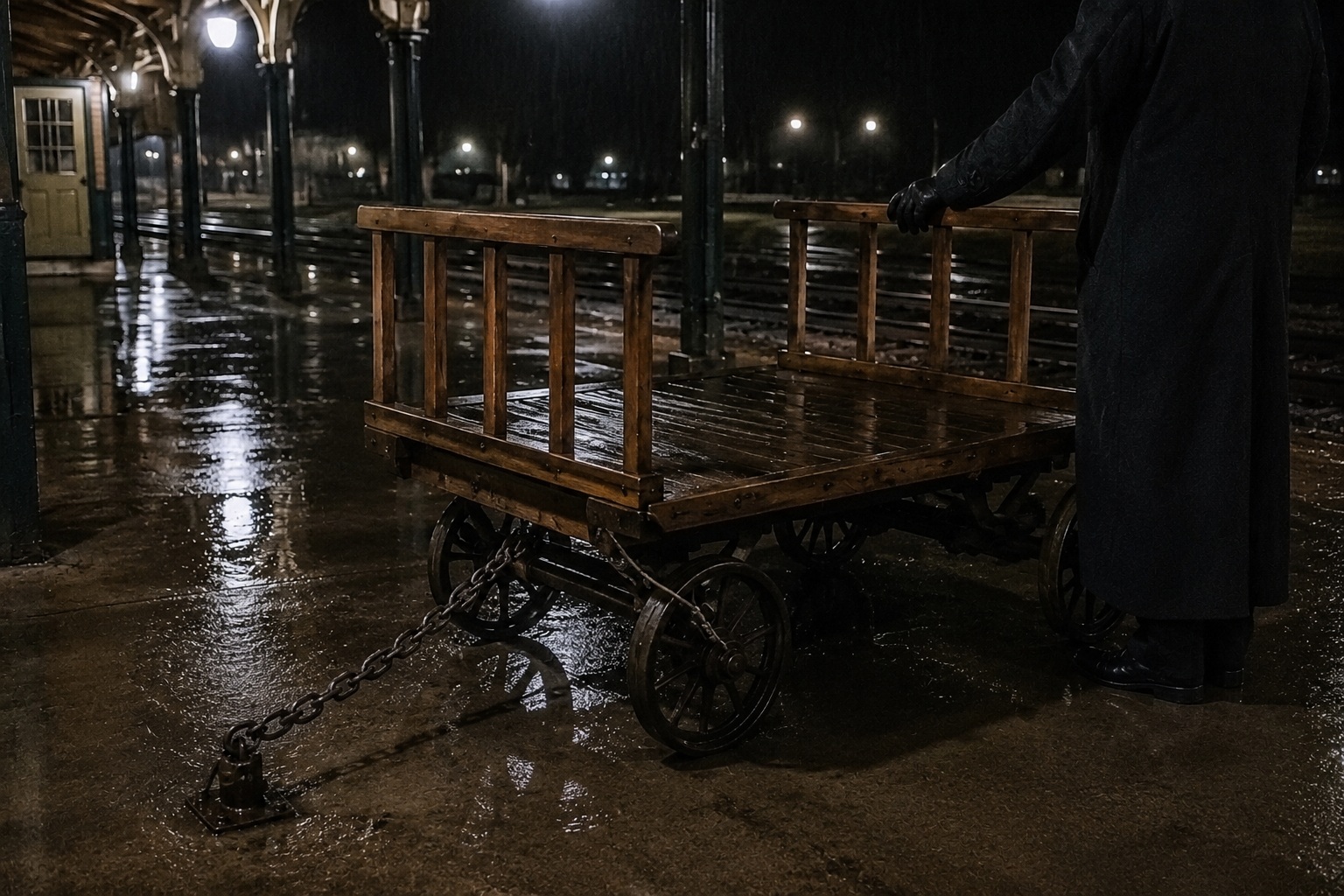
This time it stood closer to the antique baggage cart. One gloved-looking hand rested directly on the wooden rail. The impossible part was not the figure itself. It was the chain.
The Concrete Detail That Did Not Fit
The heavy steel links still hung perfectly straight between the anchor and the cart. There was no slack. No movement. No sign the cart had shifted even an inch.
Yet the figure's arm appeared to pass naturally behind one of the chain loops as if occupying physical space beside an object that had clearly never been disturbed. When maintenance inspected the cart before sunrise, the chain still carried an even layer of moisture except for one narrow dry stripe along the top of the wooden rail.
Nobody remembered touching it. No animals could have left such a clean mark. The rain resumed less than an hour later, washing it away.
The Station Dog Refused The Platform
A retired railway worker often visited the museum with his elderly shepherd. The dog adored people. Children could crowd around him without concern. He happily wandered nearly every corner of the property.
Except Platform Two. Whenever they approached the baggage cart, the shepherd slowed. Its ears lifted. Its nose pointed toward empty air several feet beyond the chained wheels.
What People Checked Afterward
Instead of continuing forward, it quietly stepped behind its owner. Not frightened. Not barking. Just unwilling to cross a particular section of concrete.
The behavior repeated every visit. Eventually the caretaker tested something. He approached alone. The dog waited comfortably.
The moment the caretaker rolled the baggage cart's protective information stand a few feet closer to the chained cart, the shepherd immediately stood, stared toward the platform edge, and refused another step. Nothing visible occupied the space. The stand was returned. The dog relaxed.
Nobody could explain why. The Brightened View Months passed before another unusual image attracted attention. Heavy winter fog had drifted across the tracks, softening every platform light into pale glowing circles.
At first glance, nothing seemed unusual. The baggage cart waited beneath its familiar lamp. The benches sat empty. Snow dusted the platform edge.
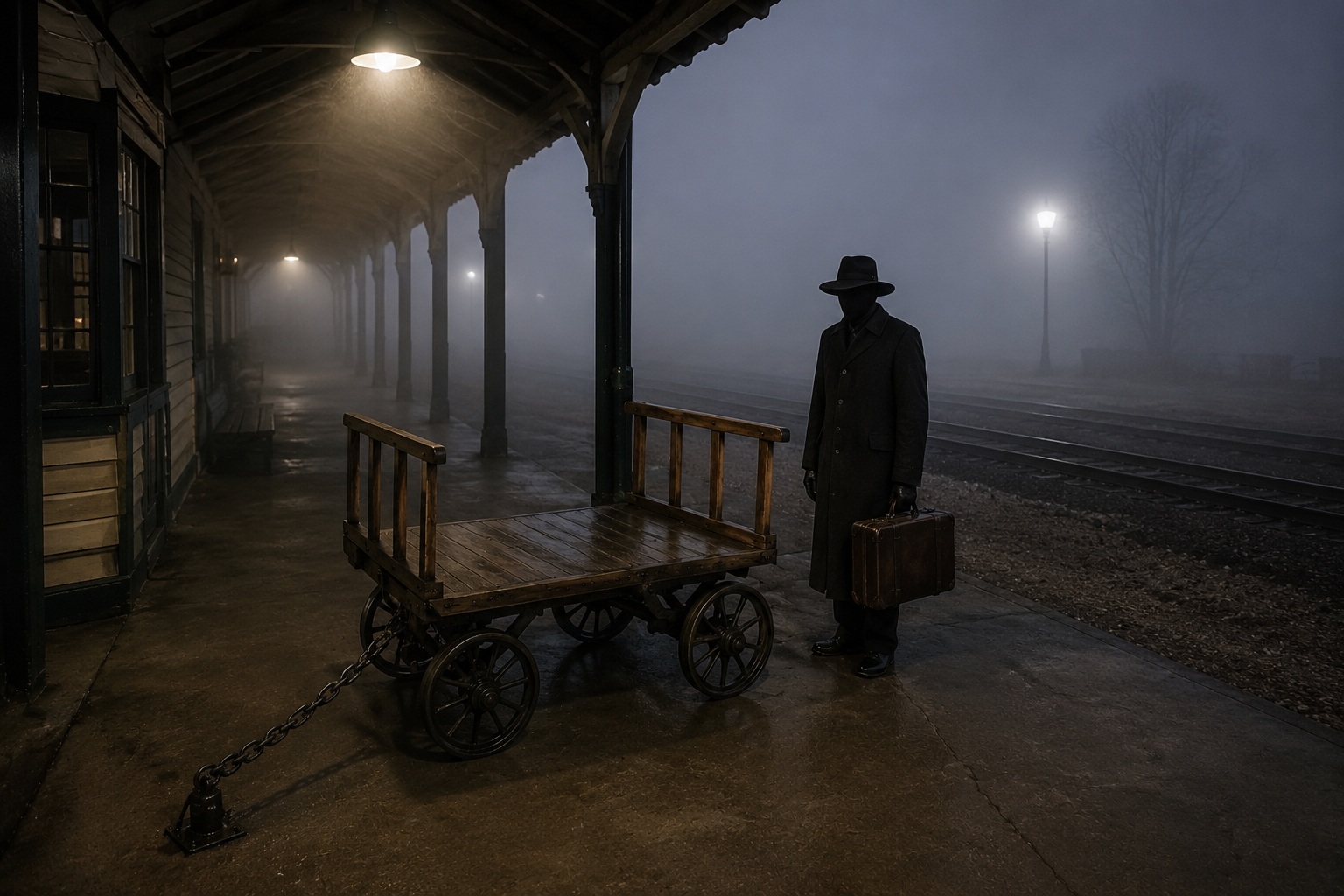
Only after someone enlarged the image did they notice another detail. The passenger's outline was clearer than before. Buttons reflected faintly along the coat. A brimmed hat became visible.
The Small Detail That Changed The Story
One polished shoe extended slightly beyond the cart wheel. The face, however, remained strangely featureless. Not blurred. Simply darker than everything around it.
As though light reached every surface except that one. The most unsettling detail appeared near the figure's feet. A small leather suitcase rested upright beside the cart. Museum volunteers recognized it immediately.
The depot displayed an almost identical suitcase inside the waiting room behind locked glass. The display case remained secured overnight. The suitcase inside had never been removed. Yet the object beside the waiting passenger matched its worn corners, brass latch, and distinctive leather strap almost perfectly.
By morning, only the museum exhibit remained. Nothing sat beside the baggage cart. The display cabinet was still locked.
The Last Freight Of Winter
How The Place Felt Different Later
Late February brought one final heavy snowstorm. Dispatchers expected delays throughout the region. A slow-moving freight finally approached just before dawn. As the locomotive rounded the curve, its powerful headlights swept across the abandoned platform.
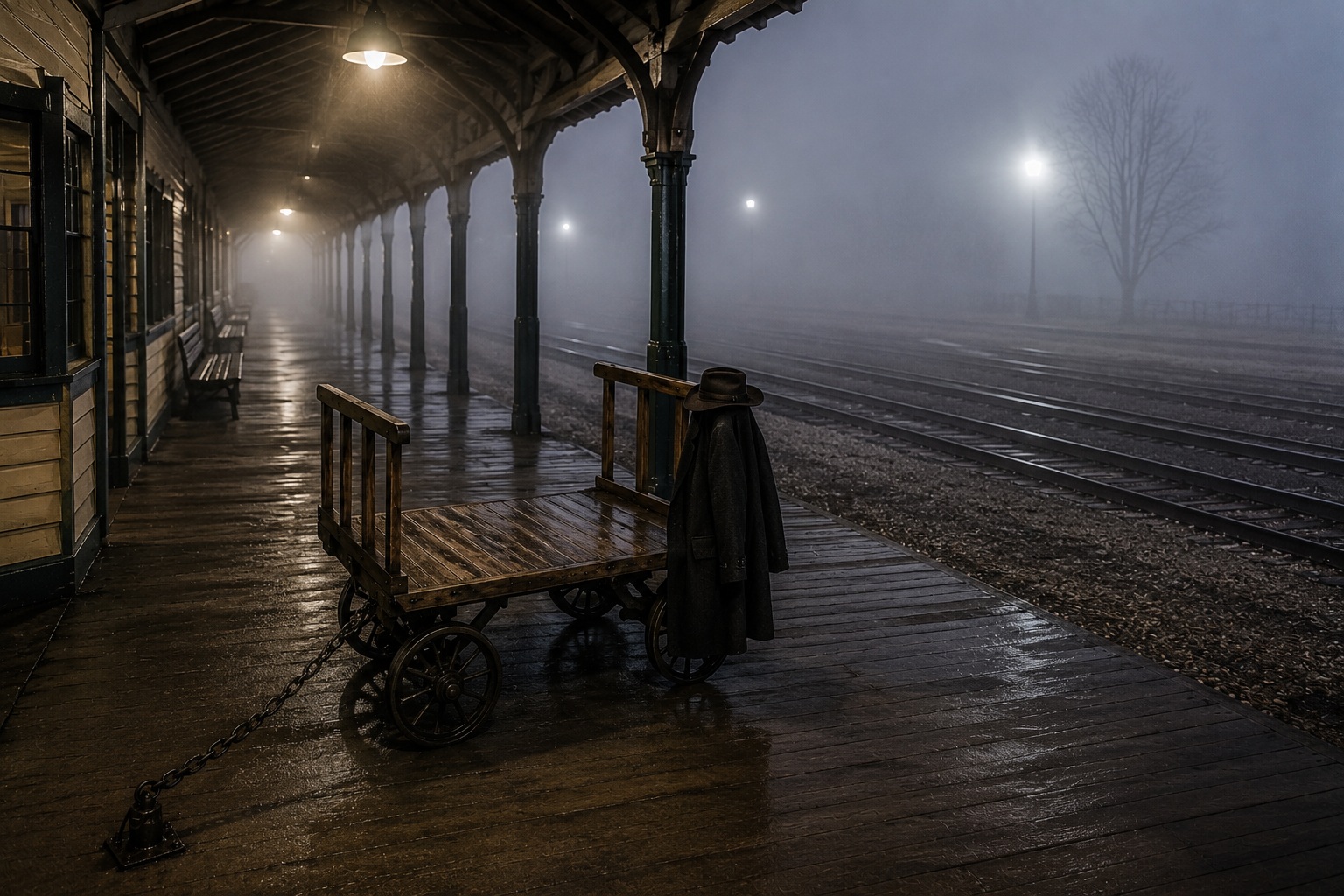
For only a moment, the baggage cart cast two separate shadows. One belonged to the cart itself. The other stretched beside it in the unmistakable shape of a standing traveler. When the train reached the depot seconds later, only the baggage cart remained.
Drivers later mentioned nothing unusual. The platform inspection found untouched snow everywhere except a narrow strip beside the cart where loose flakes had somehow settled in a perfectly straight rectangle, as though something solid had sheltered that space from falling snow. No footprints entered it.
No footprints left. The chained wheels remained frozen exactly where they always had. The rectangle disappeared after sunrise as warming air softened the snow. No one managed to recreate the pattern afterward.
Some Journeys Never End Today the old depot welcomes visitors just as it always has. Families browse faded tickets. Children ring the restored station bell under supervision.
Why This Image Still Gets Shared
Volunteers explain how baggage once traveled separately from passengers. Most visitors stop briefly beside the antique baggage cart without giving it much thought. They notice the polished wood. The thick chain.
The weathered iron wheels. Few imagine anyone waiting there anymore. Employees still perform their nightly rounds. The lamps still glow across empty concrete.
Freight trains still rush through without stopping. Sometimes the platform looks perfectly ordinary for months. Then another quiet evening arrives. The chain remains tight.
The cart has not moved. Yet beside it stands someone dressed for a journey that ended long before anyone working there was born. Never waving. Never approaching the tracks.
Never asking for help. Simply waiting with endless patience beside luggage that should already be inside a locked museum display. Perhaps for a train whose timetable disappeared generations ago. Or perhaps because some departures never truly happen, even after the station itself has forgotten who once stood beneath its lamps.
The depot keeps no record of the final passenger who waited beside that baggage cart. Still, whenever rain darkens the old platform or fresh snow settles before dawn, workers admit they glance toward the chained wheels before looking anywhere else. Just in case someone has quietly returned to catch a train that no longer comes.