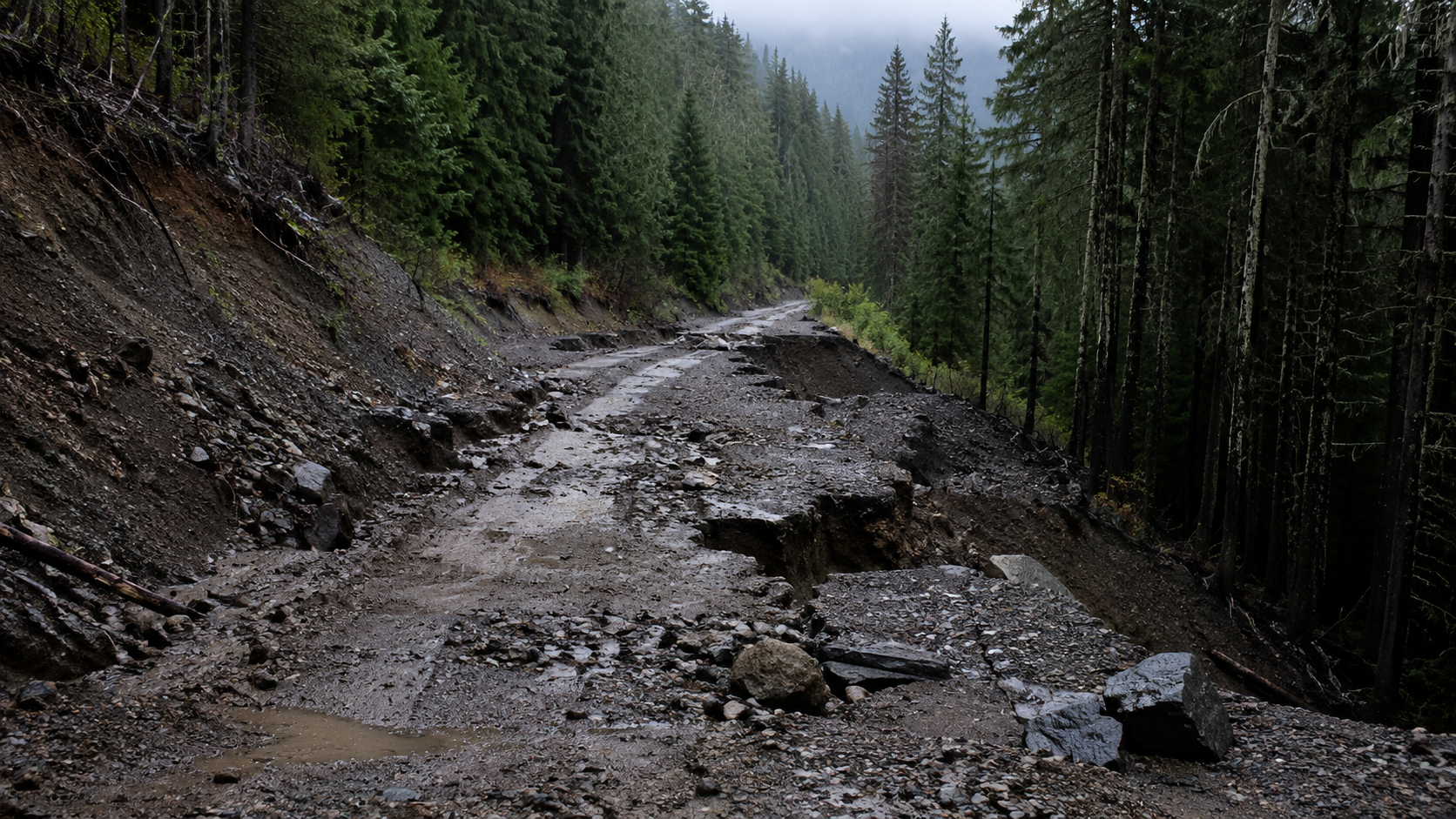
The North Briar fire road was not a place anyone expected to produce a famous piece of evidence.
It was a utility road, cut through timber and left to survive weather, runoff, and occasional forestry traffic. After a week of heavy rain, the road had partly failed. Gravel slumped into ditches. Culverts choked with needles and silt. Mud collected in shallow shelves along the shoulder.
That is where the footprint appeared.
The story is usually told as a Bigfoot account because of the size of the track, the setting, and the sounds reported before it was found. But the reason the North Briar cast still circulates among cautious believers is simpler: it began as a worksite problem, not a campfire performance.
The Washed-Out Road
North Briar was a steep fire access route used by forestry crews, contractors, and seasonal patrols. It crossed a mixed stand of fir, alder, and second-growth cedar before climbing toward a ridge where older logging grades disappeared into brush.
After storms, the lower half became unstable. Water ran down the tire ruts and chewed them deeper. The crew assigned to inspect it was there to mark repairs, check drainage, and reset survey stakes that had shifted with the road edge.
Nothing about that job required a mystery. Washouts explain many strange impressions in mud. Roots, rocks, slipping boots, and collapsed banks can all create shapes that look like more than they are.
That is why the location matters. The crew was already looking carefully at the ground.
Knocking After Dark
The first strange detail did not involve a footprint. It involved sound.
According to the account, two crew members staying near the work area reported hearing hard knocks from the timber after dark. The sounds came in short groups, separated by long pauses, as if something heavy was striking wood against wood.
Forests are not quiet at night, especially after rain. Trunks shift. Branches drop. Water releases from high limbs in sudden slaps. Woodpeckers, owls, and distant equipment can also create misleading rhythms.
Still, the witnesses described the knocking as deliberate. It did not sound like random cracking or a single tree settling. It sounded paced.
The second night, the same pattern was reportedly heard from farther upslope. No one saw an animal. No one claimed to hear vocalizations. The story stays unnerving because the sound remained just outside certainty.
The Bent Survey Stake
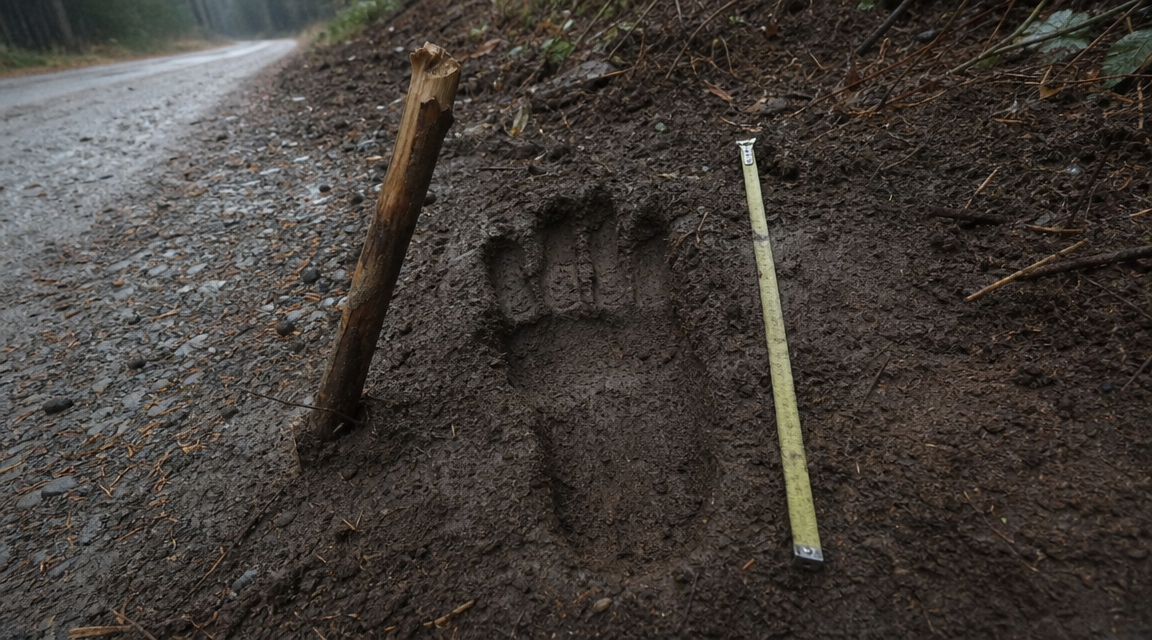
The survey stake was one of several placed along the washed shoulder to mark repair limits. It was not a permanent post, just a narrow wooden stake driven into damp soil where the road edge needed to be regraded.
On the morning after the second night of knocking, the crew found one stake bent sharply toward the ditch. It had not been cleanly snapped. It leaned as if struck, stepped on, or pushed sideways while the ground was soft.
Beside it was the print.
This pairing became the heart of the North Briar account. A large track by itself can be debated endlessly. A bent stake by itself proves little. Together, they suggest an interaction with the worksite, even if the cause remains unknown.
The mud around the stake was reportedly churned by rain but not covered with boot traffic. That gave the impression a single heavy step had landed near the marker after the crew left for the evening.
What the Footprint Looked Like
Descriptions of the footprint vary, but the core details remain consistent. It was large, longer than a work boot, and broad through the forefoot. The heel was pressed deep into the mud, while the front of the print showed a wide fan where toes appeared to have pushed into softer material.
The print did not look crisp in the way souvenir tracks often do. Its edges were slightly slumped. Rainwater had softened the perimeter. The toe impressions were visible but not cartoonish.
That imperfect quality is one reason some people find it more interesting. Hoaxes often look too clean because the maker wants the viewer to understand the shape immediately. The North Briar print looked like mud had taken an impression from weight, weather, and motion all at once.
Crew members reportedly compared it against their own boots and found no match. The stride could not be established because no clear second print survived nearby.
Making the Plaster Cast
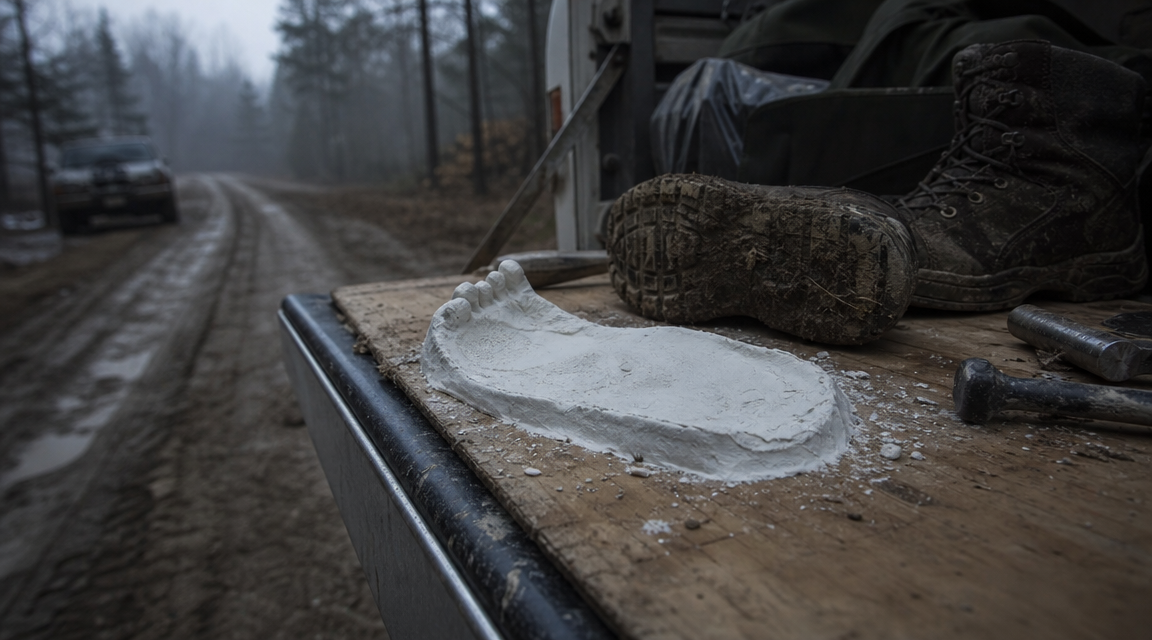
Someone on the crew had plaster available for field marking and repair documentation. Whether by curiosity or caution, they decided to cast the track before traffic, rain, or more slumping destroyed it.
The cast was made in the usual rough way: water mixed with plaster, poured carefully into the print, then left to set while the road inspection continued. By the time it was lifted, the surface captured the general outline, the broad front, and enough texture to make the object worth keeping.
It was not a laboratory-grade cast. It was a field save.
That distinction matters. A messy cast can preserve real information, but it can also preserve distortion. Mud pulls, plaster bubbles, and lifting errors can exaggerate features. The North Briar cast is evidence, but not the kind that ends an argument by itself.
Why Believers Keep Returning to It
For Bigfoot researchers, the case has three attractive features.
First, the find came from a remote work road rather than a public trail. A casual prankster would have needed access, timing, and knowledge of where the crew had placed stakes.
Second, the footprint appeared after nights of reported knocking. In Sasquatch lore, wood knocks are often discussed as possible communication or territorial sound-making. That does not prove the North Briar sounds came from an unknown animal, but it gives the sequence a familiar pattern.
Third, the footprint was cast before the story had much time to grow. Physical evidence gathered early is harder to dismiss than a memory polished over years.
The most persuasive version of the case does not ask anyone to believe a creature posed for proof. It asks why a heavy, barefoot-looking impression appeared beside a disturbed survey marker in a place where forestry workers had already heard unusual sounds.
The Skeptical Read
A grounded reading has to begin with mud.
Washed-out roads create deceptive surfaces. A boot can widen when it slips. A partial animal track can merge with runoff. A collapsing clod can resemble toes after water cuts channels through it. If more than one impression overlapped, the result could look like a single oversized footprint.
The bent stake has ordinary possibilities too. It could have been hit by a vehicle mirror, falling branch, thrown debris, or loosened soil. If a crew member forgot stepping near it, the later discovery would feel stranger than it was.
The knocking also resists certainty. Sound carries strangely in wet timber. A distant camper splitting wood, a loose snag tapping in the wind, or an animal shifting branches can produce patterns the human mind organizes into intention.
None of these explanations is weak. The North Briar cast survives because none of them is complete.
What the Cast Cannot Prove
The plaster cast cannot identify a species. It cannot prove height, weight, intelligence, or intent. Without a verified chain of custody, clean scale photographs, soil measurements, and multiple tracks, it remains suggestive rather than conclusive.
That frustrates both sides. Believers want the cast to speak louder than it can. Skeptics want it to go silent because it is imperfect.
But field evidence often lives in that middle space. It is not a confession from the woods. It is an object made because someone at the scene thought the ground had recorded something unusual.
The cast also cannot separate the footprint from the story around it. If the knocking reports are removed, the track becomes an odd mud impression. If the cast is removed, the knocking becomes another night-sound anecdote. Together, they create a case with texture.
The Unsettling Part That Remains
The most persistent detail is not the size of the footprint. It is the placement.
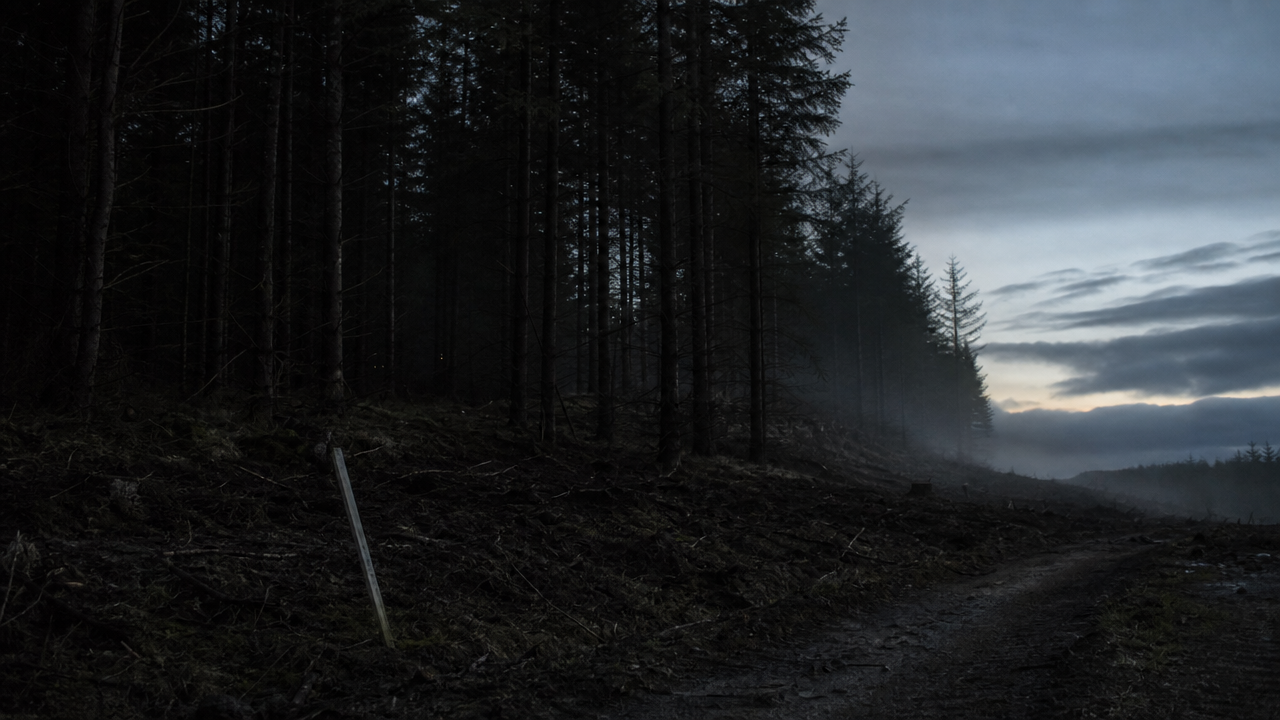
The print was not found in the middle of the road where a hoaxer would expect attention. It was beside a bent survey stake, at the edge of a damaged work zone, in mud soft enough to take weight but unstable enough to erase evidence quickly.
That makes the scene feel less staged and more incidental, as if something crossed the road, contacted the marker, and continued into timber before morning.
No clear trail followed it. No photograph showed a figure among the trees. No later visit produced a second cast as compelling as the first.
What remains is a white plaster shape, a story of knocks in wet forest, and a bent stake that turned a routine road repair into a question.
The North Briar cast does not prove Bigfoot walked that fire road. It suggests that, for at least one morning, the people assigned to fix the road believed the mud had caught something larger and stranger than their own boots.
Reader Context
This Weird Witnessed story is an editorial reconstruction, written as eerie visual storytelling rather than a verified report. For more context, see Bigfoot and Sasquatch Stories Guide and How WeirdWitnessed Creates Reconstructed Horror Stories.