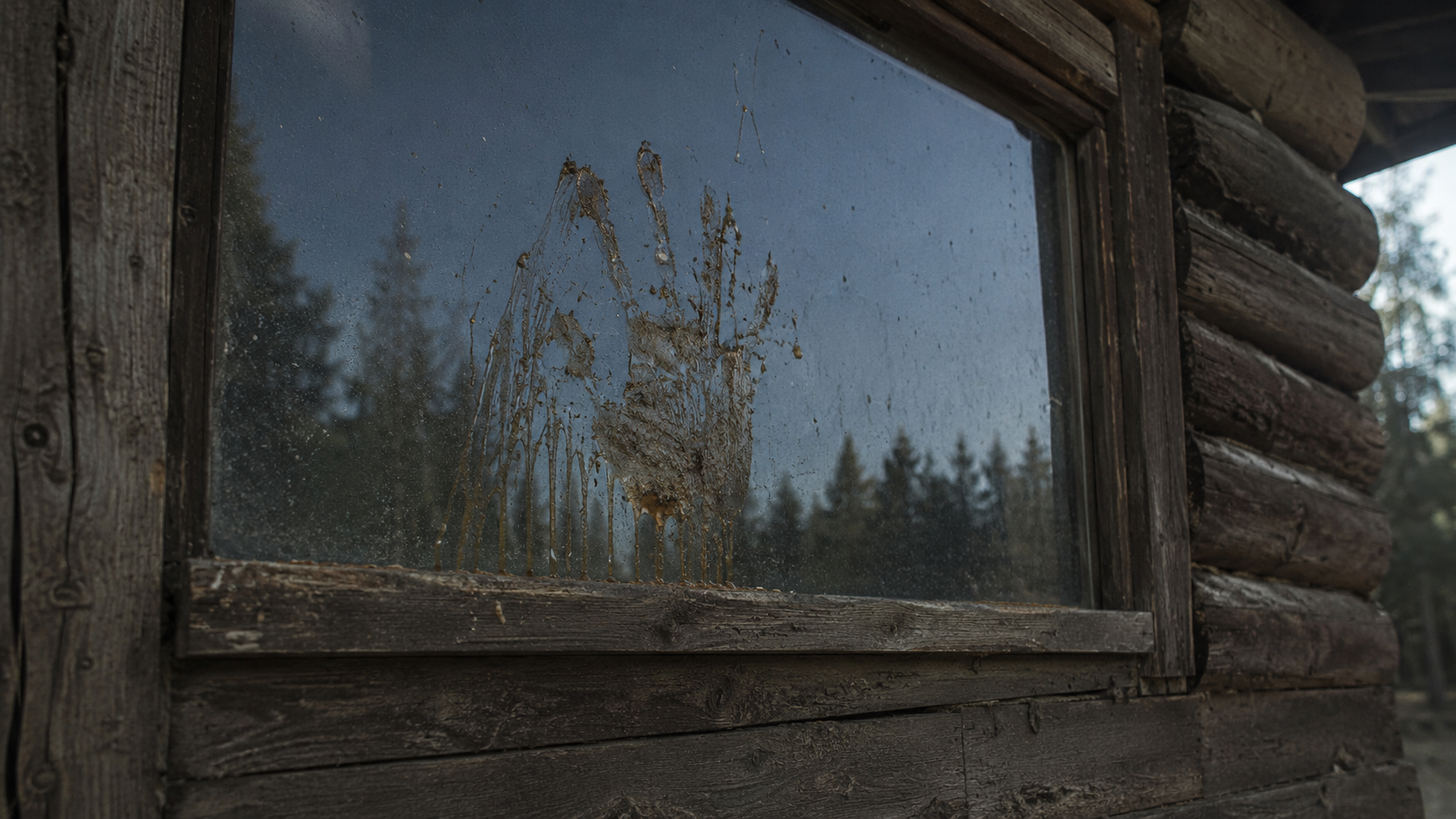
The handprint was not on the door, where a prankster would have left it.
It was high on the outside of a ranger cabin window, above the level where most people would naturally reach without stepping onto something. The glass had weathered a winter of wind, freezing rain, and blown needles, yet the mark stood out in amber smears, pressed broad across the pane as if a palm had dragged through spruce resin before touching it.
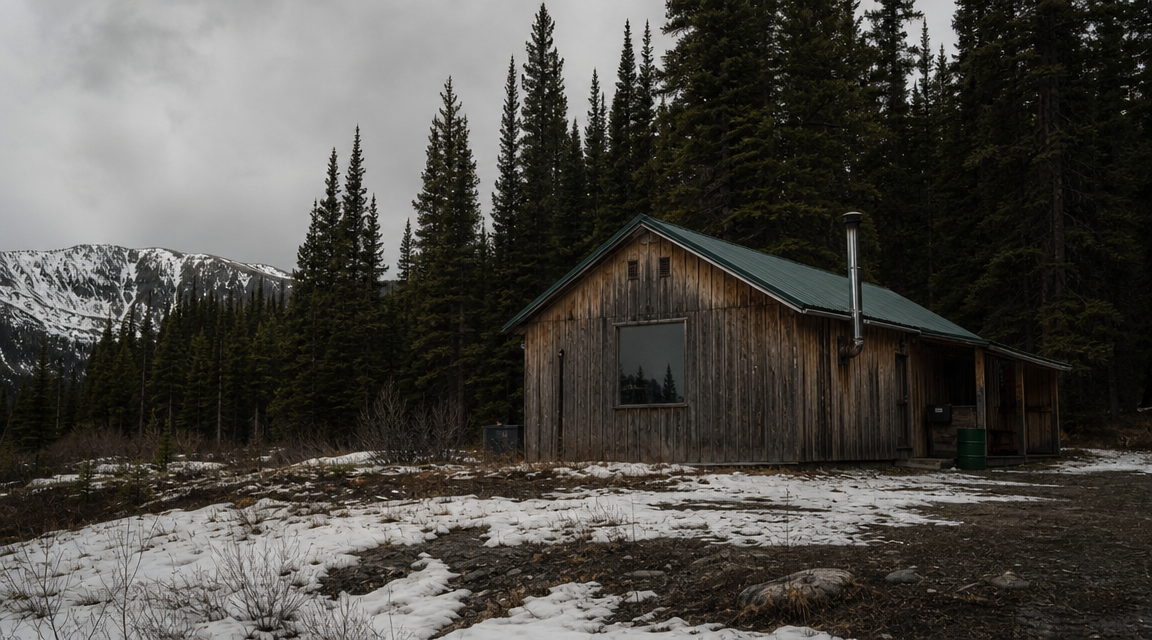
Hollow Spruce cabin was not famous before this. It was a seasonal ranger shelter used by forestry staff, trail crews, and occasional maintenance workers. Through the winter shutdown it sat locked, unheated, and mostly ignored at the end of an access path that could disappear under snow.
When the first crew returned, they expected roof damage, mice, maybe a fallen limb. Instead, they found a mark on the window, broken branches along the approach, and later, according to the maintenance notes repeated in the recreated scene, a sequence of low knocks from the timber.
A Cabin Left Alone for Winter
Hollow Spruce is described as a practical backcountry station: a dry place for tools, trail notes, and summer crews.
The cabin was shut down before heavy snow. The shutters were checked, the door was secured, and nonessential supplies were removed. There was no caretaker living nearby and no winter recreation route advertised through the site.
That matters because the simplest explanation for strange marks on a building is human activity. Someone stops by, fools around, leaves a print, and the story grows after the fact.
Here, the problem is access and timing. The cabin was reportedly visited only after thaw made the approach manageable. If someone went there during winter, they did so without obvious reason and left no clear trail except damage that looked more like passage than vandalism.
The Window Mark
The handprint was found on an exterior window near one side of the cabin, not on the front entrance. It was described as broad, darkened at the center by grime and resin, with uneven fingers that tapered into thin streaks.
The resin is the detail that gives the case its texture. A dry hand on old glass can leave oil. A glove can leave mud. This mark was reported as sap-smeared, with the amber tackiness of spruce pitch visible in the ridges and dragged edges.
Maintenance workers said the window was too high for a casual touch from the ground. A tall person could reach higher, or stand on a log, stump, or carried object. But the area below reportedly lacked the scuffing or placement marks that would make that explanation satisfying.
The pane was photographed by the crew before it was cleaned. Those photographs, in the account, became the main reason the story traveled beyond a normal maintenance complaint.
Why Height Became the Problem
Bigfoot evidence often turns on scale, and scale can be treacherous around sloping ground, snowmelt, and uneven foundations.
Still, the Hollow Spruce print was repeatedly described as being high enough to feel wrong. Not impossibly high, but awkwardly high. The sort of height that forces a witness to stand beneath it and raise their own arm for comparison.
The print was also said to be wide. Not a clean five-fingered stamp, not a perfect forensic impression, but a broad palm area with thick finger spacing. Skeptics can fairly point out that sap smears distort. A gloved hand sliding on glass can widen itself. Meltwater can pull resin downward and make a small mark seem larger.
What unsettled the crew was the combination: height, width, and the lack of an easy staging point below it.
Snapped Branches on the Access Path
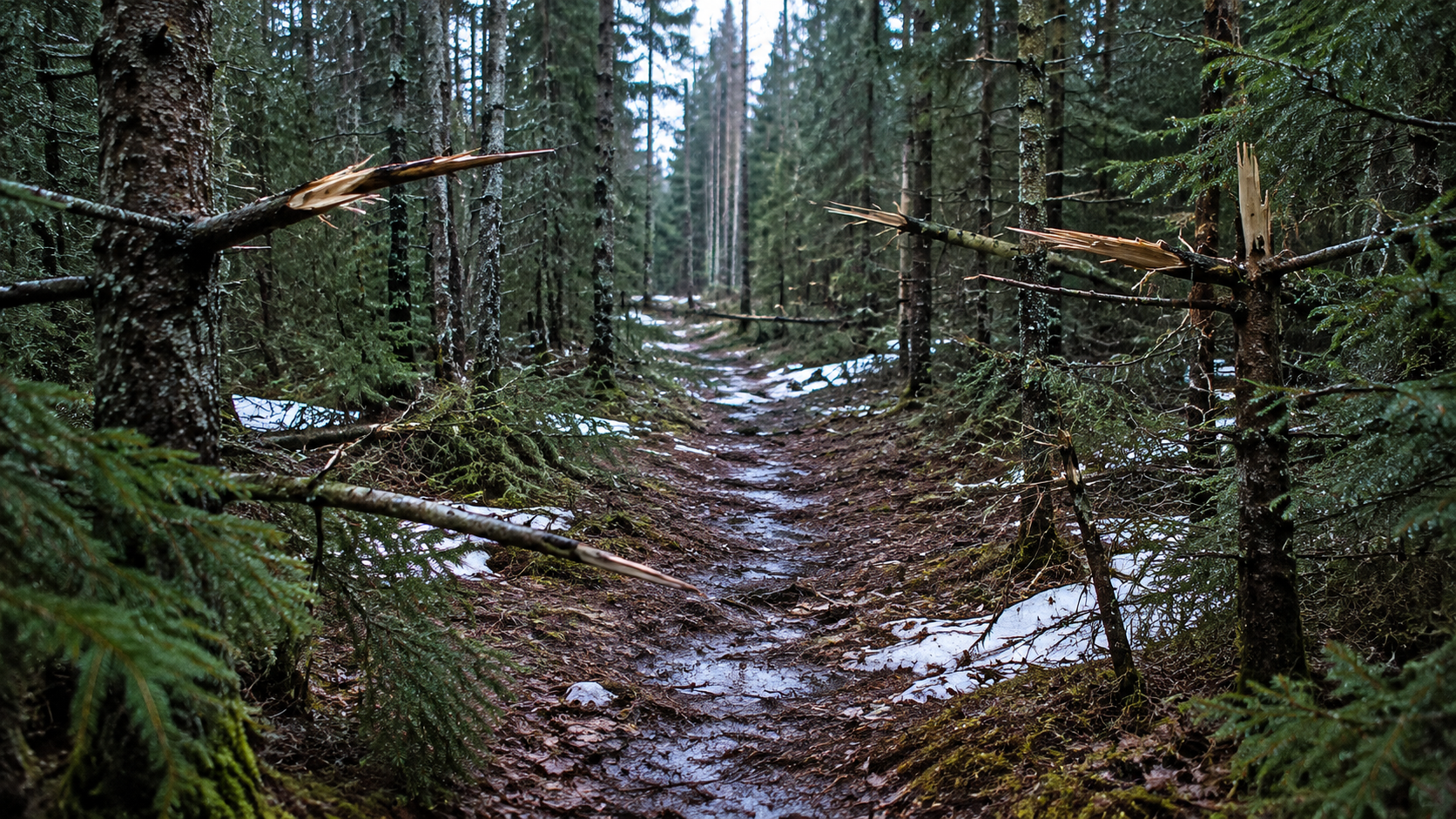
The branch breaks were found along the narrow approach to the cabin. They were not presented as a dramatic trail of destruction.
Several spruce and alder branches were snapped at about shoulder height. Some were bent downward before breaking. Others were cracked clean enough to suggest pressure rather than storm damage.
Winter can do this. Heavy snow loads bend branches until they fail. Wind pushes limbs against each other. Animals moving through a tight corridor can break brush without announcing anything unusual.
But the maintenance crew reportedly noticed the breaks because they formed a rough line toward the cabin. They were not all fresh in the same obvious way, yet enough retained pale exposed wood to suggest recent damage after the worst weather had passed.
If the window mark was the focal point, the branches supplied the approach. They made the cabin feel visited, not merely marked.
The Low Knocking Pattern
The knocking was heard after the window was documented, while the crew was still working around the site. It was described as low, wooden, and spaced in short groups.
Not loud enough to be theatrical. Not close enough to identify. It came from the timber beyond the cabin, stopped, then resumed from a slightly different direction.
Forests knock for ordinary reasons. Trunks settle. Frozen limbs crack as temperatures change. Woodpeckers drum. Tools echo strangely between trees. A person who has already found an unnerving mark may hear pattern where there is only coincidence.
Yet the reported rhythm is what kept being mentioned. It was not a random crack, according to the account, but a measured sequence: two or three low knocks, a pause, then an answering set farther off.
Bigfoot researchers often treat wood knocks as possible communication or territorial display. Skeptics treat them as one of the easiest sounds to misread in a living forest. Hollow Spruce sits directly in that uneasy middle.
Evidence Without a Creature
There was no sighting at Hollow Spruce. No figure at the tree line. No face in the window. No dramatic chase down the access path.
That restraint is part of the case’s appeal. The evidence is physical and circumstantial: a sap-smeared print, broken branches, and sound. None of it proves a Sasquatch visited the cabin. None of it even suggests that an unknown animal stood at the window.
But taken together, the details resist a tidy explanation. A prank explains the handprint, but less easily explains why it was placed high, outside, with resin rather than paint or mud. Weather explains branches, but less neatly when they appear along the access route. Forest noise explains knocking, but not necessarily why multiple workers remembered it as patterned.
The case asks a smaller question than believers sometimes want. Not “Did Bigfoot leave a handprint?” but “What set of ordinary causes accounts for all of this without leaving a loose end?”
The Prank Theory
The human explanation deserves serious attention. Remote cabins attract trespassers. Some people know exactly how to create a mystery with a few suggestive details.
A person could gather spruce pitch, smear a gloved hand on the window, and break branches while walking in. They could make knocks with a stick after the crew arrived, if they were close enough and willing to risk being seen.
But prank theories need motives and logistics. Hollow Spruce was not a tourist landmark. The first audience was a small maintenance crew, not a camera crew or public trail group. If the goal was attention, the setup was strangely private.
There is also the issue of effort. Carrying out a prank after winter shutdown means reaching the cabin when access was poor, choosing a side window, placing a mark at an awkward height, and leaving without claiming credit.
Possible is not the same as satisfying.
The Animal Possibility
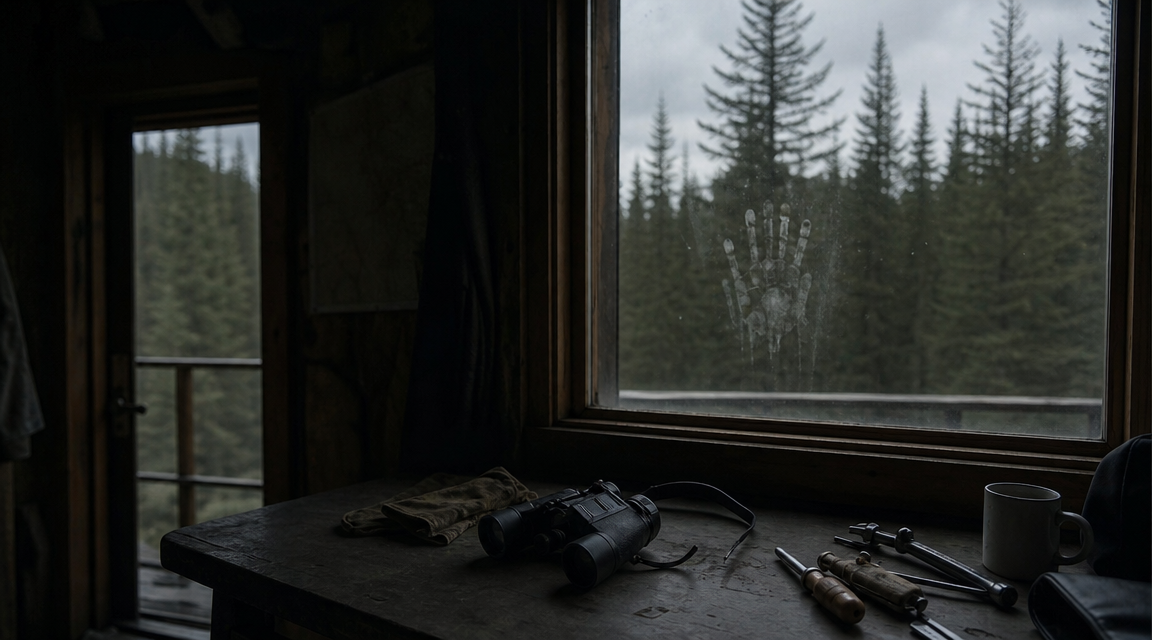
Black bears can investigate cabins. They climb, rub, paw windows, and leave oily or dirty marks behind. A bear moving near spruce pitch could plausibly smear resin onto glass.
This explanation should be considered before anything stranger. Bears are strong, curious, and capable of reaching places that seem too high for humans.
Still, the reported shape of the print did not sound like a typical paw smear to the witnesses. They emphasized a palm-like spread rather than claw marks or pad placement. The branch breaks, too, were said to sit along a path at heights that suggested upright passage, though that interpretation depends heavily on human perception.
A bear remains one of the best natural explanations. It just does not erase why the people who saw the mark thought first of a hand.
What Hollow Spruce Leaves Behind
The Hollow Spruce cabin story is not a smoking gun. It is not the kind of evidence that can stand alone in a scientific argument.
Its strength is atmosphere plus physicality. The cabin was closed. The print was outside. The sap was real enough to be noticed. The branches were there. The knocks were heard by people already trying to finish an ordinary maintenance job.
That does not make the conclusion extraordinary. It makes the uncertainty durable.
Many Bigfoot reports rely on a fleeting shape crossing a road or a sound heard once in darkness. Hollow Spruce offers something quieter: a surface touched, a route disturbed, and a forest that seemed to answer when workers began paying attention.
Maybe it was a bear. Maybe it was a person with too much patience. Maybe winter and resin and expectation collaborated to make a pattern from separate events.
Or maybe something large stood outside an empty ranger cabin after the snow began to leave, placed a sap-covered hand against the high glass, and looked in.
Reader Context
This Weird Witnessed story is an editorial reconstruction, written as eerie visual storytelling rather than a verified report. For more context, see Bigfoot and Sasquatch Stories Guide and How WeirdWitnessed Creates Reconstructed Horror Stories.