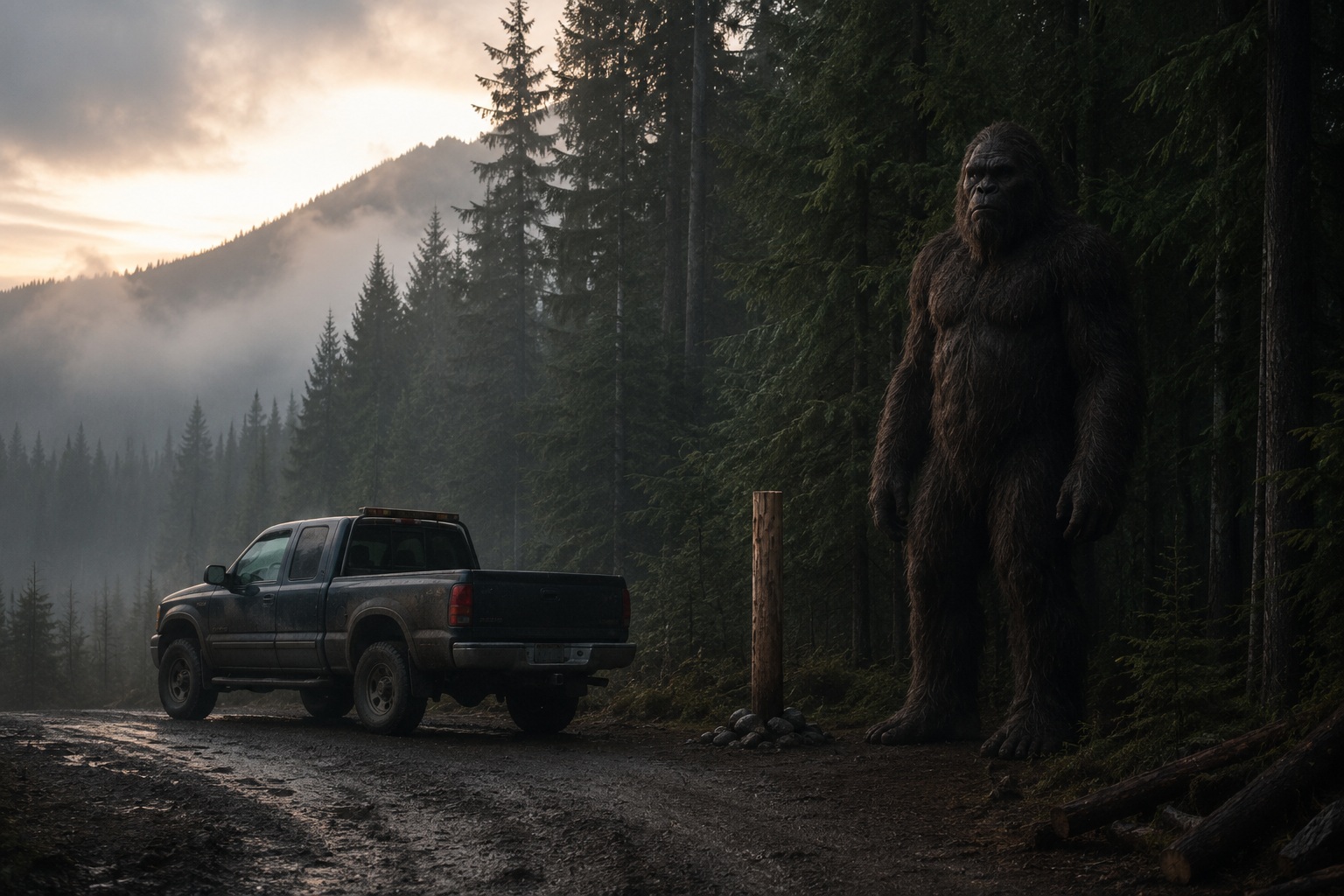
A man pulled his truck onto a quiet logging road just before sunrise. The rain had stopped an hour earlier, leaving the forest dripping and still. He stepped out to stretch his legs and noticed broken branches ahead, higher than he could comfortably reach.
At first he assumed a storm had snapped them. Then something moved between two cedar trees. It was not running. It was simply walking. Slow. Heavy. Calm. What stayed with him for years was not the shape itself. It was how completely wrong the size felt. The shoulders seemed as wide as the front of his truck. Its head rose well above a roadside marker that stood taller than any person. Every step covered ground that would have taken him two or three strides. When it disappeared behind a fallen log, the log looked strangely small.
He later admitted he could not describe the face very well. The color was uncertain. The details faded every time he tried to remember them. But the size never changed. Stories like this appear again and again wherever people talk about Bigfoot. Faces, hair color, and distance often vary, yet one detail almost always remains the same. Witnesses spend far more time talking about scale than appearance. That raises an interesting question: why does size become the detail people remember most?
Scale is usually the first thing that shocks people Many frightening experiences happen too quickly for someone to notice small details. If you suddenly see something unexpected in the woods, your brain does not begin by studying its nose or eyes. Instead, it asks much simpler questions.
The Creepy Example People Recognize
How big is it? How far away is it? Can it reach me? Those questions appear almost immediately because they matter for survival.
That may explain why so many witness stories focus on comparisons instead of measurements. Someone says it stood taller than a pickup truck. Someone else says its shoulders reached the lower branches of a pine tree. Another person remembers that a deer looked unusually small beside it.
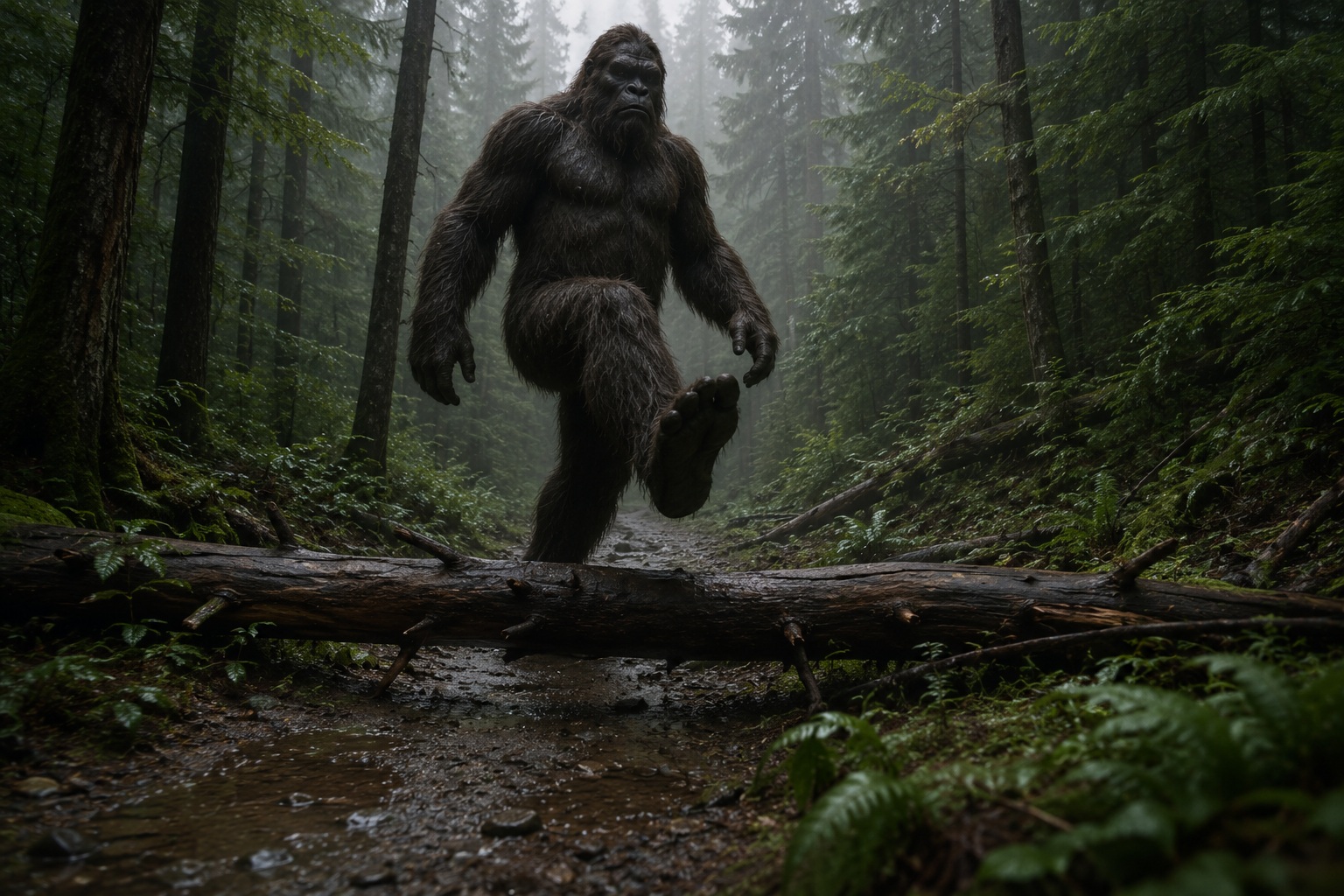
These comparisons are easier to remember than exact numbers. Very few people calmly estimate height during a frightening surprise. Instead, they remember ordinary objects they already understand. A mailbox.
A fence. A parked SUV. A trail sign. Those familiar objects become the ruler their memory uses afterward.
Why This Pattern Feels Personal
Ordinary objects make huge size easier to understand A description like "about nine feet tall" sounds impressive. But many people struggle to picture what nine feet really means. A witness saying, "Its head was higher than the basketball hoop beside the driveway," creates a much stronger image.
That is why stories often include everyday landmarks. A road sign. A cabin roof. A picnic table.
A bridge railing. These objects help listeners imagine the scene immediately. They also help the witness organize the memory. People naturally compare unfamiliar things with familiar ones.
That does not only happen in strange stories. Someone describing a large wave says it was taller than a house. Someone describing a fish says it was as long as a canoe. Bigfoot stories use the same kind of comparison because size is easier to picture through something already known.
The Detail That Makes People Stop
The way something moves can make it seem even larger Witnesses rarely describe only height. They also describe movement. Many stories mention long, steady strides.
Others talk about a figure stepping over logs instead of climbing them. Some say it crossed a creek in only a few steps. Movement changes how people judge size. A person taking enormous steps appears larger even before anyone estimates height.
Heavy movement also affects perception. Witnesses often describe deep footfalls. Slow swinging arms. A broad upper body.
Little visible effort while moving through rough ground. Whether someone believes these stories or not, the descriptions tend to repeat the same pattern. The figure never seems rushed. Instead, it appears comfortable in terrain that feels difficult for everyone else.
Ordinary Explanations People Check First
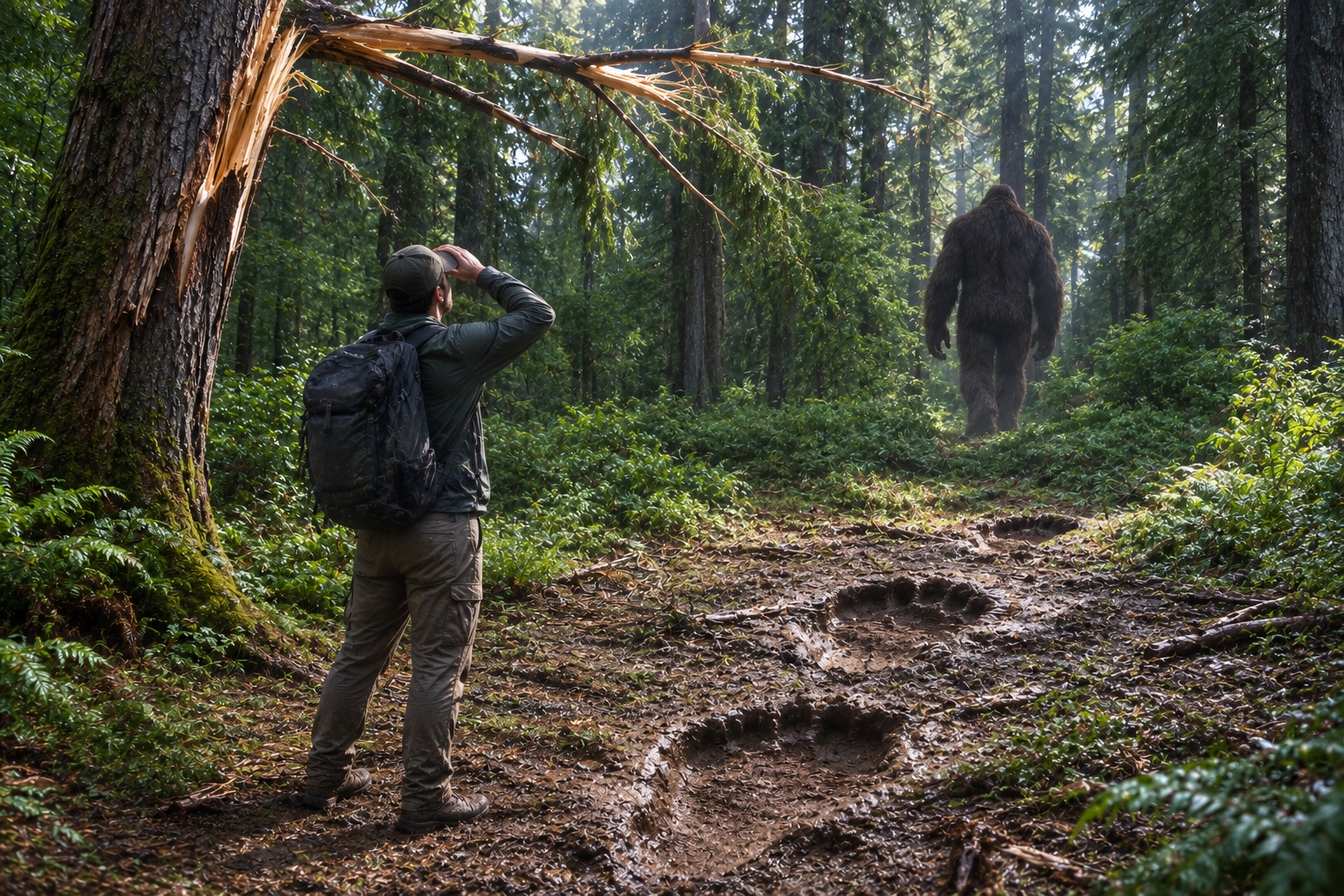
That contrast makes the reported size seem even greater. People often check the surroundings before they think about the figure One interesting pattern appears after many reported encounters. People do not immediately begin looking for hair or footprints.
Instead, they start checking the objects that helped them judge size. They walk over to the tree. They measure the branch. They stand beside the trail marker.
They compare themselves with the fallen log. Sometimes they return later during daylight just to see whether they remembered the scene correctly. That reaction makes sense. It is easier to compare yourself with a tree than to compare yourself with a memory.
Even people who later question what they saw often say they wanted to know whether the scale really felt as impossible as it did during the moment itself. The forest suddenly becomes full of measuring sticks. The witness is not trying to recreate every detail.
They are trying to answer one question. Could anything that large really have fit where I thought I saw it? Why scale makes these stories so unsettling Many scary stories depend on hidden things.
Why The Pattern Is Hard To Dismiss
A face in a window. A voice from another room. A shadow standing in a doorway. Bigfoot stories usually work differently.
The figure is often reported in open view. The fear comes from its relationship with everything around it. A large tree suddenly seems smaller. A fence no longer feels tall.
A truck no longer feels protective. Scale quietly changes the entire environment. That may be why these stories stay in people's minds. The witness does not only remember seeing something unusual.
They remember the world around it feeling wrong. Objects they trusted as normal references suddenly failed. A stump looked tiny. A hillside looked shorter.
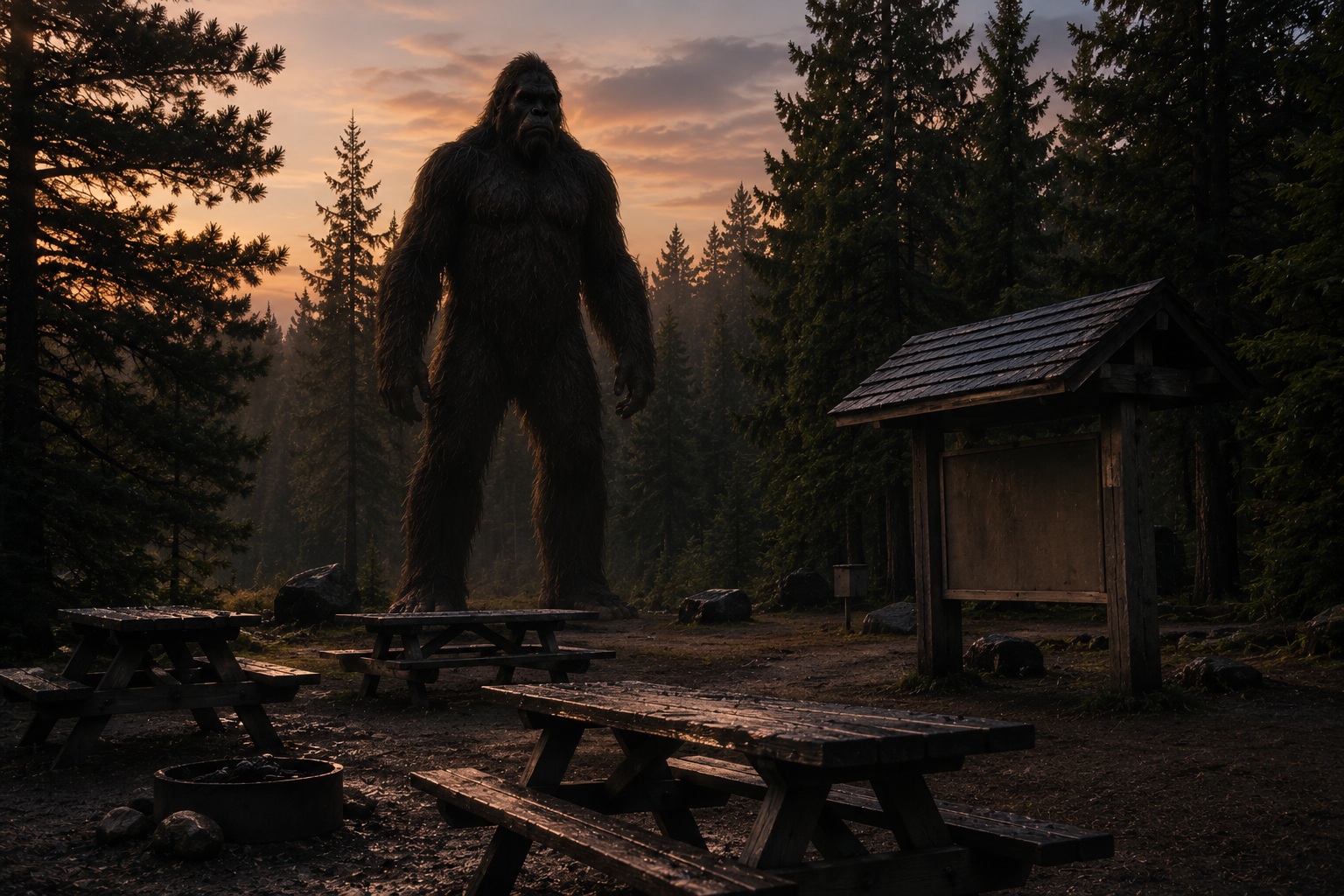
Why People Avoided That Spot Later
A person who had walked those trails for years suddenly felt much smaller than expected. That emotional shift can remain long after smaller visual details disappear. People may forget whether the hair looked dark brown or black. They may forget exactly where the arms were.
But they still remember standing beneath the same tree later and realizing just how high those broken branches really were. Other strange details often appear beside reports of enormous size Scale is usually the headline detail, but it is rarely the only one. Witnesses sometimes mention unusual silence.
Birds stop calling. Nearby animals seem unusually alert. The woods feel strangely empty. Others describe an odd feeling that the figure appeared and disappeared much faster than expected for something so large.
Some remember a strong smell. Others remember hearing branches snap long before seeing anything. Not every story contains the same details. The repeating pattern is that the enormous size becomes the center around which every other memory forms.
Why This Pattern Keeps Coming Back
Even years later, conversations often begin with the same sentence. "I couldn't believe how big it was." Only afterward do people mention the face, the hair, the sound, or the direction it walked. That order says something interesting about how people process frightening surprises.
The brain remembers what felt most important first. For many reported Bigfoot encounters, that first impression is scale. Whether someone views these stories as folklore, mistaken identity, or something harder to explain, the repeated focus on size has become one of the most recognizable parts of the tradition.
It is also one of the reasons these stories remain so easy to imagine. Almost everyone knows how tall a pickup truck is. Almost everyone knows the height of a trail sign or the roof of a small cabin. When a witness says something stood comfortably above those familiar markers, listeners do not need exact measurements.
They picture the scene immediately. That shared mental picture may be the strongest reason scale appears again and again. It transforms an ordinary forest into a place where familiar objects suddenly feel too small. And for many readers, that simple idea is far more unsettling than any detailed description of a face.