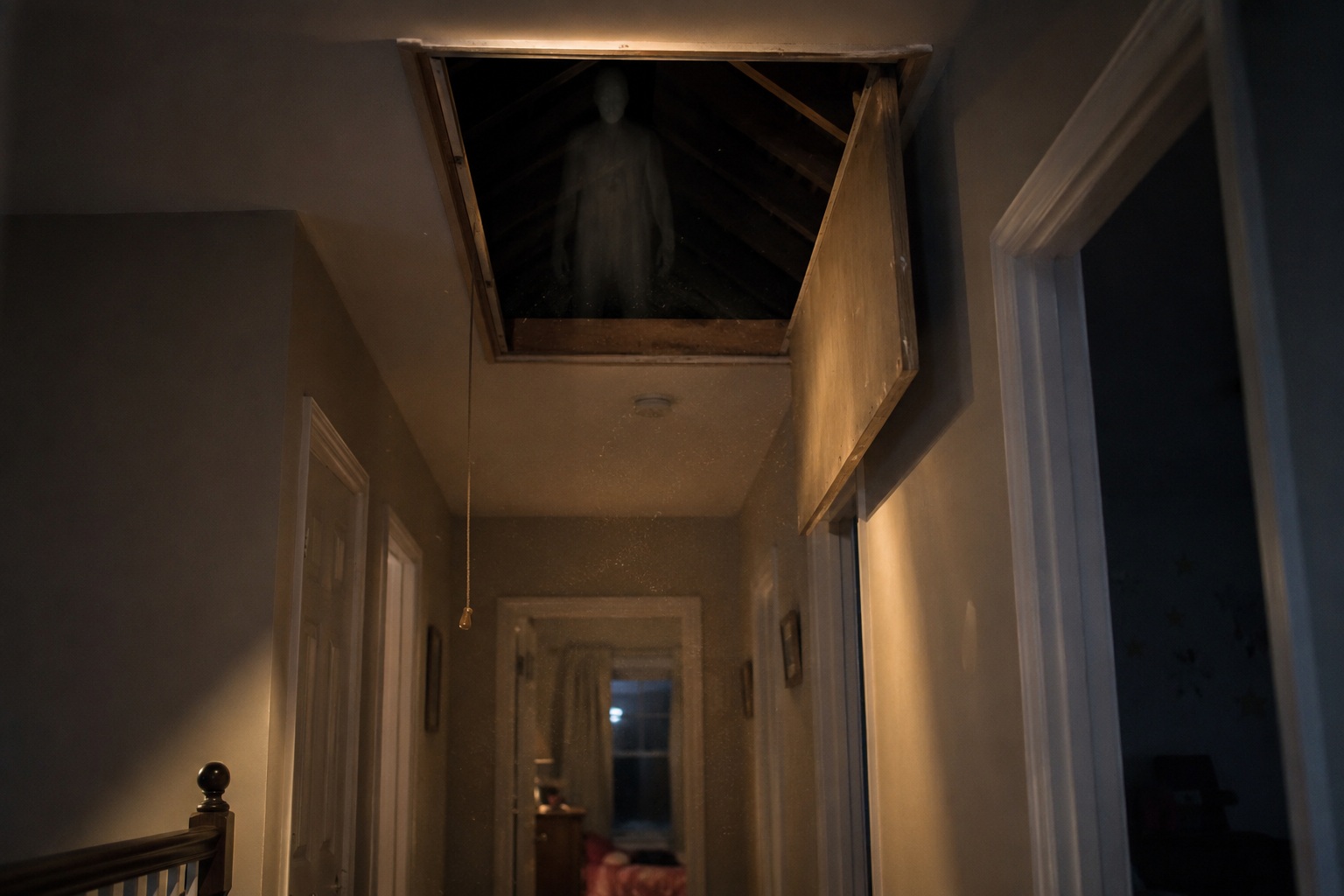
The sound came just after midnight. Not a loud crash. Just the soft scrape of wood sliding across painted drywall. A man lying awake in an old farmhouse looked toward the ceiling outside his bedroom. The square attic hatch sat at the end of the hallway where it always had. Except tonight it wasn't sitting flat. One corner hung lower than the others, leaving a narrow black gap.
He told himself it had probably never been fully closed. Then the hatch shifted again. It didn't fall. It didn't swing open. It simply lifted a few inches, paused as if someone above was holding it, then settled back into place with a dull tap.
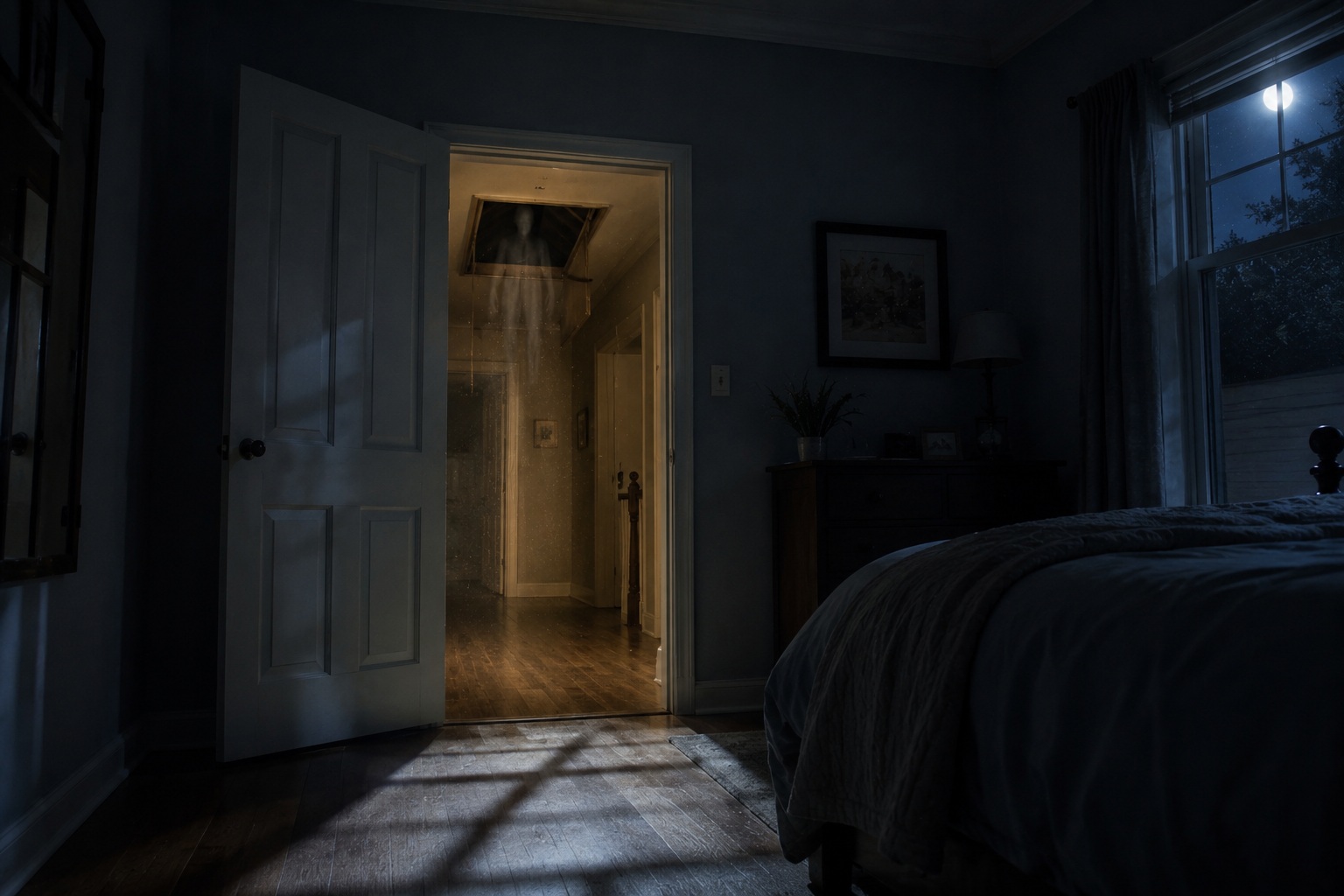
He walked into the hallway expecting to find a draft or loose latch. Instead he found something stranger. The hatch was completely closed again. He stood beneath it for several seconds before noticing another detail. Fine gray insulation dust drifted down through the hallway light, even though nothing else moved. He climbed into the attic the next morning. No animals. No broken boards. No signs that anyone had been there. Yet he couldn't shake the feeling that whatever had lifted the hatch had been waiting directly above him.
Stories like this appear again and again in strange house discussions, witness statements, and local ghost tales. Whether someone believes they point toward something paranormal or not, attic hatches seem to appear in an unusually large number of haunting stories. Why does such an ordinary part of a house become one of the places people fear the most?
The First Time It Happened
Why attic hatches feel different from ordinary doors Most rooms in a house belong to everyday life. People walk through bedrooms, kitchens, and living rooms every day. They know what sounds those places normally make. Attics are different.
Many people visit them only once or twice a year. They are dark, unfinished, filled with insulation, old boxes, exposed beams, and forgotten belongings. Even during daylight they often feel separated from the rest of the home. That distance changes how people react to sounds coming from above.
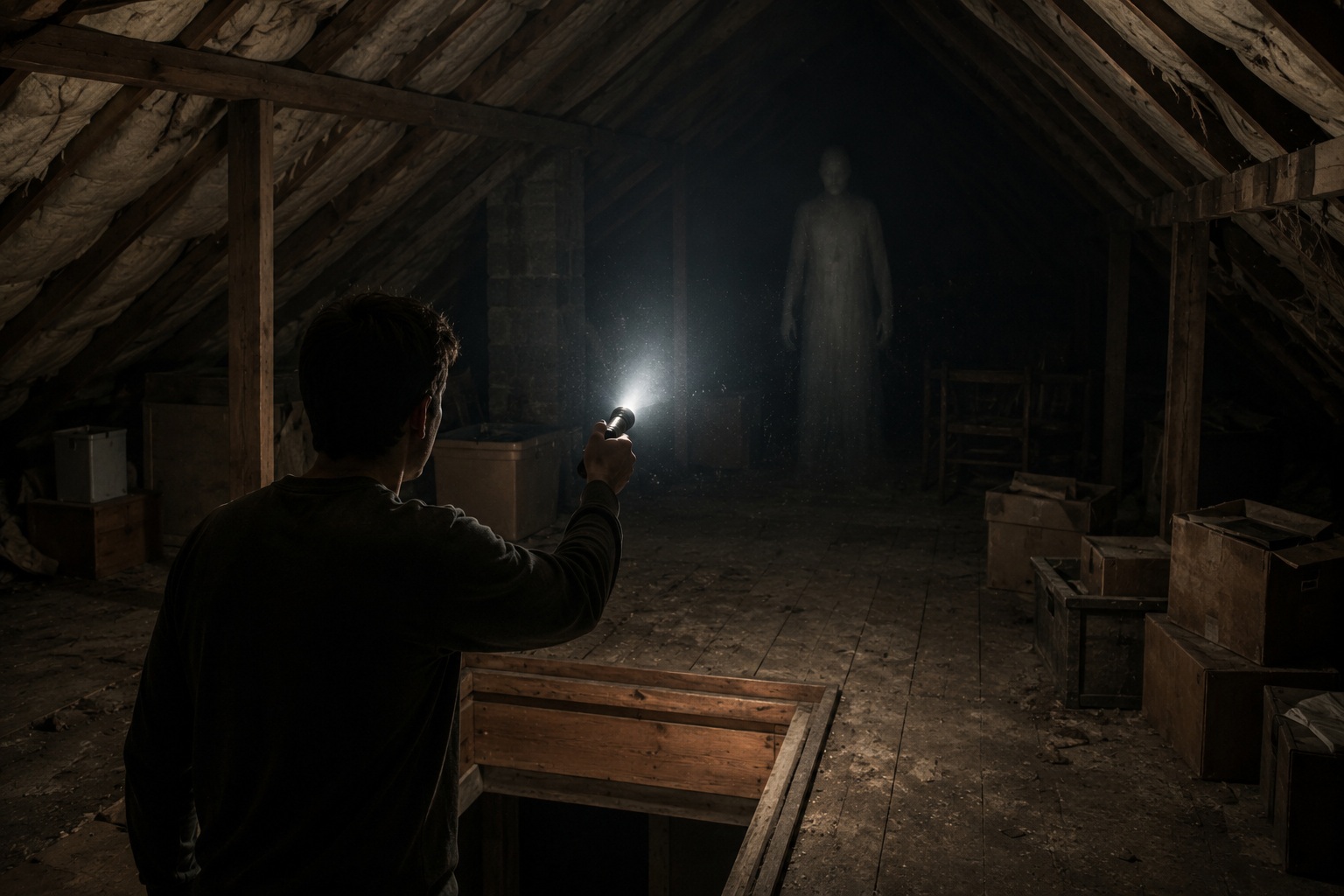
A creaking ceiling can feel much more personal than a noise outside because it seems to happen inside the same building while remaining completely hidden. Unlike a basement door, an attic hatch usually sits directly overhead. People naturally imagine something standing above it. That simple mental picture appears in haunting stories from many different places. The fear isn't just that something is in the attic. It's the idea that something is waiting just above a thin wooden panel.
What witnesses usually describe One interesting pattern is that people rarely report an attic hatch flying open dramatically. Instead they describe smaller movements. The hatch may appear slightly crooked after everyone has gone to bed.
Why The Place Felt Wrong
One corner may hang lower than the others. Someone hears a light scraping sound followed by silence. The hatch seems to lift a little before settling back into place. Sometimes people insist they closed it earlier that day, only to find it shifted hours later.
The movement itself is often less frightening than what follows. Many witnesses describe standing beneath the opening without hearing anything above them. Others say they expected to hear footsteps, an animal, or someone moving around, but instead found complete silence. That silence becomes part of the story.
It leaves the imagination to fill the empty space above. Some stories add one unsettling detail. Instead of seeing a person looking down, someone reports a pale transparent figure standing several feet behind the opening inside the attic. The figure has no face. It remains perfectly still before fading into darkness.
That kind of image appears much more often than dramatic ghost attacks. It is simple, quiet, and difficult to forget. What people usually check first Most people don't immediately assume something supernatural happened.
The Detail Nobody Could Explain
They begin with practical explanations. Older houses expand and shrink as temperatures change. Wood moves. Loose attic panels can shift slightly if they were not seated properly.
Strong drafts sometimes lift lightweight access covers. Small animals can also create surprising sounds. Raccoons, squirrels, birds, mice, and even larger insects may produce scratching, running, or soft impacts that seem much bigger than they really are. Many witness stories include someone climbing into the attic the next morning.
They check insulation. They search for nests. They look for footprints in the dust. Sometimes they discover a perfectly ordinary cause.
Sometimes they find nothing unusual. Finding nothing doesn't automatically mean something paranormal happened. But it often explains why these stories continue to spread. People remember the mystery more than the inspection.
What They Checked Afterward
The unanswered question stays with them far longer than a simple explanation would. Why the movement feels so frightening Human brains constantly pay attention to movement. A picture hanging slightly crooked catches the eye.
A door that wasn't open yesterday immediately feels important. An attic hatch combines movement with uncertainty. It suggests access. Unlike a wall, it is designed to open.
That means every tiny change naturally raises one uncomfortable thought. Did something come through? Stories often build on that single question rather than showing anything dramatic. Someone notices dust drifting down.
Someone hears one quiet knock from above. Someone finds the ladder beneath the opening even though nobody remembers moving it. The details stay ordinary enough to feel believable inside the story while still leaving room for fear. Many haunting stories also happen late at night.
The house is quiet. Background sounds disappear. Even tiny noises become easier to notice. Without everyday distractions, people begin listening for patterns.
The Moment It Became Harder To Ignore
That attention makes each scrape or tap feel much more meaningful. Whether the source is ordinary or unexplained, the emotional experience becomes very real. Why attic spaces appear so often in ghost stories Attics already carry powerful ideas before anything strange happens.
Families store old photographs there. Childhood toys disappear into dusty boxes. Furniture from previous generations waits beneath sheets. The space feels connected to memory.
Ghost stories often grow wherever memory and empty spaces overlap. Unlike a garage or shed, an attic sits directly above everyday life. People sleep beneath it every night. That physical position creates natural tension.
The unknown is literally overhead. Writers, filmmakers, and storytellers have used this idea for decades because audiences immediately understand it. They don't need long explanations. Everyone knows what it feels like to stare at an attic hatch while wondering if they should climb up.
Why People Avoided That Spot Later
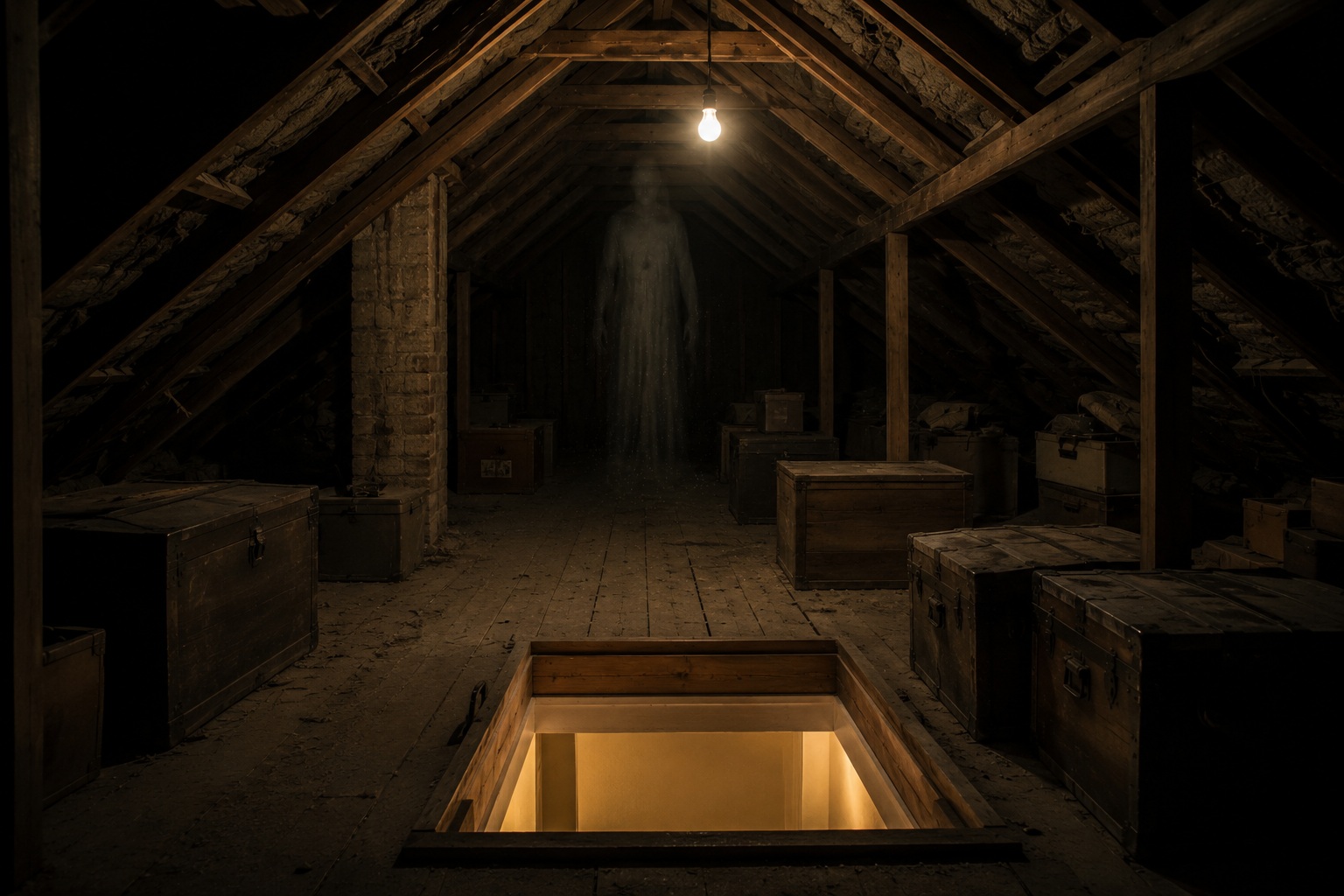
Many stories never reveal what was inside. That uncertainty often makes them scarier than stories with obvious monsters. A faceless transparent figure standing motionless between old rafters can remain in someone's memory far longer than a detailed creature. The missing information becomes part of the fear.
Readers imagine the rest themselves. Other haunting patterns connected to attic hatch stories People who read attic hatch stories often notice similar themes appearing elsewhere. Many also involve ordinary parts of a home behaving in unexpected ways.
People wonder why footsteps seem to come from empty upstairs rooms. Others ask why knocking inside walls sometimes appears to answer back. Some describe hearing their own name called from an empty hallway while nobody else is awake. Others tell stories about basement doors standing open after being closed earlier that evening.
The pattern connecting these stories isn't complicated. Each begins with something familiar. A hallway. A staircase.
Why The Story Still Gets Shared
A hatch. A door. A mirror. Nothing looks impossible at first.
Only one small detail feels wrong. That single contradiction allows fear to grow naturally. Readers imagine themselves in the same house, asking the same questions, checking the same places. Perhaps that's why attic hatch stories continue to spread.
Most people have looked up at one without thinking much about it. After reading enough haunting stories, however, the next quiet scrape from the ceiling can suddenly feel different. Even if the explanation turns out to be loose wood or shifting air, the image has already taken hold.
Somewhere above, hidden behind a square wooden panel, there is a dark space no one can see from below. For many people, that is enough to make an ordinary attic hatch feel like one of the most unsettling places in any house.