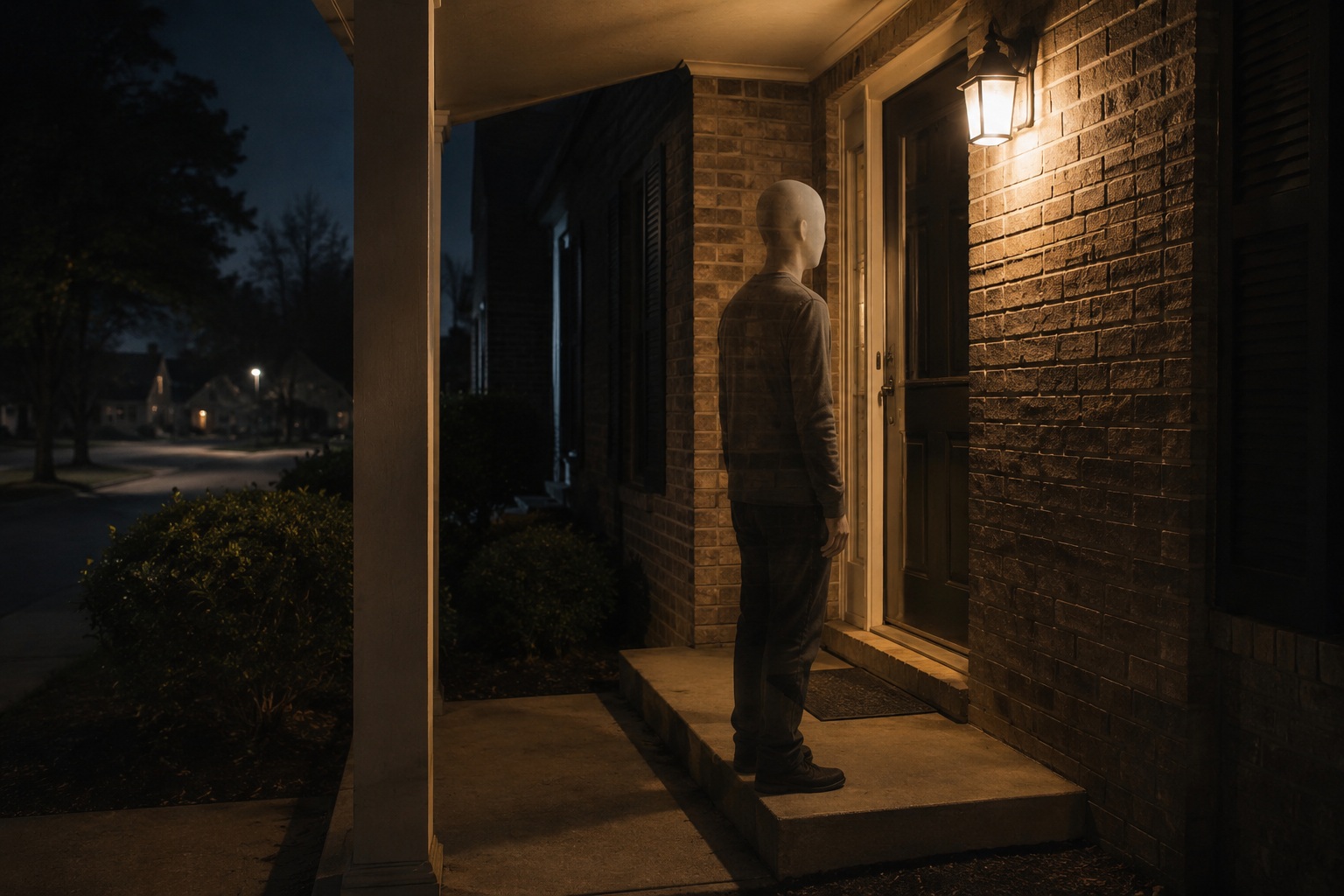
A man woke just after 2:00 a.m. because his phone buzzed with a motion alert from the front porch. He expected to see a raccoon, a stray cat, or maybe a package blowing across the steps in the wind. Instead, the notification preview showed what looked like someone standing only a few feet from the front door.
The figure wasn’t hiding. It wasn’t trying to get inside. It simply stood there, facing the house. When he opened the image, the porch light revealed enough to make out a head and shoulders. But the closer he looked, the stranger it became. The face had no features. No eyes. No mouth. Just a pale blur where a person’s face should have been. One shoulder seemed to fade into the brick wall beside the door instead of standing in front of it.
He rushed to the window. The porch was empty. The alert had arrived only seconds earlier, yet there was nobody walking away, no car leaving, no sound except insects and distant traffic. The next morning he checked for footprints, looked for branches moving in the wind, and wondered whether rain, insects, or reflections had created something that only looked human.
Stories like this appear again and again wherever doorbell cameras have become common. The details change, but the pattern stays surprisingly similar. People describe a silent face near the front door, often late at night, with one small detail that doesn’t seem quite right. So why do these reports happen so often, and why do they stay in people’s minds long after the image is gone?
The First Time It Happened
Front Doors Feel Different After Dark A front door is one of the few places where almost everyone expects another person to appear. Friends arrive there. Delivery drivers stop there.
Neighbors knock there. When something shaped like a person appears outside that space, our brains immediately assume someone has come to visit. That expectation makes even a small visual mistake feel important. A coat hanging from a railing might look like shoulders for a split second.
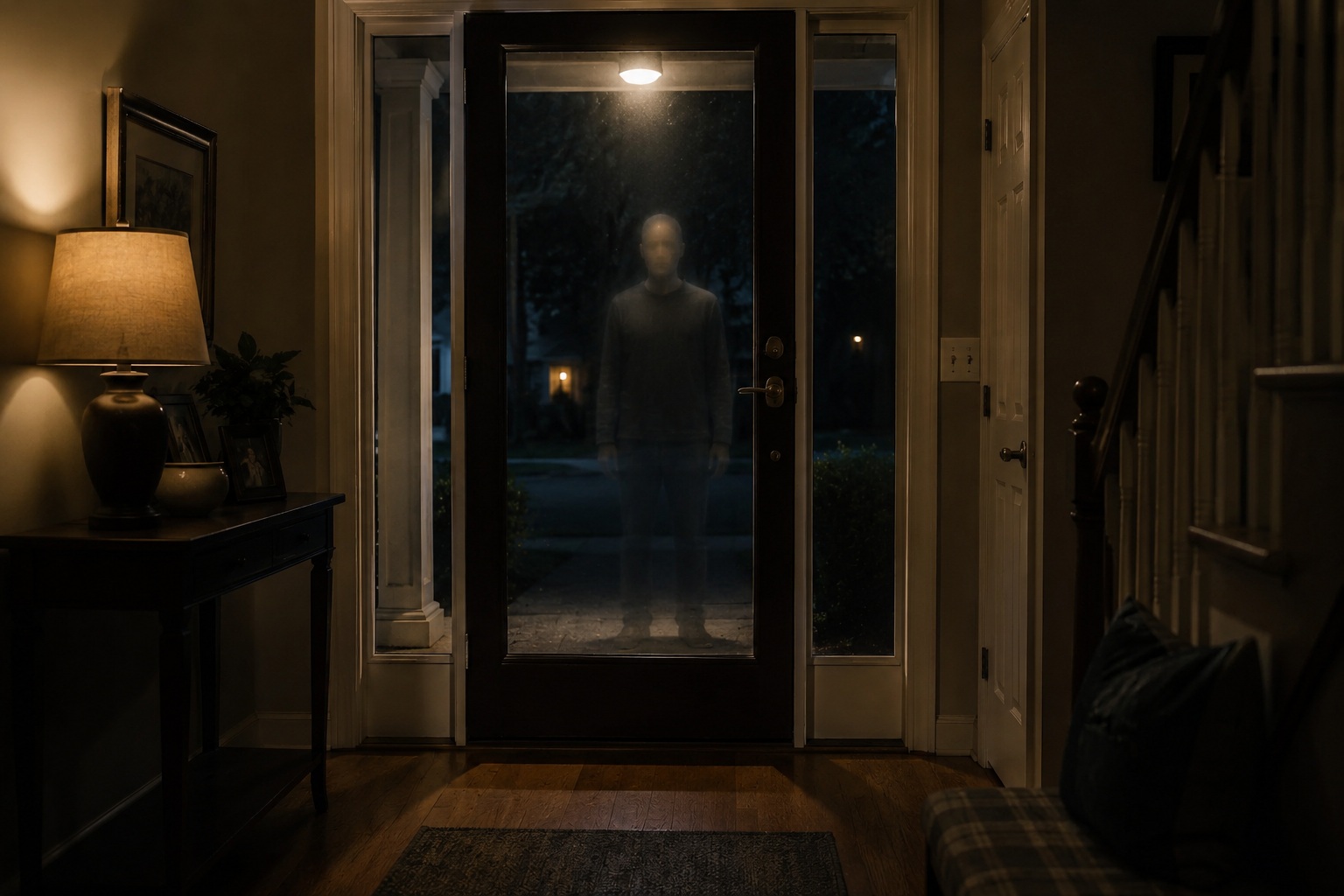
A reflection on wet glass can seem like pale skin. But in many reported ghost stories, witnesses say the shape is much clearer than that. Instead of mistaking an object for a person, they describe seeing what already looks like a person whose face seems unfinished.
Sometimes the figure is slightly transparent. Sometimes the head appears too smooth, almost like light passing through fog. Other times the body stands normally while the face refuses to come into focus no matter how long someone stares. Those details are what people remember.
Not simply “someone was outside.” Instead, “someone was outside, but they didn’t look completely human.”
Why The Place Felt Wrong
Details People Mention Again And Again Many ghost stories share surprisingly ordinary settings.
A quiet porch. A small front path. A driveway after rain. A single porch light shining onto empty steps.
Witnesses often say nothing dramatic happened. The figure didn’t run. It didn’t wave. It didn’t pound on the door.
Instead, it simply waited. That stillness is part of what makes these stories unsettling. People expect strangers to move. Someone delivering a package walks away.
Someone knocking shifts their weight. Someone looking for an address glances around. The figures described in paranormal stories often do none of those things. They remain perfectly still.
The Detail Nobody Could Explain
Another detail appears often. The face itself seems wrong. Not frightening because it is damaged or angry, but because it lacks normal human features. Some witnesses describe smooth skin where eyes should be.
Others say the face appears blurred while everything else in the picture remains sharp. A few describe the head turning toward the camera without any change in expression because there is no expression to see. Whether someone believes these stories or not, the same small details return often enough that readers immediately recognize the pattern.
Doorbell Cameras Become Part Of These Stories Modern homes constantly watch the space outside the front door. That means people notice brief moments they would never have seen years ago. A visitor who pauses for only three seconds.
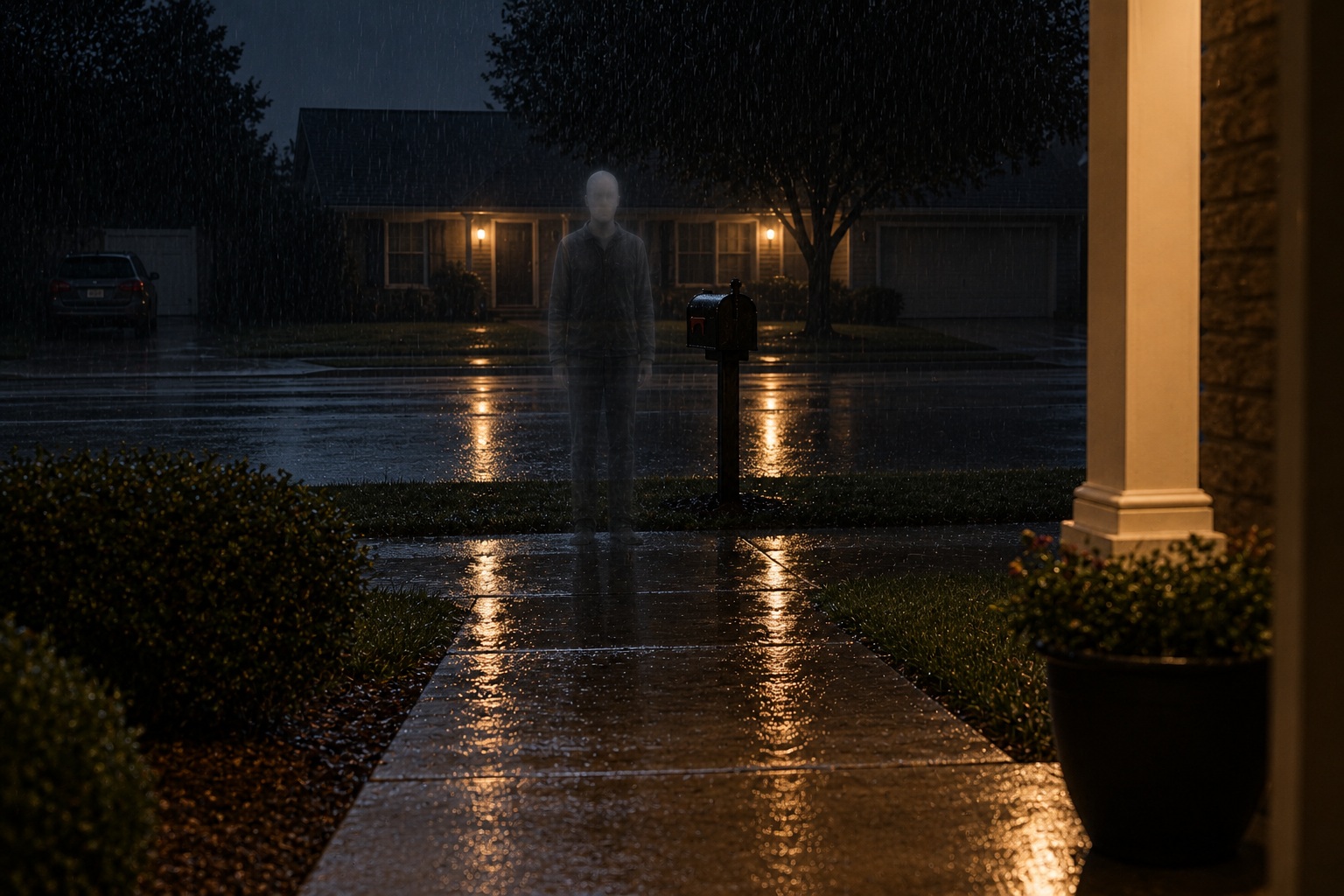
Fog drifting across the porch. Rain crossing the lens. An insect flying close enough to become a bright blur. Most of those alerts have ordinary explanations.
What They Checked Afterward
But they also encourage people to study still images far longer than they normally would. The longer someone looks, the more they compare tiny details. Was that a face? Why does one side of the head disappear into the darkness?
Why does the porch light shine through part of the shoulder? In ghost stories, witnesses often say they first assumed there had to be a normal answer. They checked whether someone had actually knocked. They looked outside immediately.
They reviewed nearby images. They searched for reflections in nearby windows. They tried to recreate the same lighting the following night. Sometimes those checks make the picture seem much less mysterious.
Other times, people walk away still feeling that something looked wrong, even if they cannot explain exactly why. That uncertainty is what keeps these stories alive.
The Moment It Became Harder To Ignore
Why Faceless Figures Are So Unsettling
Humans naturally look for faces.
We recognize them faster than almost anything else. That ability helps us notice friends, family, and strangers in crowded places. But it also means our attention locks onto anything that almost looks like a face. A shape with two dark spots and a pale outline immediately grabs attention.
When those expected features suddenly disappear, the result feels deeply uncomfortable. That is why faceless figures appear so often in ghost stories. The missing details become the frightening part. Readers can easily imagine standing at their own front door, expecting to see another person, only to find a face that refuses to become clearer.
Unlike monsters with claws or dramatic costumes, a faceless person feels close to everyday life. They stand where ordinary visitors stand. They wear ordinary clothing. Only one detail refuses to fit.
That simple contradiction often creates more fear than something obviously impossible.
Why People Avoided That Spot Later
What People Usually Check Before Sharing The Story
Most people do not immediately decide they have witnessed something paranormal. Instead, they begin eliminating ordinary possibilities.
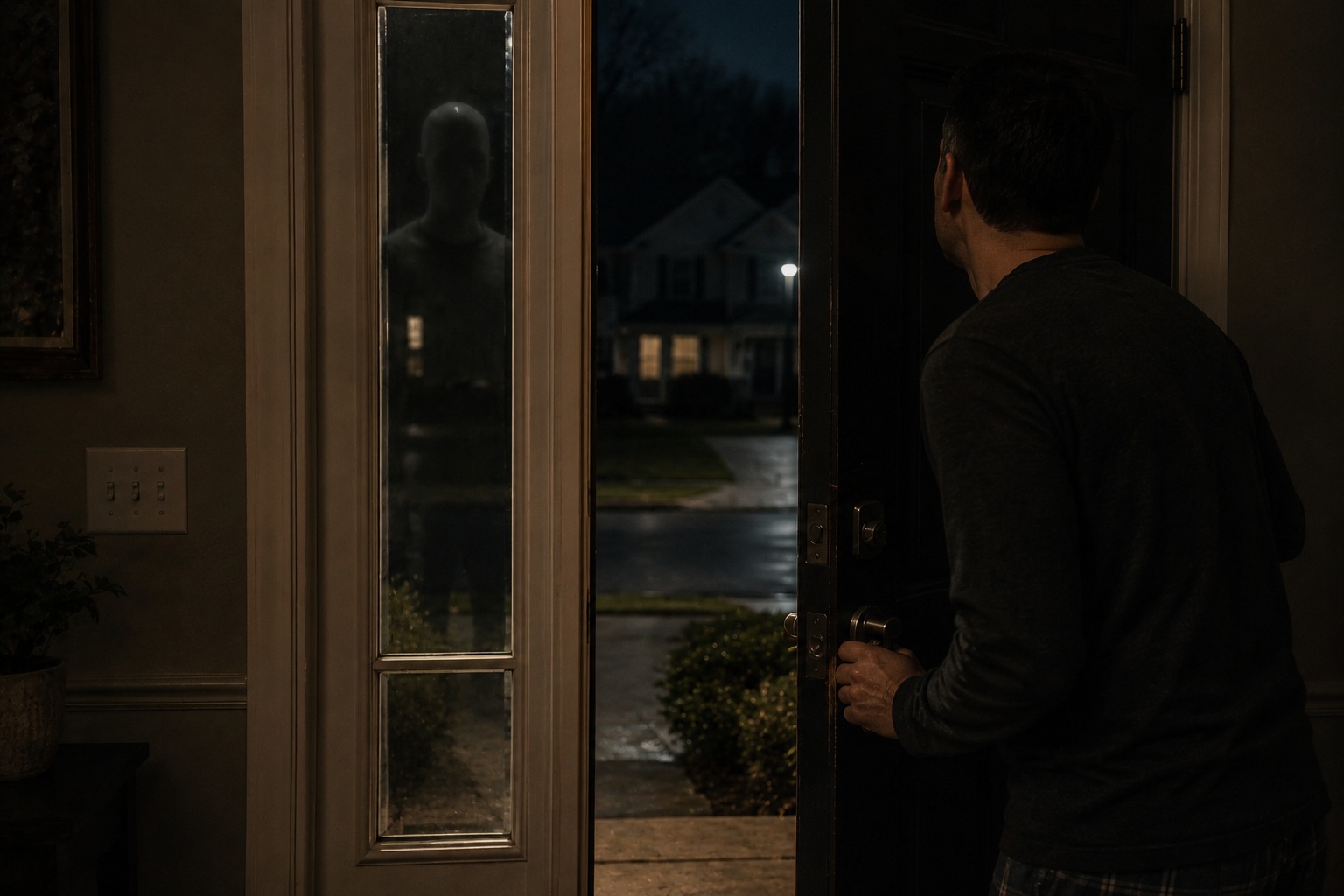
They step outside. They look for neighbors. They examine trees that might cast unusual shadows. They clean the camera lens.
They look for insects. They compare images taken on different nights. If another family member was awake, they ask whether anyone heard footsteps or knocking. Some discover that changing weather created unusual reflections.
Others realize moisture on the lens softened a face until it appeared featureless. But many stories continue because none of those checks completely satisfy the witness. The image may only last a second. The porch may truly be empty.
The lighting may refuse to recreate the same effect. That does not automatically make the story paranormal. It simply leaves a question that people continue thinking about. And unanswered questions often become the stories repeated around dinner tables, online forums, and late-night conversations.
Why The Story Still Gets Shared
These Stories Keep Returning Reports of strange faces near front doors existed long before smart doorbells. Older stories described someone standing outside during a storm. Others mentioned a pale visitor seen through frosted glass.
Some spoke of a silent person waiting at the end of a path who disappeared before anyone opened the door. Today’s technology has changed where these stories appear, but not their basic shape. The front door remains a boundary between the familiar home and the dark world outside.
A silent figure waiting there feels like something that should not happen. Whether someone believes these stories come from unusual lighting, mistaken perception, coincidence, or something harder to explain, they continue to spread because they combine ordinary places with one impossible detail. Not a monster.
Not a screaming ghost. Just someone standing quietly outside the house with a face that never quite becomes a face. That image is simple enough to imagine, ordinary enough to feel possible, and strange enough to stay with people long after the porch light turns off.