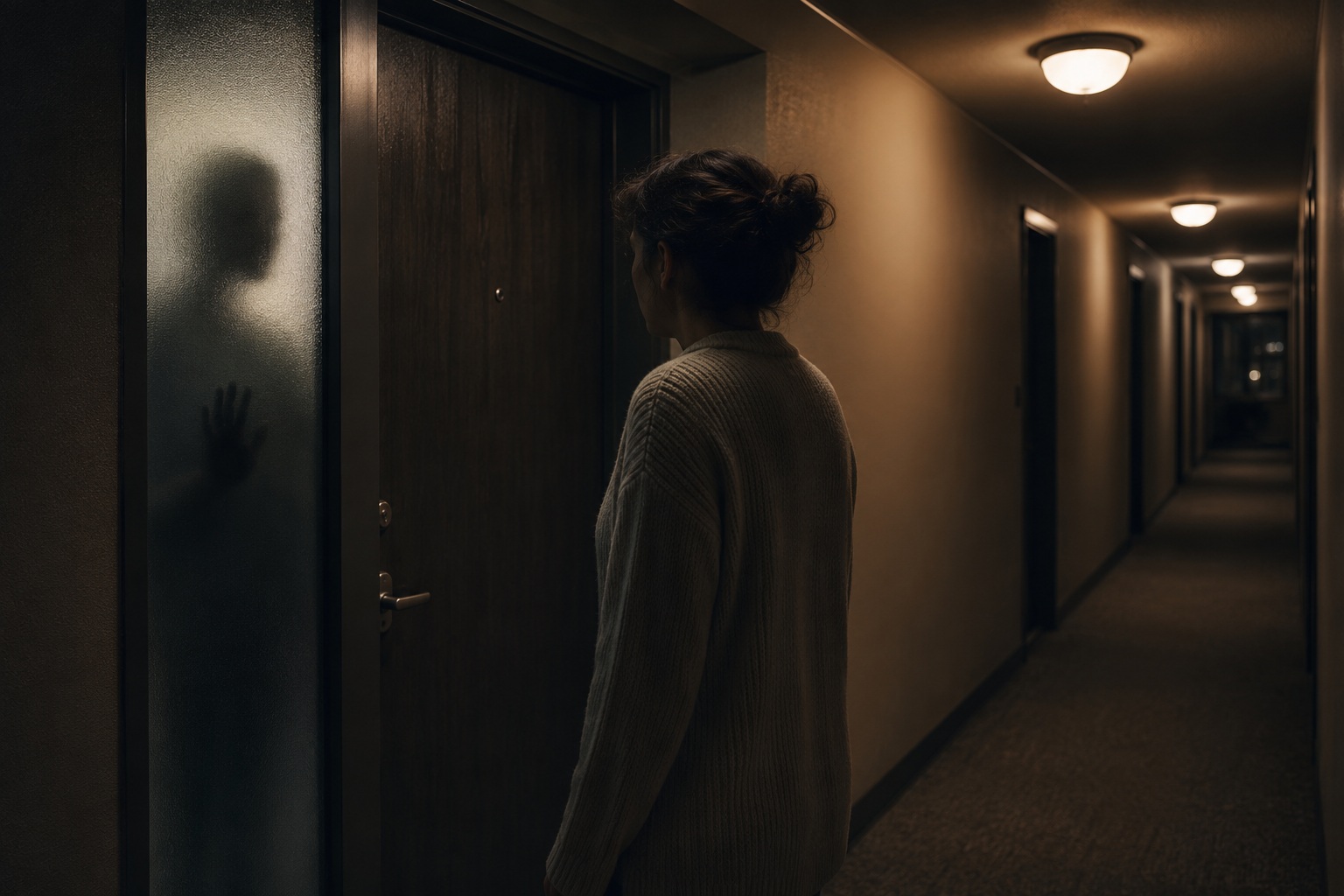
A woman arrived at her apartment long after midnight, exhausted from work and ready to sleep. The hallway lights buzzed softly as she unlocked her door. Before stepping inside, she glanced toward the frosted glass panel beside the entrance.
Someone was standing on the other side. The shape did not move. It looked like a person facing her from inside the apartment. Shoulders. Head. Arms hanging close to the body. She froze with her key still in the lock. She whispered, "Who's there?"
Nothing answered. Her first thought was that a family member had come home early. Then she remembered she lived alone. She slowly opened the door. The room beyond was empty. Every light was off. No footsteps. No sound. She switched on the hallway lamp and looked back toward the frosted glass.
The figure was still there. Only then did she realize the impossible part. The glass was built into the wall beside the doorway. There was no space behind it for anyone to stand. Stories like this appear again and again in ghost discussions, old houses, offices, apartment buildings, hospitals, and even public restrooms. People describe seeing someone behind frosted glass, only to discover there was nowhere for a person to be. Why does this strange image show up so often, and why does it stay with witnesses for years afterward?
The First Time It Happened
Why frosted glass creates such an unsettling mystery Frosted glass hides details while keeping the shape of a person easy to recognize. Your eyes cannot see a face or clothing clearly. Instead, they notice the outline of a head, shoulders, and body. That is just enough information for your brain to say, "Someone is there."
Normally, that is useful. Frosted glass is designed to provide privacy while letting light pass through. But paranormal stories begin when something about the shape feels wrong. Witnesses often describe the figure as unusually still. Others say it seemed slightly taller than expected.
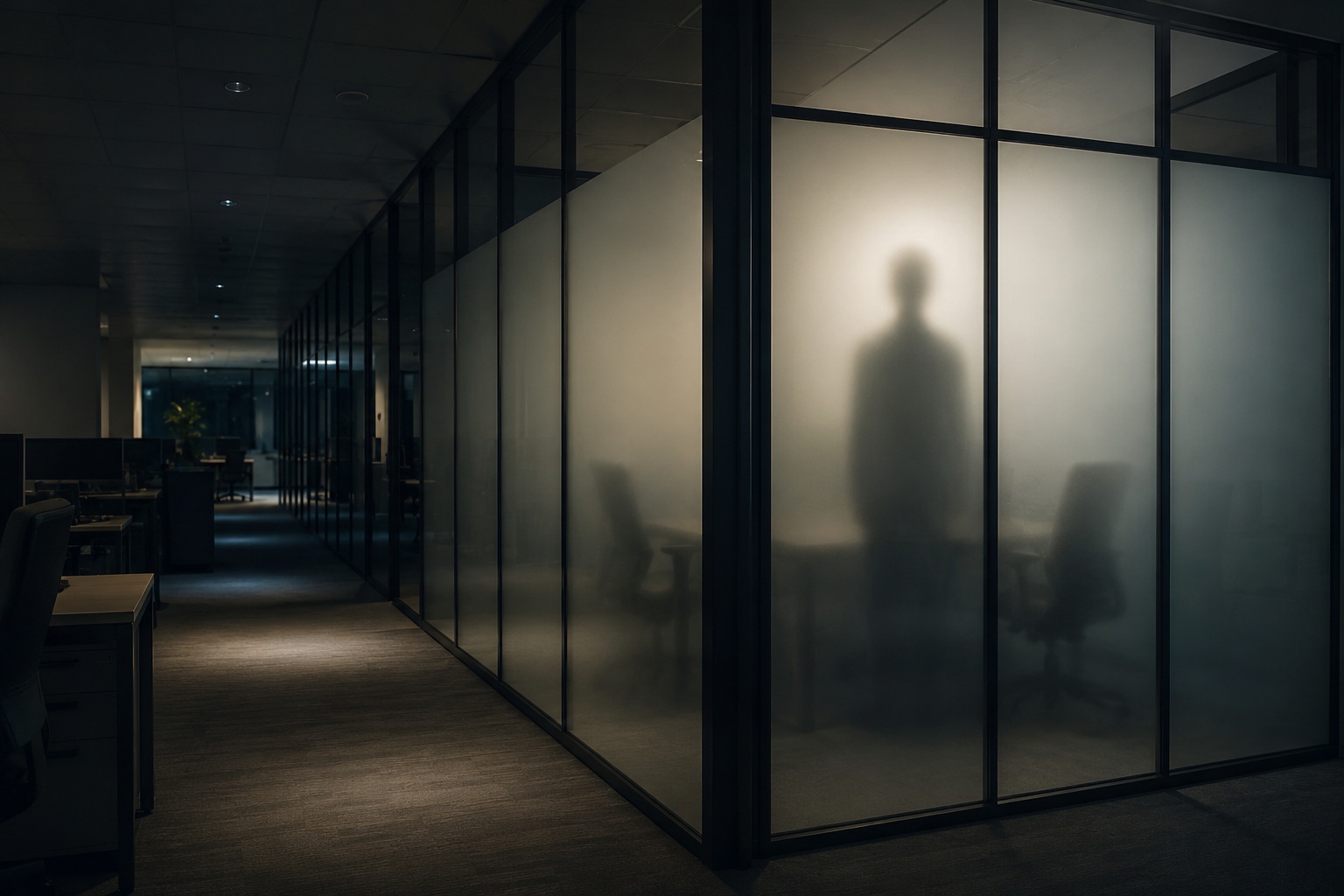
Some say the head was tilted too far or the arms looked unusually long. Many notice there was no movement at all, even after several seconds. The lack of ordinary human behavior is often what turns a simple surprise into something deeply frightening. People expect someone waiting behind a bathroom door or office partition to shift their weight, adjust their posture, or eventually walk away.
Instead, the figure simply remains. That single wrong detail appears in many ghost stories. Where people most often report these figures The stories are rarely set inside abandoned castles or famous strange buildings.
Why The Place Felt Wrong
Instead, they happen in ordinary places. Apartment entrance doors with frosted side panels appear often. Office meeting rooms with privacy glass are another common setting. Hospital corridors sometimes appear in witness stories because frosted windows are used throughout patient areas.
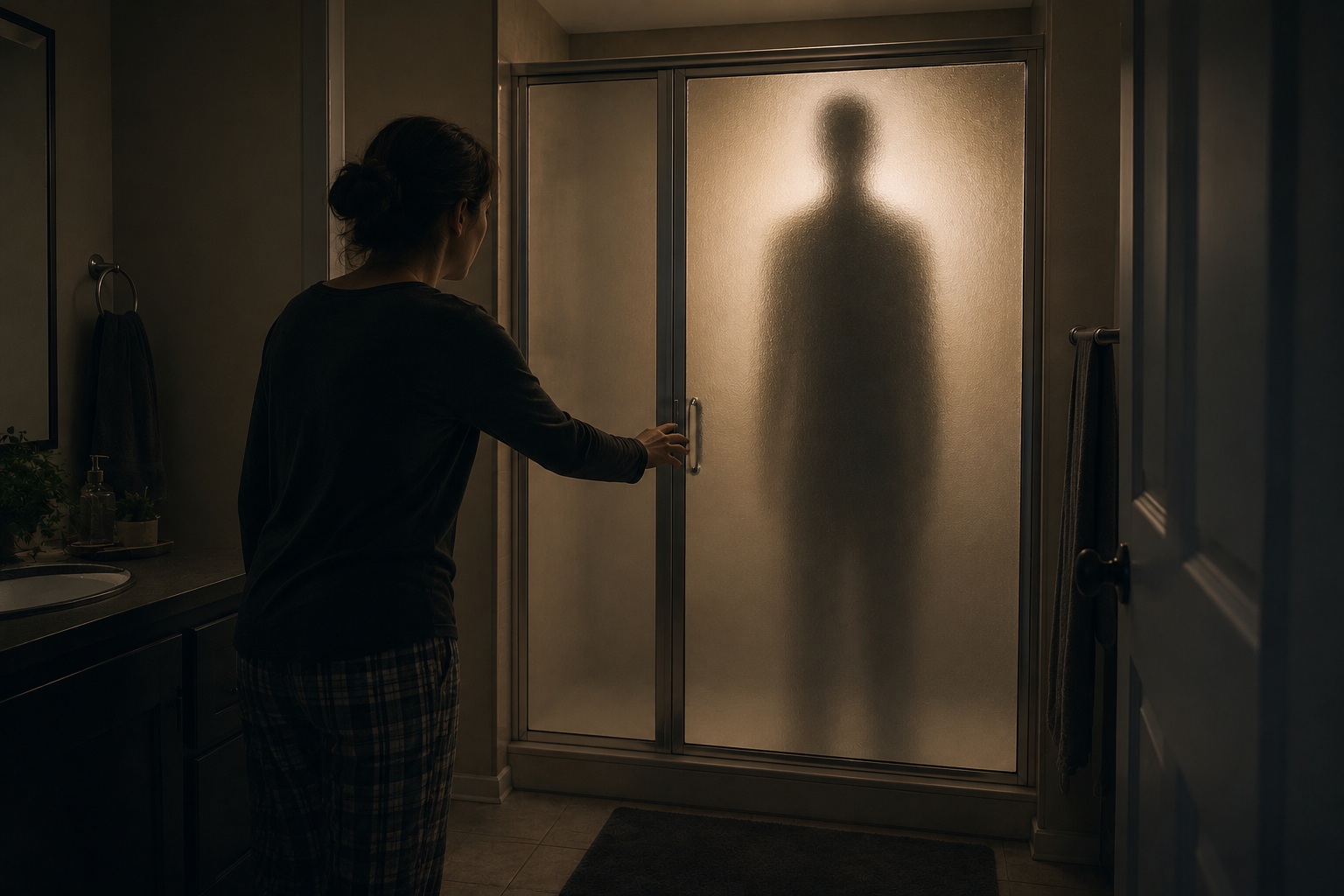
Public changing rooms and shower entrances also show up in discussions. People also describe seeing blurred figures behind greenhouse glass late in the evening, or behind the textured windows of older homes. The location matters less than the glass itself. Because the surface removes facial details, every figure becomes anonymous.
Without a face, people cannot immediately decide whether they are looking at a stranger, a friend, or nobody at all. That uncertainty creates tension almost instantly. Paranormal stories build on exactly that feeling. Instead of revealing who is standing there, the glass keeps every answer hidden.
What witnesses usually check first Most people do not immediately assume anything supernatural happened. Their first reaction is practical. They open the door.
The Detail Nobody Could Explain
They look around the corner. They switch on more lights. They search for another exit the person might have used. Sometimes they discover a coat hanging behind the glass or a stack of boxes creating an unexpected outline.
Those explanations solve many situations. But the stories that continue are the ones where nothing is found. Witnesses often return to the exact spot and try to recreate what they saw. They stand in different rooms.
They compare lighting from inside and outside. They ask another person to stand behind the glass. Many report that none of those ordinary tests recreate the same shape they first noticed. Others describe an even stranger detail.
Once they open the door and find nothing, they look back through the frosted glass again. The figure is gone. Whether that happened because of changing light, a mistaken first impression, or something the witness cannot explain is exactly why these stories remain popular. Why the image feels so convincing
What They Checked Afterward
Ghost stories often depend on seeing only part of something. Frosted glass naturally removes information while leaving just enough behind. That makes every shadow seem more important. Instead of focusing on details, the brain fills in the missing pieces.
A coat becomes shoulders. A darker patch becomes hair. Two bright areas become hands. Most of the time those guesses disappear once someone takes a closer look.
The memorable stories are different because the shape behaves like a person before disappearing. Witnesses sometimes describe the outline slowly turning its head. Others say it appeared to lean closer without taking a step. Some report the figure gradually faded until only the glowing glass remained.
A common detail is the complete lack of facial features. People remember seeing a head where a face should have been, but nothing else. That missing face appears again and again in strange-house stories because it feels both familiar and impossible at the same time.
The Moment It Became Harder To Ignore
It resembles a person while refusing to become one. That combination is difficult to forget. Why this pattern appears in so many ghost stories Many strange-house stories involve places that separate one room from another.
Doorways. Hallways. Windows. Curtains.
Mirrors. Frosted glass belongs to the same group. It creates a boundary where someone could appear without being fully visible. That makes it a powerful setting for suspense.
People naturally pause before walking through these spaces. They hesitate. They look twice. That extra moment gives every unusual shape more attention.
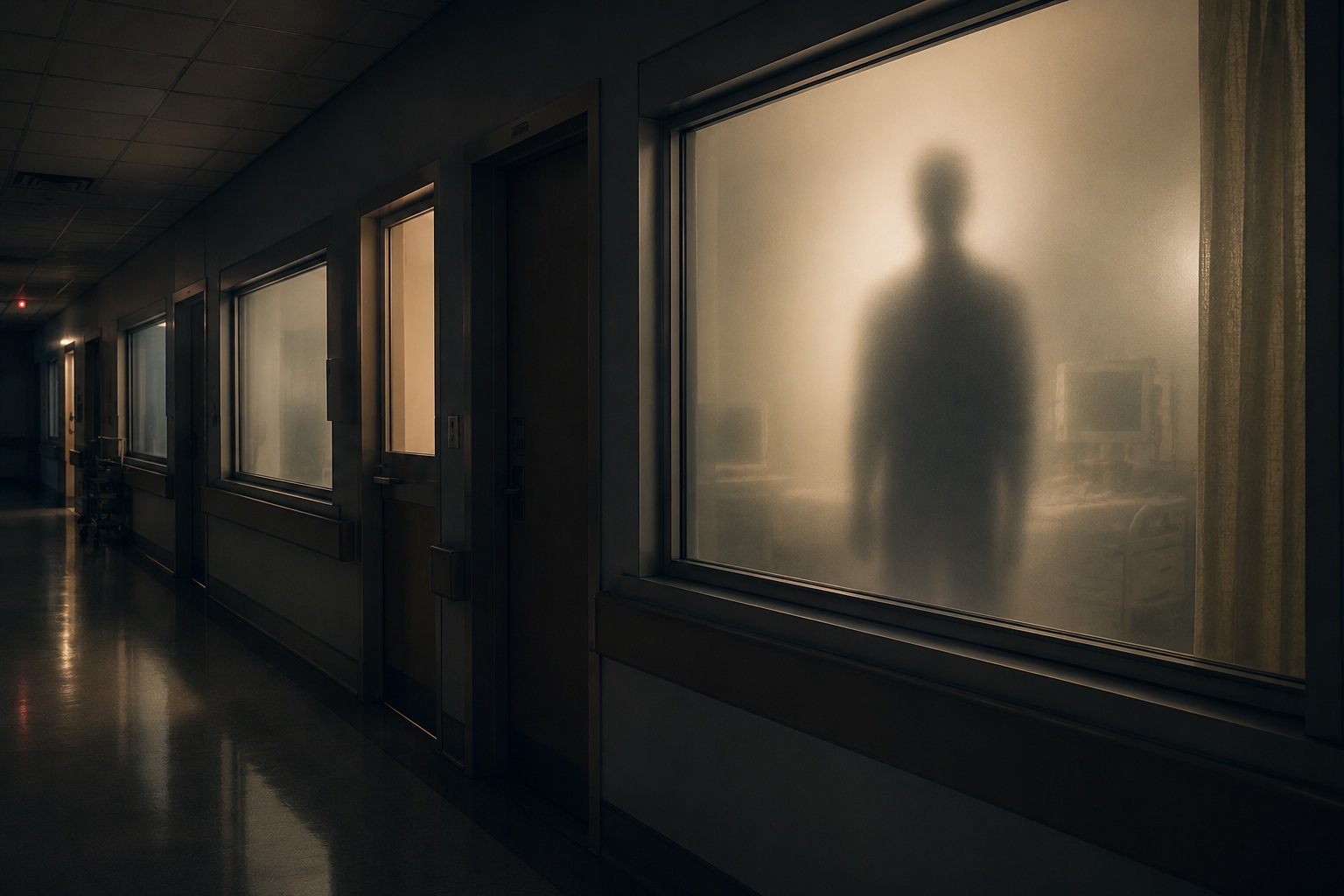
Why People Avoided That Spot Later
Many classic ghost stories use this same idea. The figure is never standing in the middle of the room. Instead, it waits just beyond the place where vision becomes uncertain. Sometimes it is behind a doorway.
Sometimes behind thin curtains. Sometimes behind textured glass. The pattern stays consistent because the fear comes from not knowing exactly what is being seen. Once something is fully visible, it usually becomes less frightening.
Half-hidden figures leave room for imagination. That uncertainty often becomes scarier than seeing a clear person. Other strange experiences that often happen nearby People who report figures behind frosted glass sometimes describe other unusual moments happening around the same time.
They hear footsteps after the figure disappears. A nearby door slowly opens. Lights seem dimmer than they should. Someone thinks they heard their own name spoken quietly from another room.
Why The Story Still Gets Shared
Pets may stare toward the glass even after everyone else has walked away. Whether those moments are connected or simply remembered together, they become part of the larger story. They all share one theme. An ordinary place suddenly feels occupied.
Nothing dramatic happens. No chase follows. No loud scream breaks the silence. Instead, someone simply feels as though another person was present for a few seconds before vanishing.
That quiet uncertainty explains why stories about frosted glass continue to spread. Almost everyone has walked past a textured window without thinking twice. After hearing one of these stories, however, many people admit they hesitate the next time they notice a motionless shape waiting behind the glass.
Sometimes it turns out to be another person. Sometimes it is only changing light. And sometimes, according to countless ghost stories, the door opens to an empty room while the memory of the silent figure remains far longer than anyone expects.