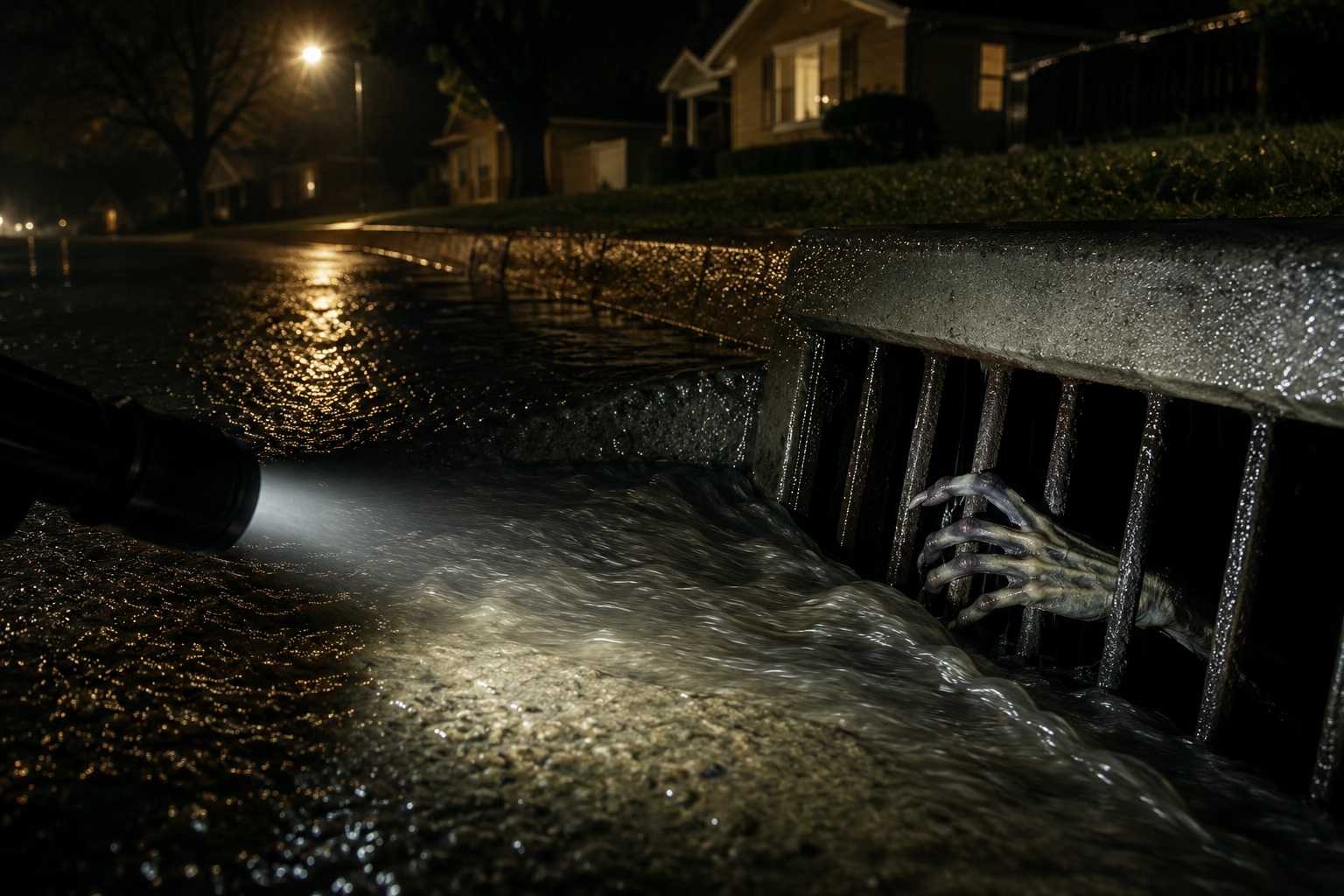
A man walking home after a summer storm decided to cut through a quiet neighborhood instead of staying on the main road. Rainwater still rushed along the curb, carrying leaves and small branches toward a large storm drain beside the sidewalk.
He heard something slap against the metal bars. At first he assumed it was a floating branch. Then it happened again. He stepped closer with his phone light. Water poured into the opening so fast it was difficult to see below. The beam reached only a few feet into the darkness before disappearing into moving water.
Something pale moved. Not a fish. Not trash. A long webbed hand slowly wrapped around one of the wet metal bars from inside the drain. The fingers were much too long. The skin looked smooth and gray, almost shining beneath the rushing water. For a second the hand remained perfectly still, as if listening.
Then two large eyes opened deeper inside the tunnel. The man backed away without taking another look. By morning he returned with friends. The drain looked completely normal except for muddy streaks on the bars where something had gripped them during the night. Stories like this appear in towns all over the world. They change details from place to place, but many begin in surprisingly similar locations. Instead of deep wilderness, witnesses often describe ordinary storm drains, roadside culverts, flooded ditches, creek outlets, or river tunnels. Why do so many river creature stories begin there?
The First Time It Happened
Storm drains sit where two worlds meet Storm drains feel ordinary during the day. People barely notice them while walking past. They simply carry rainwater away from streets and parking lots. At night, however, they become something else.
Looking into one is like looking into a tunnel that disappears beneath an entire neighborhood. Water flows somewhere you cannot easily follow, and darkness hides what lies around the next bend. That uncertainty makes storm drains perfect settings for strange stories. Many creature legends begin where familiar places suddenly connect to unknown spaces. A doorway, attic, abandoned tunnel, cave entrance, or drain all create the same feeling. They suggest that something hidden could travel into places people use every day.
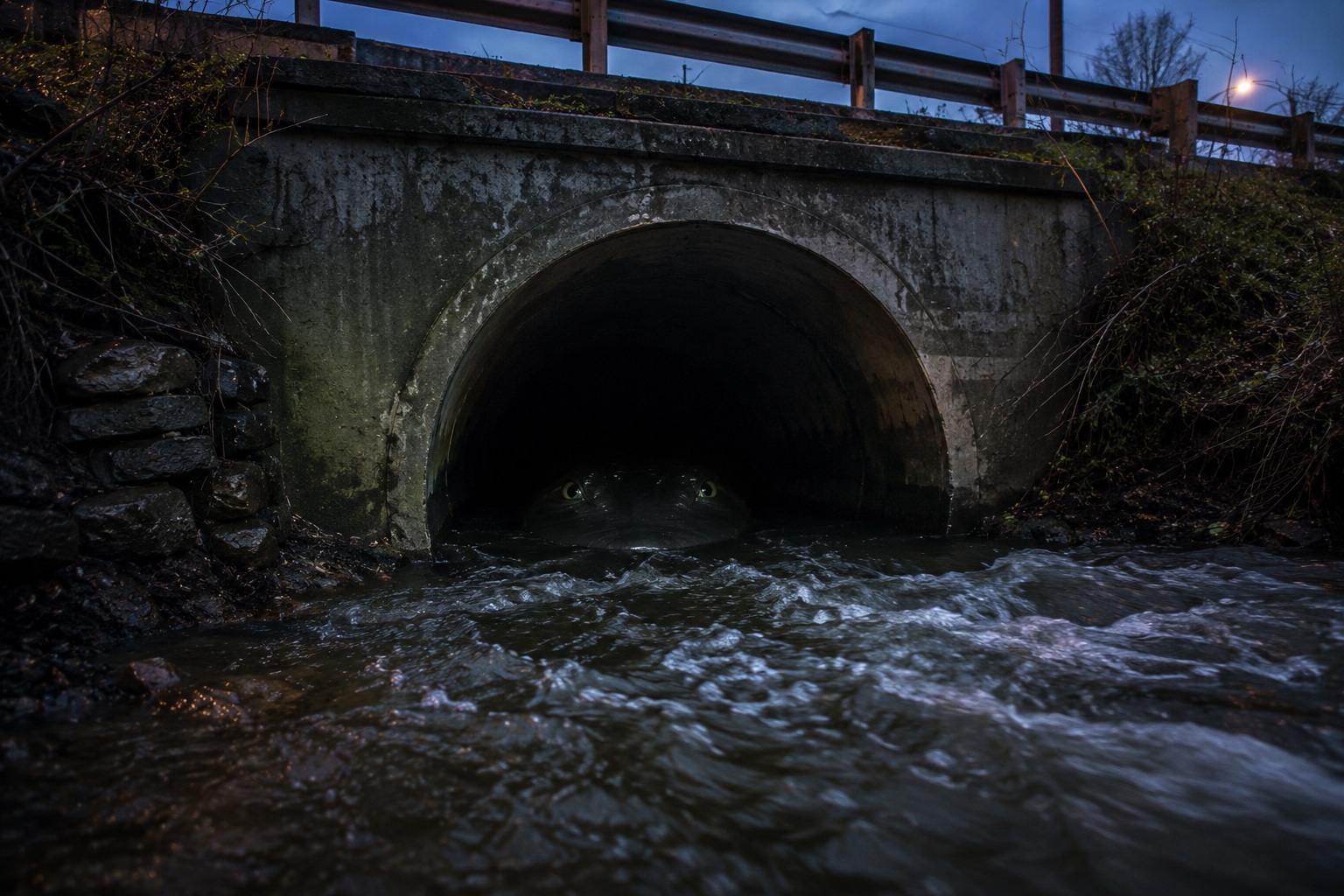
Unlike rivers in open view, storm drains remove the water from sight. People naturally wonder what might be moving below them. That question is often enough for a frightening story to grow. Running water hides movement surprisingly well
Witnesses often describe hearing something before seeing anything. They hear splashing that sounds too heavy for a fish. A scraping noise echoes from inside the tunnel. Metal bars vibrate.
Why The Place Felt Wrong
Something bumps the grate from below. Fast-moving water makes judging sound extremely difficult. Echoes bounce through concrete tunnels and seem to come from different directions. A small object can sound much larger. At the same time, rushing water hides small movements that would normally be obvious.
Someone shining a flashlight into a flooded drain may catch only a brief glimpse of motion before it disappears beneath muddy water. That tiny uncertain moment allows imagination to fill in everything the eyes missed. Many stories grow from exactly this kind of incomplete view.
People rarely claim they stood watching a creature for several minutes. Instead they describe one quick look at something that felt completely wrong. The physical details repeat in many stories Although locations vary, the creatures themselves often share familiar features.
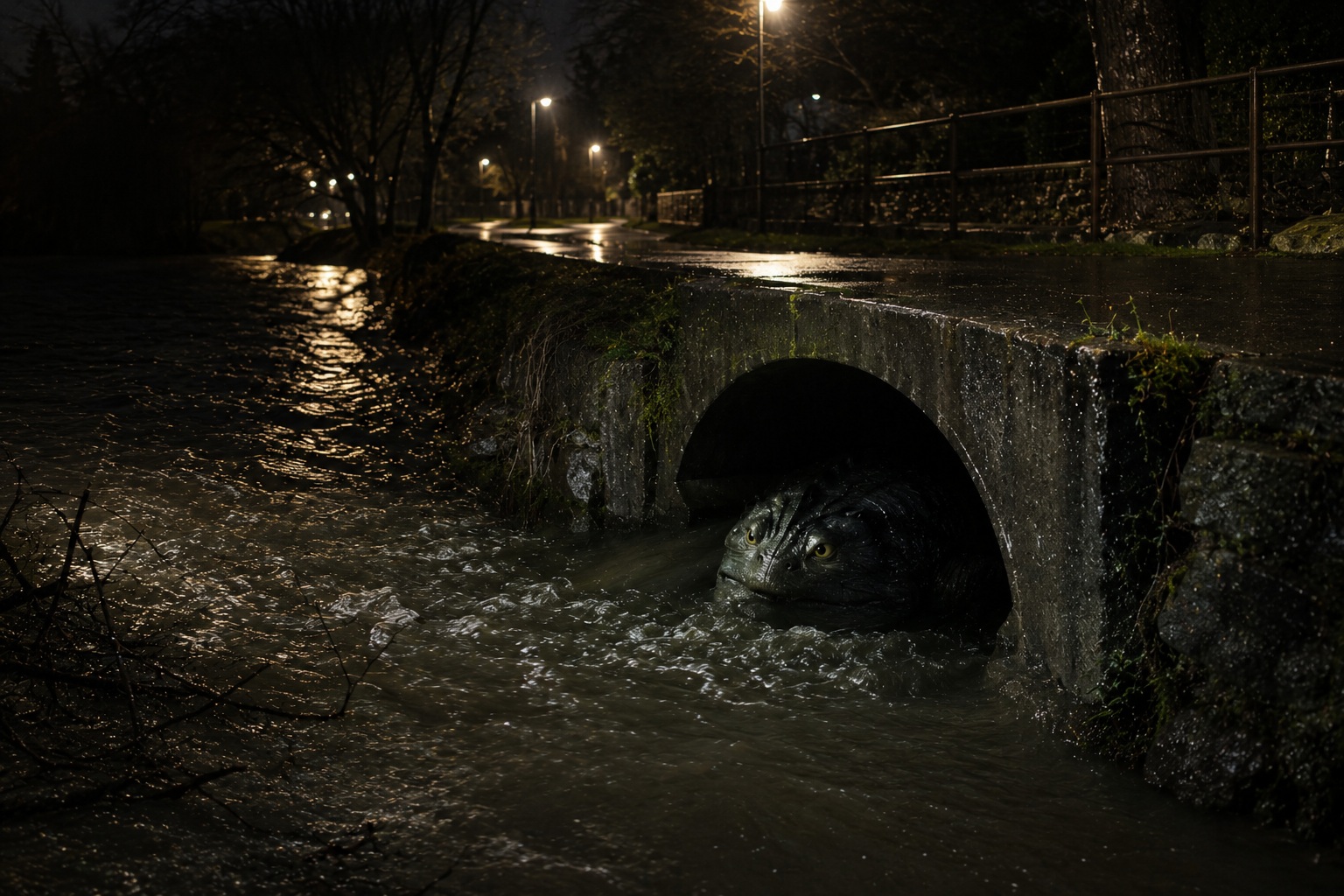
Witnesses commonly describe unusually large eyes reflecting light from below. Others mention webbed hands gripping concrete edges. Some describe smooth gray skin instead of scales. Others report a broad head appearing above floodwater for only a second before sinking again.
The Detail Nobody Could Explain
One detail often remains consistent. The creature is partly hidden. Instead of standing fully in the open, only a hand, face, shoulder, or curved back becomes visible. That limited view makes the story more believable inside its own logic.
People know they did not get a perfect look. They simply describe the single detail they cannot explain. Many readers find that more unsettling than stories where someone claims to have seen every feature clearly. A partially visible shape leaves room for uncertainty.
That uncertainty keeps people thinking about it long after reading. What witnesses usually check first Whether someone believes the story or not, the reactions tend to sound similar. People return during daylight.
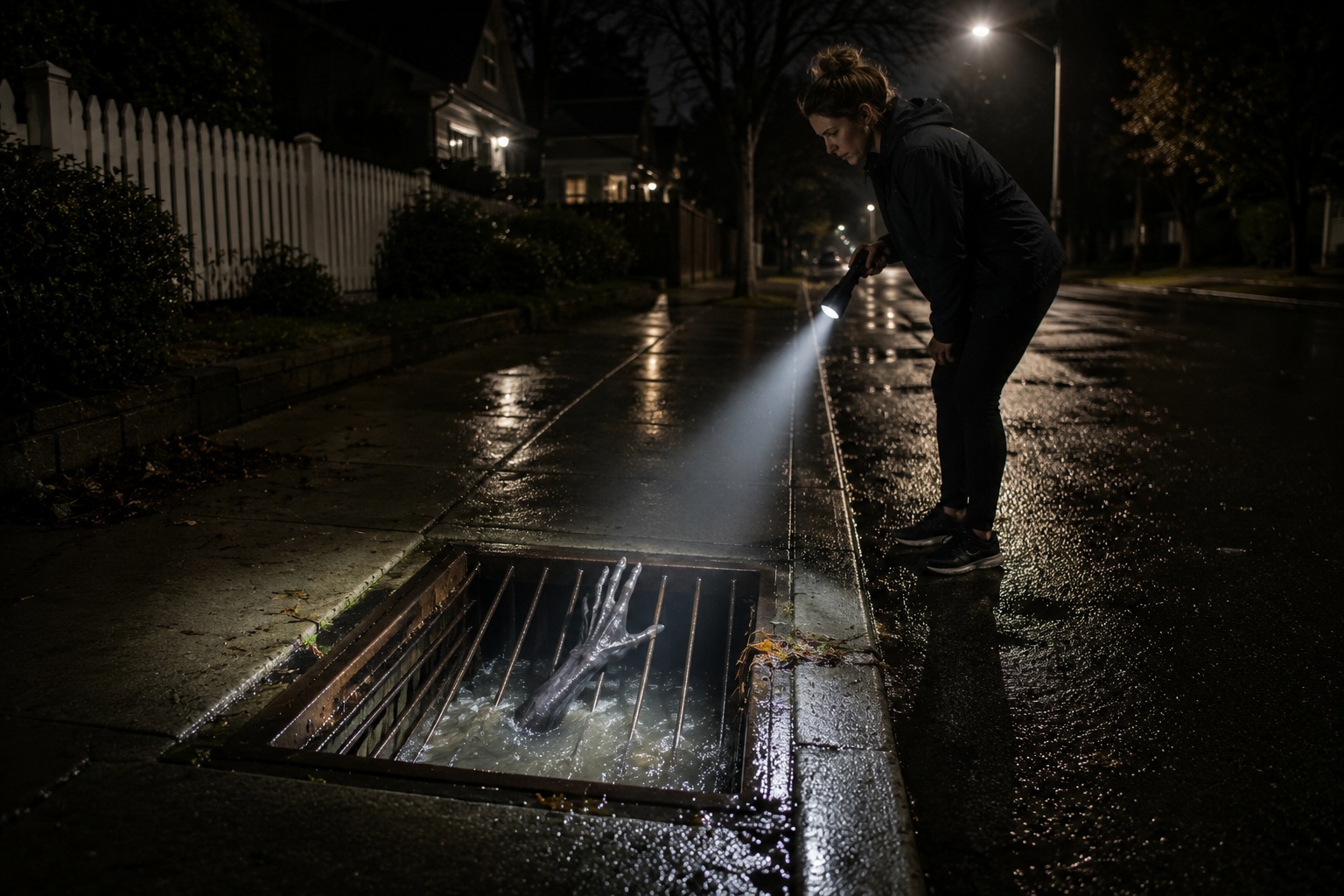
They shine lights farther into the tunnel. They look for animal tracks in nearby mud. They search for signs that a raccoon, turtle, beaver, otter, or large fish might explain what they saw. They check whether storm water left branches or trash hanging inside the bars.
What They Checked Afterward
Sometimes they notice nothing unusual. Sometimes they find scraped mud or bent weeds nearby. Neither outcome fully settles the question. Finding nothing unusual feels strange because the experience felt so vivid.
Finding disturbed mud does not necessarily answer what caused it. The uncertainty remains. That is one reason these stories continue spreading. They end with an ordinary place that anyone can visit, yet people still imagine something hidden just beyond sight.
Unlike stories set in distant forests, storm drain legends happen beside sidewalks, neighborhoods, schools, and shopping centers. Readers can easily picture themselves standing in exactly the same place. Rivers already carry old creature legends Long before modern towns built storm drains, rivers inspired stories about strange living things beneath the surface.
The Moment It Became Harder To Ignore
Nearly every culture has tales about creatures hiding where water suddenly becomes deep, dark, or difficult to see. Modern storm drains simply inherit that same atmosphere. Instead of disappearing beneath natural rocks, the water now vanishes into concrete tunnels. The mystery stays the same.
Floods also contribute to these stories. Heavy rain changes familiar places overnight. Creeks overflow. Water fills roadside ditches.
Storm drains roar with fast-moving currents. Neighborhoods suddenly sound different. People who normally ignore these places begin paying attention because the rushing water demands notice. That creates the perfect setting for unusual experiences.
Even perfectly ordinary animals can appear surprisingly strange when emerging from muddy floodwater under a flashlight. Once those moments are shared from person to person, later witnesses may notice similar details because the story already exists in their minds. That does not mean every report is invented.
Why People Avoided That Spot Later
It simply shows how powerful familiar story patterns can become. Storm drains provide exactly the kind of setting where expectation and uncertainty naturally meet. Why these stories remain so memorable Most river creature stories avoid dramatic endings.
The creature rarely chases anyone. It usually does not climb completely out of the drain. Instead it watches. Perhaps a hand grips the bars.
Perhaps two eyes remain motionless beneath flowing water. Perhaps a smooth head slowly sinks below the surface without making another sound. Those quiet endings stay with readers. Nothing is fully explained.
Nothing is completely revealed. The place itself remains ordinary the next morning. Children still walk past the drain. Cars continue driving overhead.
Why The Story Still Gets Shared
Rain eventually fills it again. That ordinary setting is exactly what makes the story frightening. People expect danger in remote swamps or deep caves. They do not expect it beside the curb where they park every evening.
Storm drains also represent hidden depth. Everyone knows they continue far beyond what can be seen. Very few people know their exact paths beneath a town. That unseen network becomes an easy home for frightening ideas.
Whether someone believes river creature stories or simply enjoys telling them, the pattern explains why storm drains appear so often. They combine darkness, rushing water, echoing sound, hidden spaces, and ordinary neighborhoods into one location. Every heavy rain transforms them into places people instinctively avoid looking into for too long.
And perhaps that is why so many stories begin with one final glance through wet metal bars. Because for just a second, it can feel as though something below is already looking back.