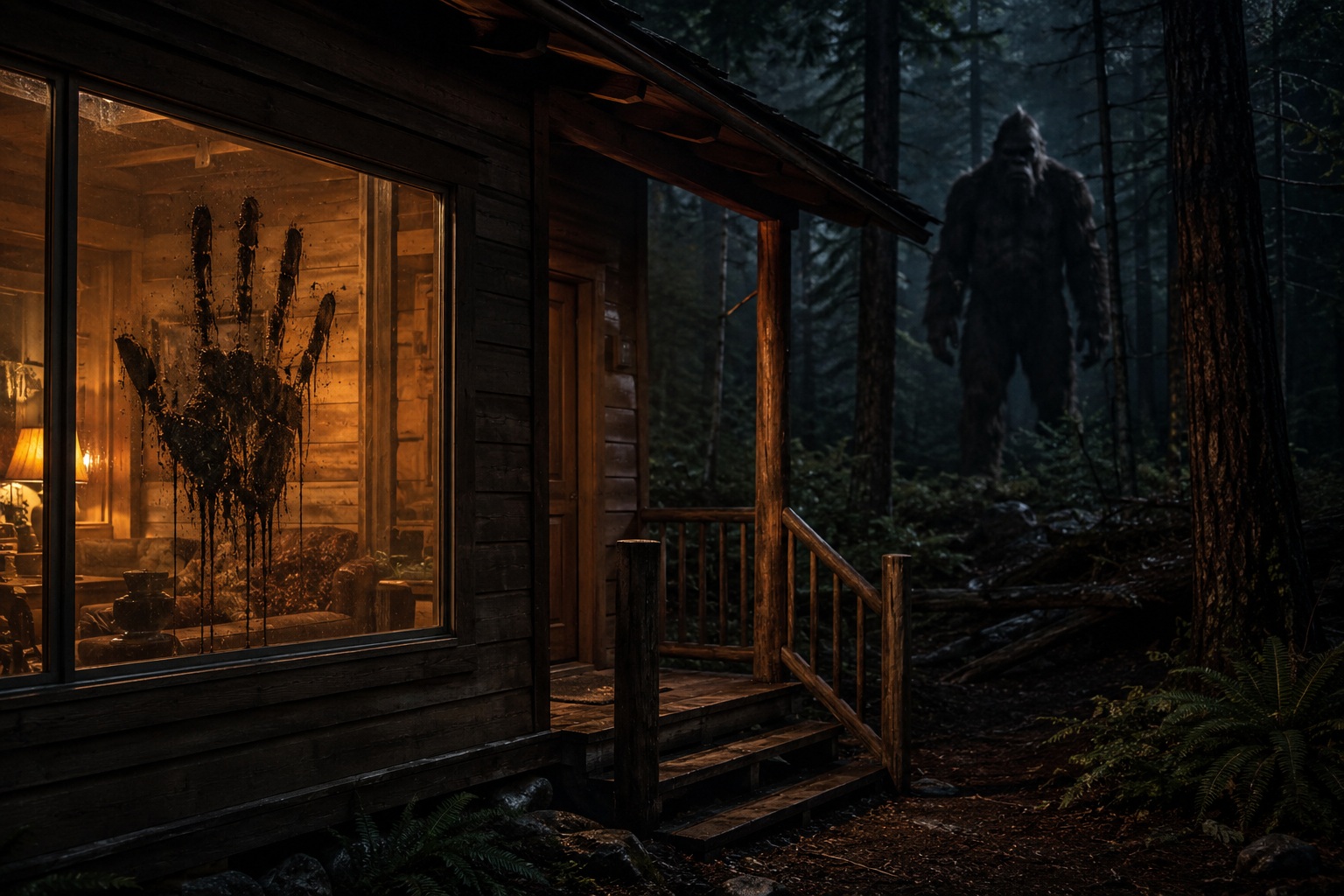
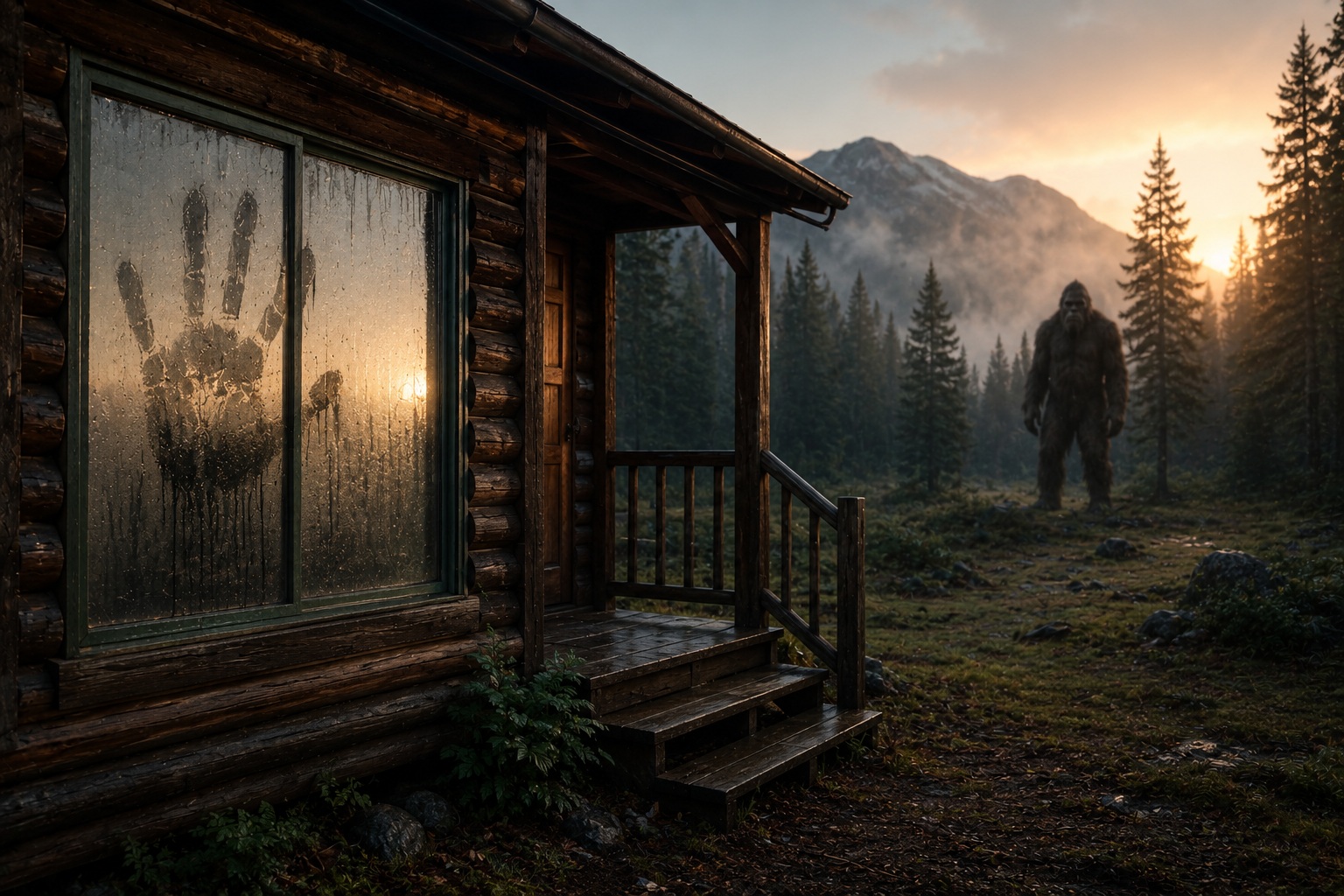
The handprint was already there when the porch light came on. Not smeared across the whole window. Not sliding down the glass. Just one enormous print resting at eye level on the outside of the cabin's front window, as though something had calmly leaned in to look inside.
The family had arrived only twenty minutes earlier. They had unloaded coolers, stacked firewood beside the porch, and laughed about who would take the smallest bedroom. Nobody remembered seeing the print when they unlocked the door. Now everyone stood inside the warm cabin staring at it.
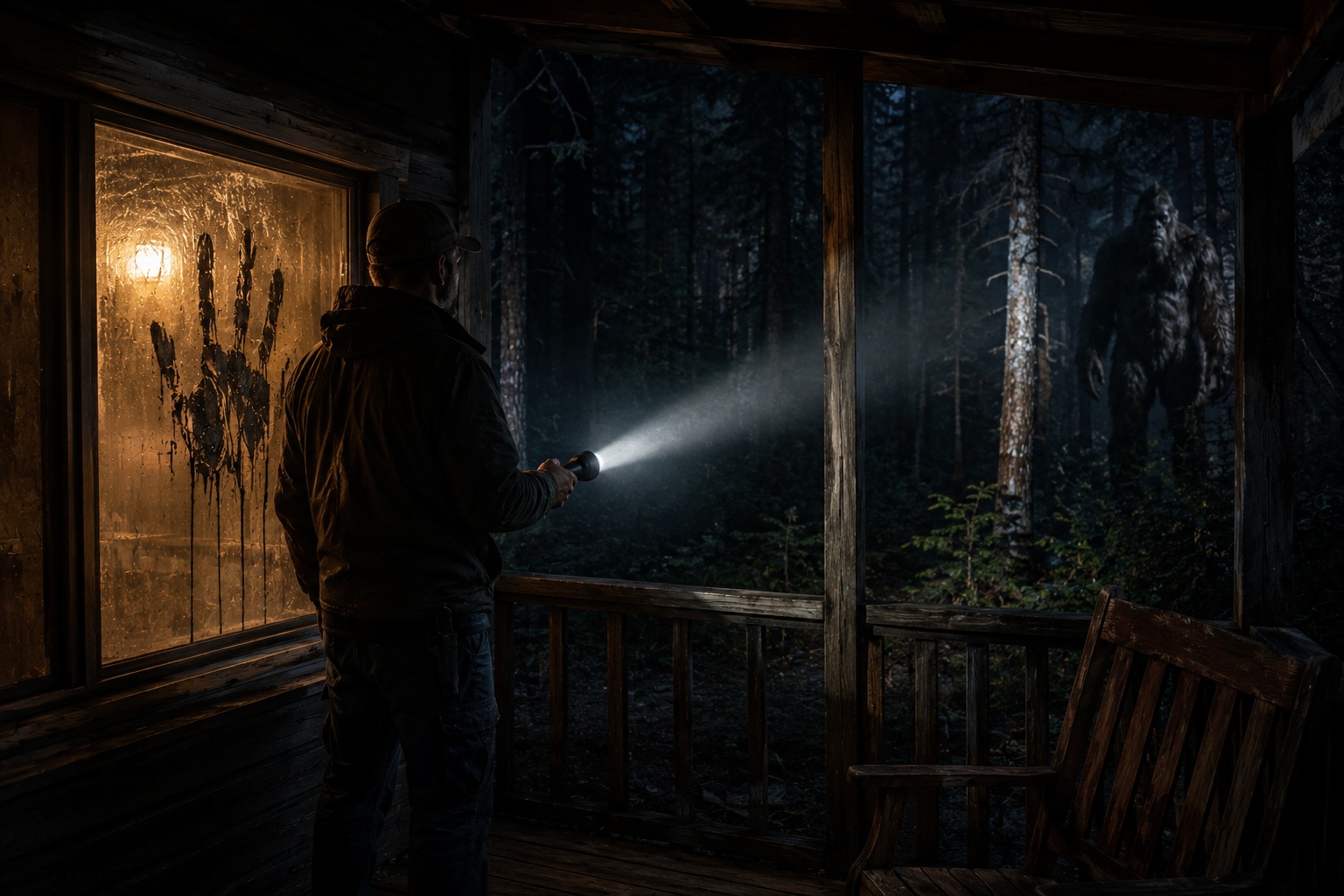
Five long fingers spread wider than a dinner plate. The palm seemed strangely narrow compared to the length of the fingers. Condensation had formed around the edges where the glass stayed cold, making the outline even easier to see. One person finally stepped outside with a flashlight.
The porch boards creaked under every step, but the forest beyond the railing stayed completely still. No broken branches. No footsteps running away. Nothing standing between the trees. When the light returned to the window, the print was gone. Whether stories like this happened exactly as remembered is impossible to know. But huge handprints on lonely cabin windows appear again and again in Bigfoot stories across North America. They have become one of the details people remember most—not because they seem violent, but because they suggest something quietly standing close enough to look inside.
Why the Handprint Changes the Story
Window Makes The Story Personal A distant figure across a valley is frightening. Something standing inches beyond your window feels completely different.
Cabins create a strange kind of fear because the wall between safety and wilderness becomes only a sheet of glass. You can hear rain on it. You can see reflections in it. You can imagine someone—or something—looking back through it. That is why cabin windows appear so often in wilderness folklore.
People expect bears to sniff around cabins. They expect raccoons to climb porches. They even expect deer to wander close at dawn. A giant handprint suggests something behaving much more like a curious person than a passing animal. Instead of simply moving through the woods, whatever left the mark seemed interested in the people inside.
That idea stays with witnesses long after the trip ends.
Witnesses Always Notice The Size First Nearly every version of the story begins the same way. Nobody notices fingerprints.
Why Height Matters More Than Noise
Everyone notices scale. Witnesses usually describe spreading their own hand against the glass after finding the mark. The comparison becomes the part they never forget. Sometimes the fingers seem unusually long. Sometimes the thumb sits at an odd angle.
Sometimes the entire print appears much higher than expected, forcing people to imagine the height of whatever placed it there. Whether those measurements are remembered accurately is another question. Fear changes memory. Still, the first reaction is almost always physical rather than emotional.
People don't immediately ask what made the print. They ask, "How big would something have to be?" That single question drives the rest of the story.
Most witnesses don't instantly decide something impossible happened. Instead, they start crossing ordinary explanations off the list. Was it already on the window before they arrived? Could another visitor have played a prank?
Did one of the children accidentally leave muddy marks earlier? Could wet pollen, tree sap, or dust create a shape that only looked like a hand? If the cabin is rented, they often ask whether previous guests noticed anything similar. Some people walk around the building looking for boot prints.
What People Check Before Believing It
Others inspect the porch railing. Many check nearby trees for broken bark or fresh scratches. The search itself becomes part of the memory. Even if nothing unusual turns up, witnesses often remember exactly where they looked and what they hoped to find.
Can Leave Surprising Marks Too Nature creates stranger patterns than most people expect. A bear standing upright can leave muddy marks on walls, doors, and windows. Raccoons regularly climb screens and porch railings, leaving small wet prints.
Large birds sometimes hit glass, leaving feather dust or wing marks that look surprisingly dramatic until viewed in daylight. Rain can stretch pollen into odd shapes. Dust sticks differently to cold and warm sections of glass. Tree branches brushing a window during storms create streaks that look completely different under porch lights than they do the next morning.
Our brains naturally search for familiar patterns. A random smear can suddenly resemble fingers once someone points it out. That doesn't mean every reported handprint has a simple answer. It only explains why experienced hikers usually begin with ordinary possibilities instead of extraordinary ones.
Story Becomes Harder To Forget Some reports include details that make witnesses hesitate before dismissing the experience. The print appears unusually high on the glass. The hand seems much larger than expected.
Normal Explanations That Usually Come First
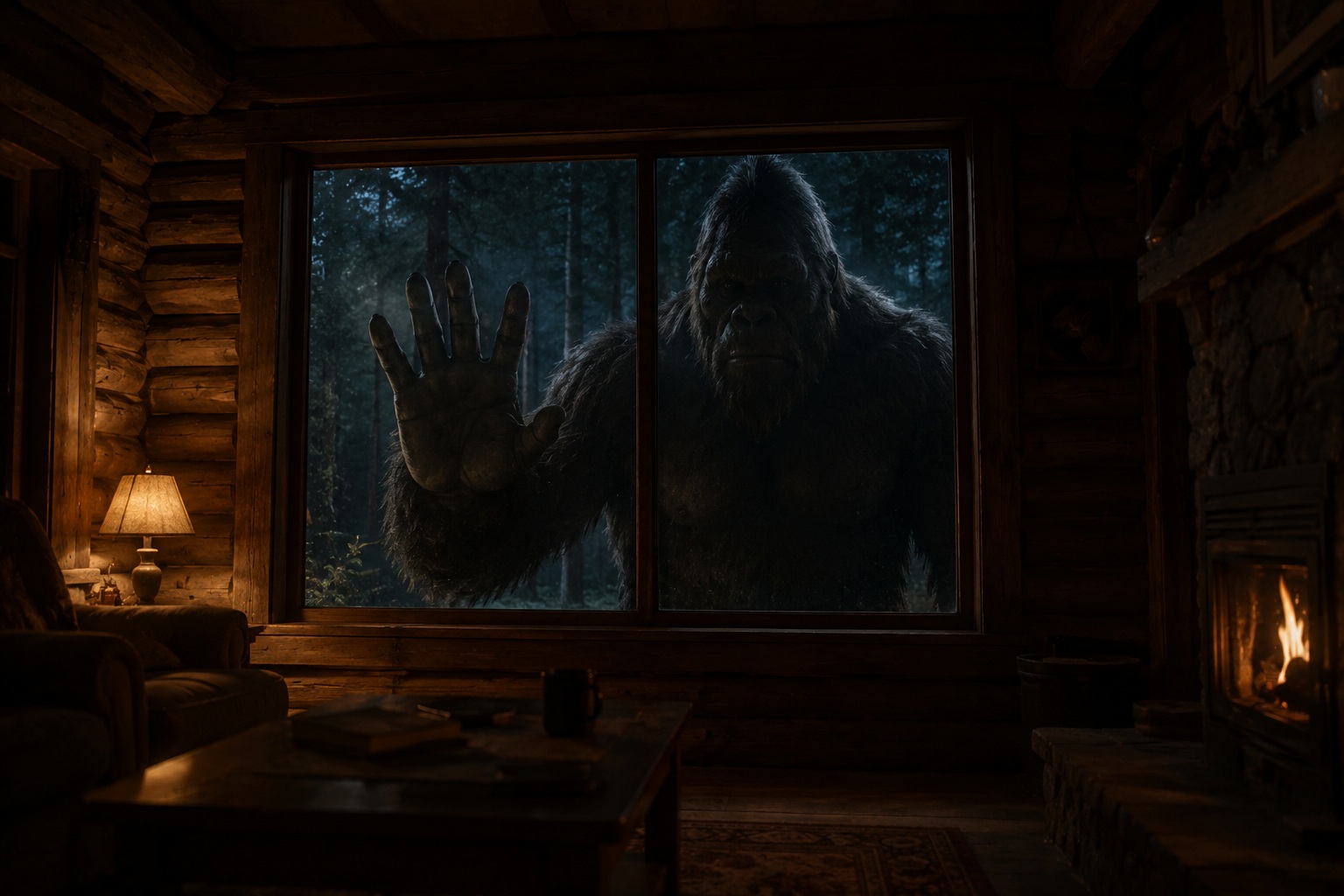
The shape faces inward, as though someone placed their palm against the window while looking inside. Sometimes several people remember seeing it before it faded as condensation changed or morning sunlight warmed the glass. In other stories, dogs begin barking at the same window before anyone notices the mark.
Occasionally someone reports hearing slow footsteps circling the cabin earlier in the night. None of those details automatically point toward one answer. But together they create a story that feels much harder to shrug off than finding an old muddy stain during daylight. The emotional sequence matters.
People hear something. Then they discover the print. The second event suddenly changes the meaning of the first.
Most of these stories don't happen in busy neighborhoods. They happen where forests begin. Cabins are temporary homes. People stay only a few nights.
When the Mark Feels Less Ordinary
They don't know every sound the building makes. The forest itself changes after sunset. Branches scrape roofs. Wind pushes leaves across decks.
move through darkness just outside the porch light. Because cabins stand alone, every unfamiliar sound feels closer. Every reflection becomes more noticeable. Large windows that provide beautiful daytime views become dark mirrors after sunset.
Sometimes people look outside. Sometimes they see only their own reflection. Sometimes they notice a shape beyond it. A handprint fits naturally into that setting because it suggests a silent visitor rather than an attack.
Nothing has to break. Nothing has to chase anyone. The fear comes from realizing how close something may have stood without making itself fully visible.
Imagine hearing two different wilderness stories. In one, someone says they felt uneasy while camping. In the other, someone says they found a giant handprint outside the cabin window exactly where a face would have been while looking in. The second story is much easier to picture.
Why Cabin Stories Spread So Fast
Specific details survive retelling. A broken twig could mean anything. An oversized handprint on glass creates an image everyone immediately understands. It also invites participation.
Listeners almost always compare the described size with their own hands. They imagine standing inside that cabin. They picture reaching toward the opposite side of the glass. The story becomes personal before it becomes mysterious.
That is one reason these reports continue to circulate decades after they are first told. The image itself does most of the work.
Part Nobody Wants To Imagine Many wilderness stories describe seeing a large figure crossing a trail.
Those encounters usually last only seconds. Window stories feel different. They suggest time. To leave a careful handprint, something had to stop.
Why the Window Detail Lingers
It had to stand quietly. Perhaps it listened. Perhaps it watched the lights inside. Perhaps it simply rested its hand against the cold glass before walking away.
That possibility unsettles people because it replaces a passing glimpse with a silent pause. Whether the explanation is an unusual animal, a mistaken pattern, an old mark revealed by changing moisture, or something witnesses still struggle to explain, the image remains powerful for the same reason.
It asks readers to picture an ordinary evening inside a warm cabin. A fire crackles. Someone washes dishes. Another person laughs from the next room.
Outside, only darkness presses against the glass. Then someone notices a hand resting where no hand should be. Not pounding on the window. Not scratching.
Just waiting long enough to leave its shape behind before disappearing back into the trees.