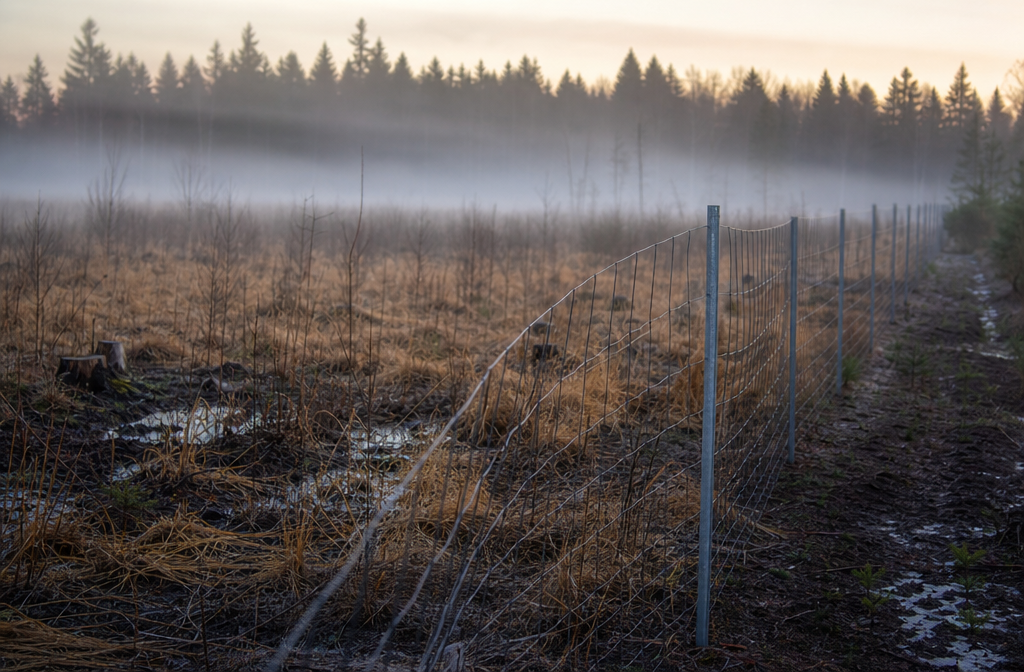
The Alder Run fence was supposed to keep deer out. Instead, one morning it looked like something had pushed hard enough to bow the wire inward, then left its best tracks inside the protected plot.
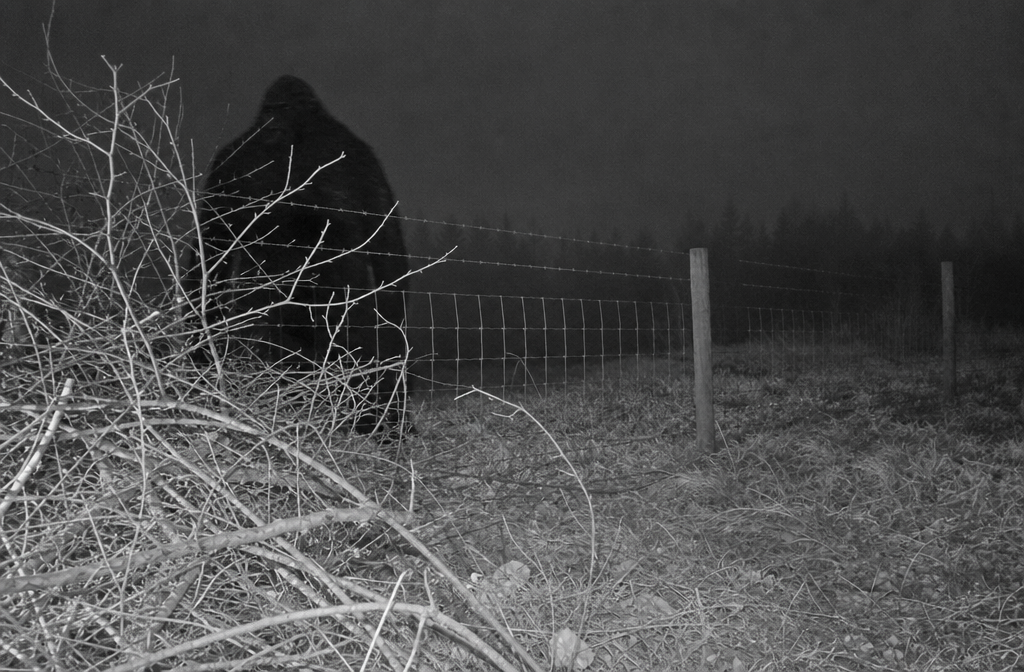
That is the contradiction that keeps the case alive. A trail camera caught a broad dark body behind alder brush at 2:17 a.m. The fence damage was discovered after dawn. The mud outside the bend showed little useful approach sign, but the mud inside held large impressions running along the damaged panel.
Nothing here proves Sasquatch. A bear, person, or strange fence failure still belongs on the list. But five details make Alder Run hard to file away.
WHAT THE PHOTOS SHOW:
- One section of deer-exclusion fence bowed inward toward the research plot.
- Mud was smeared low on the mesh, with a brace post leaning off plumb.
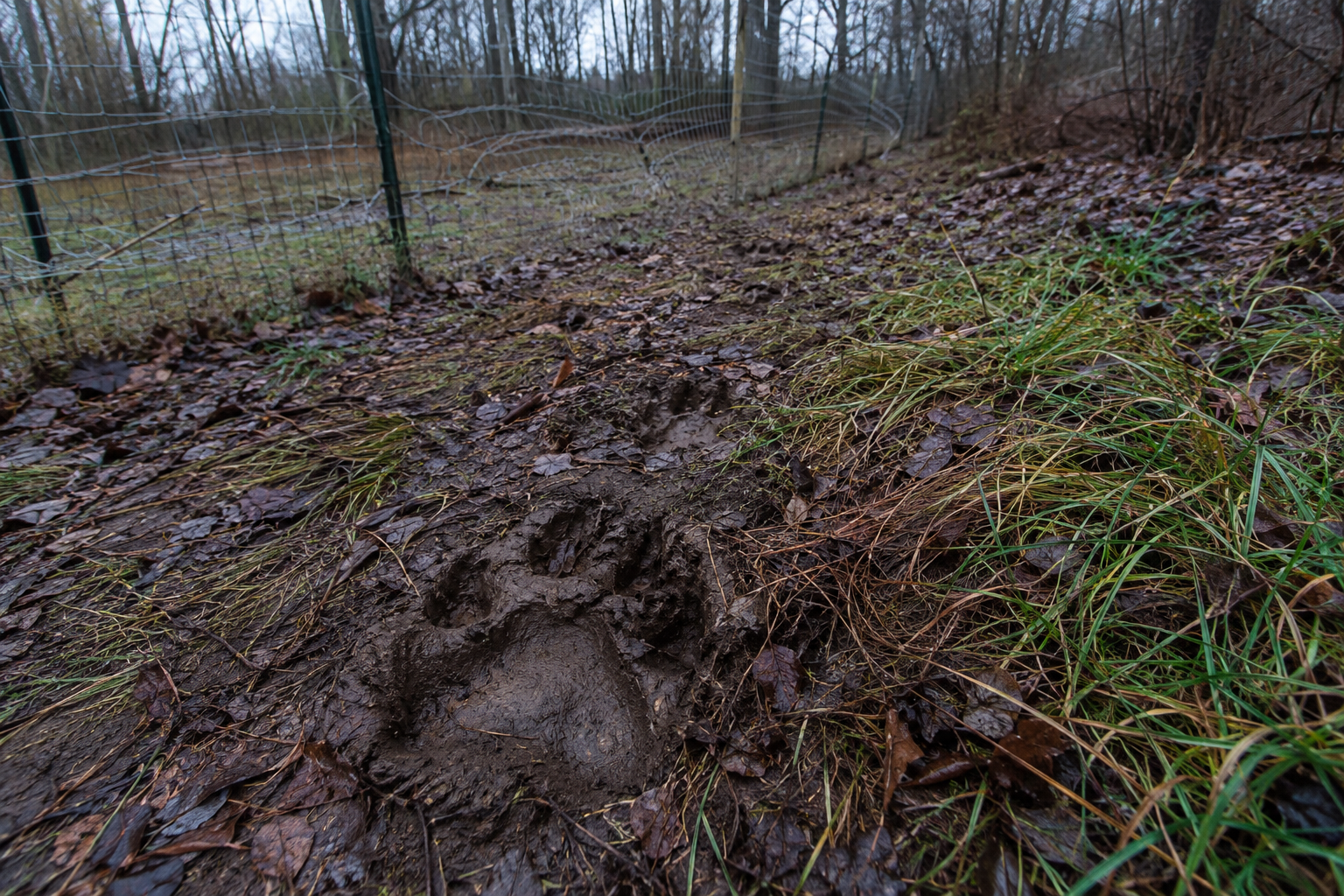
- Large muddy tracks appeared inside the fenced area, not outside the impact point.
- A trail camera frame showed a broad dark figure partly hidden behind alder brush.
- The outside approach area showed deer sign, raccoon sign, and boot marks, but no clean matching trackway.
1. The Fence Bent Toward the Protected Plot
The first detail is the direction of force.
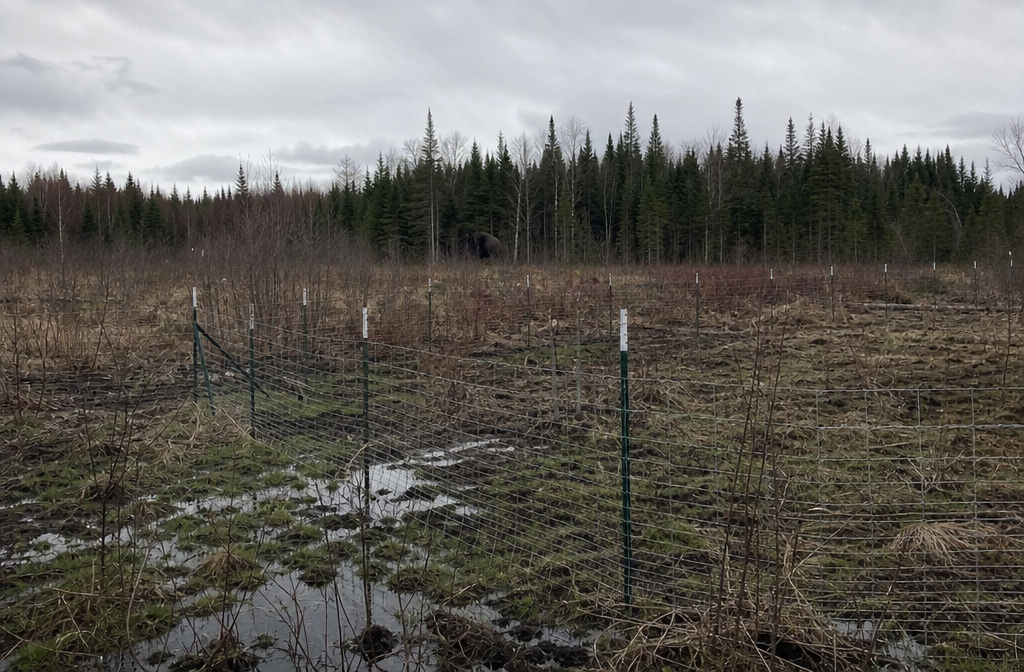
The Alder Run enclosure was an ordinary deer-exclusion plot on private timberland. It surrounded saplings, fern growth, and wet black soil so the landowner could compare browsed and unbrowsed regrowth.
By sunrise, one fence section had bowed inward across roughly fourteen feet. It held a long, rounded curve from knee height to near shoulder height, as if weight had leaned into it instead of striking one small spot.
That matters because an animal approaching from the cutover side should have left some messy sign outside the panel: churned mud, claw gouges, hoof punctures, or a staggered recovery trail.
Instead, the most readable ground sign was on the interior side.
2. The Tracks Were on the Wrong Side
The tracks are the reason this story spread beyond a damaged fence report.
Inside the enclosure, the landowner photographed five main impressions and several partials. They ran parallel to the bent section, close enough to connect the fence damage and the trackway.
The impressions were long, wide through the forefoot, and softened by spring mud. They were not perfect Bigfoot prints with crisp toes. They were messy, heavy depressions in saturated ground, which is exactly why skeptics can argue about them.
But their location is harder to wave away.
If something pushed the fence from outside, why were the clearest tracks inside? If something was already inside, how did it enter a locked plot without leaving a gate trail, crawl mark, or obvious exit?
That mismatch is the center of the case.
3. The Camera Caught a Shape Behind the Brush
The trail camera did not capture a clean creature photo.
It was mounted to watch deer movement along the cutover edge. Its view included a brush pile, part of the fence, and the dark gap where a game path disappeared into the trees.
At 2:17 a.m., the camera recorded one frame with a broad dark shape behind tangled alder limbs. There is no face. No visible eyes. No dramatic stride across the open ground.
Still, the figure looks wrong for a deer. It lacks a neck line, back line, and leg pattern. It also does not read easily as a shadow, because thin branches remain visible in front of the dark mass.
The most interesting part is the shape’s bulk. Most of its mass rises behind the brush pile instead of stretching low along the ground.
4. The Mud Outside Did Not Match the Damage
Wet alder ground usually records movement well.
This was not dry gravel or pine-needle duff. The cutover held shallow water, grass roots, leaves, and soft ditch mud. A heavy animal walking up to the fence should have left more than a vague scuff.
The landowner did find ordinary sign outside the plot. There were raccoon prints near the ditch, deer nips on cut stems, and his own boot marks from checking the site earlier in the week.
What he did not find was the missing approach trackway.
Rain, grass, angle of approach, and later foot traffic can erase evidence quickly. But the site should have been favorable to at least one clear impression near the damaged panel.
Instead, the ground gave its clearest answer on the side that made the least sense.
5. The Damage Looked Broad, Not Pointed
A deer can hit a fence. A bear can climb one. A falling limb can deform wire in strange ways.
Those are serious explanations. The problem is that the Alder Run panel did not show one obvious point of impact.
The mesh bowed in a wide arc. The lower edge stayed attached. The top line sagged toward the saplings. A brace post leaned several inches off plumb, but there were no tire ruts, no broken latch, and no clean hole where an animal had punched through.
That pattern suggested sustained pressure instead of a quick collision. A black bear pressing its weight into the mesh could do that. So could a person using both hands and a shoulder. But the broad bend is also why some Sasquatch researchers paid attention.
What a Normal Explanation Would Need to Explain
The most responsible answer is not “Bigfoot did it.” It is “what combination of ordinary events fits all the details?”
A bear remains the strongest natural explanation. Bears can stand upright, push wire, leave large muddy prints, and look strange on infrared cameras. A bear partly hidden by alder brush could easily appear broader and more upright than it really was.
But that answer still has to explain why no clearer bear track appeared outside the damaged section, why the interior impressions looked elongated, and why the camera did not show a recognizable snout, ears, or forelegs.
A human hoax is also possible. Someone could enter the plot, bend the fence from inside or outside, and walk through mud to create confusing tracks.
Yet Alder Run was not a public trail or a roadside attraction. The plot sat on private timberland, and the photos were not staged like viral monster bait. If it was a prank, it required cold mud and real force for a subtle payoff.
What Viewers Should Look For
If you study the photos, start with the boring parts.
Look at the base of the fence, whether the mesh is stretched evenly or torn at one point, and the way the top line dips toward the interior. Those construction details matter more than the dark figure at first glance.
Then compare the track positions to the fence bend. The impressions are not scattered randomly through the plot. They sit near the damaged panel, as though whatever made them moved along the inside edge after the wire changed shape.
Finally, look at the trail camera frame without trying to force a face into it. The useful question is not “does it look exactly like Bigfoot?” The better question is whether it looks like a deer, bear, person, shadow, or something the camera only partly caught.
Why This Small Field Case Works
The Alder Run incident works because it is not built on one spectacular image.
The trail camera frame alone would be easy to ignore. The fence damage alone could be blamed on a bear, deer, or falling limb. The impressions alone would be another disputed track report.
Together, they create a tighter puzzle: a bent fence, a dark body near the brush, and a track line that appears where the simple explanation does not want it to be.
That does not turn the case into proof. It turns it into a useful field problem. Every ordinary answer has to account for the timing, the force direction, the missing approach sign, and the wrong-side tracks.
That is why a quiet deer study plot became more interesting than a sharper but isolated photo.
The Question That Still Bothered the Landowner
By the next afternoon, rain had softened the track edges and the fence had been pulled back enough to protect the saplings. The landowner added another camera, checked the gate chain, and walked the outer perimeter again.
He found normal wildlife sign. He found one smeared patch near the ditch that could have been almost anything. He did not find the clean outside track that would make the whole story simple.
That is why the Alder Run fence bend still gets discussed by people who follow Sasquatch evidence. It is not the clearest footprint case. It is not the best trail camera image. It is a contradiction preserved for one wet morning before the weather started erasing it.
So what do you think happened at Alder Run: a bear and bad mud, a careful hoax, or something large enough to bend the fence and leave its tracks on the wrong side?
Reader Context
This Weird Witnessed story is an editorial reconstruction, written as eerie visual storytelling rather than a verified report. For more context, see Bigfoot and Sasquatch Stories Guide and How WeirdWitnessed Creates Reconstructed Horror Stories.