The first thing that felt wrong was not the tree. It was the silence after the logging trucks disappeared. A hunter had parked along an old gravel logging road before sunrise, planning to hike into a stretch of second-growth forest where deer often crossed between fresh clear-cuts. The engines faded into the distance, leaving only the smell of damp pine and fresh-cut wood.
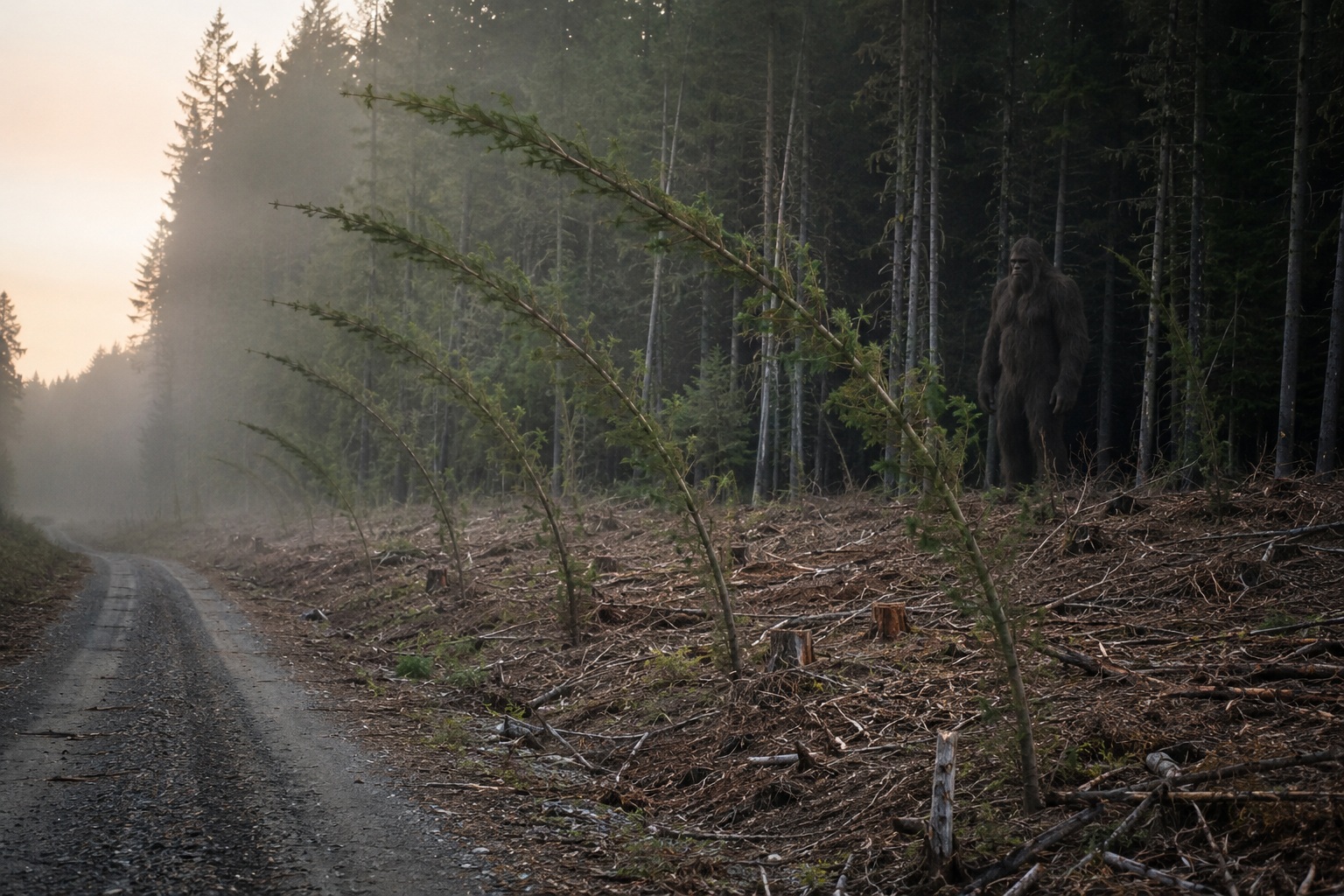
About fifty yards from the road, he noticed a young cedar bent into a smooth arch. It wasn't broken. It wasn't snapped. The trunk had been folded low enough that its top almost touched the ground, yet it was still alive, its needles bright green.
He stepped closer. Behind it stood another bent tree. Then another. Each one pointed deeper into the woods, almost like arrows.
That alone might have been strange but forgettable. Forests are full of odd shapes after storms and heavy snow. Then he looked uphill toward the edge of the newest logging cut. A huge dark figure stood between two stumps. It was taller than the remaining tree line behind it. Thick shoulders. Long arms hanging almost to its knees.
It never moved. When he blinked after rubbing sweat from his eyes, the figure was gone. Only then did he realize every bent tree faced the place where it had been standing.
Stories like this appear surprisingly often whenever people talk about Bigfoot encounters near active or abandoned logging roads. Witnesses describe strange tree bends, twisted saplings, woven branches, or living trees forced into impossible angles before they report hearing heavy footsteps, finding oversized tracks, smelling wet fur, or briefly seeing a massive hairy figure. Whether these tree formations come from nature, people, or something witnesses simply connect after the fact, they have become one of the most recognizable details in modern Bigfoot stories.
Logging Roads Appear In So Many Bigfoot Stories
Logging roads create an unusual mix of open visibility and deep isolation. Heavy equipment clears long corridors through otherwise dense forests. Fresh roads make it easier for hunters, hikers, survey crews, and campers to reach places they would never normally visit.
At the same time, the roads leave miles of untouched timber on either side. That combination means people spend time where large wildlife also travels. Many reported Bigfoot sightings happen along these corridors because they offer long lines of sight. Someone can briefly see a huge shape crossing between trees hundreds of feet away before it disappears into thicker forest.
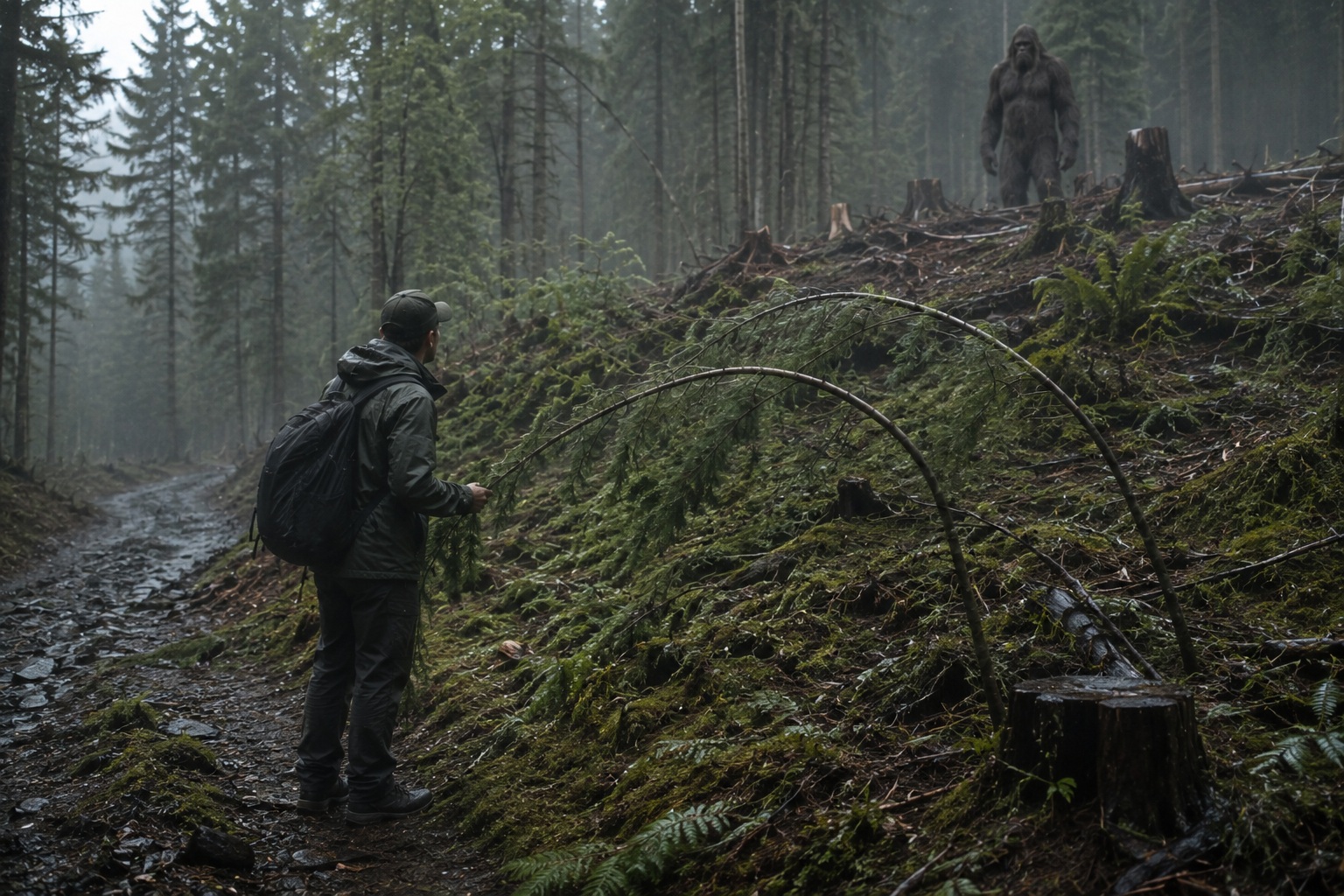
Fresh mud also preserves footprints better than rocky mountain trails. Clear-cuts expose unusual tree damage that might stay hidden beneath dense branches elsewhere. Because of this, logging roads naturally become places where people notice odd forest details they might ignore in other settings. For believers, these roads seem like natural travel routes for a large hidden animal.
For skeptics, they simply concentrate people in remote environments where ordinary forest damage looks unusual. Either way, the setting appears again and again in witness stories.
The Bent Trees That People Remember Most
Not every bent tree attracts attention.
Forests are full of leaning trunks, storm damage, and trees growing toward sunlight. The reports that stick with witnesses usually involve something more specific. Many describe healthy young trees bent sharply without breaking. Others mention several trees bent in the same direction over a surprisingly small area.
Some find arches tall enough for a person to walk beneath. Others describe crossed saplings that seem placed rather than naturally fallen. Sometimes witnesses say fresh green trees are woven together while still alive. The important part is not that the forest contains damaged trees.
It is that people feel the shapes look deliberate. That feeling changes how they see everything afterward. An ordinary snapping branch becomes a possible warning. Fresh footprints suddenly seem more important.
A distant knock echoes differently. The forest itself begins to feel organized rather than random. Whether that impression reflects reality or simple human pattern recognition depends on who is telling the story.
What Usually Comes Next In Witness Accounts
Interestingly, bent trees rarely appear as the ending of the story. They are often the beginning. Someone notices unusual tree shapes. Then they smell something unusually strong.
Many describe the odor as wet dog, damp fur, old leaves, or something earthy that seems out of place. A few minutes later comes a loud crack from uphill. Not the rapid snapping of small branches. One single heavy break.
Then silence. Some hear rhythmic wood knocks. Others report rocks landing nearby without seeing who threw them. Only after those moments do some witnesses describe briefly seeing an enormous hairy figure.
Usually it is standing partly behind a trunk. Sometimes it crosses an old skid trail. Occasionally it simply watches before disappearing with surprising speed. Whether those events are connected is impossible to know from individual stories.
But the sequence itself appears often enough that experienced outdoors enthusiasts immediately recognize it when comparing reports.
The Ordinary Reasons Trees End Up Bent
There are many completely normal ways a tree can grow into an unusual shape. Heavy snow can push young trees toward the ground for months before they slowly recover.
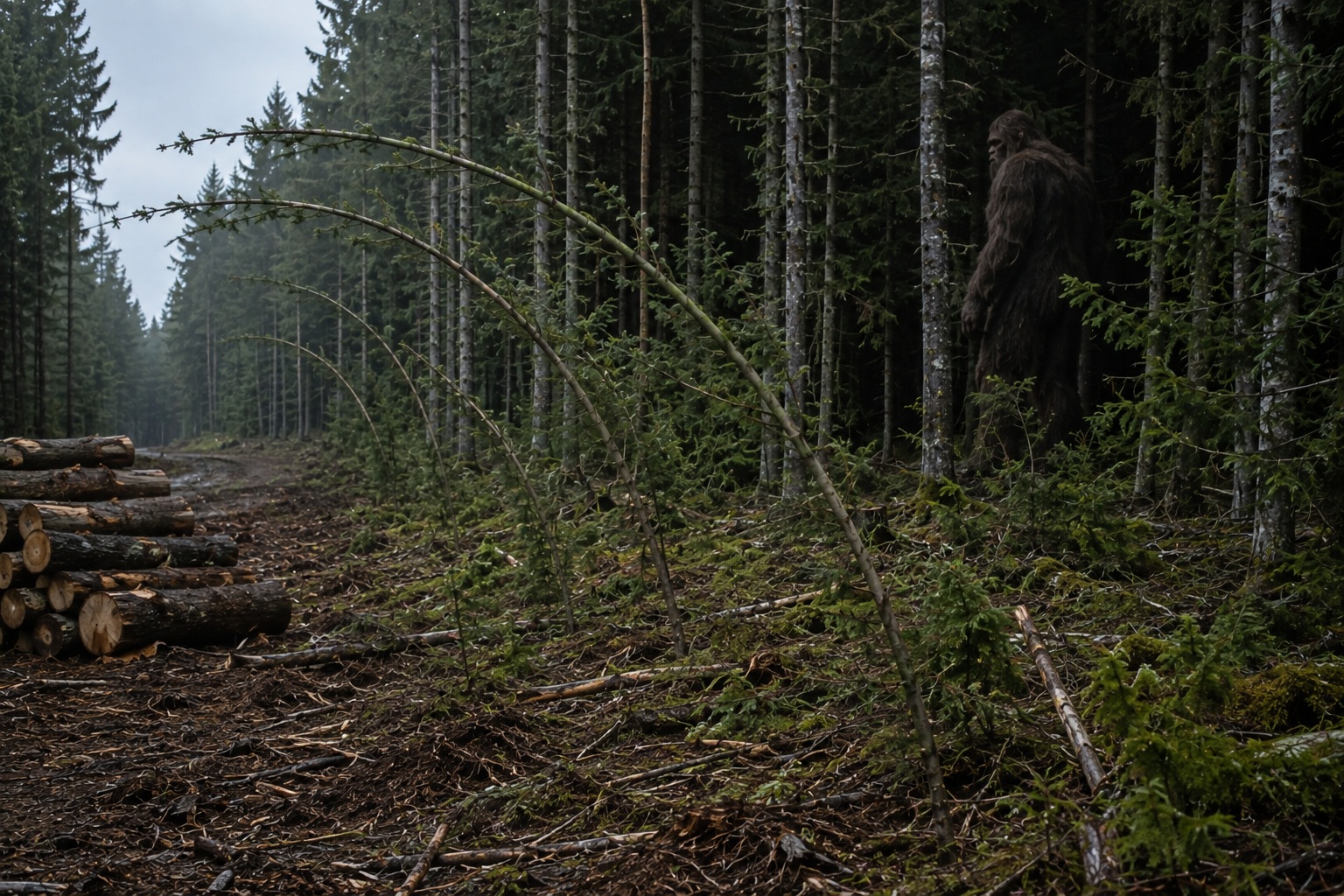
Ice storms bend flexible trunks without killing them. Falling trees can pin saplings underneath until they begin growing around the obstacle. Animals rub against young trees repeatedly. Soil movement changes root angles.
Strong prevailing winds shape forests over decades. Human activity also explains many unusual formations. Survey crews bend vegetation temporarily. Hunters create trail markers.
Children build shelters. Campers weave branches together. Forestry workers sometimes move saplings while clearing paths. In some places, Indigenous peoples historically bent young trees for trail markers, though many trees casually labeled this way today cannot be confidently linked to those traditions.
When viewed individually, most bent trees probably have ordinary explanations. Forests are dynamic places where living wood responds to weather, gravity, and time in surprising ways.
When Witnesses Think Those Answers Feel Incomplete
The stories become more unsettling when several unusual details happen together.
A witness might find multiple healthy bent trees within a short distance. Nearby, oversized footprints appear in fresh mud beside the logging road. No vehicle tracks explain how they arrived. The area suddenly becomes unnaturally quiet.
Birdsong stops. Even insects seem absent. Then comes the smell. Then the distant movement.
Finally, someone catches sight of an enormous figure stepping behind trees that should not be wide enough to hide something so large. Any one of those details could have a simple explanation. Together, they create a memory that feels much harder to dismiss. That combination is why witnesses often remember the bent trees so vividly.
The trees become the first chapter of a much stranger afternoon. Later, when telling the story, people naturally begin with the thing they saw before everything else changed.
Why Bent Trees Feel Like Messages Instead Of Accidents
Humans naturally search for intention.
We are remarkably good at recognizing arrows, faces, trails, and patterns even when none were deliberately created. That ability has obvious advantages. It helps us navigate landscapes, recognize danger, and notice changes in familiar places. It also means unusual arrangements of natural objects can feel meaningful.
Several bent trees pointing in roughly the same direction immediately invite interpretation. People begin asking questions. Are they markers? Warnings?
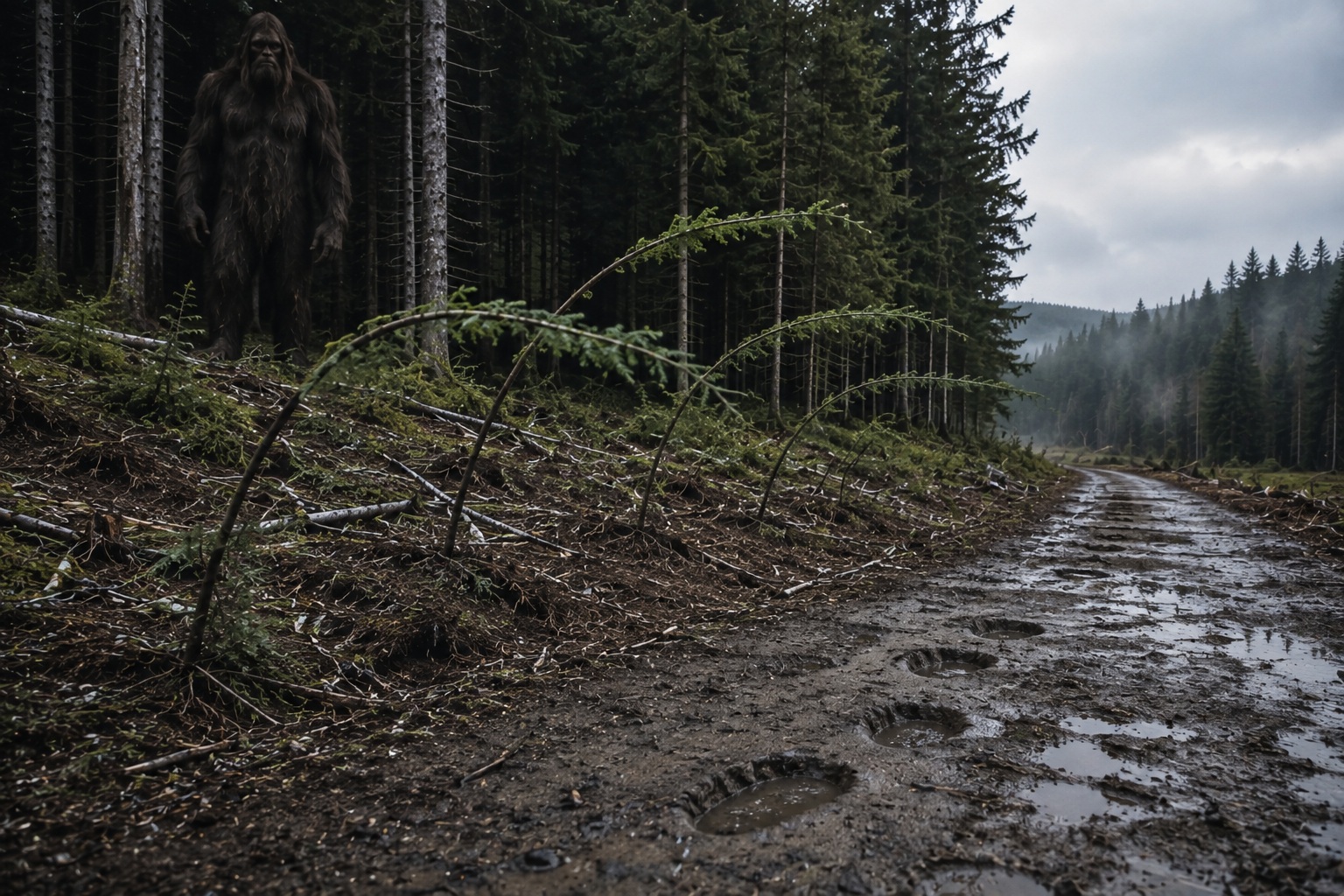
Shelters? Territory boundaries? Even if no answer exists, the questions themselves reshape the experience. Instead of seeing separate damaged trees, witnesses begin seeing one connected arrangement.
That shift makes later events seem related. A heavy footstep no longer sounds random. A snapped branch becomes part of a sequence. The brief glimpse of a towering figure suddenly feels like the explanation for everything that came before.
Whether or not that conclusion is justified, the human mind naturally links nearby events into one story.
The Forest Looks Different After You Notice One
Many hikers who later share unusual experiences say they never paid attention to bent trees before that day. Afterward, they notice them everywhere.
Some return with friends expecting to find the same formations. Others discover perfectly ordinary explanations once they revisit the area in daylight. Still others insist the trees themselves have changed or disappeared after logging operations continue. Those changing landscapes make verification difficult.
Logging roads evolve quickly. Fresh cuts become young forests. New roads replace old ones. Heavy machinery reshapes the ground.
Storms alter familiar landmarks. By the time someone returns weeks later, the exact setting may already look different. That uncertainty keeps these stories alive. The bent trees remain just unusual enough to invite questions but ordinary enough that no single explanation satisfies everyone.
This Small Detail Stays In Bigfoot Folklore
Bigfoot stories rarely depend on one dramatic moment alone. Instead, they build from a chain of small observations. An unusual smell.
Fresh prints. A strange silence. Heavy footsteps. Tree knocks.
Then, perhaps, one brief glimpse of something impossibly large standing where no person should be. Bent trees fit perfectly into that pattern. They are visible before anything frightening happens. They encourage people to slow down and look closer.
They create the uneasy feeling that someone—or something—has already been there. Whether those formations come from weather, wildlife, people, or simple coincidence, they continue appearing in stories because they change how witnesses experience the forest. The next snapped branch sounds different. The next shadow between trees holds your attention longer.
And if you happen to glance back toward the edge of a quiet logging road and see a huge hairy figure standing perfectly still beside a row of bent young cedars, the trees may not be the part of the story you remember most. They are simply the moment when the ordinary walk ended, and every step afterward felt like someone else already knew exactly where you were going.