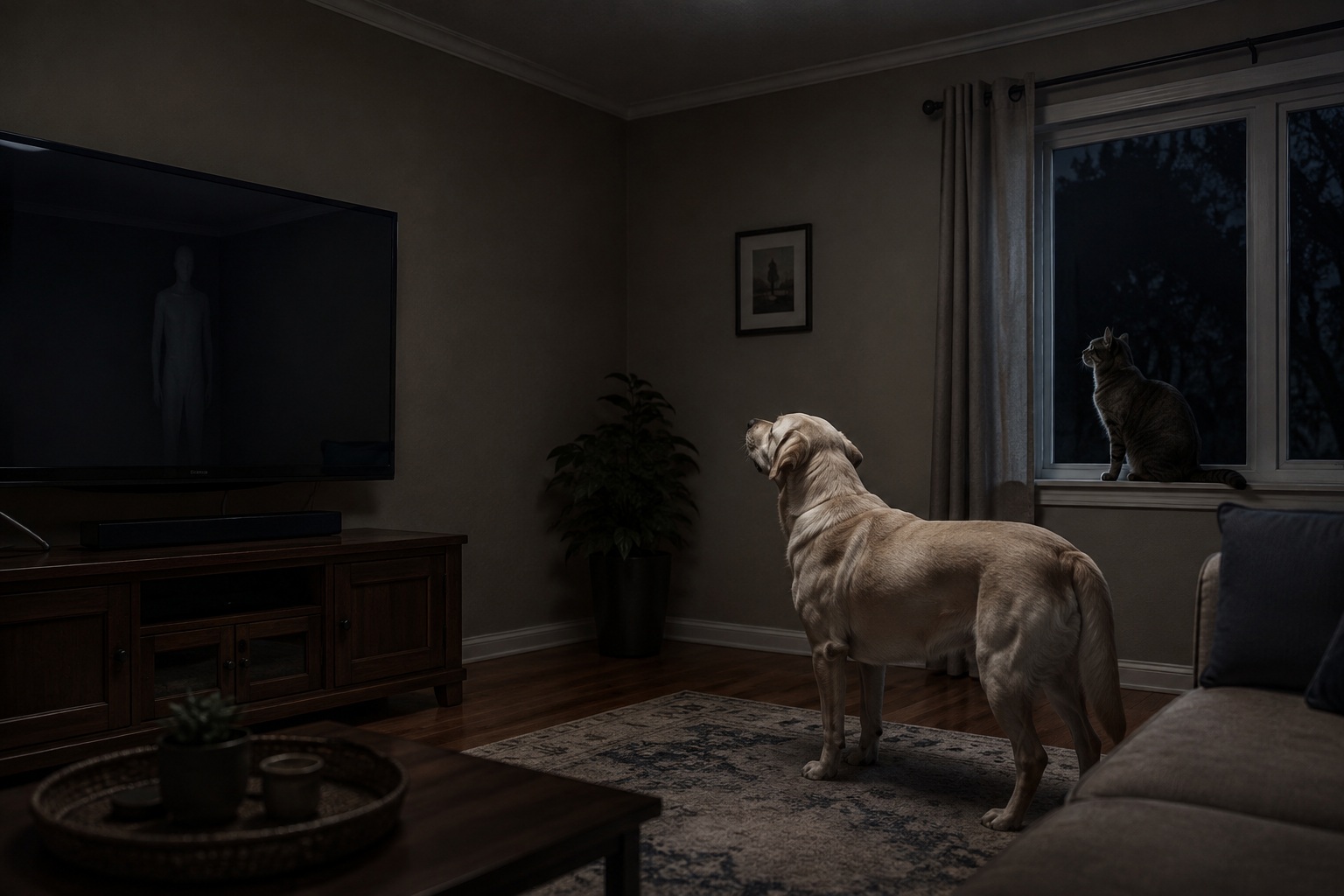
The dog had been asleep for nearly an hour when it suddenly lifted its head. Nothing had moved in the living room. The television was off. Rain tapped softly against the windows, and the only light came from a small lamp beside the couch. Yet the old Labrador stood up without making a sound and stared into the far corner of the room.
Not at the wall.
Not at the bookshelf. At the empty space just above them. Its ears stayed forward. Its tail didn't wag. It didn't bark. It simply watched as though someone had quietly walked into the house and stopped there.
Its owner called its name twice. The dog never looked away. Then the family cat, which had been grooming itself on the windowsill, froze too. It slowly turned its head toward the exact same corner. For several seconds both animals remained perfectly still, focused on a place where nobody else could see anything.
Only afterward did the owner notice something unsettling. The corner wasn't completely empty anymore. For just a second, in the reflection of the dark television screen, there seemed to be a pale figure standing where the pets had been staring. When they looked directly at the corner, nothing was there. When they glanced back at the screen, the shape was already gone.
Stories like this appear again and again in ghost discussions, witness statements, and late-night conversations. Long before someone says they saw a shadow or a blurred person, they often describe a dog, cat, or even a bird behaving strangely first. So why do so many apparition reports begin with animals quietly watching an empty corner?
Why Corners Appear So Often In Ghost Stories
Corners are ordinary places that most people ignore. They collect shadows, stay slightly darker than the rest of a room, and often sit just outside the area people naturally focus on. That alone makes them perfect places for imagination to fill in missing details.
But witnesses rarely describe pets acting as though they simply noticed a dark spot. Instead, they describe focused attention. Dogs reportedly sit upright with their ears aimed toward one location. Cats slowly track something invisible across the ceiling before stopping at one corner. Some owners say their pets appear to watch someone standing still rather than chasing movement.
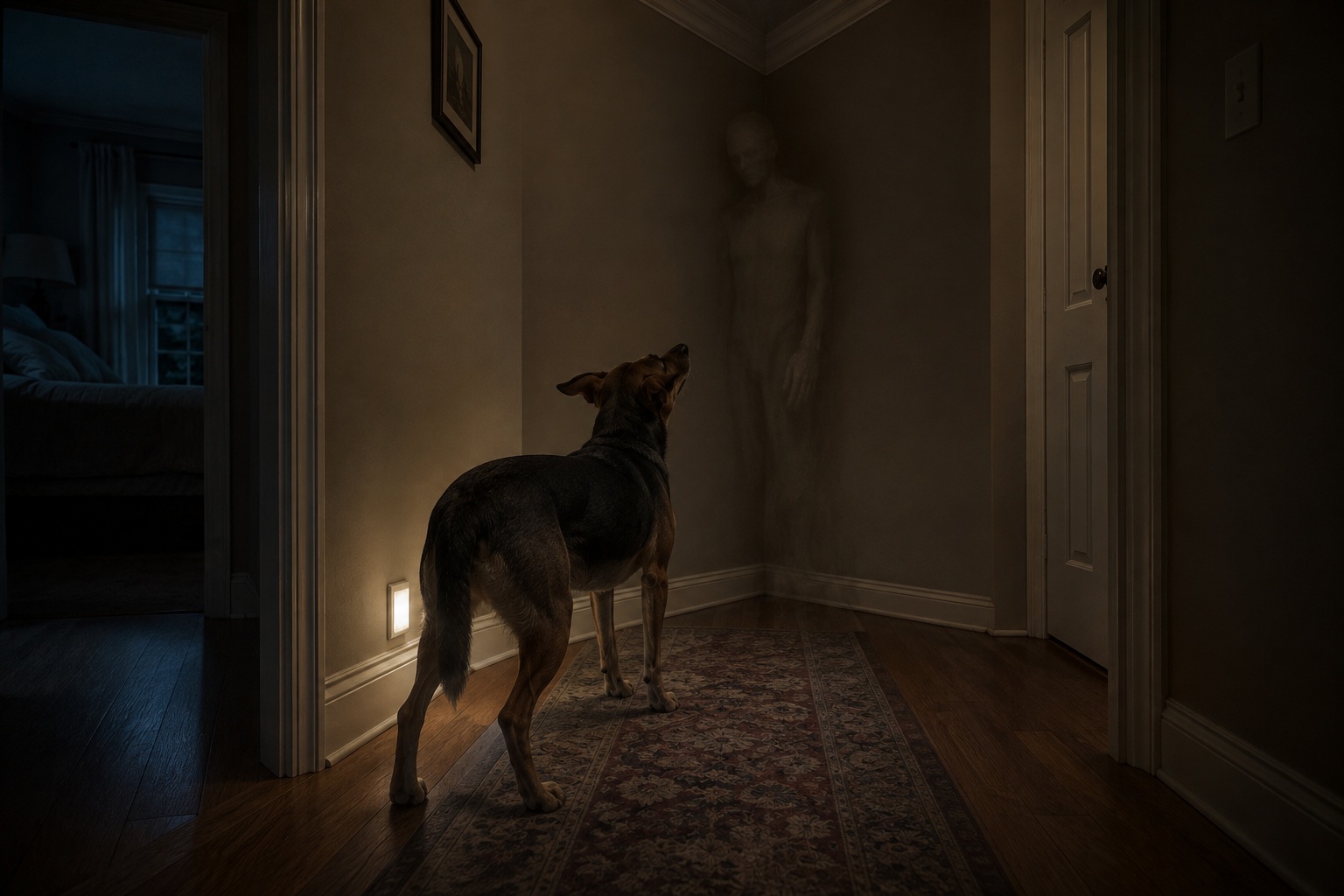
That difference matters because people interpret deliberate attention differently from random curiosity. A dog sniffing around the room feels normal. A dog standing perfectly still for several minutes while staring at the same empty space feels much harder to ignore. Many apparition stories begin exactly there—not with the person seeing something unusual, but with the unsettling feeling that their pet is reacting to someone who shouldn't be inside the house.
The Small Details Owners Notice First
People often remember the animal's behavior more clearly than the figure itself. Witnesses commonly mention that the pet becomes unusually quiet. Dogs that normally bark remain silent.
Cats stop blinking. Birds suddenly refuse to return to a perch they usually use every evening. Owners also notice that the animals seem unusually confident about where they are looking. Instead of scanning around the room, their attention stays fixed on one exact point.
Many stories describe pets following something that appears to move very slowly across the room before stopping near a doorway, staircase, or ceiling corner. Only afterward do people begin questioning what the animal might have been watching. That order is important because it changes how the experience is remembered. Instead of someone imagining a ghost first and then noticing strange pet behavior, the concern begins with the animal.
Whether that changes what really happened is another question, but it certainly changes how people tell the story later.
Can Animals Sense Things Humans Miss?
There are plenty of ordinary reasons pets notice things before people do. Dogs hear higher frequencies than humans.
Cats can detect tiny movements that people overlook. Many animals respond to vibrations through floors, distant footsteps, plumbing noises, insects inside walls, or electrical sounds that never register consciously for their owners. A loose vent clicking inside a wall may be obvious to a dog long before a person notices it.
Mice inside the ceiling can attract a cat's attention for several minutes. Even changing air pressure before a storm can alter animal behavior. These explanations account for many reports. But they don't explain every detail that witnesses describe.
People become uncomfortable when the animal behaves as though it is watching someone rather than listening for a sound. Owners sometimes describe their pets tracking eye level across an empty room, pausing where a person would naturally stand. Others say their dogs appeared to greet someone silently before becoming nervous only after the unseen point approached them.
Those descriptions feel different because they resemble social behavior rather than hunting behavior. Whether that interpretation is correct is impossible to know, but it explains why these moments stay in people's memories.
Why Reflection Stories Make The Reports More Disturbing
Many apparition reports include one extra detail that changes the entire experience.
The owner finally looks where the pet has been staring. Nothing. Then they notice a reflection. Not necessarily in a mirror.
It might be a television screen after dark, a glass cabinet, a polished picture frame, or a window reflecting the room behind them. For a brief moment they think they see someone standing exactly where the dog has been watching. The shape usually isn't described as a normal person.
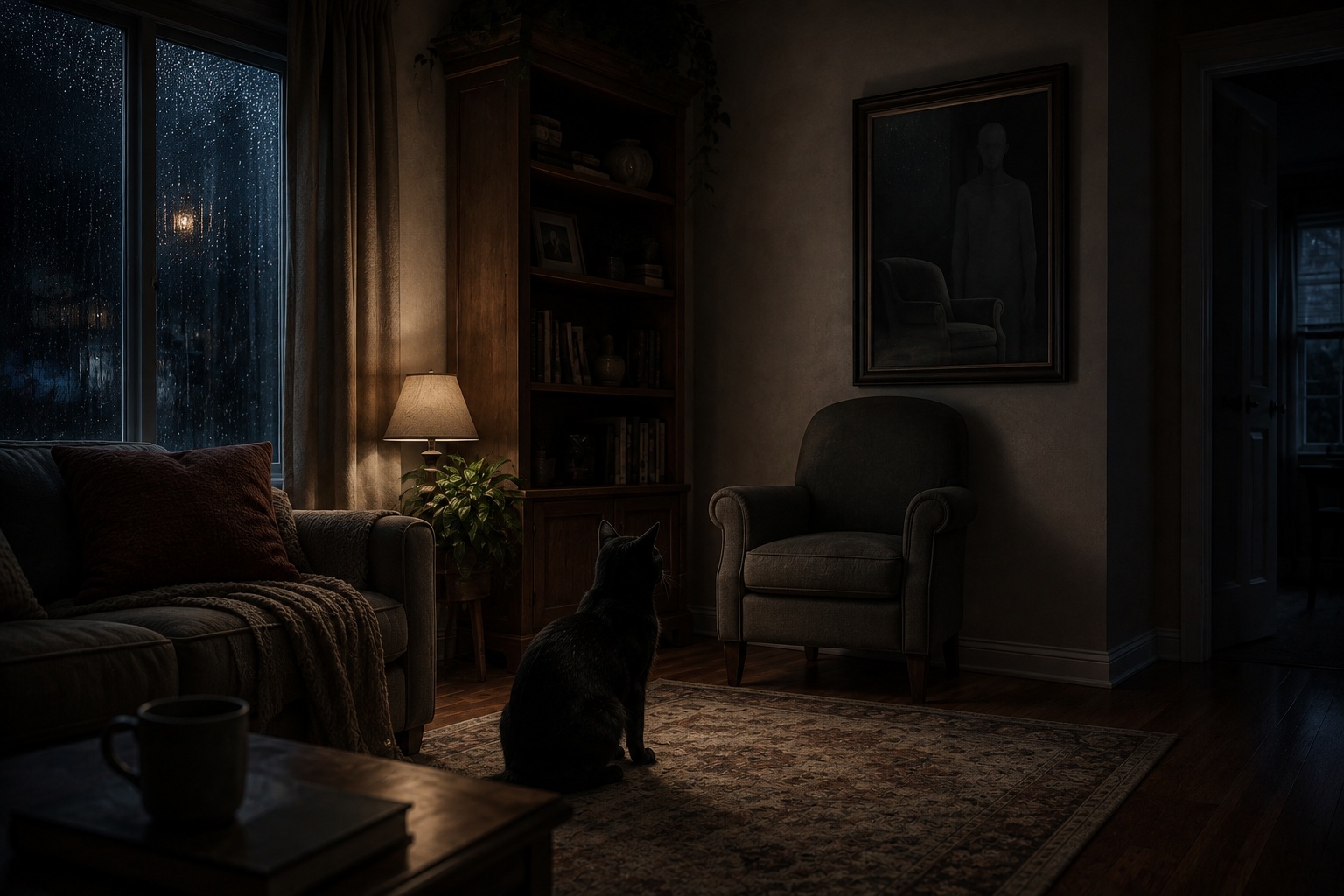
Witnesses often say the figure looks faded, lacks facial detail, or appears slightly transparent. Sometimes it seems taller than expected. Sometimes it disappears as soon as they turn around. Reflection stories are unsettling because they create a mismatch.
Looking directly into the room shows nothing.
Looking at the reflection suggests someone is there. Whether this comes from lighting, angle, tired eyes, or something harder to explain, it leaves people questioning which version of the room they actually trusted.
Why The Experience Feels So Personal
Ghost stories involving strangers are frightening.
Ghost stories involving family pets feel personal. People trust their animals because they have watched them react accurately to visitors, wildlife, delivery drivers, and familiar household sounds for years. When that same trusted behavior appears without any visible cause, owners naturally wonder what changed.
Psychologists also note that humans quickly search for patterns when something unexpected happens. If the dog stares into one corner and the lights flicker ten minutes later, the two events become connected in memory even if they had separate causes. If someone later remembers seeing a faint reflection, that memory can become even stronger over time.
Memory isn't a video recording. It is reconstructed every time we think about it. That doesn't mean witnesses invent experiences. It simply means that emotionally powerful moments become organized into stories our brains can understand.
A silent pet staring into darkness provides an unforgettable starting point.
When Witnesses Say The Normal Explanations Feel Less Convincing
Most reports eventually settle on ordinary answers. Hidden animals.
Heating systems. Streetlights creating unusual shadows. Reflections from passing cars. Fatigue after long workdays.
These explain many experiences remarkably well. Yet some stories continue because several unusual details appear together. Owners describe multiple pets watching the same empty location. Visitors who know nothing about previous experiences become uncomfortable in exactly the same corner.
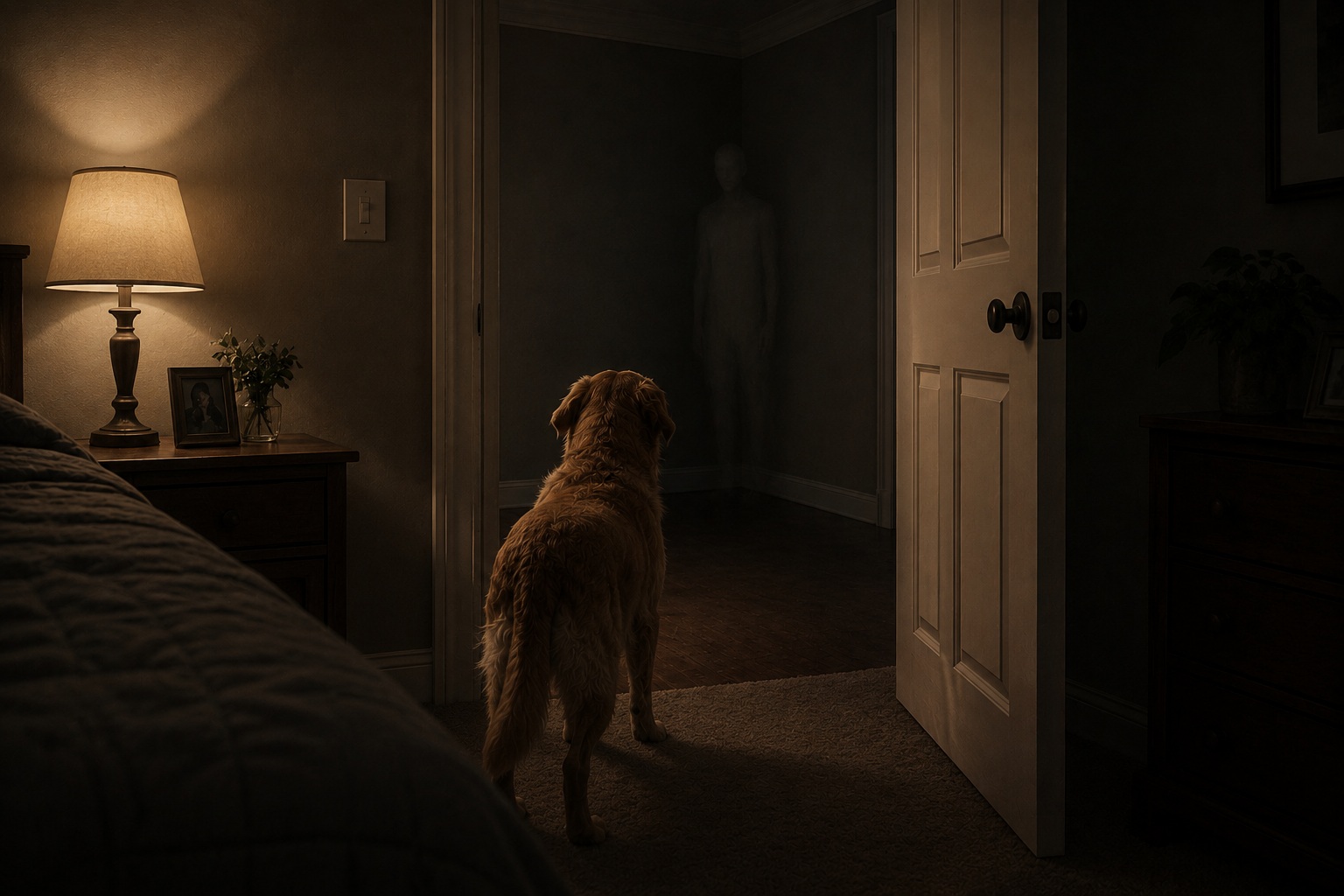
Someone later notices a pale figure reflected only from one angle. The pet suddenly relaxes at the exact moment the shape seems to disappear. Individually, each detail may have a simple explanation. Together, they become harder for witnesses to dismiss emotionally.
That doesn't mean an apparition was present. It explains why these stories remain memorable years later. People are rarely strange by one strange event. They are strange by several ordinary events that seemed to fit together too perfectly.
Why These Stories Continue To Spread
Stories about pets reacting first are easy to imagine because nearly everyone has watched an animal suddenly become interested in something they couldn't immediately identify. The situation feels believable before anything paranormal even enters the picture. Only after the unexplained behavior continues do people begin asking larger questions.
That slow progression makes these accounts feel more convincing than stories that begin with a dramatic ghost appearing out of nowhere. The fear grows naturally. First the dog watches. Then the cat notices.
Then someone thinks they saw a blurred person standing exactly where the animals had been looking. Finally they discover nothing is actually there. That sequence has appeared in books, local stories, family conversations, and modern online discussions for decades because it follows the way people naturally process uncertainty.
The animals react. The people investigate.
The room remains ordinary. Yet one small detail never quite fits.
The Question People Keep Asking
No one can say with certainty whether pets sometimes notice something people cannot. Science offers many strong explanations involving hearing, smell, movement, and environmental changes, and those likely account for countless reports. At the same time, stories about apparitions continue because they often include one extra moment that witnesses struggle to explain away completely.
It isn't usually a floating ghost or dramatic haunting. It's something much quieter. A dog refusing to leave one corner. A cat staring above an empty chair.
A reflection that briefly contains someone the room does not. Most people eventually move on. Some laugh about it later. Others never look at that corner quite the same way again, especially when their pet suddenly stops playing, raises its head, and begins watching empty space with complete attention.
Perhaps the animals hear something.
Perhaps they see something ordinary that people miss. Or perhaps the reason these stories endure is simpler than either explanation. When the first witness in a ghost story cannot speak, people are left trying to interpret the silence for themselves.