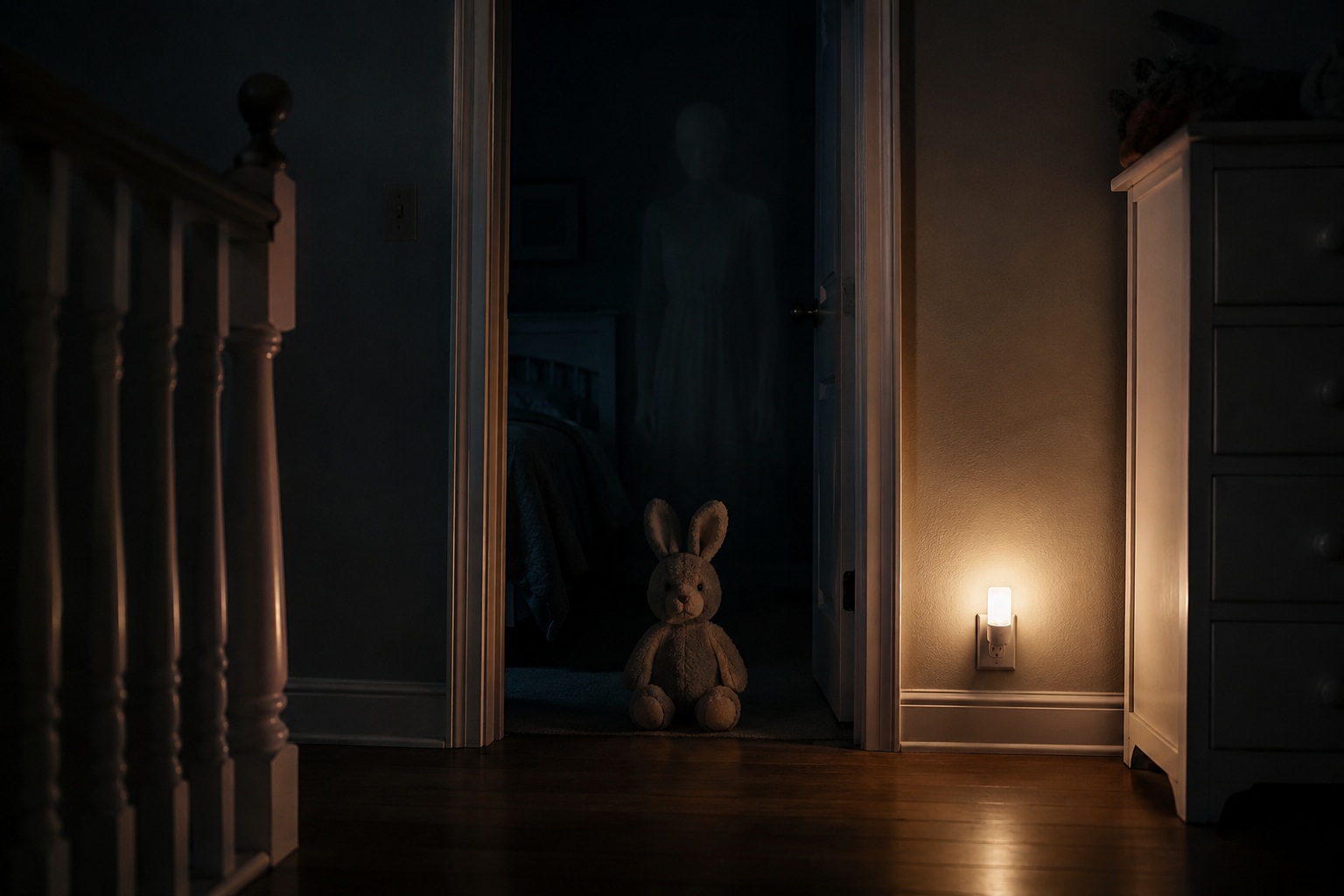
The stuffed rabbit hadn't been there when the family went upstairs. Everyone agreed on that much. It was sitting perfectly upright in the middle of the bedroom doorway, facing the hallway instead of the room where it normally stayed. The toy's stitched smile looked harmless in the soft glow from the night-light, but something about the placement felt deliberate. The father picked it up without saying anything and placed it back in the toy basket.
Half an hour later, while checking on his daughter after hearing a strange creak, he stopped again. The rabbit was back in the doorway.
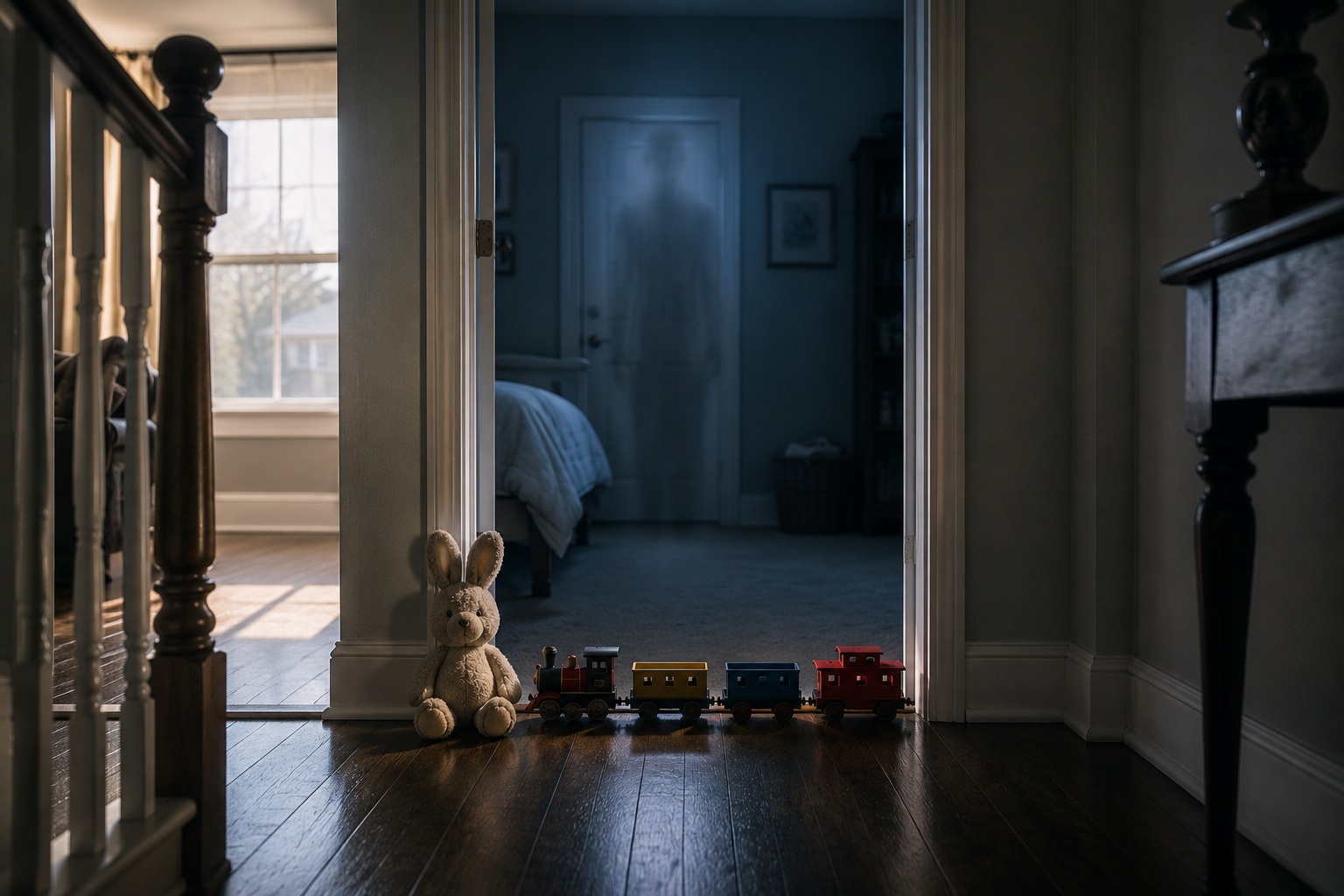
This time another toy sat beside it. A small wooden train rested across the threshold as though someone had carefully lined up both objects where anyone walking through would immediately notice them. Nothing else had moved. The bedroom window was closed. The child was asleep beneath the blankets. Even the family dog refused to cross the doorway, standing several feet away with its ears low while staring into the dark room.
Stories like this appear surprisingly often in ghost discussions. The toys themselves are ordinary. What makes people uneasy is not that something moved, but where it appeared. Why do so many ghost stories begin with toys arranged in doorways, and why does that simple detail stay with witnesses long after the rest of the night fades?
The First Time It Happened
Most toys are expected to be scattered across bedrooms, living rooms, or playrooms. Finding one in the middle of a doorway feels different immediately. A doorway isn't just another spot on the floor. It separates one place from another. It is where someone enters, leaves, watches, or waits. Because of that, objects placed there naturally attract attention.
Many reported ghost stories begin with someone noticing an everyday object blocking a threshold. Sometimes it is a doll. Sometimes it is a toy car, stuffed bear, or children's book. The item usually isn't damaged or frightening by itself. Instead, it feels intentionally placed.
That small change transforms an ordinary room into something people suddenly hesitate to enter. The doorway becomes the focus rather than the room beyond it. Even readers who do not believe in ghosts often admit they instinctively imagine someone standing just inside the darkness beyond the toy.
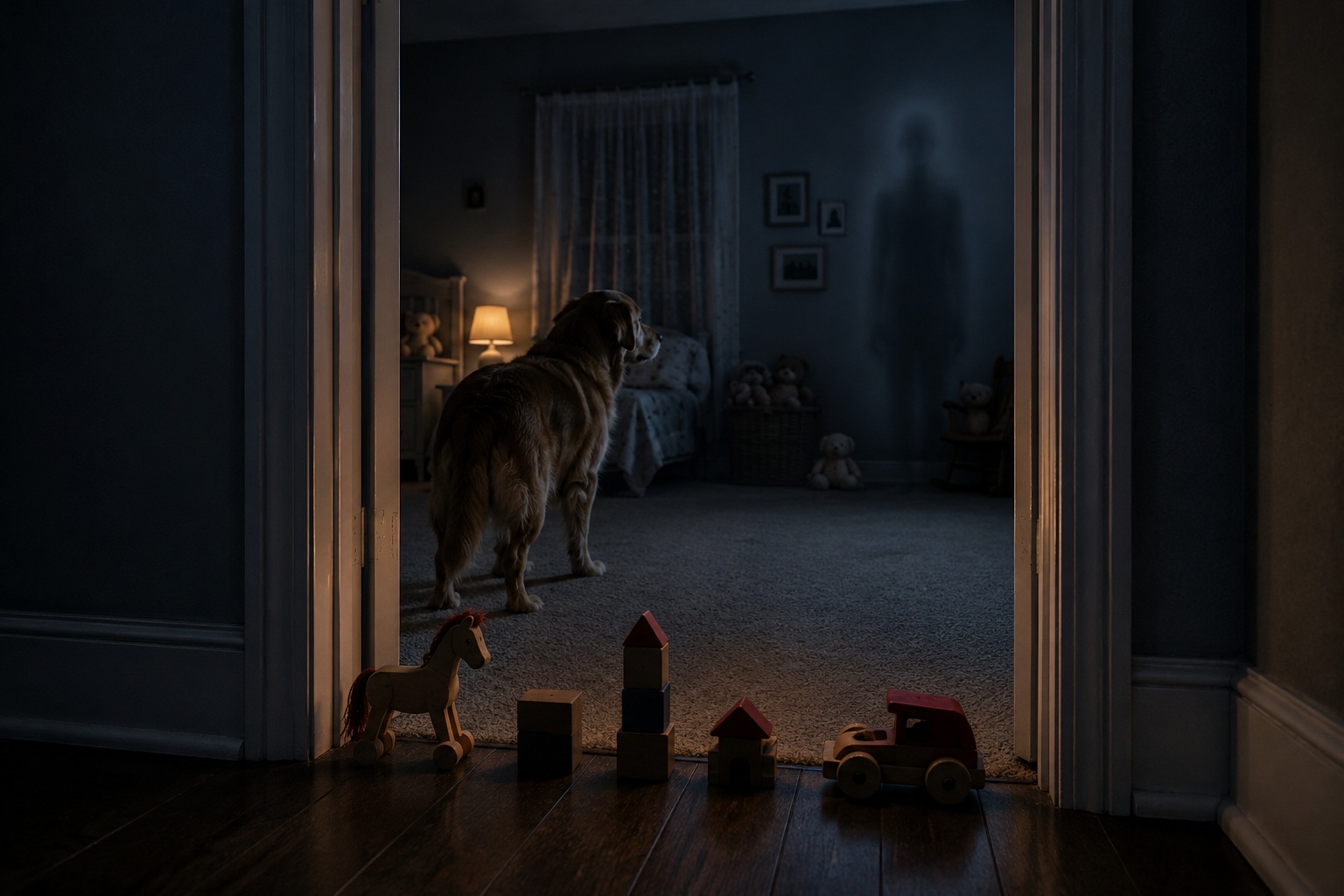
A shoe left in the hallway rarely becomes the center of a ghost story. A teddy bear often does. Children's toys already carry emotional meaning. Parents recognize where favorite toys belong because they see them every day. When one appears somewhere unexpected, people notice immediately.
That familiarity makes the change more unsettling. Witnesses often describe toys sitting upright instead of lying naturally after being dropped. Others mention dolls facing the hallway instead of facing the room. Some stories describe several toys lined neatly across a doorway while everything else in the room remains untouched.
Why The Place Felt Wrong
Whether someone believes a ghost moved them or not, the careful placement becomes the detail everyone remembers. It feels purposeful instead of random.
Most people do not immediately decide something supernatural happened.
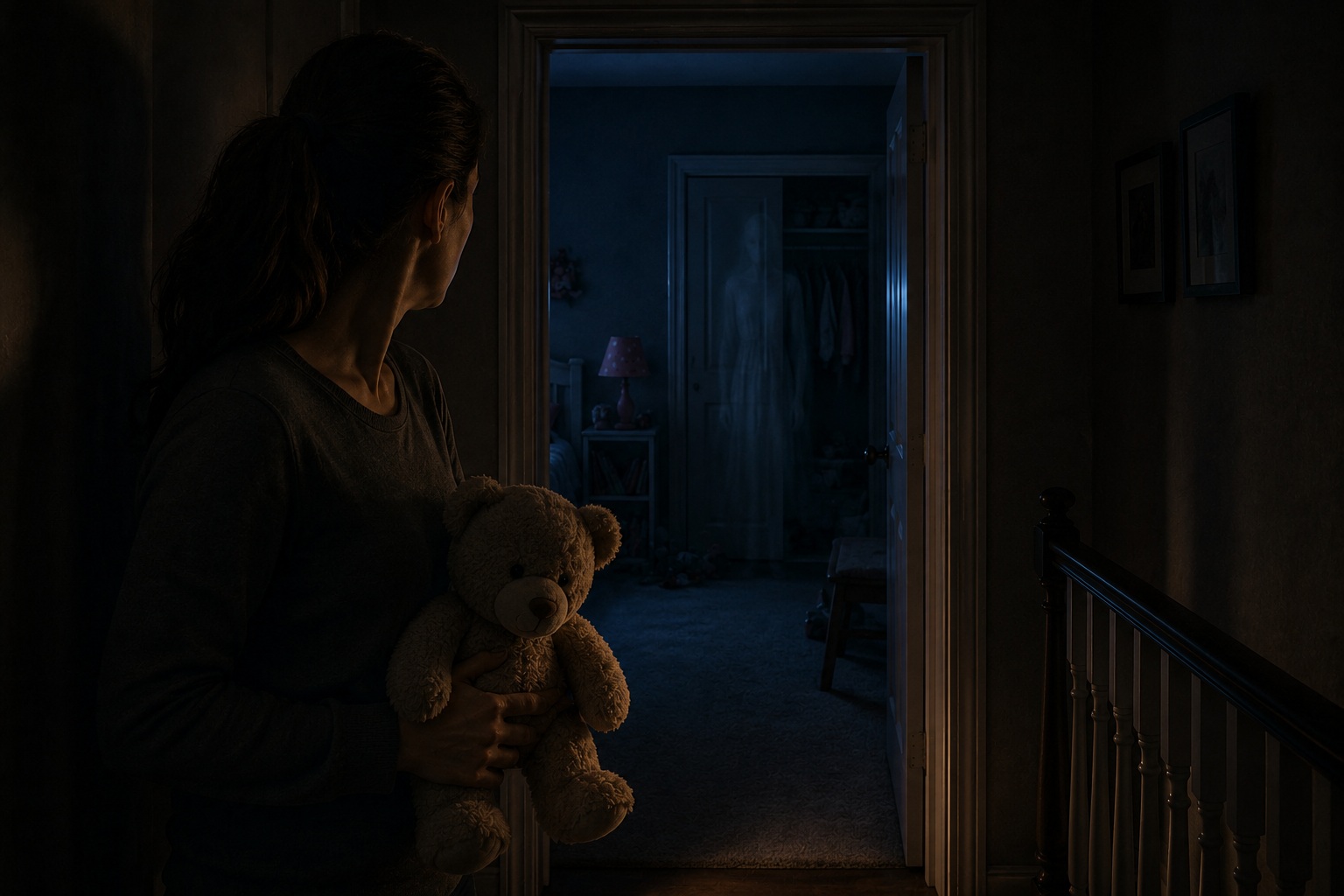
They start checking ordinary explanations. Parents ask whether another child was awake. They look for pets that may have carried soft toys into the hallway. They wonder whether they absentmindedly moved the item earlier in the evening.
Sometimes those explanations solve the mystery. A toddler wandered around after bedtime. The family dog picked up a stuffed animal. Someone forgot cleaning up before going upstairs.
But many ghost stories become memorable because witnesses believe those possibilities no longer fit what they found. Several toys appear standing neatly instead of scattered. Heavy wooden toys end up balanced upright. Objects return to the same doorway after being moved elsewhere.
The Detail Nobody Could Explain
These repeated details make people question their first assumptions.
Many doorway toy stories include one extra detail that changes the entire mood. Someone thinks they see a person.
Not clearly. Usually the figure has no readable face. It may appear transparent, blurred, unusually tall, or standing partly inside the darkness of another room. Sometimes witnesses describe seeing the shape only for a second before it fades.
Others report noticing it only after looking back toward the doorway where the toys were sitting. The figure rarely does anything dramatic. It simply stands there. That stillness often feels stranger than movement would.
The toys seem almost like markers drawing attention toward the place where the figure briefly appeared. Whether this reflects imagination, poor lighting, or something people cannot explain, it becomes the emotional center of the story. The toys themselves stop being important. Instead, they become the beginning of whatever came next.
What They Checked Afterward
Ghost stories involving toys often become family stories told for decades. Part of that comes from how ordinary the setting is. There are no abandoned hospitals or strange castles.
The story happens inside a familiar home. It begins during bedtime, after cleaning up, while checking children, or while walking quietly through a hallway everyone knows well. Nothing dramatic has happened yet. Then one impossible-looking detail appears.
Because parents spend years noticing where toys belong, they trust those memories more than they might trust remembering the exact position of other household objects. That confidence makes the experience harder to dismiss emotionally. Even if someone later finds a reasonable explanation, the uneasy feeling often remains because the memory is attached to protecting children rather than simply solving a puzzle.
The emotional connection lasts much longer than the mystery itself.
Across many cultures, doorways are treated differently from ordinary spaces. People decorate entrances.
The Moment It Became Harder To Ignore
They bless thresholds. Some traditions avoid leaving certain objects directly across a doorway overnight. Others tell stories about spirits waiting near entrances rather than inside rooms. These traditions developed independently in many places, making doorways feel symbolically important even to people who have never studied folklore.
Modern ghost stories naturally borrow from that idea. Instead of ancient symbols, today's stories use everyday household items. A stuffed rabbit replacing an old protective charm. A toy train sitting where an old tale might once have placed a candle.
The objects change, but the feeling remains remarkably similar. The doorway represents transition. Something ordinary suddenly feels uncertain. That symbolism helps explain why these stories spread so easily.
Readers instantly understand the image without needing complicated background.
There are practical reasons toys move. Children sleepwalk.
Why People Avoided That Spot Later
Pets carry objects. Cleaning routines leave things in unusual places. People remember events imperfectly. All of those happen regularly.
The interesting part comes when witnesses describe combinations that seem harder to explain together. Several toys arranged neatly after everyone was asleep. Objects returning repeatedly to the same threshold. A pet refusing to enter despite normally sleeping in the room.
A family member briefly seeing a pale human-shaped figure beyond the doorway immediately before noticing the toys. Each detail alone has possible explanations. Together they create a story that feels much larger than its individual parts. That doesn't automatically mean something supernatural occurred.
It explains why the experience becomes memorable enough to tell others. People remember patterns more than isolated events. The doorway, the toys, and the silent figure become linked into one vivid scene.
Many famous ghost stories do not begin with loud noises or floating furniture. They begin with something quietly wrong. A chair facing the wrong direction. A photograph hanging crooked overnight.
Why The Story Still Gets Shared
A bedroom door standing open when everyone remembers closing it. Toys arranged across a doorway belong to that same family of stories. The image is simple enough that anyone can picture it immediately. Parents especially understand how unusual it feels because they instinctively recognize when a familiar toy appears somewhere it shouldn't.
The story grows from that first uncomfortable moment. People check the room. They look under beds. They call another family member.
Sometimes nothing else happens. Other times they report hearing footsteps, seeing a blurred person standing inside the room, or finding the toys moved again before sunrise. Whether those later details have ordinary explanations or remain mysteries, the beginning rarely changes. It started with a toy waiting in the doorway.
Perhaps that is why the image remains so powerful. The toy itself is harmless. The doorway is ordinary. The house is familiar.
But together they suggest that someone else may have decided exactly where that toy should be placed—and might still be standing quietly beyond the threshold.