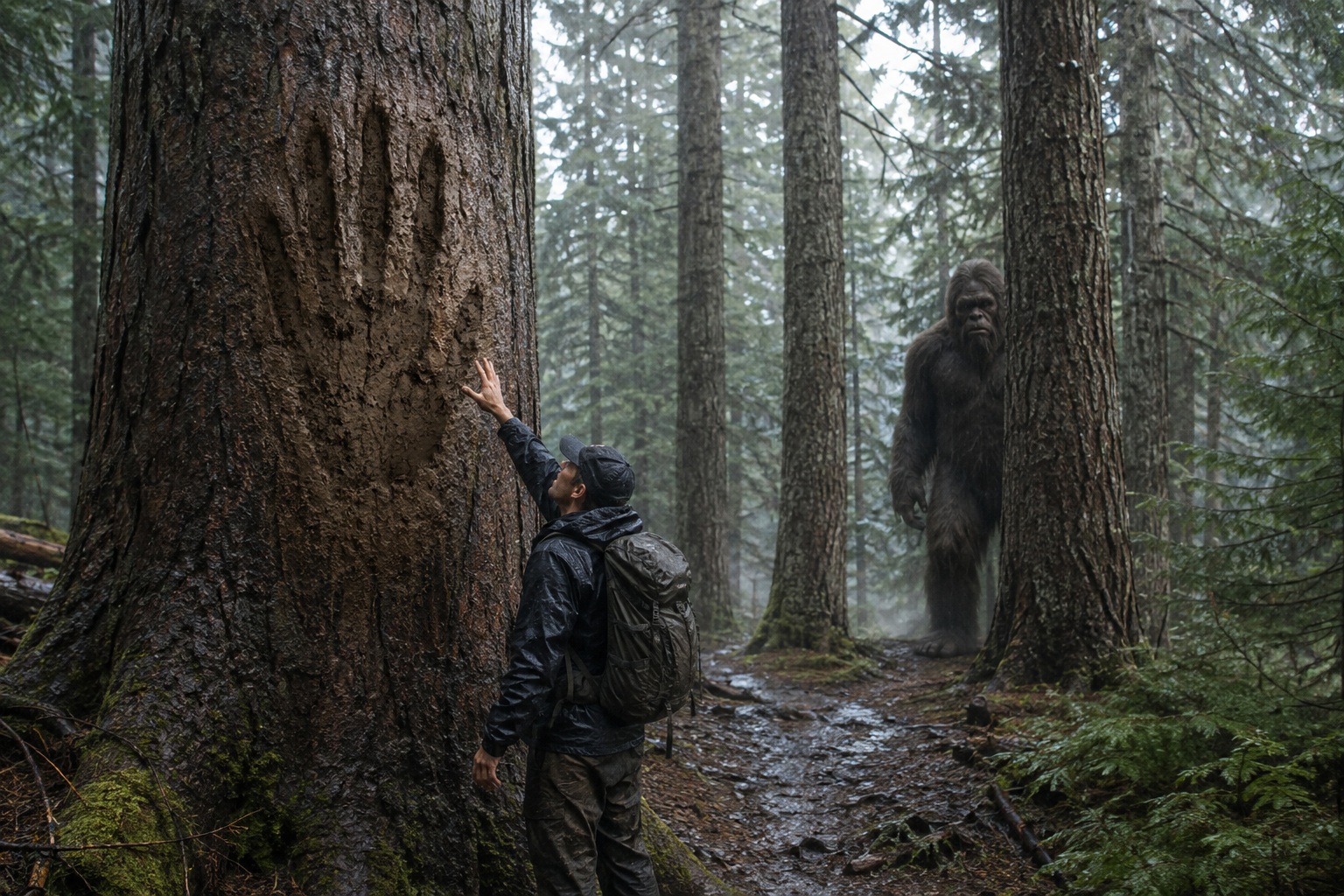
The first handprint was almost seven feet above the ground. It wasn't the size that made the hikers stop. It was the mud. Rain had ended before sunrise, leaving the forest floor soft and dark. Every fallen branch was damp. Every boot picked up fresh mud within a few steps. Yet the smear on the pine trunk looked newer than the storm itself, as if someone had pressed a wet hand against the bark only minutes earlier.
One person reached up and touched it. The mud was still cold. They searched for climbing marks, broken branches, or a place where someone might have stood. The bark below the print was untouched. No boot impressions led close enough to explain it. The trunk was too wide to climb easily, and the nearest rock sat several yards away.
Only after turning around did someone notice another handprint on a second tree farther down the trail. Both were facing the same direction. That small detail changed the walk home. It no longer felt like random mud left by another visitor. It felt like something unusually tall had paused beside the trail, placed a hand on each tree while moving through the woods, and continued without leaving any obvious sign of where it went.
Stories like this appear surprisingly often in Bigfoot discussions. People describe muddy handprints placed much higher than expected, usually after rain, often near places where someone also reported hearing heavy footsteps, tree knocks, strange whistles, or seeing a large hairy figure disappear between the trees.
So what are those marks supposed to mean, and why do they stay in people's memories long after the footprints have washed away?
Footprints naturally draw attention because everyone understands how they happen. Handprints are different.
The First Time It Happened
Most people don't touch tree trunks while hiking. Even children usually run past them rather than stopping to press muddy palms against the bark. When someone suddenly notices a fresh handprint well above normal reach, the mind immediately starts asking who put it there and why.
Height matters because people estimate it almost instantly. Even without measuring, most hikers know roughly how high they can comfortably reach. If the print sits another foot or two above that point, it immediately feels wrong. Bigfoot stories often describe creatures between seven and nine feet tall. Because of that, unusually high marks on trees become part of the larger picture witnesses are already trying to understand.
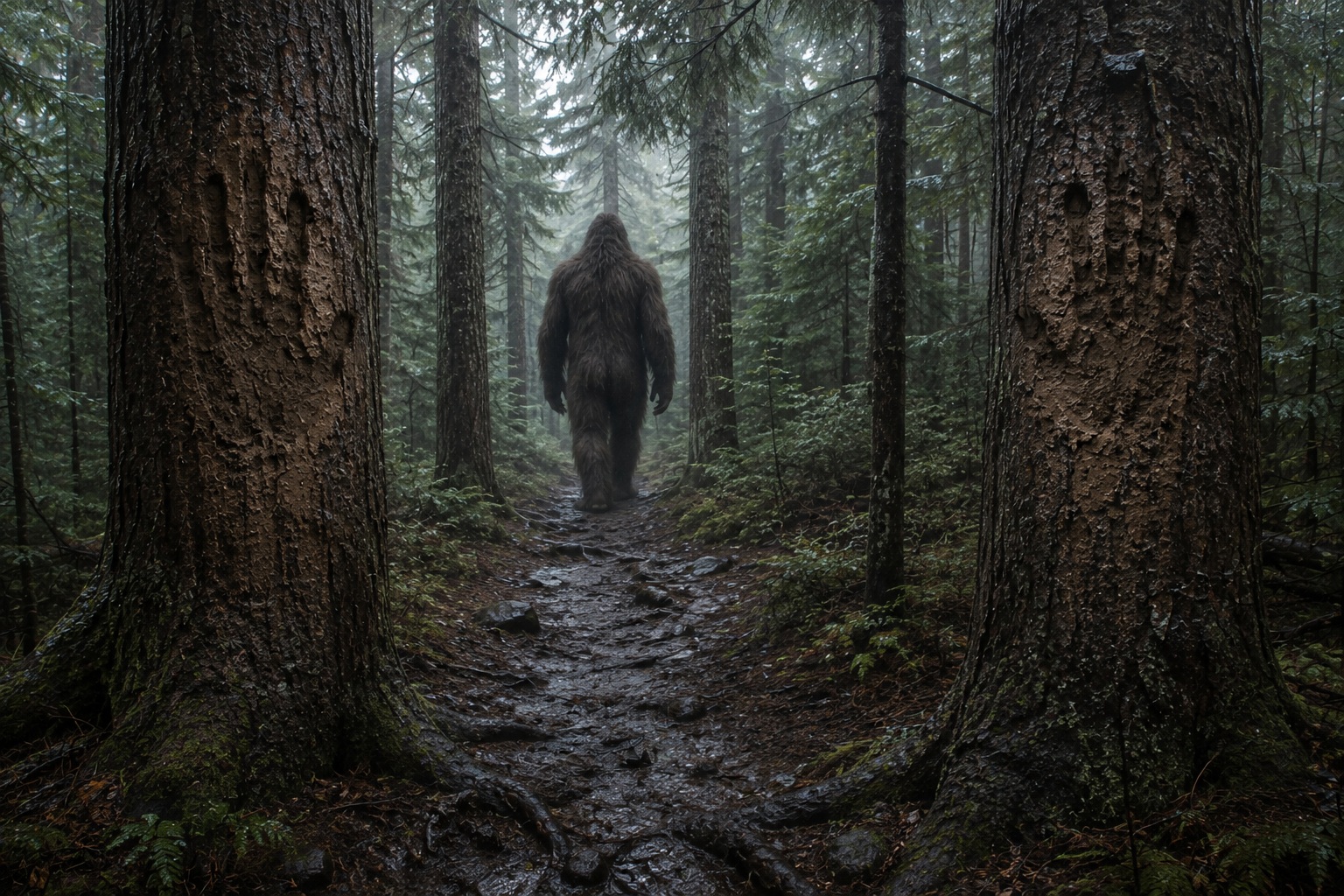
One mark alone might not seem remarkable. Several placed along the same path begin to feel much harder to dismiss.
Many reports mention these marks after wet weather.
That makes sense for ordinary reasons as well. Wet mud sticks to skin more easily. Damp bark also holds fresh smears longer before drying. But witnesses often describe something else. The surrounding trees remain mostly clean while only one or two trunks carry obvious muddy prints.
Why The Place Felt Wrong
Sometimes they appear beside game trails. Sometimes along old logging roads. Sometimes close to narrow creek crossings where people already feel isolated. The reports usually describe the same sequence.
Someone notices the print. Everyone starts looking upward instead of at the ground. Only then does the forest begin feeling unusually quiet. Whether that silence has any meaning or simply comes from people stopping to listen is impossible to know, but the emotional shift appears in story after story.
The discovery changes where everyone's attention goes. Instead of wondering what walked through the woods, they begin wondering what might still be standing nearby.
People rarely stop after finding the first mark.
They immediately begin checking nearby trunks. This habit appears throughout outdoor stories because repeating patterns usually mean more than isolated ones. If another handprint appears at roughly the same height, the idea of a random accident becomes less satisfying. Witnesses also compare the direction each print faces.
The Detail Nobody Could Explain
Are they pointing toward a creek? Toward thicker forest? Toward an open clearing? Some people even notice alternating left and right hand positions, making it seem as though something walked naturally between the trees.
Whether those impressions truly came from hands is another question. Mud slides. Rain changes shapes. Pieces of bark fall away.
Human memory also fills in missing details surprisingly quickly once someone says, "That looks like a hand." Still, repeated marks are one reason these stories continue circulating. People feel they are seeing a pattern rather than a coincidence.
Most hikers don't jump straight to Bigfoot. They begin with ordinary possibilities. Could another visitor have reached the spot while standing on a fallen log? Could someone have climbed the tree?
Did children play there recently? Could muddy gloves have left the mark? Sometimes these explanations work perfectly. A hidden stump, a leaning trunk, or a nearby rock can suddenly make an impossible height completely ordinary.
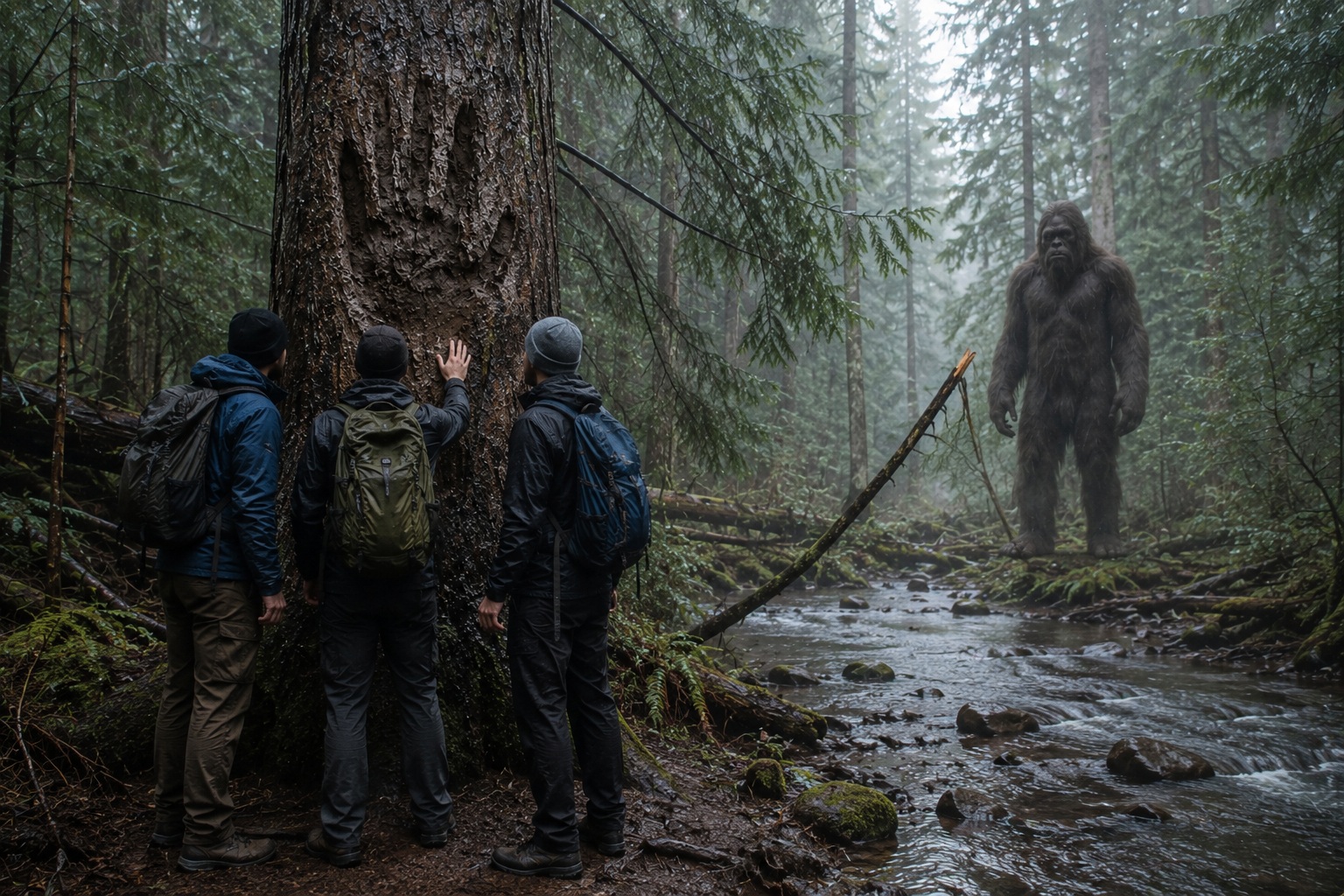
What They Checked Afterward
Hunters occasionally brace themselves against trees while crossing muddy ground. Forestry workers may leave dirty glove marks without realizing it. Even wildlife researchers handling equipment can accidentally transfer mud higher than expected. These possibilities explain many reported marks.
That is why experienced outdoors people usually inspect the area before deciding the print seems unusual.
Some reports become stranger because several details appear together. The tree stands alone with nothing nearby to climb.
The bark below the print remains clean. Fresh rain should have softened the ground, yet there are surprisingly few nearby tracks. Witnesses sometimes describe snapped saplings farther ahead, deep knocking sounds from uphill, or the feeling that something large moved away without ever becoming clearly visible.
None of these details automatically point toward anything mysterious. Each has ordinary possibilities. Branches break naturally. Large animals move quietly.
Echoes behave strangely in forests. Yet people remember combinations far more strongly than individual events. One odd detail may be forgotten. Five unusual details connected together become a story repeated for years.
The Moment It Became Harder To Ignore
That is one reason muddy handprints often survive in memory even when photographs never captured them well.
Stories Trees appear constantly in reports for a simple reason. They dominate the environment.
Anything large moving through the forest naturally interacts with them. Witnesses describe bent branches. Fresh bark scrapes. Tall trunk marks.
Objects apparently thrown from behind trees. Knocking sounds echoing between them. Muddy handprints fit neatly into that existing picture because they suggest direct physical contact with the forest itself. Unlike footprints, which disappear quickly after weather changes, marks on bark may remain visible for hours or even days depending on conditions.
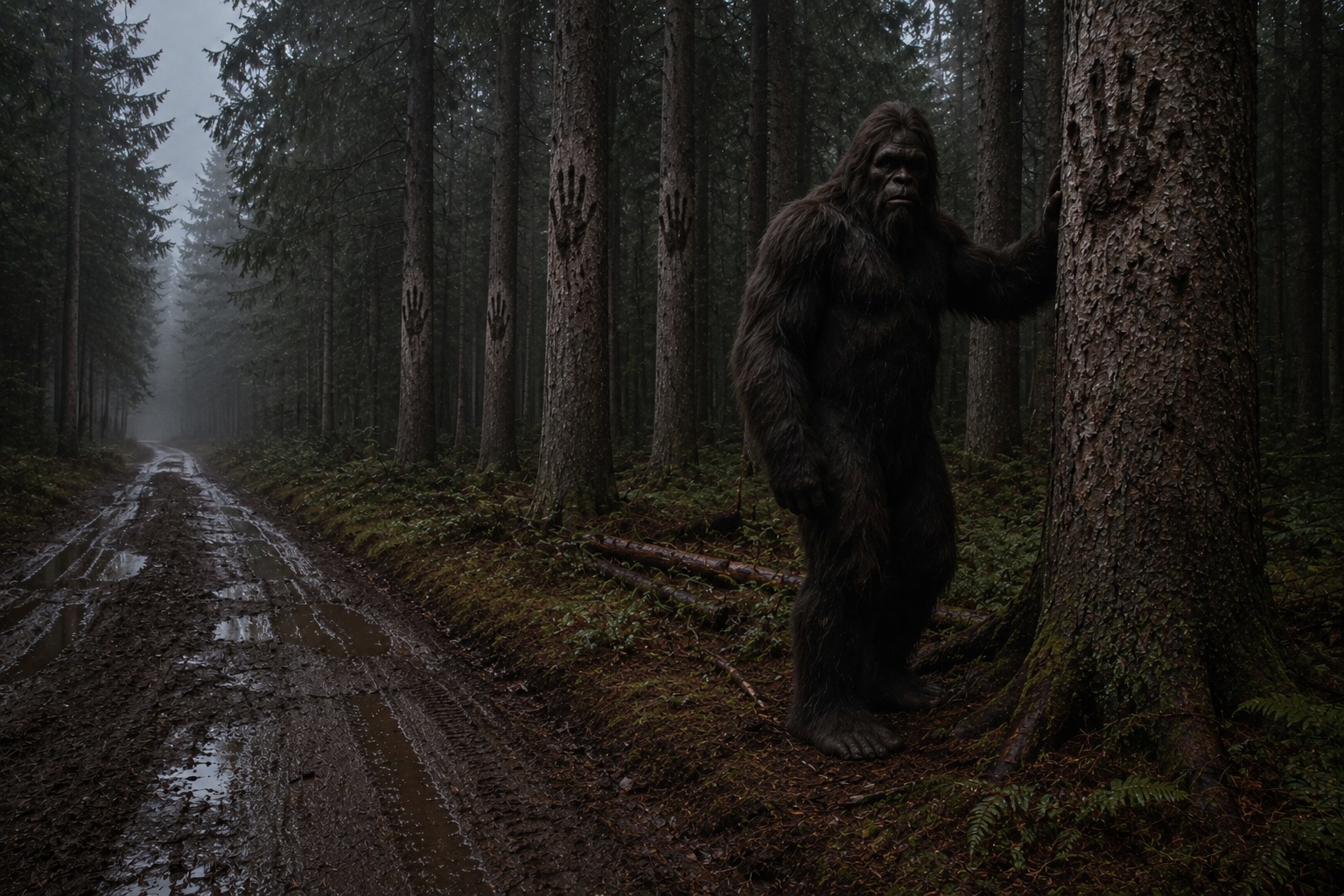
That makes people feel as though they're looking at something left behind rather than something happening right now. Psychologically, that feels unsettling. It suggests whoever—or whatever—made the mark had enough time to leave before anyone arrived. The forest suddenly feels occupied by something just out of reach.
Why People Avoided That Spot Later
If the same muddy print appeared four feet above the ground, most people would probably shrug. At seven feet, the conversation changes. Height creates scale.
Scale creates imagination. People begin estimating arm length. They compare themselves with the tree. Someone inevitably stretches upward trying to match the mark.
When they fail, the story suddenly becomes personal. Instead of reading about something tall, they physically experience how far away that print seems. Even if someone eventually finds a perfectly ordinary explanation, that brief moment of comparison leaves a lasting impression. The same effect happens with oversized footprints, unusually high broken branches, or deep scratches above head level.
The measurements matter less than how they make people picture something enormous standing exactly where they are.
Why The Story Still Gets Shared
People Forests already limit visibility. Trees interrupt every line of sight.
Sound travels unpredictably. Large animals often remain hidden until surprisingly close. Because of that, the imagination works harder than it does in open fields. A muddy handprint high on rough bark becomes more than a dirty mark.
It becomes a question. Who reached that high? Why touch the tree there? Why only one print?
Why does it seem so fresh? Questions are often scarier than answers. Most people who tell these stories don't claim they solved the mystery. Instead, they remember the feeling that arrived the moment they noticed the mark.
They stopped looking down at the trail. They started looking into the trees. Every dark gap between trunks suddenly seemed large enough to hide something watching quietly from only a short distance away. Whether those handprints came from another person, an unusual outdoor situation, mistaken perspective, or something no one could identify, they continue appearing in Bigfoot stories because they combine two powerful ideas.
They suggest enormous size. And they suggest recent presence. One without the other is interesting. Together they leave people walking the rest of the trail with the uncomfortable feeling that whatever touched the tree may not be very far ahead.