
The first thing the farmer noticed was not the shape in the sky. It was the silence. The wind had been pushing across the wheat fields all afternoon, bending every stalk in the same direction. Then, without warning, everything stopped. The leaves hung motionless. The birds vanished. Even the loose tarp on an old trailer stopped flapping.
He looked toward the western horizon expecting rain. Instead, one cloud seemed wrong. Its top looked ordinary enough, rising into soft white towers like dozens of summer storm clouds. But the bottom was perfectly flat. Not almost flat. Not mostly flat. It looked as though someone had sliced it clean with a giant knife.
As he watched, the cloud drifted toward the farm without changing shape. Then he realized something stranger. The clouds behind it continued moving across the sky. This one barely moved at all.
For nearly five minutes it appeared to hang over the same stretch of open field before slowly sliding away without producing rain, thunder, or even much shadow. Years later he still said the silence frightened him more than the cloud itself. Stories like this appear again and again in UFO discussions. People often ask why unusual sightings begin with what looks like an ordinary cloud, especially one with an unnaturally flat underside. Is it simply a weather pattern people misunderstand? Is it an optical illusion? Or has the flat-bottom cloud become one of those details that sticks in memory because it feels strangely deliberate?
Most reports have ordinary explanations. Some describe common cloud types that naturally develop flat bases. Others involve perspective or changing sunlight. Yet a smaller group of stories keeps returning to one unusual detail: witnesses insist the cloud itself behaved differently from every other cloud around it.
That combination—an ordinary object doing one impossible thing—is exactly what makes these stories linger. Why Flat-Bottom
The First Time It Happened
A flat cloud is not unusual by itself. Many clouds naturally develop flat undersides because warm rising air reaches a level where moisture condenses evenly. Meteorologists see this every day.
The problem begins when witnesses describe a cloud that looks too isolated or too perfect compared with everything surrounding it. Instead of blending into the weather, it appears almost separate from it. People often describe it hanging lower than nearby clouds. Others say it remains in one place while neighboring clouds continue moving.
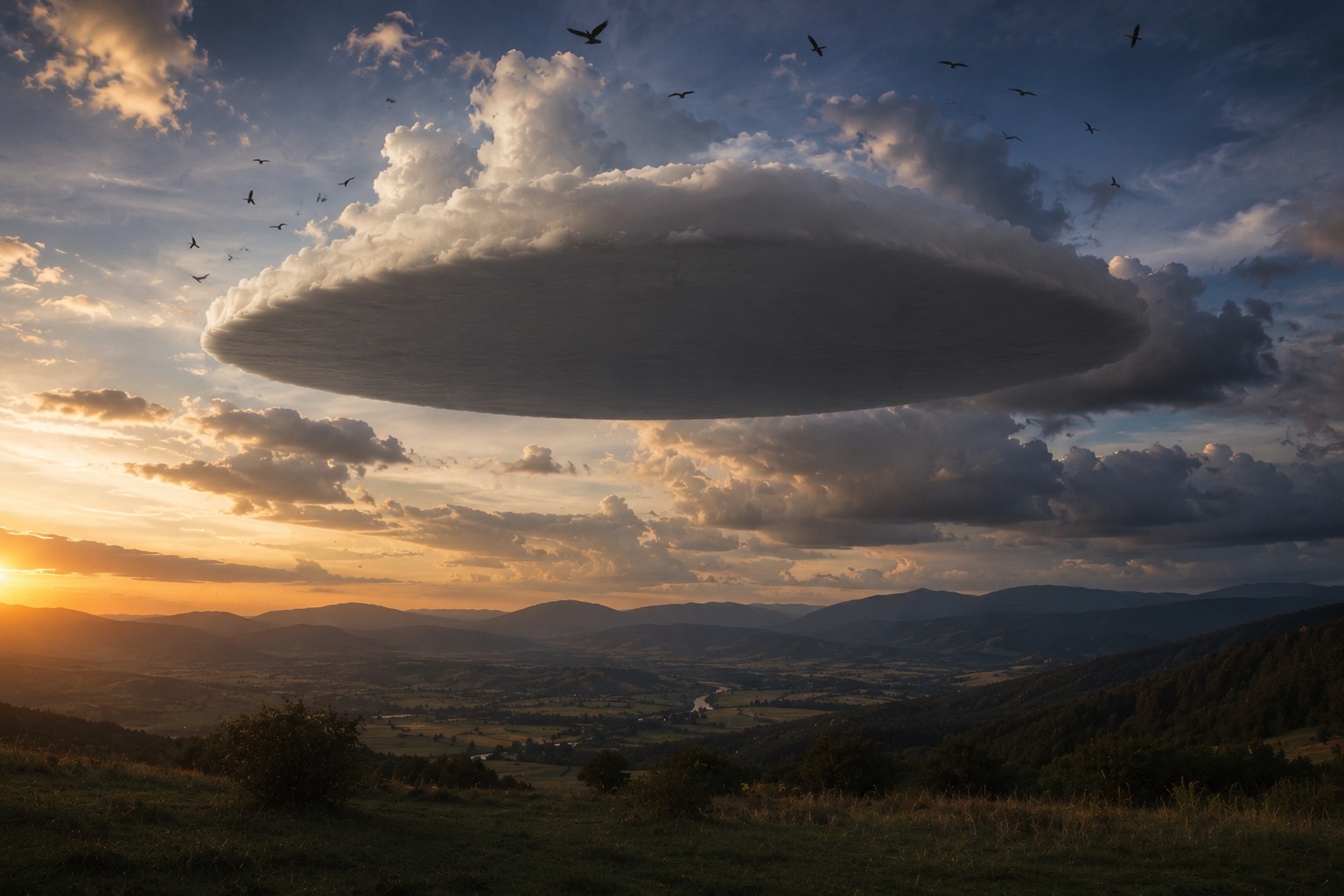
Some mention that its edges seem unusually sharp despite strong winds. None of these details automatically point toward anything mysterious. But when several happen together, people begin paying much closer attention. Unlike the classic flying saucer story, these reports usually begin with someone assuming they're looking at weather.
That makes the later surprise feel much stronger.
Interestingly, witnesses rarely begin by saying they saw a spaceship. Instead, they say something felt slightly wrong before they could explain why.
Why The Place Felt Wrong
Perhaps the cloud casts an oddly shaped shadow. Perhaps birds suddenly avoid flying beneath it. Perhaps traffic noise seems strangely distant. Perhaps the wind changes direction for only a few moments.
The flat bottom becomes important only after people start looking carefully. Human brains constantly compare familiar patterns. Clouds drift. Clouds change shape.
Clouds merge and break apart. When one cloud refuses to behave like every other cloud nearby, attention naturally locks onto it. Even if nothing unusual follows, the experience becomes memorable because it interrupted expectations. Could A Hidden
Object Be Inside The Cloud?
One popular idea in UFO folklore suggests that a craft hides inside a cloud. This idea appears in books, television shows, online discussions, and witness stories from many different decades. According to these stories, the cloud acts almost like camouflage. Sometimes people report seeing a dark circular outline inside the cloud.
Others describe sunlight reflecting from something metallic for only a second before disappearing again. Some witnesses claim the cloud suddenly shrinks or breaks apart, revealing a disc-shaped object for a brief moment. These stories are dramatic. They are also difficult to verify because clouds constantly change, sunlight shifts quickly, and distance makes judging shapes extremely difficult.
The Detail Nobody Could Explain
Still, the hidden-object idea remains popular because it offers a simple explanation for why someone first noticed what seemed like an ordinary weather formation. Whether that explanation is correct is another question entirely.
Nature is fully capable of producing clouds that look unnatural.
Lenticular clouds often resemble giant flying discs. Shelf clouds can appear as enormous solid walls stretching across the horizon. Certain storm clouds produce astonishingly smooth flat bases. Temperature layers, moisture, and wind can all combine to create formations that seem almost artificial.
At sunrise and sunset, lighting exaggerates these effects. Strong shadows may make a cloud appear much thicker than it really is. Bright edges can hide depth. Dark undersides may look perfectly smooth even when they are not.
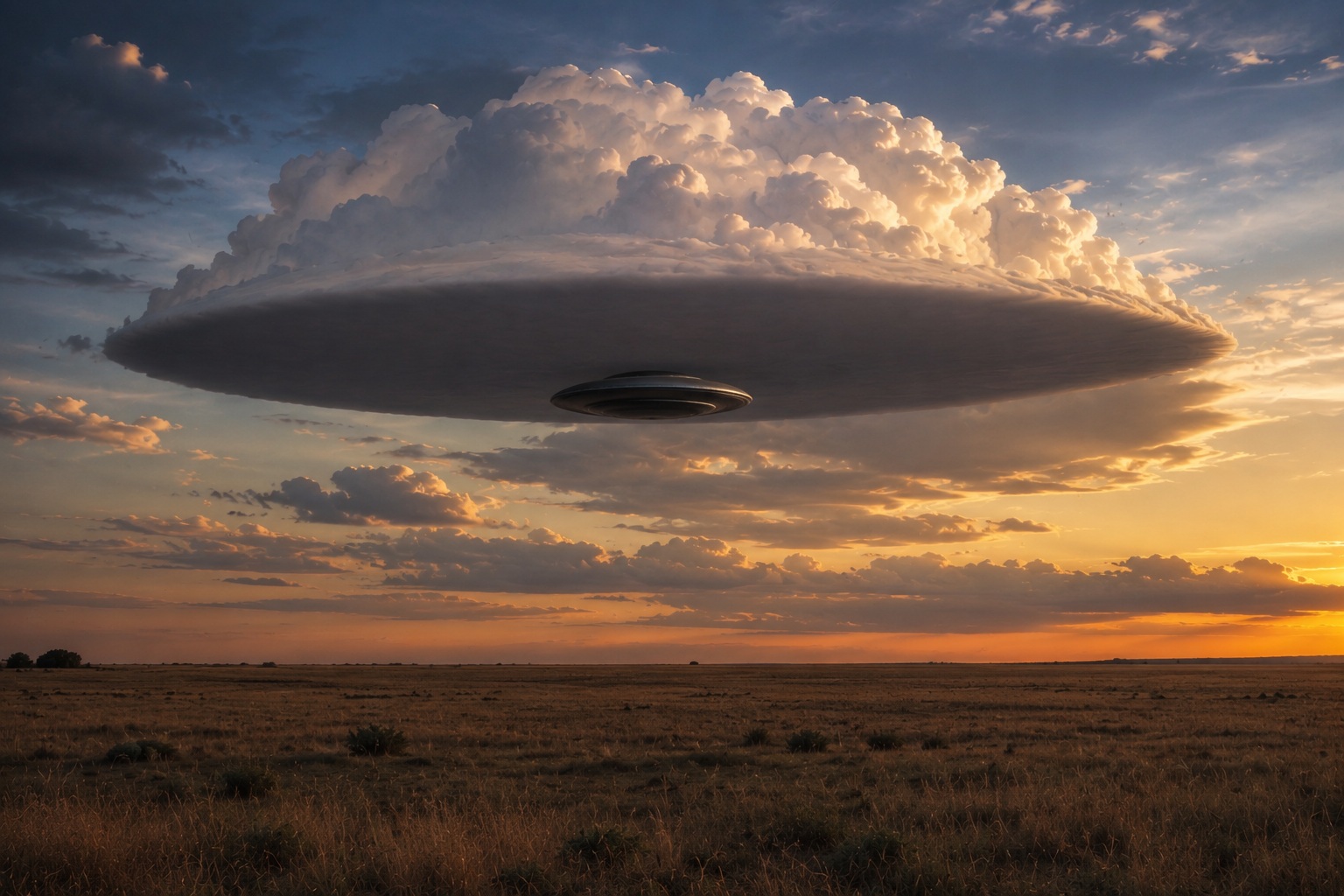
Distance also plays tricks. Without nearby objects for comparison, people struggle to judge size, height, and movement. A cloud many miles away may appear almost stationary while lower clouds race past in different wind layers. These explanations account for many reported sightings.
What They Checked Afterward
They remind us that the sky often looks stranger than we expect.
Most stories end there. Someone sees an unusual cloud.
Later they discover a weather explanation. Life moves on. But some reports contain extra details that make witnesses question what they experienced. Instead of simply hanging in place, the cloud appears to change direction without matching surrounding winds.
Instead of dissolving gradually, it seems to vanish unusually quickly. Instead of drifting naturally, it appears to stop over one location before continuing. Again, memory is not perfect. People naturally simplify events after retelling them.
Even so, these are the details that keep certain stories alive. The flat bottom itself is rarely the entire mystery. It becomes important because it appears alongside several smaller observations that feel connected. One unusual detail is easy to dismiss.
Four or five unusual details together become much harder for the witness to forget.
The Moment It Became Harder To Ignore
Many reports include something people struggle to describe. They don't simply say they saw something strange.
They say the atmosphere itself felt strange. The air seemed unusually still. Sounds became muffled. The light looked slightly different.
Colors appeared washed out or unusually bright. These descriptions are highly subjective. They may reflect changing weather, emotional stress, or simple coincidence. Yet they appear so frequently that they have become part of modern UFO folklore.
Interestingly, these sensations also occur before ordinary thunderstorms. Pressure changes can alter how people perceive sound. Humidity affects visibility. Changing sunlight can transform familiar landscapes into scenes that feel unfamiliar.
Because these physical changes happen naturally, they can make an already unusual-looking cloud seem even more unsettling. Once people become alert, every ordinary detail begins attracting attention. The silence suddenly matters. The birds matter.
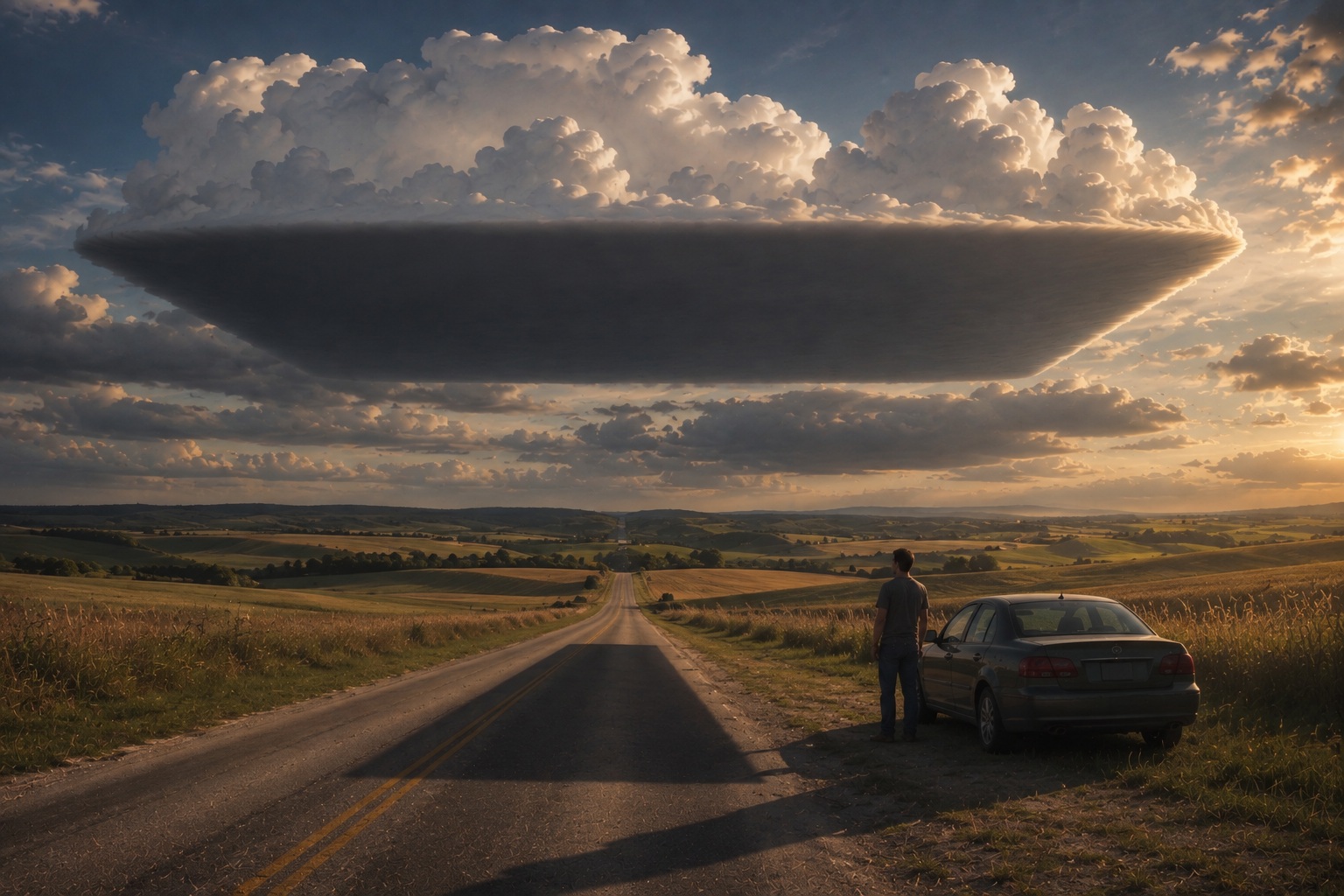
The wind matters. The cloud becomes the center of a much larger experience.
Why People Avoided That Spot Later
Memory rarely stores every detail equally.
Instead, it saves whatever felt most unexpected. Someone may completely forget what the rest of the sky looked like. They may not remember the exact date. They may even forget how long they watched.
But they remember that impossibly straight lower edge. It becomes the anchor for the entire experience. Psychologists sometimes call this a "flashbulb" style memory, where one striking image dominates everything else. Whether every detail remains perfectly accurate years later is impossible to know.
The emotional impact stays much longer than the precise measurements. That helps explain why witness stories from different places often sound surprisingly similar even when the people have never met. The flat-bottom cloud becomes shorthand for the moment everything ordinary suddenly felt uncertain.
Why The Story Still Gets Shared
If you notice a remarkably flat-bottom cloud, there's no reason to assume anything extraordinary. Most likely you're watching an interesting weather formation. Still, careful observation tells you much more than immediate conclusions. Look at neighboring clouds.
Are they moving the same direction? Is the flat cloud changing shape naturally? Does it produce rain later? Does the sunlight explain unusually sharp edges?
Notice whether birds continue flying normally. Watch how shadows move across the ground. See whether the cloud gradually blends into surrounding weather. Most importantly, avoid focusing on only one detail.
Our brains naturally build stories from incomplete information. The more calmly we observe, the more likely we are to notice ordinary explanations. Even so, there remains a reason these stories continue spreading. They begin with something everyone has seen countless times.
A cloud. Then one tiny detail refuses to fit. The bottom is too straight. The movement feels slightly wrong.
The silence arrives first. And for a few unforgettable minutes, an ordinary summer sky becomes something people remember for the rest of their lives—not because they know what they saw, but because they never found a simple answer that completely satisfied them.