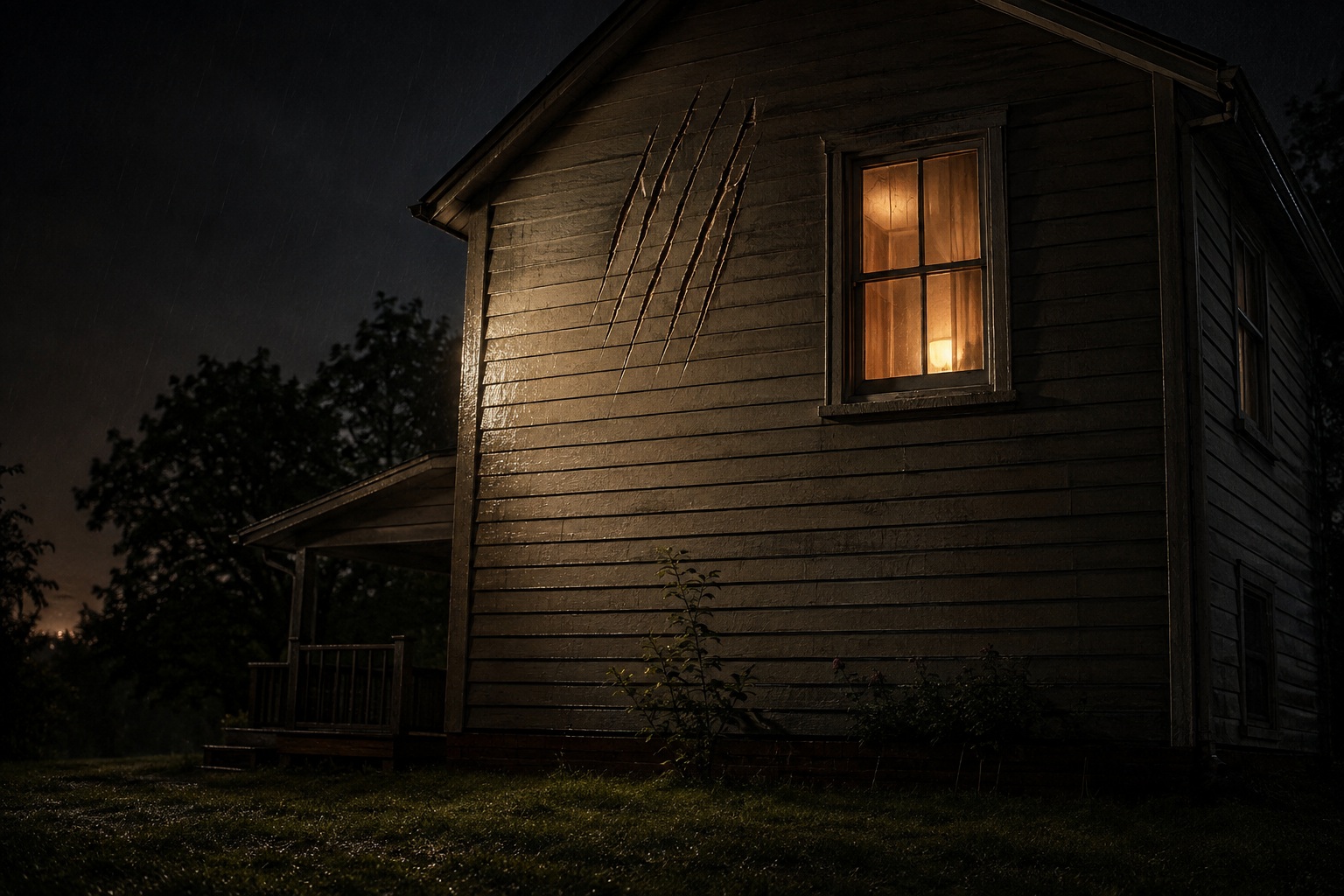
What Leaves Scratches High On A House Where No Animal Should Reach? The scratches began above the second-floor bedroom window. Not beside it. Not on the porch posts where a raccoon might climb. Five pale grooves had been cut through the dark paint nearly twenty feet above the ground, starting beneath the roofline and dragging downward toward the glass. The longest ended only inches above the window frame.
The homeowner noticed them after hearing something scrape across the siding shortly after 2 a.m. He described three slow pulls, a pause, and then another scrape directly outside the bedroom. When he finally looked through the curtains, the yard below was empty. Morning made the marks stranger. There was no tree against that wall, no ladder, no drainpipe beneath them, and no obvious path an animal could have used. The scratches were too high to examine from the ground, yet deep enough to see from the lawn.
Marks like these sit in an uncomfortable corner of strange creature stories. Scratches on houses are common. Scratches in places that seem physically difficult to reach are different. So what actually leaves claw-like marks high on siding, windows, roofs, and walls—and when does an ordinary explanation stop fitting comfortably?
Height Changes the Entire Meaning of a Scratch A scratch near the bottom of a house usually does not seem mysterious. Dogs jump against doors. Cats climb. Raccoons investigate siding. Bears can stand surprisingly tall. Branches scrape walls in wind. Tools, ladders, construction work, and previous owners leave marks that nobody notices until years later.
Move the same scratch fifteen or twenty feet upward, however, and people begin asking a different question. The mark itself may not have changed. What changed is the apparent access. If five long grooves appear beside a ground-floor trash enclosure, an animal seems reasonable. Put those grooves above an upstairs window on an otherwise bare wall and the mind immediately tries to reconstruct how anything reached them.
That reconstruction is what makes these stories unsettling. People look for a nearby roof. They check whether a branch could have touched the siding. They study drainpipes, cables, decorative trim, fences, sheds, trellises, and anything else that might provide a climbing route. Sometimes the route becomes obvious.
The First Time It Happened
Sometimes the wall remains frustratingly empty. That does not automatically make the scratches paranormal. It simply means the important question is no longer, "What can make scratches?" It becomes, "What could make scratches there?" Animals Can Reach Much Higher Than People Expect
The first possibility worth taking seriously is also the least exciting: animals are excellent climbers. Raccoons can scale surfaces that look nearly impossible from the ground. Squirrels move across roofs, gutters, wires, and rough siding without leaving an obvious route. Cats can reach ledges through combinations of jumping and climbing that homeowners never witness.
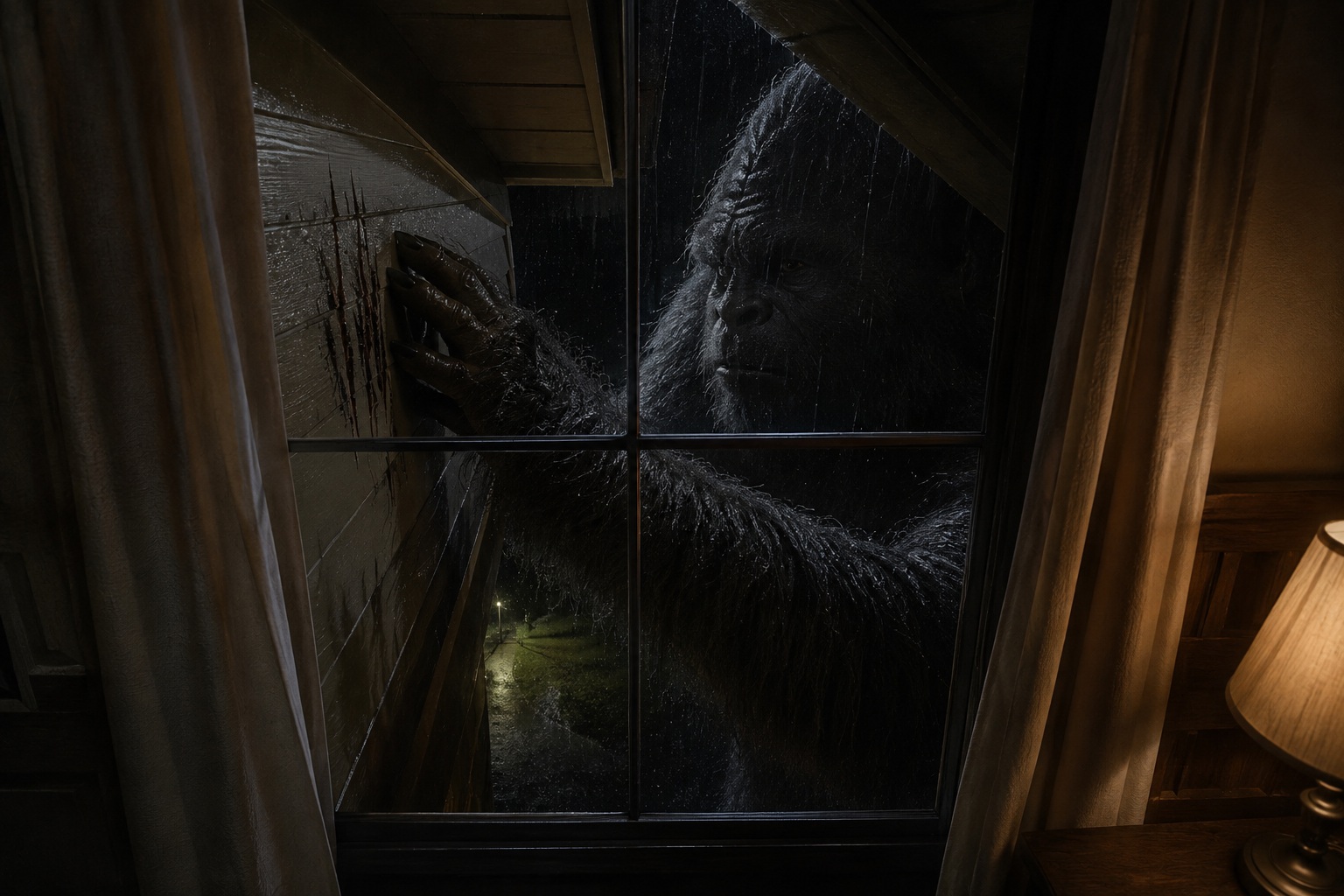
Even large animals can create surprisingly high marks. A bear standing upright has considerable reach, and claw marks on trees can appear much higher than someone unfamiliar with bears might expect. A bear climbing or stretching against a structure can leave marks well above normal human shoulder height.
The material of the house matters too. Wood siding provides grip. Brick has seams and rough edges. Corners can be easier to climb than flat walls. Gutters, window trim, vents, shutters, cables, and tiny architectural ledges may function as footholds even when they do not look useful to us.
An animal also does not necessarily have to remain on the wall while making the mark. It might jump, slip, scramble, or fall. A desperate animal trying to reach an attic opening can leave a vertical series of claw marks that looks much more dramatic afterward than the brief event that created it.
Why The Place Felt Wrong
This is why height alone is not enough to make scratches mysterious. The stronger question is whether the suspected animal had a believable way to reach that exact spot. The Shape of the Marks Matters More Than Their Size People naturally focus on the biggest scratch.
Investigators of ordinary property damage usually care more about the pattern. Are the marks parallel? How far apart are they? Do they begin at the same height? Are they shallow surface streaks or actual cuts into the material? Do they continue around a corner? Is paint pushed outward along the edges?
Five lines do not necessarily mean five claws. A branch with several broken twigs can create multiple parallel streaks. A ladder being moved against a wall can leave repeated marks. Metal hardware can drag through paint. Even loose siding or gutter pieces can rub against another surface during wind.
The direction matters as well. Long downward marks suggest something different from short horizontal scrapes. Random overlapping damage often points toward repeated contact, while several clean lines created in one movement may suggest a single object being dragged across the surface. Weathering can also make old damage look fresh.
Water enters a scratch. Dirt collects around it. Paint flakes away. Sunlight changes the surrounding color. Months later, someone notices a pale line and assumes it appeared recently. That is why a strange nighttime sound followed by discovered scratches can be misleading. The sound and the marks may be connected.
They may also be two completely separate things. Why Scratches Near Upstairs Windows Feel Different There is a reason these stories so often become frightening when the marks are close to a window. A scratch beneath the roof is property damage.
The Detail Nobody Could Explain
A scratch ending beside bedroom glass feels like approach. That distinction is emotional rather than scientific, but it shapes how people remember the experience. Imagine waking to a dragging sound outside an upstairs room. The noise stops. A few seconds later, something lightly taps the glass.
You do not see anything. In daylight, you find four pale grooves descending toward the upper corner of the window. Even if an animal eventually becomes the best explanation, the placement creates an immediate and deeply uncomfortable picture: something was close enough to touch a window that you considered unreachable.
Creature stories amplify that feeling. Some descriptions involve a large hairy figure supposedly standing against a wall or reaching beneath an eave. Others describe long-limbed shapes near roofs, barns, cabins, or upstairs windows. In those stories, scratches become frightening because their height appears to match the reported size of whatever was seen.
That does not establish what made the marks. But it explains why a few grooves in paint can become the detail someone remembers for decades. The scratches seem to give the unseen visitor a height. Wind Can Create Surprisingly Violent Marks
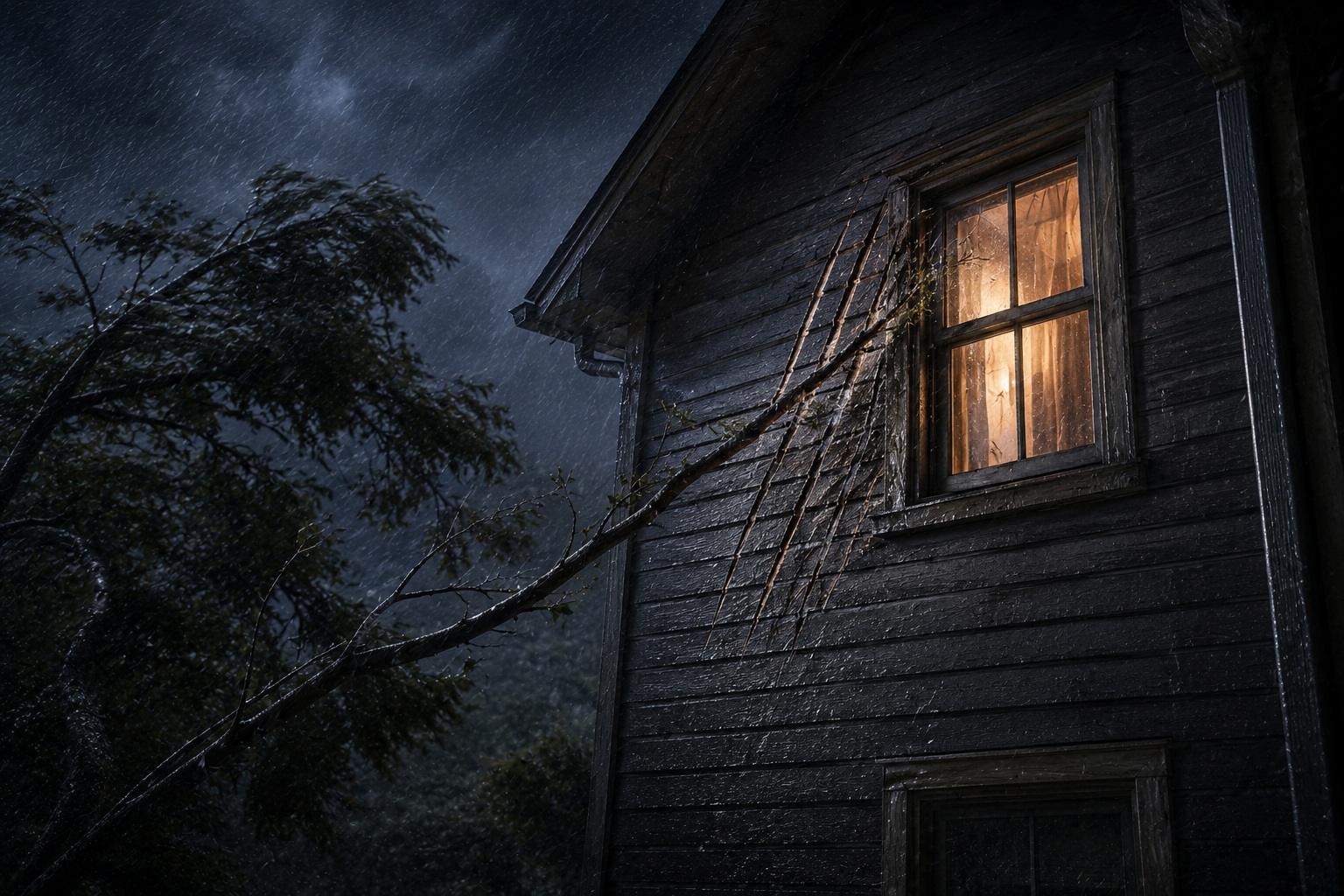
One of the easiest explanations to underestimate is wind. A branch does not need to rest permanently against a house to strike it. During strong gusts, a flexible limb can bend several feet farther than it does on a calm morning. Trees sway. Smaller branches whip sideways. Broken limbs swing from partially attached wood. Vines and cables move.
What They Checked Afterward
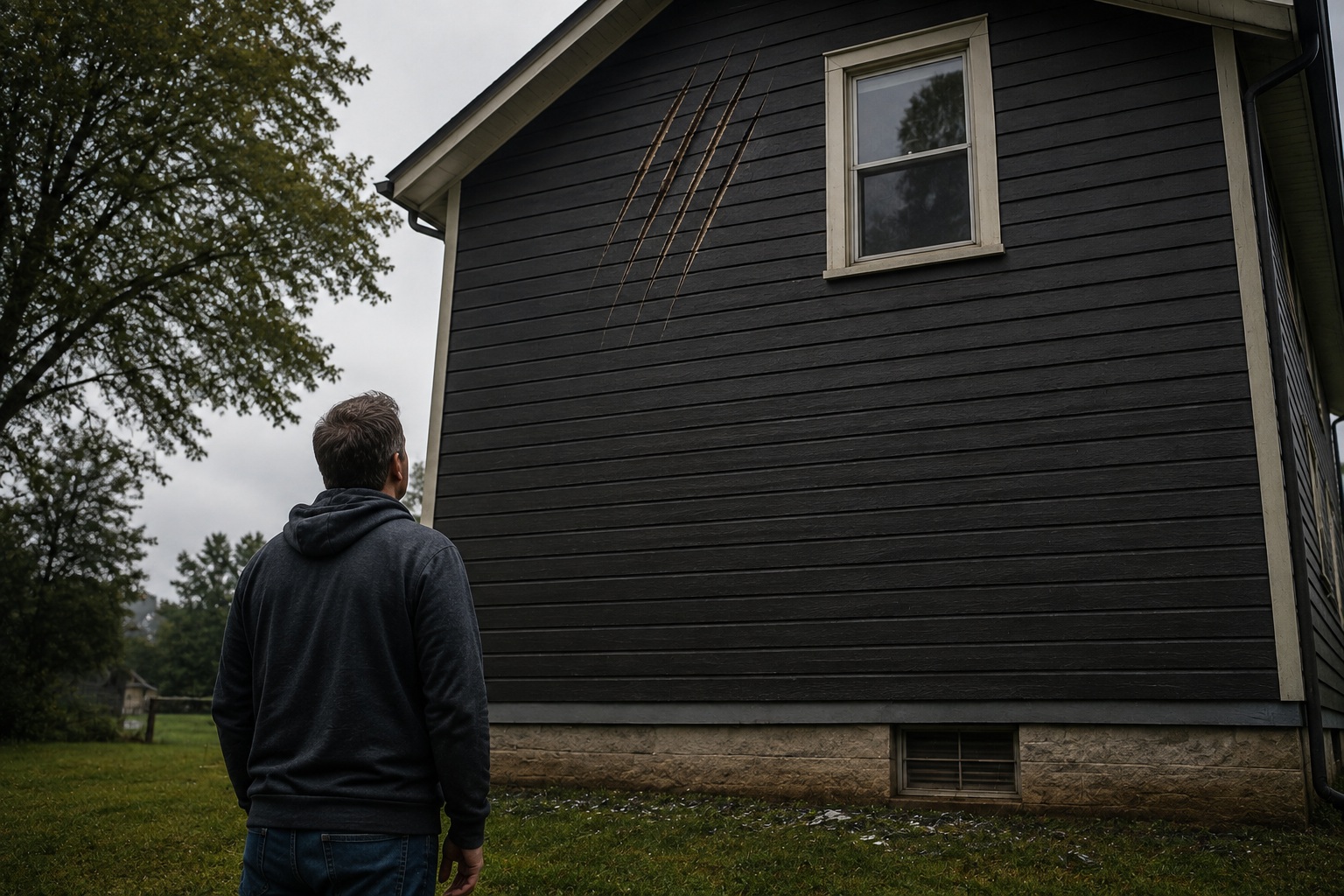
By daylight, everything may have returned to its normal position. A homeowner then stands below a scratched second-floor wall and concludes that the nearest branch is much too far away. That might be true under calm conditions. It may not have been true during the night.
Loose objects attached to the house can create the same problem. A cable, gutter strap, antenna component, shutter, decorative piece, or damaged roof material can repeatedly strike siding. The resulting sound can be disturbing. Scrape. Pause.
Scrape. Pause. From inside a dark bedroom, repeated wind-driven contact can sound deliberate because gusts arrive in pulses. The brain hears rhythm and starts imagining intention. The useful check is not simply whether anything touches the wall now.
It is whether anything nearby could reach the damaged area while moving. The Normal Explanations Get Weaker When Access Disappears Some scratch stories remain puzzling because the usual possibilities do not fit neatly. Consider a smooth exterior wall beneath a roof overhang.
There are no nearby trees. No cables cross it. The drainpipe is on the opposite corner. The scratches begin several feet away from the roof edge and several feet above the nearest window ledge. Now suppose the marks are fresh enough that exposed wood is still bright beneath the paint.
That combination does not tell us what made them. It does remove some easy answers. This is the point where careful observation matters more than immediately naming a creature. Look at the ground beneath the wall. Freshly damaged siding may leave flakes or splinters. Check the roof and gutter above. Look around the corner rather than only directly below the marks. Search for hair, mud, paw marks, droppings, disturbed roofing material, broken branches, or anything that suggests an animal's route.
The Moment It Became Harder To Ignore
Also consider human access. Was roofing work done recently? Did someone clean the gutters? Could a ladder have been placed there? Were holiday decorations installed? Did painters, builders, utility workers, or previous occupants use that side of the house? A mark can remain unnoticed long after the person who made it has left.
The strongest strange-scratch stories are not the ones where someone simply says, "It was too high." They are the ones where obvious routes were actually checked and still did not explain the placement. Sounds Before the Scratches Can Be More Frightening Than the Marks
Many stories about unexplained exterior scratches begin with noise. That makes sense because people rarely inspect the upper siding of their houses without a reason. They hear dragging outside the bedroom. Something bumps beneath the eaves.
A pet suddenly wakes and stares toward the ceiling. There is a scrape across the wall followed by several seconds of silence. Then another scrape begins farther along the house. Those details can create the impression of movement even when nobody sees what caused it.
Houses themselves complicate matters. Sound travels through framing. A noise made near the roof can seem to come from the wall. Something moving in an attic can sound as though it is directly outside. Gutters transmit vibrations. Pipes knock. Wood expands and contracts. An animal on one part of the roof may sound like something clinging to another part of the house.
This is why matching a sound to a mark requires caution. But occasionally the timing becomes difficult to ignore. Someone hears a harsh scrape outside a particular window, checks the wall the following morning, and notices fresh damage exactly there. Paint chips lie underneath it. The grooves were not visible the previous day.
Why People Avoided That Spot Later
Now there is at least a reasonable basis for connecting the sound and the scratches. The mystery still remains physical rather than automatically paranormal: What reached the wall? Why Giant-Creature Stories Keep Returning to High Marks
Bigfoot and other creature stories frequently emphasize scale. A normal-sized figure in darkness can be frightening, but an unusually tall figure creates an immediate physical problem. Witnesses compare it with doorways, vehicles, fence posts, tree branches, rooflines, or windows because those familiar objects provide size.
High scratches work the same way. If marks appear twelve feet above the ground, readers instinctively imagine something with a twelve-foot reach. That conclusion can be wrong. The creature would not necessarily have been standing on the ground. The marks could have another source entirely. Perspective can distort height, and people are poor at estimating measurements without reference points.
Still, scratches become powerful story details because they remain after the frightening moment has passed. A strange shape disappearing into trees is a memory. Grooves beside a window are something you can walk outside and look at the next morning. That physical persistence encourages people to connect the two.
For a creature report to become more interesting, however, the marks should match other details rather than carry the entire story. A clearly seen huge hairy figure beside a known-height porch, followed by fresh marks at roughly shoulder level on that figure, is more coherent than unexplained scratches alone.
Why The Story Still Gets Shared
Without that connection, scratches remain scratches. Strange placement narrows possibilities. It does not name the thing that made them. Sometimes the Most Unsettling Answer Is Simply "Unknown"
Most high scratches on houses probably have ordinary causes. Animals climb better than expected. Wind moves objects farther than expected. Previous repairs leave marks. Branches bend. People forget where ladders were placed. Damage can remain unnoticed for months. Those explanations deserve to come first because houses exist in busy environments filled with animals, weather, tools, and moving materials.
But there is a smaller category that stays uncomfortable. Fresh grooves appear on a section of wall with no obvious climbing route. The nearest branches cannot reach it. Nothing loose hangs nearby. No work was done there. The marks follow a clear pattern rather than random weather damage.
And perhaps someone heard the scratching while it happened. That still does not justify jumping directly to Bigfoot, a crawler, a ghost, or any other strange visitor. "Unknown" is a complete answer when the available details do not support anything more specific. Yet it is easy to understand why these marks inspire creature stories.
A mysterious noise can be blamed on the house. A shadow can be blamed on darkness. But scratches require contact. Something touched the wall.
And when those scratches are high above the ground, ending beside a second-floor window that nobody thought anything could reach, the disturbing question is not whether claws exist. It is what was tall enough, agile enough, or strangely positioned enough to put them there.