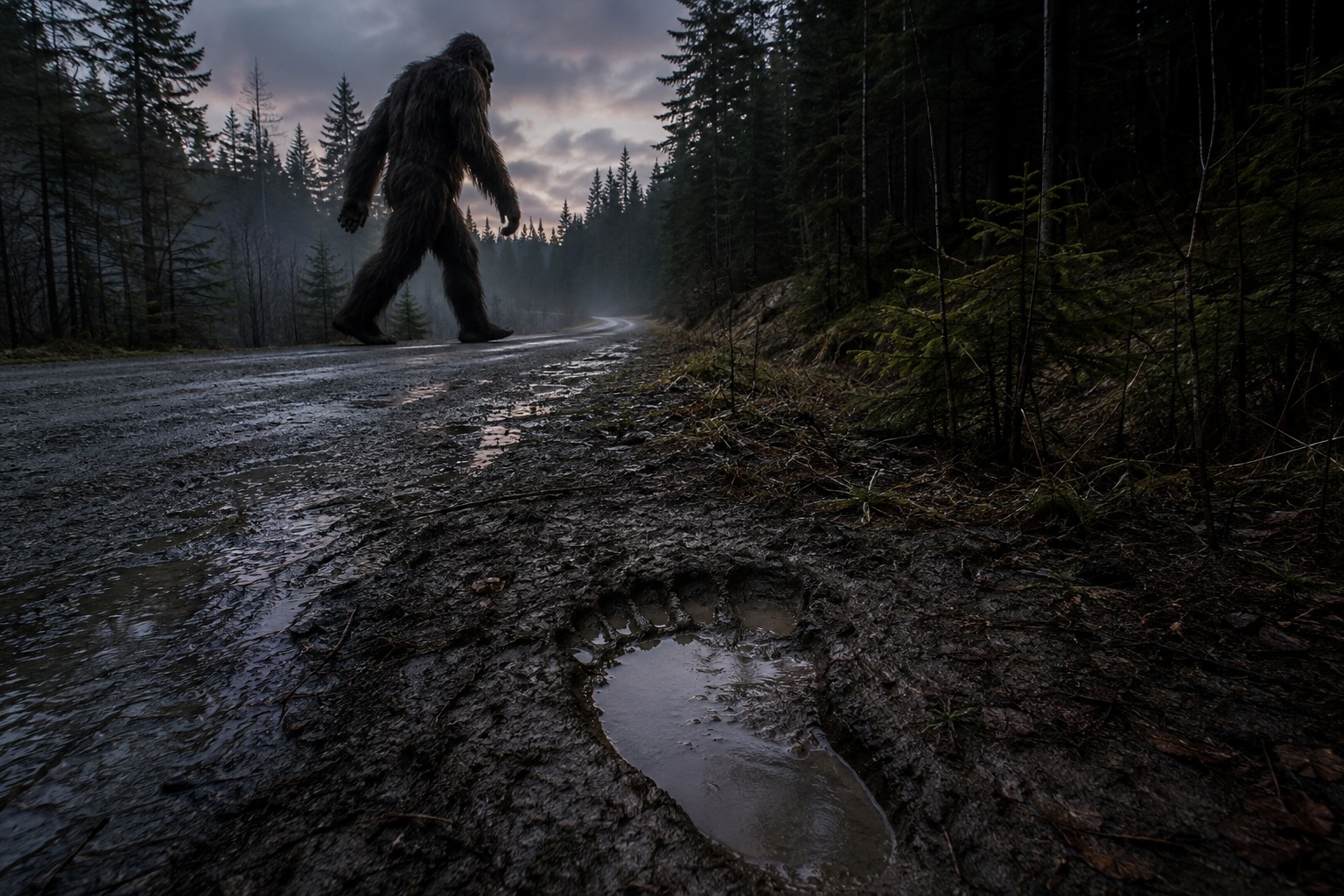
Why Are Bigfoot Footprints So Hard To Find After A Sighting? The first footprint was deep enough to hold rainwater. The second was barely visible. After that, there was nothing. A hiker had stopped beside an old logging road after hearing something heavy moving downhill through the brush. Across a narrow opening between the trees, he saw a huge upright figure take several quick steps through waist-high ferns. It was dark brown, covered in hair, and tall enough that its shoulders seemed level with branches well above the hiker's head.
Then it disappeared behind the timber. He waited before walking over. The ground where the figure had crossed looked perfect for tracks: damp soil, patches of mud, flattened plants. Near the road was one long bare footprint pressed into soft earth. A few feet farther on was another shallow mark.
Then the trail seemed to vanish. The hiker followed the direction he had watched the figure travel. There were bent ferns and disturbed leaves, but no neat line of giant footprints disappearing into the woods. That frustrating pattern appears again and again in Bigfoot stories. Someone reports seeing a massive creature at surprisingly close range, yet a search afterward produces only a few questionable impressions—or none at all.
So why can something supposedly enormous be so difficult to track? A Huge Animal Does Not Automatically Leave Huge Tracks The basic problem is that footprints require the right ground. A creature can weigh hundreds of pounds and still cross many forest surfaces without leaving anything resembling a clean footprint. Hard-packed dirt, dry pine needles, roots, stones, grass, moss, and layers of dead leaves can all hide the shape of a foot.
Think about walking through the woods in ordinary boots. On a muddy trail, your tread may appear perfectly. Step two feet sideways onto leaves and the recognizable print can disappear immediately. You still disturb the ground, but what remains may be a crushed leaf, a shifted twig, or a patch of flattened vegetation rather than a boot-shaped impression.
The First Time It Happened
The same problem would apply to a large barefoot creature. A footprint becomes dramatic when the entire foot presses into soft material evenly enough to preserve its outline. Forest floors rarely cooperate for more than a few steps. This helps explain one strange feature of Bigfoot footprint stories: isolated tracks.
A witness may find one impressive impression in mud beside a creek, road ditch, puddle, or wet depression but nothing equally clear around it. That can feel impossible until you look at how quickly the surface changes. One step lands in mud. The next lands on roots and leaves.
The third hits packed soil. The track line has already disappeared. Why Tracks Often Vanish Near Roads And Trails Many Bigfoot sightings happen around roads, trail edges, clearings, creek crossings, and other places where people can actually see some distance.
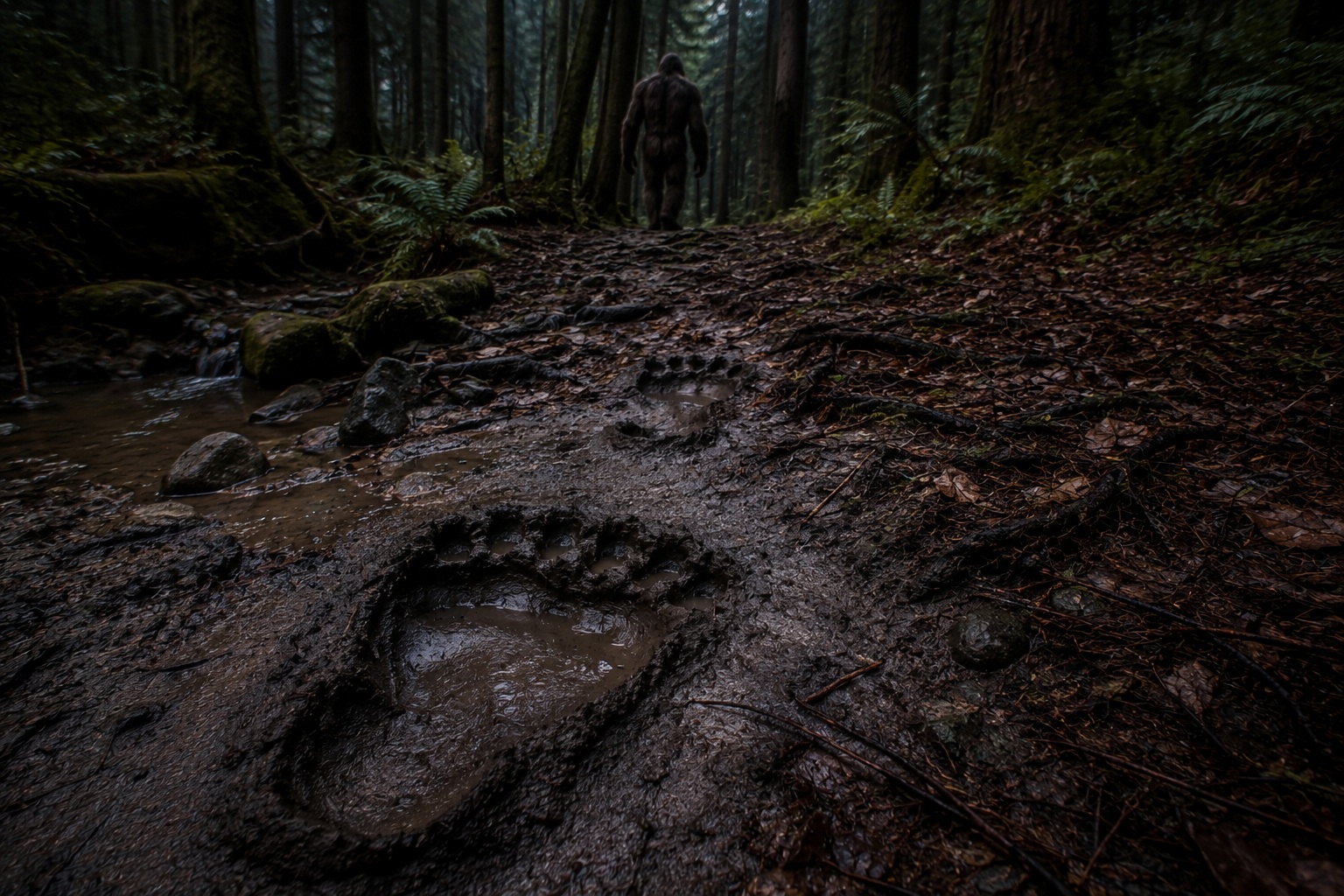
Those places also create misleading expectations about footprints. Imagine a large figure crossing a gravel logging road at night. The witness sees it clearly because the open road provides several seconds of unobstructed view. The figure then enters thick forest. When the witness reaches the crossing point, the road itself may preserve almost nothing.
Gravel shifts under weight, but it rarely produces a recognizable foot outline. Packed dirt can be surprisingly resistant. Road shoulders may contain weeds, stones, roots, and old tire disturbance. The softest patch might be a narrow drainage ditch. That means the only obvious footprint could appear several feet away from where the creature was first seen.
Why The Place Felt Wrong
This is also why the question "Where are all the tracks?" can be harder to answer than it sounds. A witness is usually searching for giant human-shaped feet. Smaller disturbances may not register as part of the trail at all. A snapped fern is not immediately impressive.
Neither is a scuffed patch of leaves. But those may be the only marks available. Forest Floors Can Hide Disturbance Almost Immediately A thick layer of leaves behaves differently from mud.
When something heavy steps onto dry leaves, they compress, slide, crack, and overlap. Once the pressure is removed, some of them spring partly back into place. There may be disturbance without a readable shape. Needle-covered forest floors can be even more deceptive. Pine needles form loose layers that spread pressure across the ground. Unless the soil underneath is soft, a foot may leave little more than a vague depression.
Vegetation creates another problem. A huge creature pushing through ferns might leave a visible route for a short time, but plants bend in complicated ways. Some remain flattened. Others slowly rise. Wind and rain add more movement. Then there are roots. Large trees create networks of hard surfaces just beneath the leaves. A foot that appears to land on soft forest floor may actually be placing most of its weight across several buried roots.
The result can look surprisingly faint. This does not make every missing-track story mysterious. It simply means that "large creature" and "obvious footprints" are not automatically the same thing. The forest is very good at hiding feet. The First Thing People Usually Check Is The Ground
The Detail Nobody Could Explain
After a close Bigfoot sighting, people often describe doing something that would be completely reasonable: they go to where the figure was standing. They want scale. They want to know how tall it really was compared with a tree, road sign, branch, fence post, or embankment. They also want to see whether the ground contains anything unusual.
This is where expectations collide with messy terrain. A witness may remember watching an enormous hairy figure plant one foot directly beside a tree. Yet when they reach that tree, the spot is covered in bark chips, leaves, and roots. There is no perfect footprint.
Sometimes there is a depression that looks approximately the right size. Sometimes several leaves appear pressed down. Sometimes a toe-like shape can be imagined in mud but not followed anywhere. That uncertainty matters. Human beings are extremely good at finding familiar shapes once we know what we want to see. A vague depression can begin to look like a heel. Five marks can begin to resemble toes.
That is why the clearest footprint stories are usually the ones involving surfaces capable of preserving detail: wet mud, fine soil, sand, snow, or soft sediment. Even then, finding one clear print does not guarantee finding twenty. Terrain can change within a single stride. Rain Can Create Tracks And Destroy Them
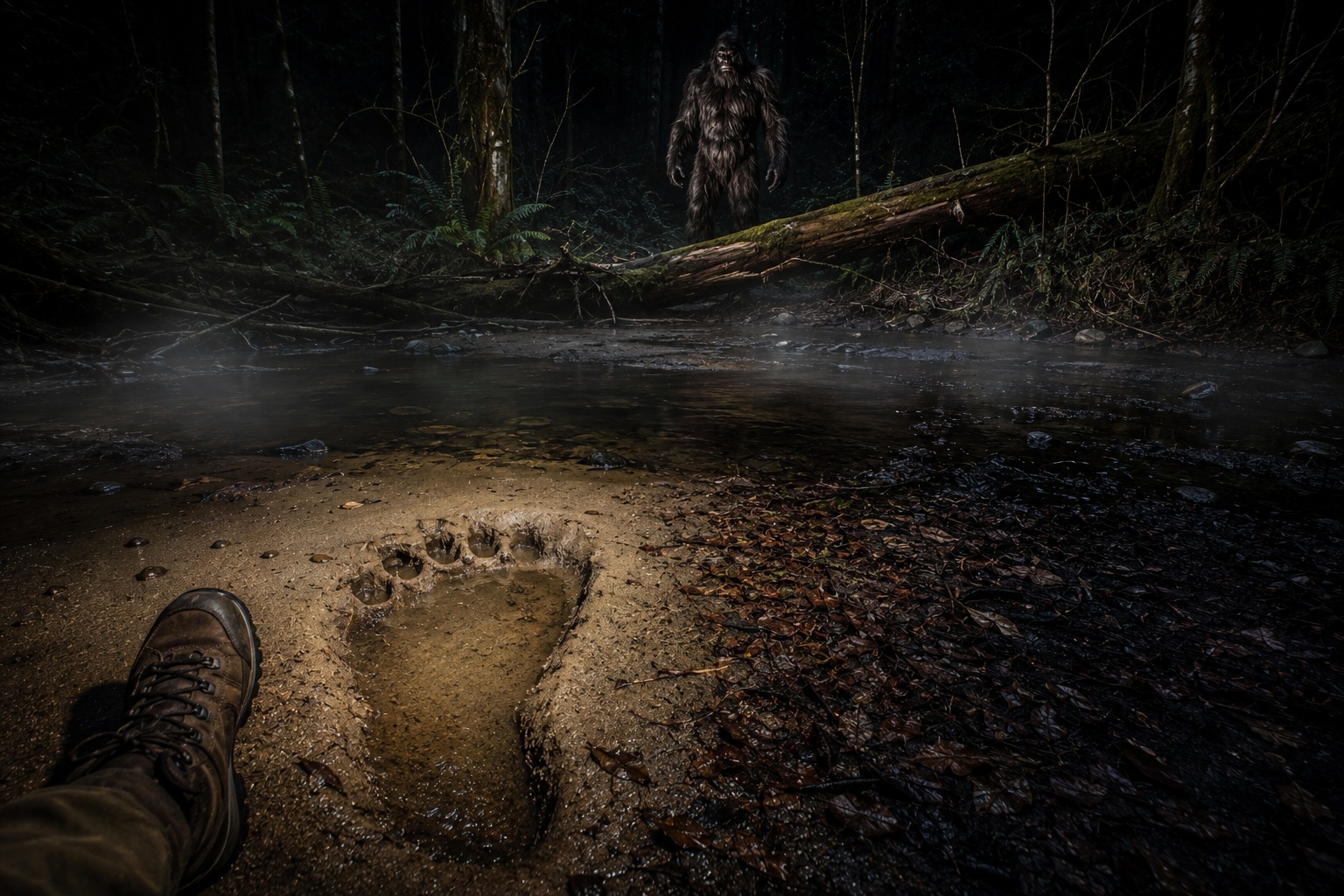
Weather makes the problem even stranger. A little moisture can turn otherwise useless soil into an excellent surface for footprints. Too much rain can erase those same impressions. Suppose something crosses a creek bank shortly before a storm. The lowest part of the bank is soft enough to preserve a deep print. Higher ground is covered with leaves and grass, producing almost nothing recognizable.
What They Checked Afterward
Then rain begins. Water collects inside the deep impression. Its edges soften. Loose dirt collapses inward. Small channels run through it. Within hours, a detailed footprint can become a long muddy hole. Snow creates a similar problem. Fresh snow can preserve a trail beautifully, but melting changes the size and shape of tracks. Sunlight, wind, new snowfall, and falling material from trees can quickly make individual impressions difficult to interpret.
This is important when considering stories where people return later. A footprint searched for the next morning is not necessarily the same footprint that existed at midnight. The woods keep changing after the witness leaves. Why A Few Perfect Prints Can Actually Raise More Questions
There is another side to the footprint problem. Sometimes the suspicious part is not the lack of tracks but how perfect the tracks are. A natural walking trail should interact with the ground in complicated ways. Prints may vary in depth. Some will be incomplete. Toes may register differently. Rocks and roots can distort the shape. One step might be clear while the next is almost invisible.
An unusually clean series of identical impressions deserves caution. Hoaxed footprints can be created with carved wooden feet, flexible molds, costume pieces, or other simple tools. Human footprints can also expand and distort in melting snow or collapsing mud until they look much larger than they originally were.
Animals create confusing marks too. A bear's hind foot can overlap its front print, producing a longer shape. Tracks can stretch when an animal slips. Rain can enlarge depressions. Multiple impressions can merge. That does not mean every unusual footprint has an easy explanation.
It means the strongest question is not simply, "Does this look like a giant foot?" It is, "Does the entire trail make sense?" Where did it begin? Where did it go?
The Moment It Became Harder To Ignore
How does the depth change? What happens when the ground changes? Are there signs of normal wildlife nearby? A single dramatic footprint is visually powerful, but the surrounding ground often tells more of the story.
The Strangest Cases Are When The Surface Should Have Recorded Something Missing tracks become harder to dismiss when the reported figure crosses a surface that should preserve them. Deep mud is one example. Fresh snow is another.
Fine wet sand can be especially revealing. If someone watches a huge upright figure walk across twenty feet of smooth wet ground and later finds no disturbance at all, ordinary tracking explanations become less satisfying. But even then, details matter. Was the exact crossing point identified correctly? How dark was it? How far away was the witness? Could grass or shallow water have hidden the actual surface? Did anyone inspect the location before other people walked through it?
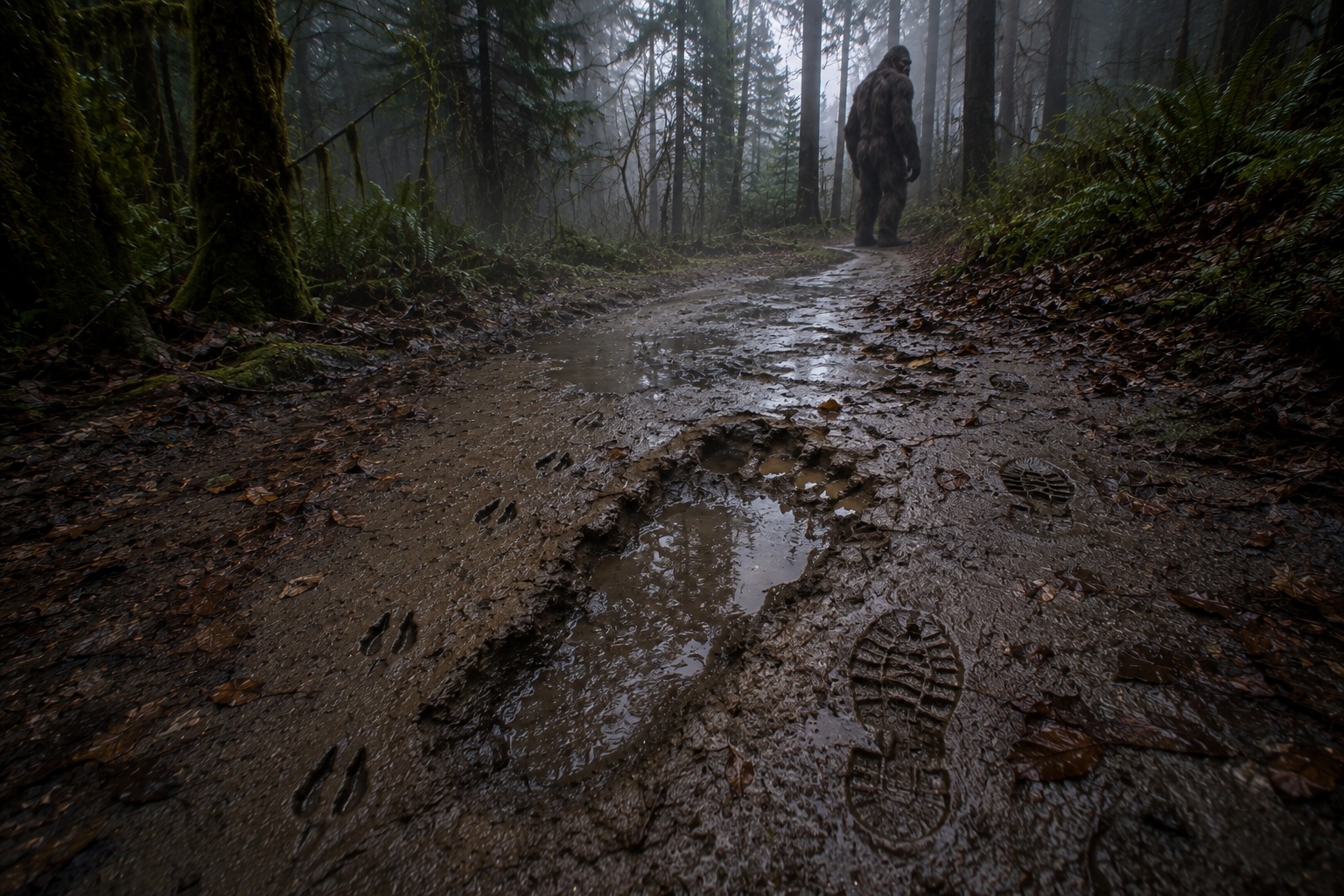
Those questions are less exciting than a giant footprint, but they matter. The unsettling stories are the ones where those possibilities have already been considered. A witness sees the figure step from a muddy creek edge onto a sandbar. They reach the spot minutes later.
There are deer tracks along the water. Their own boots sink visibly. Every step they take leaves a dark impression. But the place where the huge figure appeared to walk is smooth. That is the kind of detail that keeps a story alive. Not because it settles what was there, but because the ground behaves exactly as expected for everything except the thing the witness says they saw.
Why People Avoided That Spot Later
Why The Missing Trail Feels Creepier Than A Footprint A footprint gives the mind something solid. It has edges. It has size. It can be photographed, measured, compared, doubted, or explained. A disappearing trail does something different.
It creates absence where people expect continuation. One giant footprint beside a creek naturally makes you search for the next one. Finding a second print makes you search harder for the third. When the third never appears, the woods suddenly feel larger. That is part of why disappearing footprints are so memorable in Bigfoot stories. They turn a brief sighting into a search.
The witness is no longer only remembering what crossed the road. They are standing where it supposedly stood. The branches are still moving. The trees ahead are dark. There may be a crushed patch of grass pointing deeper into the woods, but nothing shaped like a foot.
Every few yards, the witness stops and looks down again. Nothing. Then comes the uncomfortable realization that tracking something through a forest is much harder than watching it cross an opening. A large animal does not need to vanish.
It only needs to reach bad tracking ground. And if something intelligent wanted to move through woods without following the easiest human trail, rough terrain would make that even more difficult to follow. That possibility is sometimes raised in Bigfoot discussions, although there is no need to assume deliberate track-hiding to explain most broken trails.
Why The Story Still Gets Shared
Ordinary ground conditions already do much of the work. What A Missing Footprint Trail Really Tells Us The frustrating answer is that missing footprints alone tell us very little. Forests are inconsistent recording surfaces. A heavy animal can leave a beautiful impression in one step and almost nothing on the next. Leaves, gravel, roots, grass, weather, and changing soil can break a trail surprisingly quickly.
Witnesses can also misjudge the exact route of something seen briefly, especially at night or through trees. Once people begin searching, their own footprints can disturb whatever faint marks were there. And some dramatic tracks have completely ordinary causes. That is why a Bigfoot footprint becomes more interesting when it is part of a larger, consistent trail rather than a single giant shape in the mud.
Still, the missing-track question remains one of the creepiest parts of these stories because it puts the witness in an uncomfortable position. They saw something big enough that hiding its passage seems impossible. They walk to the exact patch of woods where it disappeared.
They find one deep mark at the edge of the mud. Maybe another several feet away. Beyond that are only leaves, roots, ferns, and darkness. The simplest answer may be that the forest stopped preserving recognizable footprints.
But when you are standing there looking for the next one, that explanation does not make the woods feel any emptier.