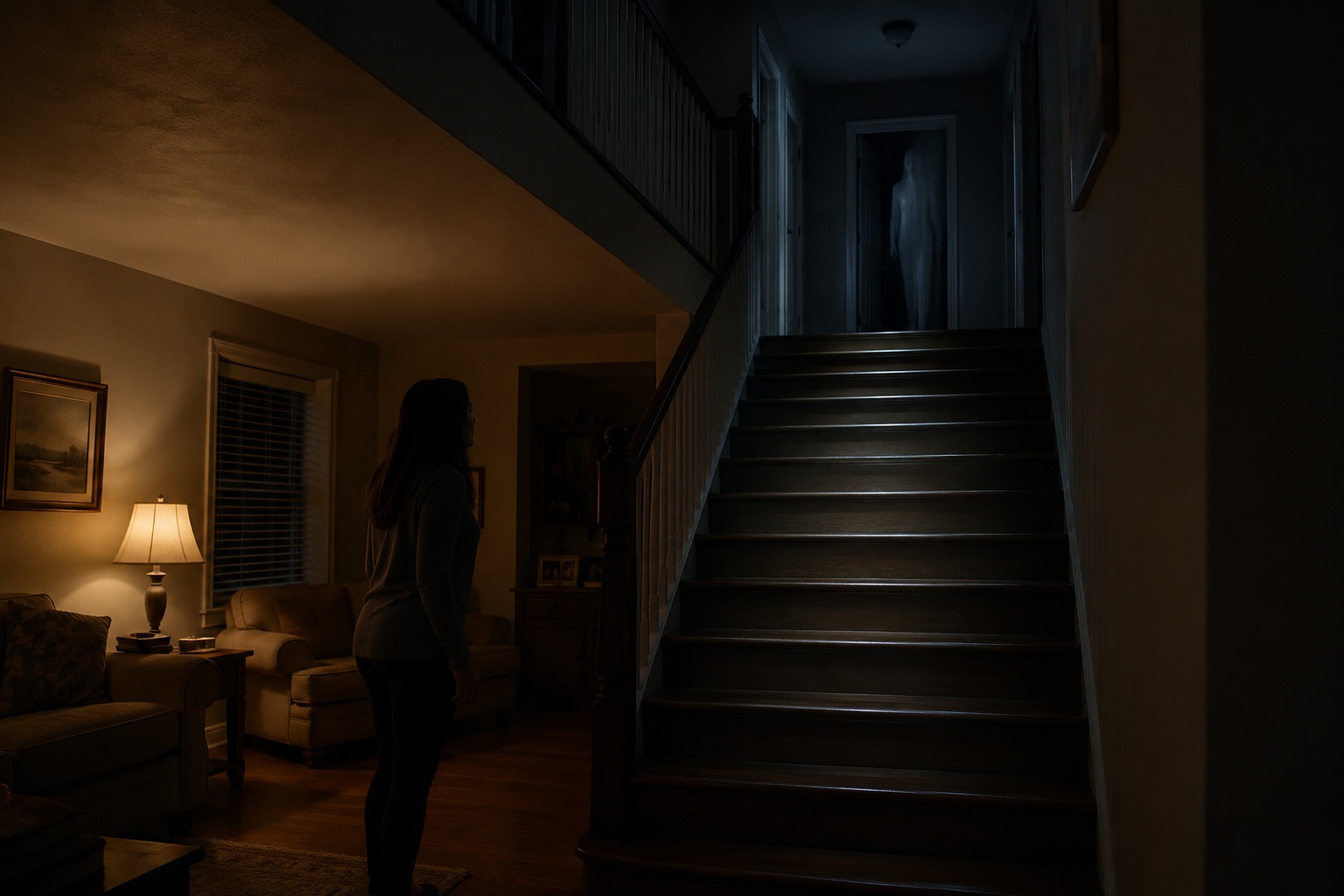
Why Do People Hear Footsteps Upstairs When No One Is Home? The footsteps stopped directly above the chair where she was sitting. For nearly a minute, they had crossed the second floor in a slow, ordinary rhythm: five or six heavy steps from the bedroom, a pause, then several more along the hallway. She was downstairs alone, reading beneath a lamp while rain tapped against the living-room windows. The sound was so normal that her first thought was that her husband had come home early.
Then she remembered his car was still gone. She stood beneath the ceiling and listened. One floorboard creaked above her. Another step followed. Then another. Whatever was making the noise seemed to walk to the top of the staircase. It stopped there. She called upstairs and heard nothing back.
Eventually she climbed the stairs with every light switched on. Both bedrooms were empty. The windows were closed. Nothing had fallen. No pet was hiding beneath the beds. Stories like this are surprisingly common. People describe footsteps crossing bedrooms, pacing hallways, climbing stairs, or stopping above the room where they are sitting. Sometimes the cause is ordinary: pipes, timber, animals, neighbors, or sound moving strangely through a building.
But the reason these stories become ghost stories is usually more specific. The noise does not merely sound like a house creaking. It sounds like someone walking. Why Upstairs Footsteps Sound So Much Like a Person
A single bang in an empty house is easy to dismiss. Footsteps are different because they contain a pattern the brain recognizes immediately. A step has weight, timing, and movement. When several impacts happen one after another, we naturally try to understand them as something traveling through space.
The First Time It Happened
That distinction matters. A pipe knocking six times from the same place usually feels mechanical. Six impacts that seem to begin above the kitchen, cross the upstairs hallway, and stop above the stairs create a completely different impression. People often describe the rhythm before anything else. The sounds may be slow and evenly spaced, like someone walking barefoot or wearing heavy shoes. Sometimes there is a slight floorboard creak between each impact.
Older homes can make this especially convincing. Wooden floors flex. Joists carry vibration. Heating systems click as temperatures change. A small movement in one part of the structure can produce several noises in nearby materials. Our brains then connect those separate noises into a sequence.
There is also a strong expectation involved. We know what someone walking upstairs sounds like because we have heard family members, roommates, hotel guests, and neighbors doing it thousands of times. Once a noise matches that familiar rhythm, "someone is upstairs" can arrive in the mind before we consciously examine other possibilities.
That is why footsteps can frighten someone much faster than an equally loud unexplained bang. The sound already has a shape. Why the Noise Often Seems to Cross the Floor One of the strangest details in these stories is movement.
A witness rarely says only, "I heard three noises." Instead, they say something like, "It walked from the spare bedroom toward the stairs." Buildings can create that illusion surprisingly well. Floor joists connect large sections of a house. Pipes run through walls and ceilings. Heating ducts carry sound from distant rooms. Timber can contract in several places as the temperature changes.
Why The Place Felt Wrong
If those noises happen seconds apart, they may seem to trace a path. The location of a sound can also be difficult to judge when you cannot see its source. Low-frequency impacts travel through solid materials especially well. What seems to come from the floor directly overhead might have started farther away.
Apartment buildings make this even more confusing. Someone walking in a neighboring unit can sound as though they are directly upstairs. Plumbing shafts and shared structural supports can carry impacts in directions that do not match the actual source. Even detached houses are not acoustically simple.
A furnace starting in the basement can make ductwork shift upstairs. Wind can push against the roof and cause framing to move. A branch brushing one section of the building can send vibration somewhere else. So apparent movement does not automatically mean that something is literally walking.
But movement is exactly what makes the experience memorable. A random creak belongs to the house. Footsteps crossing the hallway seem to belong to someone. What People Usually Check First
When someone hears footsteps in an empty upper floor, the first useful question is not whether the house is haunted. It is whether the house is actually empty. That sounds obvious, but ordinary sources can be surprisingly difficult to find. Cats can enter closets or crawl spaces. Raccoons, squirrels, birds, and rodents can move through attics and wall cavities.
The Detail Nobody Could Explain
An animal does not need to weigh as much as a person to sound large. Ceilings and hollow wall spaces can amplify scratching and impacts. A squirrel moving across attic boards may produce noises that seem much heavier from the room below. The timing matters too.
If the footsteps repeatedly happen when heating switches on or off, temperature changes become a strong suspect. If they happen during wind, the roof or exterior walls deserve attention. If they appear around the same time neighbors return home, transferred sound may explain them. People also check windows, doors, attic access points, loose vents, pipes, and objects resting against walls.
Then there is the simplest test: listening from another position. A noise that sounds exactly like footsteps from the sofa may sound obviously mechanical when heard from the staircase. Some homeowners even discover that a familiar "step" is one particular floorboard or joist responding to changes elsewhere in the house.
Finding a normal source does not make the original experience foolish. The sound may genuinely have been almost indistinguishable from a person walking overhead. The Ordinary Causes Can Be Surprisingly Creepy Houses move constantly.
Wood absorbs and releases moisture. Temperatures rise and fall. Pipes expand when hot water passes through them. Roofs respond to wind. Furnaces create pressure changes in ducts. Most of this movement is tiny. At night, tiny movements become noticeable because everything else gets quiet. Thermal changes are particularly good at producing sharp creaks and pops. After heating has been running, different materials cool at different rates. One section of flooring may shift, followed seconds later by another.
What They Checked Afterward
From downstairs, that sequence can resemble steps. Plumbing can do something similar. Pipes that are poorly supported may knock against framing when water pressure changes. A toilet filling, dishwasher running, or heating system cycling can create sounds far from the appliance itself. Wind is another common culprit.
A gust does not always create a continuous howl. It may place pressure on the roof, release it, then push again. The resulting movement can produce isolated thumps. Animals add another layer because they really are moving. A raccoon in an attic can sound absurdly large. Even mice can produce startlingly loud scratching inside hollow walls. Birds may land repeatedly on roofs or gutters.
Then there are human sources that simply are not inside the house. Neighbors shutting doors, people climbing shared stairs, children running next door, or someone walking across an attached structure can all travel through framing. These explanations cover a large percentage of mysterious-house noises.
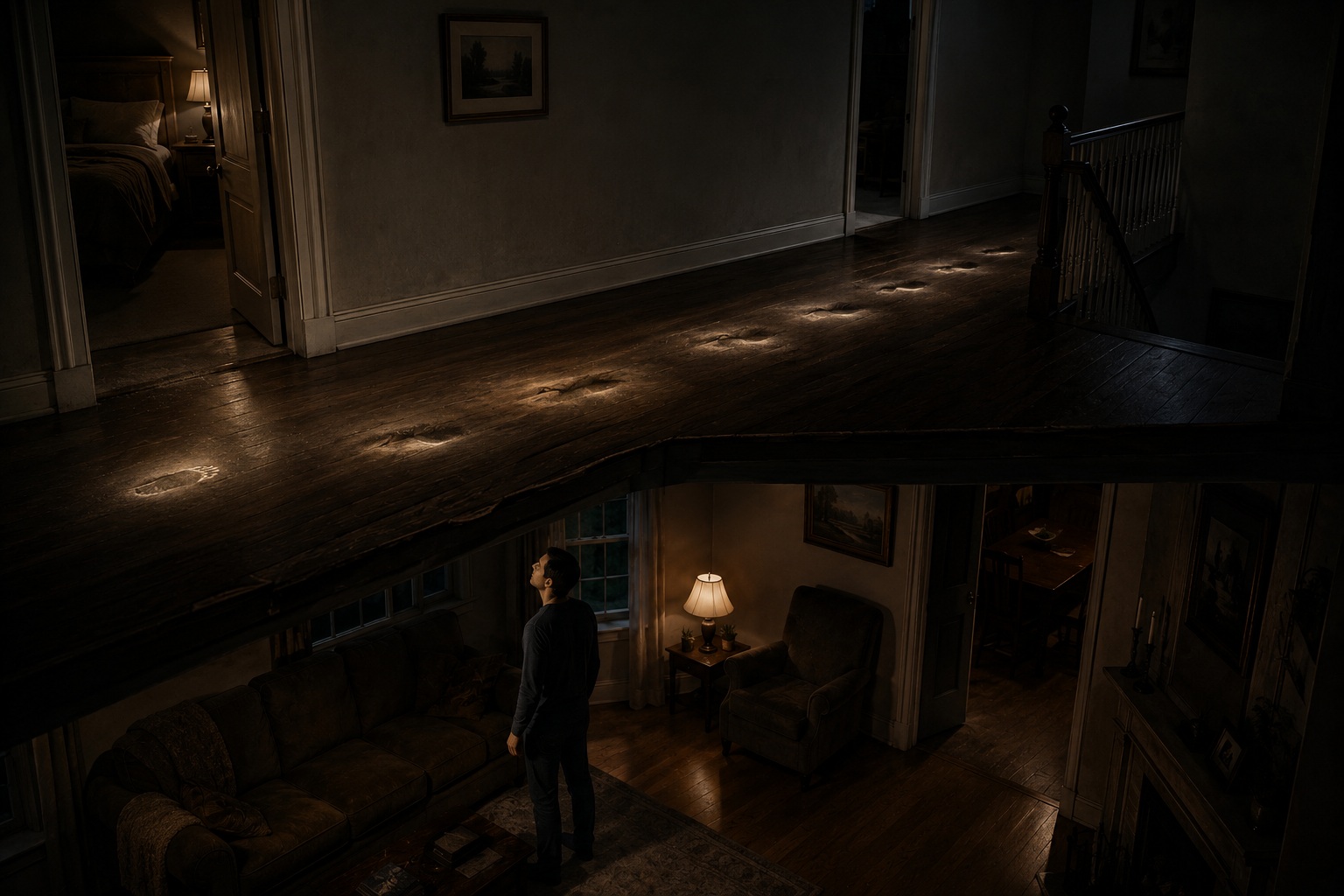
The uncomfortable stories are the ones where the sound seems to behave less like random building noise and more like deliberate walking. Why Footsteps That Stop at the Stairs Feel Different Imagine hearing four thumps overhead. Now imagine hearing slow steps cross the bedroom, enter the hallway, reach the staircase, and stop.
The second version feels far more threatening because the sound appears to understand the layout of the house. This is where many upstairs-footstep stories change tone. Witnesses describe pacing that repeatedly follows the same route. They hear a sequence moving from one recognizable room to another. Some describe the sound reaching the top stair and then beginning to descend.
The scariest versions include another detail: reaction. A person walks beneath the sound, and it stops. They return to the living room, and it begins again. They call upstairs, and the next step comes immediately afterward.
The Moment It Became Harder To Ignore
None of those details by themselves establish a paranormal cause. Coincidence and expectation can strongly affect how we interpret timing, particularly when we are frightened and listening closely. But interactive timing is harder emotionally to dismiss. A creaking house does not seem interested in you.
Something that stops when you stop feels as though it is listening. That difference explains why stories involving responsive footsteps are repeated for years while ordinary nighttime creaks are forgotten by morning. When the Normal Explanation Gets Weaker There is no single detail that transforms mysterious footsteps into a ghost.
Instead, normal explanations become less satisfying as more specific details accumulate. Repeated timing is one example. If the same route of footsteps appears night after night under very different weather and temperature conditions, simple structural movement becomes less convincing. Clear weight changes are another. Some people describe a floorboard visibly flexing or a ceiling fixture trembling as each "step" passes overhead. That still suggests a physical vibration, but it gives investigators something more concrete to inspect.
Then there are witnesses in different locations. If one person downstairs hears the steps crossing the upstairs hall while another person elsewhere in the house independently points to the same moving location, the sound becomes harder to explain as simple confusion about direction. Animals sometimes make these stories stranger too.
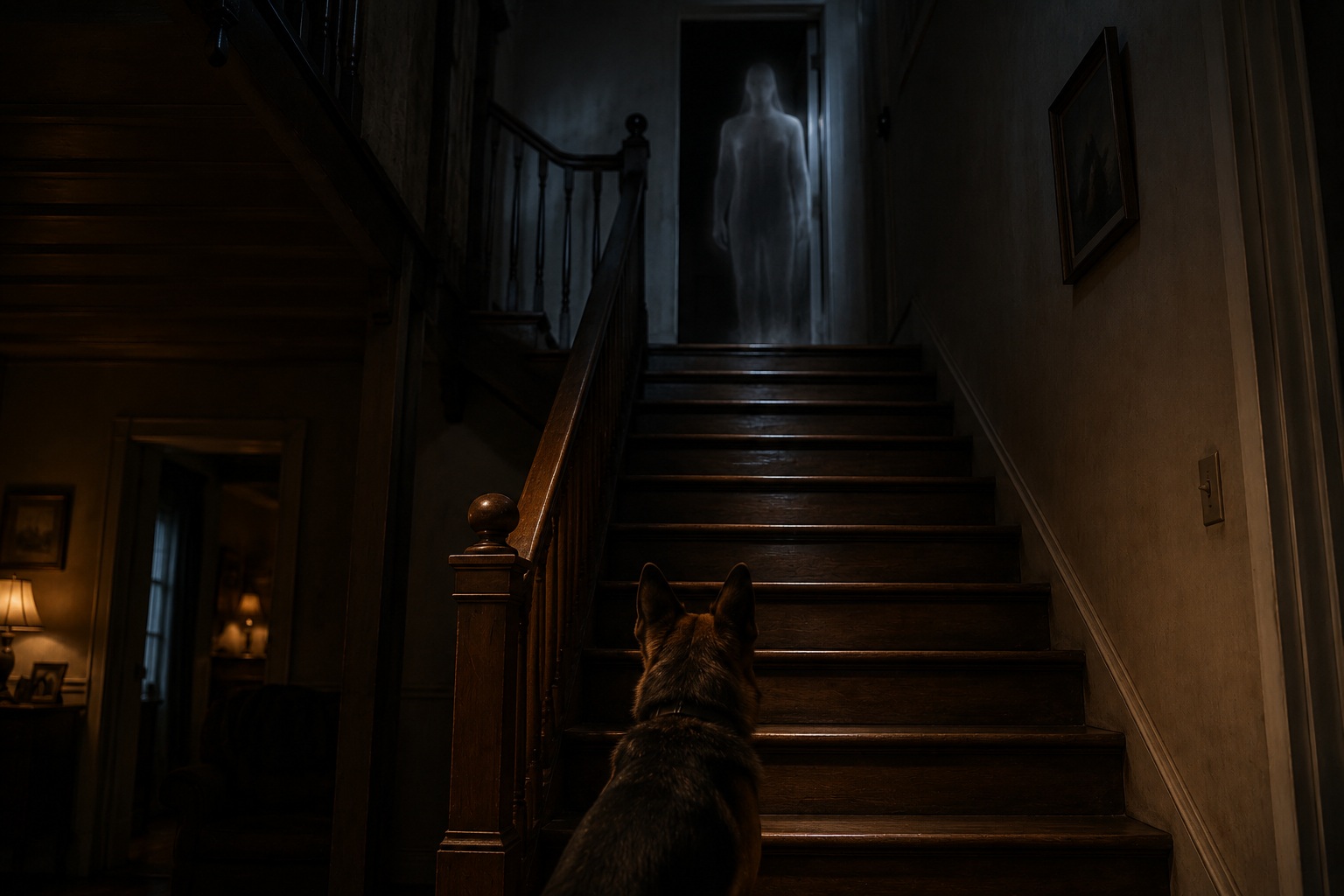
A dog may raise its head before the owner notices anything, then stare toward the ceiling as the sounds begin. A cat may watch the staircase or refuse to enter an upstairs hallway. Animals reacting to a noise is not mysterious by itself. Their hearing is better than ours in several ways, and they may notice rodents, pipes, or building movement first.
Why People Avoided That Spot Later
Still, the image sticks with people. A dark staircase is unsettling. A dark staircase while your dog stands rigidly staring at the top is much harder to ignore. Why Some Stories Add a Figure at the Top of the Stairs
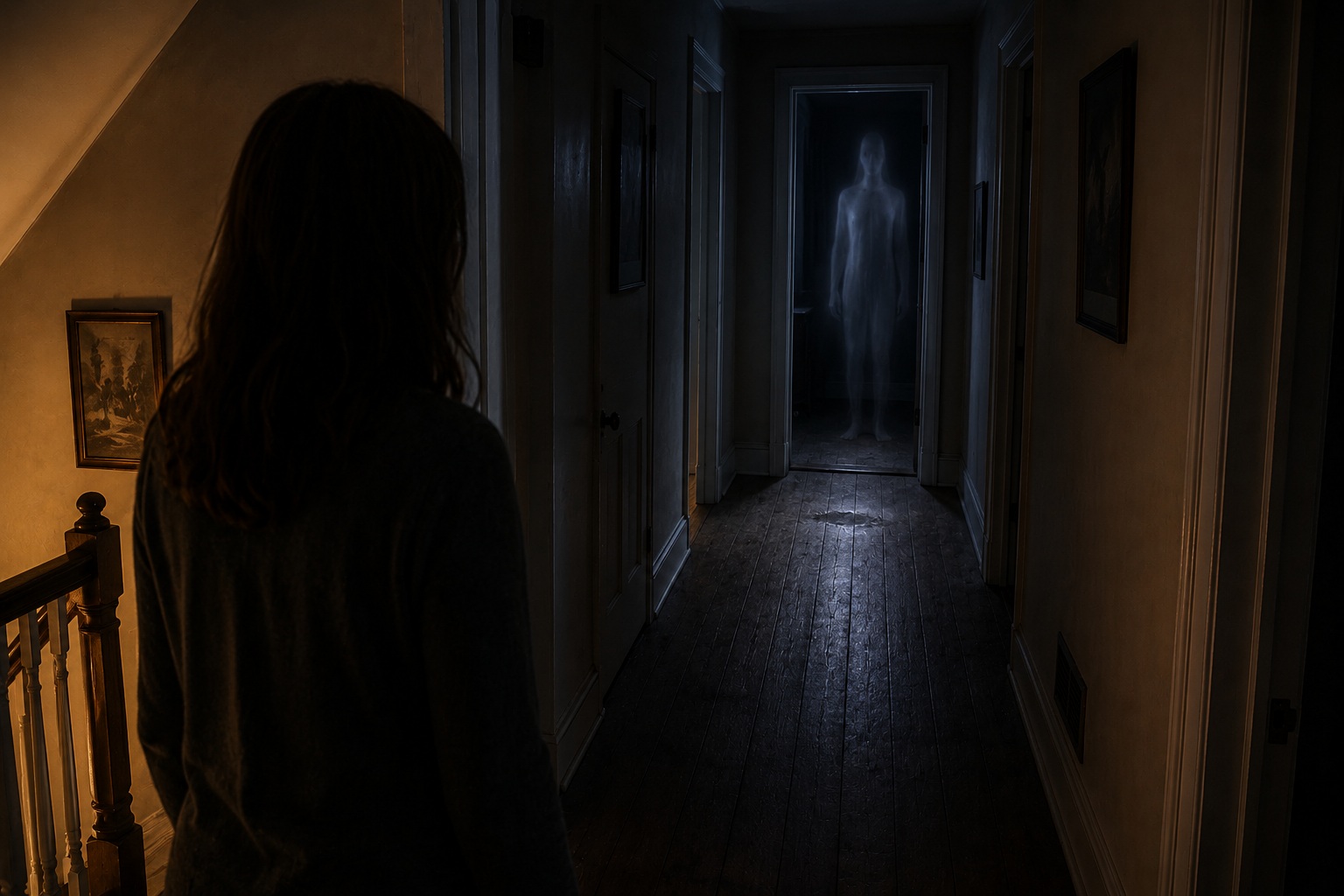
Footsteps alone leave room for uncertainty. Occasionally, the story continues. Someone finally checks the upstairs hallway and sees a shape where the walking stopped. The most unsettling descriptions are often simple rather than dramatic. A pale human-sized figure stands partly inside a doorway. A tall transparent shape appears at the far end of the hall. A person-shaped form is visible for a moment but has no readable face.
Then it fades, retreats, or is simply gone when the light comes on. There is an important reason to separate these stories from ordinary unexplained sounds. Seeing a figure introduces other possibilities: darkness, reflections, sleepiness, peripheral vision, expectation, and the brain's strong tendency to recognize human shapes.
A coat hanging from a door can become a person for half a second. A reflection from downstairs can place a pale shape on hallway glass. Someone waking from sleep can briefly experience remarkably vivid sights and sounds. But when footsteps and a human-like shape occur together, the experience becomes much harder for the witness to forget.
The sound seems to supply movement. The figure seems to supply the walker. Whether those two impressions really share a cause is another question. Why Empty-House Footsteps Stay With People
Why The Story Still Gets Shared
Upstairs footsteps work as a frightening story because they turn ordinary domestic space against us. The second floor of a home should be familiar. You know where the beds are. You know which boards squeak. You know how your partner walks and how your children run down the hallway.
That familiarity becomes the problem. When the rhythm sounds right but nobody should be there, the brain immediately notices the contradiction. There is also something uniquely uncomfortable about hearing the noise from below. You cannot see the source.
The ceiling hides it while simultaneously giving you enough information to imagine its movement. You hear the weight overhead, then the pause, then the next step closer to the stairs. In many cases, there will be an ordinary explanation. Heating systems knock. Wood shifts. Sound travels strangely. Animals get into spaces homeowners never knew existed.
Those possibilities should be checked first, especially if the noises are new or persistent. Unusual structural sounds can sometimes point to maintenance problems rather than anything supernatural. But that does not erase why the classic upstairs-footstep story remains so effective. It reproduces one of the simplest fears possible: hearing another person inside your home when you know you are alone.
And perhaps the most unsettling version is not the loudest one. It is the slow sequence that crosses the room above you, reaches the staircase, and suddenly stops. Because once the house becomes silent again, you are left waiting to hear whether the next step will be on the stairs.