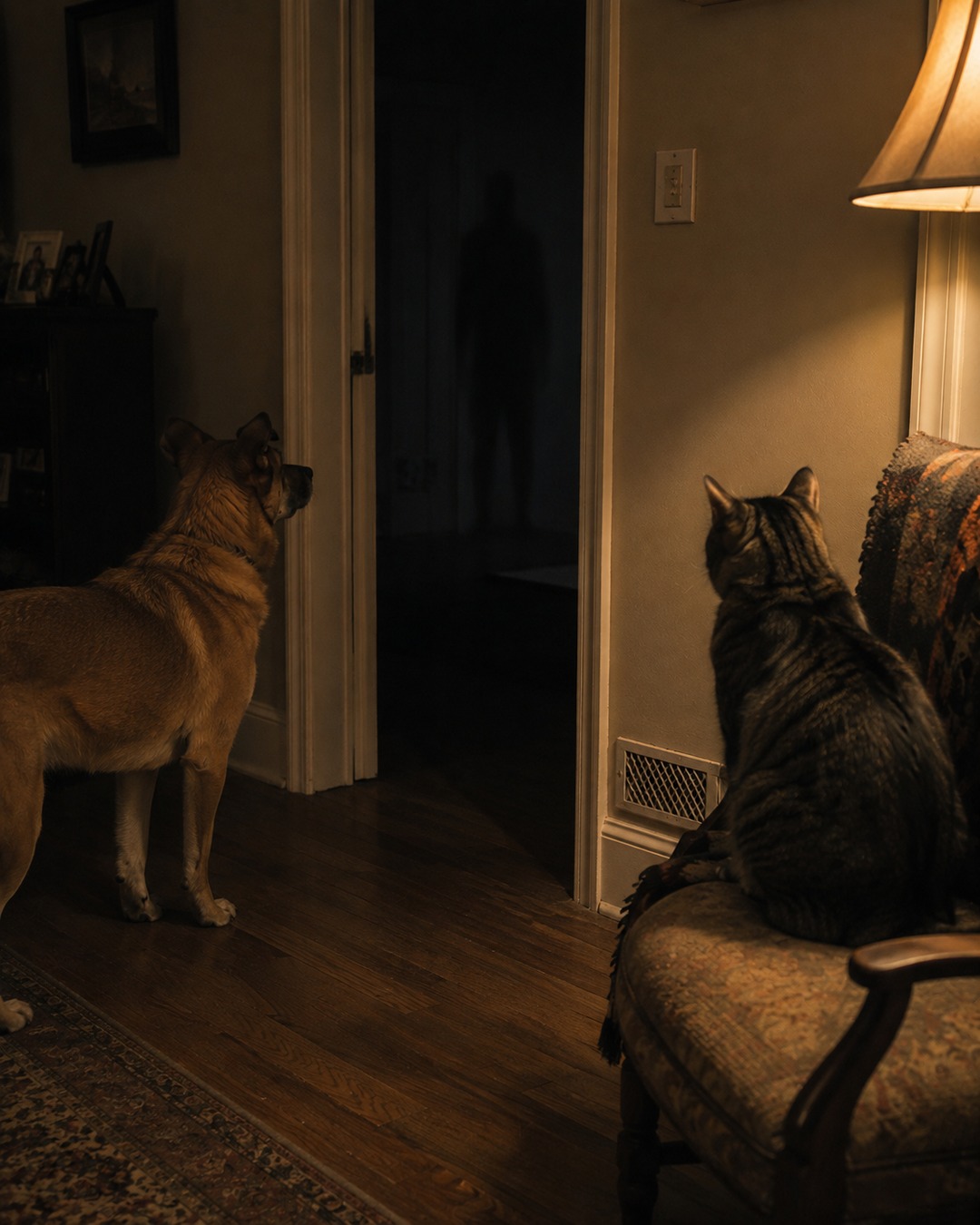
Short answer: Animals can act strangely before or during paranormal and UFO reports for many ordinary reasons: sound, smell, vibration, stress, routines changing, wildlife cues, darkness, owner anxiety, and human pattern-seeking. Animal behavior may be worth noting, but it is not proof of a ghost, cryptid, or UFO unless the behavior is carefully documented and ordinary triggers are considered.
Observable behavior comes before interpretation
A dog refusing a doorway, a cat staring into a corner, birds going quiet, or livestock bunching near a fence are observations. “The animal saw a ghost” is an interpretation. The first can be recorded; the second needs much more caution.
Animals often notice cues people miss. They may hear higher frequencies, smell unfamiliar scents, feel vibration through floors, notice tiny movements, or react to changes in human posture and voice. That sensitivity can make their behavior seem paranormal when the trigger is simply outside the human observer’s attention.
Pets and haunted-room reports
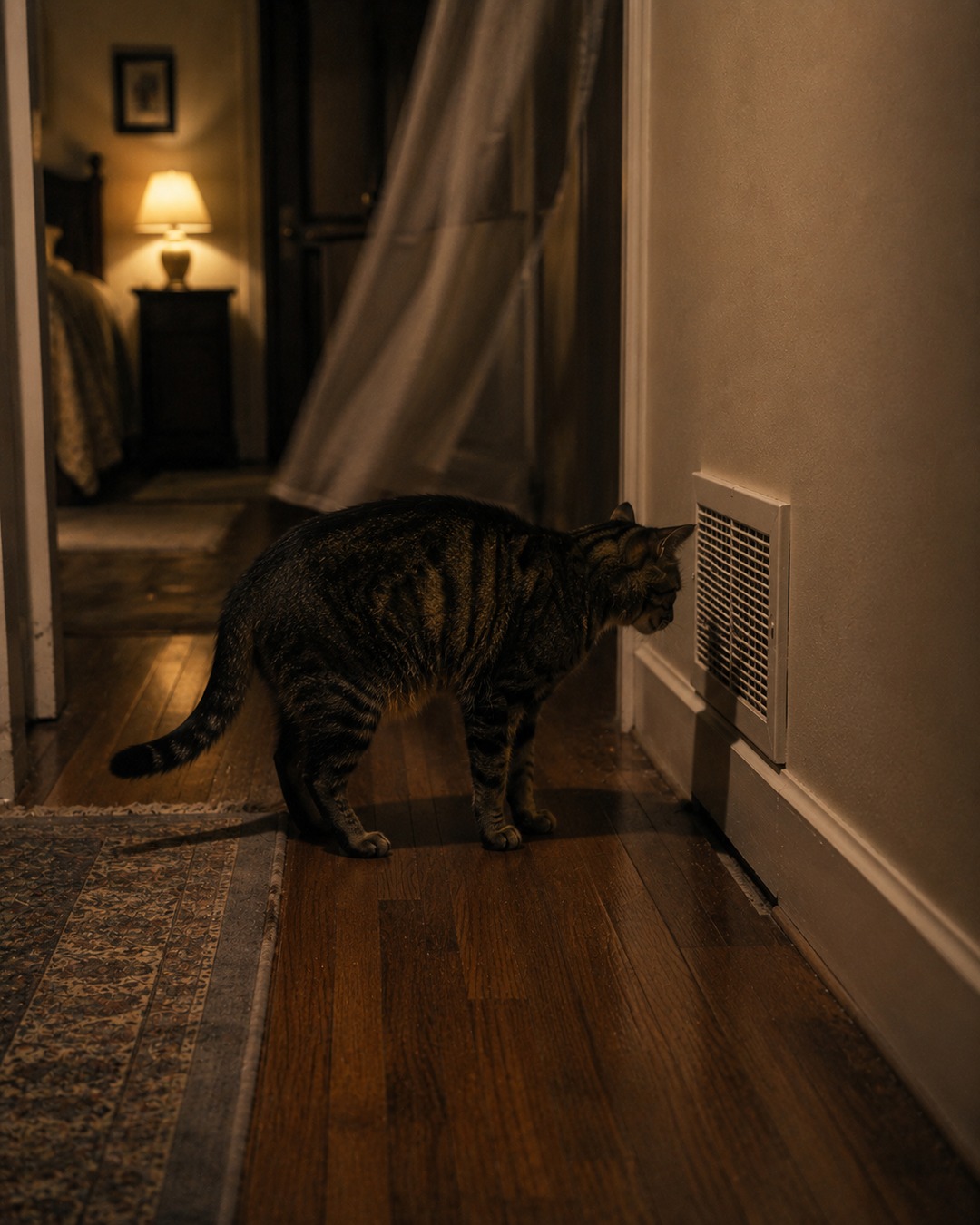
Pet stories usually become compelling because the animal behaves as if a room, corner, hallway, or stairwell contains something. Before treating that as anomalous, investigators should ask practical questions: Was there a new appliance noise? Rodents in the wall? A draft? Another animal outside? A scent on carpet or furniture? A stressed owner? A previous frightening experience in the room?
Wildlife silence and UFO reports
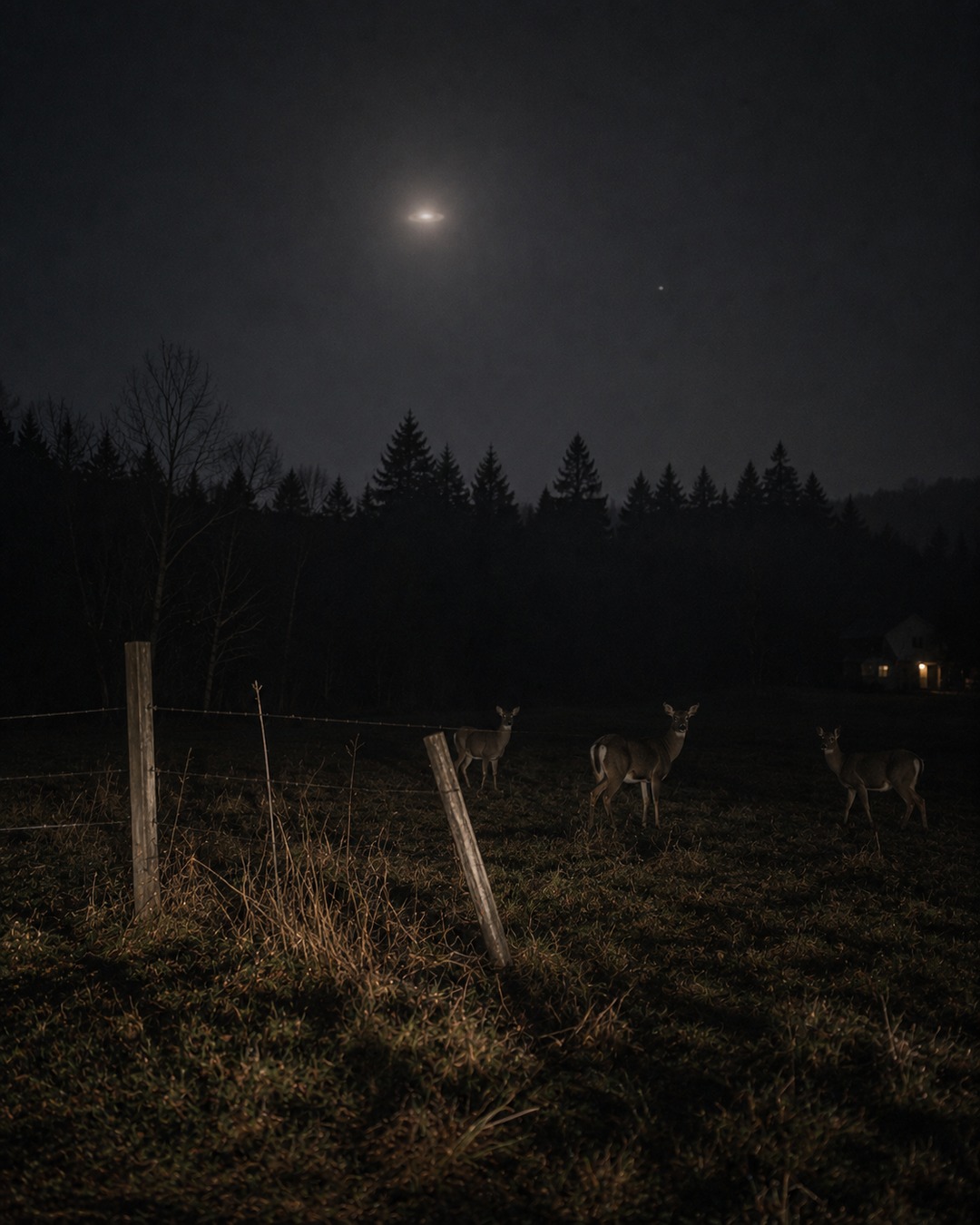
Reports sometimes say the woods or fields went suddenly quiet before a UFO sighting. That can be memorable, but wildlife vocalization changes for many reasons: predators, weather shifts, human movement, vehicle noise, artificial light, wind, seasonal patterns, and the observer’s own attention narrowing during a stressful event.
Confirmation bias and memory
Animal behavior is especially easy to remember after the fact. If someone sees a strange light and later remembers that the dog had been restless, the two details may become linked. That does not mean the memory is dishonest. It means timing, stress, and storytelling can turn ambiguous behavior into a meaningful omen.
What useful behavioral evidence would look like
- Video or time-stamped notes showing the behavior before the claimed event.
- Clear description of the animal’s normal baseline behavior.
- Weather, sound, scent, visitors, wildlife, and household changes recorded.
- Multiple animals responding in a consistent way.
- Repeat observations under similar conditions.
- Veterinary or behavioral causes considered when behavior is severe or recurring.
What we can and cannot say
We can say that animal behavior is an important part of many paranormal and UFO narratives because it gives witnesses a strong feeling that something happened before they understood it. We cannot say the animal detected a paranormal cause unless the behavior is documented and ordinary sensory or environmental explanations have been addressed.
Related WeirdWitnessed guides
- Why people see shadow figures and apparitions
- Why UFO lights can look stationary or silent
- Bigfoot sightings explained
Sources and further reading
- American Veterinary Medical Association: dog behavior
- Merck Veterinary Manual: normal social behavior in dogs
- Merck Veterinary Manual: normal social behavior in cats
- National Park Service: soundscapes and natural sounds
- NCBI Bookshelf: hearing and sound background
About the author
WeirdWitnessed publishes researched paranormal explainers that separate observable reports, folklore, ordinary explanations, and evidence limits. Images are editorial illustrations, not evidence.