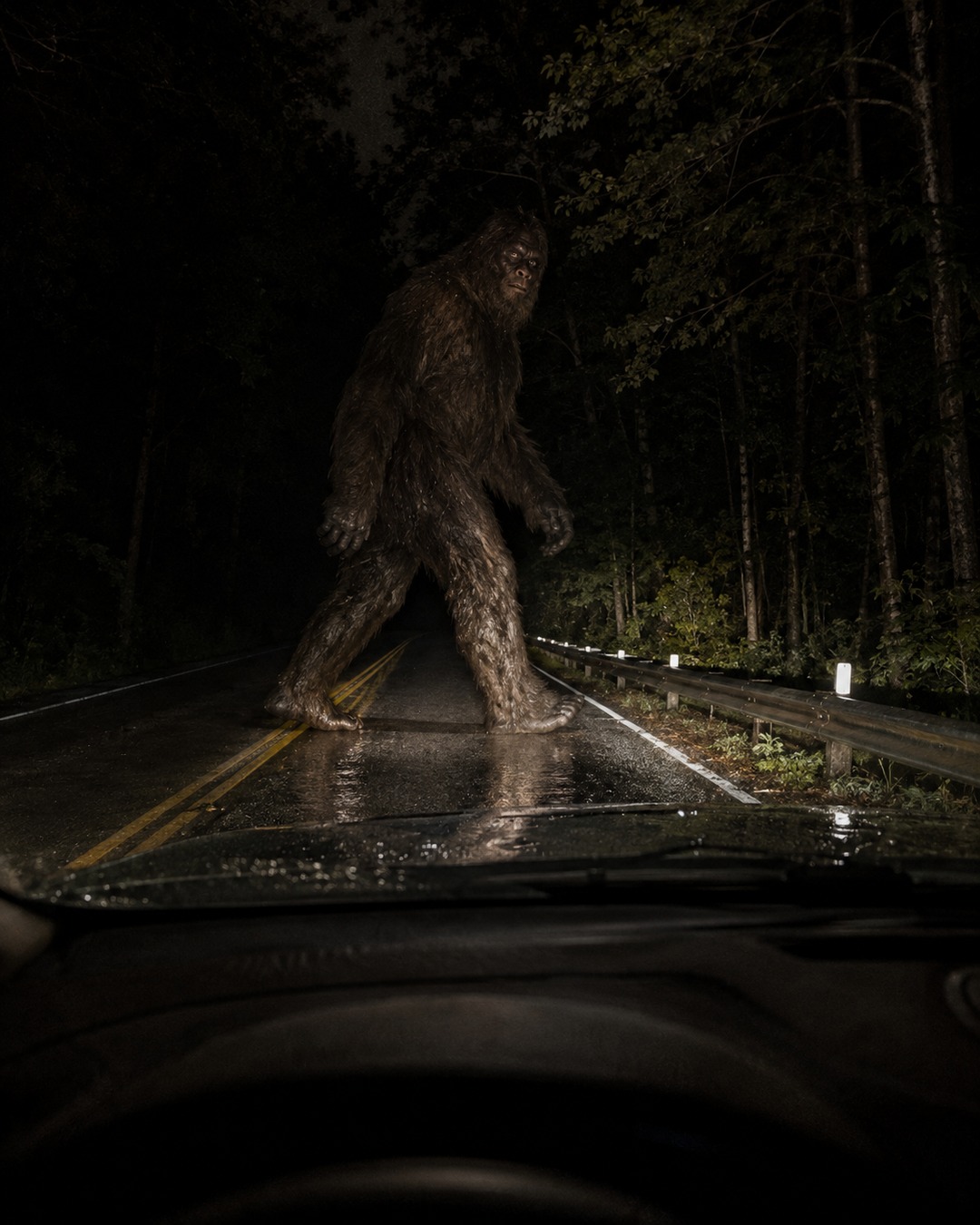
Illustrative reconstruction
The headlights reached the edge of the tree line just as something crossed the road. It was there for less than three seconds: tall, dark, upright, moving from the ditch toward the pines with a speed that made the driver lift off the gas before he understood why. By the time the car stopped, the figure was gone. The only things left were wet pavement, the smell of leaves through the cracked window, and the uneasy certainty that the shape had been too large to be a person.
A brief Bigfoot sighting often feels more convincing to the witness than it looks afterward on paper. The moment is fast. The setting is suggestive. The figure is partly hidden. The witness may be sincere, frightened and careful in the retelling, yet still lack the details needed to identify what was seen. That gap between personal certainty and public evidence is where most Bigfoot sighting reports live.
Short answer
Bigfoot sighting reports involving road crossings, tree-line glimpses, field edges, smells, sudden silence or distant upright forms are difficult to evaluate because they usually happen quickly and under poor viewing conditions. Darkness, headlights, distance, vegetation, lack of scale, peripheral vision, expectation, wildlife movement and human activity can all turn a brief observation into a powerful memory. A sincere witness may accurately report what the experience felt like without proving the identity of the figure.
A useful review asks what was actually observed, how long it was visible, what reference points were available, whether ordinary animals or people fit the scene, and whether any physical follow-up exists. Brief sightings are worth documenting, but they are not the same as tracks, clear photographs, biological samples or repeatable evidence.
What people actually report
Many Bigfoot sighting reports do not begin with a clean look at a creature. They begin with a road crossing, a dark form beside a tree line, a shape seen from a moving vehicle, a smell like wet fur, a sudden quiet in the woods, or a moment when something at the edge of vision seems too tall to be ordinary.
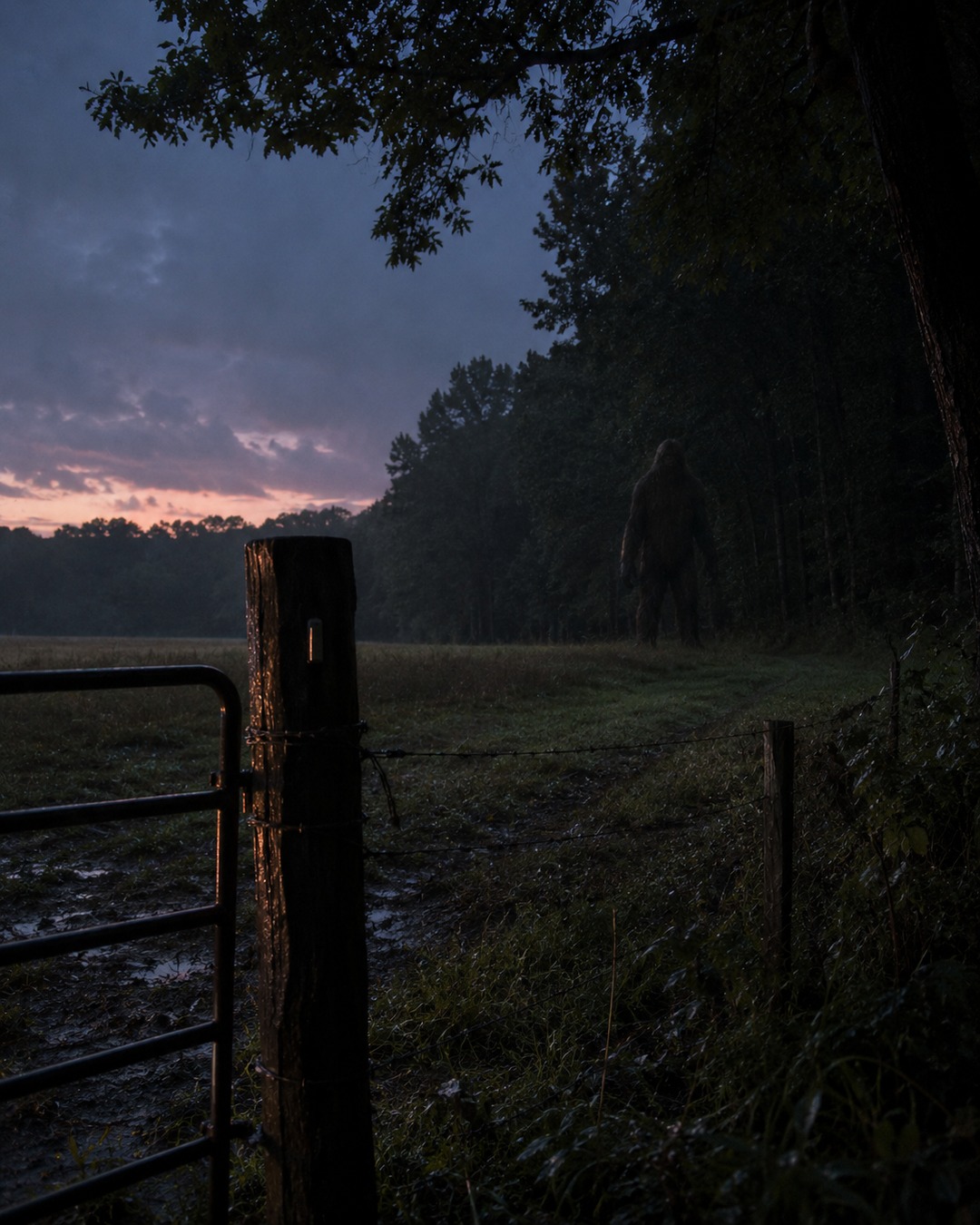
Common patterns include a figure stepping across a rural road at night, something watching from orchard rows or field edges, a dark upright shape between trunks, a large form turning away before it can be studied, or a musky odor noticed before a witness sees movement. These details matter because they describe the conditions under which the report formed, not just the creature the witness later interpreted.
Road crossings and sightings from vehicles
Vehicle sightings are memorable because they combine speed, headlights, surprise and limited time. A driver may see a figure for only a few seconds while also steering, braking and reacting emotionally. Headlights can flatten color, exaggerate contrast and make objects at the edge of the beam look larger or sharper than they are. Rain, fog, windshield glare and roadside shadows add more uncertainty.
Investigators would want the exact road location, lane position, direction of travel, speed, weather, shoulder width, distance from the vehicle, height references and whether the figure crossed in front of signs, fence posts, guardrails or trees that can later be measured. A statement that something was “huge” is less useful than a note that it passed beside a sign of known height.
Tree lines, orchards and field edges
Forest edges create strong Bigfoot imagery because they provide partial concealment. A dark shape can appear between trunks, disappear behind brush or seem to watch from a field edge. Orchards and tree farms add repeated vertical lines that make height and distance hard to judge. A stump, shadowed trunk, hanging branch, hunter, hiker, bear or deer can look very different when seen for only a moment through rows.
Reference points are essential. The best follow-up photographs show the same viewpoint in daylight, the object or gap where the figure appeared, the slope, the tree spacing and a person standing in the same location for scale. Without that context, a sighting may remain emotionally powerful but visually ambiguous.
Smell, silence and other surrounding details
Some witnesses describe a wet-fur, musky or animal-like odor before or during a sighting. Smell can be relevant, but it is not species identification by itself. Bears, deer, livestock, stagnant water, decaying vegetation, mold, skunks, wet clothing, garbage, old structures and human activity can all create strong odors outdoors.
Sudden silence is also common in Bigfoot stories. Forest soundscapes naturally change with wind, temperature, rain, time of day, predator movement and observer attention. A person who becomes frightened may notice silence more sharply than before. The silence can be part of the witness experience without proving that an unknown animal caused it.
Ordinary explanations to check first
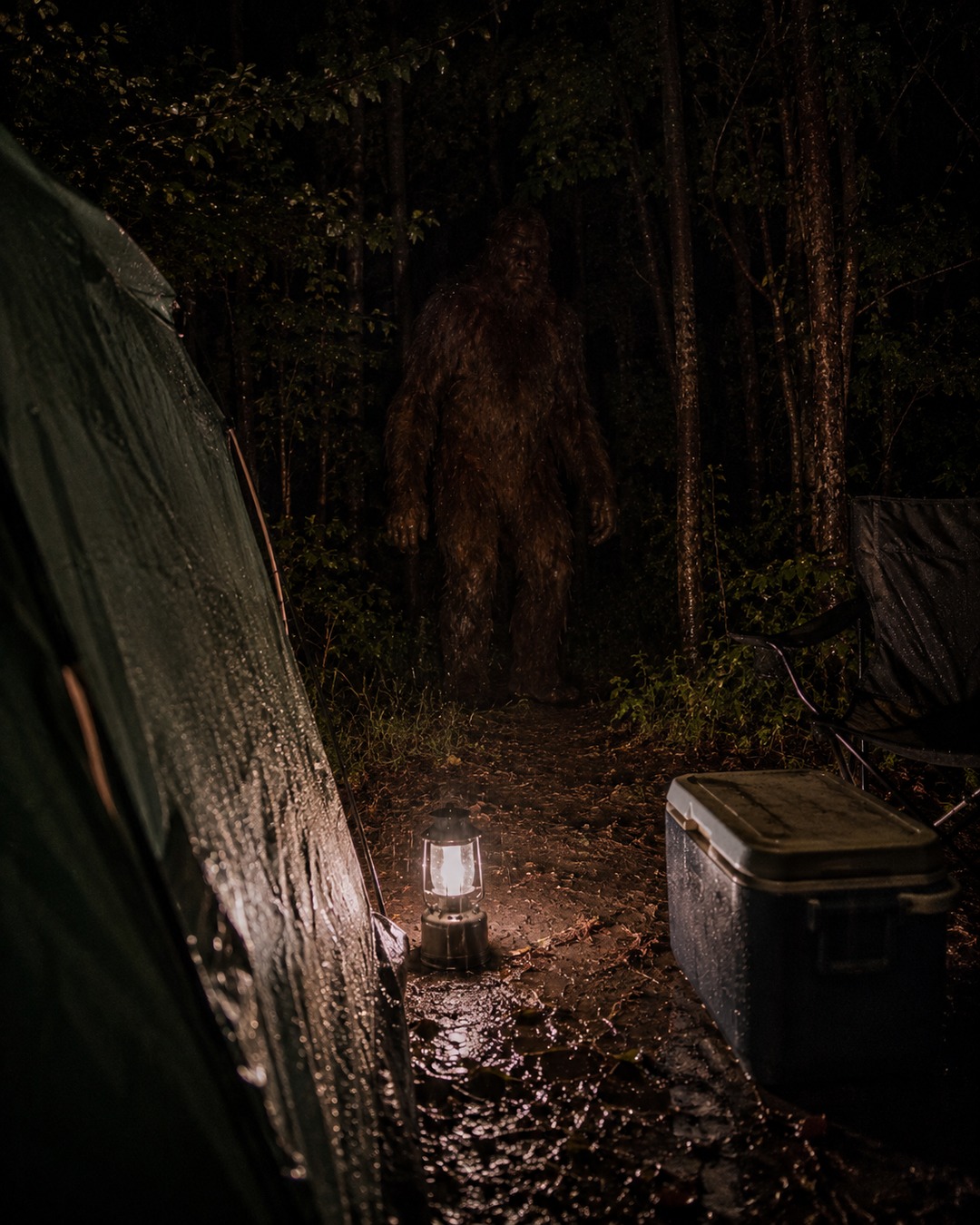
Bears are one of the most important ordinary comparisons because they can stand briefly, move through brush with surprising speed and look large in poor light. People in dark clothing, hunters, hikers, workers, tree stumps, root balls, shadows, vegetation, livestock, deer and optical effects from headlights are also worth checking. None of those explanations should be forced, but each should be considered before a report is treated as evidence of an unknown primate.
Distance and viewing duration matter. A five-second view from a moving car at night carries different weight from a minute-long daylight observation with multiple witnesses and measurable reference points. Peripheral vision and pattern recognition can make incomplete shapes feel human-like, especially when the observer already knows the area has Bigfoot stories.
How a brief sighting should be documented
- Record the exact location, date, time, weather and light conditions.
- Estimate viewing duration and whether the witness was moving.
- Photograph the scene from the original viewpoint in daylight.
- Include scale references such as signs, fence posts, trees, road lanes or a person standing at the sighting point.
- Note wind direction and possible odor sources if smell was part of the report.
- Look for ordinary human access: trails, hunting areas, work sites, camps, houses and roads.
- Keep the first account separate from later interpretation.
Field Edges, Road Crossings And Odor Clues
Some brief Bigfoot reports become more useful when the setting provides real reference points. Orchard rows, vineyards, farm lanes and field edges can help because the repeated tree spacing, fence lines, irrigation equipment, ladders or posts give witnesses something to compare with the figure. They can also mislead. Straight rows create tunnel-like sight lines, hide parts of a body behind trunks and make a person, bear or stump look larger when the witness sees it only through narrow gaps.
Road-crossing reports have a different problem. Headlights create a short, dramatic viewing window while the driver is moving, braking and trying to judge distance at the same time. A reflector post, sign, guardrail, ditch, lane stripe or fence can be valuable because it gives later investigators a measurable scale cue. Without those references, a report that felt close and huge may still be difficult to evaluate afterward. The best road reports record the vehicle speed, direction of travel, angle of crossing, weather, shoulder width, light conditions and how many seconds the figure was visible.
Odor reports need the same caution. Witnesses often describe wet fur, damp musk, spoiled meat, garbage, sour animal smell or a sudden heavy scent before seeing anything unusual. That detail can be memorable, but smell does not identify a species. Wind direction, dead animals, skunks, bears, livestock, garbage, wet vegetation, swampy ground, mold, old cabins, hunters and changing humidity can all create strong outdoor odors. Fear and expectation can also make a smell feel more meaningful once a witness has connected it with a possible creature.
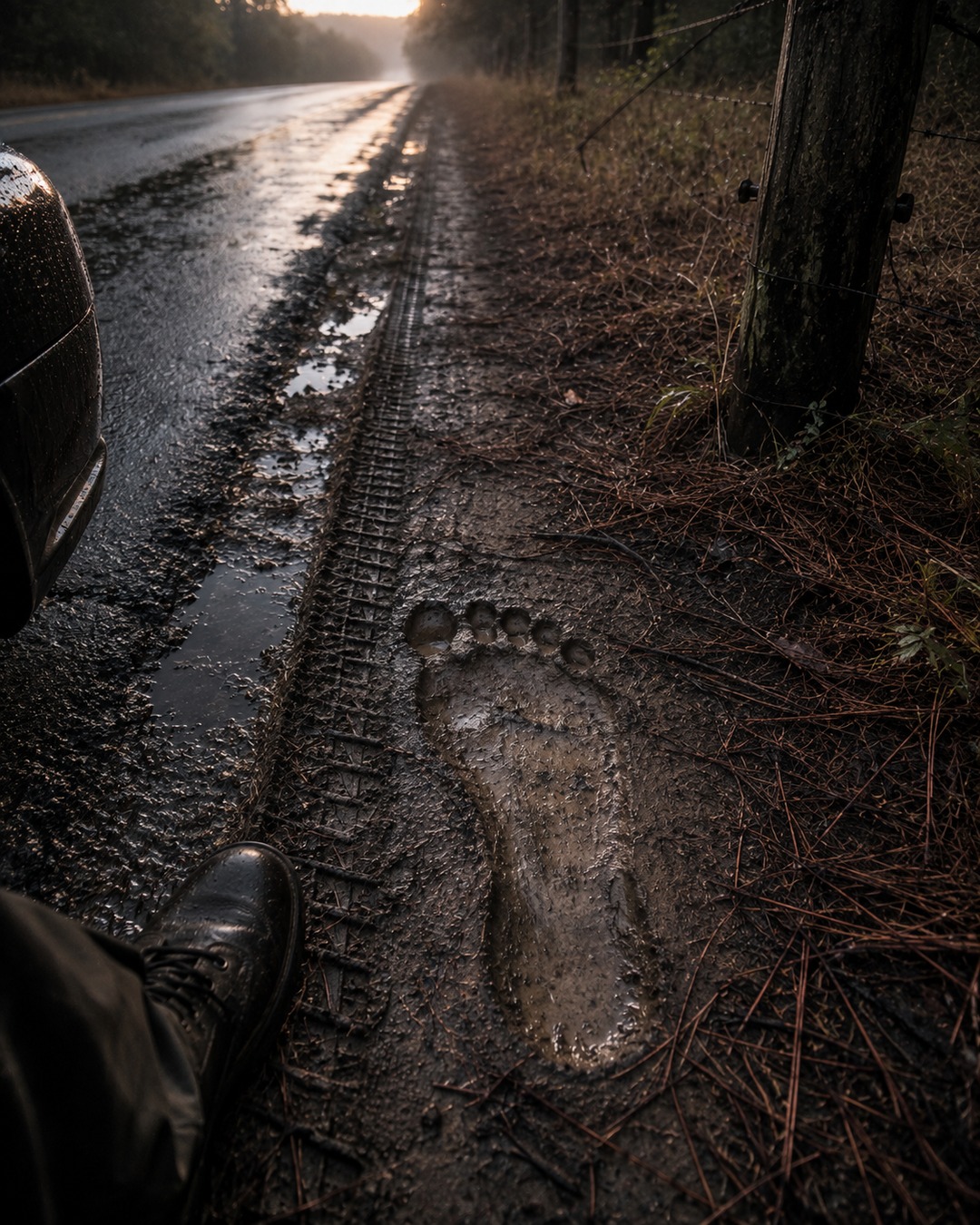
It helps to separate three different patterns: a smell before any visual sighting, a smell during a brief glimpse, and a smell followed later by footprint claims. The last pattern should not be treated as one piece of evidence. Odor is one observation; tracks are another. Any tracks still need their own evaluation: substrate, stride, depth, measurements, photographs, weather, possible human access and comparison with ordinary animal or boot impressions. For track-specific standards, see Bigfoot Footprints: What Investigators Look For In Tracks.
Related Bigfoot questions
If the report involves physical tracks, see Bigfoot Footprints: What Investigators Look For In Tracks. If the report centers on howls, knocks or silence, see Bigfoot Sounds Explained. For trail-camera images, see Bigfoot Trail Cameras And Blurry Evidence. For bent trees, broken branches or woods signs, see Bigfoot Signs In The Woods.
What we can and cannot say
We can say that people sincerely report brief Bigfoot sightings in roads, fields, orchards and forest edges. We can also say that brief observations are vulnerable to distance errors, poor light, partial concealment, memory reconstruction and ordinary wildlife or human explanations. A witness can be honest and still mistaken about identity.
We cannot say that a short glimpse proves Bigfoot exists. Stronger evidence would require measurable context, corroboration, physical traces, original images or repeated observations that survive ordinary checks. The most useful approach is not dismissal or certainty, but careful separation between the witness experience and the evidence available afterward.
Why memory can sharpen after the sighting
A sighting does not end when the figure disappears. The witness keeps replaying it, searching for the clearest frame in memory. That is normal, but memory is not a video file. Later conversation, local legend, fear, online comparisons and repeated retelling can make the interpretation feel more solid than the original observation. The most useful notes are the earliest ones, written before the witness has studied other cases or absorbed suggestions from listeners.
This is why investigators separate first impressions from later conclusions. “I saw a tall dark shape cross left to right” is a more testable statement than “I saw Bigfoot.” The first statement can be compared with the road, light, vegetation and known animals. The second is an interpretation of identity.
What would make a brief sighting stronger
A brief sighting becomes stronger when several independent details point in the same direction. Multiple witnesses who describe the same movement before discussing it, daylight follow-up photographs from the same viewpoint, measurable height references, consistent direction of travel, possible tracks or hair found afterward, and repeat reports under similar conditions all help. None proves a creature alone, but together they reduce the number of ordinary explanations.
Weak reports usually lack these anchors. They may have a dramatic moment but no location detail, no scale, no duration, no follow-up image, no access check and no reason ordinary people or wildlife could not have been present. Those reports may still matter as folklore or personal experience, but they should not be overstated as evidence.
Why this is different from tracks, sounds or trail-camera evidence
Bigfoot reports often get grouped together, but different evidence types need different standards. Tracks can be measured, photographed and compared with substrate conditions. Sounds can be recorded and analyzed against known wildlife. Trail-camera images can be checked for lens height, trigger timing and blur. A road-crossing glimpse is usually a human observation under pressure. That makes witness context the main evidence, and it means humility is necessary.
Sources & Further Reading
- National Park Service — Bear Safety
- U.S. Forest Service — Bear safety and behavior context
- National Park Service — Sounds and soundscapes
- National Park Service — Night skies and visibility context